

A local craft market is looking for vendors, and your application is accepted. You start picturing your display, your first customers and a busy weekend.
The craft fair vendor scam can look at home in the same community pages you already trust. Check the booking before excitement turns into a payment.
Overview
A fake organizer sells access they cannot provide
This is a confirmed event-booking scam. Criminals advertise an invented market or impersonate the organizers of a real one, then collect applications and vendor fees.
The deception concerns who can reserve a stall and whether the advertised booking exists. It is not simply a disappointing sales day at a legitimate event.
A familiar venue or community group can be named without permission. The people behind the payment request do not necessarily represent either one.
Multiple reports establish the vendor-fee pattern
BBB’s craft-fair warning describes fake planners obtaining vendor information and fees, including requests for personal payments and demands to pay again.
An October artist report describes paying a $70 fee for an advertised Richmond market before concluding the listing was false. The poster says Eventbrite removed it afterward.
That reported incident illustrates the established mechanism. It does not independently identify a particular real company or individual as the operator.
We therefore focus on false booking authority, application handling and payment instructions. An organizer’s trade name copied into a post is not enough to prove who is responsible.
Verify the event and the person collecting the money
A market can exist while the person messaging you has no right to book vendors. Confirm both parts before reserving stock, travel or a stall.
- The event appears in local groups but lacks independently confirmed organizer details.
- The application sends you to a personal payment recipient.
- The seller pressures you to use a friends-and-family option.
- Payment confirmation leads to a claim that nothing arrived.
- The venue cannot confirm the event or authorized booking contact.
A fee or online form is not inherently suspicious. The decisive problem is false authority combined with a payment request the genuine organizer cannot confirm.
Why a Small Local Market Feels Safer Than a Big Online Offer
A community event sounds close to home. The venue may be somewhere you have visited, and the listing may appear among genuine neighborhood announcements.
You are also offering something tangible. Handmade items and a booked table feel easier to understand than an unfamiliar investment or a promise of effortless income.
The scam uses that sense of familiarity. It does not need to persuade you to try a strange business model; it only needs to intercept an ordinary booking.
Being accepted can feel personal, especially for a new maker. You may read the response as approval of your work rather than the start of a transaction.
A modest vendor fee can lower your guard too. You might compare it with expected sales and decide it is worth paying before checking the organizer.
But the amount does not establish legitimacy. A smaller transfer is still a real loss, and a form can reveal useful personal or business information.
Multiple listings do not necessarily provide multiple confirmations. The same description can be copied across event sites and community groups by one operator.
Look for an independent source of authority. The venue or established organizer should be able to confirm who handles applications and where booking payments belong.
How the Craft Fair Vendor Scam Works
Step 1: A convincing event listing reaches local vendors
The advertisement promises a market, pop-up or seasonal fair. It can name a familiar hall, church, shopping area or other venue.
Some versions invent the whole event. Others copy an existing event and place a fraudulent booking contact beside otherwise accurate details.
A date, address and attractive description can make the opportunity easy to share. Someone who reposts it may simply assume another person already checked.
Your first task is to trace the booking back to an authorized organizer. A popular group is a place to discover an event, not proof of authorization.
Step 2: An application creates the appearance of a selection process
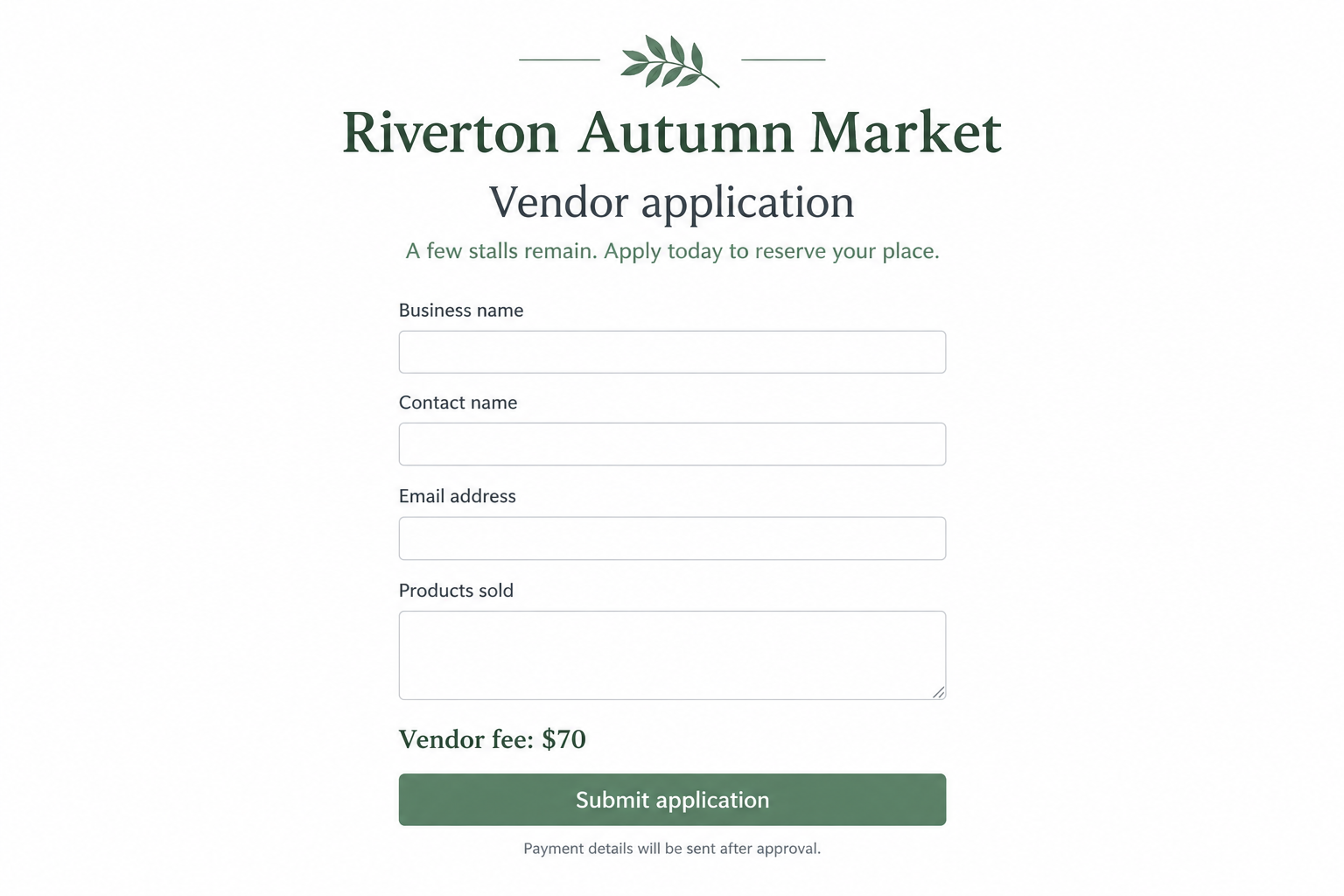
The prospective vendor fills in business details, products and contact information. A form looks like the kind of administration a real market would need.
The questions themselves may be ordinary. Their presence does not tell you who controls the form or whether the person can provide the advertised stall.
A quick acceptance can make the process feel complete. You have applied, someone has approved you, and the remaining task appears to be payment.
Pause before supplying unnecessary information. A vendor inquiry does not automatically justify identity documents, financial credentials or details unrelated to exhibiting your products.
Step 3: The supposed organizer directs payment to their own recipient
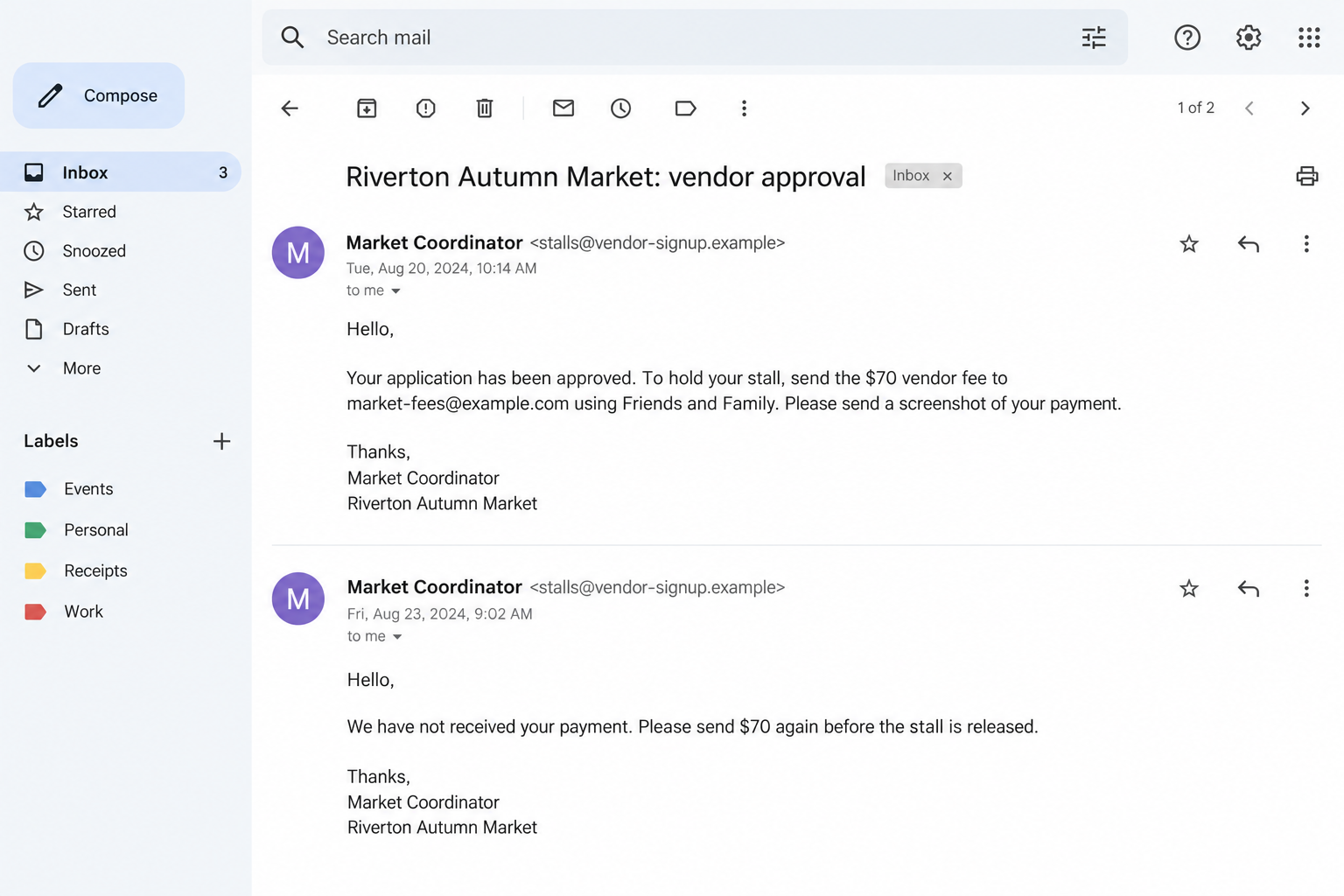
The booking fee may be requested through a payment app, bank transfer or personal account. The message describes it as the last step to secure your place.
Some reported versions insist on a friends-and-family payment. That should prompt questions when you are buying a commercial booking from someone you do not know.
Confirm the recipient with the real organizer. A different name may have an innocent explanation, but the stranger collecting the fee cannot be the only person verifying it.
The application and emails pictured here are generated examples with fictional event details. They illustrate the payment route without accusing a named real market.
Step 4: Confirmation is delayed, or another fee appears
You send payment and wait for setup times, stall assignments or other practical information. The promised confirmation never quite settles the booking.
BBB’s warning includes reports of organizers claiming that payment did not arrive and requesting a second transfer. Do not pay again before the provider checks the first transaction.
Other demands may be framed as permits or booking administration. A new charge needs to be verified against the genuine organizer’s complete terms.
A changing payment recipient is another reason to pause. Record each requested account and explanation rather than treating a series of transfers as one simple fee.
Step 5: The real event cannot recognize your reservation
The vendor eventually checks with the venue or organizer and discovers the person who took the fee was not authorized. Sometimes there is no such event at all.
An acceptance message cannot create a stall the sender never controlled. Its professional appearance does not make the venue responsible for honoring the false booking.
If an actual event exists, its organizer may be dealing with several confused vendors. Give them the listing and contact details without insisting they received your payment.
The goal now is to document the false transaction and ask the relevant provider about review options. More payments to the same messenger will not repair it.
Ask the Venue Questions That Produce a Useful Answer
Find the venue’s contact details independently. Do not use the number on the questionable poster as your sole route to verifying the poster.
Ask whether the named event is booked on that date. Then ask who is authorized to handle vendor applications for it.
If the venue only rents the space, it may not process applications itself. Ask for the established organizer’s public contact route, then verify the booking there.
Give the exact event title, date and contact name. A vague question about whether the venue hosts markets can produce reassurance that does not answer your concern.
Ask the organizer to confirm the application page and payment recipient. This checks the specific route you were given, rather than only the existence of the fair.
You can also ask about setup times, space sizes and the written fee policy. A genuine organizer should have a practical process for communicating these details.
Do not rely on one missing answer as proof of criminality. Volunteers can be busy, and venue calendars can be incomplete. Wait for confirmation before paying.
If separate reliable contacts contradict the supposed organizer’s claims, stop the transaction. Keep the contradiction as evidence instead of arguing with the person who requested money.
A Busy Listing Is Not the Same as an Established Organizer
Comments from interested vendors can make the advertisement look active. Those comments may only show that other people saw the same offer.
Pictures from an earlier fair can be reused. They establish that a picture exists, not that this year’s listing belongs to the people who ran that event.
Similarly, a profile with a familiar name might be copied or compromised. Look for a continuous, independently confirmed organizer identity and booking process.
A listing on a recognized event platform deserves the same verification. Hosting a page does not mean the platform has guaranteed every organizer’s promises.
The recent Richmond report is useful because the artist describes finding the event on several websites. Repetition helped the listing feel established before payment.
Keep your check practical: who controls the event, who accepted your application, and who receives the fee? Those people or entities should fit a verifiable arrangement.
If the arrangement changes after acceptance, return to the organizer’s confirmed contact. Do not assume a new payment address belongs to them because the conversation continues.
And remember that weak attendance is a different issue. A real organizer can run an unsuccessful event without having invented the stall or impersonated anyone.
Check Payment Protection Before Choosing How to Pay
A personal payment option is designed for a different relationship from an unfamiliar commercial booking. Do not select it merely because the sender says it avoids fees.
Ask the provider what protection applies to this type of vendor reservation. Do not assume every goods-and-services transaction or event fee qualifies for reimbursement.
If you use a card, learn the issuer’s dispute process. Keep the agreed booking details and receipt so you can describe precisely what was promised.
If the organizer insists on an unfamiliar recipient and refuses independent confirmation, leave the booking. The payment method cannot compensate for an unverified seller.
Check the actual transaction status inside the provider before considering a second payment. A screenshot supplied by the recipient cannot establish that your transfer failed.
Never misdescribe a purchase to make the payment cheaper. An accurate description helps your records and gives the provider a clearer basis to review a later complaint.
Save the fee policy before paying. A changing or disappearing page is harder to explain afterward when you no longer have the original wording.
The purpose is not to collect endless paperwork. It is to ensure that your money buys a booking from the person entitled to supply it.
What to Do if You Have Fallen Victim to This Scam
-
Stop sending fees to the suspected organizer. Do not pay again because they claim the first transfer failed or your stall will otherwise be released.
Record the newest demand and compare it with the original agreement. You can preserve the message without continuing the discussion.
-
Contact the payment provider promptly. Explain that you paid for a vendor stall through someone who appears to lack authority or advertised an invented event.
Supply the recipient, amount, date and transaction reference. Ask about cancellation, investigation or dispute options appropriate to the payment method you actually used.
-
Notify your card issuer or bank if it funded the transaction. Describe the promised booking and the evidence that the recipient was not the genuine organizer.
Do not assume funds are permanently lost or guaranteed recoverable. Let the relevant provider assess the specific transaction and explain its available process.
-
Preserve the listing, application, acceptance, fee policy and conversation. Save the original messages as well as screenshots where possible.
If the page disappears, record when that happened. A removal can support the timeline without independently proving every allegation about the person who posted it.
-
Tell the actual venue or organizer what occurred. Provide the fraudulent contact route so they can distinguish your attempted booking from an authorized reservation.
Ask them for confirmation of the relevant facts in writing when practical. Do not expect the venue to refund money it never received.
-
Report the listing to the event platform and any community-group moderators. State what you verified, where you paid and what remains uncertain.
A useful warning describes the false booking route. Avoid publishing personal accusations against people whose names may have been copied.
-
Review the details entered on the form. If you provided only business contact information, watch for targeted follow-ups rather than assuming your accounts were accessed.
If a password or identity document was supplied, address that separate exposure through the real account provider or the appropriate identity-protection process.
-
For a U.S. incident, report the pattern to BBB Scam Tracker and relevant law enforcement if money was stolen.
Keep your report numbers. Ignore anyone promising to retrieve the fee immediately if you first pay for a recovery service or another permit.
Before You Pack the Stock or Reserve Another Weekend
Verify the reservation before making further purchases for the event. Transport, extra stock and time off can add to the loss caused by the first false fee.
If an event is confirmed, ask for your own vendor reference and practical instructions through the established organizer. Do not rely solely on a social-media conversation.
Keep one folder for the booking: application, terms, receipt, venue confirmation and setup information. This makes an unexpected change easier to spot.
Talk with other established vendors about the event, but verify your particular payment route yourself. Someone else’s genuine reservation does not authenticate your messenger.
If you decide to withdraw, address cancellation with the real organizer through its written terms. An impostor cannot settle a reservation they never held.
Being caught by a local-looking listing is not a verdict on your business. The useful next step is a repeatable verification process for the next opportunity.
You can keep looking for markets. Take the excitement seriously enough to protect the money and preparation that go into making your work available.
Frequently Asked Questions
Are vendor fees themselves a scam?
No. Legitimate markets charge fees. This scam concerns invented events or people falsely claiming authority to reserve stalls and collect payment.
Does an Eventbrite or social-media listing guarantee the event?
No. Verify the organizer and venue independently. A familiar platform can host a listing without guaranteeing the booking authority of the person who posted it.
What if the venue is real?
Confirm the specific event, date and authorized booking contact. A real venue can be named in a fraudulent advertisement without its permission.
Should I pay again when the organizer says payment failed?
Check the original transaction with the provider first. Do not create a second transfer on the recipient’s word alone.
Does poor attendance prove the organizer committed fraud?
No. A disappointing legitimate market is different from an invented event or impersonated organizer. Keep the allegation attached to evidence of deception.
Can I get a vendor fee back after a personal payment?
Ask the provider promptly about your exact transaction. Protection and review options vary; neither a guaranteed refund nor inevitable loss should be assumed.
The Bottom Line
The craft fair vendor scam sells a convincing reservation without the authority to provide it. A local venue and an accepted application can conceal that missing link.
Confirm the event, organizer and recipient before paying. If the booking was false, preserve the records and contact the payment provider before sending another fee.








