


Zenuva CBD Gummies appear in glowing promotions promising easier days, better sleep, and relief from persistent pain. The bottle looks straightforward enough.
Before entering your card details, follow the offer beyond that reassuring green label. The price, guarantee, and monthly commitments deserve a much closer look.
Overview
A CBD bottle wrapped in sweeping medical promises
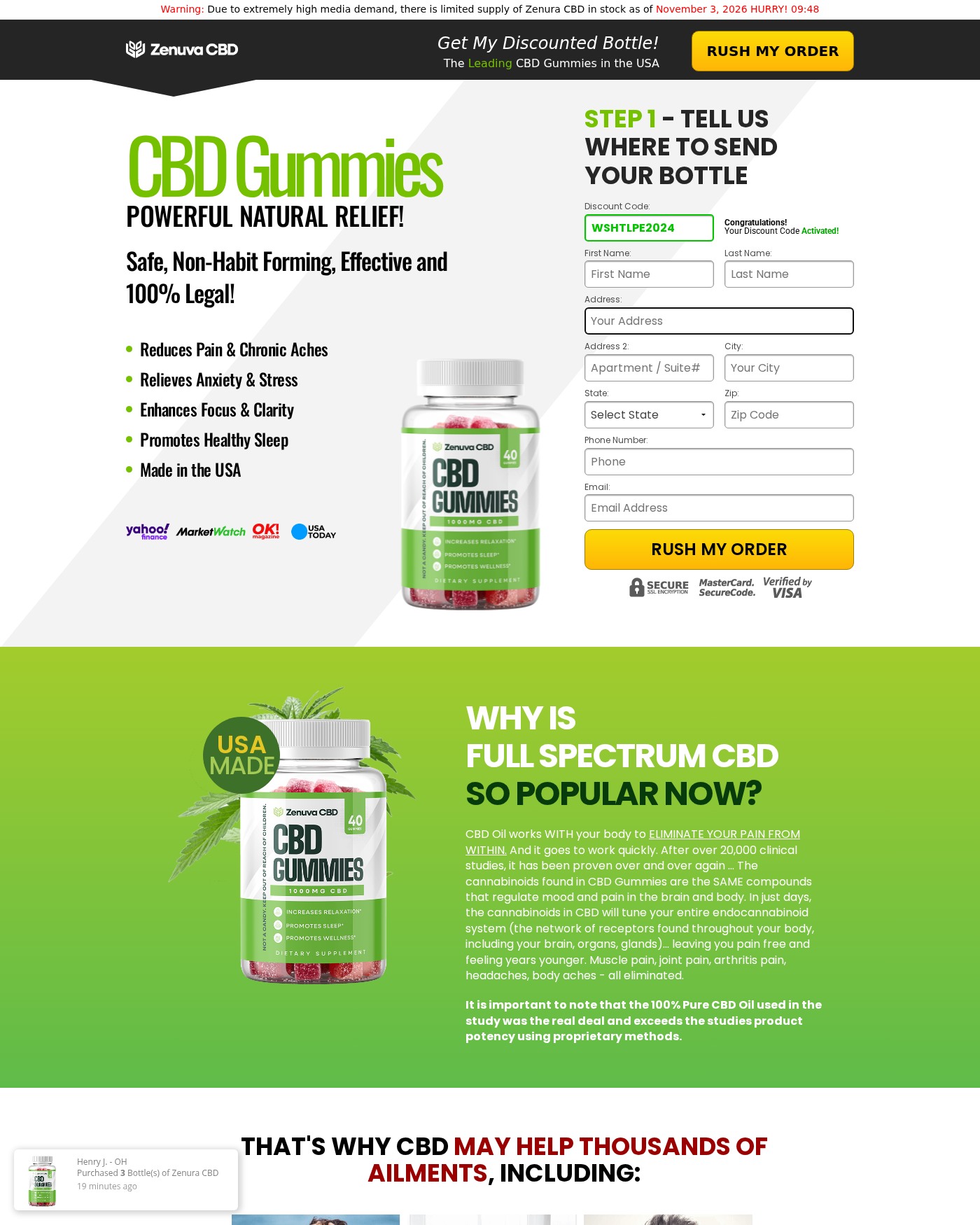
Zenuva is marketed as a CBD gummy at v1.tryzenuva.com. The pictured bottle says 1,000 mg and 40 gummies; parts of the website instead say Zenura.
The pitch goes well beyond ordinary relaxation. It describes eliminating pain, addressing numerous ailments, and producing benefits without side effects.
Those are health claims requiring reliable product-specific evidence. A label, an impressive study count, and a testimonial cannot supply that evidence.
The package price is only the beginning
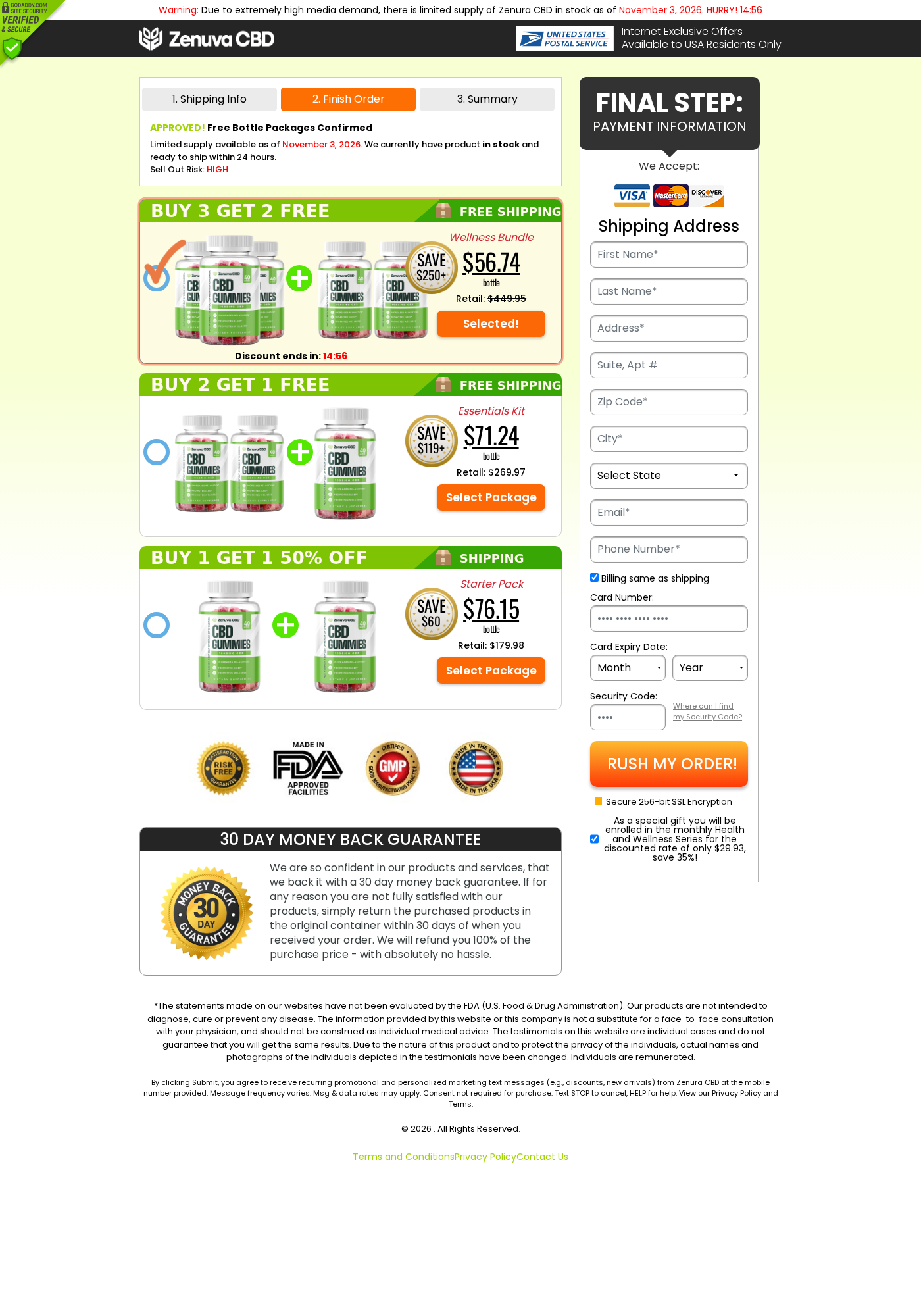
The loaded checkout selects a five-bottle package advertised at $56.74 per bottle. That works out to $283.70, not a $56.74 order.
A separate checked box adds a monthly Health and Wellness Series for $29.93. The linked terms also describe recurring product shipments every 30 days.
- Five bottles are selected before the shopper changes the package.
- The wellness-series checkbox is visibly selected on the captured form.
- Subscription terms refer to the package’s retail cost, not a clearly stated recurring total.
- Return promises differ between the sales page, checkout, and legal terms.
The warning concerns the actual sales offer
This is not a recommendation to buy Zenuva. The medical reassurance, misleading FDA-facility badge, recurring terms, and restrictive refund wording make this offer unsuitable.
The bottle’s contents have not been laboratory tested here. The documented problems are already present in the advertising and purchase conditions.
The FDA Badge and the Medical Pitch
The checkout displays an FDA-style badge claiming manufacture in FDA-approved facilities. That is not a valid assurance of approval.
The FDA explicitly says it does not approve facilities. Its oversight, registration requirements, and inspections are not the approval depicted by that badge.
A GMP emblem beside it does not fix the problem. Buyers still need the actual manufacturer, applicable standard, and verifiable documentation behind any certification claim.
Meanwhile, the front page treats CBD as broadly safe and effective. Its description of a pain-free result is much stronger than ordinary wellness language.
The small-print disclaimer says the product is not intended to diagnose, cure, or prevent disease. That disclaimer does not erase the health promises above it.
There is an important difference between research involving CBD and research proving this particular gummy works for the condition you want to treat.
A count of more than 20,000 studies gives no answer about the bottle’s formula, dose, patient group, comparison treatment, or measured outcome.
The same problem applies to dramatic improvement figures. Without an identifiable study and methods, those numbers are sales claims rather than usable medical evidence.
The FDA’s CBD safety information identifies potential liver injury, drug interactions, and drowsiness. That directly undermines blanket reassurance about an absence of side effects.
This does not mean every person taking CBD will suffer those effects. It means a seller cannot responsibly promise everyone a consequence-free remedy.
If pain, anxiety, or sleep disruption is driving the purchase, discuss that problem with a clinician. Do not substitute a gummy advertisement for an assessment.
How the Zenuva Sales Funnel Works
Step 1: The promise arrives before the price
The page leads with relief and asks for shipping information. A dated stock warning and countdown make the decision feel urgent.
Providing a name and phone number is already a data-sharing decision, even before payment. The form includes separate language about recurring promotional texts.
Text-message consent and permission to charge a payment card are different matters. Replying STOP to advertising texts does not cancel a product subscription.
Step 2: A multi-bottle deal becomes the default
The checkout emphasizes a buy-three-get-two package. Its prominent number is the average price per bottle, while the shopper is selecting five bottles.
The three-bottle option shows $71.24 each, or $213.72. The two-bottle option shows $76.15 each, plus $9.95 shipping, totaling $162.25.
These are calculations from the displayed package prices. Check the final authorized amount for any additional tax, upgrade, or changed selection.
A free-bottle headline does not make the order free. The practical question is how much the entire package costs and whether you actually want that quantity.
Step 3: Extra billing sits beside the purchase button
The captured payment form has the $29.93 monthly series selected. Its text presents enrollment as a special gift, despite describing a recurring charge.
Unchecking that particular box addresses the series selection. It does not establish that the separate product-shipment language in the terms has been canceled.
Those terms say a new shipment follows every 30 days at the selected package’s retail cost. The next payment amount needs explicit clarification.
Step 4: Cancellation and returns become separate jobs
Stopping future shipments is not the same as returning the first order. A refund request should expressly address both the physical package and recurring arrangements.
The cancellation paragraph lists 866-212-6655 and references email and a cancellation link. However, contact fields on the captured pages are incomplete.
Do not wait for a parcel before investigating a charge you did not intend. Preserve the purchase terms and contact the payment provider promptly if needed.
Bundle and refill warning
The selected five-bottle deal works out to $283.70. The prominent $56.74 figure is a per-bottle price.
A checked $29.93 monthly-series option appears separately. Product terms also describe shipments every 30 days at the selected package’s retail cost.
Do not authorize an unclear recurring amount. If already charged, request cancellation of both arrangements and keep the seller’s written response.
The Guarantee Changes as You Read
The sales page promotes three months of satisfaction protection. The checkout instead promises 30 days from receipt and describes returning the original container.
The legal returns paragraph is narrower again: one unopened product, a return authorization number, and a postmark within 30 days of the original order.
Starting the clock at ordering rather than delivery reduces the time available after shipping. Limiting credit to one unopened product matters especially with five bottles.
An opened bottle may be needed to discover whether the product suits you. Yet those terms expressly exclude refunds for used product.
This is not a harmless wording difference. A shopper attracted by a three-month trial could face a much shorter window and an unopened-item restriction.
Ask which promise applies before purchasing. If the seller cannot reconcile its own pages, do not pay on the assumption that the most generous wording wins.
Consumer rights can exceed a merchant’s policy. Keep conflicting promises because they may be relevant when explaining a misleading sale to your payment provider.
Who Makes the Gummies and Handles the Charge?
The brand names do not provide a complete seller identity
The page alternates between Zenuva and Zenura. The terms finish with an empty seller-name field and an empty card-statement descriptor.
That leaves a buyer without a reliable description of who will collect payment. A product logo is not a substitute for the contracting business.
Use the actual receipt and transaction details to identify your merchant. Do not assume an unrelated company with a similar name handled the order.
The return destination is missing essential details
The contact page’s return destination contains only USA. That is not a postal address to which you can safely send a parcel.
Obtain a complete authorized destination and return number in writing. Mailing bottles to a guessed address could make recovery harder rather than resolve the dispute.
The phone listing does not prove successful cancellation
The published customer-service number is 866-212-6655. The contact and terms pages leave the email details blank in the captured version.
No support call or cancellation was performed for this article. Save your own call time, reference number, and any follow-up confirmation.
If support supplies instructions verbally, ask for a written record. Otherwise, you may have little evidence of what was requested before another billing cycle.
The label needs batch-level evidence, not patriotic seals
The website claims US manufacture. Its artwork alone cannot establish the factory, ingredients actually supplied, or quality of a particular batch.
Ask for the full ingredient panel and a batch-matched independent laboratory report. A report for another brand or an unidentified sample cannot authenticate your bottle.
The pictured 1,000 mg describes the bottle’s advertised total, not a reason to take that amount at once. Follow professional advice about any intended use.
What a Useful Bottle Check Would Establish
The amount printed across the bottle is not a certificate of analysis. It needs to be connected to the specific batch supplied to you.
A credible report identifies the laboratory, sample, testing date, batch or lot, and measured cannabinoid content. Check that its identifiers match your packaging.
Full-spectrum language also deserves attention if THC exposure matters to you. Do not translate a general wellness slogan into a verified THC-free claim.
A product photograph may show only the front label. Before taking anything, inspect the back panel and confirm the complete ingredients and appropriate precautions.
- Check the serving size separately from the advertised bottle total.
- Identify other active ingredients, allergens, and relevant warnings.
- Keep the lot number, expiry date, and packaging rather than discarding them immediately.
- Ask whether a laboratory report covers potency alone or also the contaminants being claimed absent.
These checks do not make the purchase terms acceptable. They answer a different question: what you would ingest, rather than what the seller might charge.
If the delivered label or product name differs from the receipt, document the mismatch before opening additional bottles. That can matter to both safety and a refund request.
A clinician or pharmacist can assess the actual ingredient information against your medicines. A website promising universal relief cannot perform that individual assessment.
Why the Reviews Do Not Settle the Question
Several testimonials on the Zenuva page name Hempified CBD. Another refers to TruFarm CBD. Those are not testimonials clearly describing a Zenuva purchase.
One account discusses replacing a longstanding prescription painkiller. That is particularly troubling persuasion for a reader hoping to escape chronic pain.
Do not alter prescribed treatment because someone in a sales testimonial says they did. Your prescriber needs to guide any medication change.
The footer also discloses changed names and photographs and remuneration of the individuals. Paid, altered testimonials are not independent proof of the advertised results.
Stock notices and recent-purchase popups likewise come from the seller’s page. They do not independently establish demand or the number of satisfied buyers.
MalwareTips has previously covered Hempified-branded gummy promotion. That history provides context for the reused name, not proof that every formulation or operator is identical.
Likewise, a flood of friendly review headlines can repeat a seller’s material without testing anything. Look for disclosed payment and the evidence behind each claimed experience.
What to Do If You Ordered Zenuva
-
Retrieve the actual order. Save the receipt, merchant descriptor, package quantity, total, and any upgrade. Check whether you authorized two, three, or five bottles.
-
Address both recurring arrangements. Request an end to product auto-ship and the monthly wellness series. Ask for the next scheduled date and written cancellation confirmation.
-
Preserve the guarantee conflict. Keep screenshots of the three-month pitch, checkout guarantee, and unopened-product restriction. Record your order and delivery dates separately.
-
Get return authorization before posting. Request the full address, permitted quantity, and authorization number. Photograph the sealed products and retain tracked-postage evidence if returning them.
-
Escalate an unresolved charge accurately. Tell your card issuer what was authorized and what was not. Ask about recurring-payment controls and dispute deadlines.
-
Keep health decisions separate from billing. Discuss the label and other medicines with a qualified clinician. Seek appropriate medical help for unexpected symptoms after use.
Frequently Asked Questions
Is Zenuva the same as Zenura CBD?
Both spellings appear within this offer. That is a website inconsistency, not proof that separately sold products with similar names have identical ingredients or ownership.
Does Zenuva’s offer include monthly billing?
Yes. The captured checkout selects a $29.93 monthly series, and its terms separately describe product shipments every 30 days. Check both arrangements against your receipt.
How much is the five-bottle Zenuva package?
At the displayed $56.74 per bottle, five bottles total $283.70 before any additional applicable charge. The page’s single-bottle figure is not the bundle total.
Are the Zenuva gummies FDA approved?
The displayed facility-approval badge does not establish approval. FDA says it does not approve facilities; the prescription CBD medicine it has approved is not Zenuva.
Can I open every bottle and still claim the advertised guarantee?
Do not assume so. The legal terms limit credit to one unopened product within an order-date window, conflicting with the broader satisfaction promises.
What should I do about another Zenuva charge?
Identify the merchant and billing arrangement, preserve cancellation evidence, and contact your payment provider promptly. A refund request alone may not stop later product shipments.
The Bottom Line
Do not buy Zenuva through this offer. Its FDA-style reassurance, recycled testimonials, conflicting guarantees, and two separate recurring-billing provisions make the risk concrete.
If you already ordered, check the full package charge, cancel both unwanted recurring arrangements, and preserve the return deadline. Take unresolved billing to your payment provider.

Reviews & discussion
0 commentsShare a firsthand experience, or ask a question.
Community reviews
Zenuva CBD Gummies
Moderated reader experiences, not an editorial verdict.
Start the conversation
Have a question or something useful to share? Add the first comment.