

Zephta H-Regrow 2.0 has exploded in popularity recently as an all-natural solution for hair regrowth and thickness. With compelling claims about visible results in just 3 weeks, it certainly grabs attention. But does this product deliver on its lofty promises? This extensive report takes a deep dive into the facts.
Overview of Zephta H-Regrow 2.0
Zephta H-Regrow 2.0 is a hair regrowth serum that promises to reverse thinning hair and stimulate new growth through its “clinically proven” formula of plant extracts, antioxidants and amino acids.
It claims to work for all hair types and lead to noticeably thicker, fuller hair within 21 days. The company offers free shipping and a 90-day money back guarantee.
The product is primarily marketed through online ads and social media promotions highlighting dramatic before-and-after photos, celebrity endorsements, and rave customer reviews.
However, a closer examination reveals several concerns regarding the legitimacy of these claims.
Concern #1: FDA Approval Appears Unverified
One of the first red flags is that while the website states Zephta H-Regrow 2.0 is “FDA approved,” there is no evidence presented to substantiate this.
Searches of the FDA databases reveal no approvals, certifications or registrations for this product or its manufacturer. The FDA rigorously regulates health and medical claims, so lacking their stamp of approval casts doubt on the formula’s safety and efficacy.
Without transparency or third-party verification, the company’s assertions about FDA approval seem dubious and misleading. This raises concerns about the overall integrity of the brand and product.
Concern #2: The Dermatologist Endorsement Appears Fake
The website displays a photo of a doctor with a quote stating that Zephta H-Regrow 2.0 is “dermatologist recommended.” This conveys a sense of credibility.
However, a reverse image search reveals that same photo appearing in promotions for many other beauty products and websites unrelated to Zephta. This indicates the image is likely a stock photo that anyone can license – not a real dermatologist endorsing this specific formula.
Using a fake doctor image to imply professional backing is deceptive. It demonstrates a lack of transparency and willingness to mislead consumers.
Concern #3: Marketing Tactics Designed to Pressure Sales
The Zephta H-Regrow 2.0 website employs several marketing techniques meant to encourage urgent purchases:
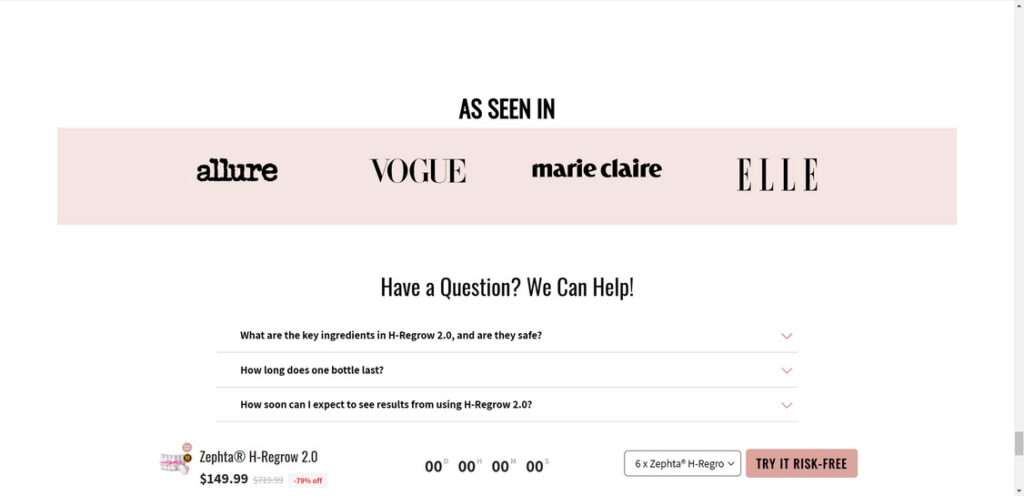
- Countdown timer for a “limited time offer”
- Constant pop-ups about “only X bottles left!”
- Buy 1, get 1 free promotions
- Free shipping and 90-day returns
While enticing, these tactics can pressure customers to purchase quickly without properly vetting the company and product first. Creating false urgency and scarcity is a common sales ploy to drive impulse buying.
Concern #4: Unrealistic Timeline for Results
Zephta claims users can expect to see dramatic hair regrowth and thickening after using the product for just 3 weeks. However, legitimate medical experts agree that typical hair growth takes months, not weeks.
Promising such fast results is unrealistic. When those immediate changes don’t happen as claimed, customers will likely feel disappointed and misled. This again indicates misleading marketing with exaggerated claims.
Concern #5: Reviews Appear Fabricated, Not Independent
Zephta’s website has pages and pages of glowing 5-star reviews. However, a search for “Zephta H-Regrow reviews” turns up no independent verification of these claims. There are no reviews on third-party sites like TrustPilot or social media.
Digging deeper, many of the before/after photos in Zephta’s reviews appear copied from other websites. This adds to doubts that these are authentic experiences from real customers.
Without unbiased reviews, there is no way to truly substantiate quality and results. The lack of transparency implies the reviews could be fabricated as a persuasion technique.
Summary of Red Flags
In evaluating the numerous claims made by Zephta H-Regrow 2.0 against the concerns raised, there are clear reasons for caution:
- No evidence for FDA approval, safety and efficacy testing
- Misuse of stock photos and fake doctor endorsements
- Pressure sales tactics and false scarcity
- Unrealistic claims about rapid results
- Reviews seem falsely manufactured, not independent
Taken together, these factors indicate Zephta H-Regrow 2.0 may ultimately be an unreliable product backed by misleading advertising. Consumers are best advised to carefully vet hair growth products and consult real doctors before purchasing.
While natural hair regrowth solutions do exist, exaggerated claims and lack of transparency are red flags. Approach offers that seem too good to be true with healthy skepticism. Look for trustworthy brands with independent testing and certifications to support any claims made in their marketing.
For individuals suffering from losing hair or thinning, work with licensed dermatologists and trichologists to find science-backed, proven treatments tailored to your specific needs. Although it requires more patience and care, this path will lead to healthy, long-lasting results over any overnight miracle cure.
Frequently Asked Questions
To further help consumers make informed decisions about Zephta H-Regrow 2.0, here are answers to some common questions:
What is Zephta H-Regrow 2.0?
It is a hair regrowth serum made from botanical extracts, amino acids and antioxidants. The manufacturers claim it quickly thickens hair, stimulates regrowth, and blocks DHT.
How is Zephta H-Regrow 2.0 used?
According to the website, apply 1 mL to clean, dry hair and scalp twice daily. Massage gently until fully absorbed. For best results, use for at least 90 days.
What ingredients are in Zephta H-Regrow 2.0?
The website does not provide a clear ingredients list. However, they state the formula contains saw palmetto, ginseng, biotin, coconut oil along with vitamins, minerals and amino acids.
How quickly will I see results using Zephta H-Regrow 2.0?
The company claims dramatic results within 3 weeks. However, realistically healthy hair growth takes 2-4 months for evidence of new regrowth. Results will also depend on individual factors like hair type and degree of shedding or loss.
Does Zephta H-Regrow 2.0 really work?
While some ingredients may provide mild benefits, there is no independent proof that this formula delivers significant or quick hair regrowth as advertised. The dramatic before/after photos shown are dubious. Exercise caution when considering this product.
Is Zephta H-Regrow 2.0 safe?
Without access to complete ingredients and FDA oversight, the safety cannot be confirmed. Apply any topical products with care and discontinue use if irritation occurs. Consult a doctor before trying any hair regrowth products while pregnant or breastfeeding.
Where is Zephta H-Regrow 2.0 sold?
Zephta H-Regrow 2.0 is currently only available through the company’s website. It is not sold in stores. Beware of any resellers offering counterfeit versions.
The Bottom Line
When a hair loss product sounds too good to be true, it likely is. Zephta H-Regrow 2.0 makes bold claims not sufficiently backed by evidence or independent testing.
Consumers are cautioned to carefully research options, consult doctors, and avoid emotional impulse purchases. Seek out trustworthy solutions, not overnight miracles. With realistic expectations and patience, healthy hair regrowth is certainly possible.








