


A small metal fork promises something much bigger than a pleasant sound: relief from pain, better circulation, and a body brought back into balance.
Sold as a 128Hz healing instrument, it comes with scientific-looking numbers and medical reassurance. The important question is what those promises actually rest on.
Overview
The product is a weighted tuning fork
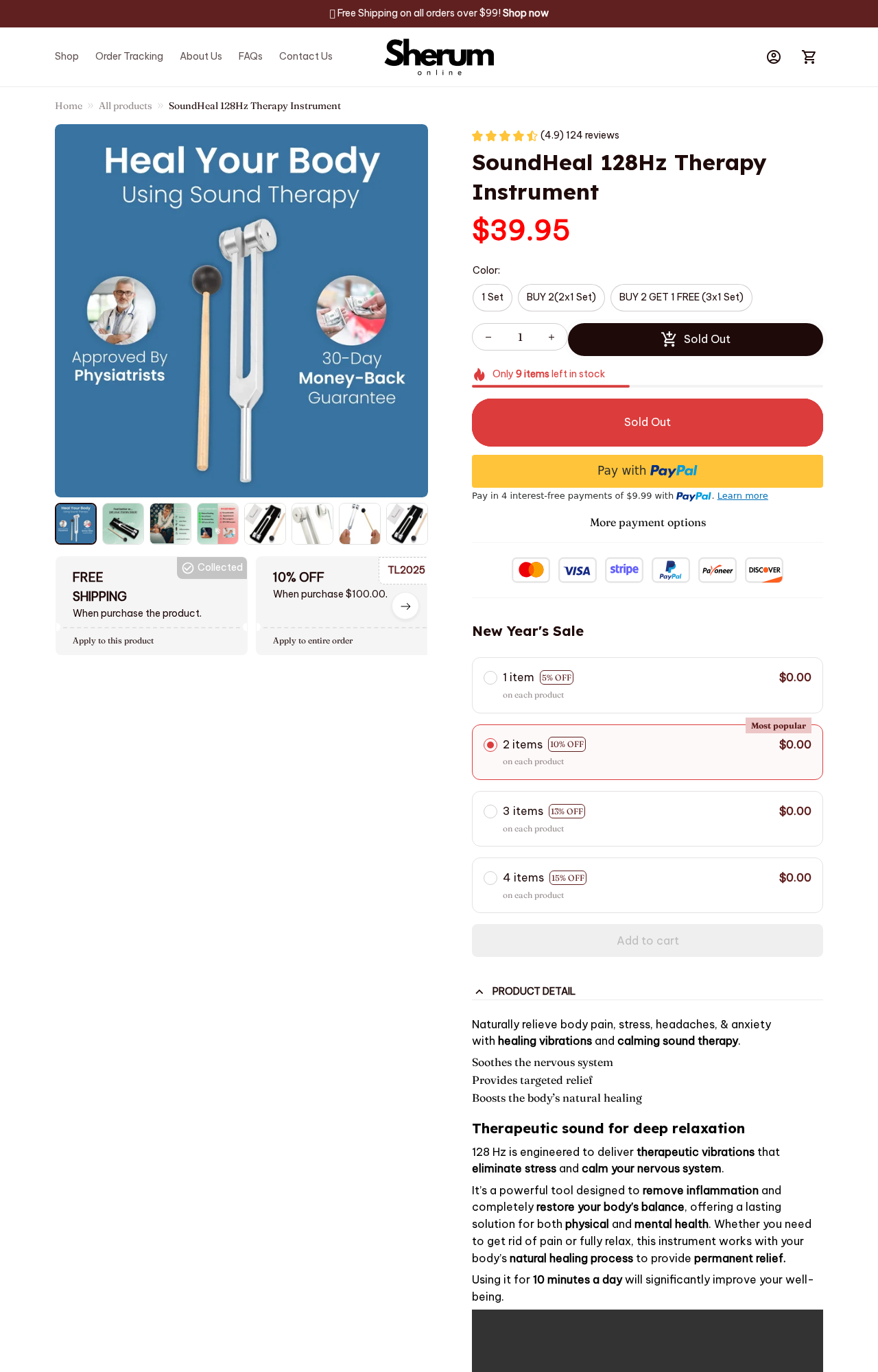
The current ToneTherapy, CoveFinds, and SoundHeal offers show a familiar physical instrument: a two-pronged metal fork with weights, a handle, and a separate mallet.
It vibrates when struck. That real sensation helps explain the appeal, but it isn’t evidence that the instrument removes inflammation or delivers lasting medical relief.
These are separate storefront offers for the same general product type. Matching photographs or descriptions don’t establish one manufacturer, identical delivered units, or common ownership.
The advertising goes well beyond relaxation
The pages connect 128Hz vibrations with pain, circulation, nervous-system balance, and healing. SoundHeal goes further, presenting a permanent-relief percentage beside claims about clinical research.
Its percentage footnote describes a customer survey. That’s a different kind of evidence from a controlled trial showing a treatment works.
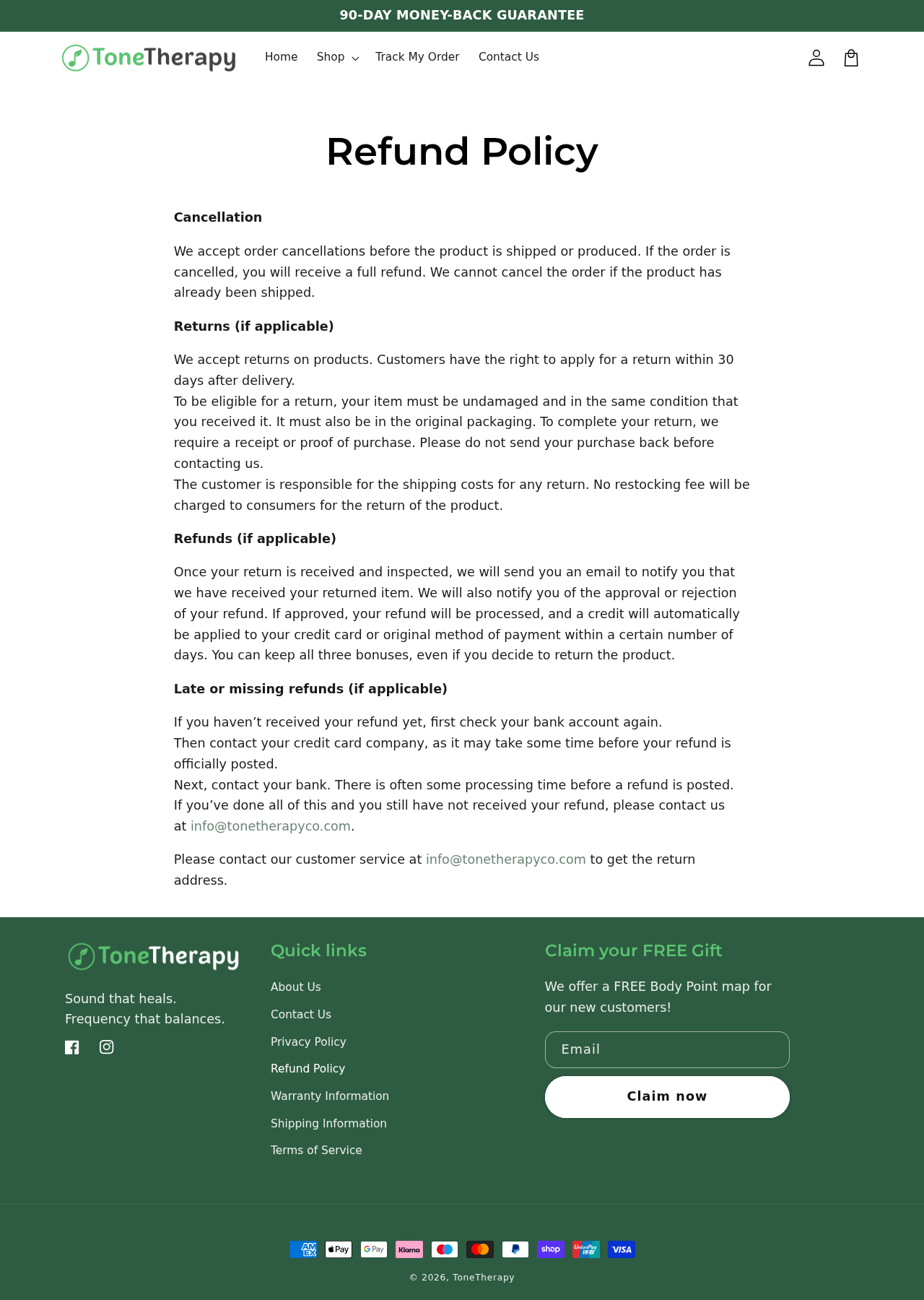
ToneTherapy adds a practical purchase problem: its refund page displays a 90-day guarantee above terms giving customers 30 days after delivery to request a return.
Don’t buy a medical promise disguised as a simple wellness purchase
Don’t purchase these offers as treatments for persistent pain, nerve problems, inflammation, or another medical condition. Their sales pages haven’t established those outcomes for these products.
You may enjoy a sound or vibration without experiencing the medical change suggested by an advertisement. Keep those two expectations separate before spending money.
- A real vibrating instrument isn’t automatically a proven treatment.
- A customer survey doesn’t establish permanent pain relief.
- A white coat doesn’t identify a clinician who recommends the product.
- Research on another intervention can’t validate every device involving vibration.
- A refund banner needs to agree with the actual return terms.
What a 128Hz Tuning Fork Actually Does
A tuning fork produces mechanical vibration and sound. Its two prongs move as the instrument rings, and vibration can also travel through its stem.
Penn State’s acoustics explanation describes that movement. Nothing mysterious needs to happen for a struck fork to produce a noticeable sensation.
The 128Hz label specifies an advertised frequency, not the number of conditions the product can treat. The retail units haven’t been independently measured here.
Clinicians also use tuning forks in examinations. A 128Hz instrument can help assess vibration sensation, including in research on screening for diabetic neuropathy.
That use asks whether a person can detect vibration. It doesn’t show that applying the instrument repairs damaged nerves or treats the cause of numbness.
Nor should a retail fork become a home diagnostic shortcut. A reassuring sensation doesn’t rule out an underlying condition, and missing sensation needs proper assessment.
The marketing leap comes when a physical effect becomes a medical conclusion. Feeling something is immediate; demonstrating durable improvement requires a different standard of evidence.
That distinction also matters with electronic frequency generators such as Calminity. Those are different devices, not proof that these forks share an operator.
The Permanent-Relief Percentage Isn’t a Clinical Trial
SoundHeal’s product page invokes medical professionals and years of clinical trials. Its graphic also presents approval by physiatrists, alongside a doctor image.
The page doesn’t name those approving clinicians or identify a product-specific trial readers can examine. A portrait cannot supply either missing detail.
The sales copy then says 92% of customers experienced permanent pain relief after more than 14 days of use.
The small print attributes the displayed statistics to a survey of the first 1,000 users. That describes customer responses, not a randomized comparison.
To support permanent relief, readers would need to know how pain was measured, how long participants were followed, and what happened to people who stopped responding.
A survey can capture satisfaction or perceived comfort. It cannot, by itself, separate the instrument’s effect from other treatment, changing symptoms, or expectations.
The same page encourages choosing sound therapy over harmful medications. Don’t let that framing turn an unsupported retail promise into a reason to abandon prescribed care.
ToneTherapy’s page makes its own broad claims, including improved circulation, accelerated healing, and relief targeting joints, muscles, and nerves. Those claims also need product-specific support.
A percentage looks precise because it has a number attached. Precision in the advertisement isn’t the same thing as reliability in the underlying evidence.
What the Actual Studies Can and Cannot Tell You
Combined sound sessions aren’t a test of this fork alone
A 2026 randomized study involved 46 university students with mild psychological distress. Its intervention combined singing bowls, tuning forks, and magnetic meridian massage.
The researchers reported improvements compared with calming music or an audio story. But several components changed together, so the fork’s individual contribution wasn’t isolated.
The study doesn’t establish that a retail 128Hz fork produces permanent pain relief. It tested a different program in a specific group of participants.
An exercise study has important reporting problems
A 2025 low-back-pain paper compared exercise with exercise plus tuning-fork therapy over four weeks. Its authors reported better results for the combined approach.
The paper describes 60 participants, divided equally between groups, but its printed results tables list 120 for each group. That discrepancy needs explanation.
The methods don’t specify the fork’s frequency or retail model. The authors also acknowledge there was no long-term follow-up to establish durability.
This is therapeutic research, so saying tuning forks have never been studied as therapy would be wrong. It still doesn’t establish the advertised product’s permanent-relief claim.
A powered massage device isn’t interchangeable with a hand-struck fork
A headache pilot study tested a battery-operated Rezzimax massage device with an attachment. Its stated operating range was 20–120Hz.
That isn’t the manual weighted 128Hz fork pictured in these offers. The manufacturer-supported study reported improvements but called for larger research and noted limited follow-up.
Promising findings about that apparatus cannot simply be transferred to another instrument because both involve vibration. The delivery method and treatment program matter.
NCCIH discusses potential benefits from music-based interventions, including some pain outcomes. That isn’t an endorsement of every sound-healing product or frequency claim.
The fair conclusion isn’t that sound can never help anyone. It’s that these particular advertising promises outrun the evidence presented for the instruments being sold.
A useful answer to the clinical-trial claim would identify the tested model, the participants’ condition, the comparison treatment, and the actual published results.
The follow-up period matters especially here. A report about feeling better shortly after a session cannot establish that pain has disappeared permanently.
So does the outcome being measured. Less self-reported discomfort, repaired nerve function, lower inflammation, and improved circulation are different findings, not interchangeable descriptions of healing.
Ask for the publication or trial identifier before treating a sales percentage as medical evidence. A general article about sound doesn’t answer that product-specific question.
ToneTherapy also presents natural healing without side effects. That broad reassurance isn’t an individualized safety assessment or evidence that an instrument suits every symptom.
You don’t need to prove the fork is physically dangerous to reject an unsupported treatment promise. The purchase can be unsuitable because the expected benefit isn’t established.
The Storefronts, Support Trail, and Refund Catch
Product names don’t identify a verified manufacturer
ToneTherapy sells its instrument at tonetherapyco.com. The SoundHeal offer appears on sherumonline.com, while CoveFinds uses a product title that also mentions Tone Therapy.
Those names and listings identify sales presentations. They don’t establish where every unit was manufactured or which factory supplied a specific order.
Keep the merchant on your receipt attached to your purchase. Another store selling a similar fork isn’t automatically responsible for your payment or return.
A shared support address is a connection, not a complete ownership map
The SoundHeal and CoveFinds pages publish support@shops-support.net. Their product descriptions also repeat several themes about healing, circulation, and bodily balance.
That shared support route is worth recognizing when comparing offers. It doesn’t independently identify the legal owner of either storefront or prove all products are identical.
A U.S. mailing address in a footer doesn’t establish a factory location or the destination for your return. Obtain the actual instructions for your order.
ToneTherapy’s 90-day banner meets a 30-day return policy
ToneTherapy’s refund page displays a 90-day money-back banner. The policy beneath it gives customers 30 days after delivery to apply for a return.
It requires an undamaged item in its original condition and packaging. Customers pay return shipping and must contact support before sending anything back.
The page tells buyers to request the return address by email. It doesn’t publish that destination, so the return’s cost can’t be established from this policy alone.
A defect warranty doesn’t guarantee a medical result
ToneTherapy separately describes a one-year limited warranty for eligible physical products. It covers defects in materials, workmanship, and malfunctions under normal intended use.
That isn’t the same as promising pain relief. A fork may vibrate as designed while failing to meet the health expectation that led you to buy.
If that happens, preserve the actual advertisement and satisfaction promise. Describe the purchase accurately instead of assuming a hardware warranty addresses an unfulfilled medical claim.
Why This Is More Than an Ordinary Relaxation Purchase
A shopper looking for a pleasant sound can compare instruments as leisure products. A person seeking relief from chronic symptoms is making a different decision.
The second buyer may postpone assessment, buy extra sets, or continue waiting for a permanent improvement the advertising makes sound predictable.
Medical-looking graphics and confident percentages can blur that distinction. They create an impression of a tested treatment without providing the evidence needed to support it.
That is why these offers shouldn’t be recommended as medical solutions. A soothing experience doesn’t justify a claim about inflammation, nerve recovery, or lasting pain resolution.
Don’t use a sales page’s body-point chart as a substitute for individualized advice. An unexplained symptom needs assessment, not an experiment designed by a checkout funnel.
Likewise, a return guarantee doesn’t establish safety or effectiveness. It describes a possible financial remedy, and that remedy has its own conditions and deadlines.
What to Do If You Bought a 128Hz Healing Instrument
-
Keep medical decisions separate from the purchase.
Don’t stop prescribed treatment or delay assessment because a page promises natural healing. Show the actual claims to your clinician if they influenced your decision.
-
Save the offer and the terms immediately.
Keep the product page, medical promises, guarantee, receipt, order quantity, total, and confirmation. Record which storefront took the payment rather than just the instrument’s name.
-
Request cancellation or a return through that merchant.
For ToneTherapy, don’t wait beyond the policy’s shorter 30-day window while assuming the banner settles it. Ask in writing which promise covers your order.
The published policy uses info@tonetherapyco.com for return instructions. Buyers at other stores need their own order’s contact route, not that unrelated mailbox.
-
Get the destination and postage responsibility before shipping.
Ask for written authorization, the complete return address, and any packaging requirements. Keep the parcel and receipt until you understand the process.
Compare the policy supplied at purchase with the answer you receive. Don’t assume every seller uses the same clock or accepts a return without approval.
-
Describe any mismatch precisely.
Photograph the received instrument, packaging, and included instructions. Distinguish missing parts, physical damage, an incorrect item, and an advertised outcome that wasn’t delivered.
That distinction helps support or a payment provider understand the complaint. You don’t need to invent a laboratory failure to explain a misleading purchase promise.
-
Escalate an unresolved payment dispute promptly.
Contact your card issuer or payment service through its genuine channels. Provide the saved claim, terms, receipt, correspondence, and any return tracking.
Ask about applicable dispute deadlines and evidence requirements. A seller’s slow response doesn’t stop a provider’s clock, and a refund isn’t guaranteed.
Frequently Asked Questions
Is the 128Hz healing instrument a fake physical product?
The offers show a real type of weighted tuning fork. The concern is the leap from vibration to broad medical claims, not an assertion that forks don’t exist.
Can a pleasant vibration prove that the instrument is healing me?
No. A sensation or moment of comfort doesn’t establish reduced inflammation, repaired nerves, or permanent relief. Those outcomes require appropriate evidence and medical assessment.
Do the SoundHeal percentages come from a clinical trial?
The page attributes its displayed percentages to a user survey. It doesn’t identify a controlled product trial supporting its permanent-pain-relief percentage.
Has tuning-fork therapy ever been researched?
Yes, including small studies and combined interventions. Their existence doesn’t validate every retail fork or establish the permanent results claimed in these offers.
Does ToneTherapy give me 90 days to request a return?
The page’s banner says 90 days, but the policy specifies 30 days after delivery for a return request. Seek written clarification and preserve both statements.
Are ToneTherapy, CoveFinds, and SoundHeal the same company?
That hasn’t been established. SoundHeal and CoveFinds share a published support mailbox, but shared support and similar products aren’t a complete ownership record.
The Bottom Line
Don’t buy a 128Hz healing instrument through these offers as a medical treatment. Their permanent-relief and healing promises aren’t established for the retail forks pictured.
If you already ordered, preserve the claims and start the appropriate cancellation or return promptly. Keep genuine health care separate from a seller’s percentage or guarantee.

Join the discussion
0 commentsShare your experience or ask a question about this article.
Discussion
Start the conversation
Have a question or something useful to share? Add the first comment.