

In today’s digital age, nostalgic Polaroid instant cameras and photo booths have made a huge comeback. Who doesn’t love capturing spontaneous moments with friends and family and having a printed photo right away? Unfortunately, scammers are taking advantage of people’s desire for fun, portable photo booths by luring victims with fake Facebook ads for a “$31.92 Polaroid At-Home Photo Booth”.
This convincing scam works by baiting people to click on an ad for an unbelievably cheap Polaroid photo booth. However, once you visit the scam website and purchase the product, you’ll never receive anything. At best, victims receive a cheap product that doesn’t match the advertised photo booth. This article will provide an in-depth overview of how the $31.92 Polaroid photo booth scam works, how to avoid falling victim, and what to do if you already placed an order.
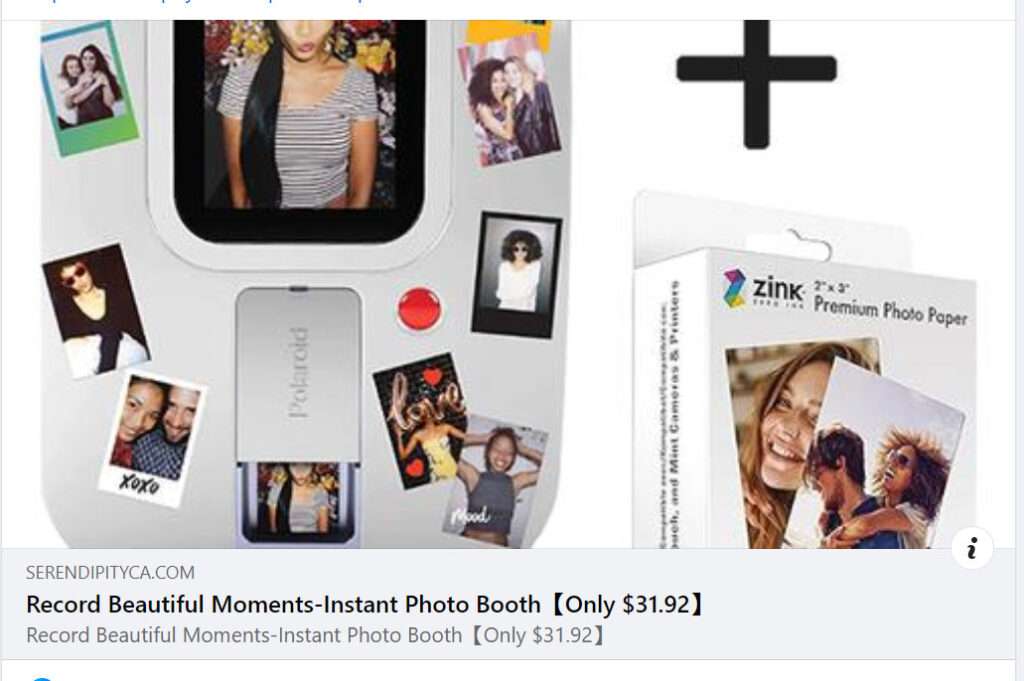
Overview of the $31.92 Polaroid Photo Booth Scam
The $31.92 Polaroid photo booth scam is a prime example of too good to be true. Scammers create authentic looking Facebook ads for a high-quality Polaroid photo booth at the unbelievable price of $31.92.
The polished ad copy describes features like a touch screen monitor, internal storage, photo editing capabilities, zero-ink printing technology, ring light, tilting camera, and wi-fi connectivity. For anyone familiar with the cost of photo booths, $31.92 seems impossibly cheap.
The savvy scammers know that the tempting price point and nostalgia factor of an instant photo booth will lure many victims to their websites. However, once purchases are made, customers either receive nothing or a cheap knockoff product.
By the time victims realize they’ve been scammed, the fake websites are taken down. With no legitimate contact information, it’s almost impossible to reach the scammers or recover lost money.
What Does the Facebook Ad Look Like?
The Facebook ad for the $31.92 Polaroid photo booth has a specific formula to catch people’s attention. Here are some key features of the scam ad:
- Headline with 👍 and ✅ emojis such as “👍Anytime is a great time for taking selfies with the Polaroid At-Home Photo Booth.”
- Detailed bulleted list describing unbelievable product features like wi-fi connectivity, augmented reality filters, Zero Ink printing technology, and more.
- Fake reviews and comments showing supposed social proof like “This is amazing!” or “Just ordered mine!”.
- Scarcity tactic saying “Only $31.92 Today Polaroid At-Home Photo Booth”.
- Professional looking images of a family or group of young people laughing and taking photos with the booth.
- Direct link to the scam website to purchase the product.
The polished ad looks trustworthy and plays into people’s desire for nostalgia. But it’s all an elaborate ploy to trick victims and steal their money.
How the $31.92 Photo Booth Scam Works Step-by-Step
Now that you know what the Facebook ad looks like, let’s break down exactly how the $31.92 Polaroid photo booth scam works to steal money.
Step 1: Scammers Create Convincing Facebook Ads
The scammers put a lot of effort into creating authentic looking Facebook ads. They include persuasive copy, fake reviews, impressive product images, and an unbelievable price. The ads target people who are nostalgic for vintage photography and want a fun photo booth for capturing memories with loved ones.
Step 2: Victims Click the Ad and Visit the Scam Website
When potential victims click on the Facebook ad, they are taken to the scammer’s website. The site continues the convincing facade with more details about the photo booth’s features, benefits, and unbelievable price.
The site looks fully legitimate with a polished design, product photos, order form, and standard policies like shipping, returns, and privacy policy. But it’s just a phony storefront set up to steal credit card information.
Step 3: Victims Purchase the $31.92 Photo Booth
To complete the purchase, victims must enter their credit card or payment details into the website order form. This gives the scammers what they ultimately want – payment information and money.
The website will likely use all the standard cues to look trustworthy like Secure Socket Layer (SSL) encryption, Norton Secured trust badges, or a green address bar. But it’s an act to make victims comfortable entering sensitive data.
Step 4: Scammers Disappear with the Money
Victims won’t realize they’ve been scammed until it’s too late. After submitting payment, the website will likely show a confirmation message that the Polaroid photo booth is being shipped.
But in reality, scammers have already taken the money and disappeared. They delete the website after enough victims make purchases.
Weeks later when no product arrives, victims try to visit the site again only to find it gone. Emails to the company also bounce back undelivered. There is no way to recover the money or reach the scammers.
Step 5: Victims Receive Nothing or a Cheap Knockoff
Most victims of the $31.92 Polaroid instant photo booth scam are unlucky enough to receive absolutely nothing after being duped. The scammers take the money and run.
However, some victims eventually receive a cheap sub-par product in the mail that doesn’t match the advertised photo booth. It may be a low-quality instant camera or small portable photo printer.
Either way, victims are out the money with no way to return the product or be compensated.
Warning Signs of the Polaroid Photo Booth Scam
While the Facebook ads look incredibly convincing, there are some subtle warning signs to watch out for. Here are 8 red flags you may notice:
1. Unbelievably low price – A highly advanced instant photo booth for under $50 is too good to be true. Legitimate products with these features would cost over $150 at a minimum.
2. High-pressure tactics – Tactics like “limited time offer” or “only 5 left!” pressure people to buy without careful consideration.
3. No seller information – No phone number, physical address, or company history should make you suspicious.
4. Newly registered domain – Scam sites use new domains registered recently to avoid detection. Real companies have older, established sites.
5. Generic stock images – Low-quality generic stock photos suggest an inauthentic seller.
6. Grammatical errors – Sloppy writing mistakes indicate a scammer didn’t put much effort into the site.
7. No SSL encryption – Lack of “https” or a lock icon means entering payment info is risky.
8. Too-good-to-be-true reviews – Overly positive reviews with no critical feedback are likely fake.
Paying attention to these red flags can help you detect and avoid the $31.92 Polaroid photo booth scam.
How to Spot This Scam on Facebook
Facebook’s massive user base makes it a prime platform for scammers to promote fake deals like the $31.92 Polaroid photo booth. Here are tips to detect this scam on Facebook:
- Scrutinize Facebook ads – The scam ad will likely appear in your News Feed or on the right column. Read carefully and look for exaggerated claims, emojis, glowing reviews, and urgency cues saying “Hurry, sale ends today!”. Always research unfamiliar companies.
- Check the Page transparency – Click on the Page name in the ad and check transparency details. Scam Pages often have no history, contact info, or location listed. Legit businesses have detailed Pages going back years.
- Look for comments exposing the scam – On the Facebook ad or Post itself, look for comments from other users warning that it’s a scam. Often previous victims will comment “this is fake!” or “I never got my order”.
- Visit website links cautiously – Don’t click suspicious links in ads or Posts promising unbelievable deals. Type the company name directly in your browser to avoid being redirected to a scam site.
- Research consumer complaints – Search for the company name along with words like “scam”, “fake”, or “complaint” to uncover stories from unhappy customers. Scam companies generate multiple complaints.
Stay vigilant when shopping on Facebook. If an ad seems too good to be true, it probably is. Take time to thoroughly research companies, examine Page transparency details, and visit website links with caution. Trust your instincts if something seems “off” to avoid being the next victim of the Polaroid photo booth scam.
How to Detect This Scam on Instagram
Here are tips for spotting the $31.92 Polaroid photo booth scam on Instagram before getting ripped off:
- Check account details – Click on the Instagram account name running the ad. Scam accounts often have zero Posts, no Profile info, and very few followers.
- Look for obvious stock images – Scammers use generic, low-quality stock photos of smiling models using the photo booth. Real companies showcase custom branded images.
- Watch for urge to “swipe up” – Scam ads pressure viewers to “swipe up” on Instagram Stories or click links urgently before a sale ends. Don’t fall for high-pressure tactics.
- Read comments – Scroll down and read the comments on Instagram ads. You’ll often see people complaining “ordered 6 weeks ago, still never received it”.
- Search company name + scam – Search for the company name plus words like “reviews”, “complaints”, or “scam” to uncover negative experiences. Numerous bad reviews indicate fraud.
- Beware unbelievable prices – No legitimate Polaroid photo booth would ever really cost just $31.92. Unusually cheap prices are a dead giveaway of a scam.
Apply extra scrutiny to Instagram ads promoting unbelievable deals. Check account details, read comments, inspect images, and research the seller thoroughly before buying to avoid scams.
How to Spot This Scam on TikTok
Scammers also leverage TikTok using videos and clever tactics. Here’s how to detect the $31.92 Polaroid booth scam on TikTok:
- Analyze video content – Scammers use stock videos or stolen content showing happy people using the photo booth. Legit sellers have custom branded videos.
- Check user profiles – Tap on the account running the scam ad. Fraudulent accounts have few followers, no user details, and zero content of their own.
- Avoid clicking direct links – Discount codes or links in Bios, comments or captions often lead to shady sites. Only buy from links in verified account Bios.
- Watch out for “limited deals” – Like Instagram, scam TikTok ads emphasize urgency like “24 hours left for this price!”. Disregard limited time offers from unknown sellers.
- Read comments – Scroll down and read comments on scam ads or videos. You’ll see angry remarks like “I got ripped off!” that expose the fraud.
- Research online reviews – Search for the seller and “reviews” online. Lack of reviews or numerous negative experiences should raise red flags.
- Check BBB site – Look up the company on BBB.org to read if there are alerts, reviews or complaints filed with the Better Business Bureau.
Be extra vigilant about tempting deals promoted on TikTok. Thoroughly vet sellers, analyze video content, avoid clicking direct links, and read comments to detect red flags before buying.
What to Do if You Already Ordered the $31.92 Photo Booth
If you visited one of the $31.92 Polaroid photo booth scam websites and submitted an order, here are the key steps to take:
Act Quickly
Time is critical after realizing you’ve been scammed. The sooner you take action, the better chance you have of reversing payments and stopping additional fraud.
Contact Your Credit Card Company
Call your credit card company’s fraud department right away. Report the charges as fraudulent so they can start an investigation and potentially reverse the charges.
Report the Scam Website
Look up the website on Whois.com to find the domain registrar. Contact them to report the scam website so they can potentially take it down to prevent more victims.
Change Passwords
If you used the same password on the scam website as other accounts, change it immediately. Scammers may try to gain access to your email, Amazon, or other accounts.
Place Fraud Alert
Consider placing a fraud alert with credit bureaus like Equifax, Experian, and TransUnion so they closely monitor your reports for any suspicious activity.
Monitor Statements
Keep a close eye on your financial statements for any unauthorized charges. Sometimes scammers charge additional small amounts hoping victims won’t notice.
Learn From Mistakes
Understand what red flags or instincts you overlooked so it doesn’t happen again. Use scam education resources to hone your ability to detect online fraud.
Spread Awareness
Share your experience on social media or with friends and family to prevent others from falling for the Polaroid photo booth scam.
Frequently Asked Questions About the $31.92 Polaroid Photo Booth Scam
Many people have questions about the too-good-to-be-true $31.92 Polaroid photo booth scam circulating on social media. Here are answers to some of the most frequently asked questions.
What makes the $31.92 Polaroid photo booth deal a scam?
The unbelievable price point is the biggest red flag. Legitimate instant photo booths with the advertised features would cost over $150 minimum. The scam ads also use fake reviews, stock images, and other tactics to appear authentic. Once you order, you either receive nothing or a cheap knockoff product.
How are people targeted for this scam online?
Scammers run fake Facebook ads and Posts targeting people who may be nostalgic for vintage photography. The polished ads appear in News Feeds and convince people they’re getting an unbelievable deal on a fun photo booth. When people click to order, the scammers steal credit card details.
What happens after I order the $31.92 photo booth deal?
In most cases, absolutely nothing arrives after placing the order and you’re out the money. The scammers take your payment info and disappear. In some cases, victims receive a cheap, low-quality photo printer or camera months later that doesn’t match what was advertised.
What should I do if I was tricked by the $31.92 Polaroid photo booth scam?
Act quickly and contact your credit card company to report the charges as fraudulent so they can start an investigation and potentially reverse the charges. Also change any passwords you may have entered on the scam site and monitor financial statements closely for further unauthorized charges.
How can I get my money back after being scammed?
Unfortunately, it’s very difficult to get money back once scammers disappear with your credit card details. Your best option is contacting your credit card company immediately and requesting a chargeback. Under the Fair Credit Billing Act, credit card companies must investigate disputed charges for customers.
How do I report the $31.92 Polaroid photo booth scam ad or website?
Use Whois.com to look up the domain registrar and contact them to report the fraudulent website so they can potentially take it down. You can also report scam Facebook ads by clicking the three dots in the corner and selecting “Report Ad”.
How can I identify the $31.92 Polaroid photo booth scam on social media?
Look for too-good-to-be-true prices, high-pressure tactics, stock images, newly created accounts, and online complaints. A real Polaroid photo booth wouldn’t cost $31.92. Also search online for the company name plus words like “scam” or “complaint” to uncover stories from previous victims.
Are the photos and reviews in the $31.92 Polaroid photo booth ads real?
No, scammers use completely fake product photos and reviews in their ads to make the deal appear authentic. Photos are usually generic stock images. The overly positive reviews are completely fabricated as well. This is a major red flag that it’s a scam.
Is there any way for me to get a Polaroid photo booth at a discounted price?
Yes, but unbelievable prices like $31.92 are always a scam. Legitimate sellers like Amazon and Walmart sometimes offer discounts or coupons on Polaroid products, but the prices will still reflect a standard retail markup. Avoid offers that seem too good to be true.
Be wary of unbelievable deals and thoroughly research sellers to avoid losing money in online scams like the $31.92 Polaroid photo booth fraud. If an offer appears fake, it most likely is. Trust your instincts and don’t provide payment information on sketchy websites.
The Bottom Line
The $31.92 Polaroid instant photo booth scam tricks people by exploiting their nostalgic feelings and desire for fun printed photos on the go. Scammers put a lot of work into creating convincing Facebook ads and websites to steal credit card information and money from victims.
If an unbelievable deal seems too good to be true, it always is. Protect yourself by looking for subtle red flags, not providing payment information on suspicious sites, and acting quickly after a scam to limit damage. Share awareness so fewer people fall victim to this and other online scams spreading on social media.








