

If you’ve seen ads claiming you can make easy money as a “TikTok Trend Reviewer,” “Trend Evaluator,” or “TikTok Pay Reviewer,” be careful. These promotions are not official TikTok jobs. They are part of a growing task-scam model that uses fake dashboards, fake earnings, AI celebrity videos, and private group chats to convince victims to pay fees before they can “withdraw” money.
TikTok does have official creator monetization programs, but they have eligibility rules and are not random pay-to-watch-video jobs. TikTok’s own support pages describe creator programs tied to account eligibility and content performance, not instant cash for reviewing trends.
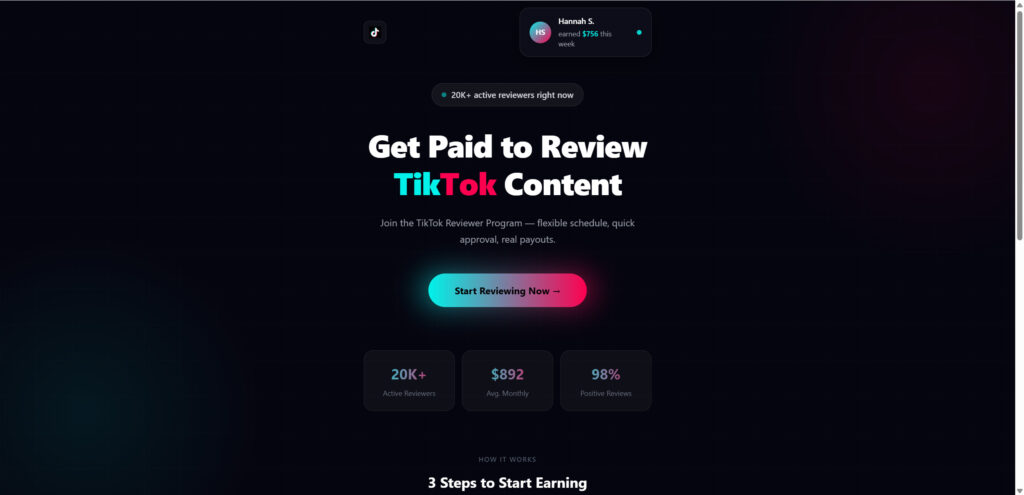
Scam Overview
The TikTok Pay Trend Reviewer scam is built around a tempting idea: regular people can supposedly get paid just for watching videos, reviewing trends, rating content, or completing tiny online tasks.
The ads are usually short, polished, and urgent. They often claim that TikTok is hiring everyday users for a new trend-review program. Some versions say you can earn $100, $300, or even more in minutes. Others show what looks like a live account dashboard with money already waiting.
The hook is simple: it looks easy, fast, and official.
To make the pitch more believable, scammers often misuse the TikTok name and style. They may use TikTok-like colors, fake logos, app-style pages, and social-media language that makes the offer feel connected to the real platform.
Some versions go further by showing AI-generated videos that appear to feature well-known celebrities or creators. Victims may see fake clips of Ariana Grande, Zach King, Charli D’Amelio, MrBeast, or other public figures supposedly promoting the opportunity.
Those endorsements are not real.
The voices, facial movements, and scripts are manipulated to create the illusion of legitimacy. The goal is not just to impress viewers. It is to lower skepticism quickly. If a familiar celebrity or creator appears to approve something, many people stop questioning it.
After clicking the ad, victims usually land on a simple website that claims they can start immediately. The page may show a fake account balance, such as $100 or more, before the person has done any real work. This is psychological bait. It gives the victim the feeling that money has already been earned.
Then the scam introduces the first payment.
Victims are told they must pay a small fee to unlock earnings, activate an account, buy a tool, access a VIP level, or continue with higher-paying tasks. The fee may be around $27, but the amount can vary. It may be described as a “Golden Tool,” “activation fee,” “verification upgrade,” or “premium access.”
This is the turning point. A real job pays the worker. It does not require the worker to pay first.
This scam has been also investigated by Jordan Liles on his YouTube channel, where he offers a detailed video on the subject. We recommend watching his content for a comprehensive understanding of the scam.
Next, let’s break down exactly how scammers carry out this scam from start to finish.
How the TikTok Pay Trend Reviewer Scam Works
1. The victim sees a convincing social media ad
The scam usually starts with an ad on TikTok, Facebook, Instagram, YouTube, or another platform. The video looks like a side hustle opportunity. It may say TikTok is paying people to review viral trends or evaluate videos.
Common claims include:
- “Get paid to review TikTok trends”
- “TikTok is hiring trend evaluators”
- “Earn hundreds per day watching videos”
- “No experience needed”
- “Withdraw instantly”
- “Limited spots available”
The ad is designed to feel urgent and low-risk. It does not look like a traditional scam because it is packaged as a modern remote job.

2. Fake celebrity endorsements build trust
Many versions use deepfake or AI-generated celebrity clips. These may appear to show famous creators explaining how the program works or claiming they personally tested it.
This is one of the most dangerous parts of the scam. AI-generated videos can look realistic enough to fool casual viewers, especially when the clip is short and edited in a fast social-media style.
The celebrity is not involved. The endorsement is fabricated.
3. The landing page shows fake earnings
After clicking, the victim is taken to a website that may immediately display a fake balance. The page might say the user has already earned money after answering a few questions or watching a short video.
This fake balance is intentional. It creates excitement and makes the victim feel they are close to receiving money.
The site may ask basic questions like:
- Do you use TikTok?
- How many hours per day do you watch videos?
- Are you over 18?
- Do you want to review trends part-time or full-time?
These questions are not real screening questions. They are part of the funnel.
4. The scam asks for a small upfront payment
Once the victim tries to withdraw or continue, the site introduces a fee. The scam may say the payment is needed to unlock the account, access a tool, verify identity, or upgrade to a payout tier.
This is where many victims lose their first amount of money.
The fee is often kept low enough to feel harmless. A $27 payment may not seem huge, especially if the dashboard claims the victim has already earned $100, $300, or more.
But the displayed earnings are fake.
5. Victims are moved into private group chats
After the first payment, the scam may move to WhatsApp, Signal, Telegram, Messenger, or another private channel.
Inside the group, victims see other users posting screenshots of earnings, withdrawals, and success stories. These people may appear supportive and excited.
In reality, many of those accounts are controlled by scammers.
The group creates social proof. It makes the victim think other people are making money, so the system must be real.
6. The victim is pushed to complete more tasks
The scam then becomes more layered. Victims are told to complete daily tasks, review content, click buttons, rate trends, or process fake assignments.
Each task appears to increase the balance.
This creates a trap: the more time the victim spends inside the system, the harder it becomes to walk away. They feel invested.
7. Withdrawal is blocked by new fees
When the victim tries to withdraw, the scam adds another condition.
They may be told to pay for:
- Account verification
- Tax clearance
- VIP access
- A withdrawal unlock
- Anti-fraud review
- Balance release
- Processing fees
- Commission upgrades
Each payment is presented as the final step. But after one payment, another demand appears.
The FBI has warned about work-from-home scams where victims are offered simple online jobs, shown fake earnings, and then pressured to send money to unlock or continue earning.
8. The scammers disappear or keep demanding money
Eventually, the victim either refuses to pay more or runs out of money. At that point, the scammers may block them, delete the group, shut down the website, or move the scam to a new domain.
The victim never receives the promised earnings because the earnings never existed.
Red Flags of the TikTok Pay Trend Reviewer Scam
Watch for these warning signs:
- The job promises high pay for very easy work
- The ad claims TikTok is paying random users to watch or review videos
- A dashboard shows money before any real work is done
- You are asked to pay before withdrawing earnings
- The site uses celebrity videos that feel oddly scripted or unnatural
- You are moved to WhatsApp, Signal, Telegram, or Messenger
- Group members post earnings screenshots to pressure you
- You are told to unlock VIP levels or tools
- The company has no verifiable official TikTok connection
- The website was recently created or uses a strange domain name
The biggest red flag is simple: you should never have to pay money to receive wages.
Is TikTok Pay Trend Reviewer Real?
No. The “TikTok Pay Trend Reviewer” or “TikTok Trend Evaluator” offer described in these ads is not a real official TikTok job.
TikTok does offer creator monetization options, but those programs are tied to creator eligibility, content requirements, and official TikTok systems. They are not random ads promising instant money for watching videos.
What To Do If You Fell for the Scam
- Stop paying immediately
Do not send another fee, even if they claim it is the final step. - Do not share more personal information
Avoid sending ID documents, bank details, card numbers, crypto wallet details, or login codes. - Contact your bank or card provider
Report the payment as fraudulent and ask whether a chargeback or dispute is possible. - Change passwords
If you created an account using a password you use elsewhere, change it immediately. - Block the scammers
Leave any private group chats and block the accounts contacting you. - Report the ads and websites
Report the ad on the platform where you saw it. You can also report fraud to the FTC or your local cybercrime authority. - Watch for recovery scams
Scammers may contact victims again claiming they can recover the lost money. These are usually scams too.
Is Your Device Infected? Run a Free Malware Scan
Slow performance, constant pop-ups, or strange behavior? These are classic signs of a malware infection. The fastest way to find out is to scan your device with Malwarebytes Free — one of the most trusted malware removal tools available.
The free version detects and removes the most common threats, including:
- Adware — the cause of those annoying pop-ups
- Browser hijackers — unwanted redirects and changed homepages
- Trojans and spyware — hidden programs stealing your data
- Potentially unwanted programs (PUPs) — software you never asked for
👉 Select your device below — Windows, Mac, or Android — then follow the simple steps to download Malwarebytes, scan your system, and remove any threats it finds. The scan usually takes 5 to 20 minutes.
Run a Malware Scan with Malwarebytes for Windows
Malwarebytes is one of the most popular and trusted anti-malware tools for Windows — and it’s completely free for removing infections. It catches threats that many antivirus programs miss, including adware, browser hijackers, and trojans. Follow the steps below to scan and clean your PC in just a few minutes.
Download Malwarebytes
Click the button below to download the latest version of Malwarebytes for Windows from the official source. The free version is all you need — it will scan your computer and remove adware, browser hijackers, and other malicious software at no cost.
Download MalwarebytesOfficial installer for Windows 11 and 10. Your download starts right away.Want real-time protection? See Malwarebytes Premium Malwarebytes Free for WindowsScans and removes malware at no cost
-
Install Malwarebytes
When the download finishes, open your Downloads folder and double-click the MBSetup file. If Windows shows a User Account Control pop-up, click “Yes” to allow the installation.
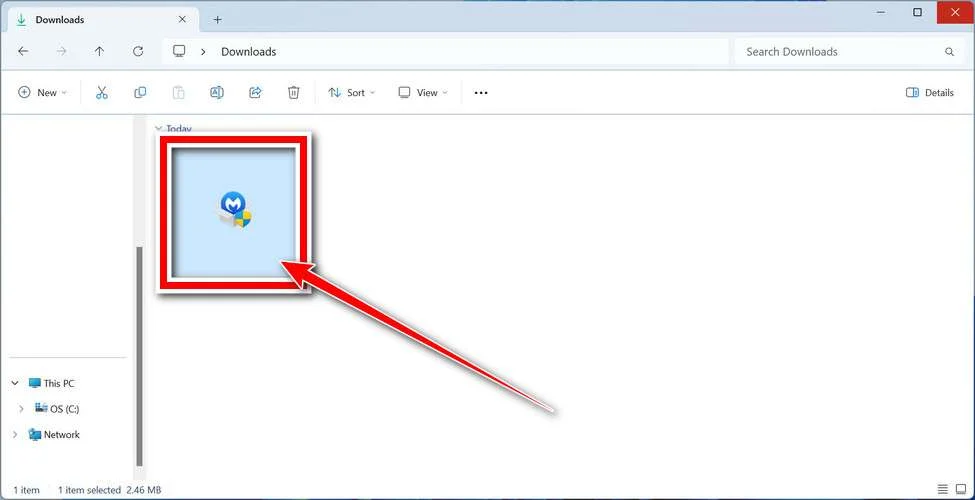
Follow the On-Screen Prompts to Install Malwarebytes
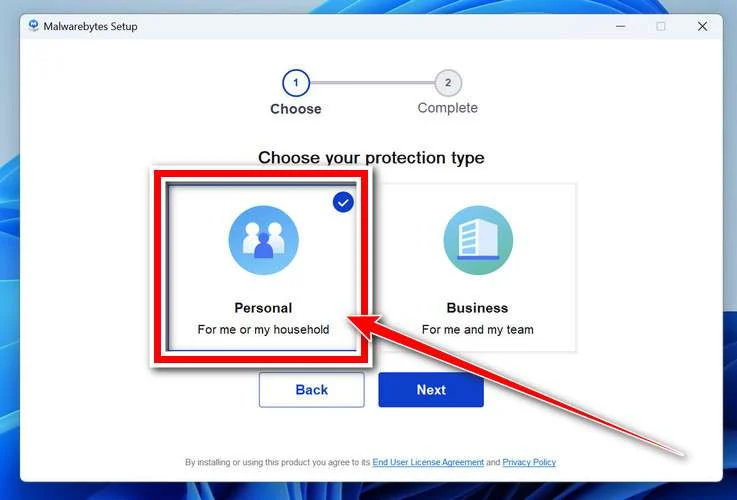
The setup wizard will walk you through a few quick screens:
-
Choose where you’re installing the program — “Personal Computer” or “Work Computer” — then click Next.
-
Malwarebytes will now install on your device. This usually takes under a minute.

-
When installation is complete, the “Welcome to Malwarebytes” screen will open automatically.
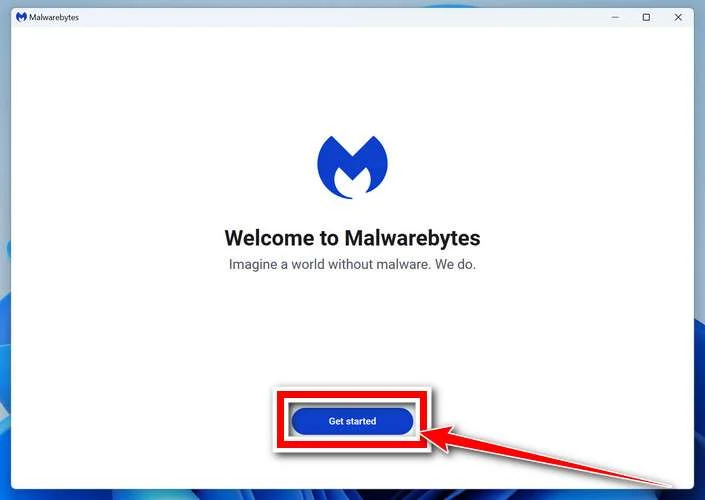
-
On the final screen, click Open Malwarebytes to launch the program.

-
Enable “Scan for Rootkits”
Before scanning, turn on rootkit detection so Malwarebytes can find even the most hidden threats. Click the Settings gear icon on the left side of the screen.
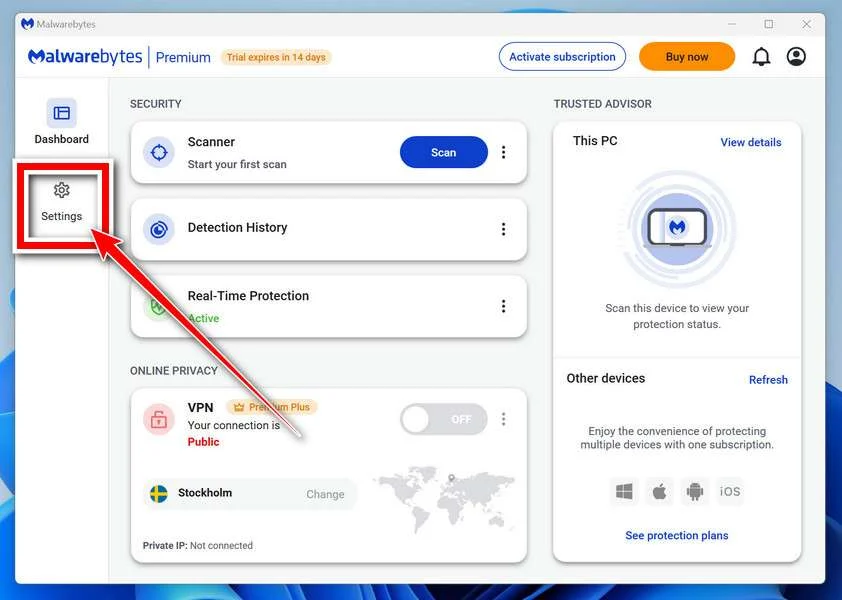
In the settings menu, find “Scan for rootkits” and click the toggle so it turns blue.

Done? Click “Dashboard” in the left pane to return to the main screen.
Start the Scan
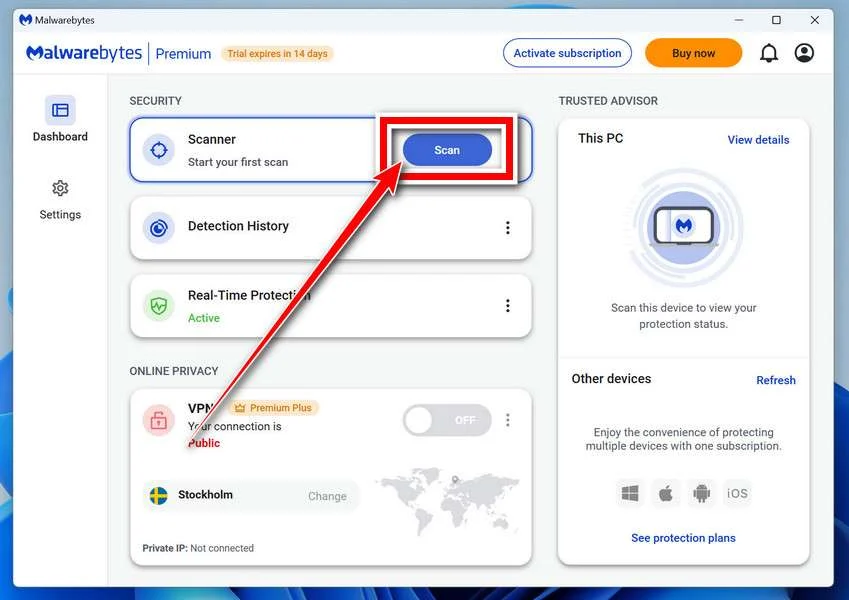
Click the blue Scan button. Malwarebytes will automatically update its virus database and start checking your computer for malware.
-
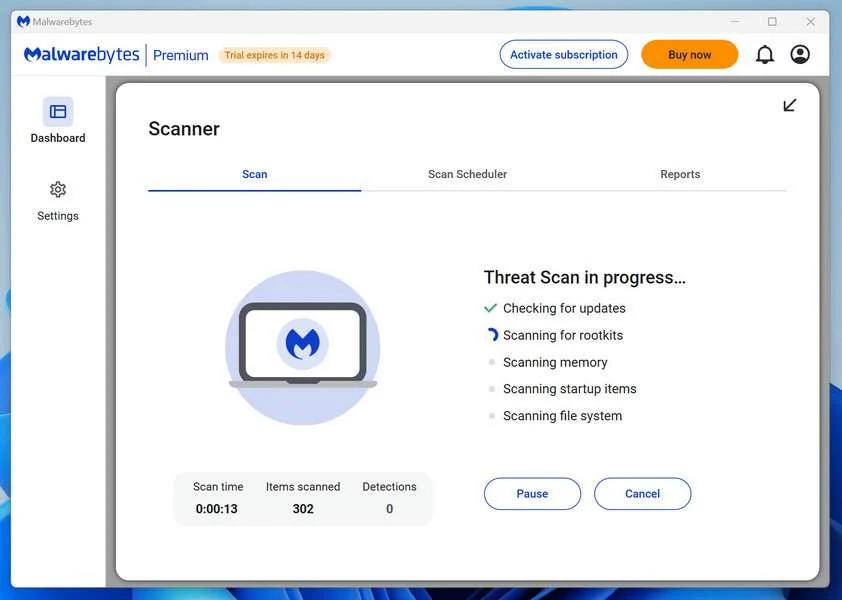
Wait for the Scan to Finish
The scan checks your entire system for browser hijackers and other malicious programs, so it can take 5 to 20 minutes depending on your computer. Feel free to do something else — just check back occasionally to see the progress.
-
Quarantine the Detected Threats
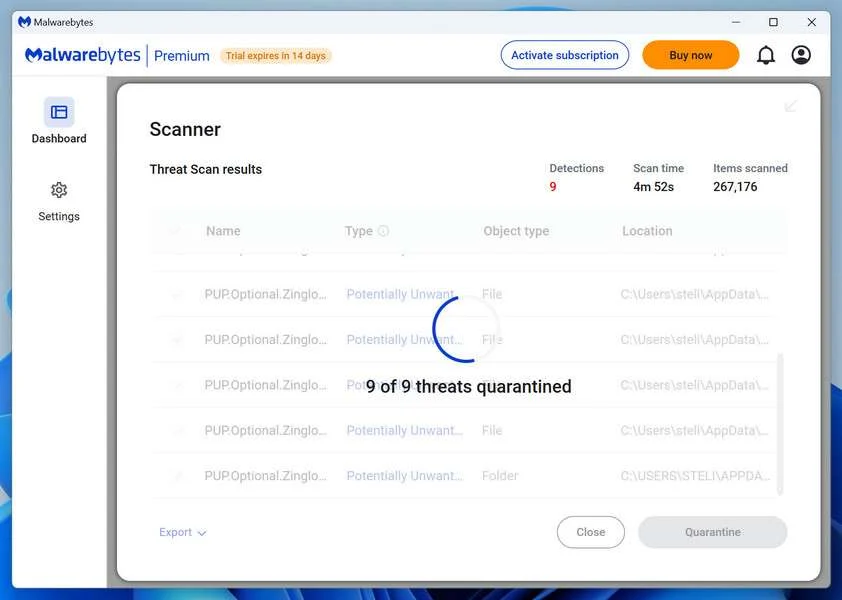
When the scan is done, you’ll see a list of everything Malwarebytes found — malware, adware, and potentially unwanted programs. Click the “Quarantine” button to remove all of them at once.
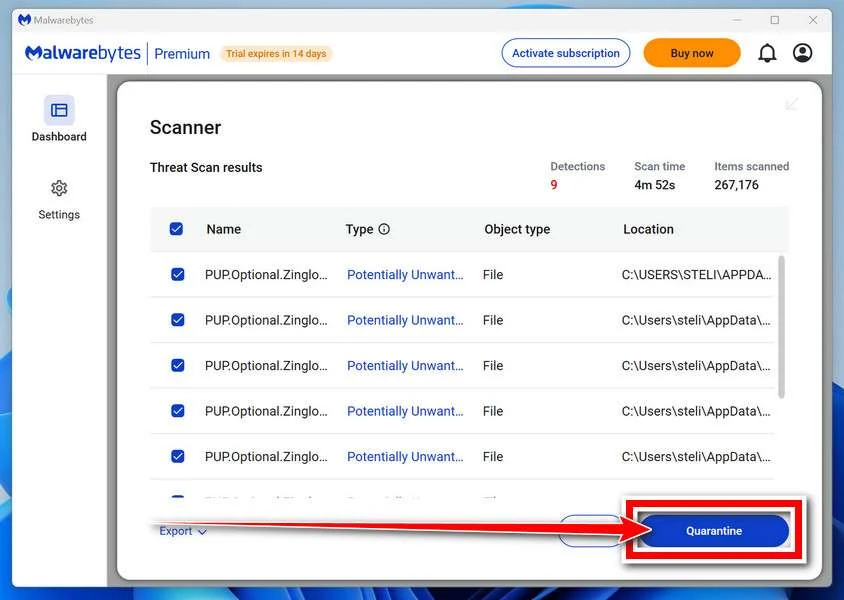
Malwarebytes will now remove the malicious files and registry entries and move them safely into quarantine.
-
Restart Your Computer
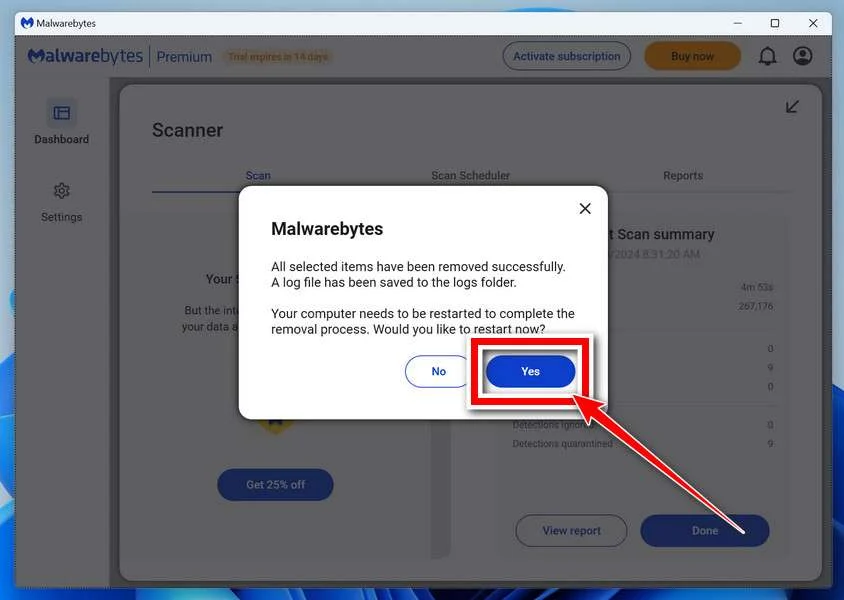
Some threats can only be fully removed after a reboot. If Malwarebytes asks you to restart, click Yes. Once you’re logged back in, Malwarebytes has finished removing the threats it found.
That’s it — your Windows PC is now clean of trojans, adware, and other malware, and should be back to running smoothly.
If you are still having problems with your computer after completing these instructions, then please follow one of the steps:
- Run a computer scan with ESET Online Scanner
- Ask for help in our Windows Malware Removal Help & Support forum.
Run a Malware Scan with Malwarebytes for Mac
Malwarebytes for Mac is a free on-demand scanner that removes the malware other security software tends to miss — adware, browser hijackers, and unwanted programs included. Cleaning an infected Mac with Malwarebytes has always been completely free, and it’s our go-to recommendation. Follow the steps below to scan and clean your Mac in just a few minutes.
-
Download Malwarebytes for Mac
Click the button below to download the latest version of Malwarebytes for Mac.
Download MalwarebytesOfficial installer for macOS. Your download starts right away.Want real-time protection? See Malwarebytes PremiumMalwarebytes Free for MacScans and removes malware at no cost -
Open the Malwarebytes setup file
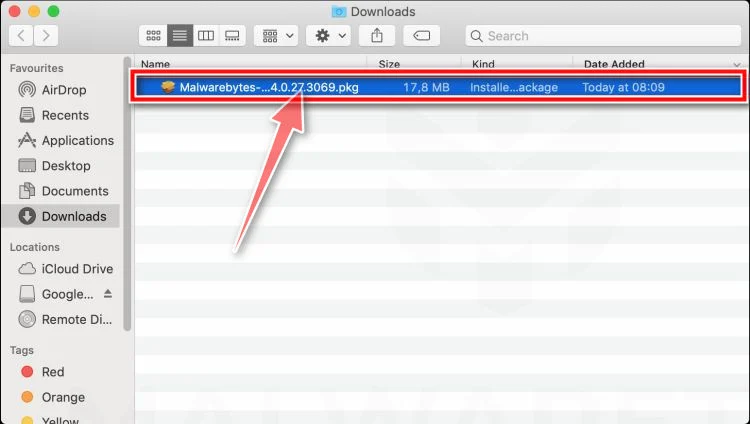
When the download finishes, open your Downloads folder and double-click the setup file to begin the installation.
-
Follow the On-Screen Prompts to Install Malwarebytes
The Malwarebytes for Mac Installer will guide you through a few quick screens. Click “Continue” and keep following the prompts until the installation completes.
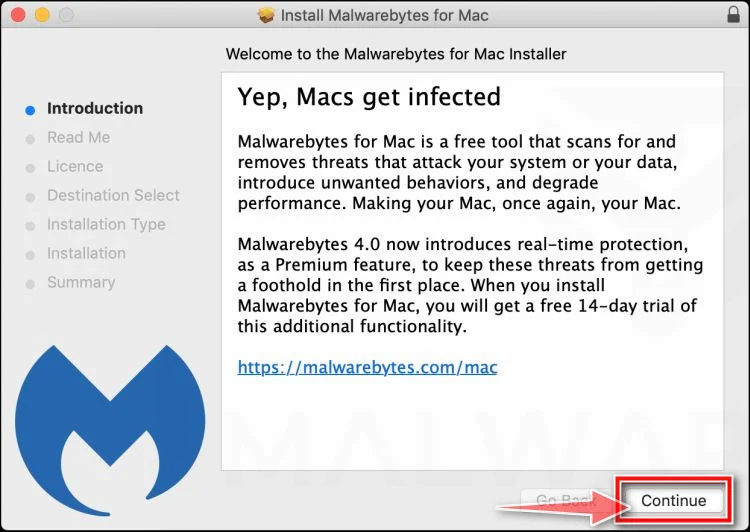
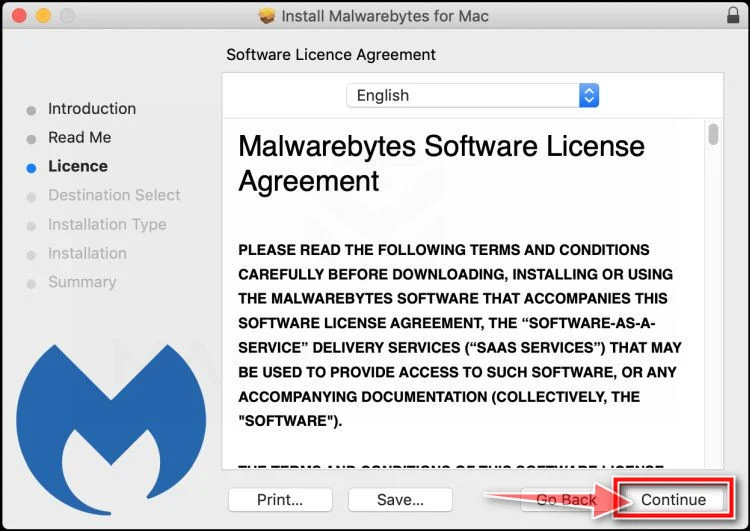
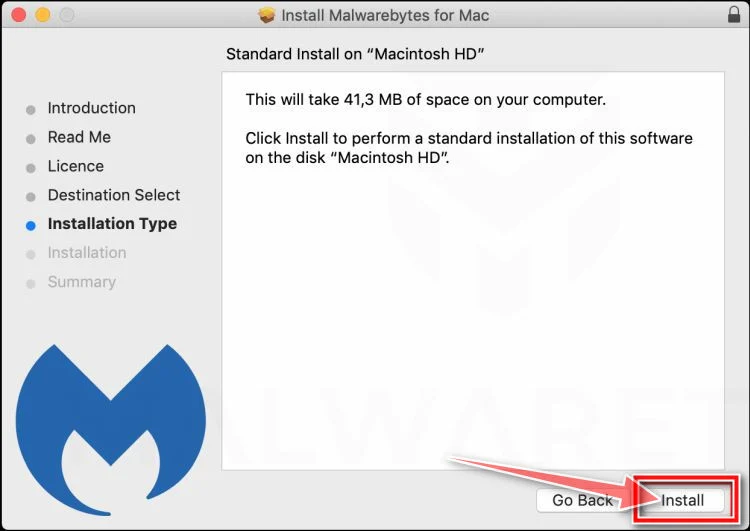
When the installation is complete, Malwarebytes opens to the Welcome to Malwarebytes screen. Click “Get started“.
-
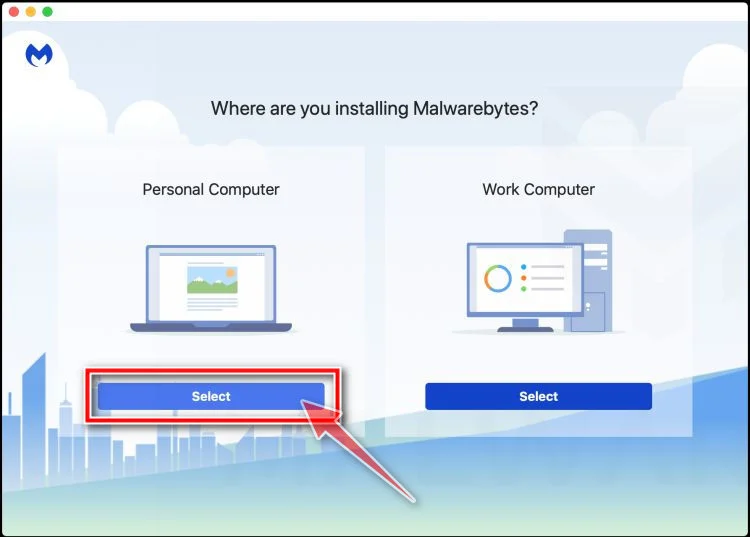
Select “Personal Computer” or “Work Computer”
Malwarebytes will ask what type of computer you’re installing it on. Click either Personal Computer or Work Computer, whichever applies.
-
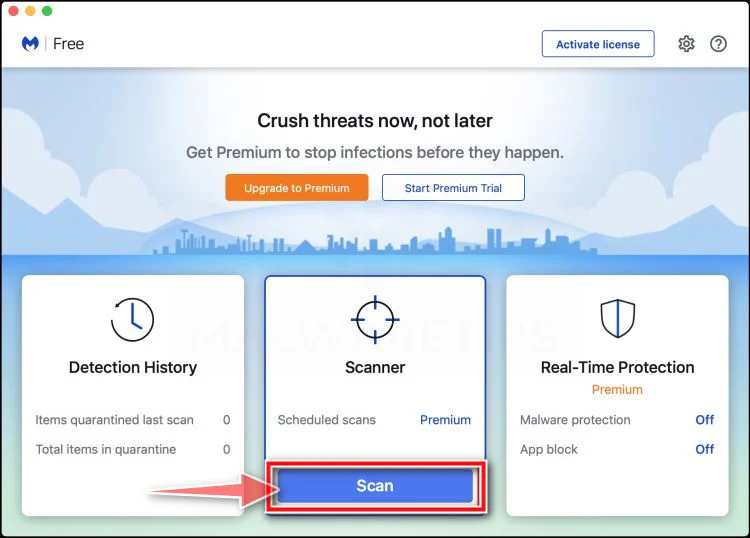
Start the Scan
Click the “Scan” button. Malwarebytes will automatically update its detection database and begin checking your Mac for malware.
-
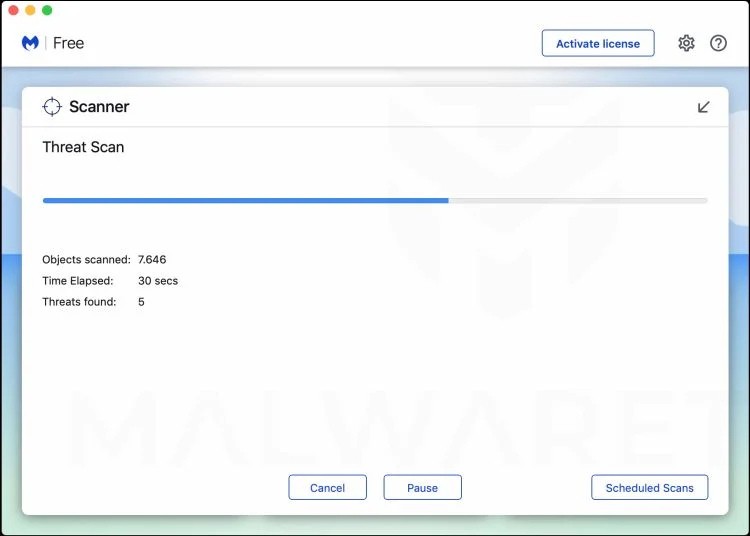
Wait for the Scan to Finish
Malwarebytes will scan your Mac for adware, browser hijackers, and other malicious programs. This can take a few minutes, so feel free to do something else — just check back occasionally to see the progress.
-
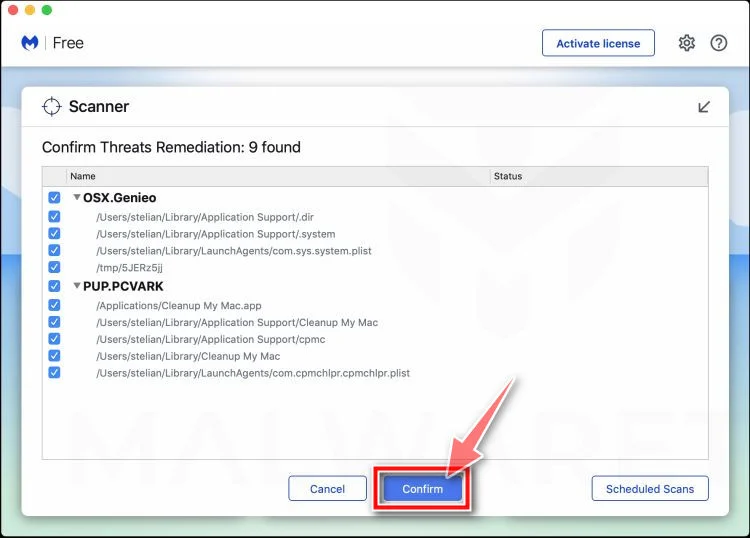
Quarantine the Detected Threats
When the scan is done, you’ll see a list of everything Malwarebytes found. Click the “Quarantine” button to remove all the threats at once.
-
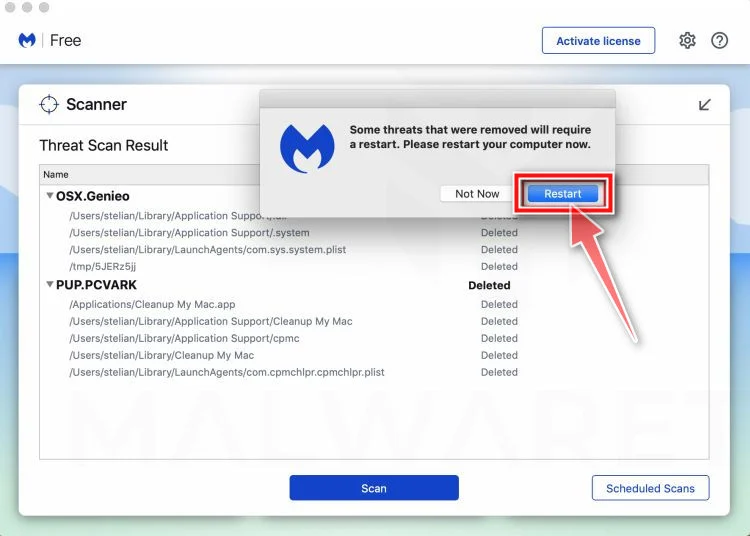
Restart Your Mac
Malwarebytes will now remove all the malicious files it found. Some threats can only be fully removed after a reboot — if Malwarebytes asks you to restart, allow it. Once you’re logged back in, your Mac is clean.
That’s it — your Mac is now free of adware, rogue browser extensions, and other potentially harmful software.
If you are still experiencing problems while trying to remove a malicious program from your computer, please ask for help in our Mac Malware Removal Help & Support forum.
Run a Malware Scan with Malwarebytes for Android
Malwarebytes for Android automatically detects and removes dangerous threats like malware and ransomware so you don’t have to worry about your most-used device being compromised. Aggressive detection of adware and potentially unwanted programs keeps your Android phone or tablet running smooth.
-
Download Malwarebytes for Android.
You can download Malwarebytes for Android by clicking the link below.
Get Malwarebytes for AndroidOpens Google Play in a new tab.Want real-time protection? See Malwarebytes Premium for AndroidMalwarebytes for AndroidScans your phone and removes malware at no cost -
Install Malwarebytes for Android on your phone.
In the Google Play Store, tap “Install” to install Malwarebytes for Android on your device.

When the installation process has finished, tap “Open” to begin using Malwarebytes for Android. You can also open Malwarebytes by tapping on its icon in your phone menu or home screen.

-
Follow the on-screen prompts to complete the setup process
When Malwarebytes will open, you will see the Malwarebytes Setup Wizard which will guide you through a series of permissions and other setup options.
This is the first of two screens that explain the difference between the Premium and Free versions. Swipe this screen to continue.
Tap on “Got it” to proceed to the next step.
Malwarebytes for Android will now ask for a set of permissions that are required to scan your device and protect it from malware. Tap on “Give permission” to continue.
Tap on “Allow” to permit Malwarebytes to access the files on your phone.
-
Update database and run a scan with Malwarebytes for Android
You will now be prompted to update the Malwarebytes database and run a full system scan.

Click on “Update database” to update the Malwarebytes for Android definitions to the latest version, then click on “Run full scan” to perform a system scan.

-
Wait for the Malwarebytes scan to complete.
Malwarebytes will now start scanning your phone for adware and other malicious apps. This process can take a few minutes, so we suggest you do something else and periodically check on the status of the scan to see when it is finished.

-
Click on “Remove Selected”.
When the scan has been completed, you will be presented with a screen showing the malware infections that Malwarebytes for Android has detected. To remove the malicious apps that Malwarebytes has found, tap on the “Remove Selected” button.

-
Restart your phone.
Malwarebytes for Android will now remove all the malicious apps that it has found. To complete the malware removal process, Malwarebytes may ask you to restart your device.
That’s it — your Android phone is now clean — no more malicious apps, adware, or browser redirects.
If you are still having problems with your phone after completing these instructions, then please follow one of the steps:
- Restore your phone to factory settings by going to Settings > General management > Reset > Factory data reset.
- Ask for help in our Mobile Malware Removal Help & Support forum.
Stay Protected: Block Ads and Malicious Sites
Now that your device is clean, keep it that way. Most infections start with a malicious ad or a fake download button — so blocking them at the source is your best defense.
We recommend AdGuard, which blocks malicious ads, phishing pages, and dangerous redirects before they can reach you.
👉 Download AdGuard and browse safely
The Bottom Line
The TikTok Pay Trend Reviewer scam uses fake job promises, AI celebrity endorsements, fake balances, and private group chats to make victims believe they are earning money.
The rule is simple: real jobs do not ask you to pay to get paid.
If a website claims you can earn hundreds of dollars reviewing TikTok trends but then asks for an activation fee, VIP upgrade, or withdrawal payment, walk away.
FAQ
Is the TikTok Pay / Trend Reviewer job real?
No. There is no legitimate TikTok program that pays random users to review trends or watch videos for quick cash. These ads are not affiliated with TikTok.
Why do I see money already in my account on the site?
That balance is fake. It’s designed to create excitement and push you toward paying a fee to “unlock” or withdraw it.
Are the celebrity videos in the ads real?
No. Many use AI-generated deepfakes that mimic public figures. These celebrities have no connection to the offer.
Why am I being asked to pay $27 or another fee?
That’s the core of the scam. Real jobs don’t require upfront payments. The fee is how scammers make money.
Can I actually withdraw the earnings shown?
No. Victims are typically blocked or asked for more payments before withdrawal, and the money is never released.
What are the biggest warning signs?
- High earnings for simple tasks
- Upfront fees
- Fake dashboards showing instant money
- Pressure to upgrade or “unlock” earnings
- Being moved to WhatsApp/Telegram groups
- Celebrity endorsements that seem unnatural
Why do they add me to group chats?
To create fake social proof. Many “members” are controlled by scammers posting fake earnings to build trust.
Is this connected to TikTok in any way?
No. These scams only use the TikTok name to appear legitimate. They are not official programs.
What happens if I already paid?
You likely won’t recover the money from the scammers. Contact your bank immediately to try a chargeback and stop any further payments.
Can they steal more than just the fee?
Yes. If you share personal or payment details, they may attempt further fraud or identity misuse.
How can I report this scam?
Report the ad on the platform where you saw it and file a complaint with your local consumer protection agency or cybercrime unit.
Are there real ways to earn money from TikTok?
Yes, but only through official programs (creator funds, brand deals, etc.), and none involve paying upfront fees to participate.

Join the discussion
2 commentsShare your experience or ask a question about this article.
Discussion
I could see why some people fall for it. Because it is right within the TikTok app.
I am not sure why TikTok lets this happen.
In reply to Zigmund
That in-app presentation is exactly what gives the offer borrowed credibility, Zigmund. Paid advertisers can appear inside a trusted platform without being endorsed or employed by it, and scam campaigns often disappear before reports are processed. Reporting the advertiser and its landing page to TikTok helps, but no legitimate job requires a fee, cryptocurrency payment, or deposit to release earnings.