


Type your Roblox username, pick 10,000 Robux for $0.00, and finish one quick step. That was the whole pitch on 5020.pro, and it sounded easy.
If you found the site through a video, a comment or a search for 5020 pro free Robux codes, here’s what was really waiting behind that last step.
Overview
What 5020.pro promised
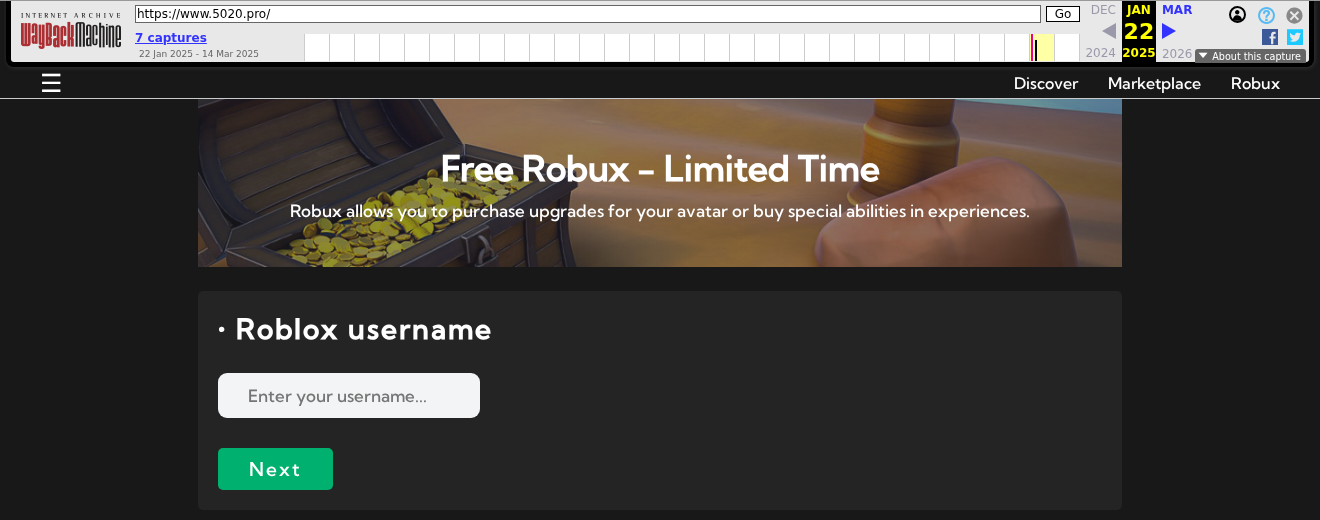
The page called itself Free Robux, Limited Time. It copied Roblox menu labels such as Discover, Marketplace and Robux, so it felt like part of the game.
Visitors entered a username, chose a package of 1,000 to 10,000 Robux priced at $0.00, and were told to complete one task to prove they weren’t a robot.
What was behind the Verify button
5020.pro was a scam, and it never delivered Robux. The page’s own code shows what the button actually did.
- The Verify button opened a CPABuild content locker, a paid offer wall that unlocks only after a completed offer.
- The recent payouts were two fixed usernames typed into the page, not live results.
- The account search came prewritten with a stranger’s name, amjad, left in the page code.
- Roblox states that no Robux generator exists, under any name.
Where 5020.pro is now
The domain no longer loads. Its registration is on client hold, a status that keeps a domain out of the internet’s address system even though it remains registered.
The design lives on. The same page template still runs on a Blogspot address, and the same locker service sits behind new Robux, Fortnite and Pokemon GO generator pages.
Is 5020 Pro Legit?
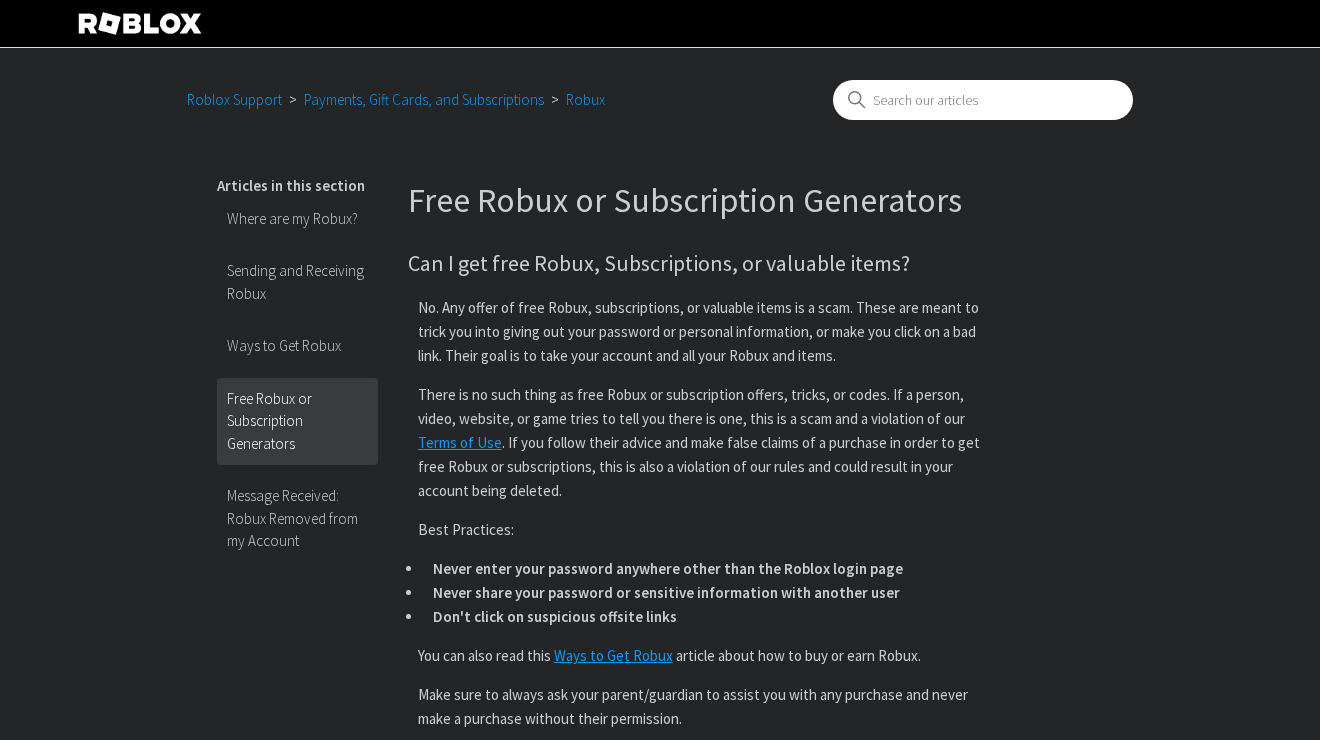
No. Roblox answers this question directly in its support article on generators: any offer of free Robux, subscriptions or valuable items is a scam.
Robux only come from Roblox itself. You buy them, or creators earn them by selling avatar items or building experiences on Roblox.
No outside website can add Robux to your account from a username. Roblox controls every balance, so a site claiming otherwise is describing something it can’t do.
Roblox adds a warning many players miss. Making false purchase claims to get free Robux breaks its rules and can get your account deleted.
So the real choice on a page like 5020.pro was never free Robux versus paid Robux. It was paid Robux versus a stranger profiting from your time, data and device.
Are There 5020 Pro Free Robux Codes?
No. Roblox’s own wording is blunt: there is no such thing as free Robux or subscription offers, tricks or codes.
Searches for 5020 pro codes, sometimes typed with a dot in the middle of the number, usually come from videos and comments that promise a working code.
Those links lead to the same kind of page: a username box, a package picker and a verification step. A code that needs an offer wall first isn’t a code.
The only codes that add Robux are the ones on Roblox gift cards, bought from Roblox or authorized retailers.
Roblox even pays a bonus for doing it the official way: up to 25% more Robux on web, computer and gift card purchases.
How the 5020.pro Scam Worked
Step 1: A Roblox look-alike page sets the scene
The archived page uses a dark Roblox-style layout, a treasure chest banner and the line that Robux lets you buy upgrades for your avatar.
Four packages offered 1,000, 4,000, 8,000 and 10,000 Robux, each marked $0.00. A zero price makes the choice feel safe and nudges visitors upward.
The page also carried leftover tags from a Blogger blog, including Blogspot advertising settings. It was a copied template, not a site built for one offer.
Step 2: A fake search pretends to find your account
After you typed a username and pressed Next, a spinner appeared. Its default text, searching for amjad, was written into the page, a leftover from whoever built the template.
The form had one box, for a username, and no password field. The search couldn’t open your account, check a balance or add anything to it.
The search exists to make the next step feel personal. Once you believe the site has found your account, finishing one small task feels like the last formality.
Step 3: Hard-coded payouts supply the proof
Under the form, a Recent payouts panel claimed two users had just received 100 000 and 10 000 Robux. Even the word received was misspelled.
Both entries were typed directly into the HTML, with fixed avatars. They never changed, never updated and never came from a real transaction.
Fake payout lists are standard on generator pages. They answer the doubt you’re having at that moment with an invented example of someone just like you.
Step 4: The Final Step opens a content locker
The final screen asked you to click Verify now and complete one task to prove you’re not a robot. That button called a script loaded from a CloudFront address.
The script’s own code identifies it as a CPABuild content locker. It locks the page, shows a list of offers and checks for a completed lead before unlocking anything.
A lead is a paid action: an app install, a survey, a sign-up or a trial. The page owner earns a commission each time a visitor completes one.
There’s nothing to unlock afterward, because no Robux were ever waiting. The robot check is the product, and your completed offer is what gets paid.
The locker script also reads the referring page, the screen size and whether the visitor is on a phone, so the offer list can match the device.
Step 5: The page disappears, the template doesn’t
The Internet Archive holds seven captures of 5020.pro between January 22 and March 14, 2025. Today, the domain sits on client hold and doesn’t resolve.
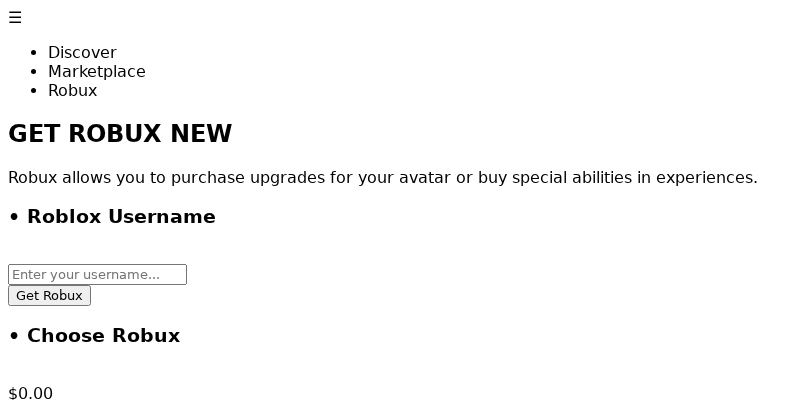
The same template is still live at getrbloxs.blogspot.com, with the same sentence about avatar upgrades and the same $0.00 packages. Its styling broke after the original template host went offline.
The locker service is even busier. Public scan records show the same CloudFront locker host on Roblox, Fortnite, Pokemon GO and Monopoly Go generator pages through October 2026.
Those pages carry different locker IDs from 5020.pro, so they’re separate lockers on the same service. The method travels faster than any single domain.
Our free Robux scam playbook and reports on Robuxclaimnow and Rboxe.com cover the same username-then-tasks pattern on other addresses.
What the Offers Behind the Locker Can Cost You
The specific offers in a locker change by country, device and day. What stays constant is the kind of action they ask for.
On phones, lockers often push app installs. An app from outside the official store, or one that demands broad permissions, can bring ads, tracking or worse.
Browser notification prompts are another favorite. Allowing them lets a site push fake alerts and prize pop-ups long after you’ve closed the page.
Surveys and sign-ups collect names, emails, phone numbers and sometimes birth dates. For a child, that’s personal data shared with advertisers they never chose.
Some offers lead to free trials or mobile subscriptions. Those can turn into charges on a parent’s card or phone bill if nobody notices the fine print.
Completing several offers doesn’t help either. A locker can keep asking for one more task, because each completed lead pays the page owner again.
None of these costs shows up as a Robux loss, which is why players often don’t realize anything went wrong until a bill, a pop-up or a strange app appears.
Why Free Robux Pages Keep Coming Back
A generator page costs almost nothing to run. The template is copied, the hosting is free, and the locker service supplies the offers and handles the payments.
5020.pro shows the life cycle. The domain was registered in October 2024, the first archive capture appeared in January 2025, and the captures stop in March.
When one address is suspended, the same page reappears elsewhere. Blogger removed robux-robux-robux.blogspot.com, while getrbloxs.blogspot.com and other copies stayed online.
The template itself came from a GitHub Pages site that no longer exists. Its pages still point to those missing files, which is why the surviving copies look broken.
Free hosts make takedowns slow to matter. Netlify, Cloudflare Pages and Blogspot subdomains can be created in minutes, so reporting each one helps but never ends the cycle.
That’s why the useful defense is recognizing the pattern rather than memorizing domain names. A username box, $0.00 packages and a robot check describe every version.
How to Get Robux Without Getting Scammed
Buy Robux inside the Roblox app or website, or with a Roblox gift card from a store you trust. Redeem gift cards only on the official Roblox site.
Creators can earn Robux by selling avatar items or building experiences. That takes real work, but it’s the only earning path Roblox recognizes.
Turn on two-step verification for the account, and keep the password unique. A strong account survives a bad click far better than a weak one.
Roblox’s privacy settings let you limit who can message or chat with you. Tightening them cuts off many generator links before they ever reach a younger player.
Be just as careful with cheap Robux sellers. Discounted Robux from strangers, Discord servers or marketplace listings are a different scam with the same ending.
Parents can manage the account through Roblox’s parental controls. Talking through generator pages once usually works better than blocking them one by one.
Warning Signs on Any Free Robux Page
Domains change every week, but the page design barely does. These signs showed up on 5020.pro and on every clone of its template.
- Only a username is needed. Real Robux purchases happen inside Roblox, signed in, never on a form that asks for a name and nothing else.
- Packages cost $0.00. Roblox doesn’t give Robux away, so a free price tag is the first lie on the page.
- A robot check stands between you and the reward. Complete one task, verify you’re human or unlock your Robux all mean the same offer wall.
- The winners feed never changes. Reload the page; if the same names claim the same amounts, they were typed in by the builder.
- The address is a free subdomain. Many clones run on blogspot.com, netlify.app or pages.dev addresses with random names.
- The link came from a comment, video or message. Roblox doesn’t announce Robux through strangers’ links.
What to Do if You Have Fallen Victim to This Scam
- Change your Roblox password if you typed it anywhere.
Roblox says to enter your password only on the Roblox login page. If you typed it on a generator or offer page, change it now and turn on two-step verification.
- Check your account for strange activity.
Look at your Robux balance, recent transactions and active sessions. Sign out of all other sessions from the security settings if anything looks off.
- Remove apps you installed for an offer.
Uninstall anything you added to complete a task, especially apps from outside Google Play or the App Store.
- Turn off notification permissions you allowed.
In your browser settings, remove permission for any site you don’t recognize. Fake prize alerts stop once the permission is gone.
- Scan your device and block malicious ads.
If you installed an app or allowed notifications, a free Malwarebytes scan can find adware and unwanted programs. AdGuard helps block the redirects and pop-ups these pages rely on.
- Cancel any trials or subscriptions.
Check the email you used for sign-up confirmations, and look at card and phone bills for new charges. Cancel and dispute anything you didn’t intend to buy.
- Report the page.
Use Roblox’s Report Abuse tools for any in-game message or link that sent you there, and report the video or comment on the platform where you saw it.
The guide below walks through a Malwarebytes scan on Windows, Mac or Android, then explains how AdGuard can block malicious ads and redirects afterward.
Is Your Device Infected? Run a Free Malware Scan
Slow performance, constant pop-ups, or strange behavior? These are classic signs of a malware infection. A quick way to check is to scan your device with Malwarebytes Free, one of the most trusted malware removal tools available. If you only visited a scam page and didn’t download or install anything, this scan is optional.
The free version detects and removes the most common threats, including:
- Adware — the cause of those annoying pop-ups
- Browser hijackers — unwanted redirects and changed homepages
- Trojans and spyware — hidden programs stealing your data
- Potentially unwanted programs (PUPs) — software you never asked for
👉 Select your device below — Windows, Mac, or Android — then follow the simple steps to download Malwarebytes, scan your system, and remove any threats it finds. The scan usually takes 5 to 20 minutes.
Run a Malware Scan with Malwarebytes for Windows
Malwarebytes is one of the most popular and trusted anti-malware tools for Windows — and it’s completely free for removing infections. It catches threats that many antivirus programs miss, including adware, browser hijackers, and trojans. Follow the steps below to scan your PC and remove what Malwarebytes finds.
Download Malwarebytes
Click the button below to download the latest version of Malwarebytes for Windows from the official source. The free version is all you need — it will scan your computer and remove adware, browser hijackers, and other malicious software at no cost.
Download MalwarebytesOfficial installer for Windows 11 and 10. Your download starts right away.Want real-time protection? See Malwarebytes Premium Malwarebytes Free for WindowsScans and removes malware at no cost
-
Install Malwarebytes
When the download finishes, open your Downloads folder and double-click the MBSetup file. If Windows shows a User Account Control pop-up, click “Yes” to allow the installation.

Follow the On-Screen Prompts to Install Malwarebytes
The setup wizard will walk you through a few quick screens:
-
Choose where you’re installing the program — “Personal Computer” or “Work Computer” — then click Next.

-
Malwarebytes will now install on your device. This usually takes under a minute.

-
When installation is complete, the “Welcome to Malwarebytes” screen will open automatically.

-
On the final screen, click Open Malwarebytes to launch the program.

-
Optional: Check for rootkits with a Custom Scan
You don’t need to change any settings for a normal scan. The standard Threat Scan in the next step is enough for most problems, so you can go straight to it.
If you also want to check for rootkits, use a Custom Scan. In current versions of Malwarebytes, rootkit scanning is only available there:
- On the Scanner tile, click the three-dot menu and select Advanced Scan.
- Choose Custom Scan. In its options, check Scan for rootkits.
- Select your system drive (usually C:\) as the location to scan, then start the scan. It takes longer than a Threat Scan.
- When it finishes, review and quarantine the results as described in the steps below.
Rootkit scanning isn’t available on Windows devices with ARM processors.
Start the Scan
Click the blue Scan button. Malwarebytes will automatically update its virus database and start checking your computer for malware.

-
Wait for the Scan to Finish
The scan checks your entire system for browser hijackers and other malicious programs, so it can take 5 to 20 minutes depending on your computer. Feel free to do something else — just check back occasionally to see the progress.

-
Quarantine the Detected Threats
When the scan is done, you’ll see a list of everything Malwarebytes found — malware, adware, and potentially unwanted programs. Click the “Quarantine” button to remove all of them at once.

Malwarebytes will now remove the malicious files and registry entries and move them safely into quarantine.

-
Restart Your Computer
Some threats can only be fully removed after a reboot. If Malwarebytes asks you to restart, click Yes. Once you’re logged back in, Malwarebytes has finished removing the threats it found.

When the scan is done, check whether the problems you noticed have stopped. If they continue, see the options below.
If you are still having problems with your computer after completing these instructions, then please follow one of the steps:
- Run a computer scan with ESET Online Scanner
- Ask for help in our Windows Malware Removal Help & Support forum.
Run a Malware Scan with Malwarebytes for Mac
Malwarebytes for Mac is a free on-demand scanner that removes the malware other security software tends to miss — adware, browser hijackers, and unwanted programs included. Cleaning an infected Mac with Malwarebytes has always been completely free, and it’s our go-to recommendation. Follow the steps below to scan your Mac and remove what Malwarebytes finds.
-
Download Malwarebytes for Mac
Click the button below to download the latest version of Malwarebytes for Mac.
Download MalwarebytesOfficial installer for macOS. Your download starts right away.Want real-time protection? See Malwarebytes PremiumMalwarebytes Free for MacScans and removes malware at no cost -
Open the Malwarebytes setup file
When the download finishes, open your Downloads folder and double-click the setup file to begin the installation.

-
Follow the On-Screen Prompts to Install Malwarebytes
The Malwarebytes for Mac Installer will guide you through a few quick screens. Click “Continue” and keep following the prompts until the installation completes.



When the installation is complete, Malwarebytes opens to the Welcome to Malwarebytes screen. Click “Get started“.
Malwarebytes needs Full Disk Access to check your whole Mac. When it asks, open System Settings > Privacy & Security > Full Disk Access, turn on Malwarebytes (it may be listed as Malwarebytes Protection), and confirm with your password or Touch ID. Then return to Malwarebytes. On macOS Monterey and earlier, this setting is in System Preferences > Security & Privacy > Privacy.
-
Select “Personal Computer” or “Work Computer”
Malwarebytes will ask what type of computer you’re installing it on. Click either Personal Computer or Work Computer, whichever applies.

-
Start the Scan
Click the “Scan” button. Malwarebytes will automatically update its detection database and begin checking your Mac for malware.

-
Wait for the Scan to Finish
Malwarebytes will scan your Mac for adware, browser hijackers, and other malicious programs. This can take a few minutes, so feel free to do something else — just check back occasionally to see the progress.

-
Quarantine the Detected Threats
When the scan is done, you’ll see a list of everything Malwarebytes found. Click the “Quarantine” button to remove all the threats at once.

-
Restart Your Mac
Malwarebytes will now remove all the malicious files it found. Some threats can only be fully removed after a reboot — if Malwarebytes asks you to restart, allow it. Once you’re logged back in, check whether the problems you noticed have stopped. If they come back, save the scan report and ask for help in our forum.

If the problems you noticed continue after the scan, see the options below.
If you are still experiencing problems while trying to remove a malicious program from your computer, please ask for help in our Mac Malware Removal Help & Support forum.
Run a Malware Scan with Malwarebytes for Android
Malwarebytes for Android scans your phone or tablet for malware, adware, and potentially unwanted apps. The free version scans only when you start a scan. Real-time protection, which checks apps automatically, is part of the paid Premium version.
-
Download Malwarebytes for Android.
You can download Malwarebytes for Android by clicking the link below.
Get Malwarebytes for AndroidOpens Google Play in a new tab.Want real-time protection? See Malwarebytes Premium for AndroidMalwarebytes for AndroidScans your phone and removes malware at no cost -
Install Malwarebytes for Android on your phone.
In the Google Play Store, tap “Install” to install Malwarebytes for Android on your device.

When the installation process has finished, tap “Open” to begin using Malwarebytes for Android. You can also open Malwarebytes by tapping on its icon in your phone menu or home screen.

-
Follow the on-screen prompts to complete the setup process
When Malwarebytes opens, it walks you through a short setup. Tap Get started and follow the prompts. If you see an offer for a trial or a paid plan, read it before you accept. You can skip it and keep using the free scanner.
Malwarebytes will ask for permission to access the files on your phone so it can scan them. Tap Allow, or turn on the permission in the Android screen that opens, then return to Malwarebytes.
-
Run a scan with Malwarebytes for Android
On the main screen, tap Scan now. In some versions, you open the menu, tap Scanner, and then tap Run a scan.
-
Wait for the Malwarebytes scan to complete.
Malwarebytes will now start scanning your phone for adware and other malicious apps. This process can take a few minutes, so we suggest you do something else and periodically check on the status of the scan to see when it is finished.

-
Remove the detected apps.
When the scan has been completed, you will see a list of the threats that Malwarebytes for Android has detected. Next to each detected item, tap the menu icon (three dots), then choose to uninstall the app or delete the file. Android then asks you to confirm. Tap OK or Uninstall to remove the app.
-
Restart your phone.
When the detected apps are removed, restart your phone if Malwarebytes asks you to. Then check whether the problems you noticed have stopped.
If the problems you noticed continue after the scan, see the options below.
If you are still having problems with your phone after completing these instructions, then please follow one of the steps:
- Ask for help in our Mobile Malware Removal Help & Support forum.
- Only as a last resort, reset your phone to factory settings. Read the warning below first.
- Back up your photos, videos, files, and messages, for example to your Google account or a computer.
- Make sure you know your Google account email and password. The phone asks for them after the reset. If you changed the password recently, Google recommends waiting 24 hours before you reset.
- On a Samsung phone, also make sure you know your Samsung account password.
- If you use an authenticator app for two-step verification, move your accounts to another device or save your backup codes first.
Stay Protected: Block Ads and Malicious Sites
No scan can prove a device is completely clean, so it helps to block threats before they reach you. Most infections start with a malicious ad or a fake download button — so blocking them at the source is your best defense.
We recommend AdGuard, which blocks malicious ads, phishing pages, and dangerous redirects before they can reach you.
👉 Download AdGuard and browse safely
Frequently Asked Questions
Is it dangerous just to open 5020.pro or a clone?
Opening the page is low risk on an updated device. The danger starts when you install an app, allow notifications, enter a password or share personal details.
Can a generator steal my account from my username?
A username alone doesn’t give anyone access. Accounts get stolen when players type their password into a fake page or share a login code.
Can Roblox ban me for using a Robux generator?
Roblox treats generator offers as a violation of its Terms of Use. Making false purchase claims to get free Robux can lead to the account being deleted.
Are free Robux codes on YouTube or TikTok real?
No. Roblox says free Robux codes don’t exist. Videos and comments that promise them point viewers to generator pages like this one.
My child used a Robux generator. What should I check?
Look for new apps, notification permissions, sign-up emails and unexpected charges. Then change the Roblox password together and review the parental controls.
Do Robux generators install viruses?
The page itself usually doesn’t. The risk comes from what the offers ask you to install or allow, so remove those apps and permissions, then run the scan above.
The Bottom Line
5020.pro was a fake Robux generator. Its payouts were typed into the page, and its verification step was a CPABuild offer wall that paid the page owner.
Don’t use 5020 pro, its clones or any site promising free Robux. If you completed an offer, change your Roblox password, remove installed apps and scan your device.

Join the discussion
2 commentsShare your experience or ask a question about this article.
Discussion
c’est trop bien mais j’arrive pas
In reply to JULIEN PUGLIESE
Bonjour. Si ça “n’arrive pas”, c’est justement parce que ce genre de site n’est pas légitime. Il vaut mieux ne pas continuer, ne rien payer, et ne jamais entrer ses identifiants Roblox sur ce type de page.