

A towering metal rabbit appears on your feed, followed by a warning that it escaped. Suddenly, a strange workshop video feels less like entertainment.
If you searched for Nosey animatronic because the clips unsettled you, start with the original posts. Their context matters much more than the frightening caption.
Overview
Nosey Is a Physical Project, Not an Entirely AI-Generated Invention
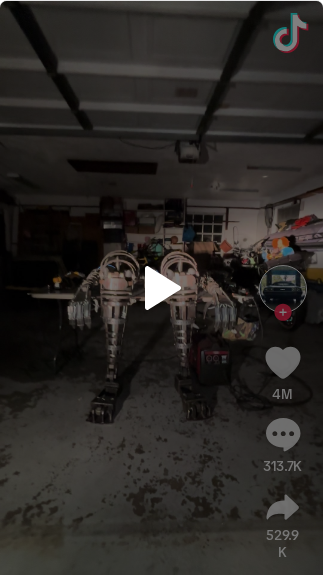
Nosey is the name of a metal rabbit project documented by Benjamin Pochurek, who posts as Citra under @benjamin_pochurek on TikTok.
His original progress posts show fabrication work and separate mechanical components. Calling the whole project nonexistent, or dismissing every workshop image as AI, is incorrect.
However, a physical rabbit structure and an independently roaming robot are very different things. The first does not automatically establish the second.
That distinction is the answer to much of the confusion. Real objects can appear in fictional stories, exaggerated captions, edited footage, and ordinary construction updates.
The Escape Story Is a Separate Claim
A caption saying Nosey escaped is not a public-safety notice. Neither a sinister soundtrack nor an account repeating that caption supplies independent confirmation.
Treat the runaway-rabbit narrative as unsubstantiated, not as a reason to believe an autonomous machine is approaching your neighborhood.
The same standard applies to claims about exceptional speed, silent movement, or resistance to bullets and fire. Each requires evidence of its own.
- Physical existence: the creator documents a fabrication project, including components, assembly, and later workshop development.
- Engineering performance: a speed, protection, or autonomy claim needs a corresponding demonstration or test.
- A claimed escape: an actual incident needs a traceable location, date, and credible corroboration beyond reposts.
- A frightening video: its caption, uploader, editing, and original context must be evaluated together.
This Is a Media-Literacy Question, Not a Proven Payment Scam
Nosey’s appearance is not evidence that its creator is committing fraud. A horror-inspired art project does not become a scam simply because viewers find it frightening.
The problem is the leap from a real construction project to unsupported claims about a dangerous escaped robot. Readers deserve that distinction without sensationalism.
You do not need to pick between believing every frightening claim and declaring every frame computer-generated. Neither extreme explains the material accurately.
What the Original Nosey Posts Actually Show
Start With the Creator, Not a Reposted Display Name
Citra’s TikTok profile identifies the rabbit as Nosey and links to benjamin_pochurek’s Linktree. That page connects his TikTok, Instagram, and YouTube accounts.
The linked Citra YouTube channel describes a metal rabbit project. Its uploads include maintenance, welding, seated walkaround, and pneumatic-installation videos.
Those connections help distinguish an original project update from an unrelated account using a similar name. A matching display name alone is a weak identifier.
Before trusting an alarming repost, compare its exact handle with the creator’s linked accounts. Then look for the same footage with its original description attached.
Early Progress Reports Show Work in Pieces
The original Progress Report No. 1 was posted in June 2025. Its description places the project alongside welding, sculpture, and horror-inspired creation.
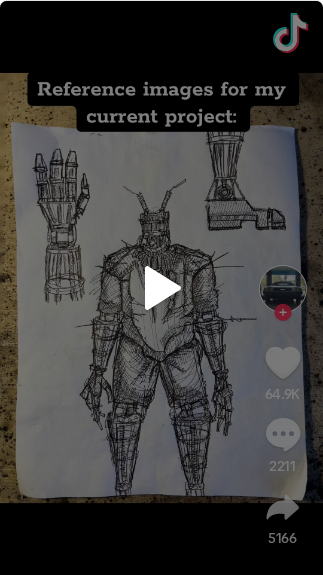
A separate reference-drawings post explicitly identifies inspiration from The Walten Files. That artistic context should not disappear when the images are shared.
In Progress Report No. 25, the creator discusses the hip assembly, handles separate components, and explains joints and planned mounting work.
The post describes making art and possible future gallery display. It is not a record of a completed machine independently running through public streets.
These are useful, specific details. They replace the vague argument that something looks too strange to be real with an identifiable construction history.
Later Updates Need Their Own Dates
A project can change after its first viral moment. Footage from 2025 should not be presented as a complete description of everything built afterward.
The creator’s February 2026 Nosey Seated Walkaround describes the seated position as helping access the project during development.
Its description says, “Wiring, software, and head design: immanent.” The wording places that particular upload in a development stage, rather than demonstrating independent escape.
His channel also lists a pneumatic-pressure installation update from October 2026. That newer title establishes continuing project documentation, not every capability claimed elsewhere.
Read each update for what it shows at that time. A future improvement cannot retroactively turn an old caption into an independently verified incident.
Notice the wording of Seated Walkaround. Walking around a seated object to show its construction is not the same as showing the object walking.
That small distinction is easy to lose while scrolling. Read the title alongside the description before deciding which action the footage is supposed to demonstrate.
Is Nosey CGI, AI, or a Real Animatronic?
Real Construction and Screen Fiction Can Coexist
A physical prop can be filmed normally, moved by a person, animated mechanically, or incorporated into edited storytelling. Those possibilities are not mutually exclusive.
For example, a metal hand that bends at its joints establishes a movable component. It does not show how the completed body balances or navigates.
Likewise, a shot of a figure in a doorway tells you where the camera points. It does not reveal whether an operator, support, or edit is involved.
Judge the exact claim attached to the exact shot. Do not let one impressive detail silently stand in for several missing demonstrations.
A Visual Oddity Cannot Identify an AI Generator
Compression, low light, motion blur, reflections, and editing can make ordinary footage look unusual. A strange edge is a reason to inspect, not a definitive diagnosis.
It would be misleading to name a specific AI tool based only on how a rabbit, shadow, or hand looks in a short clip.
For a particular edited video, look for an original upload, an effects disclosure, creator commentary, or documented production evidence. Otherwise, keep the uncertainty specific.
That does not mean accepting an escape story. A video can fail to establish a real event even when its precise production method remains unidentified.
What Would Demonstrate Autonomous Movement?
Autonomous movement means more than a joint moving or a camera following a figure. The relevant question is how the machine senses, controls, and supports itself.
A useful demonstration would show a sustained sequence, the surrounding space, and enough technical context to distinguish independent operation from external assistance.
Even then, one controlled demonstration would establish only what happens under those conditions. It would not establish unrestricted outdoor movement or extraordinary speed.
This is not a demand that a hobbyist publish every design file. It is simply the evidence needed before viewers accept a much larger claim.
Use a Claim Checklist Instead of a Single Real-or-Fake Label
Break an impressive clip into questions that can actually be answered. Otherwise, the answer to one modest question can accidentally endorse an entire frightening narrative.
- Object: can you trace the structure to the creator’s documented build?
- Movement: does the clip show a component moving, the full structure moving, or just the camera moving?
- Control: is independent operation demonstrated, or is the source of movement unexplained?
- Event: does anything establish the alleged time, place, and escape outside the caption?
You might answer yes to the first question and still have no reliable answer to the others. That is a meaningful result, not a contradiction.
How the Nosey Escape Story Spreads
Step 1: A Genuine Workshop Update Supplies the Hook
The starting material is memorable: an oversized rabbit, exposed metalwork, and a familiar horror aesthetic. It needs little explanation to stop someone scrolling.
A full progress report may discuss unfinished assemblies for several minutes. A short excerpt can retain the intimidating appearance while dropping that practical context.
The viewer then encounters a finished-looking character rather than a construction sequence. That first impression makes later claims feel more plausible than their evidence warrants.
Step 2: A Caption Turns Appearance Into Capability
Next comes the unsupported leap. A frame of a large rabbit is paired with claims that it can run, hunt, withstand attacks, or operate independently.
Those statements may appear in narration, overlaid text, comments, or another person’s summary. None becomes a demonstrated specification merely through confident delivery.
Look closely at the verbs. A plan to build something, a claim about its future design, and a completed test are three different statements.
Step 3: Repetition Makes the Escape Sound Established
Once the escape narrative becomes the hook, later posts can refer to it as though everyone already knows it happened. Familiarity replaces sourcing.
Several accounts may reuse one clip or react to each other. That creates several posts, not several independent witnesses.
A reaction video can also show genuine fear without adding any factual information. The person’s emotional response is not confirmation of the underlying event.
Trace the story backward. If each version ultimately points to another caption rather than an identifiable incident, the chain has not supplied corroboration.
Step 4: A Recycled Clip Becomes a Fresh Local Warning
An old upload can feel new when someone shares it today. A caption may imply the robot is nearby without establishing when or where anything occurred.
That is when a scary entertainment clip starts functioning like a warning. Friends forward it to protect each other, inadvertently carrying the missing context further.
The useful response is to restore the date, creator, and demonstrated facts. Sending an even more dramatic counterclaim only creates another layer of confusion.
Is Nosey Dangerous? Separate Real Machinery From Viral Threats
A Heavy Project Is Not a Runaway-Robot Alert
Any large metal structure or powered mechanism deserves ordinary workshop precautions. Weight, moving parts, and fabrication equipment can create hazards during construction or handling.
That practical point is entirely different from saying Nosey is roaming independently and threatening the public. The viral narrative has not established that claim.
Do not approach somebody’s workshop, seek a private address, or attempt to inspect the project yourself. Following a public creative account does not grant physical access.
If you encounter an actual immediate hazard, describe what you personally see to the appropriate local service. Do not substitute a viral robot story for observations.
Speed and Protection Claims Need Matching Tests
Suppose a post claims a speed of 32 mph. A static image, hand-moved component, or edited running sequence is not a measured speed test.
Similarly, metal construction alone does not establish bullet resistance, fire resistance, or waterproof operation. Those are separate performance questions with different test conditions.
There is no need to pronounce every ambitious design goal impossible. The sensible conclusion is narrower: do not present untested specifications as achieved capabilities.
Never try to test such claims by damaging a prop, using a weapon, starting a fire, or trespassing. The online rumor does not justify dangerous behavior.
What to Do If a Nosey Video Worried You
- Pause the clip before forwarding it. Separate what the camera shows from what the caption alleges. Write down the claim you actually want to check.
- Find the original creator’s account. Use the linked profiles under @benjamin_pochurek rather than assuming a similar display name belongs to Citra.
- Open the full progress report. Look for construction explanations, unfinished components, and the original description. Watch beyond the few seconds selected for a repost.
- Check the upload date and context. Ask whether this is an old project update, a creative sequence, or a documented new event.
- Require a source for an alleged escape. A location, date, and credible independent report matter. Repeated comments and reaction videos do not replace them.
- Correct a misleading share directly. Tell recipients that Nosey is a real project, while the post does not establish a dangerous escaped robot.
- Help a frightened child step out of the story. Show the ordinary workshop context, explain how captions change meaning, and stop replaying upsetting clips.
- Leave the creator’s private life alone. Do not seek addresses, send accusations, or join harassment. Check public claims without turning a fact-check into targeting.
You can enjoy horror without treating it as news. Muting a phrase or leaving the app for a while is also reasonable when repeated clips feel overwhelming.
When reporting misleading content, describe the specific false framing. A precise report is more useful than alleging that every image or every creator account is fraudulent.
Other Viral Visual Claims Worth Checking
The broader lesson applies whenever striking footage arrives without enough context. A plausible-looking image and a well-supported explanation are not the same thing.
MalwareTips also examines the viral walking-plant video and giant-octopus drone footage. Each story needs its own source check.
The Matteo Zayid Halloween-prop story is another reminder to distinguish a frightening narrative from an independently documented event.
Together, these cases show why source-checking starts with the original upload, not the most alarming repost.
Frequently Asked Questions
Is Nosey Animatronic Real or Fake?
Nosey is a physical metal-rabbit project documented through the creator’s construction updates. That does not make every capability claim or escape caption factual.
Is Nosey CGI or AI-Generated?
It is inaccurate to label the entire project CGI or AI. Assess individual clips separately, especially reposts that add footage, edits, or unsupported narration.
Who Is Citra, the Creator of Nosey?
Citra is Benjamin Pochurek, posting as @benjamin_pochurek on TikTok. His linked profiles connect the project with his Instagram and YouTube documentation.
Did Nosey Actually Escape?
The viral escape narrative is unsubstantiated. A frightening clip or repeated caption is not reliable confirmation that an autonomous robot escaped into public spaces.
Is Nosey Dangerous to the Public?
The videos do not establish a roaming public threat. Real workshop machinery still needs appropriate handling, but that is different from the runaway-robot story.
Can Nosey Run at 32 Mph or Resist Bullets?
Those claims require relevant performance tests. Do not treat a creator’s ambition, a metal frame, or a repost’s narration as proof of either capability.
The Bottom Line
Nosey animatronic is a real fabrication project, not an entirely imaginary AI rabbit. The dangerous-escape narrative is not an established event.
Check the creator’s original update, separate visible construction from claimed performance, and do not forward a frightening caption as a public-safety warning.

Join the discussion
0 commentsShare your experience or ask a question about this article.
Discussion
Start the conversation
Have a question or something useful to share? Add the first comment.