

A giant 10-foot animatronic rabbit named Nosey has taken TikTok, Facebook and YouTube by storm. Clips show it crouching in dark hallways, peeking around corners with glowing eyes, and even allegedly “escaping” from a workshop. Millions of people have watched these creepy videos, asking the same question:
Is Nosey Animatronic real or just another viral AI hoax?
The creator behind the trend, TikToker Benjamin Pochurek (aka Citra), claims Nosey is a massive animatronic robot he’s building in his workshop. He describes it as bulletproof, fireproof, waterproof, and even capable of running 32 mph. But experts and fact-checkers are pointing to something else:
The so-called Nosey animatronic isn’t real. The viral clips are AI-generated videos, created with advanced tools such as Google’s Veo 3, which can fabricate hyper-realistic footage that looks indistinguishable from real life.
In this article, we’ll break down the truth behind Nosey, explore how the AI videos were made, explain why so many people were fooled, and discuss what this means for the future of misinformation and online horror storytelling.
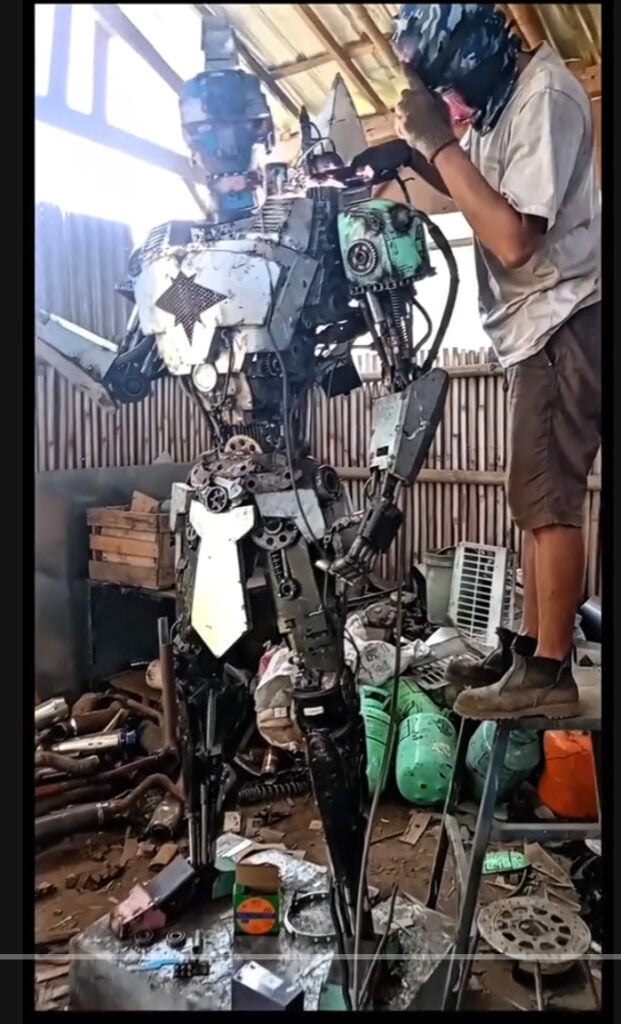
The Rise of Nosey Animatronic on Social Media
The Nosey videos began trending in mid-2025 when Citra started posting short clips of a gigantic, humanoid rabbit robot in dimly lit rooms, workshops, and even suburban hallways.
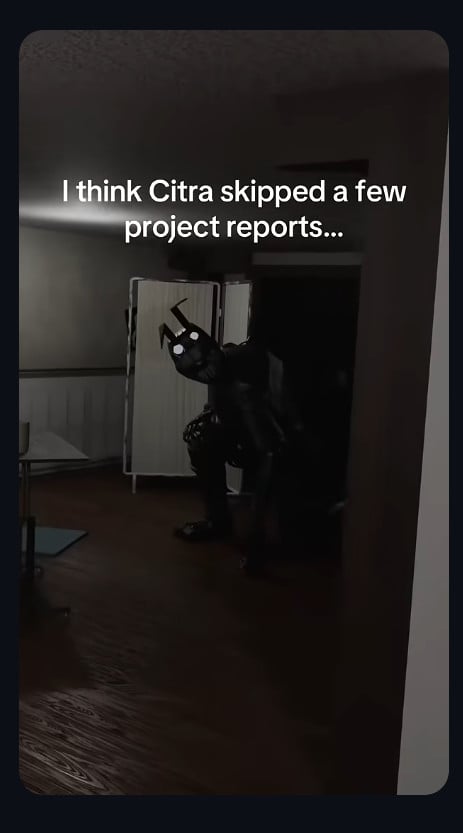
Each video was designed to feel like “found footage” from a horror film. Eerie music, shaky camera angles, and captions like “I think Citra skipped a few project reports…” made the content feel authentic and unsettling.
The concept resonated immediately because it combined:
- Creepy animatronic design (similar to Five Nights at Freddy’s)
- Horror-movie atmosphere (dark lighting, glowing eyes, unsettling movements)
- Claims of realism (framed as a real DIY animatronic project)
- AI-driven visuals that looked convincing to the untrained eye
Within weeks, the hashtag #NoseyAnimatronic had tens of millions of views across TikTok, YouTube Shorts, and Instagram Reels.
What Citra Claimed About Nosey
To build hype, Citra described Nosey as having almost superhuman (or super-robotic) abilities:
- Over 10 feet tall
- Able to crouch to 5 feet to squeeze through tight spaces
- Running speed of 32 mph
- Silent movement, despite its enormous size
- Bulletproof, fireproof, and waterproof
- Able to function autonomously
These claims made Nosey sound like a military-grade robot—something even billion-dollar research firms like Boston Dynamics haven’t achieved.
Why Experts Called Nosey Out as Fake
Engineers, roboticists, and AI researchers quickly began analyzing the viral clips. Their verdict? Nosey isn’t real—it’s AI-generated video.
Here’s why:
1. Unrealistic Engineering Claims
No independent builder with a home workshop could create a 10-foot bulletproof animatronic that runs faster than a cheetah. Such a project would require:
- Multimillion-dollar funding
- Teams of engineers in hydraulics, AI, and materials science
- Years of development time
Even state-of-the-art robotics labs haven’t achieved anything close.
2. AI Visual Artifacts
Careful frame-by-frame viewing of Nosey clips revealed AI artifacts—tiny glitches and inconsistencies common in AI-generated video. These include unnatural shadows, warped mechanical parts, and flickering edges around Nosey’s body.
3. Use of Veo 3 and Other AI Tools
Investigators pointed out that the clips strongly resemble outputs from Google’s Veo 3, a cutting-edge AI video model capable of creating ultra-realistic moving footage from text prompts. With the right descriptions (“10-foot animatronic rabbit crouching in a hallway, glowing eyes”), Veo 3 can fabricate entire scenes like the Nosey videos.
Other tools such as Runway Gen-3, Pika Labs, and Kaiber AI could also have been used in combination for added realism.
4. No Continuous Shots of Functionality
Every Nosey clip is short, edited, and atmospheric. None show a full, continuous sequence of Nosey walking, running, or performing the claimed feats in a believable way. This matches how AI-generated clips are typically produced—brief, stylized segments, not sustained real footage.
The Viral “Escape” Hoax
One of the most popular Nosey narratives was the idea that the animatronic escaped from Citra’s workshop and began roaming neighborhoods or hallways.
These videos, of course, were pure AI fabrication. They showed Nosey lurking in homes, bending down under doorframes, or standing menacingly at the end of a corridor.
The “escape” storyline worked because:
- AI tools easily generate eerie environments.
- Horror fans love the Five Nights at Freddy’s vibe.
- People wanted to believe they were seeing raw, found-footage evidence.
But just like other AI horror hoaxes online, these clips were engineered for virality, not reality.
Why People Believed Nosey Was Real
Despite the obvious red flags, millions of viewers initially believed Nosey might be real. Why?
- Hyper-realistic AI video – Veo 3 and similar models produce visuals nearly indistinguishable from real camera footage.
- Citra’s DIY narrative – Framing it as a workshop project made it feel authentic.
- Horror familiarity – Nosey looked like something straight out of a scary video game or movie, which blurred the line between fiction and reality.
- Fast virality – On TikTok, misinformation spreads faster than fact-checking.
- Suspension of disbelief – People want to be entertained, and many enjoy pretending “what if this is real?”
Comparing Nosey to Real Robotics
To see why Nosey couldn’t exist outside AI video, consider actual robotics today:
- Boston Dynamics’ Atlas – Human-sized, can run and do parkour, but nowhere near silent, bulletproof, or horror-movie creepy.
- Disney Imagineering animatronics – Lifelike movement in theme parks, but strictly limited to controlled environments.
- DARPA’s robotics projects – Backed by military budgets, still not close to building a Nosey-like machine.
If world-class research labs with billions in funding can’t build Nosey, a TikToker with Venmo donations certainly hasn’t.
Nosey as Performance Art, Not Robotics
The truth is clear: Nosey is not a real animatronic. Instead, it’s a piece of AI-driven performance art, blending horror aesthetics with cutting-edge video tools.
- The “animatronic” design comes from AI-rendered props and workshop scenes.
- The “escape” stories are AI-generated short films.
- The entire narrative is designed to entertain, creep out, and go viral—not to document real robotics engineering.
That doesn’t mean Citra lacks talent—he’s a skilled storyteller who understands how to use AI tools to capture attention. But calling Nosey a real animatronic is misleading.
The Dangers of AI Hoaxes Like Nosey
While Nosey is mostly harmless fun, the phenomenon raises bigger concerns:
- Erosion of trust – As AI videos become more convincing, it’s harder to know what’s real.
- Scam potential – Asking for donations to fund “real animatronics” when the videos are AI is ethically questionable.
- Fear mongering – Viral “escape” stories can scare viewers who don’t realize it’s fiction.
- Future misinformation – Today it’s horror entertainment; tomorrow it could be political deepfakes influencing elections.
How to Spot AI-Generated Hoaxes
- Look for artifacts – Glitches, warped details, and unnatural lighting often expose AI.
- Check the source – Is the creator a robotics lab or just a TikToker with a Venmo link?
- Look for continuous footage – AI videos are short; real engineering projects show sustained demos.
- See if experts weigh in – Engineers and fact-checkers often debunk viral clips quickly.
- Trust but verify – Don’t accept shocking visuals at face value—always fact-check.
The Bottom Line
So, is Nosey Animatronic real or fake?
Fake. The viral TikTok clips are AI-generated, created with tools like Veo 3, Runway Gen-3, and other AI video platforms.
Nosey is not a functioning robot, not a 10-foot bulletproof rabbit, and certainly not a machine that escaped from a workshop. It is digital horror storytelling powered by artificial intelligence.
That said, Nosey has succeeded brilliantly as entertainment. It shows how AI tools can create entire viral mythologies, blending art, fiction, and fear into stories that captivate millions.
But it also serves as a warning: in the age of AI, don’t believe everything you see on your feed.
FAQ: Nosey Animatronic
Is Nosey Animatronic real?
No. Nosey is an AI-generated creation, not a real animatronic robot.
Who created Nosey?
TikToker Benjamin “Citra” Pochurek, using AI tools like Veo 3 to generate videos.
How big is Nosey supposed to be?
Citra claims Nosey is over 10 feet tall, but this is part of the fictional narrative.
Can Nosey really run 32 mph?
No. That claim is impossible with current robotics technology and exists only in the AI-generated videos.
Why do the videos look real?
Because modern AI video models like Veo 3 create hyper-realistic footage that closely mimics real camera recordings.
What about the escape stories?
They are AI-fabricated short films meant to build suspense and virality.
Is Nosey dangerous?
No. Nosey doesn’t exist in real life—it’s a fictional character created with AI.
How is Nosey funded?
Through donations on Venmo and hype around the videos, which raises ethical questions since the project is fictional.
What is Nosey really?
A viral piece of AI horror storytelling and digital performance art, not robotics engineering.
What does Nosey teach us?
That AI can blur reality so convincingly that millions of people believe in something that never existed.








