Join Google Meet Scam Email – How Fake Meeting Invites Steal Your Data
Written by: Thomas Orsolya
Published on:
Have you ever received an unexpected Google Meet invitation with a subject like “Emergency Budget meeting” or something equally urgent? The email looks convincing. It displays a meeting link, a list of guests, and options to respond with “Yes,” “No,” or “Maybe.” It even includes a “Join with Google Meet” button that appears to lead to a legitimate meeting. But here’s the truth: it’s a phishing scam designed to steal your personal information and credentials.
In this detailed guide, we’ll investigate how the Join Google Meet Scam Emails work, the tactics scammers use to appear legitimate, the dangers of clicking on these fake links, and what steps you should take if you’ve already fallen victim.
Scam Overview
Phishing scams impersonating Google Meet have become increasingly common, targeting both individuals and businesses. The scam typically begins with an email invitation that closely resembles a legitimate Google Meet calendar invite.
The email usually contains:
A subject line such as “Invitation to Emergency Budget meeting” or “Urgent Company Meeting”.
A Google Meet URL that appears valid at first glance (e.g., meet.google.com/cwm-hcqj-ocs).
A “Join with Google Meet” button or link.
Meeting details such as date, time, and guest list to enhance legitimacy.
Options to RSVP: “Yes,” “No,” or “Maybe.”
Although everything looks authentic, the Join button doesn’t lead to a legitimate Google Meet session. Instead, it redirects to a malicious phishing domain such as:
dialgift.com
meet-secure-auth.com (examples vary)
meet-login-verify.net
or other lookalike URLs designed to mimic Google’s interface.
These domains are carefully crafted to resemble Google’s actual login page, complete with the familiar logo, layout, and design. This tactic is intended to trick recipients into entering their Google account credentials.
Key Characteristics of the Scam
Imitation of Google Meet Branding The email mirrors official Google Meet invitations, including logos, structure, and RSVP buttons.
Urgency and Authority Subject lines like “Emergency Budget meeting” create a sense of urgency, prompting recipients to act without thinking critically.
Familiar Format Scammers use calendar invite formats that resemble legitimate business communications.
Phishing Redirection Clicking the link doesn’t launch a real meeting—it leads to a phishing site that looks like Google’s sign-in page.
Credential Theft Once users enter their email and password, attackers capture the data and gain access to the victim’s account.
Secondary Attacks After gaining access, scammers may:
Send phishing messages to contacts
Access sensitive company data
Attempt financial fraud
Lock the user out of their own account
Real Example of the Scam Email
Subject: [xxxxxxx] Invitation to Emergency Budget meeting

Join with Google Meet

Meeting link
meet.google.com/cwm-hcqj-ocs

When
TUESDAY Oct 8, 2025 ⋅ 11:15am – 12pm (Eastern Time – New York)

Guests
Md@[xxxxxxxx]
Terrence Keeling – organizer

View all guest info

Reply for[xxxxxxxx]
Yes No Maybe
More options
for[xxxxxxxx]
Everything about this email seems legitimate. It mimics a Google Calendar invite with guest names and structured details. But upon hovering over the “Join with Google Meet” link, it actually redirects to a malicious domain.
How the Scam Works
Understanding the mechanics of the Join Google Meet Scam is critical. The phishing scheme follows a structured process designed to exploit human trust and urgency.
Step 1: Crafting a Convincing Invitation
Scammers start by spoofing legitimate Google Meet invitations. They use subject lines that imply urgency or importance, such as:
“Emergency Budget Meeting”
“HR Meeting Today”
“Immediate Action Required”
“Board Meeting Update”
The email often contains meeting details that look convincing, including a time zone, a date, and a list of participants. This lends credibility to the invitation.
Scammers also carefully choose domain names that look legitimate. For example, dialgift.com or meet-secure-auth.com may sound unrelated, but the displayed text can say “meet.google.com” while the actual URL leads elsewhere.
Step 2: Delivery Through Email or Calendar Invite
The phishing message can be delivered in several ways:
Standard Email Message The attacker sends a message that resembles a Google Meet invitation.
Calendar Spam (Google Calendar Exploit) Attackers can add events to a calendar, automatically triggering an invitation to the victim’s inbox.
Compromised Business Accounts Some scammers send invites from already compromised corporate email addresses, making them even more convincing.
Step 3: Redirecting the Victim to a Phishing Page
When the victim clicks the “Join with Google Meet” button, they expect to join a meeting. Instead, they are redirected to a malicious phishing site that imitates Google’s sign-in page.
The fake page may:
Display the Google logo and colors
Ask the user to sign in again
Request additional information (e.g., phone number or two-factor authentication code)
Load slowly to mimic network lag, making it seem real
This is a critical step, as most users do not scrutinize the URL bar closely when joining a meeting.
Step 4: Stealing the Victim’s Credentials
Once the victim enters their email address and password, the information is instantly captured by the attacker’s server. The scammer can now:
Access the victim’s Gmail and Google Workspace
Bypass security alerts if the victim uses weak security settings
Lock the victim out by changing the password
Some phishing sites even automatically redirect the victim to a real Google Meet landing page after stealing their credentials, making the theft harder to detect immediately.
Step 5: Exploiting the Compromised Account
With valid credentials, attackers may:
Send additional phishing invitations from the victim’s account to others in their contact list.
Access sensitive corporate or personal data stored in Gmail, Drive, or Docs.
Attempt identity theft by resetting passwords on other services linked to the email.
Launch business email compromise (BEC) schemes to defraud companies.
Sell the stolen credentials on the dark web.
Step 6: Expanding the Attack
If the victim’s email is part of a corporate domain, attackers can:
Infiltrate internal networks
Send fraudulent payment requests
Steal trade secrets or internal communications
This step is particularly dangerous for businesses, as it can result in data breaches, financial losses, and reputational damage.
What to Do If You Have Fallen Victim to the Join Google Meet Scam
If you’ve clicked on a suspicious Google Meet invitation and entered your credentials, immediate action is crucial to minimize the damage. Follow these steps carefully.
Remove any unfamiliar apps or services connected to your account.
Scammers may grant hidden permissions to maintain access.
5. Notify Your Contacts
If attackers have gained access to your account, they may send phishing messages to your contacts. Inform your colleagues, friends, or clients to ignore suspicious emails from your address.
6. Run a Full Security Scan
Use reputable antivirus software to scan your device.
Remove any detected malware.
Update your operating system and browser.
Some phishing pages attempt to install spyware or malware in addition to stealing credentials.
7. Report the Phishing Attempt
Forward the email to Google’s phishing team at phishing@google.com.
Report the domain to your company’s IT department if applicable.
Use your email client’s “Report phishing” option.
Reporting helps prevent others from becoming victims.
8. Monitor Financial and Personal Accounts
If your email was used for sensitive communications or linked to financial accounts, watch for:
Unauthorized transactions
Password reset attempts
Suspicious logins
If necessary, freeze your credit or alert your bank.
9. Educate Your Organization
If this happened at work, report the incident to your IT or security team immediately. Early detection can prevent attackers from spreading within your organization.
10. Consider a Professional Security Audit
For high-risk cases or compromised business accounts, engaging cybersecurity professionals may be necessary to contain and eliminate threats.
Is Your Device Infected? Run a Free Malware Scan
Slow performance, constant pop-ups, or strange behavior? These are classic signs of a malware infection. The fastest way to find out is to scan your device with Malwarebytes Anti-Malware Free — one of the most trusted malware removal tools available.
The free version detects and removes the most common threats, including:
Adware — the cause of those annoying pop-ups
Browser hijackers — unwanted redirects and changed homepages
Trojans and spyware — hidden programs stealing your data
Potentially unwanted programs (PUPs) — software you never asked for
👉 Select your device below — Windows, Mac, or Android — then follow the simple steps to download Malwarebytes, scan your system, and remove any threats it finds. The whole process takes about 5 minutes.
Malwarebytes for WindowsMalwarebytes for MacMalwarebytes for Android
Run a Malware Scan with Malwarebytes for Windows
Malwarebytes is one of the most popular and trusted anti-malware tools for Windows — and it’s completely free for removing infections. It catches threats that many antivirus programs miss, including adware, browser hijackers, and trojans. Follow the steps below to scan and clean your PC in just a few minutes.
Download Malwarebytes
Click the button below to download the latest version of Malwarebytes for Windows from the official source. The free version is all you need — it will scan your computer and remove adware, browser hijackers, and other malicious software at no cost.
(The link opens in a new page where your download will start)
Install Malwarebytes
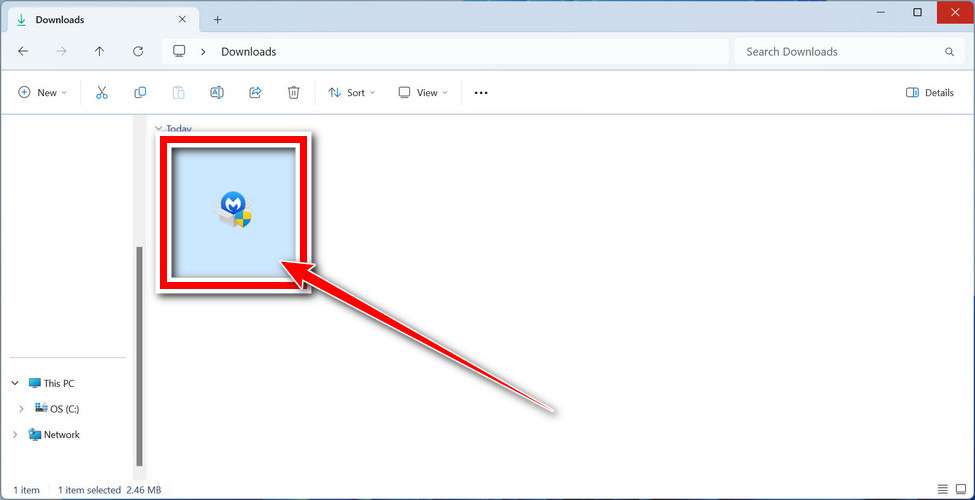
When the download finishes, open your Downloads folder and double-click the MBSetup file. If Windows shows a User Account Control pop-up, click “Yes” to allow the installation.
Follow the On-Screen Prompts to Install Malwarebytes
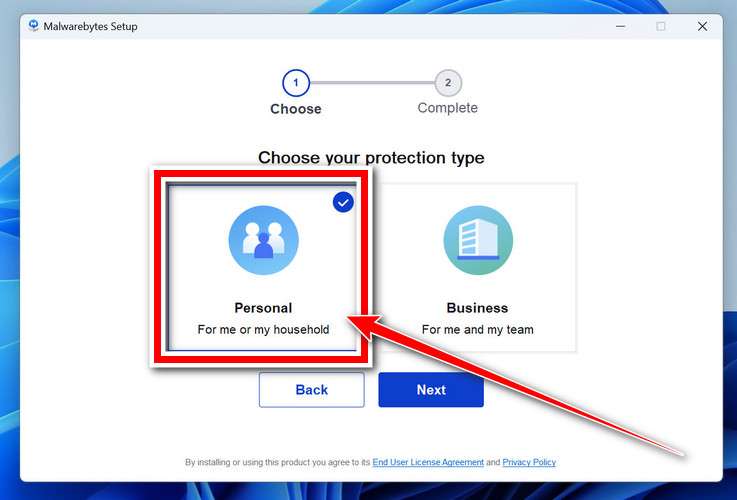
The setup wizard will walk you through a few quick screens:
Choose where you’re installing the program — “Personal Computer” or “Work Computer” — then click Next.
Malwarebytes will now install on your device. This usually takes under a minute.
When installation is complete, the “Welcome to Malwarebytes” screen will open automatically.
On the final screen, click Open Malwarebytes to launch the program.
Enable “Scan for Rootkits”
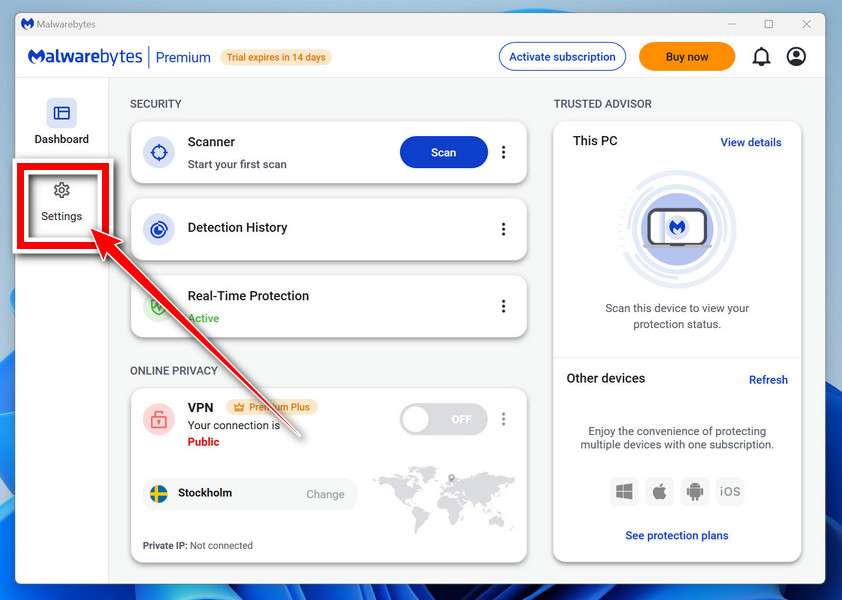
Before scanning, turn on rootkit detection so Malwarebytes can find even the most hidden threats. Click the Settings gear icon on the left side of the screen.
In the settings menu, find “Scan for rootkits” and click the toggle so it turns blue.
Done? Click “Dashboard” in the left pane to return to the main screen.
Start the Scan
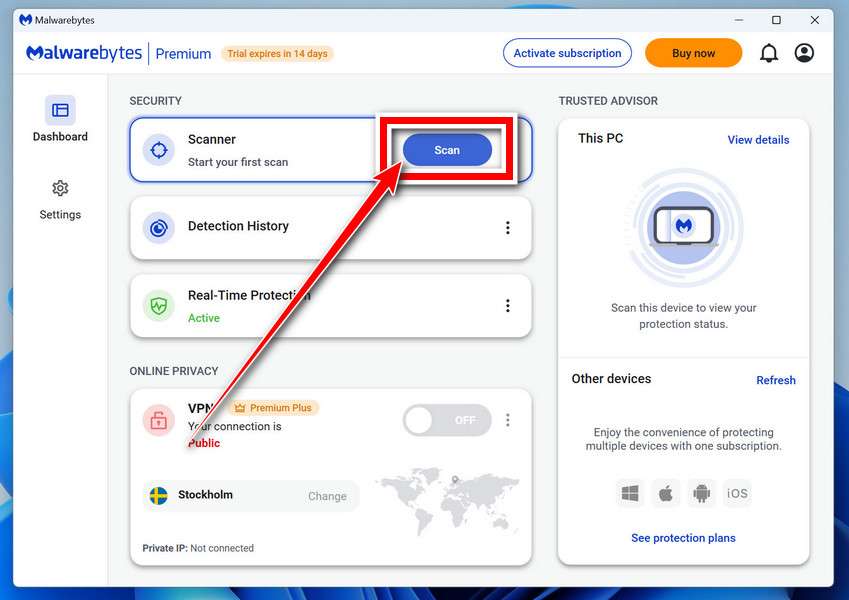
Click the blue Scan button. Malwarebytes will automatically update its virus database and start checking your computer for malware.
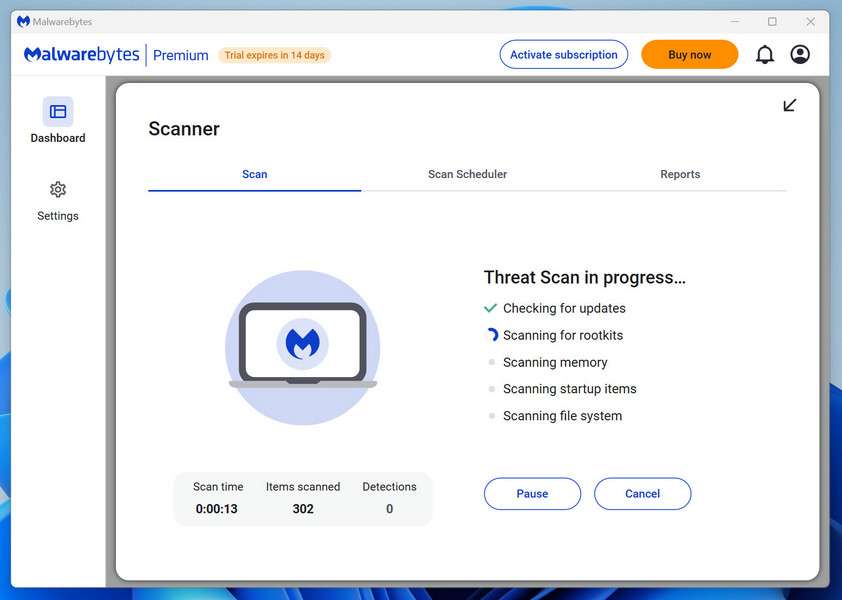
Wait for the Scan to Finish
The scan checks your entire system for browser hijackers and other malicious programs, so it can take several minutes. Feel free to do something else — just check back occasionally to see the progress.
Quarantine the Detected Threats
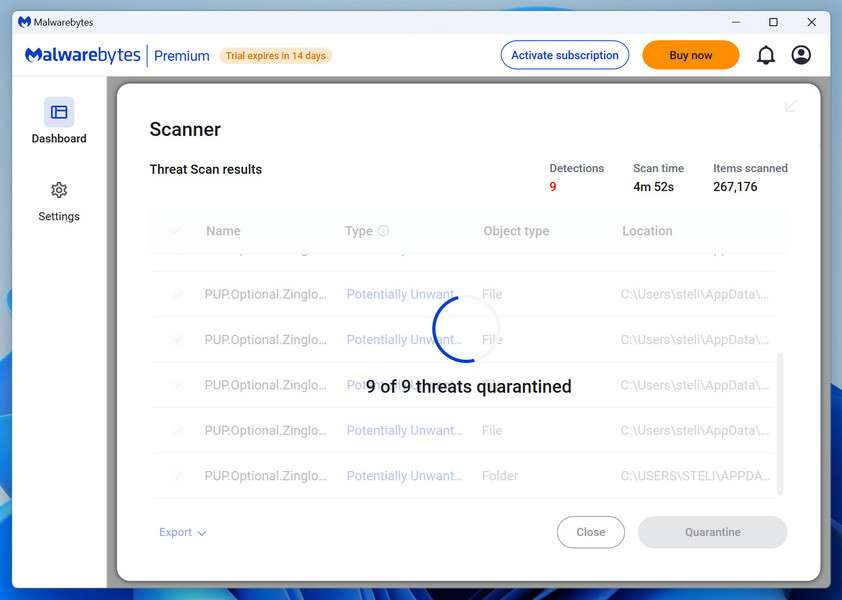
When the scan is done, you’ll see a list of everything Malwarebytes found — malware, adware, and potentially unwanted programs. Click the “Quarantine” button to remove all of them at once.
Malwarebytes will now remove the malicious files and registry entries and move them safely into quarantine.
Restart Your Computer
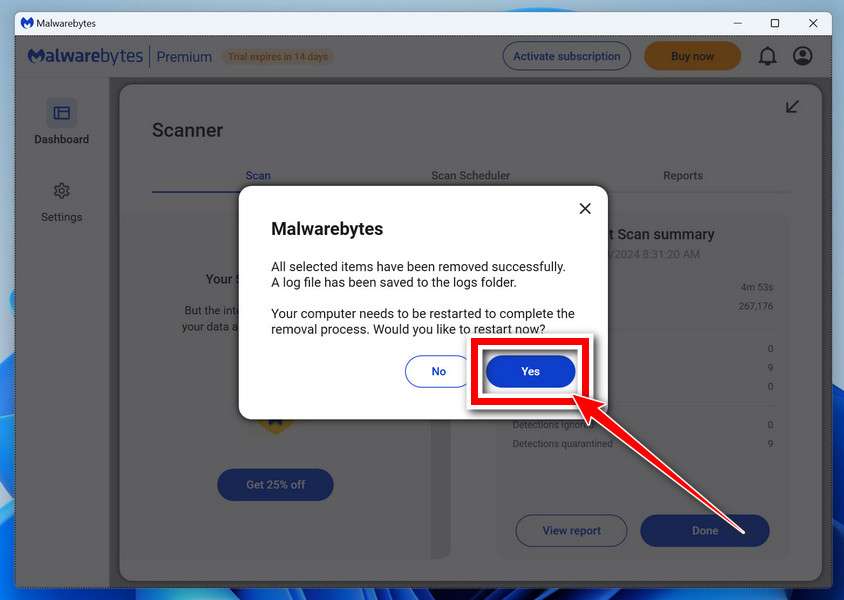
Some threats can only be fully removed after a reboot. If Malwarebytes asks you to restart, click Yes. Once you’re logged back in, your PC is clean and you can continue with the next steps in this guide.
When the scan finishes, click Quarantine to remove everything Malwarebytes found. That’s it — your Windows PC is now clean of trojans, adware, and other malware, and should be back to running smoothly.
If your current antivirus allowed this malicious program on your computer, you may want to consider purchasing Malwarebytes Premium to protect against these types of threats in the future. If you are still having problems with your computer after completing these instructions, then please follow one of the steps:
Malwarebytes for Mac is a free on-demand scanner that removes the malware other security software tends to miss — adware, browser hijackers, and unwanted programs included. Cleaning an infected Mac with Malwarebytes has always been completely free, and it’s our go-to recommendation. Follow the steps below to scan and clean your Mac in just a few minutes.
Download Malwarebytes for Mac
Click the button below to download the latest version of Malwarebytes for Mac.
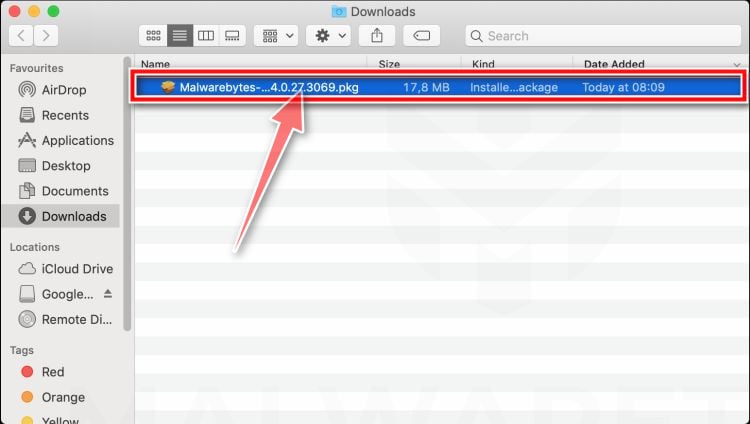
When the download finishes, open your Downloads folder and double-click the setup file to begin the installation.
Follow the On-Screen Prompts to Install Malwarebytes
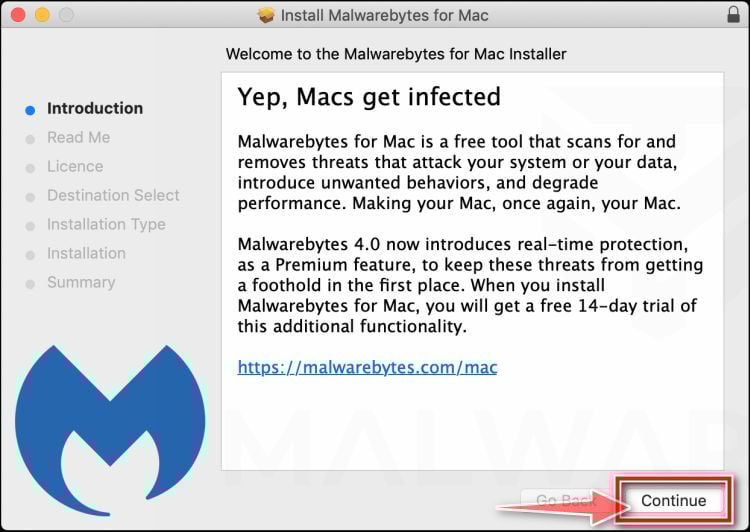
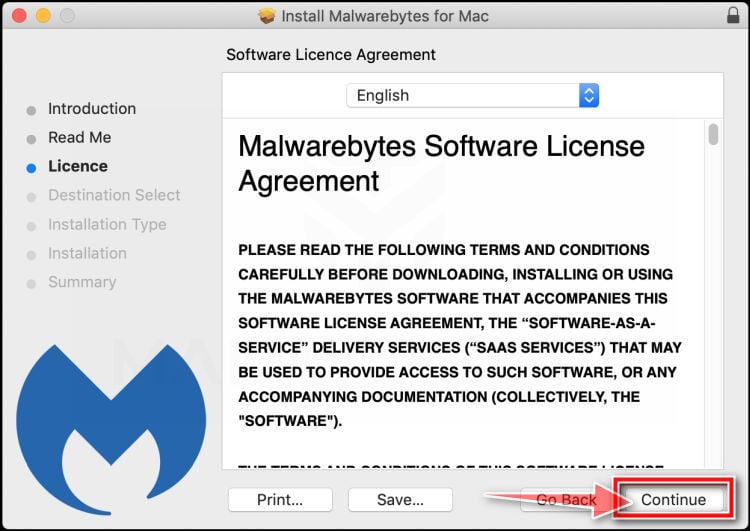
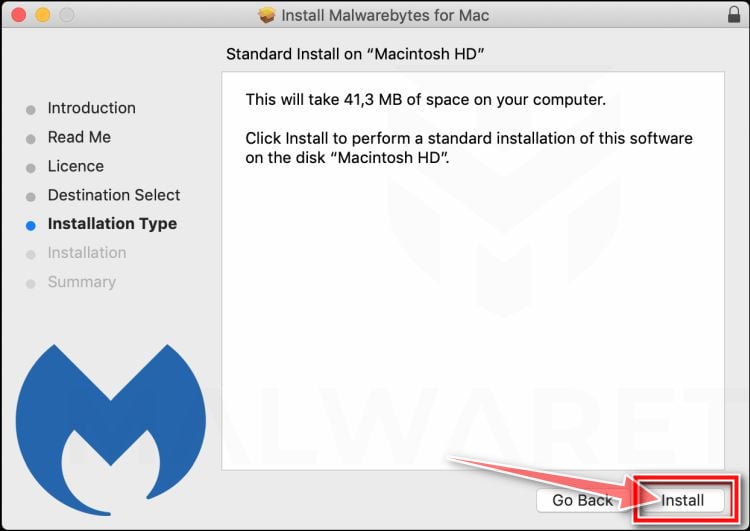
The Malwarebytes for Mac Installer will guide you through a few quick screens. Click “Continue” and keep following the prompts until the installation completes.
When the installation is complete, Malwarebytes opens to the Welcome to Malwarebytes screen. Click “Get started“.
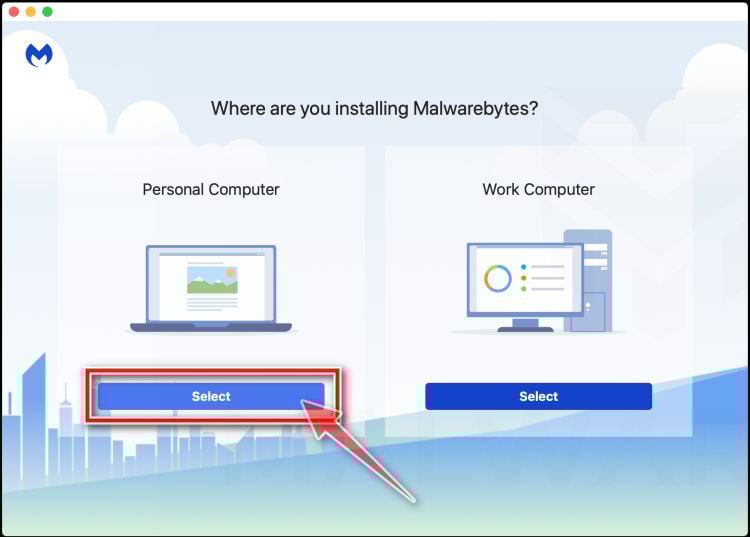
Select “Personal Computer” or “Work Computer”
Malwarebytes will ask what type of computer you’re installing it on. Click either Personal Computer or Work Computer, whichever applies.
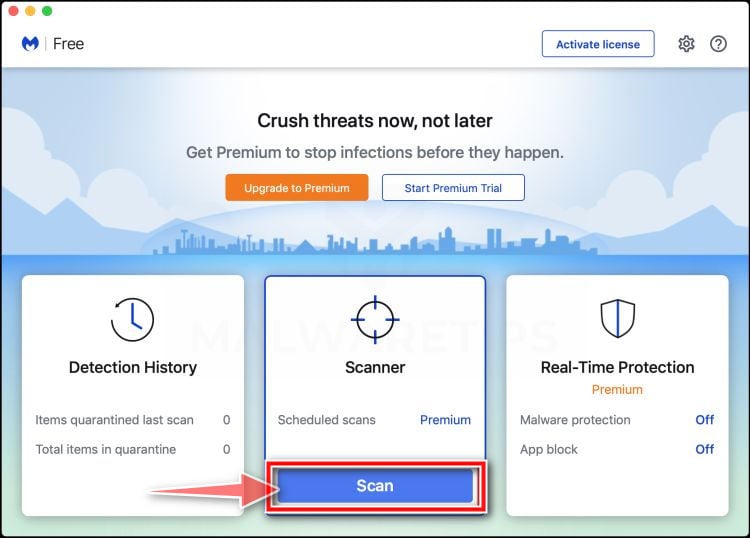
Start the Scan
Click the “Scan” button. Malwarebytes will automatically update its detection database and begin checking your Mac for malware.
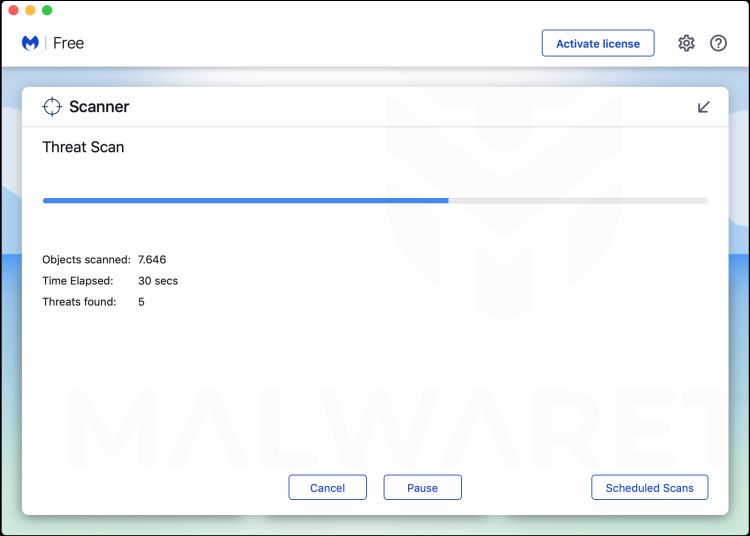
Wait for the Scan to Finish
Malwarebytes will scan your Mac for adware, browser hijackers, and other malicious programs. This can take a few minutes, so feel free to do something else — just check back occasionally to see the progress.
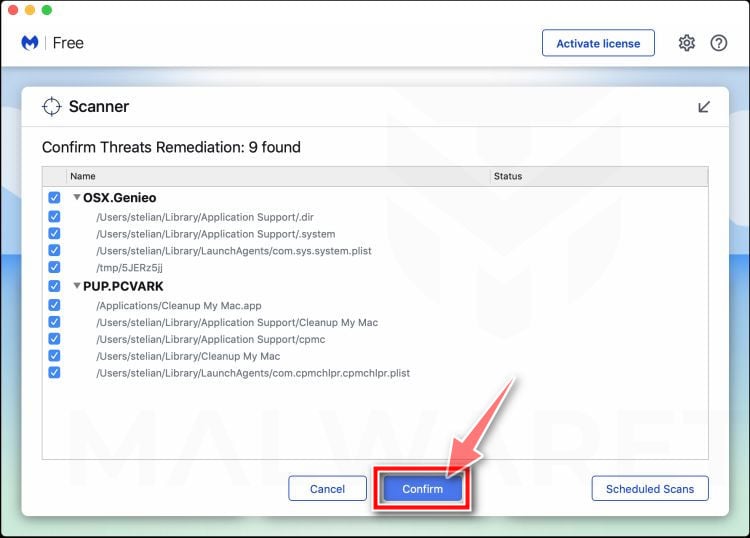
Quarantine the Detected Threats
When the scan is done, you’ll see a list of everything Malwarebytes found. Click the “Quarantine” button to remove all the threats at once.
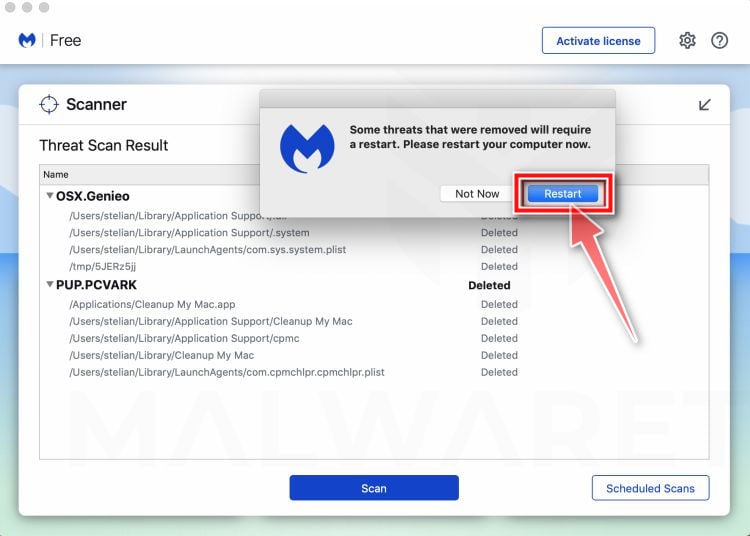
Restart Your Mac
Malwarebytes will now remove all the malicious files it found. Some threats can only be fully removed after a reboot — if Malwarebytes asks you to restart, allow it. Once you’re logged back in, your Mac is clean.
Once the scan is done, remove every threat it detected. Your Mac is now free of adware, rogue browser extensions, and other potentially harmful software.
If your current antivirus allowed a malicious program on your computer, you might want to consider purchasing the full-featured version of Malwarebytes Anti-Malware to protect against these types of threats in the future. If you are still experiencing problems while trying to remove a malicious program from your computer, please ask for help in our Mac Malware Removal Help & Support forum.
Run a Malware Scan with Malwarebytes for Android
Malwarebytes for Android automatically detects and removes dangerous threats like malware and ransomware so you don’t have to worry about your most-used device being compromised. Aggressive detection of adware and potentially unwanted programs keeps your Android phone or tablet running smooth.
Download Malwarebytes for Android.
You can download Malwarebytes for Android by clicking the link below.
In the Google Play Store, tap “Install” to install Malwarebytes for Android on your device.
When the installation process has finished, tap “Open” to begin using Malwarebytes for Android. You can also open Malwarebytes by tapping on its icon in your phone menu or home screen.
Follow the on-screen prompts to complete the setup process
When Malwarebytes will open, you will see the Malwarebytes Setup Wizard which will guide you through a series of permissions and other setup options. This is the first of two screens that explain the difference between the Premium and Free versions. Swipe this screen to continue. Tap on “Got it” to proceed to the next step. Malwarebytes for Android will now ask for a set of permissions that are required to scan your device and protect it from malware. Tap on “Give permission” to continue. Tap on “Allow” to permit Malwarebytes to access the files on your phone.
Update database and run a scan with Malwarebytes for Android
You will now be prompted to update the Malwarebytes database and run a full system scan.
Click on “Update database” to update the Malwarebytes for Android definitions to the latest version, then click on “Run full scan” to perform a system scan.
Wait for the Malwarebytes scan to complete.
Malwarebytes will now start scanning your phone for adware and other malicious apps. This process can take a few minutes, so we suggest you do something else and periodically check on the status of the scan to see when it is finished.
Click on “Remove Selected”.
When the scan has been completed, you will be presented with a screen showing the malware infections that Malwarebytes for Android has detected. To remove the malicious apps that Malwarebytes has found, tap on the “Remove Selected” button.
Restart your phone.
Malwarebytes for Android will now remove all the malicious apps that it has found. To complete the malware removal process, Malwarebytes may ask you to restart your device.
After the scan, tap Remove Selected to delete all detected threats. Your Android phone is now clean — no more malicious apps, adware, or browser redirects.
If your current antivirus allowed a malicious app on your phone, you may want to consider purchasing the full-featured version of Malwarebytes to protect against these types of threats in the future. If you are still having problems with your phone after completing these instructions, then please follow one of the steps:
Restore your phone to factory settings by going to Settings > General management > Reset > Factory data reset.
Now that your device is clean, keep it that way. Most infections start with a malicious ad or a fake download button — so blocking them at the source is your best defense.
We recommend AdGuard, which blocks malicious ads, phishing pages, and dangerous redirects before they can reach you.
How to Spot and Avoid Join Google Meet Scam Emails
Prevention is the best defense against phishing scams. Here are practical tips to identify and avoid these fraudulent invitations:
Check the Real URL
Hover over the “Join with Google Meet” button before clicking.
Legitimate Google Meet URLs always start with https://meet.google.com/ followed by a valid meeting code.
If the URL looks suspicious (e.g., dialgift.com, meet-verify.com), do not click it.
Verify the Sender
Check the “From” email address.
Legitimate Google invitations come from no-reply@google.com or your organization’s domain.
Be wary of slight misspellings or unrelated domains.
Confirm with the Organizer
If the meeting seems unexpected:
Contact the supposed organizer through another verified channel (e.g., phone, Slack, or direct email).
If they didn’t send it, it’s a scam.
Watch for Urgent Language
Scammers use urgency to bypass your critical thinking. Legitimate meetings rarely include urgent or alarming language.
Use Advanced Email Filtering
Enable spam filters and phishing protection in your email settings. Organizations can use tools like:
Google Workspace Security
Microsoft Defender
Dedicated email security gateways
Keep Your Software Updated
Modern browsers and email platforms often warn about suspicious links. Regular updates improve their effectiveness.
Enable Multi-Factor Authentication
Even if scammers get your password, they can’t access your account without the second authentication factor.
The Risks of Clicking Phishing Google Meet Links
Many victims believe clicking a phishing link is harmless if they don’t enter information. While that’s often true, clicking can still be dangerous:
Malware Installation Some phishing sites use browser exploits to install spyware or malicious extensions.
Cookie Theft or Session Hijacking Advanced phishing kits can steal session cookies and bypass login requirements.
Tracking and Targeting Scammers may track who clicked, then follow up with more targeted phishing attempts.
Account Enumeration By entering your email address (even without a password), you may confirm its validity to scammers.
Credential Harvesting If you enter any login information, scammers can immediately take control of your account.
Why This Scam Is So Effective
The Join Google Meet Scam is particularly dangerous because:
It leverages familiar branding and structure.
It creates a sense of urgency.
It blends into workplace routines, where online meetings are common.
It can bypass many basic spam filters.
It often uses realistic domains and wording, making it hard to distinguish from genuine invitations.
Unlike obvious phishing emails filled with spelling errors or fake logos, these invitations look and feel authentic.
Business and Organizational Impact
While individuals are frequent targets, businesses face a higher risk from this type of scam. A compromised Google Workspace account can lead to:
Data breaches exposing sensitive corporate information.
Business email compromise (BEC) scams targeting finance departments.
Reputation damage if phishing messages are sent from compromised accounts.
Regulatory consequences under GDPR or other privacy laws.
For organizations, phishing awareness training and robust security infrastructure are critical.
Real-World Examples of Similar Phishing Campaigns
The Join Google Meet scam is not an isolated incident. Similar campaigns have included:
Fake Microsoft Teams invitations.
Zoom meeting invite phishing.
“Secure document” phishing disguised as file-sharing links.
Calendar spam leading to credential theft.
In each case, scammers exploited familiarity and trust in common business tools.
What Makes Dialgift.com and Similar Domains Suspicious
One of the phishing domains uncovered in this campaign is dialgift.com. When clicked:
It redirects the user to a fake Google sign-in page.
It may use HTTPS to appear secure.
It may load slowly, mimicking the behavior of an actual Google Meet redirect.
It’s hosted on obscure servers unrelated to Google.
Scammers frequently rotate domains to evade security filters. If you see any non-Google domain when joining a meeting, it’s a red flag.
Best Practices for Staying Safe
Always verify meeting invitations before clicking.
Bookmark official Google Meet URLs and navigate directly when in doubt.
Use a password manager to detect fake login pages.
Enable browser security features to block malicious domains.
Educate employees and team members about phishing tactics.
Regularly review security settings on your Google account.
The Bottom Line
The Join Google Meet Scam Email is a sophisticated phishing attack that preys on trust and familiarity. By mimicking legitimate Google Meet invitations, scammers lure victims into entering their credentials on phishing sites like dialgift.com.
Once they obtain this information, attackers can compromise email accounts, steal personal or corporate data, and cause financial harm.
Protecting yourself requires vigilance: verify URLs, confirm invitations with organizers, and enable multi-factor authentication. If you fall victim, act quickly—changing your passwords, reviewing activity, and securing your accounts can help limit the damage.
Frequently Asked Questions (FAQ)
Is the “Join with Google Meet” button in suspicious emails always fake?
Not always—but if the email is unexpected or the sender is unfamiliar, it’s safer to hover over the link to verify the URL. If it doesn’t point to https://meet.google.com/, it’s a scam.
How can I tell if a Google Meet invite is legitimate?
Check the sender’s email address, hover over the “Join” link to verify the domain, and confirm with the organizer through another communication channel if unsure.
What should I do if I clicked the phishing link but didn’t enter my credentials?
Run a security scan, clear your browser cache and cookies, and remain vigilant for further phishing attempts. You should also change your password as a precaution.
Can scammers install malware just by me clicking the link?
In some cases, phishing sites may use browser vulnerabilities to install malware or tracking scripts. This is why avoiding suspicious links is always best.
I entered my Google login info on the fake site. What now?
Change your password immediately, enable 2FA, review account activity, and report the incident to Google. If this is a work account, notify your IT team.
Why are these scams so convincing?
They mimic real Google Meet invitations, use urgent language, and exploit familiar business tools. This combination lowers suspicion and increases the likelihood of clicks.
Are these scams only targeting businesses?
No. While businesses are common targets, individuals also receive these invitations, especially if their email addresses are publicly accessible or previously exposed in data breaches.
Should I block the sender if I receive such an email?
Yes. Blocking the sender and reporting the email as phishing helps protect you and others.
What’s the safest way to join Google Meet meetings?
Never join meetings from unsolicited emails. Type https://meet.google.com/ directly in your browser or use official calendar invites from verified contacts.
Can security software detect and block these phishing attempts?
Yes. Many modern email clients and security solutions can detect phishing domains. However, scammers frequently rotate domains, so human vigilance is still essential.
By understanding how the Join Google Meet Scam Emails operate, you can protect yourself and your organization from phishing threats. Awareness, verification, and quick action are the keys to staying safe online.
10 Rules to Avoid Online Scams
Here are 10 practical safety rules to help you avoid malware, online shopping scams, crypto scams, and other online fraud. Each tip includes a quick “if you already got hit” action.
Stop and verify before you click, log in, download, or pay.
Most scams win by creating urgency. Verify using a trusted method: type the website address yourself, use the official app, or call a known number (not the one in the message).
If you already clicked: close the page, do not enter passwords, and run a malware scan.
Keep your operating system, browser, and apps updated.
Updates patch security holes used by malware and malicious ads. Turn on automatic updates where possible.
If you saw a scary “update now” pop-up: close it and update only through your device settings or the official app store.
Use layered protection: antivirus plus an ad blocker.
Antivirus helps block malware. An ad blocker reduces scam redirects, phishing pages, and malvertising.
If your browser is acting weird: remove unknown extensions, reset the browser, then run a full scan.
Install apps, software, and extensions only from official sources.
Avoid cracked software, “keygens,” and random downloads. During installs, choose Custom/Advanced and decline bundled offers you do not recognize.
If you already installed something suspicious: uninstall it, restart, and scan again.
Treat links and attachments as untrusted by default.
Phishing often impersonates delivery services, banks, and popular brands. If it is unexpected, do not open attachments or log in through the message.
If you entered credentials: change the password immediately and enable 2FA.
Shop safely: research the store, then pay with protection.
Be cautious with brand-new stores, “closing sale” stories, and prices that make no sense. Prefer credit cards or PayPal for dispute options. Avoid wire transfers, gift cards, and crypto payments.
If you already paid: contact your card issuer or PayPal quickly to dispute the transaction.
Crypto rule: never pay a “fee” to withdraw or recover money.
Common patterns include fake profits, then “tax,” “gas,” or “verification” fees. Another is a “recovery agent” who demands upfront crypto.
If you already sent crypto: stop paying, save evidence (wallet addresses, TXIDs, chats), and report the scam to the platform used.
Secure your accounts with unique passwords and 2FA (start with email).
Use a password manager and unique passwords for every account. Enable 2FA using an authenticator app when possible.
If you suspect an account takeover: change passwords, sign out of all devices, and review recent logins and recovery settings.
Back up important files and keep one backup offline.
Backups protect you from ransomware and device failure. Keep at least one backup on an external drive that is not always connected.
If you suspect infection: do not connect backup drives until the system is clean.
If you think you are a victim: stop losses, document evidence, and escalate fast.
Move quickly. Speed matters for disputes, account recovery, and limiting damage.
Stop payments and contact: do not send more money or respond to the scammer.
Call your bank or card issuer: block transactions, replace the card if needed, and start a dispute or chargeback.
Secure your email first: change the email password, enable 2FA, and remove unfamiliar recovery options.
Secure other accounts: change passwords, enable 2FA, and log out of all sessions.
Scan your device: remove suspicious apps or extensions, then run a full malware scan.
Save evidence: screenshots, emails, order pages, tracking pages, wallet addresses, TXIDs, and chat logs.
Report it: to the payment provider, marketplace, social platform, exchange, or wallet service involved.
These rules are intentionally simple. Most online losses happen when decisions are rushed. Slow down, verify independently, and use payment methods and account controls that give you recourse.
Thomas is an expert at uncovering scams and providing in-depth reporting on cyber threats and online fraud. As an editor, he is dedicated to keeping readers informed on the latest developments in cybersecurity and tech.