

Limuva Brightening Lip Serum is being promoted online as a peptide-infused lip treatment that can supposedly hydrate, brighten, smooth fine lip lines, restore youthful lip color, reduce dryness, improve lip definition and deliver glossy “clinical-grade” results with daily use.
The product is advertised like a premium beauty treatment, but the sales page raises multiple red flags.
Limuva appears to follow the same pattern as many questionable beauty and supplement products previously covered on MalwareTips.com: exaggerated social media ads, AI-looking videos and images, copycat product positioning, inflated claims, urgency-based discounts, fake-looking testimonials, confusing refund terms and possible order or subscription risks.
This does not mean every customer will receive nothing. The bigger issue is that Limuva is marketed in a way that makes a basic lip gloss or serum look like a powerful anti-aging beauty solution. Buyers may end up paying a premium price for a cheap rebranded product that does not deliver the dramatic results promised in the ads.
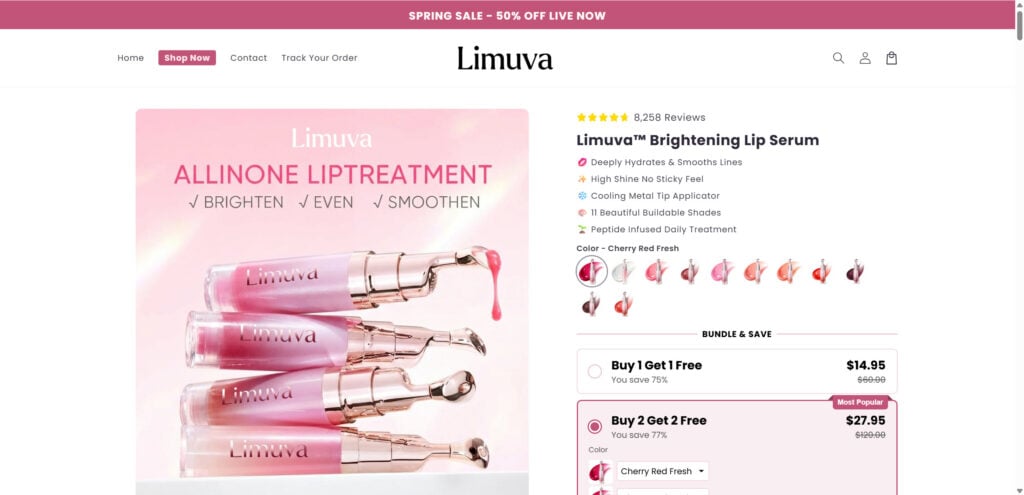
What Is Limuva Brightening Lip Serum?
Limuva Brightening Lip Serum is sold as a tinted lip serum with peptides, hyaluronic acid, vitamin C derivative, squalane, jojoba oil and a cooling metal-tip applicator.
The website says the product can help with:
- Deep lip hydration
- Smoother fine lip lines
- Brighter and more even lip tone
- Plumper-looking lips
- Better lip definition
- Non-sticky glossy shine
- A more youthful lip appearance
The product is priced around $30 and is sold in multiple shades such as Clear Fresh, Cherry Red Fresh, Baby Pink Fresh, Pink Ballet, Pink Berry Fresh, Coral Rose Fresh, Peach Rose Fresh, Juicy Peach, Fine Wine, Warm Cocoa and Guava Flush.
On the surface, it looks like a normal beauty product. But the way it is marketed makes it look far more powerful than a typical lip serum or gloss. That is where the problem begins.
Why Limuva Raises Scam Concerns
Limuva raises concerns because the marketing appears to exaggerate what a cosmetic lip product can realistically do.
The sales page does not simply describe it as a moisturizing lip serum. It uses stronger language around collagen support, brightening pigmentation, smoothing vertical lip lines, restoring definition and creating a visible transformation over several weeks.
That type of messaging is common in viral beauty-product funnels. A cheap or ordinary cosmetic item is presented as a breakthrough “clinical” solution, then promoted through social media ads that make the results look much more dramatic than they likely are.
The red flags include:
- Big anti-aging and brightening claims
- “Clinical-grade” language without clear product-specific clinical proof
- Before-and-after-style transformation messaging
- AI-looking promotional videos or beauty images
- Testimonial-style reviews that are hard to verify
- Urgency warnings such as low-stock notices and limited-time sales
- Contradictory refund language
- Possible copycat or rebranded product positioning
- Risks around extra units, upsells or subscriptions
- Similar products appearing under other names or on other platforms
This is the same type of operation seen with many social media-driven beauty and supplement offers.
Exaggerated Social Media Claims
The biggest issue with Limuva is the gap between what the product likely is and how it is promoted.
A lip serum can moisturize the lips. It may temporarily make lips look smoother and glossier. Ingredients like hyaluronic acid and oils can help lips feel softer. A tinted formula can make lips appear brighter while worn.
But that is very different from implying that a lip serum can rebuild collagen, reverse aging, restore lost lip color, transform lip texture or make lips look “10 years younger.”
Many of these claims are difficult to prove, especially when the seller does not provide independent clinical testing for the exact Limuva product. The website uses ingredient-based language, but ingredient claims are not the same as proof that the finished product delivers the promised results.
This is a common trick in misleading beauty marketing. Sellers take ingredients that sound scientific, such as peptides, hyaluronic acid or vitamin C, then imply that the product itself will produce dramatic anti-aging results.
AI Videos and Fake-Looking Beauty Images
Limuva is also the type of product that is often pushed through AI-generated or heavily edited social media ads.
These ads may show:
- Perfect lips with unrealistic shine
- AI-generated beauty models
- Edited before-and-after results
- Fake influencer-style testimonials
- Synthetic voices or AI presenters
- Stock footage presented as real customer results
- Close-up lip videos that do not prove the product caused the result
This matters because beauty products are visual. If the ad shows lips that look smoother, fuller and brighter, many buyers assume the product created that effect. But the result may come from lighting, filters, lip liner, editing, AI generation or a completely different product.
Consumers should be especially cautious when an ad looks too polished, too dramatic or too perfect. Real cosmetic results are usually subtle, temporary and dependent on the person’s skin, lip condition and routine.
A Cheap Rebranded or Copycat Product?
Another major concern is that Limuva looks like it may be a rebranded or copycat version of an existing peptide lip serum concept.
The product style, metal-tip applicator, shade names, peptide-brightening positioning and lip-treatment language are similar to other peptide lip serums sold elsewhere for lower prices. That suggests Limuva may not be a unique breakthrough formula, but rather a repackaged or copycat product sold through a polished Shopify-style storefront.
This is common in dropshipping-style beauty scams.
A product is sourced cheaply from overseas suppliers or copied from a trending brand, then sold under a new name with premium claims and aggressive ads. The seller creates the impression of an exclusive beauty innovation, while the actual product may be generic, low-cost or similar to items available on Amazon, TikTok Shop, AliExpress-style marketplaces or other online stores.
That does not automatically mean the product is dangerous. But it does mean buyers should be skeptical of premium pricing and “exclusive” claims.
The Refund Policy Is a Major Red Flag
The Limuva product page advertises a 90-day money-back guarantee and says customers can try it risk-free.
However, the refund policy appears much more restrictive. It refers to a 30-day return policy, a $5 restocking fee, original packaging requirements, and restrictions on beauty or personal-care goods. It also says sale items may not be returnable.
That creates a serious contradiction.
On the sales page, the offer sounds simple: try it for 90 days and get your money back if you are not satisfied. But in the actual refund terms, the process may be much harder. If the item is considered a personal-care or beauty product, if it has been opened, if it was bought on sale, or if the seller says it does not meet the return conditions, the refund may be refused.
This is a common tactic in questionable e-commerce funnels. The marketing page makes the guarantee sound generous, while the policy page gives the seller multiple reasons to deny refunds.
Returns May Be Difficult or Impossible in Practice
Even when a refund policy exists, customers may still struggle to get their money back.
With products like Limuva, possible refund problems include:
- Customer support not responding
- Seller requiring approval before any return
- Sale items being excluded from refunds
- Opened beauty products being considered non-returnable
- Customers being charged restocking fees
- Return windows expiring before the product arrives or before the buyer realizes the issue
- Unclear return addresses
- International return shipping costs
- Partial refunds instead of full refunds
- Delays after the seller receives the item
This is why “money-back guarantee” language should not be treated as proof that the purchase is safe. The actual policy matters more than the promotional promise.
Risk of Receiving More Units Than Ordered
Another risk with social media beauty-product funnels is receiving more units than expected.
Many of these stores use checkout tactics such as:
- Bundle offers
- Quantity discounts
- Post-purchase upsells
- “Buy more and save” prompts
- One-click add-ons
- Countdown timers
- Cart-reservation messages
- Preselected options
A buyer may think they are buying one lip serum, but the final order may include multiple units, extra shades, backup products or add-on items.
This is especially risky if the refund policy is strict. If you receive more units than you intended to buy, the seller may claim you selected the bundle and then refuse to accept the return because the item is a beauty product, sale item or personal-care item.
Anyone ordering from Limuva should screenshot the cart, checkout page and confirmation email.
Refill Subscription and Recurring Charge Risks
Another common risk with viral beauty-product funnels is the possibility of refill subscriptions or recurring billing.
Even if the main product page looks like a one-time purchase, shoppers should watch carefully for:
- “Subscribe and save” options
- VIP membership offers
- Auto-refill plans
- Free trial wording
- Monthly delivery language
- Post-checkout upsells
- Hidden boxes in checkout
- Follow-up emails offering automatic shipments
Some buyers only discover the issue when a second charge appears weeks later.
If you already bought Limuva, check your bank statement and confirmation email. Look for any wording related to subscriptions, refills, recurring shipments or membership charges. If you see anything suspicious, contact the seller immediately and ask your bank about blocking future charges.
Fake or Unverifiable Testimonials
The Limuva sales page uses testimonial-style reviews from customers who claim the product made their lips softer, smoother, less sticky, more defined and younger-looking.
The problem is that these testimonials are difficult to verify.
Common red flags include:
- First names only
- No independent review platform shown
- No verified purchase proof
- No way to confirm the photos are real
- Overly polished language
- Perfectly positive results
- Claims that sound stronger than normal cosmetic results
One testimonial-style claim says the customer’s lips look “10 years younger.” That is the type of emotional beauty claim that can push buyers into ordering quickly, even though it is not reliable proof.
Real customer reviews should be independent, balanced and verifiable. A seller-controlled product page is not enough.
“Clinically Proven” Claims Without Clear Product Proof
Limuva uses scientific-sounding ingredient claims, including peptides, hyaluronic acid and vitamin C derivative.
These ingredients are common in skincare and lip-care products. But the presence of popular ingredients does not prove that Limuva itself is clinically proven to transform lips.
A proper clinical claim should be supported by clear testing of the exact product, not just general information about ingredients.
Important questions include:
- Was the finished Limuva product clinically tested?
- How many people were in the study?
- Was it independent?
- Was there a control group?
- Were results measured objectively?
- Were before-and-after images standardized?
- Were results published or reviewed?
- Are the claims based only on ingredient marketing?
If the seller cannot answer these questions clearly, the “clinically proven” language should be treated with caution.
Is Limuva FDA Approved?
No cosmetic like this should be assumed to be FDA approved.
In the United States, cosmetic products and ingredients generally do not require FDA premarket approval, except for certain color additives. That means a company can sell a cosmetic product without the FDA reviewing its effectiveness before it appears online.
This is important because beauty sellers often use medical or scientific language to make products sound more regulated than they are. A cosmetic can be legal to sell and still have exaggerated marketing claims.
Limuva’s own disclaimer says the statements have not been evaluated by the FDA and that the product is not intended to diagnose, treat, cure or prevent disease. That disclaimer weakens the stronger claims made throughout the sales page.
Why This Looks Like Previous MalwareTips Scam Patterns
Limuva fits a familiar pattern seen in many questionable beauty and wellness campaigns:
- A product goes viral through social media ads.
- The ads use polished, AI-looking or influencer-style visuals.
- The product is framed as a breakthrough solution.
- The sales page uses dramatic transformation language.
- Urgency and scarcity push buyers to act fast.
- The product is sold at a premium price.
- Similar items appear elsewhere for less.
- Refund promises sound better than the real policy.
- Customers may struggle with returns, extra charges or unwanted units.
- The same style of campaign reappears under different names.
This model is not limited to supplements. It is now common in beauty products, hair serums, lip plumpers, skin balms, anti-aging devices and teeth-whitening products.
Is Limuva Brightening Lip Serum Legit or a Scam?
Limuva Brightening Lip Serum should be treated as a high-risk beauty-product offer.
It may be a real lip product, and some customers may receive a serum or gloss. But that does not make the marketing trustworthy.
The product appears to be promoted with exaggerated claims, questionable “clinical” language, fake-looking testimonials, urgency tactics and refund terms that may make returns difficult. It also looks similar to other peptide lip serum products sold elsewhere, which raises the possibility that buyers are paying a premium for a rebranded or copycat item.
The safest conclusion is this: Limuva is not a product we would recommend buying from social media ads.
What To Do If You Already Ordered Limuva
If you already bought Limuva Brightening Lip Serum, take these steps:
1. Check your order confirmation
Confirm how many units were ordered, what shades were selected, and whether any add-ons or subscriptions were included.
2. Screenshot everything
Save the product page, checkout page, refund policy, order confirmation and any ad that influenced your purchase.
3. Contact support immediately
Ask for cancellation or refund in writing. Use clear wording:
“I do not authorize any additional products, subscriptions, refill shipments or recurring charges. Cancel all future billing and confirm in writing.”
4. Watch your bank statement
Look for extra charges, repeat charges or billing names you do not recognize.
5. Contact your bank if needed
If you were charged for more than you ordered or the seller refuses to refund you, ask your card issuer about a chargeback.
6. Do not use the product if it irritates your lips
Stop using it if you experience burning, swelling, rash, cracking, allergic reaction or discomfort. Speak with a healthcare professional if symptoms continue.
7. Report misleading ads
Report the ad on Facebook, Instagram, TikTok, YouTube or whichever platform showed it to you.
How To Avoid Similar Beauty Product Scams
Before buying a beauty product from a social media ad, check for these warning signs:
- The ad shows dramatic before-and-after results
- The product claims to fix aging, pigmentation, dryness and volume at once
- The images look AI-generated or heavily edited
- The seller uses “clinical-grade” language without real product studies
- The product appears under multiple names online
- Similar products are sold elsewhere for much less
- The refund policy contradicts the guarantee
- Sale items are excluded from returns
- The product is a personal-care item that may not be returnable once opened
- The checkout includes bundles, upsells or refill options
- Customer reviews cannot be verified independently
A legitimate beauty product should make realistic claims, show clear ingredient information, offer transparent refund terms and avoid manipulative sales tactics.
Final Verdict
Limuva Brightening Lip Serum has too many red flags to recommend.
The product is marketed as a premium peptide lip treatment, but the claims around brightening, collagen support, smoothing fine lines, restoring lip color and transforming lips appear exaggerated. The product also looks similar to other peptide lip serums sold elsewhere for less, raising concerns that it may be a rebranded or copycat item pushed through social media ads.
The refund situation is especially concerning. The sales page promotes a 90-day guarantee, while the refund policy includes stricter 30-day terms, restocking fees, original-condition requirements, sale-item exclusions and personal-care return limitations.
For consumers, the risks include overpaying for a cheap product, receiving more units than expected, struggling to return it, being pushed into refill subscriptions and getting results that do not match the ads.
Limuva Brightening Lip Serum is best avoided unless the seller can provide clear proof of product-specific testing, transparent refund terms and verifiable independent reviews.








