

A text from UpdatePCP says your motor finance claim has reached its final stage and you could receive as much as £16,000. You may never have filed a complaint, yet the message includes a deadline and a link to confirm the vehicle.
The UpdatePCP message is a scam. It borrows a real UK motor finance issue to collect personal and banking information, sell a lead or demand an upfront fee. A mass text cannot know that compensation was approved for you.
UpdatePCP Text Scam Overview
The text turns real compensation news into a fake personal award
UK regulators have addressed complaints involving motor finance commission arrangements, so recipients may have heard that some drivers could be owed redress. The UpdatePCP scam exploits that public story. It jumps from general eligibility rules to a specific claim that your case is nearly complete, even though the sender has not reviewed your agreement.
Messages use phrases such as FINAL STAGES, urgent update and claim now. A large figure like £16,000 is chosen to make the link feel too valuable to ignore. The landing page asks for a name, telephone number, vehicle registration, finance provider, agreement dates and sometimes bank information. None of those fields prove that money exists.
A legitimate complaint can be started without the text
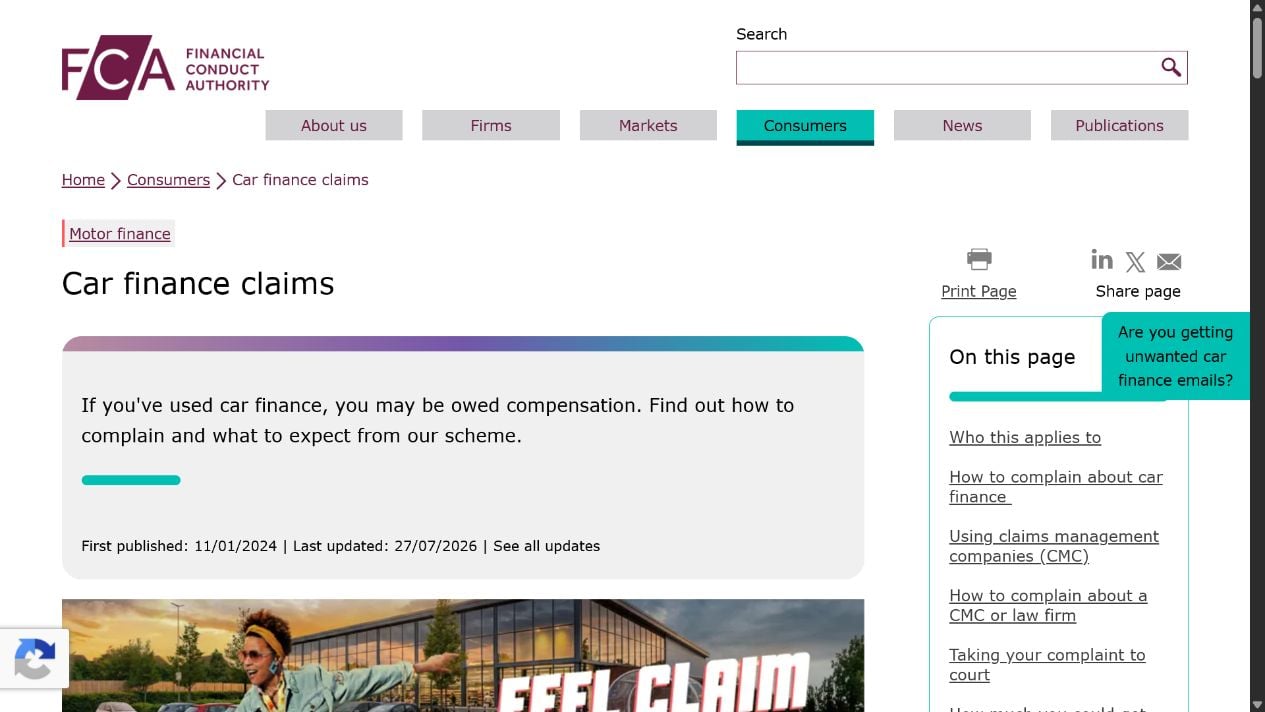
The Financial Conduct Authority publishes current information about motor finance complaints. Consumers can contact their lender directly without paying a claims company. If a response remains unresolved and meets the relevant conditions, the Financial Ombudsman Service may provide a free route for escalation.
- Confirmed scam sign: the message states a personal payout before reviewing an agreement.
- False deadline: the text claims the money or case will expire immediately.
- Data target: identity, vehicle, finance and banking details.
- Money target: an advance tax, release fee or expensive claims contract.
- Safe route: contact the lender and use FCA guidance independently.
Do not confuse a claims-management company with the regulator. Even an authorized business is not the FCA and cannot guarantee the outcome or amount. The specific UpdatePCP text should be deleted after evidence is saved and reported to 7726.
The sender name may change from UpdatePCP to PCP Update, Car Finance Review or another generic label. The test remains the same: no unsolicited sender can confirm an award without identifying a real lender decision and agreement. New branding does not make this script legitimate.
Warning Signs in the UpdatePCP Compensation Text
The message claims knowledge it cannot possess
Eligibility depends on the agreement, dates, lender, commission model and the complaint process. A sender that knows only a telephone number cannot place your case in a final stage.
The more certain the payout sounds, the less credible the message becomes.
Red Flags at a Glance
- You never opened a claim. There is no real case that could have reached a final stage.
- £16,000 is presented as waiting. The figure is bait, not a calculation from your agreement.
- The link uses an unrelated domain. It is not the lender, FCA or Financial Ombudsman Service.
- A same-day deadline appears. Legitimate complaint rights do not vanish because a text says so.
- Bank details are requested early. A lead form does not need them to check basic eligibility.
- An advance fee unlocks the award. Taxes and release charges are classic refund-scam tactics.
- The sender discourages your lender. The victim is told that direct contact will cancel or reduce the claim.
How Real Motor Finance Complaints Differ
A real process starts with an agreement and lender
Find the finance agreement, lender name, dates and vehicle information. Contact the lender through a statement or its official website. Ask what complaint process applies and keep the reference number. A genuine response identifies the account and explains how the decision was reached.
Use the FCA motor finance page for current deadlines and scheme information. The rules have changed over time, so an old social post or mass text may be inaccurate even when it links to a real news story.
Paid representation is optional
A claims company may offer convenience, but it can charge success fees and VAT from any award. Read the authority, cancellation rights, data-sharing terms and complete fee schedule. Never sign because a text implies that representation is required.
A claims company also cannot turn an ineligible agreement into an eligible one. Bold estimates are marketing until the lender reviews the facts. If a representative refuses to identify its legal entity and regulatory status, do not submit information.
The regulator does not confirm awards by random text
The FCA publishes rules and consumer guidance; it does not send surprise messages telling individuals to click a private claim link. The Financial Ombudsman Service likewise does not require gift cards, cryptocurrency or an advance tax to release compensation.
If a caller says a payment is ready, ask for the lender, agreement reference, written decision and calculation. Verify each item through the lender. A scammer usually replaces documents with pressure.
Information the UpdatePCP Form Can Put at Risk
Vehicle details strengthen later impersonation
A registration number, lender and agreement date may seem less sensitive than a password, but together they let a criminal describe a convincing account. A later caller can quote the vehicle while pretending to be a case manager, bank investigator or ombudsman employee.
A driving licence, address history and signature create greater risk. They can support account applications or unauthorized letters of authority. Never upload identity documents to a domain reached through a mass text.
Bank details are not needed before an award exists
A form may say an account number is required to pay compensation, but the sender has not produced a lender decision or calculation. Banking data can support direct-debit abuse or a follow-up call that requests authentication codes.
If someone asks you to move savings so compensation can enter an empty or safe account, stop. Lenders do not protect awards by moving your money. The receiving account belongs to a criminal or money mule.
A claims contract can cost money without stealing your identity
Some forms pass consumers to real claims businesses. Read the legal entity, authority, success fee, VAT and cancellation terms. A broad mandate may cover several agreements and create a fee even though you could have complained to the lender for free.
How the UpdatePCP Text Scam Works
Step 1: Mass texts target UK mobile numbers
The sender broadcasts a motor finance message without knowing who had PCP or hire-purchase agreements.
Recipients who recognize the public compensation story are more likely to respond.
Step 2: A large award creates curiosity
The text says a case is in its final stage or that up to £16,000 is available.
The amount makes a recipient rationalize why an unknown sender might be genuine.
Step 3: A fake deadline forces the click
The claim supposedly expires today or needs immediate identity confirmation.
Urgency prevents a direct check with the lender.
Step 4: The form collects finance data
The page requests personal details, vehicle registration, lender, dates and contact permission.
That information can be sold as a lead or used for tailored impersonation.
Step 5: Sensitive details or a contract follow
Later screens request banking information, identification or a broad letter of authority.
The victim may unknowingly sign a fee-bearing claims agreement.
Step 6: A fee is demanded before payment
A fake agent claims that tax, insurance or processing money is needed to release the award.
Additional fees appear after the first payment because no compensation exists.
Step 7: Recovery scammers reuse the details
A second caller claims the first firm was fraudulent and offers to recover the loss.
The recovery pitch seeks another fee, remote access or bank authentication code.
How To Check a Motor Finance Compensation Message
Leave the text and contact the parties that hold the agreement
Do not click. Locate the lender from your agreement or credit records and contact it through an independently verified channel.
Read the FCA’s current car finance claims guidance and use the free complaint route before considering paid representation.
A Safer Verification Sequence
- Check whether you had an eligible agreement. A text cannot establish that fact.
- Contact the lender directly. Ask whether a complaint or award exists in your name.
- Verify any claims firm. Match its legal name, permissions and contact details.
- Read the fee agreement. Calculate success fees, VAT and cancellation costs.
- Refuse advance payment. A payout is not released through gift cards or cryptocurrency.
- Forward the text to 7726. Then block the sender and preserve screenshots.
What To Do If You Used the UpdatePCP Link
Identify the data, contract and payment involved
Save the text, website address, form, privacy notice, agreement and confirmation. Record every detail submitted and any checkbox or signature used.
If banking or card information was entered, contact the bank immediately and describe a suspected motor finance compensation phishing page.
If you signed a claims agreement, cancellation requires more than blocking a number. Read the written process and act within any cooling-off period.
Recovery Checklist
- Ask the bank to secure exposed credentials and review recent transactions.
- Change reused passwords and protect the email account receiving finance documents.
- Contact the lender if agreement details or identity documents were disclosed.
- Freeze credit or use protective registration when identity theft is possible.
- Send written cancellation to any claims firm and keep proof of delivery.
- Ask the lender whether a third party submitted authority or a complaint.
- Report the text to 7726 and the website to the relevant fraud-reporting service.
- Ignore callers demanding another fee to recover supposed compensation.
Revoke permissions you did not understand
A letter of authority may let a firm obtain account information or act for you. Ask the lender what it received and how to revoke it if you no longer want representation.
Continue watching email and telephone contact. Lead forms can circulate among several marketers, so later callers may know convincing details without representing your lender.
Frequently Asked Questions
Is the UpdatePCP text genuine?
No. A message claiming your case is in its final stage and promising a large award without reviewing the agreement is a scam.
Could I still have a real motor finance complaint?
Possibly. Contact the lender directly and follow current FCA guidance rather than using the text link.
Do I need a claims company?
No. Consumers can complain directly to the lender, and eligible unresolved matters may go to the Financial Ombudsman Service for free.
Should I pay tax to release compensation?
No. An unexpected advance tax, insurance or release payment is a scam warning.
The Bottom Line
The UpdatePCP text is not a shortcut to £16,000. It is a mass-message funnel built around real headlines and a fabricated personal claim.
Delete the link, contact the lender yourself and never pay to release compensation that has not been documented by the actual finance provider.








