

Digital ATM System is promoted through ads claiming that a hidden phone setting can produce hundreds or even thousands of dollars with only a few minutes of daily effort. The promise is presented as an insider secret that large technology companies supposedly tried to hide.
There is no such setting. The dramatic story leads to a $97 training and website-building product whose own current sales page says income is not guaranteed and real work is required. That gap between the advertisement and the product is the heart of the Digital ATM System scam.
Overview
Digital ATM System is a money-making offer advertised on social media and through deceptive advertorial pages. The campaign tells viewers that an ordinary smartphone contains a little-known feature capable of generating a large passive income.
One version begins with a page designed to resemble a CNN report. The false headline claims that a whistleblower engineer exposed a three-minute phone hack that forces Big Tech to pay users.
The advertorial says ordinary Americans can earn between $300 and $1,000 per day. It introduces fictional success stories, unnamed insiders, and a supposed Silicon Valley engineer who has discovered a money stream hidden inside the viewer’s phone.
The page is not hosted on CNN.com, and CNN did not publish the report. The familiar branding, news layout, author presentation, and investigative language are used to borrow trust from a real media organization.
Buttons on the fake article lead to another page that resembles a sponsored Facebook post. A long video repeats the promise that people can turn on one setting, perform a brief daily ritual, and collect $3,000, $5,000, or $10,000 per month.
The video delays explaining the method. It uses stories about financial stress, retirement, family arguments, and people who allegedly bought expensive vehicles after discovering the system. Viewers are encouraged to keep watching because the secret will supposedly be revealed near the end.
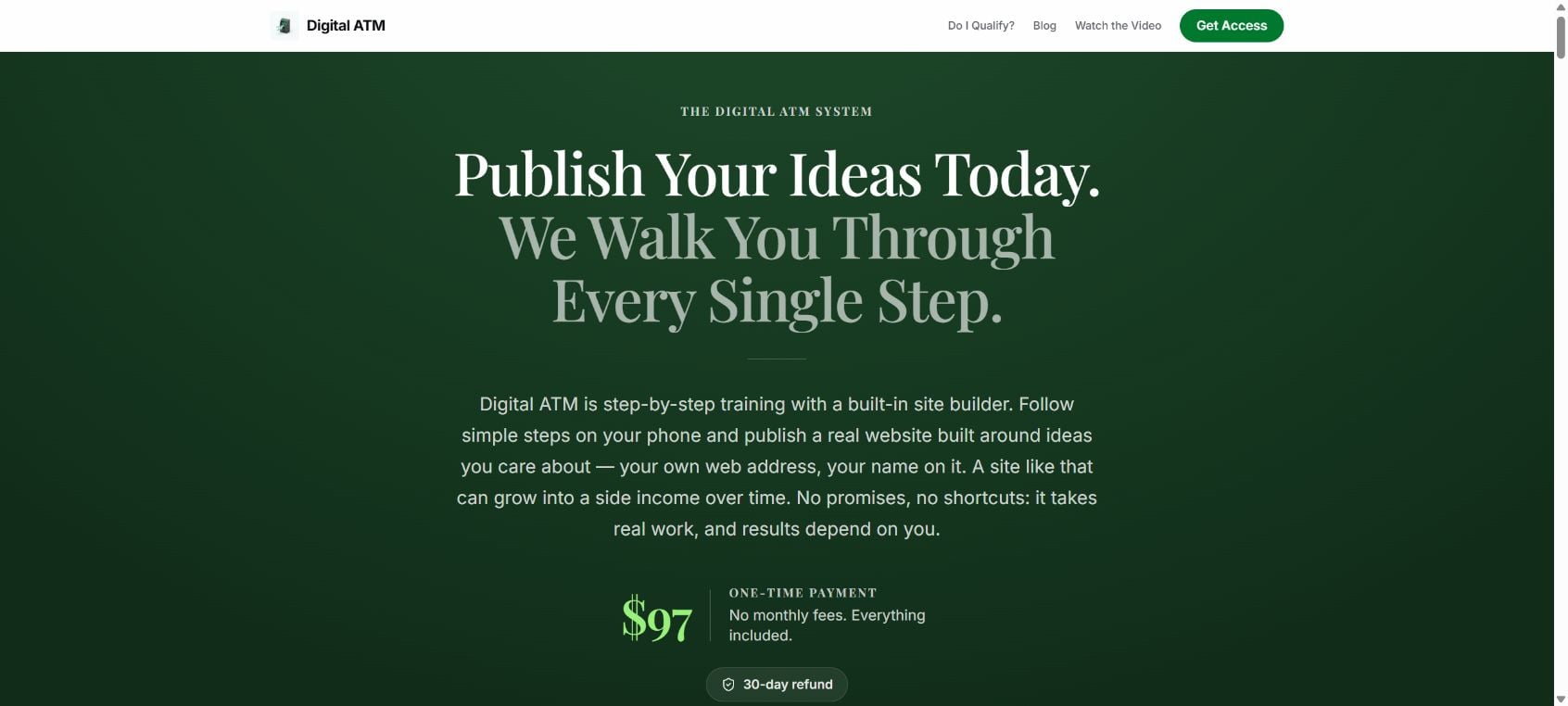
Instead of revealing a phone setting, the funnel asks for $97. The current GetDigitalATM.com website describes the product as six training modules, 34 steps, a site builder, a writing assistant, a picture tool, hosting, and progress tracking.
In other words, the product is an online website-building course and toolset. A buyer may use it to publish pages about products and attempt to build traffic over time. That activity is not automatic, guaranteed, or equivalent to switching on a hidden payment feature.
The current page quietly contradicts the advertisement
The live Digital ATM homepage reviewed by MalwareTips on August 10, 2026, uses much more cautious wording than the ads. It says a website can grow into side income over time, that there are no promises or shortcuts, and that results depend on the customer.
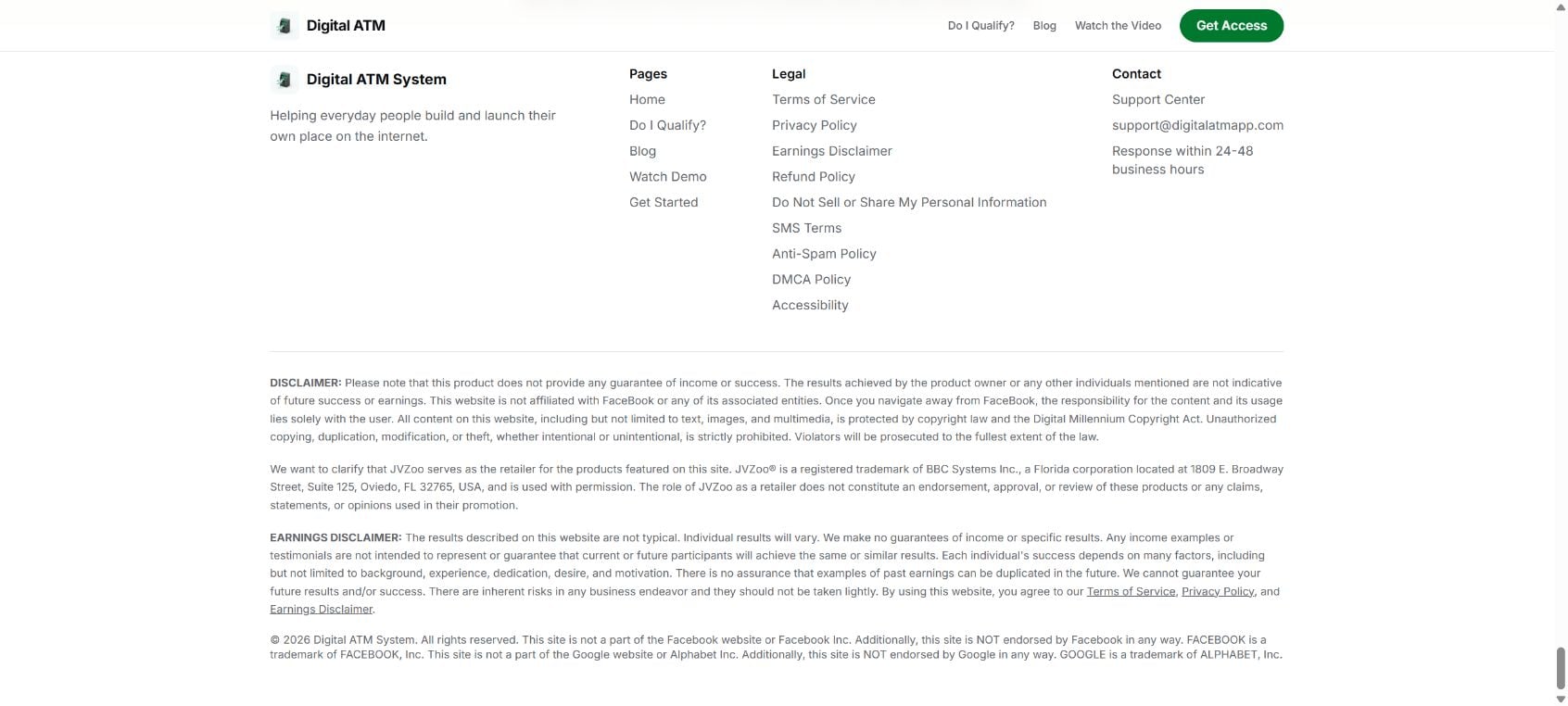
The page also says the program takes real work. Its earnings disclaimer states that the product provides no guarantee of income or success and that examples are not indicative of future earnings.
Those disclosures are important, but they do not erase the net impression created by an ad promising $300 to $1,000 per day from a three-minute phone trick. A disclaimer at the bottom of a later page cannot transform a fictional mechanism into an honest first impression.
The $97 price is described as a one-time payment with no monthly fee. The page says hosting is included for the lifetime of the product and defines that lifetime as approximately five years.
Even if the buyer receives access to a functional site builder, that does not validate the advertisement. The relevant question is not only whether files or software are delivered. It is whether consumers are induced to pay by materially false claims about what the product is and what a typical person can earn.
A website is not a cash machine
Building a website can be a legitimate project, but publishing a page does not automatically create an audience or revenue. A site needs useful original content, search visibility, returning visitors, legal compliance, security, maintenance, and a genuine way to earn money.
If the model involves affiliate links, revenue depends on traffic, reader trust, merchant approval, commission rates, and purchases. Most new websites earn little or nothing, especially when many customers use similar AI-generated templates to publish generic product pages.
A writing assistant can speed up a draft, but it cannot guarantee ranking, credibility, or sales. Search engines may ignore thin, repetitive, inaccurate, or mass-produced pages. Visitors may leave if content offers no experience or evidence.
The campaign avoids those realities by presenting income as a phone feature rather than a difficult business. The three-minute claim removes traffic, competition, expenses, skill, risk, and time from the story.
Digital ATM System warning signs
- A page imitates CNN even though it is not hosted on CNN.com.
- The headline claims an unnamed engineer exposed a hidden Big Tech secret.
- The offer promises between $300 and $1,000 per day.
- The mechanism is described as a phone trick, setting, hack, method, or ritual.
- The secret is withheld throughout a long video.
- Stories focus on paid-off debt, retirement fear, trucks, and financial freedom.
- The video says the system requires little experience, time, or effort.
- The sales page ultimately asks for $97.
- The actual product is a website-building course and toolset.
- The live page says real work is required and income is not guaranteed.
- The bottom disclaimer contradicts the certainty of the promotional story.
- The checkout is handled through a third-party digital product retailer.
The Federal Trade Commission says that an offer promising guaranteed income, large returns, or a proven system is likely a scam. Its guidance on business and coaching offers reminds consumers that nobody can guarantee they will make money in business.
How The Operation Works
The Digital ATM funnel is a structured persuasion sequence. It does not begin by honestly asking whether someone wants to buy a beginner website course. It first creates a sensational mystery, then reveals the price only after the viewer has invested time and emotion.
1. A social media ad promises effortless income
The first contact is usually a short video or sponsored post. It may feature a postal worker, retiree, mother, truck driver, or ordinary employee who supposedly found a hidden setting and began receiving large deposits.
The story is deliberately specific about the money but vague about the work. Dollar amounts and lifestyle improvements are clear. The actual source of revenue is not.
2. A fake news page manufactures credibility
The click opens an advertorial styled as a CNN investigation. News colors, navigation, a breaking headline, and references to a whistleblower make the offer look independently verified.
Readers who do not inspect the address bar may assume a respected newsroom investigated the system. The page uses that borrowed authority to make an impossible claim feel worthy of further attention.
3. The story invents a conflict with Big Tech
The fictional engineer supposedly discovered a way to redirect technology-industry money to ordinary users. The campaign says powerful companies tried to suppress the information because the method threatens their profits.
This framing turns missing evidence into proof. If no established publication discusses the system, promoters can claim suppression. If a viewer is skeptical, the story suggests that skepticism comes from years of being misled.
4. The second page imitates social media
A button leads to a video page designed to resemble a Facebook post or advertisement. Labels such as sponsored, reactions, comments, and a familiar layout create another layer of artificial familiarity.
Fake comments and success stories make it appear that other people have already tested the method. The visitor cannot verify whether those profiles or results belong to real customers.
5. The video stretches curiosity for many minutes
The narrator repeatedly says the phone setting will be shown soon. Meanwhile, the script discusses bills, job dissatisfaction, retirement, Social Security, family conflict, and fear of missing out.
This delay is useful to the seller. The longer viewers watch, the more they may feel committed to reaching the answer. Repetition also makes the claimed earnings begin to feel familiar rather than extraordinary.
6. Objections are dismissed before the price appears
The video says the system is not cryptocurrency, affiliate marketing, trading, surveys, ride sharing, or a pyramid scheme. By naming common concerns, the narrator appears transparent while still withholding the actual business model.
The offer also says no special skills or investment are needed. This removes the practical questions a buyer should ask about traffic, competition, advertising costs, content, commissions, and customer acquisition.
7. The $97 product replaces the promised secret
At the end, the visitor is offered access to Digital ATM System. The hidden phone setting never appears because it does not exist. The buyer instead receives or is promised training and tools for building a website.
The price is small compared with the advertised income. If the viewer believes $1,000 per day is possible, $97 feels trivial. That comparison is created by the false earnings premise.
8. The funnel may lead to more offers
Digital marketing products often include optional upgrades, related services, coaching, traffic packages, domain services, or follow-up promotions. MalwareTips cannot say that every Digital ATM buyer receives every type of upsell, but customers should watch for additional checkout pages and marketing messages.
Never assume an upgrade is necessary to recover the first payment. Paying more because the basic product did not produce the advertised result can deepen the loss.
9. The disclaimer shifts responsibility to the buyer
The bottom of the current site says results are not typical, income is not guaranteed, and success depends on many individual factors. It also says the site is not affiliated with Facebook or Google.
Those statements reveal the reality the advertisement concealed. The program is a risky attempt to build an online property, not an ATM, a phone switch, or a guaranteed income stream.
If You Have Bought This
If you paid for Digital ATM System, focus first on preserving evidence and using the stated refund window. You do not need to buy another product to make the original purchase work.
- Save the advertisement that influenced you. Capture the fake news page, video claims, earnings amounts, phone-setting language, checkout, receipt, and confirmation emails. The difference between the ad and the delivered product is important.
- Identify the retailer and billing descriptor. The current page says JVZoo serves as retailer and that card statements show COMMAS. Your receipt may list a different processor or descriptor, so rely on the actual transaction record.
- Request the advertised refund immediately. The live page offers a 30-day guarantee. Send a clear written request to the support address on your receipt and copy the retailer’s support channel if applicable.
- State why the offer was misleading. Explain that you were promised a hidden phone method or specific earnings but received website-building training. Avoid a long argument. Include the date, amount, order number, and requested resolution.
- Do not accept endless delay. If support asks repeated questions while the refund period is closing, restate the request and contact the payment provider. Keep every reply.
- Cancel related subscriptions. Review the checkout and statement for hosting, software, SMS, coaching, traffic, or membership charges. Cancel anything you did not intend to keep and save confirmation.
- Contact your card issuer if necessary. If the seller refuses a valid refund or the delivered product materially differs from the advertising, ask about a billing dispute. Provide screenshots and the seller’s written guarantee.
- Change any reused password. If you created an account using a password also used elsewhere, replace it everywhere it was reused and enable two-factor authentication.
- Remove access you no longer want. Revoke integrations, disconnect payment accounts, and remove any browser extensions or apps installed only for the program.
- Do not pay recovery agents. Anyone who unexpectedly contacts you promising to recover the money for an advance fee may be running a second scam.
- Report deceptive earnings claims. U.S. consumers can submit the ad, domain, receipt, and loss at ReportFraud.ftc.gov.
Check your statements for several months. A small unfamiliar charge may be a trial or service fee rather than a harmless error. Ask the issuer about any descriptor you do not recognize.
If you entered extensive personal information on a fake advertorial or lead form, expect more calls and emails. Treat unsolicited investment, coaching, loan, and recovery offers as suspicious because your details may be valuable to other marketers or scammers.
The Bottom Line
Digital ATM System is not a hidden phone feature that forces Big Tech to pay users $300 to $1,000 per day. The sensational ad funnel leads to a $97 website-building product whose own page admits that income is not guaranteed and real work is required.
Do not buy it based on the three-minute phone trick story. If you already paid, save the advertising, request the promised refund promptly, cancel unwanted services, and dispute unresolved deceptive charges before your payment provider’s deadline.








