

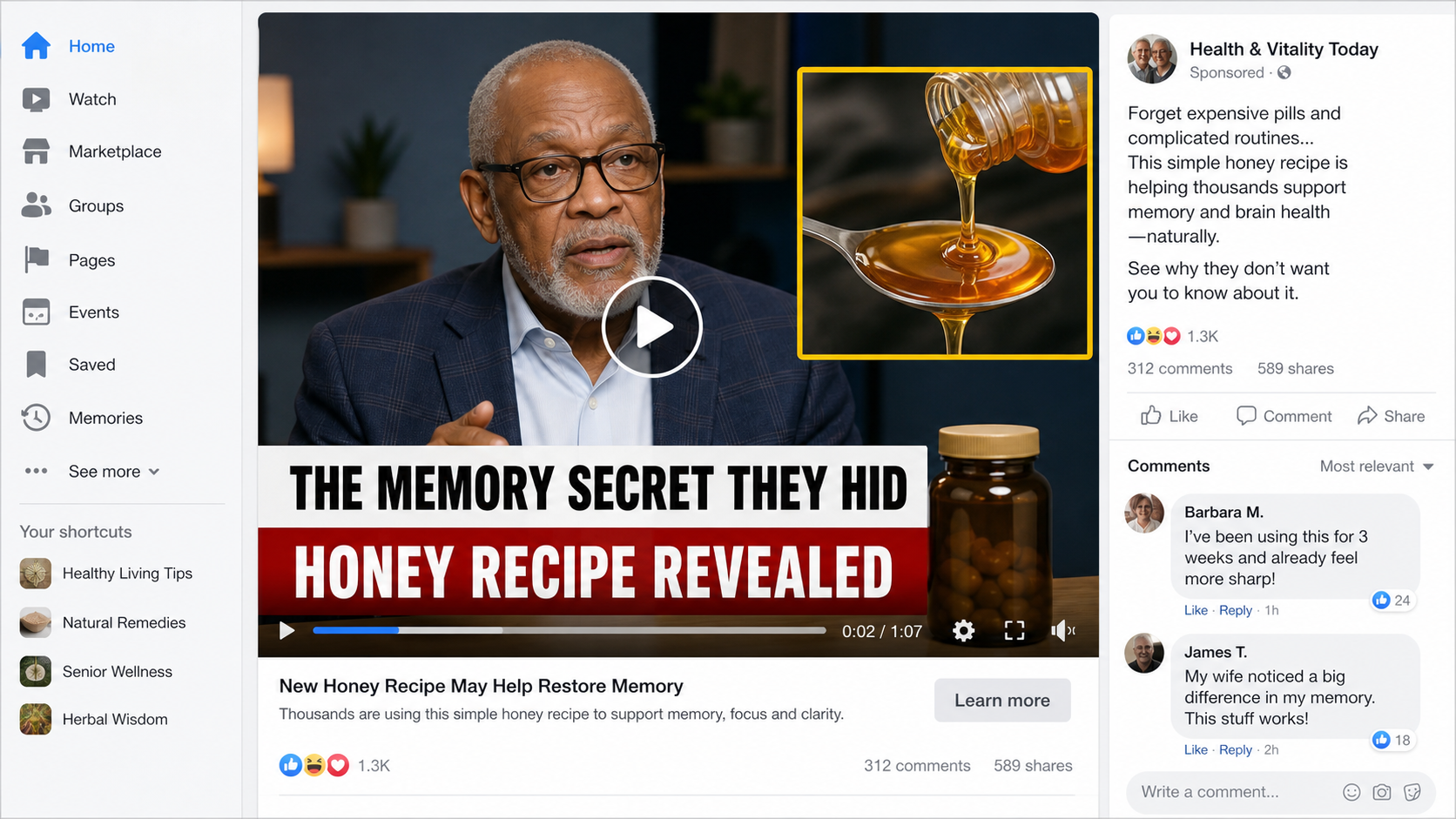
A familiar voice begins telling a deeply personal story about memory loss. Within seconds, the video promises that an ordinary spoonful of honey helped unlock a discovery powerful people wanted hidden.
The presentation feels intimate, urgent, and strangely believable. That is precisely why the Morgan Freeman Alzheimer’s cure scam deserves a closer look before anyone follows its recipe or reaches the order page.
Overview
What the Fake Morgan Freeman Story Claims
The ad makes it appear that Morgan Freeman revealed a hidden Alzheimer’s treatment after experiencing a frightening memory problem. Some versions add Bill Gates, a researcher, or an unnamed neurologist to make the supposed discovery sound larger and more credible.
Honey is presented as the clue. Viewers are told that combining it with a secret ingredient can clear brain fog, restore memories, and protect the brain from dementia. The promised kitchen recipe eventually becomes a pitch for a paid supplement.
What the Evidence Actually Shows
There is no verified evidence that Morgan Freeman endorsed this memory cure, the honey ritual, or the supplement sold at the end. A celebrity appearing on screen does not prove consent, especially when cloned audio and edited interview footage can create statements that were never made.
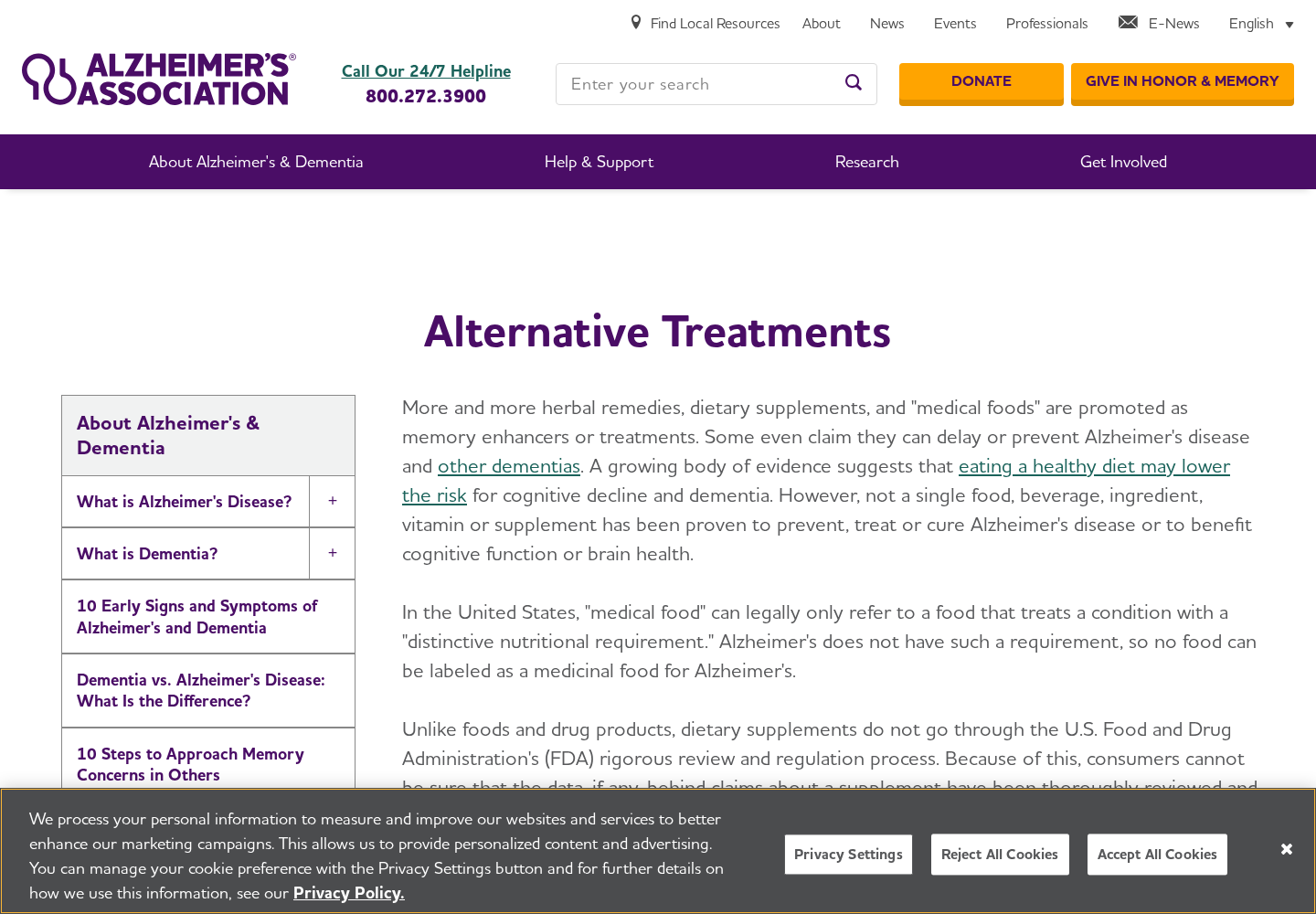
The Alzheimer’s Association explains that no single food, drink, ingredient, vitamin, or supplement has been proven to prevent, treat, or cure Alzheimer’s. A sales video cannot replace that medical reality.
- The celebrity endorsement is unauthorized or fabricated.
- The honey story is a hook, not documented clinical evidence.
- The fake interview may be assembled from unrelated footage.
- The destination often imitates a trusted news website.
- The product name can change without changing the script.
- The checkout may conceal a larger package or recurring refills.
Why the Product at the End Keeps Changing
One version of the funnel has promoted Neuro Mind Pro. Another marketer can connect the same video to a different bottle in a few minutes. The celebrity, emotional story, and alleged recipe generate the demand. The supplement is simply the item available to monetize that traffic.
This is why checking only one brand is not enough. MalwareTips has separately examined the Neuro Mind Pro supplement funnel. The warning signs in this article still apply when the bottle, label, price, seller, or domain changes.
Why Morgan Freeman Is Used to Sell the Memory Story
Morgan Freeman has one of the most recognizable voices in entertainment. His calm delivery and decades of documentary narration make almost any statement sound measured and authoritative. Scammers borrow that trust even though acting and narration do not create medical expertise.
Modern voice cloning makes this tactic easier. A short sample can be used to produce sentences the person never recorded. Real interview footage is then cut into short segments, while captions cover awkward mouth movement and dramatic music discourages careful listening.
The campaign also relies on familiarity. Viewers may not remember where they previously saw the clip, only that the face and voice feel credible. That recognition lowers skepticism during the first crucial seconds of the ad.
A genuine endorsement should be traceable to the person’s verified channels, a real broadcast archive, and a clearly identified company. If the only evidence is a sponsored social post leading to a supplement checkout, the endorsement has not been verified.
The Bill Gates Honey Recipe Is Part of the Same Funnel
The story sometimes shifts from Morgan Freeman to Bill Gates. The narrator may claim that Gates funded a dementia breakthrough, helped develop a “honey shield,” or challenged drug companies that wanted to suppress a cheap natural solution.
Those additions are designed to answer different doubts. Freeman supplies emotional trust, while Gates supplies the appearance of money, technology, and global research. Neither element proves that the advertised product works or that either person approved the campaign.
Scammers often combine several famous names because the viewer may recognize at least one. They can also test which version attracts more clicks, then direct all successful ads to the same advertorial and checkout.
The kitchen ingredient is equally flexible. Honey may become cinnamon, olive oil, salt, or a morning drink in the next campaign. A real clinical discovery does not need an endlessly changing folk remedy to explain why a supplement bottle must be purchased immediately.
What Reputable Alzheimer’s Guidance Says
Memory concerns deserve careful medical attention because they can have many causes. Medication effects, sleep disorders, depression, vitamin deficiencies, infections, stroke, and neurodegenerative disease may produce overlapping symptoms but require very different care.
The FDA warns about unproven Alzheimer’s products that claim to prevent, slow, treat, or cure the disease. Such products may waste money, create unknown safety risks, or delay a diagnosis that could lead to appropriate support and treatment.
Words such as “natural,” “doctor formulated,” or “supports memory” do not establish effectiveness. A Supplement Facts panel describes ingredients and quantities. It does not prove that the finished product reverses dementia or produces the dramatic outcomes shown in testimonials.
Anyone experiencing new or worsening memory problems should speak with a qualified medical professional. Sudden confusion, weakness, severe headache, speech difficulty, or loss of coordination can require urgent care and should never be managed through an online supplement video.
How the Morgan Freeman Alzheimer’s Cure Scam Works
Step 1: An AI Video Stops the Scroll
The campaign begins with a sponsored video on Facebook, Instagram, YouTube, TikTok, or another high-traffic platform. Morgan Freeman appears to describe a frightening personal diagnosis, a forgotten recipe, or a discovery that restored his memory.
The opening is engineered for emotion, not accuracy. A worried family member, a doctor who was supposedly stunned, and an urgent deadline give viewers little space to ask whether the audio is authentic.
Step 2: The Click Opens a Counterfeit News Page
The ad leads to an advertorial designed to resemble CNN, Fox News, CBS, or another familiar publisher. It may copy a masthead, menu, byline, breaking-news banner, and comment section.
Look at the domain, not the logo. The address usually belongs to an unrelated marketing domain. Menu buttons may do nothing, and every prominent link moves the visitor toward the same sales video.
Step 3: The Video Invents a Hidden Cause
A long presentation claims that one overlooked toxin, protein, nutrient deficiency, or blood-flow problem causes nearly every form of memory decline. This makes a complicated medical issue sound solvable with one simple ingredient.
The narrator attacks ordinary medical care as incomplete or corrupted. That claim isolates viewers from reliable advice and makes the advertiser’s unsupported explanation feel like forbidden knowledge.
Step 4: The Honey Recipe Becomes a Supplement
Viewers are promised a free recipe but are told to keep watching for the exact proportions. The presentation repeats emotional stories, invented studies, and dramatic before-and-after accounts while delaying the practical answer.
Near the end, preparing the supposed recipe suddenly becomes inconvenient or unreliable. A bottle is introduced as the precise, concentrated, and easier version of the same discovery.
Step 5: The Order Form Pushes a Large Bundle
The landing page may show one bottle at a low daily price, then highlight three-bottle and six-bottle packages as the only sensible choices. Stock counters, expiring discounts, and shipping warnings create pressure to buy before reading the terms.
A customer who thinks they selected one bottle may discover that the displayed amount was per bottle inside a larger package. Optional items can also be preselected during checkout.
Step 6: Fine Print Can Add Recurring Refills
Some funnels enroll buyers in an automatic shipment or continuity program. The disclosure may appear beneath the payment button, inside a terms link, or in small text that is difficult to read on a phone.
Recurring charges are especially harmful when the seller identity on the statement is unfamiliar. A customer may not connect the charge to the supplement until another package arrives.
Step 7: Cancellation Becomes a Maze
Support numbers may keep callers waiting, email messages may receive scripted replies, and return instructions can demand unopened bottles sent at the customer’s expense. A short refund period may continue running while the buyer waits for an answer.
Meanwhile, the original advertorial can disappear. A replacement domain, bottle, and company name allow the same campaign to continue without carrying the complaints attached to the previous version.
Red Flags That Expose the Fake Memory Cure Ad
- A famous actor appears to make a disease-cure claim that cannot be found on verified channels.
- The video says the interview will soon be deleted or suppressed.
- A household ingredient is teased for many minutes but leads to a supplement.
- The page copies a news outlet while using an unrelated domain.
- Testimonials claim that Alzheimer’s disease was reversed in days or weeks.
- The price is broken into a daily figure that hides the total charge.
- Company details differ between the footer, terms, receipt, and card statement.
- The checkout emphasizes urgency while subscription language is difficult to locate.
One warning sign should prompt caution. Several appearing together indicate that the page was designed to push a purchase before informed verification could happen.
Company, Address, and Fulfillment Checks
The Company Name May Be Disposable
Do not trust the brand printed on the bottle. Scam funnels often hide the legal seller, rotate limited-liability companies, or name different businesses in the terms, privacy policy, receipt, and bank descriptor.
If those identities do not match, you may not know who accepted your money or who is responsible for a refund. That is a serious warning, not a minor paperwork error.
The Address May Lead Nowhere Useful
Search the address before paying. It may lead to a virtual mailbox, residential property, unrelated business, shared office, or returns warehouse. A fulfillment center can ship thousands of generic bottles without being the seller, headquarters, or manufacturer.
An address used only for returns does not prove a real medical company operates there. Compare it across the website, state business records, and shipping label.
Support Can Vanish After the Charge
Call the published number before ordering. Fake or unstable supplement sellers often use disconnected lines, outsourced agents who cannot identify the product, and email inboxes that never provide a meaningful response.
Ask whether refills are automatic, what one order costs in total, and where returns go. If support avoids those basic questions, do not give the checkout your card.
Product Traceability May Be Missing
Look for a complete Supplement Facts panel, actual ingredient amounts, warnings, lot number, domestic responsible party, and identifiable manufacturer. Vague phrases such as “premium formula” and “FDA registered facility” do not prove approval or safety.
Some low-cost supplements are mass produced overseas, including in China, then relabeled for multiple storefronts. Country of origin alone does not prove danger, but an untraceable supply chain means the buyer cannot verify contamination controls, ingredient accuracy, or who handles an adverse reaction.
What to Do if You Have Fallen Victim to This Scam
- Contact the seller in writing. Cancel the order and any recurring plan. Request a confirmation number, return authorization, refund amount, and the date on which billing will stop. Save every response.
- Call your card issuer promptly. Explain whether the charge was unauthorized, the amount differed from what was displayed, or recurring billing was not clearly disclosed. Ask how to block future merchant charges and dispute eligible transactions.
- Preserve the entire trail. Save the ad, video URL, landing page, checkout screen, confirmation email, shipping label, bottle, terms, and bank descriptor. Screenshots are useful because scam domains can disappear quickly.
- Do not take an unknown supplement automatically. Keep the container and ingredient label, then ask a pharmacist or physician about interactions and risks. Seek urgent help for severe or unexpected symptoms.
- Change exposed passwords. If you reused a password on the checkout or created an account through a suspicious page, replace it anywhere else it was used and enable multi-factor authentication.
- Scan the device. If the page downloaded a file, displayed browser warnings, or pushed a suspicious extension, run a full scan with Malwarebytes. Remove anything the scan identifies before using the device for sensitive accounts.
- Reduce repeat ad exposure. AdGuard can block many malicious ads, trackers, and known scam domains. It cannot make every offer safe, so continue checking the destination and seller.
- Report the campaign. Report the sponsored post to the platform and submit the seller to the FTC at ReportFraud.ftc.gov. If a package was mailed, retain the label for any postal or consumer-protection complaint.
- Arrange legitimate medical care. If the purchase was driven by memory symptoms, contact a qualified clinician. Bring a list of medications and supplements so possible causes and interactions can be assessed safely.
Frequently Asked Questions
Did Morgan Freeman Endorse an Alzheimer’s Cure?
We found no verified evidence that he endorsed the honey recipe or memory supplement promoted through this campaign. Treat clips found only in sponsored ads and anonymous advertorials as unauthorized until confirmed through genuine channels.
Is the Bill Gates Honey Recipe Real?
No reliable evidence shows that Bill Gates created or endorsed a honey recipe that cures Alzheimer’s disease. His name is added to make a rotating supplement funnel sound scientific and well funded.
Can Honey Reverse Alzheimer’s Disease?
No. Honey is a food, not a proven treatment for Alzheimer’s. Replacing medical evaluation with an online recipe can delay care and expose a person to unnecessary products.
Is Neuro Mind Pro the Only Product Used?
No. Neuro Mind Pro is one product associated with this type of story, but advertisers can replace the bottle and destination while leaving the celebrity video and cure claims intact.
Does FDA Registration Mean the Supplement Is Approved?
No. A facility registration or marketing phrase does not mean the FDA approved a supplement to treat Alzheimer’s. Disease-treatment claims require evidence that a typical supplement sales page does not provide.
How Can I Cancel a Hidden Supplement Subscription?
Send a written cancellation, keep proof, and contact the card issuer if billing continues or was not clearly authorized. Ask the issuer whether it can block the merchant’s future recurring attempts.
The Bottom Line
The Morgan Freeman Alzheimer’s cure scam uses a trusted voice, a comforting honey story, and counterfeit news design to make an unverified supplement feel like a medical breakthrough. The product can change, but the manipulation remains the same.
Do not buy because a familiar face appears in a dramatic video. Verify the endorsement, inspect the seller and billing terms, and bring real memory concerns to a qualified medical professional.








