

The Pope Leo Vatican Diabetes Cure sounds like the opening of a historical thriller. A newly revealed document, a secret kept behind Vatican walls, and a simple remedy allegedly hidden from people with type 2 diabetes all appear inside one dramatic video.
The story is compelling because it joins faith, medicine, loss, and secrecy. Our investigation followed the narrative beyond the clip to determine what is real, what has been fabricated, and why the supplement name can change without changing the underlying scheme.
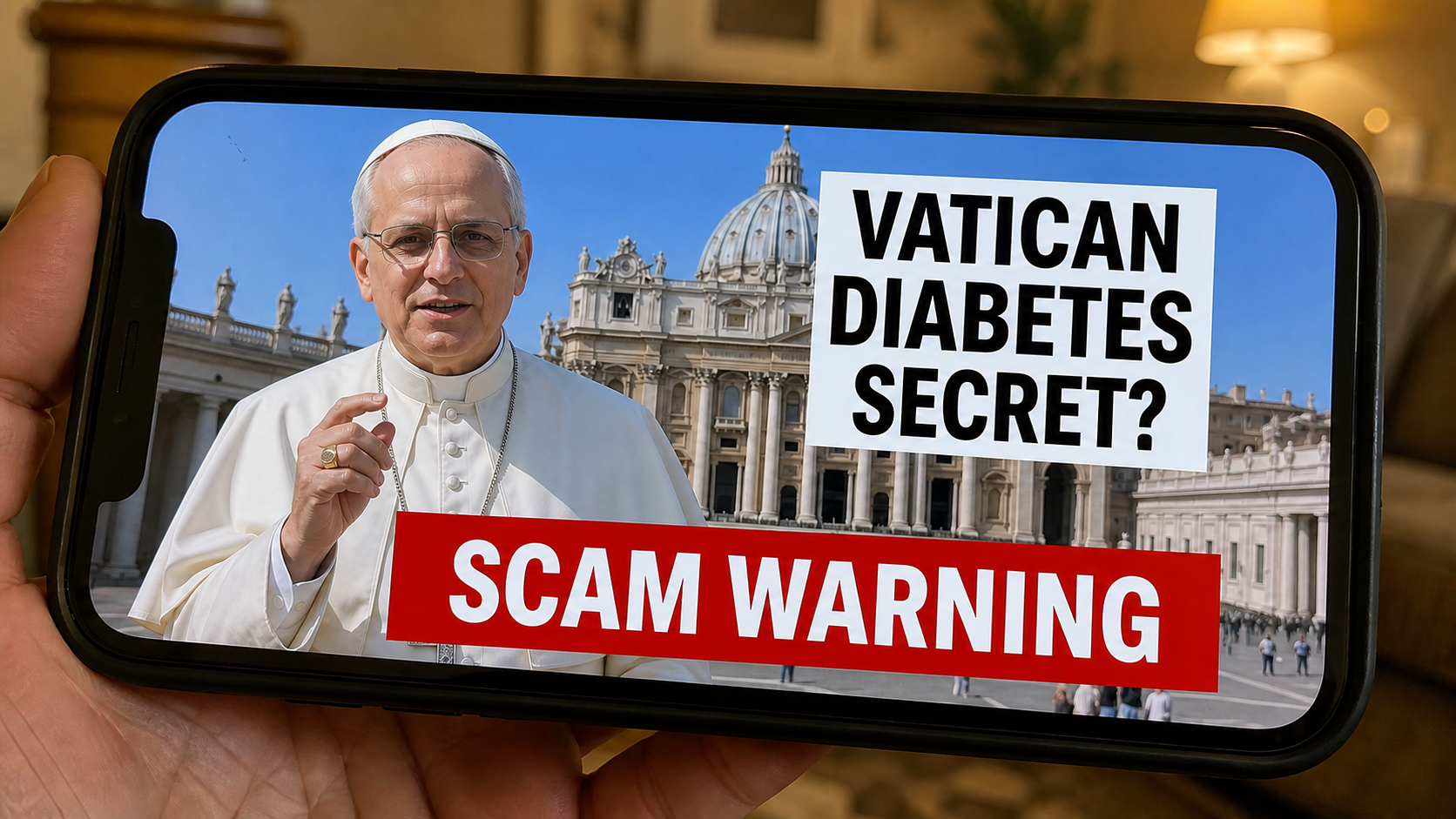
The warning image above recreates the visual language used by deceptive social ads. A recognizable religious figure, St. Peter’s Basilica, a question about a hidden diabetes secret, and a large urgent headline are enough to stop a viewer mid-scroll.
The campaign may claim that Pope Leo XIV discovered papers connected to Pope Francis or an older Vatican record. It then turns an alleged spiritual or historical revelation into authority for a modern health product.
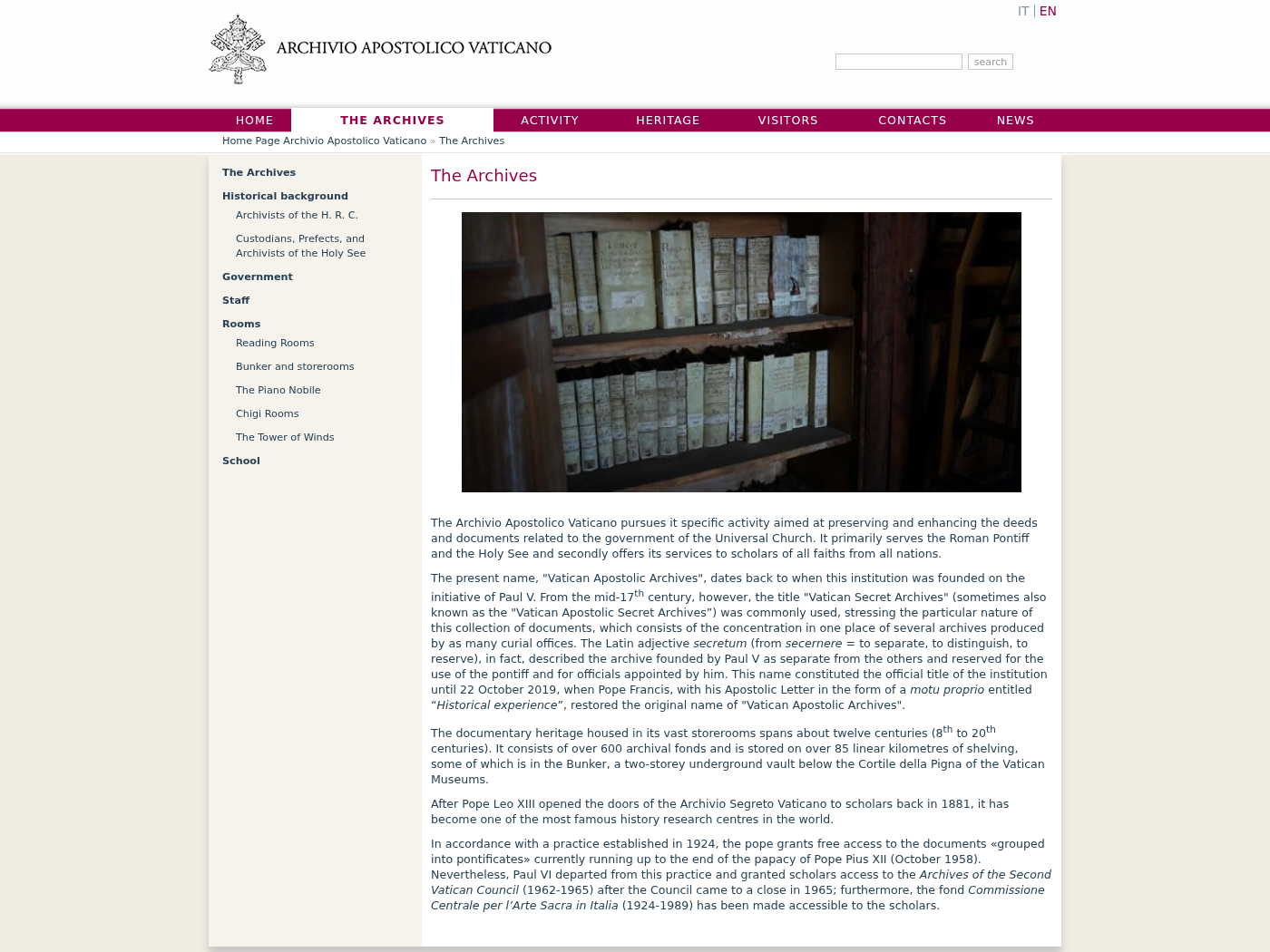
The official archive tells a very different story. Its public description concerns centuries of governance and historical documents preserved for scholarship. It does not announce a diabetes cure, endorse supplements, or serve as a hidden pharmaceutical repository.
Overview
There is no verified Pope Leo diabetes endorsement
We found no authentic Vatican statement, papal address, medical paper, or verified video in which Pope Leo XIV recommends a diabetes supplement or reveals a secret cure. The lack of an official source is decisive because a claim of this scale would be publicly documented.
Scammers do not need a real endorsement when AI can synthesize speech, alter lip movement, and place a public figure beside any bottle. The result may feel intimate and current, but emotional realism is not documentary proof.
The Vatican archive claim misrepresents a real institution
The Vatican Apostolic Archives preserves historical records connected to the government of the Church and makes material available to qualified scholars. Its official overview describes archival collections and research access, not suppressed consumer remedies.
Using a real archive makes the deception stronger. The ad can show genuine buildings, manuscripts, and institutional names while inventing the one fact that matters, a document supposedly proving that an easy plant or kitchen formula reverses diabetes.
The product can rotate because the story does the selling
This campaign is not defined by one stable bottle. Operators can replace the supplement name, domain, price, and checkout while preserving the Pope, Vatican, hidden-document, and cure narrative. A product-specific warning may therefore age faster than the story-based warning.
Recurring refills are a known risk in aggressive supplement funnels, but they must be verified at the final checkout. Without a stable live order page tied to this exact campaign, we cannot state that every version creates a subscription. Read the authorization rather than relying on the video.
- AI-generated or manipulated video can imitate Pope Leo XIV's face and voice.
- A fake Vatican discovery supplies mystery and moral authority.
- The supposed cure is not supported by an official Vatican announcement.
- The archive's real purpose is historical preservation and scholarly research.
- A fake news or television page may sit between the ad and the offer.
- Supplement brands can change while the same sales script remains active.
- Any automatic-refill claim must be confirmed from the final checkout and receipt.
What the Vatican Diabetes Cure Story Asks You to Believe
The narrative usually begins with a personal discovery. Pope Leo is said to have opened a sealed file, continued work begun by Pope Francis, or learned that church records preserved a botanical treatment modern medicine ignored.
This framing does several jobs at once. The Vatican supplies age and secrecy, a pope supplies trust, and diabetes supplies urgency. The viewer is encouraged to interpret skepticism as disrespect toward a compassionate religious figure rather than as a normal response to an extraordinary health claim.
A conspiracy element then explains why the alleged cure is not already familiar. Pharmaceutical companies, regulators, media organizations, or unnamed elites are blamed for keeping it quiet. The absence of credible evidence is transformed into supposed evidence of suppression.
The remedy is often described in vague natural terms before a commercial name appears. The ad might mention an ancient plant, spice, mineral, tea, or household ingredient, allowing the same video script to feed many different supplement pages.
People managing diabetes are especially vulnerable to this promise because daily testing, diet changes, medication costs, and fear of complications can be exhausting. Exploiting that burden with a fabricated endorsement is not compassionate health communication. It is pressure selling.
What the Official Record and the Advertising Actually Show
The Vatican provides official channels for speeches, news, and institutional information. A genuine papal announcement about a medical breakthrough would be easy to trace to a dated text, named researchers, clinical evidence, and responsible health authorities. The campaign supplies none of that chain.
The archive website explains that its holdings span centuries and concern the Holy See and church governance. Its history includes the opening of records to scholars. Nothing in that description supports a secret modern supplement recipe attributed to Pope Leo.
The health claim is also implausibly broad. Type 2 diabetes is a chronic metabolic disease influenced by genetics, insulin resistance, pancreatic function, medication, activity, nutrition, sleep, and other conditions. A video cannot establish that one unnamed natural remedy reverses it for everyone.
The FDA has repeatedly warned about products illegally marketed to treat diabetes. Supplements sold with cure language have not passed the approval process required for drugs that diagnose, treat, cure, or prevent disease.
The campaign’s instability is additional evidence. When the same Pope and Vatican story can lead to a different bottle or domain, the alleged historical discovery cannot logically validate each replacement formula. The marketing narrative is portable because it is detached from product-specific science.
A fake video may still include accurate details, such as Pope Leo’s name, the existence of the archive, or genuine diabetes terminology. Scams often wrap one invented conclusion in many true fragments. Verification must focus on the claimed endorsement and cure, not the decorative facts.
How the Pope Leo Vatican Diabetes Cure Scam Works
Step 1: A dramatic papal video appears on social media
The viewer sees Pope Leo apparently speaking about health, compassion, or a discovery connected to people living with diabetes. The clip may use real footage as raw material while replacing the audio or changing the context.
The sponsored account is often less recognizable than the person on screen. Checking the page history, creation date, previous names, and official verification can reveal that the advertiser has no relationship with the Vatican.
Step 2: AI makes the invented message feel personal
Synthetic speech can reproduce tone and cadence, while lip-sync tools adjust mouth movement. Captions repeat the claim so viewers accept the message even when the audio has small glitches.
The clip may be short because close inspection is dangerous to the scam. Sudden cuts, mismatched lighting, unnatural blinking, distorted teeth, odd hand movement, and words that do not align with the lips are common warning signs.
Step 3: The Vatican archive provides a secrecy hook
The video claims that sealed papers, a private note, or an ancient manuscript revealed a diabetes answer. Viewers are rarely shown a readable document with a catalogue number, provenance, translation, or independent historian.
A real institution is being used as scenery. The archive can verify whether a document exists, but the ad avoids the details that would let scholars or journalists perform that check.
Step 4: A fake article imitates trusted reporting
After the click, an advertorial may resemble CNN, Fox News, a major newspaper, a medical journal, or a Vatican news page. The domain in the address bar usually does not belong to the organization copied by the design.
The page continues the same story with selected quotes, countdowns, and testimonials. Its purpose is to convert attention into a sale, not to provide balanced reporting or links to primary evidence.
Step 5: A rotating supplement becomes the alleged cure
Only near the end does the bottle appear. The viewer is told that the product contains the plant, mineral, or extract found in the secret record, even though no verifiable chain connects that formula to the archive.
When complaints or ad accounts accumulate, the operator can change the bottle name and reuse the campaign. This is why the Pope Leo Vatican Diabetes Cure should be recognized as a story template, not only as one product warning.
Step 6: The checkout pushes bundles and may add continuity
A low per-bottle figure can conceal a much larger total for three or six bottles. The checkout may also introduce an optional or preselected refill program that was not prominent in the video.
Do not assume a subscription exists, and do not assume it does not. Read every line beside the order button, look for terms such as monthly, continuity, autoship, recurring, membership, and cancel anytime, then save the screen.
Step 7: Refund friction protects the funnel's revenue
After purchase, a customer may discover that the celebrity story was false or that the product differs from the advertisement. Refund rules can require unused bottles, return authorization, tracked shipping, or a narrow deadline.
The campaign can disappear while the billing merchant remains unfamiliar. The receipt and card descriptor are therefore more useful than the public ad when identifying who accepted payment and where a dispute must be sent.
Company, Address, and Fulfillment Checks
A pope is not the seller
The public figure in the video has no role in processing the order. The responsible party is the legal entity named at checkout, in the terms, on the receipt, and on the card statement. If no entity is disclosed, that is a major reason not to pay.
A rotating product name can distract from the merchant behind it. Search the legal name and card descriptor alongside words such as complaints, refunds, subscriptions, and attorney general, not only the branding printed on the bottle.
A returns address may lead only to a warehouse
Aggressive supplement offers sometimes list a fulfillment center, mailbox, registered agent, or unrelated suite as if it were a full corporate headquarters. A location that accepts parcels does not prove who formulated or manufactured the capsules.
Check the address on maps and business registries. Compare it across the privacy policy, terms, receipt, and return instructions. Conflicting locations make enforcement and refunds harder, especially when the seller changes domains.
Dead phone lines and silent inboxes are not support
Call before ordering and ask which exact product the number supports, whether billing repeats, and where returns go. Send the same questions by email so there is a written record.
If the number is disconnected, plays an endless recording, or the agent cannot name the legal seller, walk away. A polished order page cannot compensate for contact details that fail a simple pre-sale test.
Unverified manufacturing can create a health risk
Some deceptive funnels use generic private-label supplements that can be sourced internationally, but origin must be proven product by product. Do not state that a bottle came from China unless shipping, customs, label, or manufacturer evidence supports it.
The sharper point is that unknown origin, missing batch tests, unclear ingredient amounts, and disease-cure claims create avoidable risk. Diabetes supplements can also interact with insulin or oral medicines and may contribute to dangerous low blood sugar.
Why Faith and Medical Authority Are Such Powerful Bait
Celebrity scams normally borrow fame. This one borrows spiritual trust as well. The viewer may feel that doubting the message means doubting the speaker’s compassion, even though the real Pope never delivered the commercial endorsement.
The archive element turns ordinary marketing into a revelation. Because most viewers cannot personally inspect Vatican records, the claim sounds difficult to disprove. Yet the burden belongs to the seller making the claim, and a catalogue reference or authenticated document is never supplied.
The scheme also exploits a common misunderstanding about natural products. A plant can contain biologically active compounds and still require dose studies, interaction checks, quality controls, and clinical trials. Natural does not mean proven, universally safe, or capable of curing diabetes.
A legitimate medical discovery would not need a copied news layout, synthetic papal voice, rotating bottle, and disappearing social account. It would have named investigators, published methods, reproducible data, adverse-event reporting, and oversight from health authorities.
The safest response is not to debate the video’s theology or history. Verify the endorsement on official Vatican channels, verify the medical claim through qualified health sources, and verify the merchant at checkout. The campaign fails all three tests.
Warning Signs to Watch For
- A pope appears to reveal a commercial health product in a sponsored social video.
- The alleged archive document has no catalogue number, readable text, provenance, or independent authentication.
- A cure claim is explained through conspiracy rather than reproducible medical evidence.
- The page copies the appearance of CNN, Fox News, a medical journal, or Vatican media.
- The address bar belongs to an unrelated domain.
- The supplement name appears only after a long emotional presentation.
- The bottle or checkout changes while the Vatican story remains identical.
- The order total, recurring terms, legal seller, or return location is difficult to find.
The use of religious imagery does not make the advertisement safer. When an unverified papal endorsement, a secret archive, a medical cure, a copied news page, and a commercial checkout appear in one route, the most reasonable conclusion is that trust is being engineered for a sale.
What to Do if You Have Fallen Victim to This Scam
- Preserve the ad and transaction. Save the video, advertiser profile, URL, landing page, checkout, receipt, product label, shipping package, emails, and card descriptor. Screenshots can disappear once a campaign is reported.
- Keep taking prescribed medicine. Do not stop insulin or other diabetes treatment because the ad promised a cure. Contact your clinician promptly if you changed medication, experienced low blood sugar, or took an unknown supplement.
- Ask the seller to cancel in writing. Use the receipt and terms to identify the merchant. Request cancellation, refund instructions, and confirmation that any refill or membership has been terminated.
- Check the authorization for recurring terms. Review the final checkout and bank statement for monthly, autoship, continuity, trial, or membership language. A story can rotate products, so rely on the exact agreement you accepted.
- Challenge unauthorized billing quickly. Contact the card issuer if charges repeat without consent or the merchant refuses a valid refund. Provide your screenshots, cancellation request, return tracking, and the misleading endorsement evidence.
- Report impersonation and health fraud. Report the ad to the platform, the FTC, and the FDA. Include the domain and seller rather than only the rotating supplement name.
- Protect your email and phone. Expect follow-up offers if you submitted contact details. Block suspicious senders, avoid links in refund messages, and never provide a one-time bank code to an inbound caller.
- Scan and filter the device. Use Malwarebytes if the route triggered downloads or alarming browser notices. AdGuard can reduce exposure to malicious ads and tracking domains.
Frequently Asked Questions
Did Pope Leo XIV discover a diabetes cure in the Vatican?
No credible official record supports that claim. The Vatican’s public channels and Apostolic Archives do not announce a papal supplement discovery or a secret treatment for type 2 diabetes.
Is the Pope Leo video a deepfake?
Campaign versions may combine real footage, synthetic speech, altered captions, and lip-sync manipulation. Even a visually convincing clip is false if the claimed statement cannot be found in an authentic full recording or transcript.
What is actually inside the Vatican Apostolic Archives?
The archive preserves centuries of historical and governance records connected to the Holy See and provides research access under established rules. Its official description does not support the supplement story.
Which supplement does the Vatican cure ad sell?
The product can change. That flexibility is a central warning sign because the Pope and archive narrative is doing the persuasion, then a rotating bottle is attached near the end of the funnel.
Is every version an automatic subscription?
Recurring refills are possible in aggressive health funnels, but they are not proven for every version. Read the final checkout, receipt, and bank statement for explicit continuity terms before making that claim.
Can a natural supplement cure type 2 diabetes?
A dietary supplement cannot be assumed to cure diabetes from testimonials or an ad. Discuss any ingredient with a qualified clinician and continue evidence-based monitoring and treatment unless your medical team changes it.
The Bottom Line
The Pope Leo Vatican Diabetes Cure is not a hidden medical revelation. It is a flexible advertising story that uses AI manipulation, religious authority, a real archive, conspiracy language, and a fake editorial bridge to make a rotating supplement seem historically and spiritually validated.
No verified Pope Leo endorsement or Vatican cure announcement supports the pitch. Do not buy from the video, do not change diabetes treatment, and do not trust a bottle until the legal seller, full formula, billing authorization, manufacturing evidence, and refund path are clear.








