

The Filtered Shower Head Subscription Trap does not begin with an obviously shady product. It begins with dry skin, weak water pressure, an attractive shower head, a buy one get one free sale, and the promise that cleaner water may fix everyday irritation.
Muravai is the current brand behind the offer we examined. The important detail is not hidden in a mysterious billing rumor. The store openly presents filter packs that renew for $19.99 every 30 days, while other parts of the page give conflicting guidance about how long a filter should last.
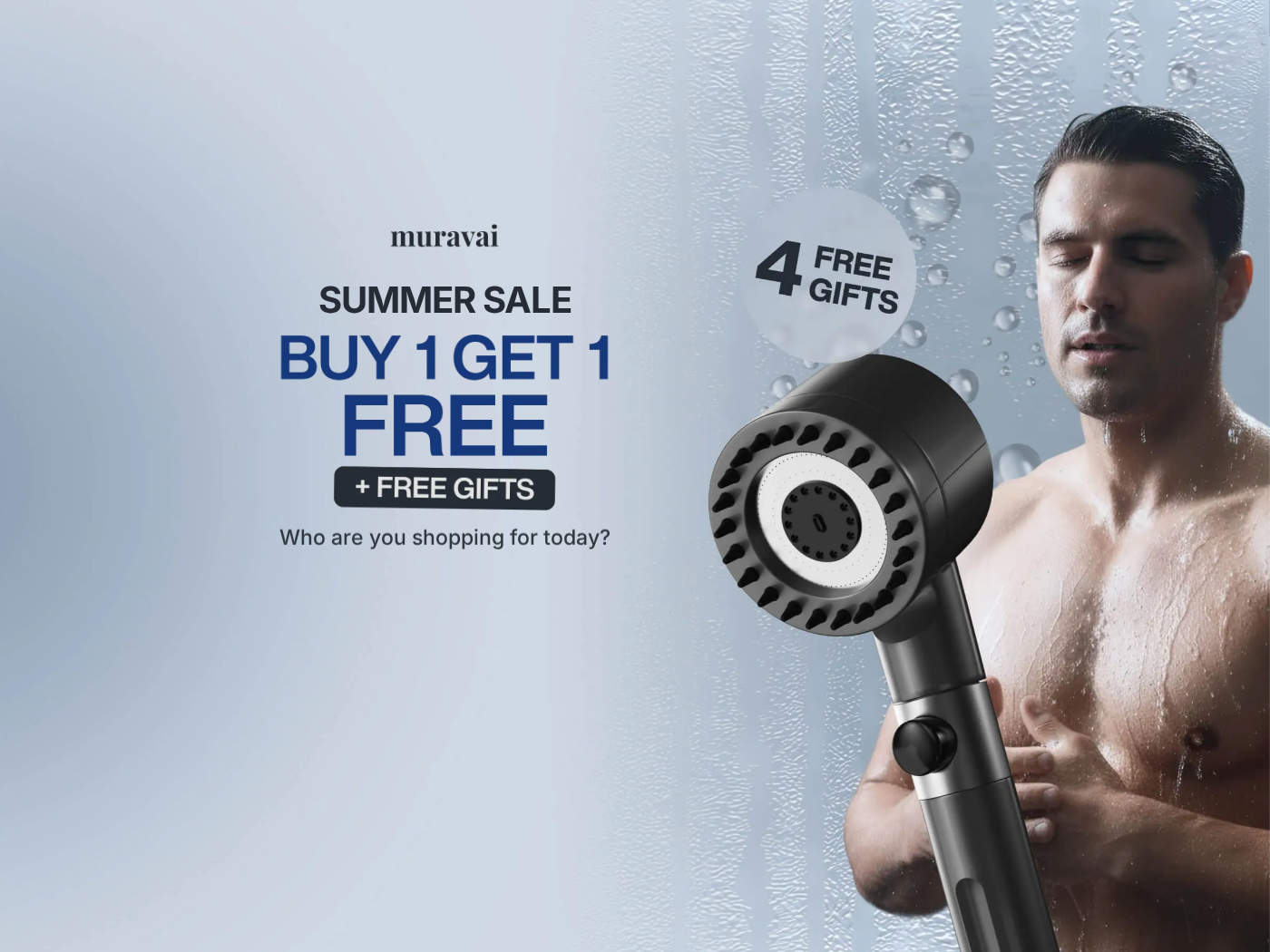
The Muravai landing page is polished and visual. A large filtered shower head appears beside a model, a summer sale, four free gifts, and a buy one get one free headline. The opening screen is built to make the bundle feel generous before recurring supplies are considered.
The product page lists the shower head at $59.99 and makes broad performance claims, including increased pressure and multi-stage filtration of chlorine, rust, and heavy metals. Those claims should be evaluated separately from the subscription terms.
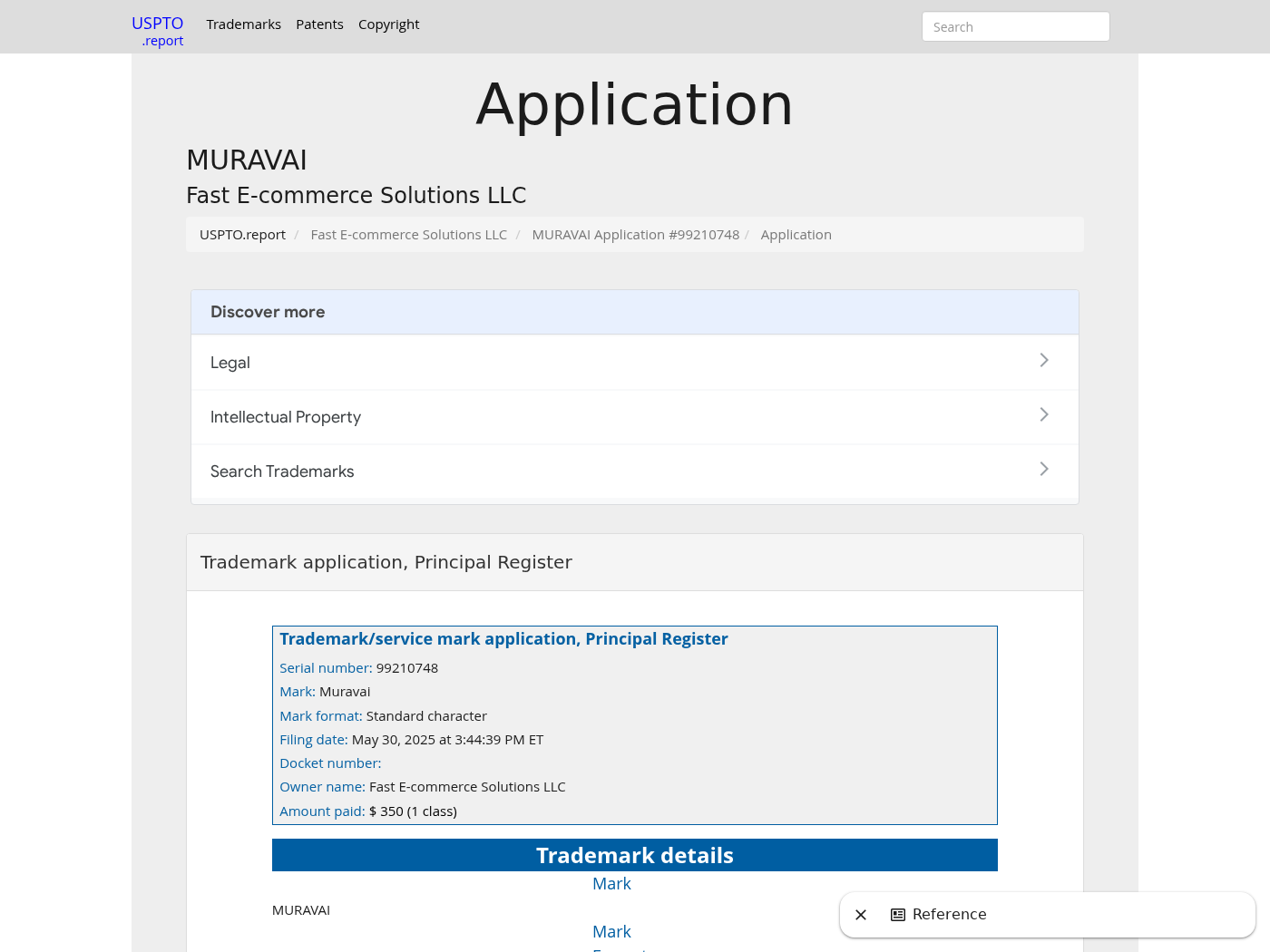
The company trail is more concrete than many short-lived product funnels. A trademark application names Fast E-commerce Solutions LLC as the owner of Muravai. That record helps identify the business, but it does not resolve the product-claim, refund, and refill concerns by itself.
Overview
Muravai sells a real product with a real recurring filter offer
The filtered shower head is visibly offered for sale, and the site provides installation information, policies, contact details, and replacement filters. This is not a case where the entire storefront is imaginary. The issue is how the purchase, claims, and recurring filter program are presented.
The product page says filter packs renew at $19.99 each every 30 days. That is an explicit automatic-refill arrangement, not speculation. A shopper who selects it should expect future charges until the subscription is cancelled under the applicable terms.
The replacement schedule contradicts itself
One section recommends replacing the filter every 10 days under certain conditions. Elsewhere, the same page discusses intervals of one to two months and says a cartridge may last as long as six months. These ranges lead to very different annual costs.
If a customer receives a $19.99 shipment every 30 days but needs a cartridge less often, unused filters can accumulate. If the seller believes a cartridge can require replacement every 10 days, a single monthly pack may not match the fastest schedule either.
The refund window has conditions that matter
Muravai advertises a 40-day return period, but the policy says the product must have no visible damage and remain in original packaging. The buyer pays return shipping, and the refund is issued only after the seller receives, inspects, and approves the item.
A shower product normally has to be installed and exposed to water to test pressure, leaks, and comfort. Customers should ask how the original-packaging and no-visible-damage rules apply after a normal trial, because that question is not answered by a large guarantee headline.
- The main shower head was listed at $59.99 during the review.
- The site promoted a buy one get one free offer and additional gifts.
- Replacement filter packs renew for $19.99 each every 30 days.
- The page claims up to a 200% water-pressure increase.
- It also claims 18-stage filtration and 99% to 99.9% removal figures.
- Replacement guidance ranges from 10 days to several months.
- Returns are limited to 40 days and customer-paid shipping.
- The privacy policy names Fast E-commerce Solutions LLC.
What the Filtered Shower Head Offer Is Really Selling
The advertisement connects several frustrating problems to one household fixture. Dry skin, brittle hair, chlorine smell, low pressure, and visible sediment are grouped together, making the shower head feel like a simple answer to both cosmetic and plumbing concerns.
A dramatic discount then reduces the time available for careful comparison. Buy one get one free sounds like a product deal, but the long-term cost is shaped by filter replacements. The hardware is only the first part of the customer relationship.
The site describes an 18-stage filter and uses precise removal percentages. Exact numbers create scientific confidence, yet the page should also provide accessible test methods, laboratory identity, water conditions, contaminant concentrations, flow rate, cartridge capacity, and standards used to produce those figures.
Water quality varies by location, and a shower filter is not the same as a certified drinking-water treatment system. Some media can reduce certain substances, but a broad claim covering chlorine, rust, heavy metals, skin benefits, and major pressure improvement needs clear product-specific evidence.
The refill model is commercially attractive because it converts a one-time shower purchase into monthly revenue. That does not make every subscription illegitimate. It does mean the enrollment, frequency, cancellation method, and realistic replacement need must be unmistakable before payment.
What Our Muravai Investigation Found
The current Muravai page lists a $59.99 filtered shower head and promotes a buy one get one free sale. It describes the body as ABS plastic and says the product was engineered in the USA. That wording does not necessarily identify the manufacturing country.
The recurring offer is explicit. Filter packs are presented at $19.99 each and renew every 30 days. Customers should calculate $239.88 for twelve monthly $19.99 charges before tax and shipping, then compare that amount with their actual replacement schedule.
The site claims up to a 200% pressure increase and filtration of 99% or 99.9% of various substances. We did not find enough visible independent test detail on the main page to reproduce or confidently generalize those precise performance claims across homes.
The replacement instructions conflict. Advice ranging from 10 days to one or two months, with an additional statement that a filter may last up to six months, leaves shoppers without a stable basis for judging value or the appropriate subscription frequency.
Muravai’s privacy policy identifies Fast E-commerce Solutions LLC and lists 30 N Gould St, Suite R, Sheridan, Wyoming. Registered Agents Inc publicly identifies the same street address as its Sheridan location, so the address may function as a registered-agent contact rather than an operating headquarters.
A trademark application names Fast E-commerce Solutions LLC as the owner, lists a Massachusetts mailing address, provides a telephone number, and claims first use in September 2024. Public review platforms also contain mixed experiences, but individual complaints remain allegations unless supported by order records.
How the Filtered Shower Head Subscription Trap Works
Step 1: A visual ad turns discomfort into urgency
The social ad focuses on an unpleasant shower, irritated skin, weak pressure, or contaminants. Before the viewer checks local water data or plumbing causes, the product is presented as the obvious missing upgrade.
Short demonstrations can be persuasive but incomplete. Pressure may change because of the spray plate rather than filtration, and colored test water does not establish certified contaminant reduction under real household conditions.
Step 2: A generous bundle lowers price resistance
The landing page leads with buy one get one free and extra gifts. This anchors the decision around how much merchandise arrives, not around filtration evidence, replacement cost, durability, or return conditions.
Countdowns and seasonal language imply that comparison could cost the shopper a rare deal. The same promotional structure can remain active or return under a different sale name.
Step 3: Precise claims create a laboratory impression
The page uses terms such as 18-stage filtration, 200% pressure, and 99% removal. Numbers feel objective, but they are meaningful only when the test setup and limits are disclosed.
A buyer should ask for the independent report, model tested, standard followed, contaminant list, initial concentration, flow rate, cartridge life, and laboratory accreditation. A badge or animation is not a substitute for those details.
Step 4: Replacement filters turn hardware into continuity
Once the shower head is selected, filter packs can be added on a renewing schedule of $19.99 each every 30 days. The future charge may feel small compared with the initial bundle.
Over time, the refill stream can cost several times the original hardware. Customers need a clear enrollment checkbox, renewal date, quantity, shipping cost, cancellation route, and reminder policy before authorizing it.
Step 5: Conflicting lifespan advice obscures the real cost
A filter that lasts 10 days creates a very different expense from one that lasts six months. When the same seller presents both extremes, a monthly shipment cannot be evaluated confidently.
Water quality and use do affect cartridge life, but useful guidance should state the rated capacity and measurable replacement indicators. A broad range without a capacity figure shifts uncertainty onto the buyer.
Step 6: Return conditions appear after the emotional sale
The large promotional page emphasizes comfort and savings. The refund policy requires original packaging, no visible damage, contact with support, customer-paid return shipping, and approval after inspection.
Testing a shower head can leave water marks or opened packaging. Customers should obtain written confirmation that normal installation does not automatically disqualify a return before relying on the 40-day promise.
Step 7: Cancellation becomes the critical final test
A legitimate subscription should be as easy to cancel as it was to start. The customer should receive written confirmation that future shipments and charges have stopped, not merely that one order was refunded.
If support is unresponsive or another $19.99 charge appears after cancellation, the saved checkout, cancellation message, and bank statement become the evidence needed for a card dispute.
Company, Address, and Fulfillment Checks
The legal entity is Fast E-commerce Solutions LLC
The privacy policy and trademark record connect Muravai with Fast E-commerce Solutions LLC. That is more useful than relying on the brand alone because legal records, receipts, and disputes generally follow the entity or payment descriptor.
Customers should still compare that name with the checkout and card statement. If a different processor or merchant appears, ask which company is responsible for subscriptions, returns, warranties, and product claims.
The Wyoming address looks administrative
The policy lists 30 N Gould St, Suite R, Sheridan, Wyoming. The same location is publicly used by a registered-agent service. This does not make the LLC fake, but it weakens any assumption that the address is a factory, laboratory, warehouse, or staffed headquarters.
The trademark filing uses a Massachusetts mailing address. Different addresses can have legitimate purposes, but the seller should clearly label the registered agent, mailing office, returns center, and operational location rather than letting one suite imply all four.
Test support before it controls your cancellation
Write to support and call the number in the trademark record before ordering. Ask how to cancel filters, when cancellation takes effect, whether a shipment already processed can be returned, and which address accepts the package.
An email response provides evidence. If the business will not explain a simple $19.99 renewal before the sale, do not expect a frictionless answer after several filters have already shipped.
Do not invent a manufacturing country
The page says engineered in the USA and identifies an ABS plastic body. That does not prove where the product or filters are manufactured. We did not find enough direct sourcing evidence to state that Muravai is made in China.
The practical concern is traceability. Ask for the manufacturing country, filter media composition, independent testing, model certification, and lot information. A device that contacts household water deserves more than attractive renders and seller-controlled performance figures.
Is Muravai Fake, or Is the Subscription the Main Problem?
Muravai is not fake in the narrow sense of being a nonexistent listing. The site offers a physical shower head, names a legal entity, provides policies, and has a trademark application. Those facts do not automatically validate every performance claim or customer experience.
The subscription concern is stronger because the refill terms are visible. A $19.99 filter pack every 30 days is recurring billing. The customer should judge whether that frequency matches the product’s stated lifespan and the home’s actual water conditions.
The contradictory replacement guidance is especially important. If a cartridge may last six months, monthly delivery can produce five unnecessary packs in that period. If it truly needs replacement every 10 days, the monthly offer may not even supply enough.
The company record also changes how the address should be interpreted. A registered-agent building is a legal contact, not proof of a fake company. It is equally not proof of a staffed consumer-support office or manufacturing operation.
The fairest conclusion is that consumers are looking at a real retail offer with material disclosure, evidence, and recurring-cost questions. The safest purchase is one made only after obtaining written cancellation terms and product testing details.
Warning Signs to Watch For
- The deal emphasizes free products before showing the long-term filter cost.
- Replacement filter packs renew for $19.99 every 30 days.
- Cartridge-life guidance ranges from 10 days to as long as six months.
- Precise 99% to 99.9% filtration claims lack obvious reproducible test detail on the main page.
- The seller claims up to a 200% pressure increase across varying home conditions.
- The refund requires original packaging, no visible damage, inspection, and customer-paid shipping.
- The Wyoming contact is associated with a registered-agent service.
- Engineered in the USA does not disclose the manufacturing country.
The strongest warning is not one isolated policy. It is the combination of aggressive bundle marketing, explicit monthly refills, contradictory cartridge life, difficult return conditions, and performance claims that need more independent detail than the sales page provides.
What to Do if You Have Fallen Victim to This Scam
- Save your subscription evidence. Keep the product page, renewal wording, checkout, receipt, emails, filter shipments, cancellation request, and card statements. Record whether you selected the recurring offer or it appeared preselected.
- Cancel through every available channel. Use the account page, email, and phone if available. State that you revoke authorization for future filter shipments and charges, then request written confirmation with the effective date.
- Separate the hardware return from cancellation. A refunded shower head does not necessarily cancel a filter plan. Ask the seller to confirm both actions independently and retain each confirmation.
- Photograph defects immediately. Leaks, cracks, missing pieces, or damage should be photographed before and after installation. The policy asks customers to report damaged items within 48 hours, so send notice quickly.
- Return with tracking. Follow the written instructions, photograph the packaged item, and retain the carrier receipt and delivery scan. Customer-paid shipping makes proof of arrival especially important.
- Dispute post-cancellation charges. If another $19.99 renewal appears after confirmed cancellation, contact the card issuer promptly. Provide the recurring terms, cancellation timestamp, confirmation, and new transaction.
- Secure the browser used for checkout. Run Malwarebytes if unusual redirects, downloads, or alerts appeared. AdGuard can block deceptive ads and reduce cross-site tracking.
- Report patterns, not assumptions. File a report with the FTC or your state consumer agency if cancellation or refund terms are not honored. Include dates and documents rather than unsupported claims about origin.
Frequently Asked Questions
Is the Muravai filtered shower head real?
Muravai operates a real storefront offering a physical shower head and filters. The investigation concerns recurring refill terms, inconsistent cartridge guidance, refund restrictions, company transparency, and the evidence behind performance claims.
Does Muravai charge a monthly subscription?
The product page explicitly offers filter packs that renew for $19.99 each every 30 days. Customers who enroll should expect recurring charges until the subscription is successfully cancelled.
How often does the Muravai filter need replacement?
The website gives inconsistent guidance, including every 10 days, one to two months, and up to six months. Ask for a rated capacity and measurable replacement criteria before choosing a monthly plan.
Who owns the Muravai brand?
Muravai’s privacy policy and a trademark application identify Fast E-commerce Solutions LLC. The trademark record is useful evidence, although it does not independently verify every product claim or customer-service promise.
Is 30 N Gould St a Muravai factory?
We found that the address is publicly associated with a registered-agent service. It may serve as a legal contact, but it should not be treated as proof of a factory, laboratory, warehouse, or staffed headquarters.
Is the Muravai shower head made in China?
The site says engineered in the USA but does not clearly establish manufacturing origin on the main page. We found insufficient direct evidence to claim China, so buyers should request sourcing and testing documentation.
The Bottom Line
The Filtered Shower Head Subscription Trap is not based on a rumored hidden charge. Muravai visibly offers $19.99 filter packs that renew every 30 days. The recurring cost becomes more concerning because the same page gives widely different estimates for cartridge life.
The product may be real, but the performance evidence, renewal frequency, return conditions, and company locations deserve careful review. Buy only after the subscription is clearly optional, cancellation is documented, and the seller explains how testing and filter capacity support its claims.








