

The Baking Soda Weight Loss Funnel is built to survive product-name changes. One day the secret is attached to EvoSlim, another day it is SlimSoda, and after the order button the customer may discover that the bottle being sold is actually Ignitra.
This investigation follows the route rather than trusting the label. We tested the redirects, compared the pages, examined the Ignitra claims, ingredients, prices, guarantees, addresses, and company names, then checked whether the visible offers prove the automatic-refill allegation often associated with similar campaigns.
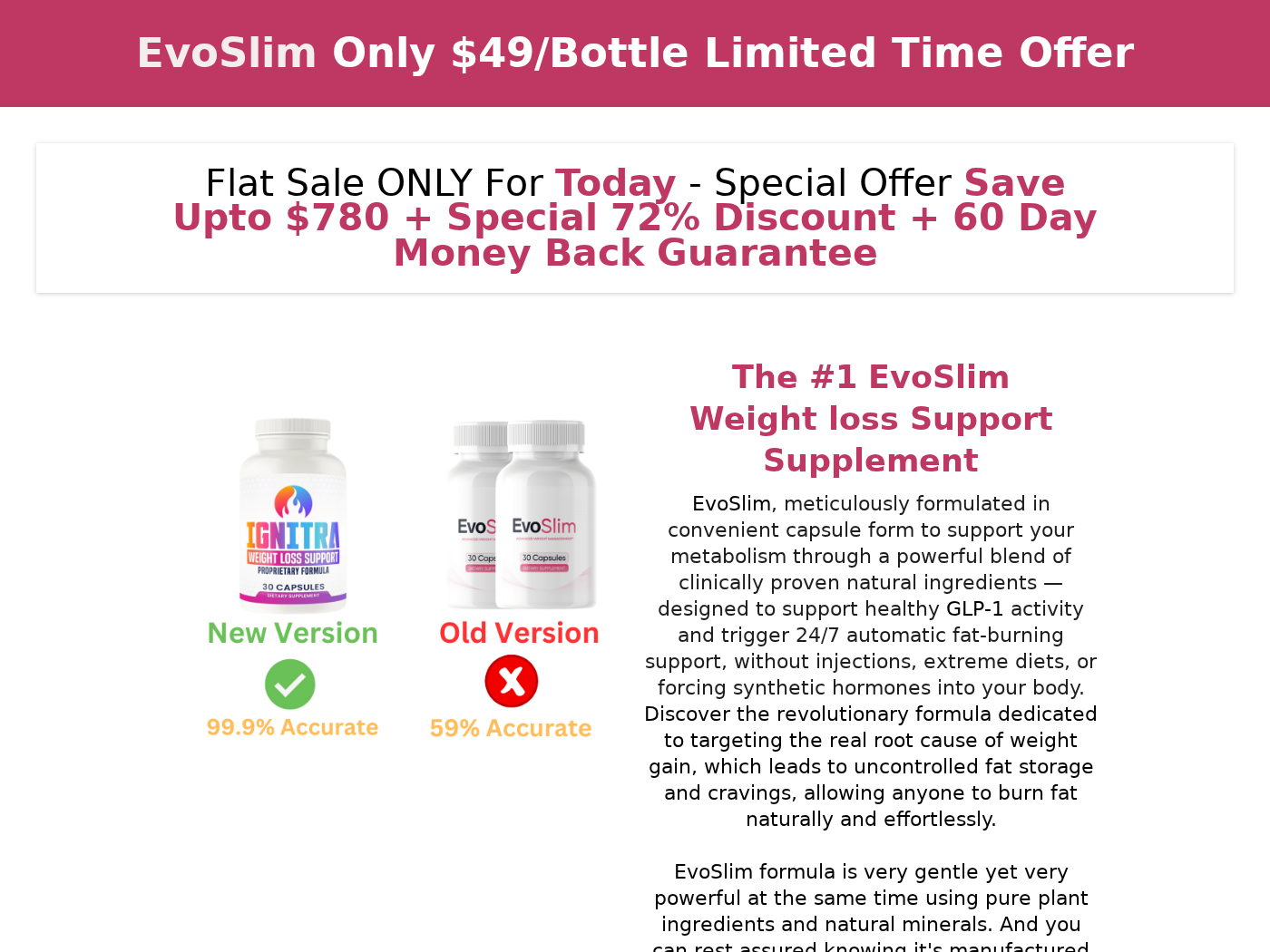
The first screenshot captures the brand switch in plain view. An EvoSlim page places its advertised bottle beside Ignitra and describes Ignitra as a new or more accurate version, even though a shopper arrived through an EvoSlim weight loss story.
That presentation is unusual because a normal brand update should explain the manufacturer, reformulation, label transition, old and new ingredients, order responsibility, and which guarantee governs each package. The page instead pushes the visitor toward the replacement without resolving those questions.
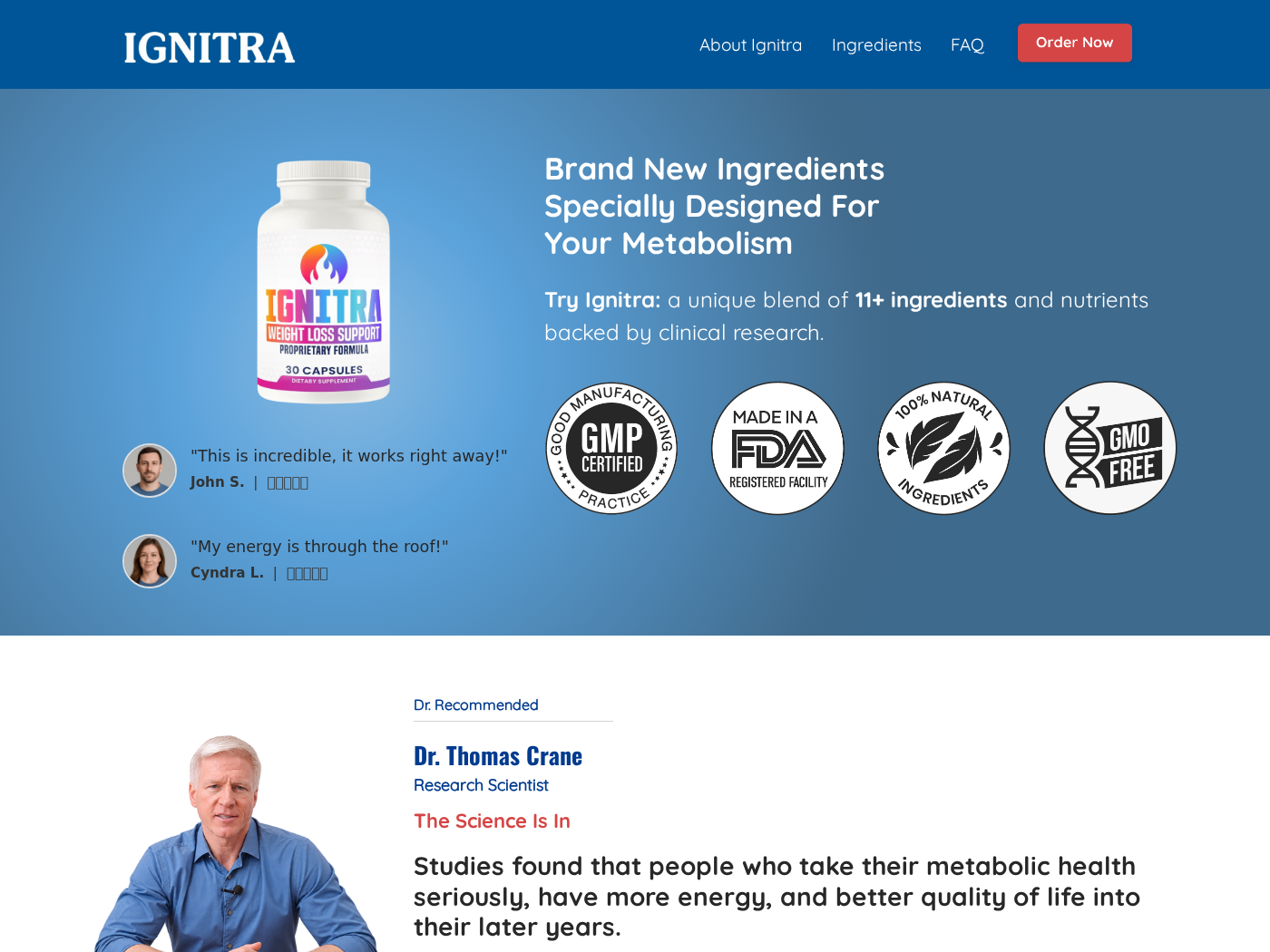
The second screenshot shows the destination reached after the order link. During live checks, both EvoSlim and SlimSoda tracking routes opened the same Ignitra presentation. The connection is therefore not just thematic. The two different front-end brands converged on the exact same commercial endpoint.
Overview
The story stays stable while the bottle changes
The funnel usually begins with a celebrity-style baking soda trick, coffee addition, kitchen recipe, or natural GLP-1 claim. The viewer spends most of the presentation learning an emotional weight loss story before any stable product identity is required.
Because the narrative does the persuasive work, operators can exchange EvoSlim, SlimSoda, Ignitra, or another bottle near the end. Search warnings focused only on one supplement name become less useful when the advertiser rotates names and domains.
EvoSlim and SlimSoda both redirected to Ignitra
The EvoSlim order link passed through mwwizy.com with an EvoSlim tracking parameter. The SlimSoda route used mwebtrackerhq.com with its own tracking parameter. Despite different front-end branding, both ultimately displayed the same Ignitra sales page.
That finding raises basic consumer questions. Which advertised formula applies, which bottle will ship, which entity sold it, and which refund policy controls the transaction? A tracked redirect can measure affiliates, but it should not hide a material change in product identity.
The visible offers do not prove hidden automatic refills
The pages reviewed describe one-time multi-bottle packages and lengthy refund guarantees. We did not find sufficient checkout or card-statement evidence to say that every Ignitra, EvoSlim, or SlimSoda purchase automatically creates a subscription.
That distinction matters. The funnel shows deceptive branding and endorsement red flags without needing an unsupported autoship claim. Buyers should still inspect the final authorization for continuity terms because affiliates, upsells, and checkout versions can change.
- Celebrity-style AI videos promote a baking soda or kitchen weight loss secret.
- Fake editorial pages can imitate CNN, Fox News, or another trusted outlet.
- EvoSlim and SlimSoda use different branding and tracking routes.
- Both routes opened the same Ignitra presentation during live testing.
- The product and ingredient story changes before the customer reaches checkout.
- Multiple Ignitra-related domains provide inconsistent company and return details.
- One-time bundle language was visible, so automatic refills are not confirmed.
- The final checkout and card descriptor remain the authoritative billing evidence.
What the Baking Soda Weight Loss Story Is Designed to Hide
The advertisement rarely asks viewers to evaluate an unknown supplement. It asks them to believe that a familiar celebrity discovered a simple trick after struggling with weight, medication, menopause, metabolism, or public criticism.
Baking soda, coffee, gelatin, pink salt, or another household ingredient makes the idea feel affordable and noncommercial. The recipe is delayed while a video introduces a secret ratio, missing activator, or biological switch that supposedly makes the trick work.
A medical-sounding explanation follows. GLP-1, mitochondria, gut bacteria, cortisol, insulin, or metabolic age may be presented as the single hidden cause. These real biological terms are simplified until one capsule appears to solve several unrelated mechanisms at once.
The fake celebrity segment gives the product borrowed history. Viewers may believe Oprah Winfrey, Dr. Oz, a weight specialist, or another public figure already tested the idea. We found no authentic endorsement connecting those people to this Ignitra route.
By delaying the bottle, the marketer can change inventory or affiliate offers without rebuilding the emotional core. A visitor who believes the story may accept whichever product appears after the final continue button.
What Our Ignitra, EvoSlim, and SlimSoda Checks Found
The strongest technical evidence is the shared destination. EvoSlim and SlimSoda used different tracking domains and parameters, yet both opened an Ignitra sales page. That shows the front-end brands participate in one converging offer path at the time tested.
The Ignitra page used the headline Brand New Ingredients Specially Designed For Your Metabolism. It displayed a bottle beside badges referencing GMP, an FDA registered facility, natural ingredients, and a seller-controlled research narrative featuring a supposed scientist named Dr. Thomas Crane.
FDA registered facility language does not mean the FDA approved Ignitra. The FDA does not approve dietary supplements before sale. A badge cannot establish effectiveness, label accuracy, manufacturing quality, or disease treatment.
Ignitra-related domains are inconsistent. One describes the product as FDA approved, another contains an obvious copy error referring to prostate health, and return pages point to different post-office boxes in Utah and Florida. Similar domains may include sellers or affiliates, so relationships must be proven rather than assumed.
Some pages name Emberline Metabolic Sciences, Inc. and a Reno address, while others use only the Ignitra brand or separate return locations. We did not find enough independent registration evidence to declare every domain part of one verified corporate structure.
Common package displays ranged around $49 to $79 per bottle, depending on quantity and domain, with a 180-day guarantee on several pages. Exact price, total charge, refund destination, and product identity must be captured from the version the buyer actually authorizes.
How the Baking Soda Weight Loss Funnel Works
Step 1: A fake celebrity video starts the story
The viewer encounters a social ad that appears to show a celebrity or doctor discussing a simple weight loss trick. Synthetic audio, lip-sync manipulation, misleading captions, and unrelated footage create the endorsement.
The ad buyer may be a generic page with little history. Viewers should look for the complete statement on the public figure’s verified account instead of trusting a short sponsored clip.
Step 2: The kitchen recipe keeps the viewer watching
Baking soda is combined with coffee, water, salt, or another familiar ingredient. The exact recipe is repeatedly delayed while the presenter promises that one missing addition changes metabolism.
This open loop keeps attention without providing enough information for medical or scientific evaluation. The free trick is gradually converted into a reason to buy a proprietary capsule.
Step 3: A fake news page borrows a trusted design
The click may open an advertorial styled like CNN, Fox News, a daytime show, a newspaper, or a health magazine. Its logo and layout imply that independent journalists investigated the discovery.
The domain does not belong to the copied outlet. Every button leads forward through the sales route, and the page offers no balanced evidence, verified author, correction policy, or authentic broadcast link.
Step 4: A temporary product name enters the pitch
EvoSlim or SlimSoda can appear as the packaged form of the ritual. The viewer is encouraged to transfer belief in the celebrity, recipe, and medical story directly onto the bottle.
The page may show conflicting ingredients or introduce Ignitra as an updated formula. The lack of a stable label prevents a reliable safety check before the customer reaches the order button.
Step 5: Tracking redirects swap the customer into Ignitra
The order click passes through an affiliate tracking domain. Tracking itself is common in online marketing, but here the destination materially changes the brand from EvoSlim or SlimSoda to Ignitra.
The customer must stop and reassess from zero. A new product requires a new formula check, company check, price check, billing check, and refund check. The earlier story cannot validate the replacement.
Step 6: Bundle pricing pushes a larger commitment
The sales page emphasizes per-bottle savings, free shipping, guarantees, customer stories, and the popularity of three or six bottles. A lower unit figure can obscure a total approaching $300.
Large bundles also make returns harder because customers may open multiple bottles or pass the refund deadline while waiting for the promised transformation. Try nothing until a clinician has reviewed the exact label.
Step 7: The merchant trail matters more than the ad name
If the product disappoints, support may refer to the Ignitra order, a ClickBank-style receipt, a processor descriptor, or a return box unrelated to EvoSlim and SlimSoda. The original name may not help locate the charge.
Save the final checkout, receipt, descriptor, shipping label, and policy. Those records determine who accepted payment, whether billing repeats, where returns go, and which deadline applies.
Company, Address, and Fulfillment Checks
Three bottle names do not mean three accountable companies
EvoSlim, SlimSoda, and Ignitra are marketing names in this route. The responsible legal entity should appear consistently in the terms, privacy policy, checkout, receipt, and card statement. The current pages do not present one clean chain across every brand.
Do not accept a celebrity, doctor character, or affiliate website as the seller. Ask who owns the formula, who manufactures it, who processes payment, and who is legally obligated to honor the guarantee.
PO boxes and return centers are not headquarters
Ignitra-related pages reference different return locations, including post-office boxes in Pleasant Grove, Utah, and Lakeland, Florida. A return facility can handle packages without owning, formulating, or testing the supplement.
Search each address and label its actual function. Conflicting boxes do not prove fraud by themselves, but they make it harder to know which policy governs the exact transaction and where formal complaints should go.
Support must identify the exact version you bought
Call or email before ordering and ask whether support handles Ignitra, EvoSlim, SlimSoda, or all three. Request the legal seller, formula, next billing date, cancellation rule, return address, and refund deadline in writing.
If the representative cannot explain why two brands redirect to Ignitra, do not expect clarity after a charge. An answer that merely repeats a guarantee headline is not an operational refund procedure.
Unknown manufacturing is the real safety concern
Some generic supplements are mass-produced overseas, including in China, but we did not find product-specific evidence proving Ignitra’s manufacturing country. That claim must remain unmade until labels, customs records, or responsible-company documentation establish it.
What is visible is insufficient traceability across domains and brands. Customers need a complete Supplement Facts panel, lot number, manufacturer, country of origin, contaminant testing, and certificate of analysis before swallowing a formula sold through a deceptive story.
Why Ignitra Should Be Judged Separately From Its Ingredients
A supplement can contain familiar vitamins, plant extracts, or metabolic ingredients and still lack evidence for the finished product. Ingredient studies do not validate an AI celebrity endorsement, baking soda story, guaranteed weight change, or a formula that changes across pages.
The supposed research scientist on the Ignitra page is part of seller-controlled advertising unless his identity, qualifications, publications, and product-specific research can be verified independently. A white coat and laboratory background are visual claims, not evidence.
The FDA badge requires similar caution. Facilities involved with supplements may be required to register, but registration does not mean the FDA reviewed and approved Ignitra for weight loss. Any page saying the supplement itself is FDA approved is using inaccurate framing.
The shared redirect is more informative than testimonial language. Two different product stories converging on one offer suggests that branding is optimized for ad response while fulfillment is centralized around the current backend product.
This does not prove that every buyer receives an unwanted subscription. The visible pages used one-time package language. The proven concern is a deceptive brand-switch funnel with inconsistent corporate, formula, and policy information.
Warning Signs to Watch For
- A celebrity or doctor appears to promote a baking soda trick outside verified channels.
- The video sends viewers to a fake CNN, Fox News, or television-style advertorial.
- The free recipe remains incomplete until a supplement is introduced.
- EvoSlim and SlimSoda order links lead to the same Ignitra offer.
- The brand changes after the customer clicks order.
- Ingredient descriptions conflict across pages or versions.
- FDA registered facility language is presented like product approval.
- Different domains use different company names, copy, and return boxes.
- Large bundles are recommended before the exact formula is established.
- A visible one-time offer is called a subscription without checkout evidence.
The sharpest warning is the route itself. A fake celebrity story, copied news page, household secret, temporary bottle, tracking redirect, replacement brand, large bundle, and unclear company chain create a purchase that is difficult to evaluate and even harder to unwind.
What to Do if You Have Fallen Victim to This Scam
- Identify the actual transaction. Use the receipt and card descriptor to determine whether the merchant recorded Ignitra, EvoSlim, SlimSoda, a processor, or another company. Save the exact domain and order number.
- Photograph everything received. Capture the shipping label, bottles, seals, Supplement Facts, lot number, inserts, and return address. Do not discard the package until the refund window has passed.
- Ask for cancellation and refund terms. Contact the merchant in writing. Request the authorization number, return address, bottle-condition rules, deadline, and confirmation that no future order or billing is active.
- Do not assume a subscription. Check the final checkout and statement. If no recurring authorization exists, describe the dispute accurately. If one does exist, cancel it separately and keep written confirmation.
- Return with proof. Photograph the sealed parcel, use tracked shipping, and retain delivery confirmation. Different return boxes across related pages make documentation especially important.
- Contact the card issuer promptly. Dispute unauthorized charges, a material product switch, or a merchant’s failure to honor written refund terms. Provide the front-end ad, redirect destination, receipt, and support record.
- Protect the device and accounts. Run Malwarebytes after suspicious downloads or redirects. Use AdGuard to reduce deceptive ads, trackers, and repeat exposure.
- Report the full funnel. Report the ad to the platform and the FTC. Include every product name, tracking domain, landing domain, payment merchant, and false celebrity shown.
Frequently Asked Questions
What is the Baking Soda Weight Loss Funnel?
It is a reusable sales route that begins with a celebrity-style kitchen trick, passes through fake editorial content, and ends at a supplement. The bottle can change while the story remains the same.
How are EvoSlim, SlimSoda, and Ignitra connected?
During live testing, separate EvoSlim and SlimSoda order links passed through different tracking domains but reached the same Ignitra sales presentation. That is a direct connection between those offer paths at the time checked.
Did a celebrity endorse Ignitra?
We found no verified endorsement from the celebrities or medical figures used in related baking soda and weight loss ads. Confirm any statement through the person’s official channels and a full original recording.
Is Ignitra FDA approved?
No dietary supplement should be described as FDA approved before sale. A facility registration or GMP badge does not mean the FDA reviewed Ignitra for safety, effectiveness, or weight loss.
Is Ignitra definitely a subscription trap?
The pages reviewed displayed one-time package language, and we did not find enough evidence to confirm automatic refills for every order. Check the exact final checkout and card statement before making that claim.
Why create a new Ignitra investigation?
Earlier warnings focused on the bottle. This version follows the more durable story and documents how EvoSlim and SlimSoda converge on Ignitra, while correcting unsupported subscription and company assumptions.
The Bottom Line
The Baking Soda Weight Loss Funnel is deceptive because the emotional promise stays fixed while the commercial identity moves. EvoSlim and SlimSoda looked like separate offers, yet both order paths reached Ignitra during live testing.
That brand switch, combined with fake endorsements, copied news styling, inconsistent domains, unclear company details, and changing formulas, is enough reason to avoid the offer. Automatic refills were not proven on the visible pages, so the strongest warning remains the documented funnel rather than an exaggerated claim.








