

A homemade drink made with baking soda and lemon sounds almost too ordinary to be dangerous. That familiarity is exactly what makes the online story so effective.
The promise usually arrives through a dramatic video, a health-page lookalike, or a post that appears to reveal something doctors have kept quiet. What follows is far less innocent than a kitchen recipe.
Overview
A familiar recipe becomes the trust hook
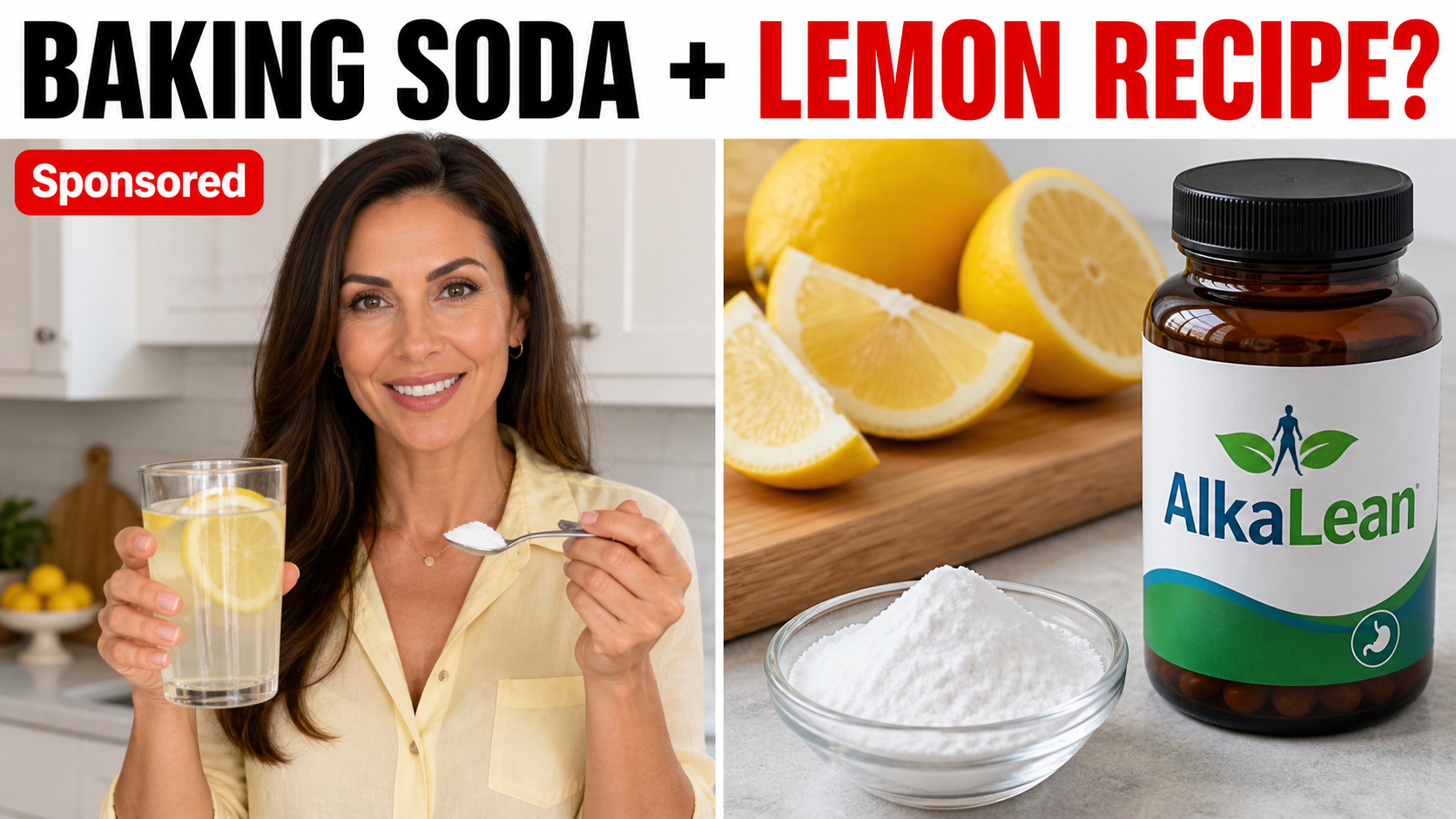
The baking soda and lemon juice recipe scam begins with ingredients people already recognize. Lemon water is associated with wellness, while baking soda is inexpensive and found in most kitchens. The combination feels less threatening than a bottle of unknown pills.
The ad uses that comfort to win a few minutes of attention. It may promise rapid fat loss, better blood sugar, reduced cravings, a flatter stomach, or an effect supposedly similar to a prescription GLP-1 medication.
A trusted-looking page makes the story feel researched
One page reviewed during this investigation appeared on the questrominsights.bu.edu domain, yet presented itself visually and textually as Health.com. It displayed a Health.com identity, health categories, an expert biography, a New York contact address, and a Health.com copyright notice.
The mismatch matters. The address bar belonged to a Boston University subdomain, not Health.com. Most of the navigation links led nowhere useful, and the article mixed a baking soda scam description with an unrelated quote about gelatin and bariatric patients.
The recipe eventually gives way to a product
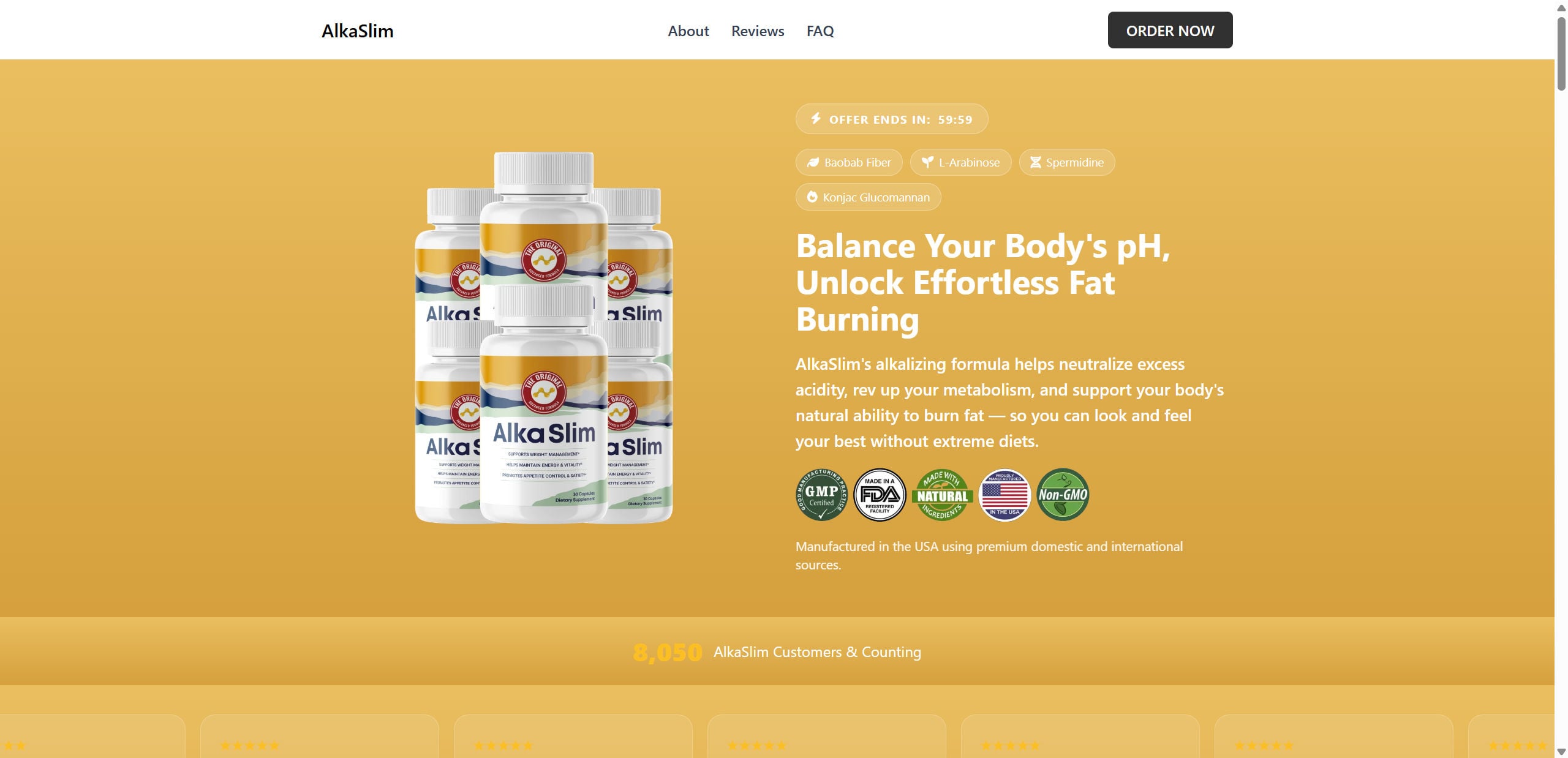
The commercial destination is not fixed. AlkaLean, AlkaSlim, SodaSlim, Jelly Lean, SlimSoda, EvoSlim, Ignitra, and other labels can appear at different points in closely related campaigns.
That flexibility explains why the story matters more than the bottle name. When a product gains too many complaints, the advertiser can replace the label while continuing to run the same video, fake interview, and household-recipe promise.
- The celebrity or doctor appearance may be generated or manipulated with AI.
- The article may imitate a news, university, or health publication.
- The promised recipe is delayed while the sales presentation becomes longer.
- A supplement replaces the inexpensive homemade drink near the end.
- Bundle pricing can turn an expected small purchase into an order costing more than $100.
- Automatic refills are possible in this market, but must be proven from the exact checkout and terms.
Why the Page on a University Domain Raises Questions
A university domain can create instant confidence. Many people assume that anything under .edu has been written, reviewed, or approved by the institution named in the address.
That assumption is unsafe. Universities operate many subdomains, publishing tools, event systems, student projects, and older platforms. A page can be misplaced, compromised, or uploaded through a weak publishing path without representing the university’s medical or editorial position.
In this case, the page did not look like Boston University’s Questrom School of Business. It wore another publication’s visual identity and listed contact details associated with that publication. The URL and the page identity told two different stories.
The text was also internally inconsistent. It described fake Today-style pages, AI customer images, non-clickable logos, unsupported badges, and AlkaLean marketing, which are useful warning signs. Yet the surrounding template itself copied Health.com branding and presented an unverifiable expert profile.
A page can contain some correct warnings and still be unreliable. Copying a trusted brand, inventing editorial signals, or publishing unrelated material under an institutional domain prevents readers from knowing who is actually responsible for the content.
The safest habit is simple: read the full domain from right to left. A real Health.com article should be hosted on health.com. A real Boston University page should clearly identify the university unit responsible for it and link into the institution’s genuine navigation.
What Baking Soda and Lemon Juice Can Actually Do
Lemon juice adds flavor, acidity, and a small amount of vitamin C to water. Baking soda is sodium bicarbonate, an alkaline compound used in cooking and in carefully directed medical applications.
Mixing an acid with baking soda produces carbon dioxide. The fizz looks active, but bubbling is not evidence that body fat is being burned. It is a basic chemical reaction occurring in the glass.
There is no credible clinical evidence that a baking soda and lemon drink melts belly fat, activates GLP-1 in a meaningful therapeutic way, or reproduces the effect of prescription obesity medication.
The National Institutes of Health notes that there is little scientific evidence that weight-loss supplements work. Some can also interact with medicines or cause harm.
Baking soda is not harmless simply because it is sold for cooking. It adds sodium, changes acid-base balance, and can interfere with other medicines. MedlinePlus advises people with high blood pressure, heart failure, kidney disease, or sodium restrictions to discuss sodium bicarbonate with a clinician.
Excessive intake can cause vomiting, diarrhea, dehydration, electrolyte problems, and dangerous alkalosis. Poison Control also warns that rapid gas formation can create serious stomach complications, particularly after a large meal or alcohol use.
How the Scam Works
Step 1: A short video interrupts the scroll
The opening clip is built for curiosity. A presenter holds a glass, lemon, spoon, or box of baking soda and claims that one missing ingredient changes how the body processes fat.
The face may belong to a generated presenter, a manipulated celebrity, or a real person whose footage was taken from another context. Subtitles make the promise readable even when the phone is muted.
Step 2: A familiar name supplies instant authority
Some versions attach the story to Oprah Winfrey, Dr. Ania Jastreboff, Dr. Oz, or another recognizable figure. The advertiser is borrowing trust, not documenting an endorsement.
Official warnings contradict these stories. Yale’s obesity research center states that the so-called pink salt trick is not medically supported and that videos appearing to show Dr. Jastreboff endorsing it are fraudulent and AI-generated.
Step 3: The click opens a counterfeit editorial page
The destination may imitate Today, CNN, Fox News, Health.com, a university, or a medical journal. Familiar colors, navigation bars, author headshots, review labels, and comments are arranged to make an advertisement look independently reported.
Look closely and the disguise often breaks. Menu items may all lead to the same place, buttons may not work, author photos may come from stock libraries, and the domain will not belong to the publication displayed on the page.

Step 4: The recipe is kept just out of reach
A genuine recipe needs a few lines. These presentations can continue for 20, 30, or 45 minutes while repeatedly promising that the exact measurements will be revealed shortly.
The delay is intentional. Every additional minute lets the script create fear, introduce a hidden cause, attack ordinary medical advice, and make the viewer feel invested in reaching the answer.
Step 5: Ordinary chemistry is dressed as a breakthrough
The narrator may mention pH, insulin resistance, cortisol, mitochondria, GLP-1, inflammation, or toxins. These are real terms, but their presence does not validate the conclusion attached to them.
A scientific-sounding explanation should lead to a named study on the exact formula, dose, population, outcome, and safety profile. Scam funnels usually provide diagrams, testimonials, and vague references instead.
Step 6: A supplement replaces the promised drink
Near the end, the viewer learns that kitchen ingredients are supposedly inconsistent or incomplete. The only reliable way to obtain the claimed effect is now a capsule, gummy, powder, or dropper formula.
This is the central bait-and-switch. The ad earned attention with a cheap homemade remedy, then used that attention to sell a higher-margin product that was not disclosed at the beginning.
Step 7: Bundles, upsells, and billing confusion raise the cost
The offer may headline a low price per bottle while preselecting three or six bottles. Shipping, warranty packages, digital programs, and post-purchase upsells can increase the final total.
Some supplement funnels also use automatic shipments. That should never be assumed without evidence from the exact checkout. Before paying, inspect the order summary, terms, checkbox state, receipt, and card descriptor for words such as subscription, continuity, autoship, membership, monthly, or recurring.
Warning Signs That the Recipe Is Really a Sales Funnel
- The video promises dramatic weight loss without meaningful diet or activity changes.
- A celebrity speaks in an unusually flat voice or moves out of sync with the audio.
- The domain does not match the news or health brand shown in the header.
- The article labels itself evidence-based without linking to relevant clinical evidence.
- The recipe can supposedly be explained in seconds, but the video prevents skipping.
- The product name appears only after a long emotional presentation.
- The checkout emphasizes price per bottle while hiding the total in smaller type.
- A countdown timer restarts when the page is refreshed.
- Testimonials cannot be traced to independent customers.
- FDA-registered or GMP badges are presented as proof that the product is FDA approved.
Company, Address, and Fulfillment Checks
The brand may vanish when the ad stops converting
These campaigns are built around replaceable names. If the page gives no stable legal entity, registration number, accountable officers, or consistent policy history, the bottle label is not a business identity. It is temporary packaging for the same sales script.
The address may be a warehouse, mailbox, or somebody else’s office
A return address does not prove where a supplement was formulated or manufactured. Search it before buying. Many aggressive supplement sellers list shared fulfillment centers, virtual offices, mailboxes, residential properties, or addresses also used by unrelated products.
The phone and email may exist only to complete the checkout
A polished contact page means little if nobody handles cancellations. Call before ordering, ask the agent to identify the exact product and legal seller, and request the refill terms in writing. If the number is disconnected or the email does not match the domain, stop.
An opaque supply chain can turn a bad order into a health risk
Do not assume a supplement was safely made in the United States because an ad displays a flag or an FDA-registered badge. Without a verifiable manufacturer, lot number, complete Supplement Facts panel, testing evidence, and recall contact, origin and quality remain unknown. Mass-produced imports can be mislabeled, contaminated, or unsafe with medications.
What to Do if You Have Fallen Victim to This Scam
- Save the complete trail. Capture the ad, page URL, order screen, terms, receipt, confirmation email, package label, tracking number, and card descriptor. Screenshots are especially valuable because these pages can disappear quickly.
- Check what you actually authorized. Compare the advertised price with the final charge. Look for multiple bottles, add-ons, insurance, membership language, and recurring billing in the checkout confirmation and terms.
- Cancel in writing. Email the seller with your order number and a direct statement that you cancel the order and any subscription or future shipment. Ask for written confirmation and keep every reply.
- Contact the card issuer promptly. Explain any unauthorized amount, recurring charge, or materially misleading transaction. Ask whether the card should be monitored, replaced, or blocked from future charges by that merchant.
- Do not keep experimenting if you feel unwell. Stop using the product and contact a healthcare professional or Poison Control if symptoms develop. Bring the bottle, ingredient panel, and order information when seeking help.
- Secure the device used for payment. If the page requested a download, notification permission, or unusual browser extension, scan the device with Malwarebytes. Use AdGuard to reduce malicious ads, tracking, and repeat exposure to similar landing pages.
- Report the campaign. Report the ad to the platform and file a complaint with the FTC. If money was stolen through broader impersonation or account takeover, also consider the FBI’s IC3.
- Warn relatives without embarrassing them. These ads are engineered to exploit trust and health anxiety. A calm explanation helps other family members recognize the same story when it returns with a different bottle.
Frequently Asked Questions
Does baking soda and lemon juice cause meaningful weight loss?
There is no reliable evidence that the drink produces substantial or lasting fat loss. The fizz is a chemical reaction, not proof of metabolism activation. Sustainable weight management requires evidence-based care, nutrition, activity, sleep, and, for some people, clinician-supervised medication.
Is the page on the Boston University domain an official Health.com article?
No. The reviewed URL was on questrominsights.bu.edu, while the page displayed Health.com branding and contact information. That mismatch is enough to treat the page as unauthenticated and unreliable, regardless of whether portions of its warning text are accurate.
Did Oprah or Dr. Ania Jastreboff endorse the recipe?
No credible evidence supports those endorsements. Yale has specifically warned that fake videos using Dr. Jastreboff’s identity are AI-generated, and Oprah has publicly warned about fraudulent weight-loss product ads using her name and image.
Why do different supplements appear in the same story?
The recipe is the reusable advertising asset. Product names can be exchanged without rebuilding the emotional script, fake interview, or news-page template. This is why consumers should investigate the merchant and checkout, not only the bottle printed in one advertisement.
Does every baking soda funnel create a subscription?
No. Some visible offers are one-time bundle sales, while others may include continuity programs or later upsells. A subscription allegation should be based on the exact terms, selected options, receipt, and subsequent charges, not on assumptions about a similar campaign.
What is the fastest way to verify a health article?
Check the domain, search the claimed expert’s official institution, look for the same announcement on the celebrity’s verified channels, and find clinical evidence for the exact product. If the page prevents basic verification while rushing you to checkout, leave.
The Bottom Line
The baking soda and lemon juice recipe story uses a harmless-looking kitchen ritual to lead viewers into a much more aggressive supplement funnel. The strongest warning is not one ingredient or bottle. It is the sequence of borrowed authority, fake editorial design, delayed disclosure, unsupported medical claims, and pressured checkout.
Do not trust the costume. Verify the domain, the endorsement, the evidence, the seller, and the complete billing terms before entering payment information.








