

A dramatic social media clip claims that a Shark Tank discovery or a famous doctor can reverse memory loss. Families worried about dementia are told that the solution has already stunned investors and medical experts.
The broadcast is not real. The click leads to Neuro Tyde Drops, a supplement offer with multiple domains, shifting names, and a refund policy that still contains an editing note.
We investigated the endorsements, health claims, product pages, prices, retailer language, return address, complaints, and billing evidence behind the funnel.
Overview
What Neuro Tyde Drops Claims to Do
Neuro Tyde is marketed as a liquid cognitive support supplement. Its pages say the drops improve focus, memory recall, mental clarity, and sustained energy through clinically researched botanical compounds.
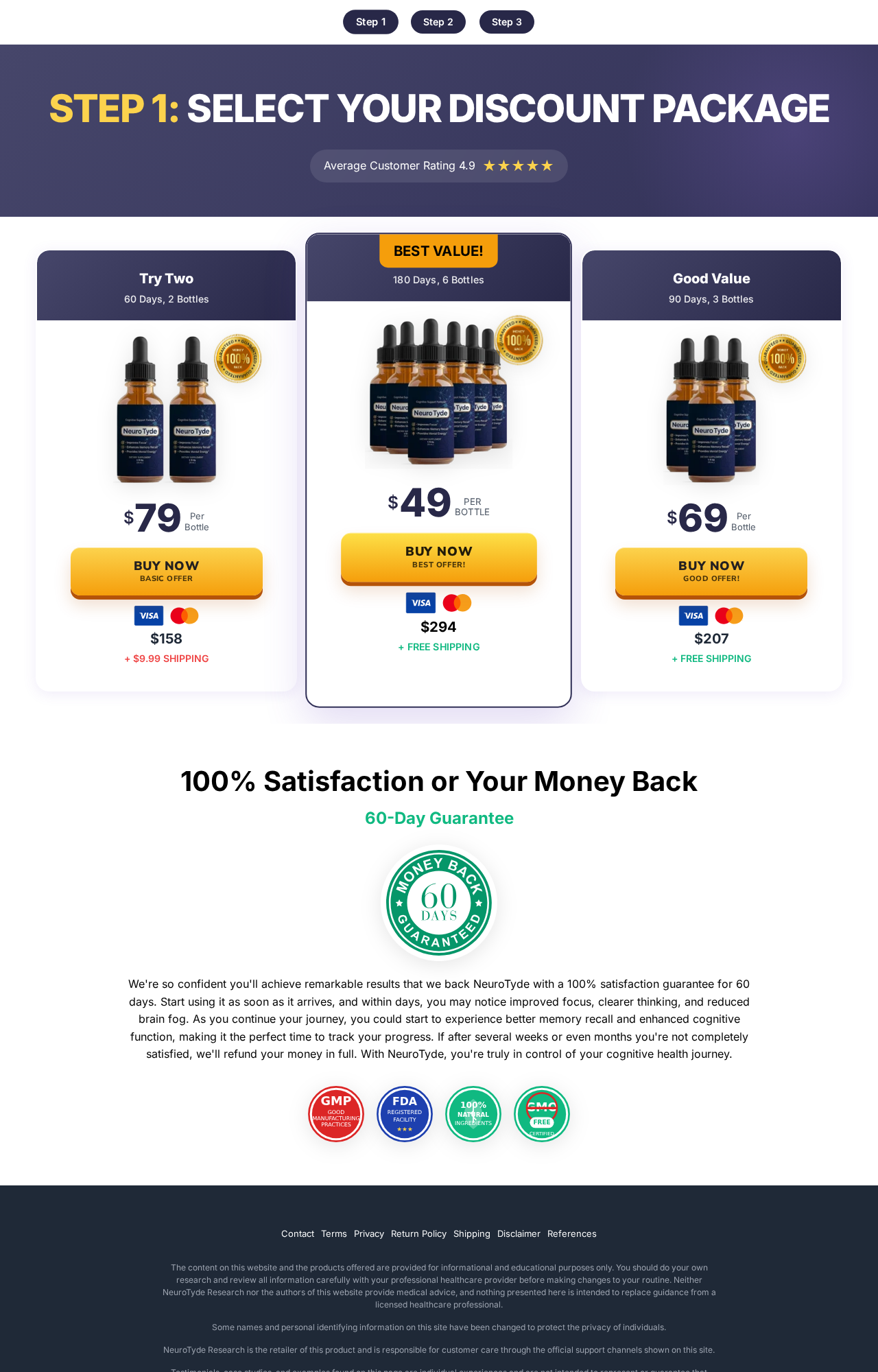
The main offer lists two bottles for $158 plus $9.99 shipping, three for $207, and six for $294. It presents a 4.9 average customer rating and places the largest package under a “best value” label.
The page identifies NeuroTyde Research as the retailer. It also publishes a 60-day guarantee, support@neurotyde.com, and a returns address in Aurora, Colorado.
Why the Advertising Is Especially Harmful
Ads associated with Neuro Tyde have imitated Shark Tank and falsely used Dr. Ben Carson in stories about Alzheimer’s disease, dementia, or dramatic memory recovery.
We found no credible evidence that Shark Tank investors or Dr. Carson endorse Neuro Tyde. There is also no finished-product clinical trial showing that the drops treat, reverse, cure, or prevent Alzheimer’s disease.
People searching for help with memory loss are often frightened and exhausted. A fake cure story exploits both the patient and the family members trying to protect them.
Our Verdict on Neuro Tyde Drops
We recommend avoiding Neuro Tyde Drops. The campaign relies on fake authority, disease-level implications, unsupported review signals, changing product identity, and legal pages that do not look carefully reviewed.
We found a real sales page and a stated refund route, but those operational details do not validate the medical claims. The seller’s own disclaimers say the product is not intended to diagnose, treat, cure, or prevent disease.
The strongest warning signs are:
- Fake Shark Tank and Dr. Ben Carson stories target dementia fears.
- The pages use “clinically researched” without a finished-product trial.
- A separate site says NeuroTyde was renamed NeuroPrime in two states.
- The supposed renaming is blamed on trademark regulations without supporting documentation.
- Large package discounts and ratings are controlled by the seller’s page.
- The refund page contains a leftover sentence describing itself as a paraphrased version.
- The returns address appears to be a shared fulfillment location.
- No evidence supports an Alzheimer’s or dementia cure.
The Fake Shark Tank and Dr. Ben Carson Story
Shark Tank Branding Creates Instant Social Proof
A Shark Tank-style clip gives viewers three false impressions at once: that a real company was publicly vetted, wealthy investors competed for it, and millions of television viewers witnessed the event.
A genuine episode can be verified through the program’s official network pages, episode guides, and investor channels. We found no credible Neuro Tyde appearance matching the promotional story.
Scammers often reuse this format because many viewers remember the show but will not remember every product that appeared.
A Doctor’s Likeness Adds Medical Authority
Dr. Ben Carson’s identity can make a memory supplement look medically endorsed. AI voice cloning, face animation, and edited interview footage can create a video he never recorded.
We found no reliable confirmation from his official channels that he endorses Neuro Tyde or claims it reverses dementia.
A white coat, famous doctor, or television frame does not replace a study of the exact product.
The Story Crosses From Wellness Into Disease Treatment
Supporting normal focus is a very different claim from reversing Alzheimer’s disease. The first is common supplement language, while the second describes treatment of a serious neurodegenerative disease.
The National Institute on Aging says no vitamin or supplement has been proven to prevent Alzheimer’s in people. Memory changes can also result from medications, sleep problems, depression, thyroid disease, vitamin deficiencies, infections, stroke, and other conditions.
A fake cure can delay evaluation during a period when an accurate diagnosis matters.
The Product Name Changes Inside the Funnel
A Popup Announces NeuroPrime
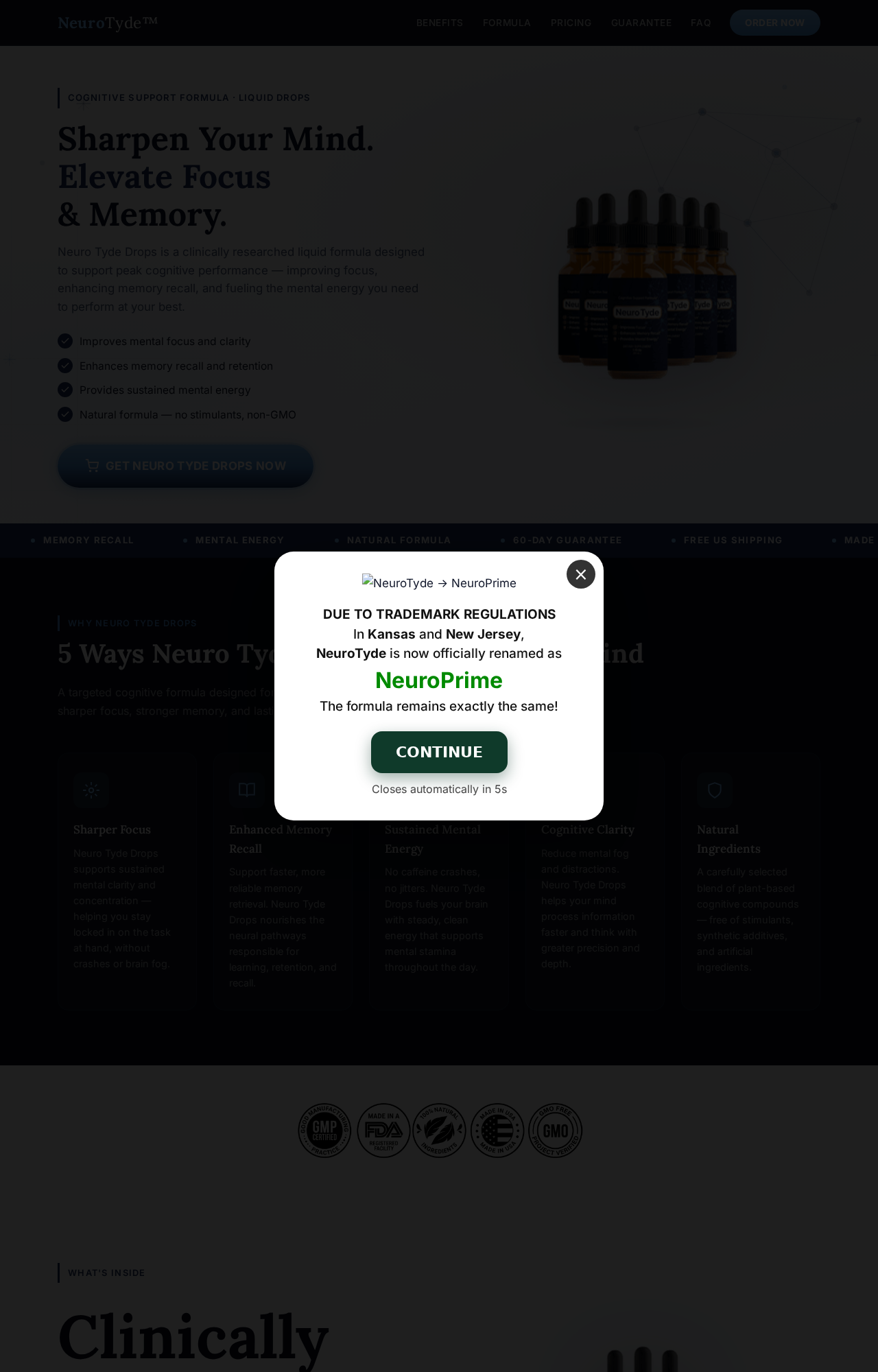
The neuro-tyde.com page displayed a popup saying NeuroTyde is “officially renamed as NeuroPrime” in Kansas and New Jersey due to trademark regulations. It says the formula remains exactly the same.
The popup does not link to a trademark record, legal notice, label transition document, or explanation from a named manufacturer. The rest of the page continues using the Neuro Tyde identity.
A consumer cannot verify ingredient equivalence from an unsupported sentence. A renamed bottle should have a clear distributor statement and matching Supplement Facts.
Changing Names Can Defeat Consumer Research
When a buyer searches complaints about Neuro Tyde, a new name can make the results appear unrelated. The marketing can also continue after one domain or label attracts scrutiny.
Not every rebrand is deceptive, but legitimate rebrands preserve accountability. They explain the company, timeline, unchanged or revised formula, lot numbers, customer support, and guarantee.
The NeuroPrime popup provides none of that context.
The Claims Stay the Same Even When the Label Changes
The page continues to promise sharper focus, enhanced memory recall, mental energy, and cognitive clarity. The new name does not come with new clinical evidence.
This shows why consumers should investigate the claim and seller rather than trusting the current label. A name change cannot transform anecdotal marketing into proof.
How the Neuro Tyde Drops Scam Works
Step 1: The Ad Finds Families Worried About Memory
The campaign targets older adults and relatives who have noticed forgetfulness, confusion, or personality changes. It promises hope before a qualified professional has established the cause.
The emotional stakes make the viewer more willing to trust a familiar television or medical figure.
Step 2: Fake Shark Tank or Doctor Footage Validates the Claim
An AI-enhanced clip imitates a show segment, investor reaction, interview, or doctor explanation. It creates the feeling that respected outsiders already performed the due diligence.
The featured people have no demonstrated relationship with Neuro Tyde.
Step 3: The Story Promises More Than the Label Can Claim
The ad discusses dementia or Alzheimer’s reversal, while the seller’s disclaimer says the supplement does not diagnose, treat, cure, or prevent disease.
The broad ad drives the sale, and the narrow disclaimer attempts to limit responsibility afterward.
Step 4: A Long Page Supplies Scientific-Sounding Language
Visitors see neurological pathways, memory encoding, natural chemistry, clinically researched ingredients, GMP badges, and an FDA-registered facility claim.
These elements do not show that the exact Neuro Tyde formula improved cognition in a randomized controlled trial.
Step 5: Multi-Bottle Pricing Raises the Commitment
Two bottles cost $158, three cost $207, and six cost $294. The six-bottle package is framed as the best value and the page recommends a long enough supply to experience the full benefits.
A frightened family may spend more than $200 before knowing whether the ingredients are appropriate for the person involved.
Step 6: A Guarantee Makes the Purchase Feel Safe
The page promises 60 days and says customers can receive a full refund. The detailed policy requires contact first, return of all bottles, customer-paid postage, tracking, and processing after receipt.
Those conditions can be manageable, but they are not the same as an effortless or immediate refund.
Step 7: The Name Can Shift While the Funnel Survives
Neuro Tyde can become NeuroPrime while the claims, bottle format, and sales architecture remain. A future campaign could attach the same dementia story to another label.
Fake endorsement campaigns should be recognized by their path, not just the product name used today.
Company, Address, and Fulfillment Checks
“NeuroTyde Research” Is Presented as the Retailer
The main checkout says NeuroTyde Research is the retailer and responsible for customer care. It does not clearly provide a full incorporated entity name, state registration, executive, or headquarters on that page.
A brand-style retailer name is not enough to identify the manufacturer or the company legally responsible for the formula.
The Support Route Is Email-First
The refund page directs customers to support@neurotyde.com. We did not find a clear toll-free product support number on the pages used for this order path.
Email can provide a useful written record, but buyers should send messages promptly and preserve delivery, reply, and tracking evidence.
The Aurora Address Is a Returns Facility
The policy gives 19655 E 35th Drive, Suite 100, Aurora, CO 80011 as the returns address. That location appears in policies for other online supplement brands.
This pattern is consistent with shared fulfillment. It does not prove that Neuro Tyde was formulated, manufactured, tested, or headquartered at that address.
The Manufacturer and Finished-Product Test Remain Unclear
The pages use Made in USA, GMP, natural, and FDA-registered facility language. We did not find the named facility or a lot-specific independent certificate on the pages reviewed.
Do not assume the product came from China without evidence. Ask for the legal manufacturer, country of manufacture, lot number, Supplement Facts, and laboratory report tied to the exact bottle.
The Refund Policy Contains a Revealing Editing Error
The Page Describes Itself as a Paraphrase
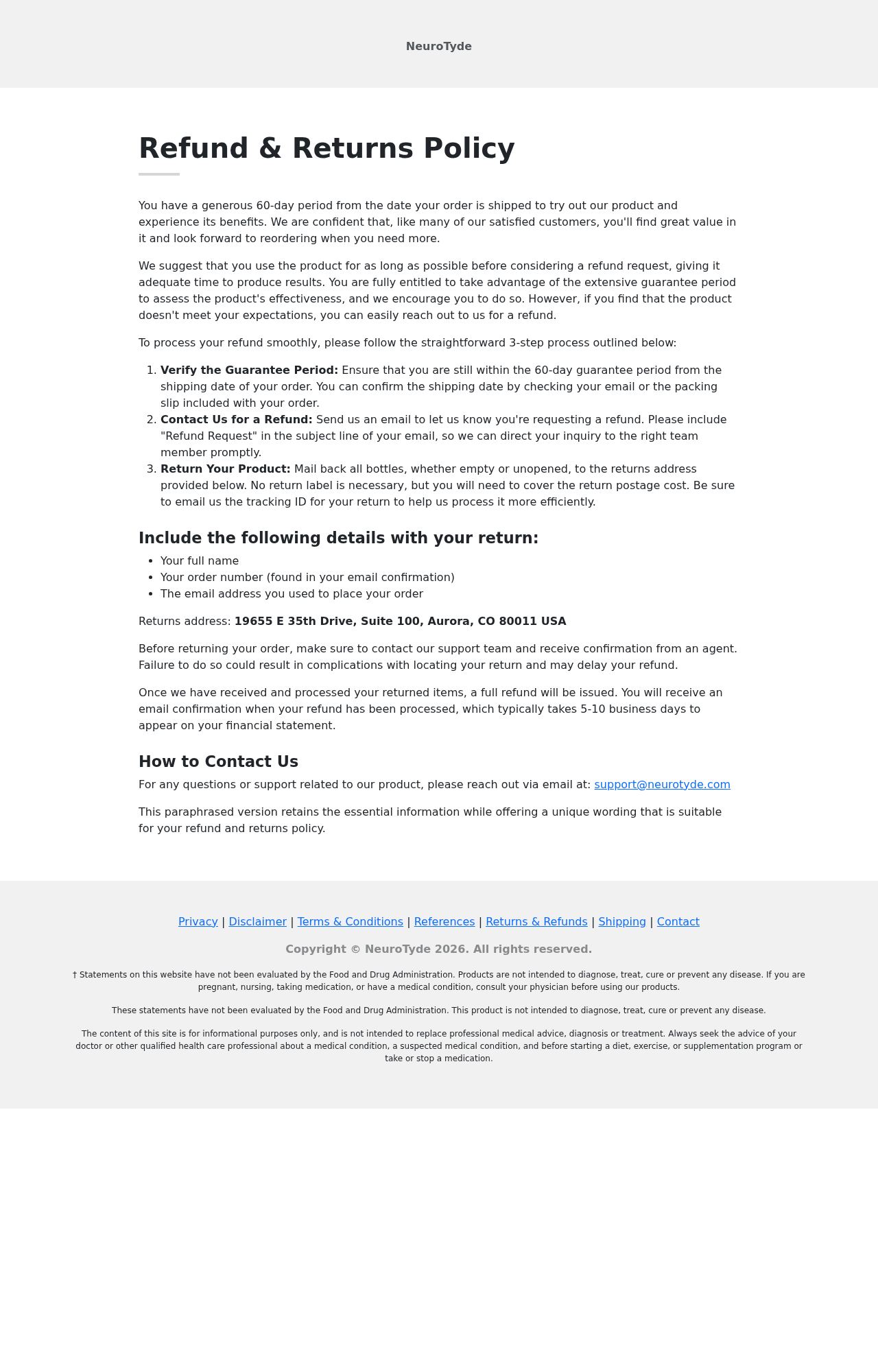
At the bottom of the refund instructions, the live page says: “This paraphrased version retains the essential information while offering a unique wording that is suitable for your refund and returns policy.”
That sentence reads like an instruction or output note that should have been removed before publication. It strongly suggests the policy was rewritten from a template without a careful final review.
A copied policy is not automatically invalid, but this mistake undermines confidence in the seller’s attention to legally important details.
The Return Requires Every Bottle
The policy says buyers must mail back all bottles, whether empty or unopened. It asks customers to contact support first and include their name, order number, and purchase email.
The buyer pays return postage and should email the tracking ID. Failure to contact support first may delay the refund.
The Deadline Is Measured From Shipping
The detailed policy describes a 60-day period from the date the order ships. Other pages may summarize the guarantee more generally.
Use the earlier deadline if two versions conflict. Request instructions well before day 60 and keep the shipping confirmation that establishes the date.
What to Do if You Have Fallen Victim to This Scam
- Preserve the ad and health claims. Save the Shark Tank frame, doctor footage, dementia promise, product page, price, guarantee, receipt, and card descriptor.
- Confirm the product name. Check whether your page, receipt, and bottle say Neuro Tyde, NeuroTyde, NeuroPrime, or another name. Photograph every label.
- Contact support immediately. Write to support@neurotyde.com with “Refund Request,” your order number, amount, and the email used to purchase. Ask for written authorization.
- Return all required bottles with tracking. The published policy says empty and unopened bottles must be returned to the Aurora address. Confirm the address in your own receipt before shipping.
- Check for any future payment. We did not find enough evidence to label the reviewed offer an automatic subscription. Still inspect the receipt and statements and cancel any recurring item actually shown.
- Dispute unresolved or unauthorized charges. Give the card issuer the false endorsement, refund request, tracking, and proof of any charge the merchant did not resolve.
- Arrange a real memory evaluation. Do not delay medical care or stop prescribed medication. Sudden confusion or neurological symptoms can require urgent attention.
- Report the campaign. Report fake television and doctor content to the platform. Submit deceptive health claims to the FTC and suspected adverse events to the FDA.
- Secure the device and browser. Run Malwarebytes if the funnel opened suspicious downloads or redirects. AdGuard can reduce deceptive ads, malicious domains, and tracking.
Frequently Asked Questions
Was Neuro Tyde featured on Shark Tank?
We found no credible evidence that Neuro Tyde received the Shark Tank endorsement described in promotional ads. Verify episode claims through the official network.
Does Dr. Ben Carson endorse Neuro Tyde?
We found no reliable confirmation of an endorsement. Treat videos making that claim as manipulated unless they appear on his verified channels.
Can Neuro Tyde reverse Alzheimer’s disease?
No supplement has been proven to reverse Alzheimer’s. Neuro Tyde’s own disclaimer says it is not intended to diagnose, treat, cure, or prevent disease.
Are Neuro Tyde and NeuroPrime the same?
One page claims the formula was renamed NeuroPrime in Kansas and New Jersey, but it provides no supporting trademark or manufacturer documentation. Compare actual labels and terms.
Is Neuro Tyde a subscription?
We did not find sufficient evidence that the reviewed package automatically enrolls every buyer in refills. Check the exact final checkout, receipt, and statement.
How does the refund work?
The published policy gives 60 days from shipping, requires prior contact and return of all bottles, and makes the customer pay postage. Use tracking and keep every email.
The Bottom Line
Neuro Tyde Drops is sold through a dangerous form of hope marketing. Fake Shark Tank and doctor stories imply a dementia breakthrough, while the actual site sells multi-bottle supplements without product-specific proof.
The shifting NeuroPrime name and unfinished refund copy add to the concern. Avoid the funnel, seek qualified evaluation for memory symptoms, and move quickly if you need to recover a payment.








