

A familiar face, a worried family, and a promise of restored memory can make any advertisement feel urgent. Neuro Recall arrives wrapped in exactly that kind of emotional pressure.
The presentation looks polished and reassuring. Yet the most important details appear only after following the offer from its dramatic video to the page where money changes hands.
Overview
The advertisement borrows Elon Musk’s identity
Neuro Recall is promoted through video content that appears to show Elon Musk discussing Alzheimer’s disease, dementia, artificial intelligence, or a hidden memory breakthrough.
We found no credible evidence that Musk developed, endorsed, tested, or recommended Neuro Recall. A convincing face and voice inside an advertisement do not establish consent.
The campaign reportedly invokes other recognizable figures, including Bill Gates, Dr. Mehmet Oz, Dr. Phil McGraw, Dr. Sanjay Gupta, actors, and television personalities.
That crowded cast is a warning. Legitimate medical evidence does not become stronger because an advertisement displays more famous names.
The Neuro Recall website contradicts its own identity
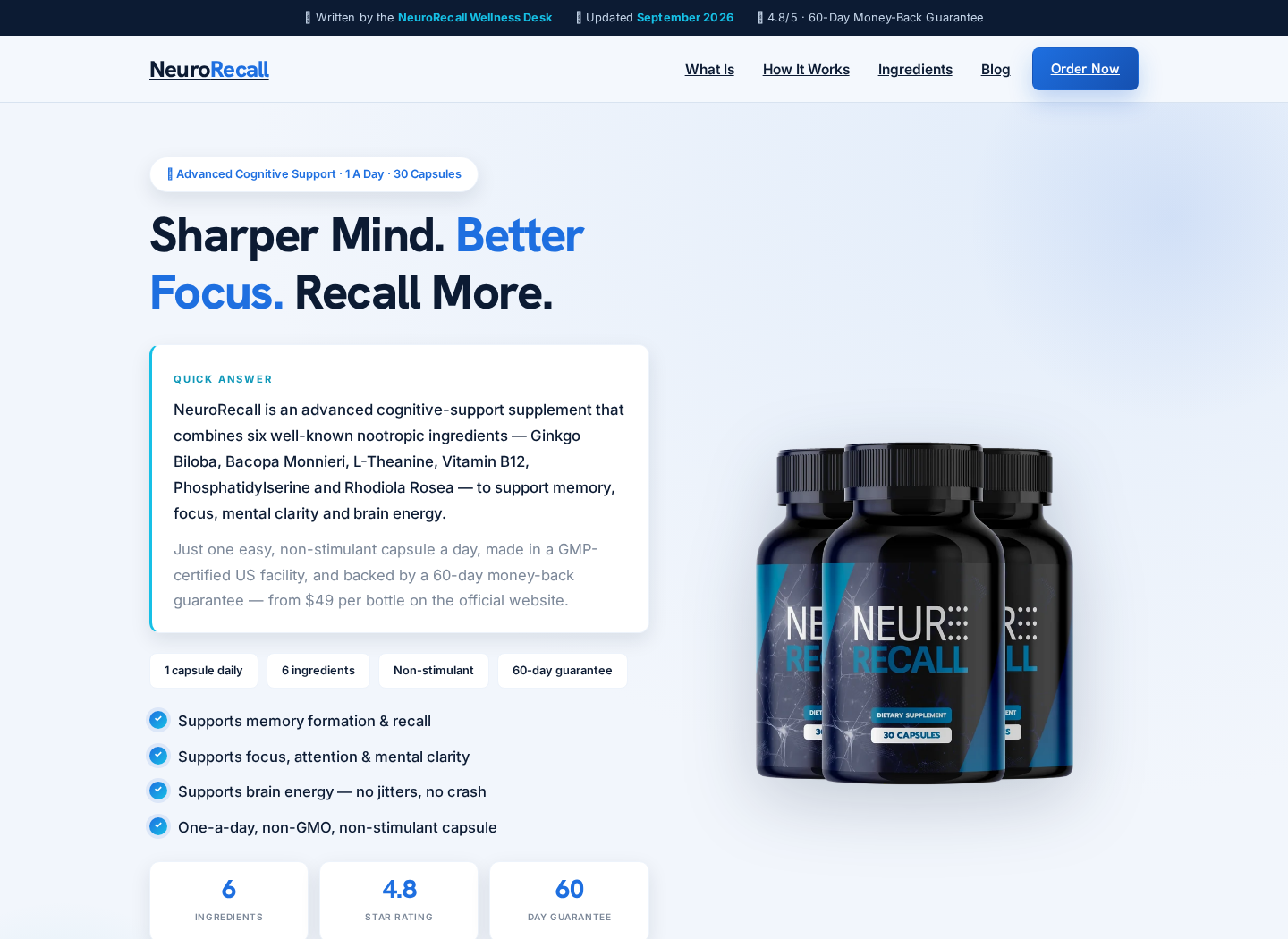
The reviewed website repeatedly describes itself as the official Neuro Recall website and store. It presents Neuro Recall as a six-ingredient cognitive-support capsule.
However, its refund policy says the website is an independent affiliate that does not process orders. The terms page repeats that it may earn commissions.
That distinction matters. A shopper is encouraged to trust an “official” destination, while the legal language describes a promotional middleman.
The order button leads to a different product
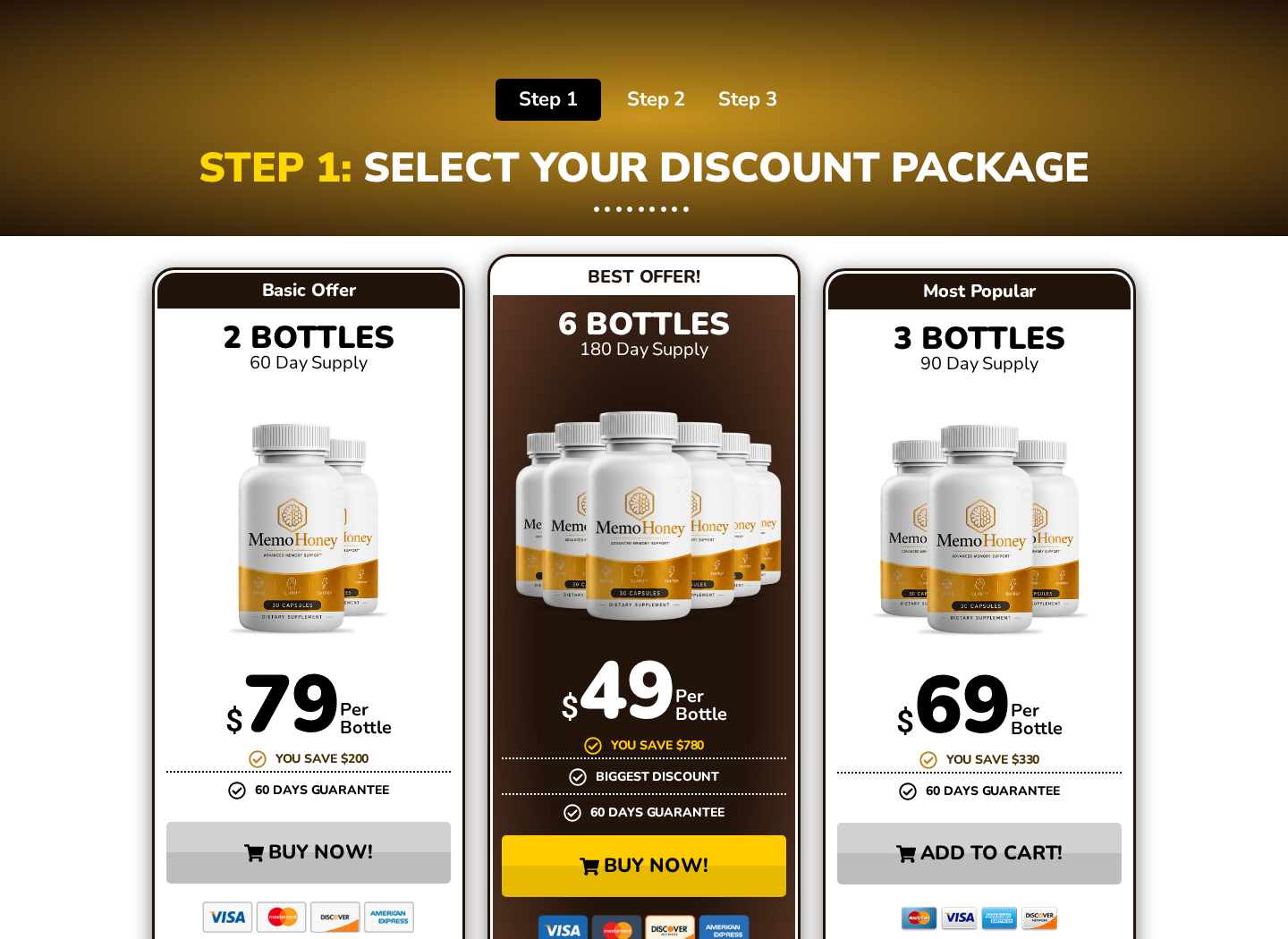
Clicking the Neuro Recall order link did not take us to a Neuro Recall checkout. It redirected to a sales page for MemoHoney.
The destination offered two, three, or six bottles of MemoHoney through BuyGoods. Neuro Recall disappeared precisely when the transaction became real.
These findings create several immediate concerns:
- The celebrity endorsement is not verified.
- The apparent official website identifies itself as an affiliate.
- The advertised Neuro Recall name changes to MemoHoney at checkout.
- The destination starts with a two-bottle order totaling $158.
- The landing page’s ingredient story does not match the checkout brand.
- No reliable evidence shows either supplement reverses dementia.
What Neuro Recall Claims to Be
The landing page describes Neuro Recall as a once-daily, non-stimulant capsule for memory, concentration, mental clarity, and brain energy.
It lists ginkgo biloba, bacopa monnieri, L-theanine, vitamin B12, phosphatidylserine, and rhodiola rosea. The page calls this a complete six-ingredient formula.
Individual ingredients may have research histories. That does not prove the finished Neuro Recall product produces the advertised experience, timing, or magnitude of benefit.
The page does not display an accessible clinical trial testing its exact finished formula against a placebo under independent supervision.
It also claims a 4.8 rating, more than 1,425 verified reviews, and a 93% preference for six bottles.
Those figures appear inside the seller-controlled presentation. We did not find an independent verification method explaining the reviewers, purchases, or sampling process.
The Medical Story and the Actual Label Are Very Different
The advertising story reportedly raises Alzheimer’s disease and dementia, conditions that require qualified medical evaluation and cannot be responsibly reduced to a supplement pitch.
The sales language is narrower. It describes support for ordinary memory, focus, and energy rather than an approved treatment for a diagnosed disease.
This gap is common in deceptive supplement funnels. The emotionally powerful video creates the expectation, while the product disclaimer limits what the seller officially promises.
A supplement disclaimer does not erase a misleading advertisement. Buyers make decisions based on the complete impression, not one sentence placed near the footer.
Memory changes can have many causes, including medication effects, sleep problems, depression, nutritional deficiencies, infections, thyroid conditions, stroke, and neurodegenerative disease.
Delaying professional assessment because an AI celebrity appears to promise a cure can cost more than the bottles. It can also delay appropriate care.
How the Neuro Recall Scam Works
Step 1: A social media video finds people worried about memory
The funnel begins with an advertisement built around a frightening possibility. A forgotten name or misplaced object is presented as a sign that urgent action is needed.
Family members may be targeted too. They want hope for someone they love and may watch a long presentation that they would otherwise ignore.
The video is designed to create attention before the viewer knows the seller, formula, price, or refund terms.
Step 2: Fake Elon Musk footage supplies instant authority
The promotion appears to show Musk explaining a breakthrough involving memory loss, AI, or suppressed research.
AI-generated audio, altered lip movements, edited interviews, and synthetic scenes can make a completely unauthorized endorsement look persuasive on a small phone screen.
Other famous people may appear as supporting witnesses. Their presence creates familiarity, but it does not provide clinical evidence.
Step 3: A fake news presentation makes the pitch look independent
The visitor may see a page styled like a television report, newspaper investigation, or trusted commentary site rather than a straightforward supplement advertisement.
Familiar layouts and logos encourage viewers to lower their guard. The content feels reported even when the advertiser controls every sentence and button.
The story may suggest that powerful interests hid the discovery. That claim conveniently explains why no recognized medical authority confirms it.
Step 4: Neuro Recall becomes the supposed solution
After the viewer accepts the dramatic story, Neuro Recall appears as the easy next step. The bottle gives a tangible form to an otherwise vague promise.
The landing page supplies polished packaging, ingredient names, ratings, badges, and a guarantee. These details make the transition from story to purchase feel natural.
Yet the page does not prove that the advertised celebrity story is genuine or that the exact product treats disease.
Step 5: The order link quietly switches Neuro Recall to MemoHoney
The most revealing moment occurs when the shopper clicks to order. The browser leaves the Neuro Recall domain and opens a MemoHoney page.
The destination describes MemoHoney as a capsule for mental clarity, energy, and cognitive well-being. It does not explain why a Neuro Recall advertisement delivered another brand.
This is not a harmless spelling variation. Product identity determines which label, ingredients, seller, policies, and support team a buyer expects.
Step 6: Bundle pricing replaces the simple trial
The MemoHoney destination offers two bottles for $158 plus $9.99 shipping, three bottles for $207, or six bottles for $294.
There is no single-bottle choice on the reviewed page. The six-bottle option receives the strongest visual emphasis and advertises the largest nominal savings.
That structure increases the initial charge before a buyer has tried the product. It also makes a refund more complicated if multiple bottles are opened.
Step 7: Policies and support appear after several identities
The Neuro Recall page says there is no autoship. The MemoHoney checkout also presents a 60-day guarantee and identifies BuyGoods as retailer.
We did not verify that every order creates recurring charges. Buyers should inspect the final checkout, receipt, and card statement instead of assuming either outcome.
The larger problem is traceability. Neuro Recall, an affiliate website, MemoHoney, BuyGoods, and separate policy domains all appear along one purchasing path.
Why the Neuro Recall to MemoHoney Switch Matters
A consumer cannot give informed consent when the advertised name and checkout name differ without a clear explanation.
The Neuro Recall page gives one formula story. The final purchase page identifies MemoHoney, which may use different packaging, ingredients, directions, and warnings.
If the shipment arrives under another name, the buyer may struggle to connect it with the original advertisement or identify the correct refund policy.
Card statements may introduce another descriptor. That makes disputed charges harder to recognize, especially for an older buyer or a family managing finances.
A transparent seller should disclose the legal merchant, product identity, final quantity, complete price, recurring terms, and return process before asking for payment.
Are the Neuro Recall Reviews Reliable?
The landing page features enthusiastic stories, star ratings, location details, and “verified purchase” language. These elements resemble a familiar retail review system.
However, the page does not link those claims to an independent platform where readers can inspect reviewer histories, dates, moderation rules, or purchase verification.
Seller-selected testimonials are marketing. They may describe genuine experiences, but they cannot establish typical results or prove a medical outcome.
The claim that thousands of adults use Neuro Recall is also difficult to reconcile with an order button that sells MemoHoney instead.
Search results can contain affiliate pages repeating the same language. Repetition across promotional websites is not independent confirmation.
Look for documented orders, consistent product labels, balanced complaints, identifiable testing, and reviewers who did not earn a commission from the purchase.
Ingredients, Safety, and Evidence
Ginkgo, bacopa, L-theanine, B12, phosphatidylserine, and rhodiola are real substances. Naming familiar ingredients does not validate a fabricated endorsement or disease claim.
Dosage matters. The visible marketing emphasizes ingredient names, but consumers need a complete Supplement Facts panel with exact amounts, serving size, and other ingredients.
Ginkgo can interact with medicines affecting bleeding. Rhodiola and other botanicals may be unsuitable for some people or interact with treatment plans.
“Natural” does not mean universally safe. Older adults frequently use several medications, making a pharmacist or clinician especially valuable before starting a supplement.
The landing page says the product comes from a registered, GMP-certified U.S. facility. It does not identify that facility or show lot-specific independent test results.
FDA facility registration is not FDA approval of a supplement’s effectiveness. It also does not confirm that a celebrity, doctor, hospital, or university endorsed the product.
Company, Address, and Fulfillment Checks
The “official” website calls itself an affiliate
Neuro Recall repeatedly says visitors are on the official website and store. Its refund policy later says the website is an independent affiliate.
That contradiction is significant. An affiliate can promote an offer without being the manufacturer, merchant, testing laboratory, or customer service operator.
No clear legal Neuro Recall company is presented
The reviewed pages use the Neuro Recall brand and “Wellness Desk” byline. They do not clearly identify a legal Neuro Recall company with executives and registration details.
A brand name is not enough. Buyers need the entity that accepts responsibility for advertising, formula accuracy, data handling, and customer disputes.
The checkout identifies BuyGoods as retailer
The MemoHoney destination states that BuyGoods is the retailer and lists 1201 N Orange Street, Suite 7223, Wilmington, Delaware.
The page also says BuyGoods’ retail role does not endorse or approve the product’s promotional claims. That disclaimer should be read carefully.
Support details belong to the final sales path
The Neuro Recall contact page lists support@neurorrecall.com. The MemoHoney checkout displays contact@customercs.com and a telephone number with a Minnesota area code.
Different support routes increase confusion. Before ordering, ask each contact to identify the product, merchant, manufacturer, return address, and exact refund requirements in writing.
What to Do if You Have Fallen Victim to This Scam
- Preserve the complete trail. Save the social advertisement, video, fake news page, Neuro Recall landing page, MemoHoney checkout, receipt, package label, and every message.
- Identify the actual charge. Check the pending and settled card descriptors. Record the date, amount, currency, merchant name, and every unexpected follow-up charge.
- Contact support in writing. Message the address on your receipt first. State the order number, product received, requested remedy, and date before the 60-day window closes.
- Ask for return instructions. Do not mail bottles to an address copied from an advertisement. Obtain authorization and a confirmed return destination from the merchant.
- Use tracked shipping. Photograph the contents, sealed bottles, label, and parcel. Keep the carrier receipt and delivery confirmation until the refund settles.
- Call your card issuer. Explain the fake endorsement and Neuro Recall-to-MemoHoney switch. Ask about dispute rights, future billing blocks, and card replacement if necessary.
- Review future statements. The page claims no autoship, but monitoring remains sensible. Challenge charges you did not clearly authorize without unnecessary delay.
- Secure the device. If the funnel caused suspicious redirects or downloads, scan with Malwarebytes. Use AdGuard to reduce malicious advertising and tracking exposure.
- Report the campaign. Report the advertisement to the platform, the FTC at ReportFraud.ftc.gov, and IC3.gov when impersonation or financial fraud is involved.
- Seek medical guidance. Stop using the supplement and contact a qualified professional if symptoms occur. Never replace prescribed dementia care with an online capsule.
Frequently Asked Questions
Did Elon Musk endorse Neuro Recall?
We found no credible evidence of an endorsement. Treat videos showing Musk promoting Neuro Recall or a dementia breakthrough as manipulated advertising.
Does Neuro Recall cure Alzheimer’s disease or dementia?
No credible evidence shows Neuro Recall cures either condition. The actual supplement language discusses general cognitive support, not an approved disease treatment.
Why does Neuro Recall redirect to MemoHoney?
The reviewed order link led to a MemoHoney bundle page. The Neuro Recall website did not provide a clear explanation for that product switch.
Is Neuro Recall an automatic subscription?
The reviewed page says orders are one-time with no autoship. Verify the final checkout and receipt, because the changing domains and brands justify extra caution.
How much does the Neuro Recall funnel charge?
The destination offered MemoHoney bundles costing $158 plus shipping, $207, or $294. Prices and terms can change, so preserve the exact checkout shown.
Can buyers obtain a refund?
The pages advertise 60 days from shipping. Request instructions immediately, keep written records, use tracked return shipping, and contact the card issuer if the seller does not resolve it.
The Bottom Line
Neuro Recall uses an unauthorized Elon Musk story and an official-looking affiliate page to build trust, then sends buyers to a MemoHoney checkout.
The unexplained brand switch, fake celebrity authority, unclear company identity, and expensive bundles make this funnel unsafe to trust. Avoid it and seek qualified care for memory concerns.








