

A famous voice seems to reveal a forgotten cure. The clip is brief, emotional, and confident enough to make an ordinary advertisement feel like breaking news.
The Elon Musk memory-cure campaign uses that illusion to move worried viewers toward supplements. We traced the current version and examined what changes behind the story.
Overview
The celebrity story is fabricated
Elon Musk has not announced a secret supplement that reverses dementia, restores lost memories, or replaces medical care.
The advertisements use altered footage, synthetic audio, copied interviews, and invented news framing to create an endorsement that viewers cannot verify.
Some versions present Musk as a researcher, investor, whistleblower, or family member sharing a personal discovery. Those details are storytelling devices, not reliable evidence.
The product can change while the script stays intact
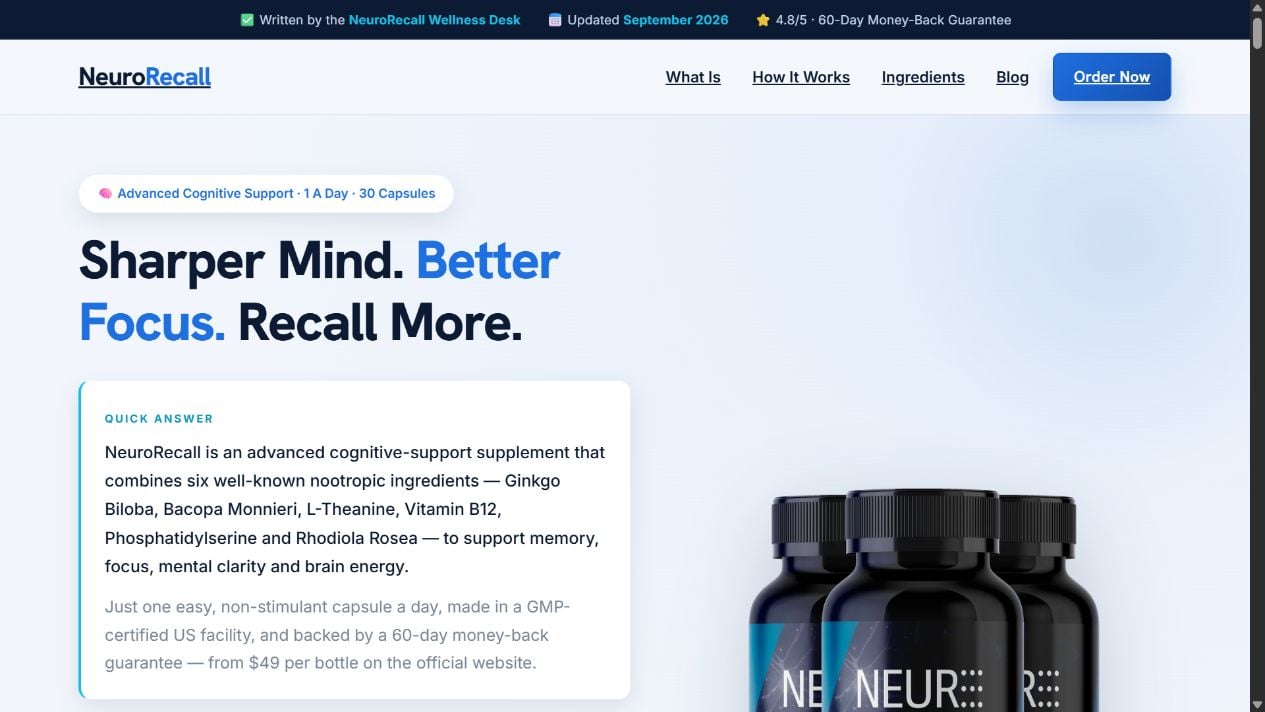
In the current version we examined, the sales journey promotes NeuroRecall, a capsule formula advertised for memory, focus, clarity, and brain energy.
Earlier campaigns used honey, rosemary, breakfast rituals, drops, gummies, and differently named capsules. The bottle is replaceable because the celebrity story creates the demand.
This article addresses the fake Elon Musk memory-cure narrative. It is not a duplicate review of every supplement that may appear at the end.
The landing page does not prove the advertised cure
NeuroRecall’s page lists ingredients and package prices, then uses familiar wellness language. None of that authenticates the Elon Musk video.
The site also displays ratings, review counts, manufacturing statements, and a guarantee. Those claims require independent verification rather than acceptance from the seller’s own page.
A real product package can still be sold through a fake endorsement. Tangible capsules do not make the preceding news story genuine.
- Elon Musk did not authorize the memory-cure promotion we reviewed.
- AI tools can imitate his voice, expressions, and speaking rhythm.
- Fake news pages turn a sales pitch into apparent reporting.
- NeuroRecall is one current product attached to the reusable story.
- The reviewed NeuroRecall page advertises one-time package pricing.
- No celebrity clip should replace medical evaluation for memory changes.
The Story Is the Product
People searching for memory help are not merely shopping for vitamins. They may be frightened by forgetfulness, a diagnosis, or changes in someone they love.
Scammers build around that vulnerability. Their advertisement offers a villain, a revelation, a trusted messenger, and a simple action that appears time-sensitive.
Elon Musk is useful to this script because his public image is associated with technology, wealth, ambition, and projects that challenge established industries.
The campaign turns those associations into implied medical authority. It suggests that someone capable of building advanced technology must also understand dementia treatment.
That reasoning is false. Expertise in engineering or business does not establish clinical expertise in neurology, geriatrics, pharmacology, or supplement manufacturing.
The fake narrative often claims that pharmacies, drug companies, doctors, or broadcasters tried to suppress the discovery.
Suppression stories discourage normal verification. If the viewer cannot find credible reporting, the advertisement suggests that the absence itself proves a cover-up.
This circular logic protects the claim from evidence. Any contradiction becomes part of the conspiracy, while the checkout remains the only recommended destination.
How the Scam Works
Step 1: A social-media ad targets fear about memory loss
The ad may mention forgotten names, misplaced objects, repeated questions, mental fog, or losing independence. These concerns feel immediate to older adults and caregivers.
Some ads use a family story or an apparent on-air confession. Others claim a common breakfast ingredient can restore the brain in days.
The goal is emotional recognition. Once viewers see their own worries reflected, they are more likely to keep watching.
Step 2: AI makes Elon Musk appear to reveal the solution
Scammers obtain existing video, then replace the audio or synchronize altered mouth movements with a synthetic script.
Compression, captions, rapid cuts, and background music hide imperfections. Mobile screens make subtle facial or vocal errors even harder to notice.
The result does not need to survive expert analysis. It only needs to feel plausible during a brief, emotionally charged scroll.
Step 3: A fake news page expands the invented interview
The click commonly opens a page styled like a television network, newspaper, science publication, or popular daytime program.
Logos, reporter bylines, video-player graphics, and familiar colors create borrowed credibility. The domain usually does not belong to the organization being imitated.
The article may claim a host challenged Musk, a demonstration shocked doctors, or supplies began disappearing after the broadcast.
Step 4: A simple ritual becomes the bridge to a product
The story often begins with honey, rosemary, cinnamon, coffee, salt, or another kitchen ingredient because familiar objects feel safe and memorable.
After several paragraphs, the “recipe” quietly becomes a branded supplement. Readers learn that ordinary ingredients supposedly lack the required concentration or proprietary blend.
This bait-and-switch lets advertisers promote the ritual in the headline while reserving the commercial product for the end.
Step 5: The supplement page creates a more respectable mood
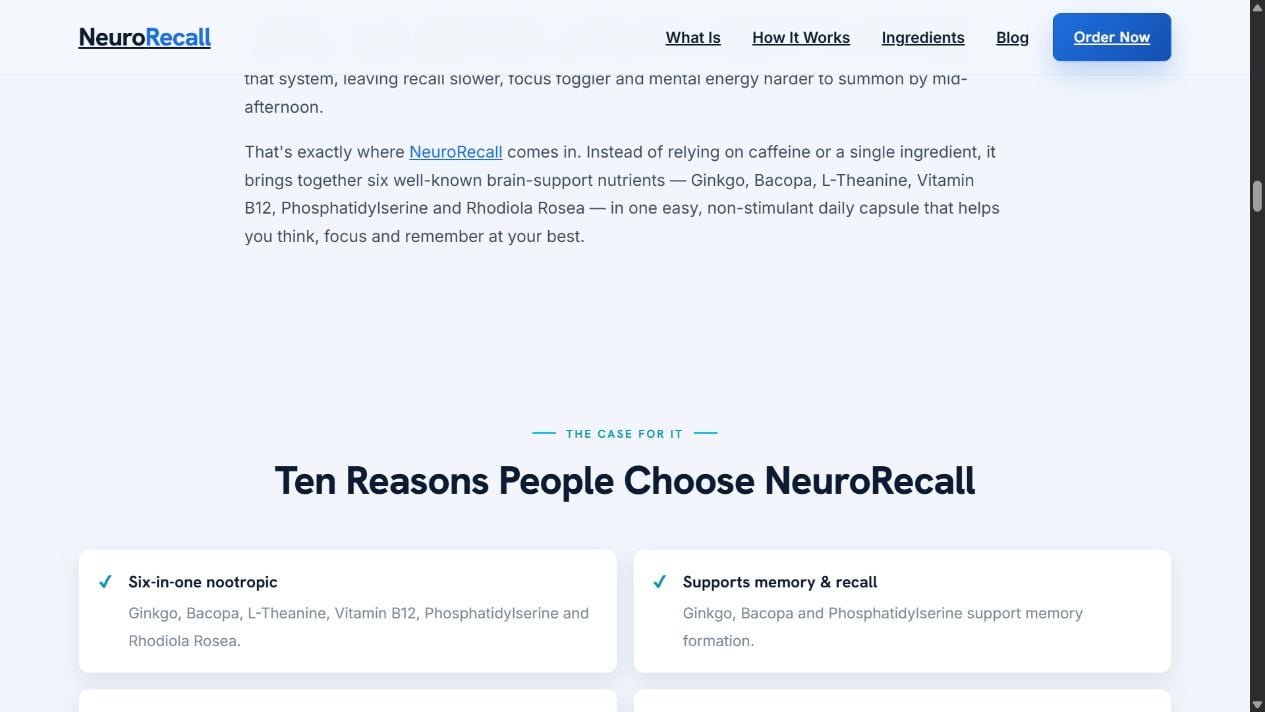
The final page uses ingredient panels, bottle bundles, guarantees, badges, and scientific-sounding explanations. The wild celebrity story may disappear entirely.
In this version, NeuroRecall lists Ginkgo biloba, Bacopa monnieri, L-theanine, vitamin B12, phosphatidylserine, and Rhodiola rosea.
Those ingredients do not transform the fake Musk endorsement into evidence. Research on individual ingredients cannot automatically validate the branded mixture.
Step 6: Bundle pricing pushes a larger first payment
The reviewed page advertised two, three, and six-bottle packages, with the lowest displayed cost per bottle attached to the largest order.
Larger bundles are framed as better value and enough time to judge results. That increases the customer’s exposure before effectiveness is known.
The page we reviewed described these as one-time purchases. We did not see proof that every order automatically creates a refill subscription.
Step 7: The campaign changes domains and bottles when challenged
A reusable ad can redirect to a different supplement without changing the celebrity, fake interview, medical fear, or promise of a hidden cure.
That flexibility helps the campaign survive takedowns and negative reviews. Search results about one product become outdated while the same fraud continues under another label.
Consumers should therefore remember the funnel, not only the current name NeuroRecall.
What the Current NeuroRecall Page Actually Shows
The website we reviewed is hosted at neurorrecall.com, with a double “r” in the domain. Official RDAP records show registration on September 9, 2026.
A new domain is not automatically fraudulent. However, a brief domain history cannot support claims implying a long-established brand or large verified customer base.
The page says the formula is made in a GMP-certified United States facility and backed by a 60-day money-back guarantee.
It displays package pricing of $79 per bottle for two bottles, $69 per bottle for three, and $49 per bottle for six.
The site also advertises “1,425+ verified reviews” and a 4.8/5 rating. We could not independently authenticate that entire review set.
The page identifies a “NeuroRecall Wellness Desk” as its writer. That label does not reveal a specific clinician, researcher, legal company, or accountable editor.
The visible offer says “one-time purchase” and “no autoship.” That is important evidence and should not be replaced with an unsupported subscription accusation.
Buyers must still inspect the final checkout. Quantity, shipping, taxes, optional add-ons, and merchant identity may become clearer only at that stage.
Why Ingredient Lists Do Not Prove a Memory Cure
Memory problems have many possible causes, including sleep disorders, depression, medication effects, vitamin deficiencies, thyroid disease, stroke, infections, and neurodegenerative conditions.
No online advertisement can determine the cause from a viewer’s age, symptoms, or browsing history.
Some listed ingredients have been studied for cognition or stress. Results vary by population, dose, preparation, duration, outcome, and study quality.
A study involving one standardized extract does not validate every capsule containing a similarly named ingredient.
Clinical relevance also matters. A small change on a test is not the same as restoring lost memories or reversing a progressive neurological disease.
Vitamin B12 can be important when a person is deficient. Taking more does not necessarily improve memory when deficiency is absent.
Ginkgo and other botanicals can interact with medication. People using anticoagulants, diabetes treatment, seizure medication, or multiple prescriptions need professional advice.
The FDA does not preapprove dietary supplements for effectiveness. A disclaimer is not proof that the finished formula was clinically tested.
Company, Address, and Fulfillment Red Flags
The website does not clearly identify the legal operator
The reviewed page presents the NeuroRecall brand but does not prominently name the legal entity responsible for the sale.
Without that name, buyers cannot easily compare the seller with corporate records, the receipt, the card statement, or a formal complaint.
The public contact trail is thin
We did not find a prominently displayed headquarters, manufacturing address, or named customer-service company on the main page.
A guarantee is only as useful as the process for invoking it. Buyers should obtain written contact details before placing an order.
Manufacturing statements need documentary support
“Made in the USA” and “GMP-certified” sound reassuring, but they do not identify the facility or provide lot-specific laboratory results.
We found no evidence supporting claims that these capsules are mass-produced in China. The responsible conclusion is that manufacturing remains insufficiently verified.
A warehouse is not the same as a manufacturer
If a package arrives from a logistics center, that address may only identify the company that picked, packed, or processed the parcel.
Customers should ask who formulated the product, who manufactured it, who owns the brand, and which company legally accepted payment.
What to Do if You Have Fallen Victim to This Scam
- Do not make medical decisions from the video. Continue prescribed care and arrange a professional evaluation for new, worsening, or sudden memory changes.
- Save the entire sales trail. Capture the ad, fake news page, final product page, checkout, receipt, merchant name, package label, and card descriptor.
- Request cancellation or a refund in writing. Quote the order number, date, amount, product quantity, and the specific misleading representation that influenced the purchase.
- Review every card transaction. If the merchant charged more than authorized or later rebills the card, contact the issuer promptly and ask about dispute rights.
- Protect health information. Treat questionnaires about diagnoses, medications, age, and symptoms as sensitive data, especially when collected through an unknown advertisement.
- Respond to side effects. Stop the supplement, contact a healthcare professional, preserve the bottle, and report serious reactions to the FDA.
- Secure your device and accounts. Use Malwarebytes after suspicious downloads or redirects. AdGuard can reduce malicious advertisements and repeat tracking from deceptive networks.
- Report the impersonation. Send the ad and destination URLs to the social platform, FTC, and the verified organization associated with the person being impersonated.
How to Spot Another Celebrity Memory-Cure Ad
Check the domain first. A page can copy a broadcaster’s logo while operating from an unrelated address containing random words or newly registered branding.
Search a memorable sentence from the video. Authentic major interviews usually appear through the broadcaster, guest, transcript services, and independent reporting.
Listen for unnatural cadence, missing breaths, repeated intonation, or words that do not match mouth movements. These clues help, but polished deepfakes may hide them.
Look for an unbroken transition from story to sale. If every paragraph eventually points to one bottle, the “news” page is functioning as an advertisement.
Ignore countdowns and inventory warnings until every term is understood. A legitimate medical decision does not become safer because a timer is moving.
Finally, ask whether the claim is plausible. A hidden kitchen ritual that reverses dementia would generate clinical research, professional guidance, and worldwide independent reporting.
Ask a relative to review suspicious videos with you. A second person often notices mismatched branding, invented quotations, or pressure that fear has made harder to see.
Frequently Asked Questions
Did Elon Musk create or endorse a memory cure?
No credible evidence supports that claim. The campaign uses unauthorized AI-manipulated media and invented reporting to sell supplements.
Is NeuroRecall the only product used in this scam?
No. NeuroRecall is one current destination. Similar stories have promoted honey products, drops, capsules, and recipes under changing names.
Is NeuroRecall itself a confirmed subscription trap?
The page we reviewed states that its packages are one-time purchases with no autoship. We found no basis to claim automatic refills from that page.
Can the listed ingredients reverse dementia?
The website does not establish that its finished formula reverses dementia. Memory changes require proper diagnosis, and supplements cannot replace evidence-based medical care.
Why use Elon Musk in a supplement advertisement?
His public image supplies instant attention and perceived technological authority. Scammers exploit that reputation even though it provides no medical validation.
What should I do with a bottle I already received?
Do not discard the packaging immediately. Photograph the label and lot number, review ingredients with a professional, and preserve evidence while pursuing any refund.
The Bottom Line
The Elon Musk memory-cure campaign is a deceptive story built from impersonation, medical fear, fake reporting, and a changeable supplement at the end.
NeuroRecall is today’s example, not the scam’s permanent identity. Reject the false endorsement, verify the merchant, and seek real medical guidance for memory concerns.

Join the discussion
3 commentsShare your experience or ask a question about this article.
Discussion
Lesley Stahl saying the year 1978 as One Thousand Nine Hundred Seventy-Eight was my first clue. I foolishly kept watching. When Elon did it too, and spoke of adults in their 50s, 60s and 70s as Fifty Ess, 60 Ess and 70 Ess, I finally clicked away from the post. 20 minutes of my life I’ll never get back
The video should be watched by those who do not think AI is dangerous!
In reply to Chriss Martorelli
Dangerous all by itself and growing more so every day, and when utilized by scam artists magnified to the extreme. Unfortunately people as a whole are gullible, and want to believe these claims (why the old “snake oil” salesmen were able to do so well). Think it’s bad now? Wait till they get more data centers on line.