

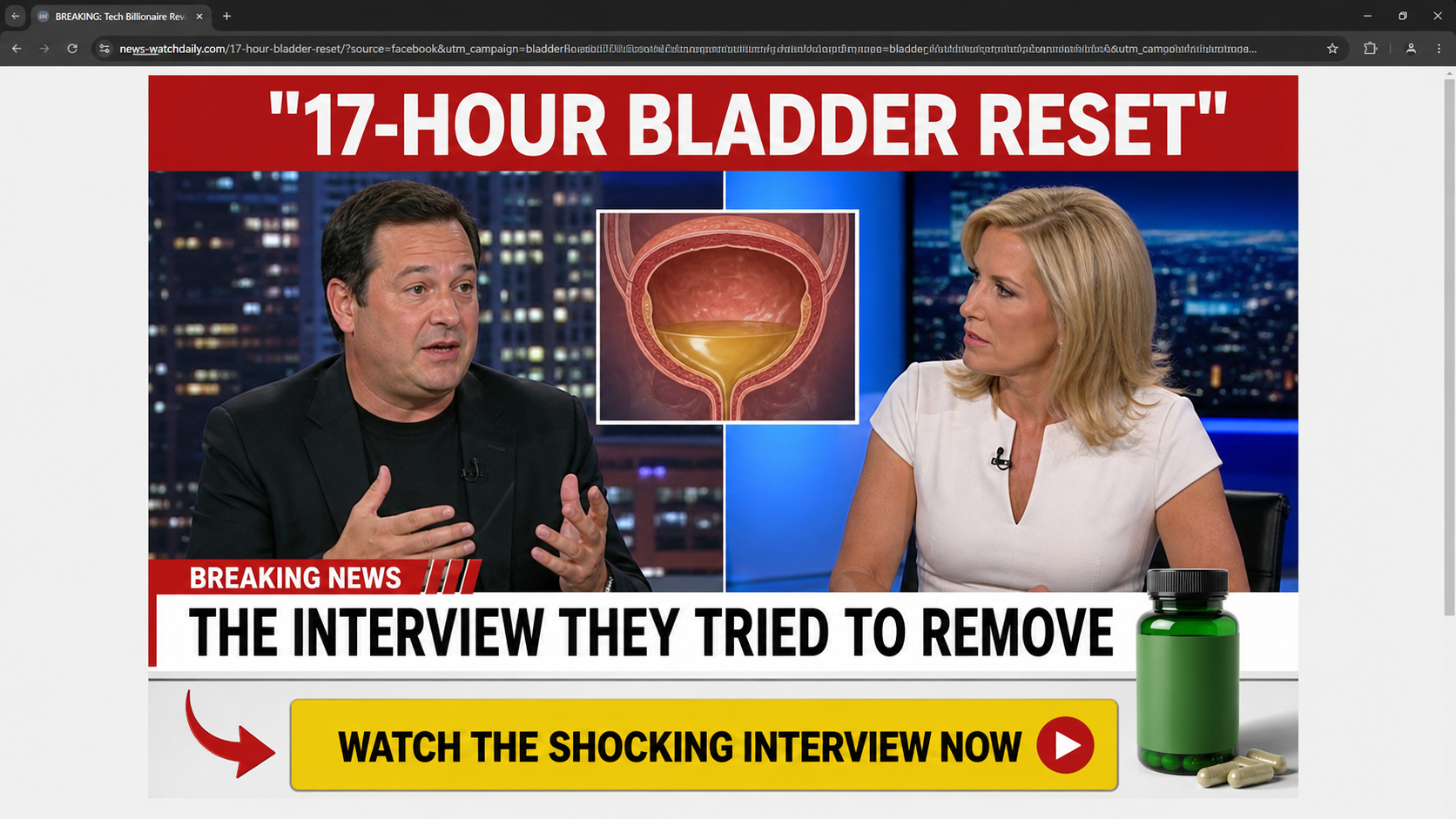
A breaking-news clip appears to show Elon Musk discussing a problem far removed from rockets or artificial intelligence. He claims a 17-hour discovery can stop bladder leaks and end nighttime bathroom trips.
The promise is surprising enough to earn a click and embarrassing enough that many viewers will not ask friends for a second opinion. That private urgency is what makes the Elon Musk bladder cure scam so effective.
Overview
What the Fake Interview Claims
The ad makes it appear that Elon Musk revealed a rapid “bladder reset” during a Fox News-style interview. Some versions add television host Laura Ingraham, alternative-health figure Barbara O’Neill, or an invented medical expert to make the story feel independently confirmed.
The promised result is extreme. A short ritual or plant formula allegedly rebuilds bladder control, ends leakage, and eliminates nighttime urgency within 17 hours, without an examination or diagnosis.
Why the Story Does Not Hold Up
We found no verified evidence that Elon Musk endorsed this urinary-incontinence cure or its associated supplement. A technology executive’s identity would not prove a medical claim even if the words were genuine, and here the endorsement itself is unverified.
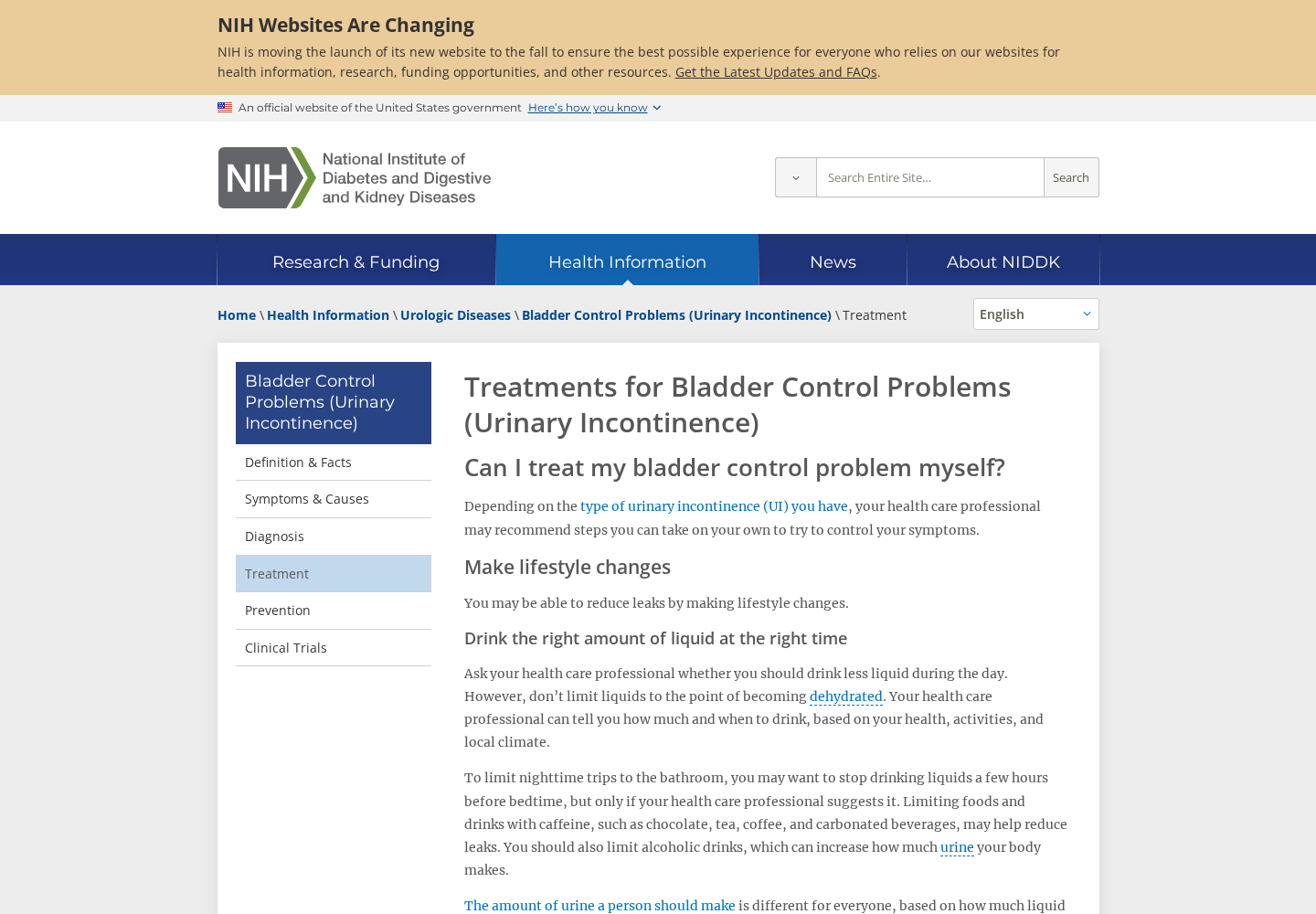
The NIDDK describes multiple treatments based on the type and cause of bladder-control problems. Lifestyle changes, pelvic-floor exercises, medicines, devices, procedures, and surgery may be considered. There is no one 17-hour solution for every patient.
- The celebrity and television endorsement cannot be verified.
- The fake network design may sit on an unrelated domain.
- A sensitive medical problem is reduced to one hidden cause.
- The guaranteed 17-hour result is medically implausible.
- The advertised bottle can change between versions.
- The checkout may add bundles or automatic refills.
The Bottle Is Replaceable
Gluco Health Plus has appeared at the end of one documented version, despite a name that sounds more closely related to blood sugar than urinary incontinence. That mismatch is revealing. The marketing story and product can be joined for convenience, not because the formula was developed for the claim.
MalwareTips has a separate investigation of Gluco Health Plus. This article focuses on the fake Elon Musk bladder-cure narrative because another supplement can replace it while the same video keeps circulating.
Why Scammers Choose Elon Musk for a Health Product
Musk is associated with ambitious technology, disruptive companies, and claims that established industries resist change. Scammers exploit that public image to suggest he solved a medical problem faster than doctors or pharmaceutical researchers.
The script often says a family member suffered, a personal discovery was suppressed, or powerful companies tried to remove the interview. Those details make the endorsement feel emotional rather than commercial.
AI audio can place the invented statement over real interview footage. Rapid cuts, subtitles, reaction shots, and a split screen with a host cover moments when the lips or facial expression do not match.
Do not use apparent realism as the test. Search verified Musk accounts and the real broadcaster’s archive. If the claim exists only in sponsored posts, copied news pages, and supplement checkouts, it has no reliable provenance.
Why a 17-Hour Bladder Cure Is a Dangerous Promise
Urinary incontinence is a symptom, not one uniform disease. Stress incontinence, urge incontinence, overflow problems, mobility issues, infection, medication effects, prostate conditions, pregnancy, childbirth, neurological disease, and other causes require different evaluation.
A universal formula cannot responsibly promise the same rapid result to all of those people. The exact time claim exists because precision sounds scientific, even when no study supports it.
Bladder symptoms can also signal a condition that deserves timely attention. Pain, fever, blood in urine, inability to urinate, new weakness, numbness, or sudden loss of control should not be managed through an anonymous online supplement.
Embarrassment can make people delay care. The funnel uses privacy as pressure: order quietly, avoid the doctor, and supposedly fix the problem by tomorrow. A legitimate clinician will discuss these symptoms routinely and without judgment.
How Fake Fox News Styling Helps the Sale
The advertorial may copy red and blue colors, a breaking-news strip, studio screenshots, a host portrait, and familiar headline typography. It is designed to be recognized in half a second, not examined closely.
The domain is the critical detail. A page can display “Fox News” while being hosted at an unrelated wellness or consumer-report address. A copied visual identity gives no authority to the content.
Working navigation is another useful test. On fake pages, category links may be images, refresh the page, or jump to the order section. Real news sites connect to years of unrelated reporting.
Comments and share counts can also be fabricated. Praise from “verified readers” proves nothing when the advertiser controls the page, names, photos, and numbers.
What to Check Before Buying Any Bladder Supplement
Start with the exact claim on the label, not the promise in the video. A bottle described only as supporting urinary wellness has not demonstrated that it treats incontinence, repairs nerves, shrinks a prostate, or produces results within a fixed number of hours.
Compare the serving size with the ingredient amounts and warnings. Proprietary blends can conceal how much of each substance is present. Search each ingredient for known interactions, particularly if you use diuretics, blood-pressure medication, blood thinners, diabetes medicine, or prescriptions affecting urination.
Also consider the cost of delay. A supplement may seem easier than an appointment, but untreated infection, urinary retention, medication side effects, or a neurological problem can worsen. Proper evaluation is not an admission of failure. It is the quickest way to understand which options fit the actual cause.
How the Elon Musk Bladder Cure Scam Works
Step 1: A Sensitive Claim Stops the Scroll
A sponsored social video shows Elon Musk apparently discussing bladder leakage, prostate symptoms, or waking repeatedly at night. The unexpected subject and rapid 17-hour promise create curiosity.
The clip may tell viewers to watch privately or use headphones. That instruction reduces the chance that another person will question the fake voice or claim.
Step 2: The Click Opens a Counterfeit Broadcast Page
The destination resembles Fox News or another trusted outlet, complete with an interview, headline, presenter, and comments. The actual web address does not belong to that network.
Every button leads toward a long video or product order. The page is advertising dressed as independent reporting.
Step 3: One Hidden Cause Explains Every Symptom
The narrator may blame a toxin, mineral deficiency, damaged nerve, weak valve, prostate buildup, or inflammation. Different medical conditions are folded into one explanation that conveniently points toward the same formula.
Doctors are portrayed as treating symptoms instead of the cause. This distrust narrative discourages proper evaluation and protects the pitch from ordinary questions.
Step 4: A Free Ritual Leads to a Bottle
The video teases a plant, kitchen ingredient, or evening routine. It delays the details while repeating emotional testimonials and claims that the presentation may soon disappear.
At the reveal, the simple ritual requires a proprietary blend. The supplement becomes the only practical way to obtain the promised 17-hour result.
Step 5: The Landing Page Uses Fake Scarcity
Stock warnings, countdown timers, recent-order popups, and an expiring discount create a false emergency. The condition may be real, but the checkout deadline is manufactured.
Multiple bottles are framed as necessary for lasting results, even though the headline promised a change within hours. That contradiction should stop the purchase.
Step 6: The Payment Page Can Hide the Real Cost
The largest print may show a per-bottle price while the card is charged for three or six bottles. Shipping, protection plans, digital guides, and additional supplements can raise the total.
Read the final quantity and full amount before submitting payment. Capture the screen because it may be needed if the receipt differs.
Step 7: Refills Become Difficult to Cancel
Some offers include autoship or continuity billing in the terms. Buyers can face another charge before support confirms cancellation, and the statement descriptor may not match the bottle.
Returns may require unopened products, a specific authorization number, and tracked shipping within a short window. Delayed replies make those conditions harder to satisfy.
Red Flags in the 17-Hour Bladder Reset Pitch
- A technology celebrity suddenly promotes a medical cure outside verified channels.
- The fake host or network cannot be matched to an original broadcast.
- One formula claims to fix every cause of urinary incontinence.
- An exact 17-hour result is guaranteed without examination.
- The product’s name or normal marketing does not match bladder care.
- The page says the interview is being removed or suppressed.
- Bundle pricing hides the total quantity and charge.
- Subscription language is separated from the main offer.
The strange product fit is especially important. When a general supplement is attached to a dramatic new condition through an anonymous advertorial, the campaign is following traffic, not medical evidence.
Company, Address, and Fulfillment Checks
The Seller May Hide Behind Several Names
Compare the product brand, checkout operator, legal entity in the terms, support name, receipt, and bank descriptor. Scam funnels frequently use different identities, leaving buyers unsure who actually took the payment.
A changing corporate trail is not reassuring flexibility. It is a barrier to refunds, complaints, and accountability.
The Address May Be a Fulfillment Prop
Search every address. It may be a mailbox, residence, shared office, unrelated business, or warehouse processing packages for many brands. A returns center is not proof of a research company or manufacturer.
Check whether other unrelated products use the same suite. Mass-return locations can create the appearance of a headquarters while revealing nothing about the seller.
Phone and Email Support May Disappear
Call before ordering. Ask whether the number supports the exact bottle, whether refills are automatic, and what the full order costs. Unanswered calls and generic email replies are strong warnings.
Do not use only the phone number printed inside a fake news article. Compare formal policy pages and the order confirmation. Conflicting details make cancellation harder.
An Untraceable Formula Can Be Unsafe
Look for ingredient amounts, warnings, lot information, an identifiable responsible company, and manufacturing details. “Natural” and “FDA registered” do not prove that a supplement treats urinary incontinence or has FDA approval.
Low-cost formulas may be mass produced overseas, including in China, and relabeled for multiple brands. Origin alone does not prove harm, but no traceable supply chain means no dependable way to verify contents, contamination controls, or accountability for adverse effects.
What to Do if You Have Fallen Victim to This Scam
- Cancel the order and refills in writing. Ask for confirmation, the refund amount, a return authorization, and the last billing date. Keep screenshots of the request.
- Contact your card issuer quickly. Explain an unauthorized subscription, unexpected bundle, or misleading amount. Ask about dispute deadlines and blocking future merchant attempts.
- Save all evidence. Preserve the video, fake news page, domain, order screen, terms, receipt, support messages, package, label, bottle, and statement descriptor.
- Do not rely on the product for treatment. Ask a pharmacist or clinician to review the ingredients. Seek prompt care for pain, fever, blood in urine, inability to urinate, sudden weakness, or severe symptoms.
- Protect your accounts. Change passwords reused on the seller site and enable multi-factor authentication on email and financial services.
- Scan suspicious devices. If the page installed a file, extension, or notification permission, run a full scan with Malwarebytes.
- Block malicious advertising. AdGuard can reduce known scam ads, trackers, and dangerous destinations, although it cannot verify every new offer.
- Report the campaign. Use the platform’s impersonation report and submit details to ReportFraud.ftc.gov. Include the merchant descriptor and support information.
- Discuss the symptoms without embarrassment. A qualified professional can identify the type and likely cause of incontinence and explain evidence-based options.
Frequently Asked Questions
Did Elon Musk Endorse a 17-Hour Bladder Cure?
We found no verified evidence that he endorsed this cure or the associated supplement. A clip on an unrelated advertorial is not an authentic endorsement.
Was the Interview Really on Fox News?
Not if it cannot be found in the network’s archive and the page uses an unrelated domain. Scammers can copy news graphics without the broadcaster’s involvement.
Can a Supplement Cure Incontinence in 17 Hours?
No universal supplement treatment can responsibly promise that result. Treatment depends on the type, cause, symptoms, health history, and professional evaluation.
Why Is Gluco Health Plus Mentioned in a Bladder Ad?
The mismatch suggests a rotating marketing funnel. A product can be attached to whichever story attracts clicks, even when its name and other promotions point elsewhere.
Is a Fulfillment Address the Company’s Headquarters?
Not necessarily. A warehouse may only ship and receive packages for many sellers. Verify the legal entity and manufacturer separately.
How Do I Stop Unwanted Refills?
Cancel in writing, retain proof, and notify the payment provider if another charge is attempted. Ask specifically about blocking recurring transactions from that merchant.
The Bottom Line
The Elon Musk bladder cure scam uses AI manipulation, fake cable-news visuals, and a private medical concern to rush viewers toward a rotating supplement checkout.
A precise 17-hour promise does not make the claim scientific. Verify the original source, examine the seller and billing terms, and seek qualified care for bladder symptoms.

Join the discussion
0 commentsShare your experience or ask a question about this article.
Discussion
Start the conversation
Have a question or something useful to share? Add the first comment.