

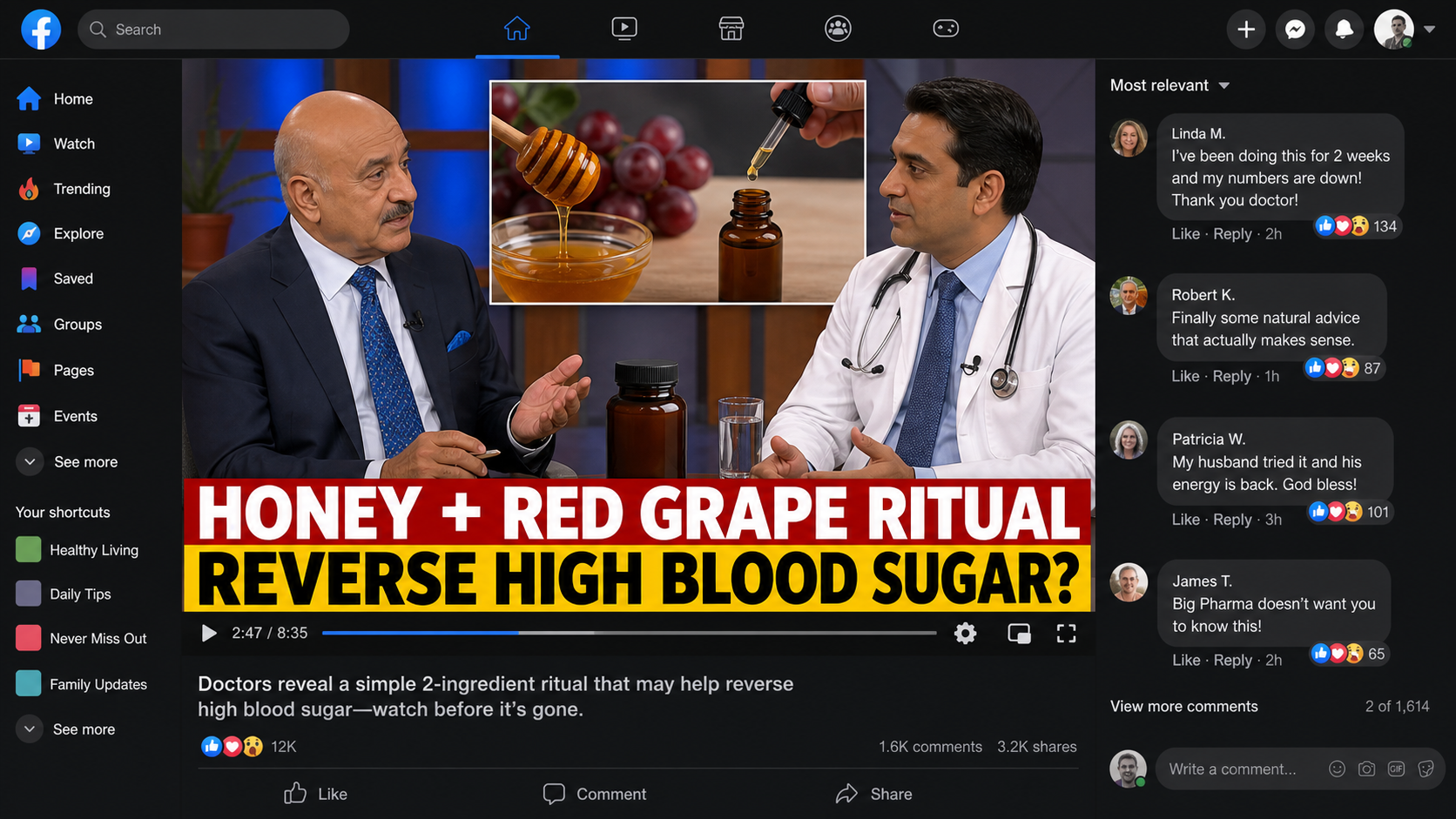
A television interview appears to reveal an argument that became too explosive to air. Dr. Phil and a medical guest discuss honey, red grapes, and a ritual that supposedly reverses high blood sugar naturally.
The presentation feels less like an advertisement than a leaked conversation. That illusion is deliberate. The Dr. Phil diabetes reversal scam uses a fake broadcast to carry viewers from a kitchen recipe to a supplement checkout.
Overview
What the Fake Dr. Phil Video Claims
The video makes it appear that Dr. Phil revealed a simple combination of honey and red grapes that addresses the real cause of type 2 diabetes. Some versions add Dr. Oz, a “60 Minutes” presenter, or an invented patient whose glucose readings supposedly normalized.
The story promises freedom from medication, constant testing, and dietary restrictions. Instead of providing a complete grocery-store recipe, it directs viewers toward blood-sugar drops or capsules such as Glyco Harmony.
Why the Medical Promise Is Misleading
We found no verified evidence that Dr. Phil endorsed this diabetes-reversal ritual or the supplement sold at the end. His face and television history are used to make a fabricated interview feel familiar.
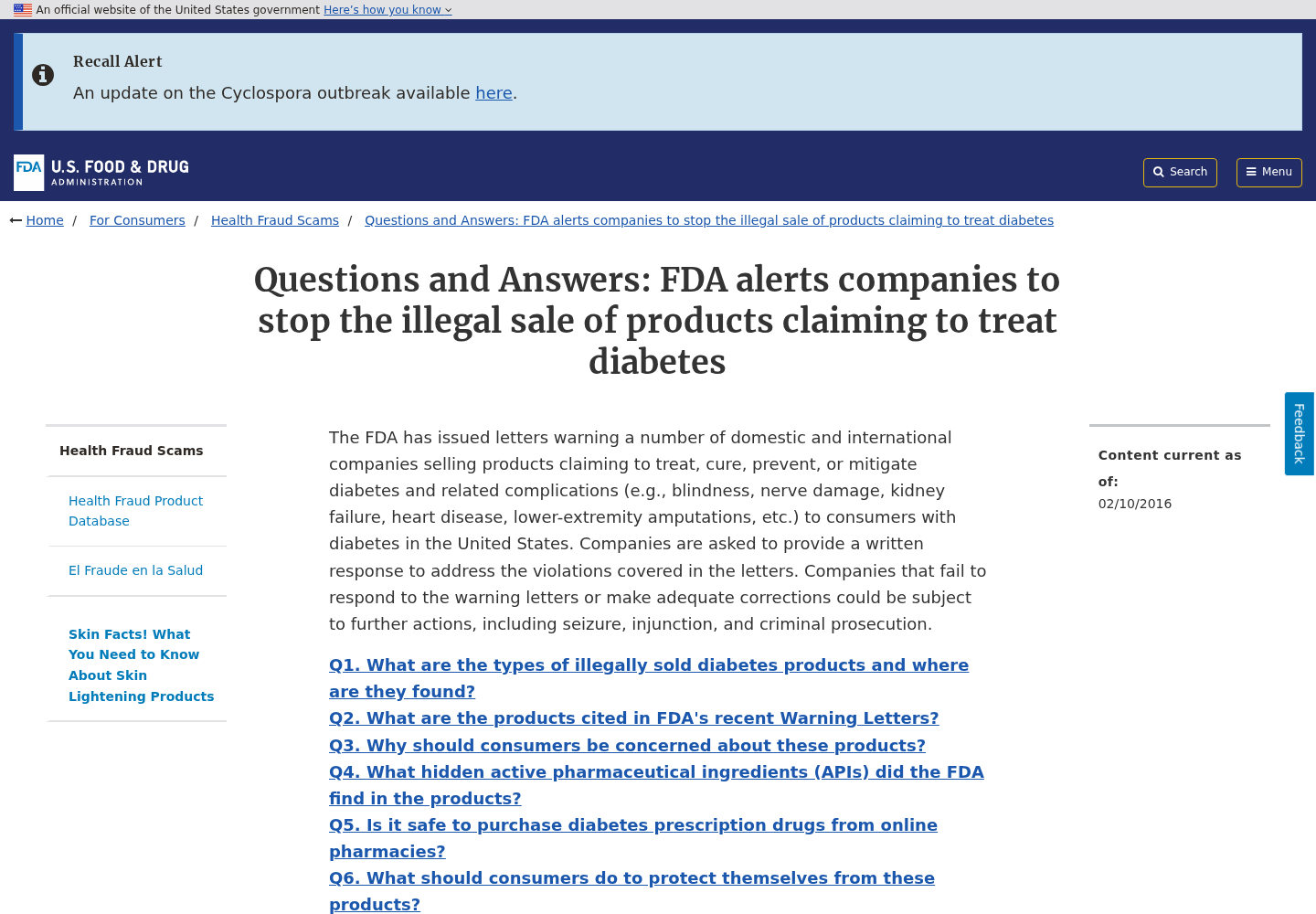
The FDA warns about illegally marketed diabetes products because unproven claims can cause people to delay or abandon appropriate treatment. A dramatic testimonial is not evidence that a supplement can cure diabetes.
- The Dr. Phil endorsement cannot be verified through genuine channels.
- The fake interview may imitate “60 Minutes” or another broadcast.
- Honey and grapes are used as bait for a paid formula.
- Testimonials may claim medication was stopped without medical supervision.
- The product name and company can rotate.
- Bundle pricing and subscription terms may be obscured.
Why the Same Story Can Sell Different Blood-Sugar Products
The celebrity narrative creates trust before a buyer knows the product name. Once the advertorial has that attention, marketers can connect it to whichever drops, capsules, or gummies are currently converting well.
Glyco Harmony has appeared in this type of funnel, and MalwareTips has examined its conflicting websites and blood-sugar claims. The warning here remains valid when a different label replaces it.
How the Fake Television Segment Is Constructed
The campaign can combine authentic clips from unrelated programs with synthetic audio, edited captions, and product images. A viewer recognizes Dr. Phil, the studio, or a news format, then unconsciously grants that recognition to the new words.
A fake “60 Minutes” frame adds seriousness. A fictional correspondent asks why the discovery was hidden, and the guest answers with a confident explanation about insulin, toxins, or a missing nutrient.
Cutaway footage hides the manipulation. Whenever the cloned speech becomes difficult to match, the video shows honey pouring, grapes, glucose meters, animation, or emotional reaction shots.
The safest check is provenance. Search the real program archive and Dr. Phil’s verified channels. If the segment exists only in sponsored ads and anonymous sales pages, there is no basis for treating it as an authentic broadcast.
Why Honey and Red Grapes Make a Strong Bait Story
Both ingredients feel natural and familiar. Red grapes can be connected loosely to antioxidants, while honey can be presented as an ancient remedy. That allows the narration to borrow real nutrition vocabulary without proving the advertised conclusion.
The recipe also feels inexpensive. Viewers click because they expect a practical kitchen method, not a costly supplement. The presentation keeps that expectation alive until the final minutes.
At the reveal, ordinary ingredients are declared too weak or incomplete. The advertised drops supposedly contain the exact concentration, extraction method, or additional compound required for results.
This contradiction exposes the funnel. If a two-ingredient ritual reverses diabetes, a proprietary bottle is unnecessary. If the bottle is necessary, the ad did not honestly offer a honey-and-grape recipe.
Diabetes Requires Real Monitoring and Individual Care
Type 1 diabetes, type 2 diabetes, gestational diabetes, prediabetes, medication-related glucose changes, and other conditions are not interchangeable. Treatment decisions depend on diagnosis, laboratory results, symptoms, medications, and individual risks.
Stopping prescribed treatment because of an online testimonial can lead to dangerous hyperglycemia and serious complications. A person should never change insulin or other diabetes medication without guidance from the professional managing that care.
Supplements can also interact with medication or alter glucose. Even a product that lowers readings could create hypoglycemia when combined with existing treatment. Unknown ingredient amounts make that risk harder to assess.
Claims such as “supports healthy blood sugar” do not mean the product reverses diabetes. Marketing language often stays vague on the bottle while the video makes much stronger disease-treatment promises.
Why Glucose Testimonials Can Be Misleading
Blood glucose changes throughout the day in response to food, activity, stress, illness, sleep, and medication. A single reading taken after beginning a supplement cannot show that the product caused an improvement or that diabetes has been reversed.
Advertisers may display a glucose meter without showing when the reading was taken, what the person ate, or which medication they used. They may also switch between fasting glucose, post-meal readings, and A1C as though those measurements mean the same thing.
Reliable evidence requires more than a dramatic number on screen. It must examine the exact formula, a suitable comparison group, meaningful follow-up, adverse effects, and whether the outcome persists. A seller-controlled testimonial section provides none of those protections.
How the Dr. Phil Diabetes Reversal Scam Works
Step 1: A Fake AI Interview Creates a Medical Emergency
A social media ad shows Dr. Phil apparently challenge conventional diabetes advice. The clip says a honey and red-grape ritual can normalize blood sugar and may soon be removed.
Cloned audio, captions, and edited footage create the statement. Familiar studio imagery encourages viewers to accept it before checking the original source.
Step 2: The Click Opens a Counterfeit News Advertorial
The destination resembles “60 Minutes,” CBS, Fox News, or another trusted outlet. It includes a headline, transcript, expert graphics, and invented reader comments.
The domain belongs to a marketing site, not the broadcaster. Menus may be decorative, and every useful link leads toward the product presentation.
Step 3: The Video Claims Doctors Miss One Root Cause
The narrator reduces diabetes to one toxin, enzyme, liver problem, or nutritional deficiency. Conventional care is described as a way to manage numbers without fixing the underlying issue.
This false simplification makes a universal solution seem possible. It also creates distrust toward anyone who might advise the viewer not to buy.
Step 4: The Recipe Becomes Proprietary Drops
Honey and red grapes keep viewers watching, but the full recipe never arrives as promised. The narrator says the key compounds must be extracted, combined, or concentrated in an exact ratio.
Glyco Harmony or another product appears as the convenient finished version. The page has shifted from an alleged news investigation to a supplement commercial.
Step 5: Testimonials Encourage Risky Decisions
Fictional buyers say their doctors were amazed, their readings normalized, and they stopped medication. Those stories are designed to make self-directed treatment changes feel safe.
Never make that decision based on an advertorial. The seller controls the names, images, comments, and claims displayed on its page.
Step 6: The Checkout Pushes a Long Supply
One bottle may be framed as inadequate, while three or six bottles supposedly provide the best chance of lasting results. A per-bottle discount hides the larger immediate charge.
Countdown timers and low-stock messages discourage reviewing the full quantity, shipping cost, refund rules, and billing authorization.
Step 7: Automatic Refills and Returns Create Friction
The checkout or terms may enroll the buyer in recurring shipments. Support can be slow, the card descriptor unfamiliar, and returns limited to unopened bottles with prior authorization.
When complaints accumulate, the marketer can replace the domain, seller, and label. The false Dr. Phil story then feeds another checkout.
Red Flags in the Honey and Red Grapes Pitch
- A television personality appears to endorse a diabetes cure that cannot be verified.
- The page copies a broadcaster while using an unrelated domain.
- A cheap kitchen recipe becomes an expensive proprietary bottle.
- The presentation claims one cause explains every form of diabetes.
- Testimonials encourage stopping medication or avoiding doctors.
- The offer guarantees dramatic glucose changes in a short period.
- Package pricing emphasizes savings instead of the total charge.
- The refund and subscription terms are harder to find than the order button.
A real diabetes treatment does not need a stolen celebrity identity or counterfeit television page. Those tactics are evidence of manipulation, not proof of a suppressed breakthrough.
Company, Address, and Fulfillment Checks
The Company Trail May Be Deliberately Messy
Identify the legal seller and compare it across the checkout, policies, receipt, support signature, shipping label, and card statement. Fake or short-lived supplement operations often use several names that do not clearly connect.
That confusion matters. If no single company accepts responsibility, a refund request can be passed between the brand, payment processor, and warehouse until the deadline expires.
The Address May Not Be a Real Headquarters
Search the address independently. It may point to a virtual mailbox, residence, unrelated office, or fulfillment center. A warehouse can ship bottles and receive returns without employing the people who control the website or formula.
Check whether dozens of unrelated products use the same suite. A logistics address should never be presented as proof of a medical research company.
Unresponsive Support Predicts a Billing Fight
Call the number before ordering and ask whether it handles the exact product, whether refills are automatic, how cancellation works, and where returns go. Do not rely on contact information shown only inside the fake news page.
Disconnected numbers, full mailboxes, generic agents, and unanswered emails are sharp warning signs. If support cannot explain the charge before purchase, it is unlikely to improve afterward.
Missing Traceability Can Make the Product Dangerous
Look for complete ingredient amounts, warnings, lot details, manufacturer information, and a responsible domestic company. “Natural,” “doctor formulated,” and “FDA registered” do not prove FDA approval or effectiveness against diabetes.
Some generic supplements are mass produced overseas, including in China, and relabeled for multiple storefronts. Origin by itself does not prove harm, but an opaque supply chain prevents meaningful checks of ingredient accuracy, contamination controls, and adverse-event accountability.
What to Do if You Have Fallen Victim to This Scam
- Cancel every shipment in writing. State that you cancel the order, subscription, and future billing. Ask for confirmation, a refund amount, return authorization, and the effective date.
- Call the card issuer promptly. Explain any unauthorized renewal, misleading bundle, or unexpected amount. Ask about disputes, recurring-payment blocks, and replacement-card options if necessary.
- Save the evidence before it disappears. Capture the AI video, counterfeit article, domain, order page, terms, receipt, support messages, package, bottle, and merchant descriptor.
- Do not stop diabetes treatment. Contact the clinician managing your care before changing medication or taking unknown drops. Seek urgent help for severe weakness, confusion, vomiting, breathing difficulty, or dangerously abnormal readings.
- Review the ingredients professionally. Show the bottle and lot number to a pharmacist or physician so interactions and glucose effects can be considered.
- Secure the device and accounts. Change reused passwords. If the page prompted a download or extension, scan with Malwarebytes.
- Reduce future malicious ads. AdGuard can block many scam destinations and trackers. It cannot confirm endorsements, so continue checking the original source.
- Report the false health claim. Report the social ad and submit the seller to ReportFraud.ftc.gov. Include the domain, phone, address, company names, and card descriptor.
- Monitor statements and deliveries. Watch for unfamiliar merchant names, small test charges, or another package. Report each new attempt quickly and retain the shipping label.
Frequently Asked Questions
Did Dr. Phil Endorse a Honey and Red Grapes Diabetes Cure?
We found no verified evidence that he endorsed this ritual or the supplement sold through the campaign. A fake television video can use his identity without permission.
Can Honey and Red Grapes Reverse Diabetes?
No credible evidence supports the universal reversal claim in these ads. Both foods can affect carbohydrate intake and should be considered within an individual’s diabetes plan, not treated as a cure.
Was the Interview Really on “60 Minutes”?
Not if it cannot be found in the program’s genuine archive and the page uses an unrelated domain. Copied graphics do not make an advertorial a real broadcast.
Is Glyco Harmony the Only Product in This Funnel?
No. It is one product associated with the story, but marketers can redirect the same fake interview to different drops, capsules, or gummies.
Should I Stop My Medication if My Readings Improve?
No. Speak with the professional managing your diabetes. Stopping or changing medication without guidance can cause dangerous glucose changes.
How Can I Cancel Automatic Supplement Refills?
Cancel in writing, keep confirmation, and notify the card issuer if billing continues. Ask the issuer specifically how it handles recurring merchant attempts.
The Bottom Line
The Dr. Phil diabetes reversal scam wraps a fake television interview around a honey-and-red-grape story, then replaces the promised recipe with rotating blood-sugar supplements.
Do not change treatment because a familiar face appears in an urgent video. Verify the broadcast, inspect the company and checkout, and discuss glucose concerns with a qualified medical professional.

Join the discussion
0 commentsShare your experience or ask a question about this article.
Discussion
Start the conversation
Have a question or something useful to share? Add the first comment.