

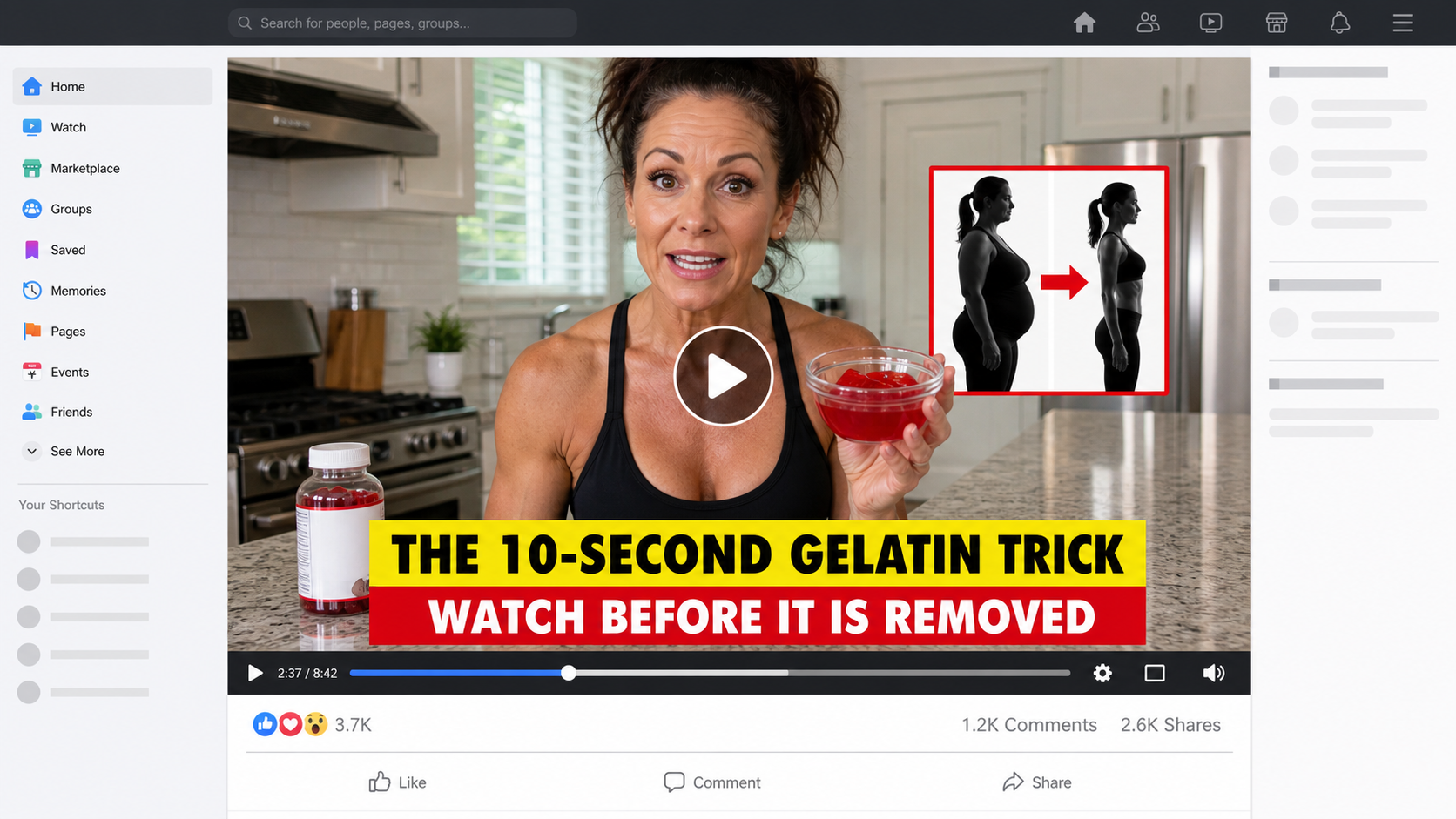
A fitness expert appears in a kitchen with a bowl of gelatin and a confession. She says one tiny change helped women lose stubborn weight after diets, workouts, and expensive programs failed.
The video is polished enough to feel personal, yet urgent enough to stop careful questions. There is a good reason for that combination. The Jillian Michaels gelatin trick scam is built to turn a fake endorsement into a fast supplement purchase.
Overview
What the Gelatin Video Wants Viewers to Believe
The ad makes it appear that Jillian Michaels discovered a ten-second gelatin recipe that switches on fat burning. It may claim she revealed it reluctantly after seeing clients struggle with menopause weight, slow metabolism, or weight that returned after dieting.
Viewers are promised instructions using ordinary gelatin, but the recipe remains just out of reach. The presentation eventually pivots to gummies, capsules, or drops described as a concentrated version of the trick.
Jillian Michaels Has Issued a Direct Warning
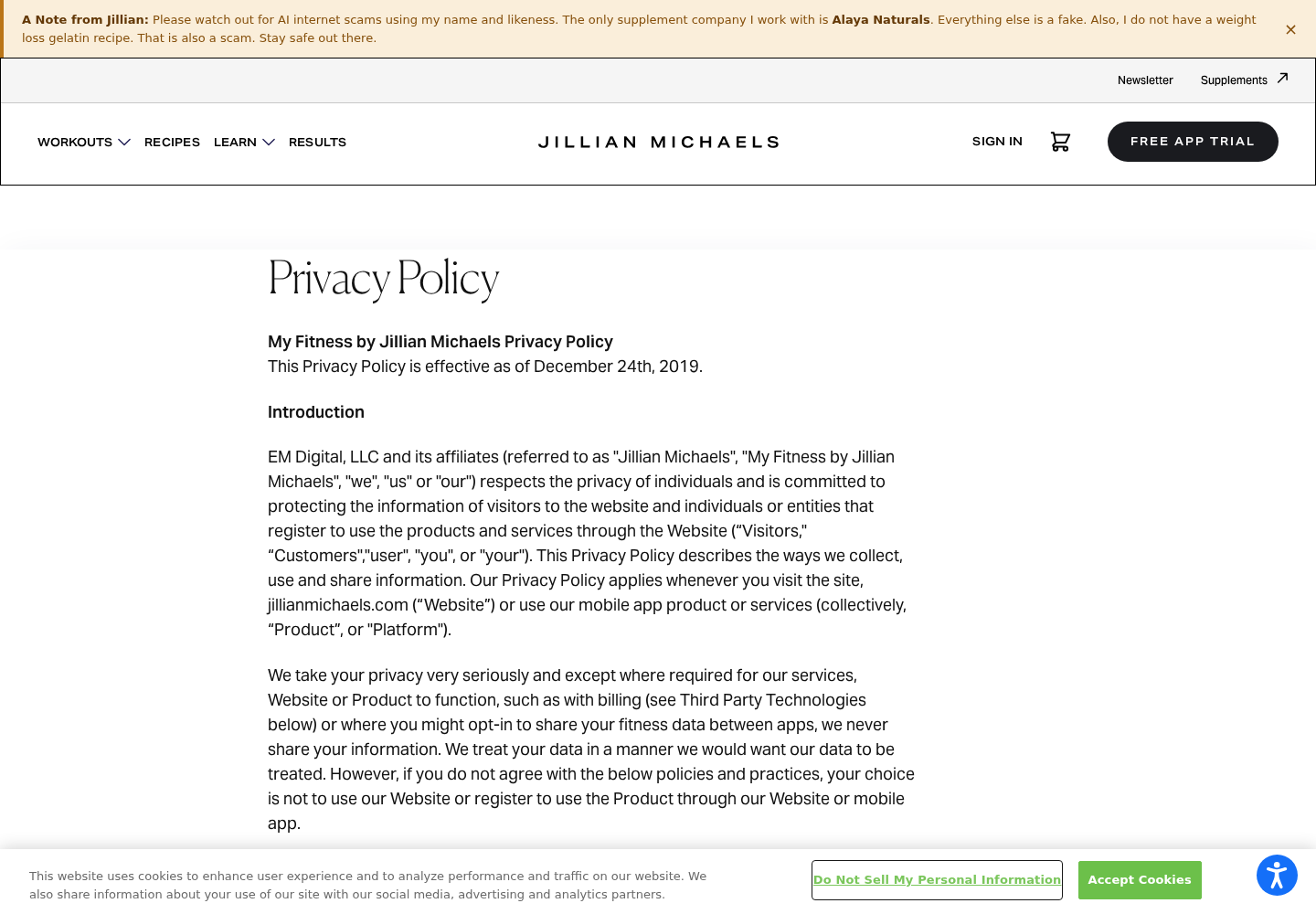
This campaign is unusually easy to verify. A notice on Jillian Michaels’ official website warns about AI internet scams using her name and likeness. It explicitly says she does not have a weight-loss gelatin recipe and calls that claim a scam.
The notice also identifies Alaya Naturals as the only supplement company she works with. A different bottle appearing under a cloned voice or fake interview should not be treated as an authorized endorsement.
- The gelatin endorsement is directly contradicted by her official website.
- AI audio can make real footage say words she never recorded.
- The video delays the recipe until a product appears.
- The fake news page can impersonate a familiar publisher.
- The gummies and brand names rotate between campaigns.
- Checkout terms may add bundles, upsells, or refills.
Why the Story Matters More Than the Gummy Name
The same narrative has been attached to products with names such as Burn Gummy and other rapidly changing weight-loss brands. Scammers do not need loyalty to one bottle. They need a compelling video that keeps producing clicks.
MalwareTips has examined related product pitches, including Fit Burn Gummies and the broader bariatric gelatin trick scam. This article focuses on the stolen Jillian Michaels endorsement so it remains useful after the product changes.
How the AI Endorsement Is Made to Look Real
Scammers can start with genuine workout footage, a television interview, or a short social clip. They replace the original audio with a cloned voice describing the gelatin trick, then add captions that reinforce every invented claim.
Fast edits hide inconsistencies. The video may cut away to gelatin, a woman measuring her waist, a doctor, or animated fat cells whenever the mouth movement looks wrong. Music and large subtitles keep attention away from facial details.
Some ads are simpler. They place an unrelated audio track over still photos and imply that the entire sequence came from a removed interview. Familiar pictures provide the credibility even when no authentic footage supports the story.
A smooth voice is not proof. Watch the full clip with sound off, search a distinctive sentence in quotation marks, and check the official website. In this case, the official warning resolves the endorsement question directly.
Why Gelatin Is Such an Effective Marketing Hook
Gelatin is inexpensive, familiar, and easy to imagine using at home. It does not sound like a dangerous drug or an exotic chemical. That familiarity lets the pitch feel practical before any evidence is presented.
The word “trick” also avoids precise accountability. A treatment must withstand questions about dose, safety, outcomes, and clinical evidence. A trick sounds like an informal discovery that experts overlooked, which is exactly the atmosphere the sales funnel wants.
The campaign may borrow language about protein, satiety, collagen, hormones, or metabolism. Some individual statements can sound plausible in isolation. They do not prove that an advertised gummy produces rapid, effortless, or permanent weight loss.
A recipe that truly requires only grocery-store gelatin would not need a long video that ends at an expensive supplement checkout. That contradiction is one of the clearest signs that the kitchen story exists to sell the bottle.
What Weight-Loss Supplement Claims Leave Out
Body weight can be affected by diet, activity, sleep, medication, hormones, medical conditions, age, and genetics. A short advertisement cannot diagnose which factors matter for one person, and one gummy cannot responsibly promise the same outcome to everyone.
Before-and-after pictures are especially weak evidence. Lighting, posture, clothing, image editing, different people, and undisclosed time periods can create a dramatic transformation. A row of testimonials does not replace a controlled study of the finished product.
The phrase “clinically studied ingredients” is also slippery. An ingredient may have been studied at a different dose, for a different outcome, or in a formulation unlike the advertised bottle. The seller should provide evidence for the actual product and claim, not merely cite general research.
People with diabetes, heart conditions, pregnancy, eating disorders, or medications deserve particular caution. An unknown formula can create interactions, digestive problems, or false reassurance while a genuine health issue remains unaddressed.
How the Jillian Michaels Gelatin Trick Scam Works
Step 1: A Fake AI Video Creates Instant Trust
A sponsored post shows Jillian Michaels discussing weight loss in a kitchen, podcast, or interview. Cloned speech claims she fought to reveal an easy gelatin method that works even when conventional diets fail.
The caption often targets a narrow worry, such as menopause weight, belly fat, slow metabolism, or weight gained after age 40. Personal targeting makes the generic sales pitch feel unusually relevant.
Step 2: The Ad Opens a Fake News Advertorial
The link loads a page styled to resemble CNN, Fox News, Women’s Health, or another trusted publication. A familiar layout, expert quotes, and an invented comment section make the commercial page look editorial.
The actual domain reveals the difference. It is normally unrelated to the publisher shown at the top, and its menu buttons either fail or return visitors to the sales presentation.
Step 3: The Presentation Attacks Familiar Solutions
The narrator says calorie control, exercise, and medical advice fail because they ignore one hidden metabolic switch. This creates frustration with legitimate approaches before the advertiser introduces its own unsupported explanation.
Scientific graphics and confident terms are used without enough detail to check the claim. The story sounds educational, but every path leads toward the same product.
Step 4: The Free Gelatin Trick Turns Into Gummies
After delaying the promised recipe, the narrator says ordinary gelatin is inconsistent, inconvenient, or missing a crucial compound. A gummy is presented as the precise version that removes measuring and preparation.
This is the bait-and-switch at the center of the funnel. Viewers clicked for free instructions and are delivered to a supplement offer instead.
Step 5: The Landing Page Manufactures Urgency
The product page displays low-stock messages, recent-purchase notifications, a countdown timer, or a discount that supposedly ends today. None of those visual elements proves real inventory or a genuine deadline.
Package pricing may emphasize the amount per bottle while charging for several bottles at once. Read the final order total, quantity, shipping, and optional add-ons before entering payment details.
Step 6: The Checkout Can Create a Refill Problem
A continuity plan may be described as VIP access, a monthly supply, autoship savings, or a subscription. The disclosure can appear away from the most prominent price, particularly on mobile screens.
Some buyers report only noticing the arrangement after another charge or shipment. The bank descriptor may use a company name that never appeared prominently in the ad.
Step 7: Complaints Follow the Brand, So the Brand Moves
Once search results fill with cancellation complaints, marketers can launch a new label and domain. The fake celebrity video remains profitable because it sends viewers to whichever offer is active.
That rotating structure explains why researching the narrative is essential. A clean-looking new bottle does not erase the fake endorsement that brought the customer there.
Warning Signs You Can Check in Less Than Two Minutes
- The official celebrity website denies the recipe or endorsement.
- The sponsored clip cannot be found in the original interview archive.
- The news logo and the website domain do not match.
- The recipe is repeatedly delayed while testimonials fill the video.
- The product appears only after conventional weight-loss methods are attacked.
- The checkout highlights a daily cost but obscures the full amount.
- Refill language appears in fine print or a separate terms page.
- The seller identity changes across policies and payment records.
The most decisive fact here is the direct denial. An advertiser cannot turn an unauthorized AI video into a real Jillian Michaels endorsement through attractive packaging or a convincing checkout.
Company, Address, and Fulfillment Checks
The Brand May Be a Temporary Label
Find the legal company taking the order, not just the gummy name. Deceptive supplement campaigns often rotate brands while the terms identify a different business, and the card statement may show yet another descriptor.
If you cannot identify one accountable seller across the checkout, receipt, policies, and statement, you are being asked to trust a business that is difficult to locate when something goes wrong.
The Address May Be a Mailbox or Warehouse
Search the listed address. It may belong to a virtual mailbox, residential property, unrelated tenant, or fulfillment center handling returns for many brands. A warehouse that received your package is not automatically the headquarters or manufacturer.
Multiple unrelated supplements using the same suite can indicate a logistics address. That does not provide meaningful evidence about who formulated the product or controls billing.
Silent Support Is a Serious Warning
Call before buying and ask for the total charge, subscription status, return location, and cancellation procedure. Scam-prone sellers may use phone trees, outsourced agents, unanswered email, and scripted replies that run down the refund window.
A legitimate seller should be able to identify its own product and explain billing in plain language. Evasion before a sale predicts worse support afterward.
Traceability Matters More Than “Natural”
Demand a readable Supplement Facts panel, ingredient quantities, warnings, lot information, and an identifiable responsible party. “Doctor formulated,” “natural,” and “made in an FDA registered facility” are not proof of effectiveness or FDA approval.
Generic gummies may be mass produced overseas, including in China, and relabeled for many campaigns. Manufacturing location alone is not proof of harm, but missing traceability leaves no dependable way to verify ingredients, contamination controls, or accountability.
What to Do if You Have Fallen Victim to This Scam
- Cancel in writing immediately. State that you cancel the order and any autoship or membership. Request confirmation, the exact refund amount, and return instructions. Keep copies and timestamps.
- Contact the payment provider. Explain any misleading quantity, undisclosed subscription, duplicate charge, or refusal to cancel. Ask about dispute deadlines and blocking future recurring attempts.
- Save the evidence. Capture the sponsored ad, fake article, checkout price, terms, receipt, shipping label, bottle, support messages, and bank descriptor. The website may change once complaints appear.
- Pause before taking the product. Ask a pharmacist or clinician to review the ingredients, especially if you take medication or have a health condition. Keep the packaging and lot number.
- Secure reused account details. Change any password reused on the seller’s site and enable multi-factor authentication on your email and financial accounts.
- Check the device. If the funnel prompted a download, browser extension, or alarming notification, scan the device with Malwarebytes and remove detected threats.
- Block repeat malicious advertising. AdGuard can reduce exposure to known scam domains, intrusive ads, and tracking. It is a useful layer, not a substitute for verifying a seller.
- Report the fake endorsement. Report the ad to the platform, notify the FTC through ReportFraud.ftc.gov, and include the landing-page domain and merchant descriptor.
- Get appropriate weight-loss guidance. If weight change is affecting your health, speak with a qualified professional who can review medications, nutrition, symptoms, and realistic options without a countdown timer.
Frequently Asked Questions
Does Jillian Michaels Have a Weight-Loss Gelatin Recipe?
No. Her official website explicitly says she does not have a weight-loss gelatin recipe and identifies such claims as a scam.
Did Jillian Michaels Endorse Burn Gummies?
Her official warning says the only supplement company she works with is Alaya Naturals and that other AI promotions using her identity are fake. Do not treat a Burn Gummy ad as authorized.
Can Gelatin Cause Rapid Weight Loss?
No credible evidence supports the dramatic results promised in these videos. Gelatin is a food ingredient, not a proven shortcut that guarantees large or permanent weight loss.
Why Does the Product Name Keep Changing?
The AI story creates demand, while the bottle is replaceable. Marketers can redirect the same ad to whichever gummy, capsule, or drops offer is currently accepting orders.
Are the Before-and-After Photos Proof?
No. They may be edited, staged, licensed, stolen, or unrelated to the advertised product. Testimonials do not establish what an average buyer will experience.
How Do I Stop Automatic Gummy Refills?
Cancel in writing, keep confirmation, and contact the card issuer if charges continue. Ask whether the issuer can prevent new recurring attempts from the same merchant.
The Bottom Line
The Jillian Michaels gelatin trick scam is not an ambiguous celebrity rumor. Her official website directly warns that the AI ads and weight-loss gelatin recipe are fake.
Ignore the borrowed face, check the domain and full checkout terms, and never let an urgent video replace evidence. The gummies may change, but the false endorsement is the engine driving the sale.

Reviews & discussion
0 commentsShare a firsthand experience, or ask a question.
Community reviews
Jillian Michaels Gelatin Trick
Moderated reader experiences, not an editorial verdict.
Start the conversation
Have a question or something useful to share? Add the first comment.