

A new scam making rounds on social media is using deepfake technology and Elon Musk’s image to promote a dubious app called “X Casino”. Promotional videos feature a deepfake AI replica of Elon Musk endorsing the app and promising outrageous rewards if users download it.
This article will provide an in-depth look at how this scam operates, the false promises it makes, and most importantly, why you should avoid falling for it at all costs. Read on to arm yourself with the knowledge needed to recognize such scams in the future.

Scam Overview
The ads for the X Casino app first started appearing on Facebook and Instagram in early 2022. They consist of short video clips that show a deepfake AI-generated version of Elon Musk promoting a mobile app called X Casino.
The deepfake Musk claims that he has “boosted jackpot odds on all slots” and promises $5,000 to anyone who doesn’t hit the jackpot on their very first try. He encourages viewers to click the link and download the app to claim the reward.
However, this is nothing more than a scam designed to steal personal information and money from unsuspecting users. The app does not actually exist – the link redirects to a fake website mimicking the Google Play Store.
The scam exploits Elon Musk’s name and reputation to fool people into believing it is a legitimate app endorsed by him. In reality, Musk has no association with this scam app.
The ads are designed to go viral, using clickbait promises of easy money to lure victims. Even a cursory look exposes the many red flags.
This scam has been also investigated by Jordan Liles on his YouTube channel, where he offers a detailed video on the subject. We recommend watching his content for a comprehensive understanding of the scam.
Next, let’s break down exactly how scammers carry out this scam from start to finish.
How the Scam Works
1. The Fake Ads
Scammers create fake ads on social media platforms like Facebook, Instagram, and TikTok. These ads feature deepfake videos of Elon Musk promoting a fictional gambling app called X Casino. The deepfakes are highly realistic representations designed to fool viewers.
The ads entice victims with promises of easy jackpot winnings up to $5,000. They provide links urging people to download the X Casino app and claim their reward.
2. The Fake Website
When victims click the link, it leads to a website dressed up to mimic the real Google Play Store. The scam site copies the official Google branding, colors, fonts, layouts, and more.
At first glance it looks identical to the legitimate Play Store. However, small mistakes reveal it’s fraudulent, like slight differences in the URL or typos.
The app grid only displays the promised X Casino app and no other real apps. There are also no reviews or ratings, which real Play Store apps would have.
3. Malware Distribution
When victims try to download the X Casino app, the site prompts them to download an APK file rather than going through Google Play. This APK contains malware disguised as the real app.
Once installed, the malware compromises the victim’s smartphone or computer security. It spies on activity, stealing personal data, account credentials, and financial information.
The malware may also sign up victims for unwanted paid services without consent. In essence, it opens up the device to complete compromise.
Avoiding The Scam
The only way to avoid this scam is identifying the subtle signs indicating the website is fake. Look for slight URL differences, layout inconsistencies, missing reviews, and limited app selection.
Only download apps from official stores like Google Play and Apple App Store. Avoid dubious third-party APK files, no matter the promises. Be skeptical of outrageous claims used to lure victims.
What To Do If You Are A Victim
If you downloaded the X Casino app and submitted any personal information, here are the steps you should take immediately:
- Delete the app from your device if you installed it. Run antivirus software to remove any potential malware.
- Change passwords for all your online accounts, especially financial accounts. Enable two-factor authentication wherever possible.
- Contact your bank and credit card companies to monitor for any suspicious activity and potentially freeze accounts.
- Place a fraud alert and monitor your credit reports with Equifax, Experian and TransUnion to catch any signs of identity theft.
- File a complaint with the Federal Trade Commission (FTC) about the scam at ftc.gov/complaint.
- Report the fraudulent ads to Facebook and Instagram. Submit screenshots and any other evidence you may have.
- Do not send any money to the scammers under any circumstances, as this will likely lead to further exploitation.
Is Your Device Infected? Run a Free Malware Scan
Slow performance, constant pop-ups, or strange behavior? These are classic signs of a malware infection. The fastest way to find out is to scan your device with Malwarebytes Free — one of the most trusted malware removal tools available.
The free version detects and removes the most common threats, including:
- Adware — the cause of those annoying pop-ups
- Browser hijackers — unwanted redirects and changed homepages
- Trojans and spyware — hidden programs stealing your data
- Potentially unwanted programs (PUPs) — software you never asked for
👉 Select your device below — Windows, Mac, or Android — then follow the simple steps to download Malwarebytes, scan your system, and remove any threats it finds. The scan usually takes 5 to 20 minutes.
Run a Malware Scan with Malwarebytes for Windows
Malwarebytes is one of the most popular and trusted anti-malware tools for Windows — and it’s completely free for removing infections. It catches threats that many antivirus programs miss, including adware, browser hijackers, and trojans. Follow the steps below to scan and clean your PC in just a few minutes.
Download Malwarebytes
Click the button below to download the latest version of Malwarebytes for Windows from the official source. The free version is all you need — it will scan your computer and remove adware, browser hijackers, and other malicious software at no cost.
Download MalwarebytesOfficial installer for Windows 11 and 10. Your download starts right away.Want real-time protection? See Malwarebytes Premium Malwarebytes Free for WindowsScans and removes malware at no cost
-
Install Malwarebytes
When the download finishes, open your Downloads folder and double-click the MBSetup file. If Windows shows a User Account Control pop-up, click “Yes” to allow the installation.
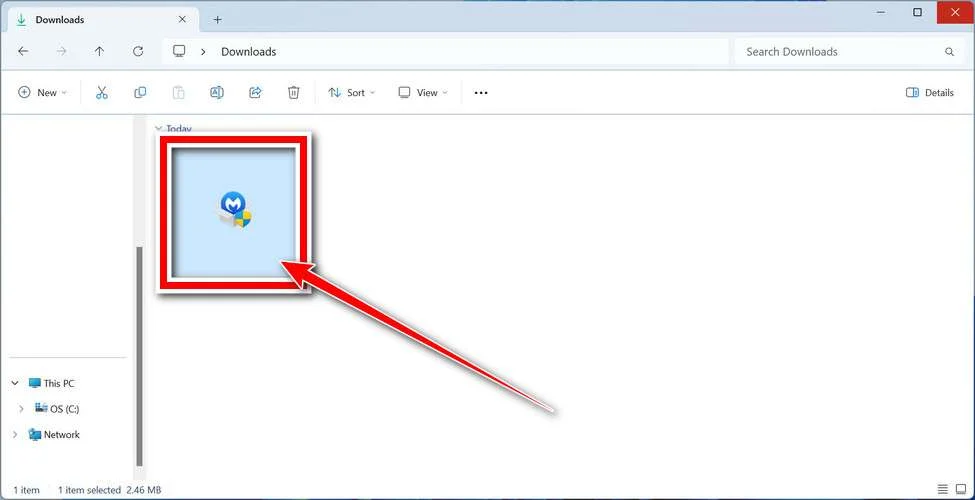
Follow the On-Screen Prompts to Install Malwarebytes
The setup wizard will walk you through a few quick screens:
-
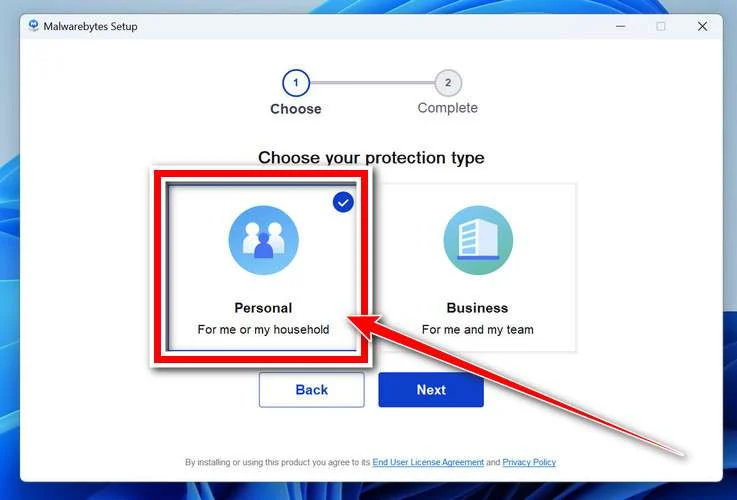
Choose where you’re installing the program — “Personal Computer” or “Work Computer” — then click Next.
-
Malwarebytes will now install on your device. This usually takes under a minute.

-
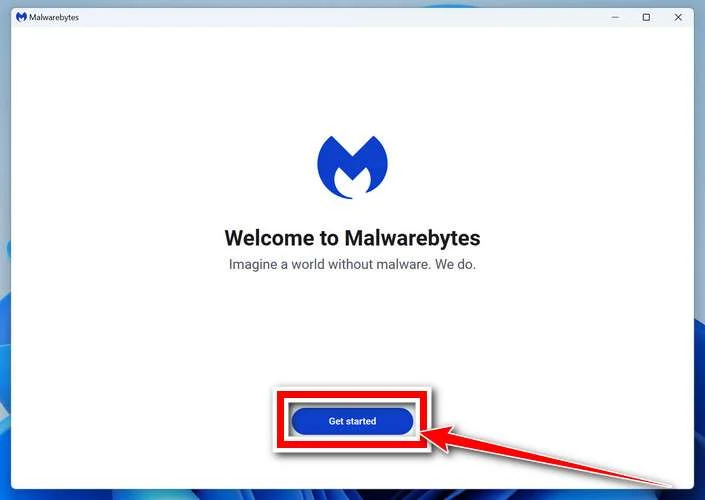
When installation is complete, the “Welcome to Malwarebytes” screen will open automatically.
-
On the final screen, click Open Malwarebytes to launch the program.

-
Enable “Scan for Rootkits”
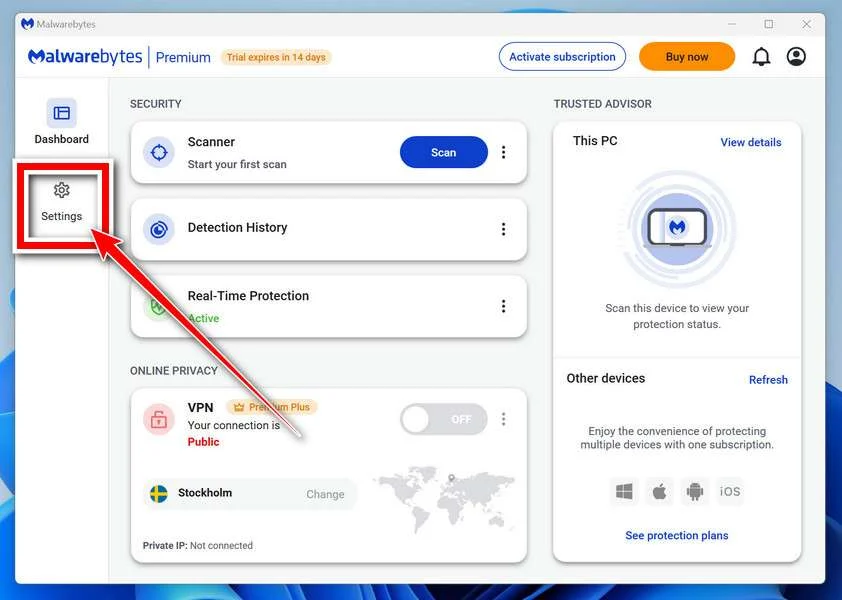
Before scanning, turn on rootkit detection so Malwarebytes can find even the most hidden threats. Click the Settings gear icon on the left side of the screen.
In the settings menu, find “Scan for rootkits” and click the toggle so it turns blue.

Done? Click “Dashboard” in the left pane to return to the main screen.
Start the Scan
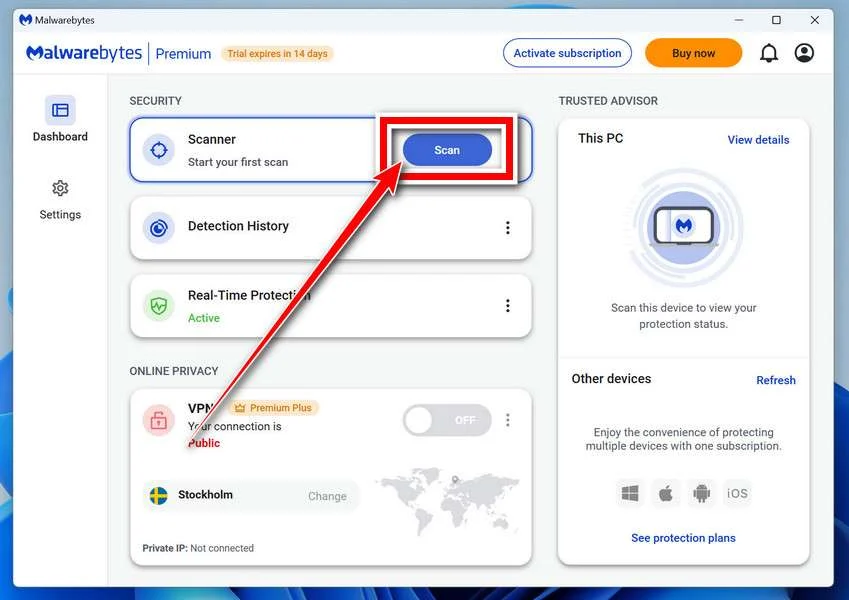
Click the blue Scan button. Malwarebytes will automatically update its virus database and start checking your computer for malware.
-
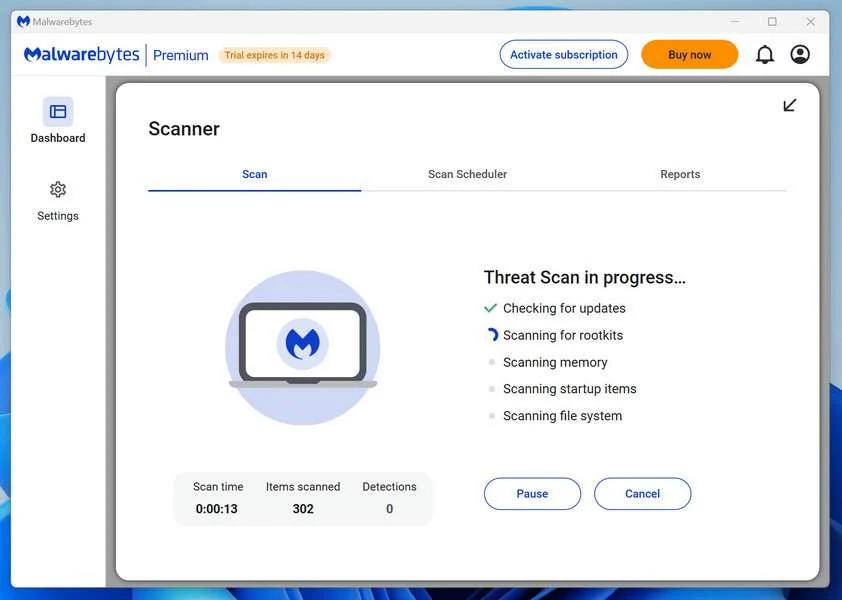
Wait for the Scan to Finish
The scan checks your entire system for browser hijackers and other malicious programs, so it can take 5 to 20 minutes depending on your computer. Feel free to do something else — just check back occasionally to see the progress.
-
Quarantine the Detected Threats
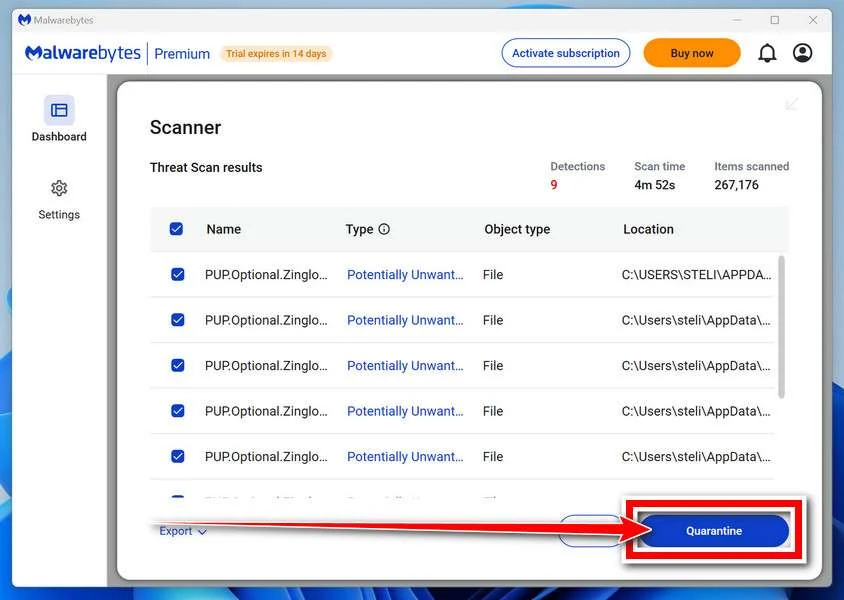
When the scan is done, you’ll see a list of everything Malwarebytes found — malware, adware, and potentially unwanted programs. Click the “Quarantine” button to remove all of them at once.
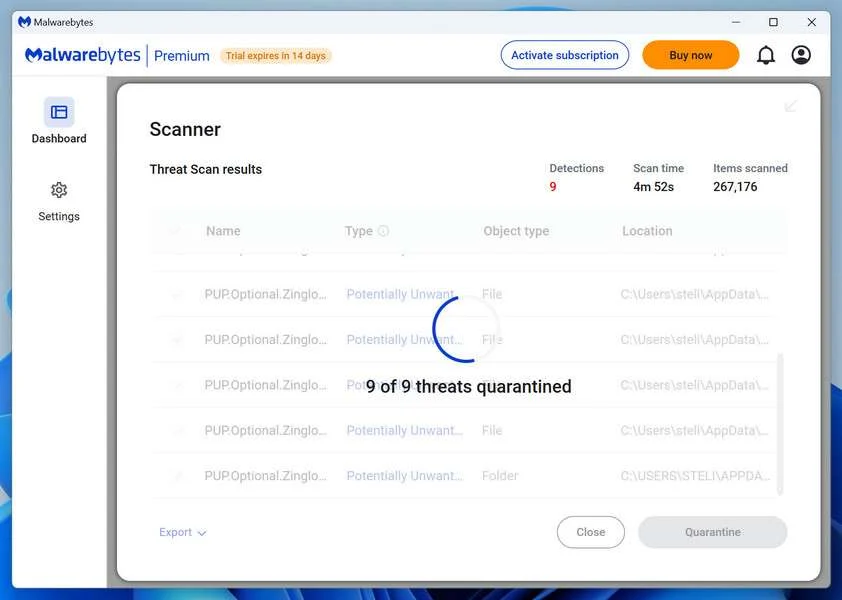
Malwarebytes will now remove the malicious files and registry entries and move them safely into quarantine.
-
Restart Your Computer
Some threats can only be fully removed after a reboot. If Malwarebytes asks you to restart, click Yes. Once you’re logged back in, Malwarebytes has finished removing the threats it found.
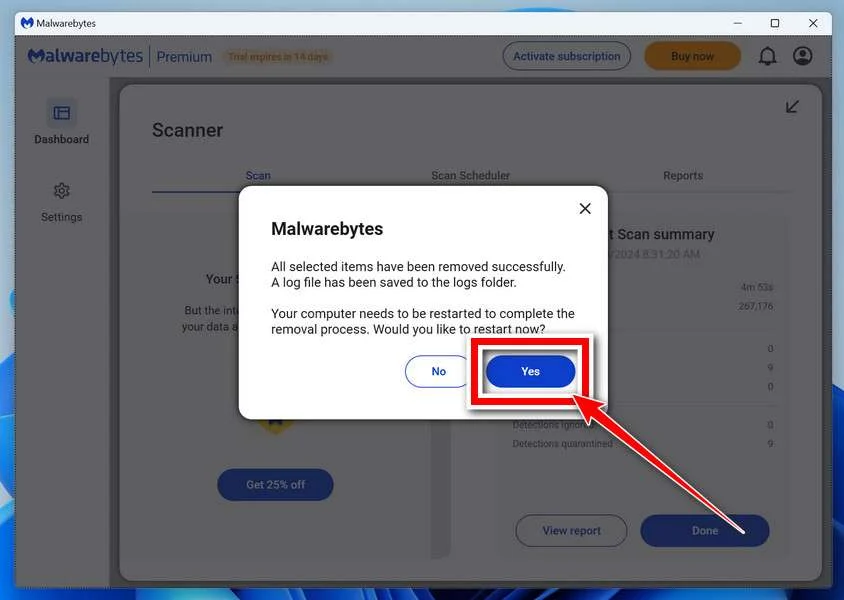
That’s it — your Windows PC is now clean of trojans, adware, and other malware, and should be back to running smoothly.
If you are still having problems with your computer after completing these instructions, then please follow one of the steps:
- Run a computer scan with ESET Online Scanner
- Ask for help in our Windows Malware Removal Help & Support forum.
Run a Malware Scan with Malwarebytes for Mac
Malwarebytes for Mac is a free on-demand scanner that removes the malware other security software tends to miss — adware, browser hijackers, and unwanted programs included. Cleaning an infected Mac with Malwarebytes has always been completely free, and it’s our go-to recommendation. Follow the steps below to scan and clean your Mac in just a few minutes.
-
Download Malwarebytes for Mac
Click the button below to download the latest version of Malwarebytes for Mac.
Download MalwarebytesOfficial installer for macOS. Your download starts right away.Want real-time protection? See Malwarebytes PremiumMalwarebytes Free for MacScans and removes malware at no cost -
Open the Malwarebytes setup file
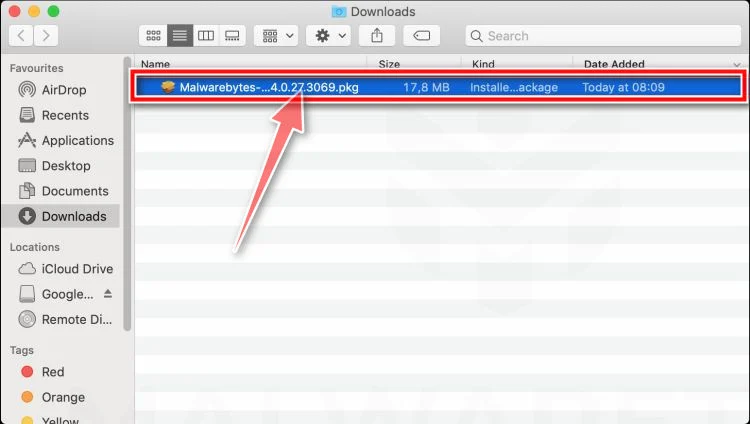
When the download finishes, open your Downloads folder and double-click the setup file to begin the installation.
-
Follow the On-Screen Prompts to Install Malwarebytes
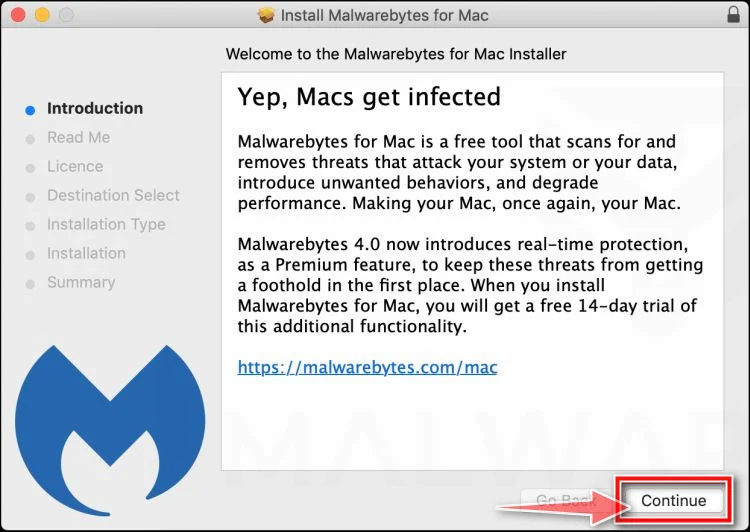
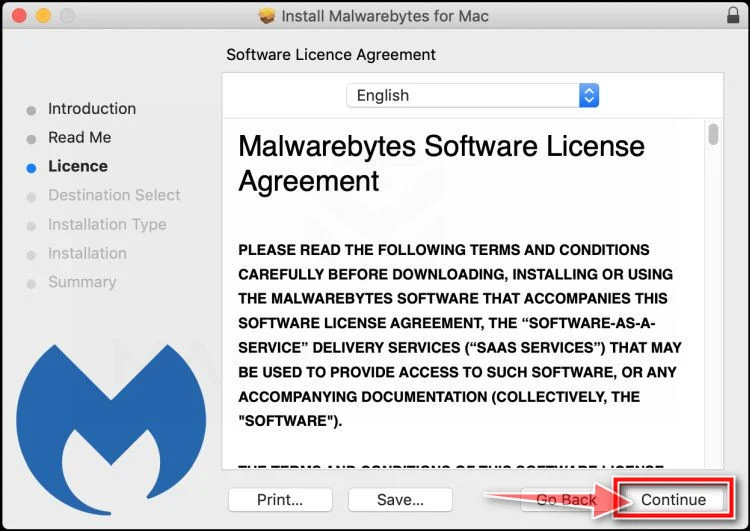
The Malwarebytes for Mac Installer will guide you through a few quick screens. Click “Continue” and keep following the prompts until the installation completes.
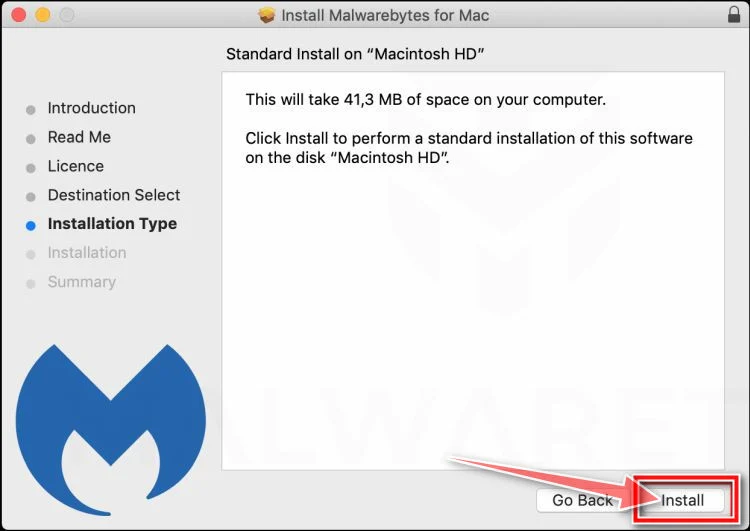
When the installation is complete, Malwarebytes opens to the Welcome to Malwarebytes screen. Click “Get started“.
-
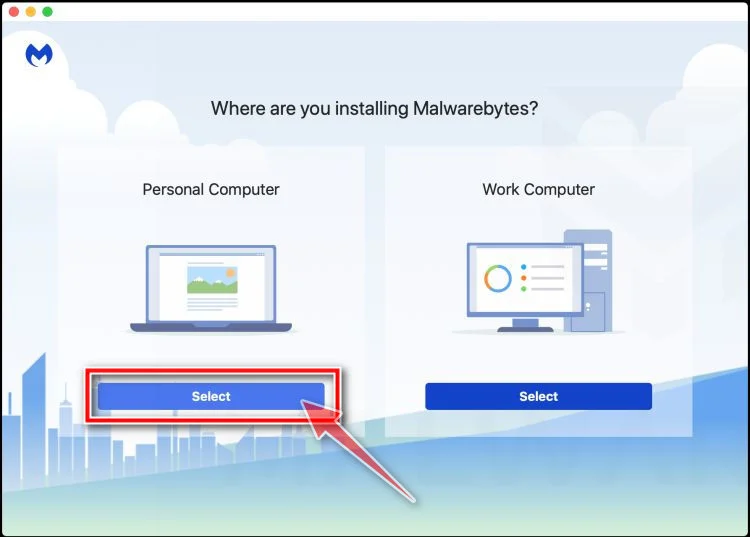
Select “Personal Computer” or “Work Computer”
Malwarebytes will ask what type of computer you’re installing it on. Click either Personal Computer or Work Computer, whichever applies.
-
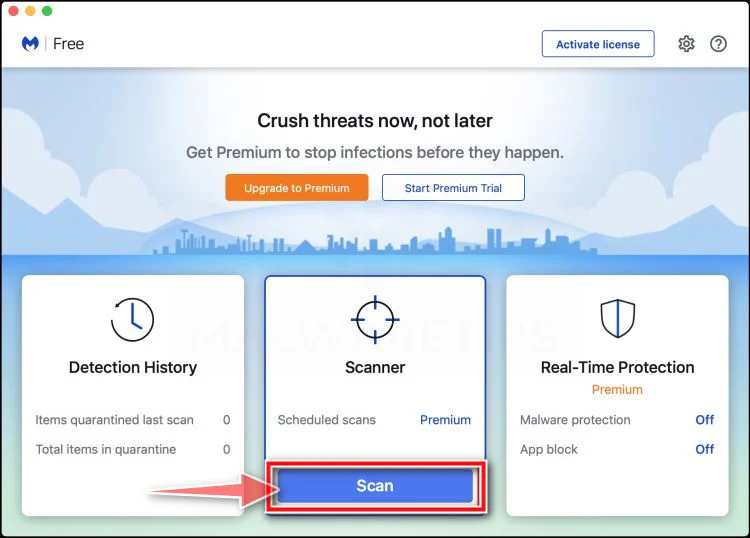
Start the Scan
Click the “Scan” button. Malwarebytes will automatically update its detection database and begin checking your Mac for malware.
-
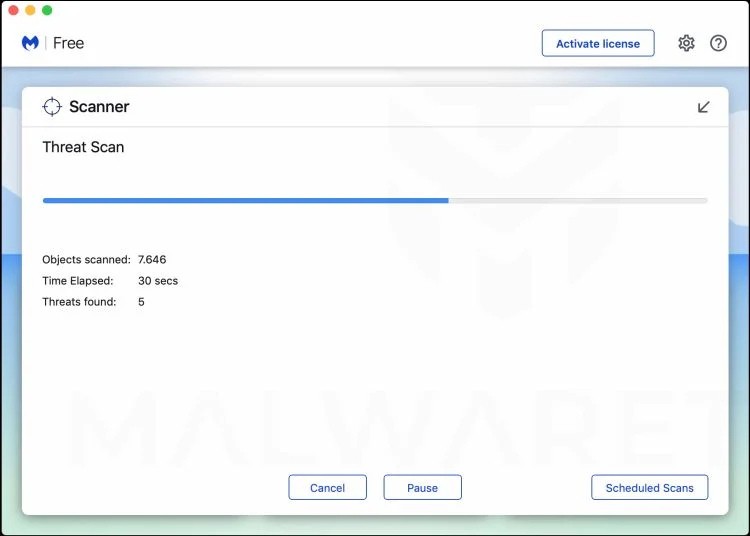
Wait for the Scan to Finish
Malwarebytes will scan your Mac for adware, browser hijackers, and other malicious programs. This can take a few minutes, so feel free to do something else — just check back occasionally to see the progress.
-
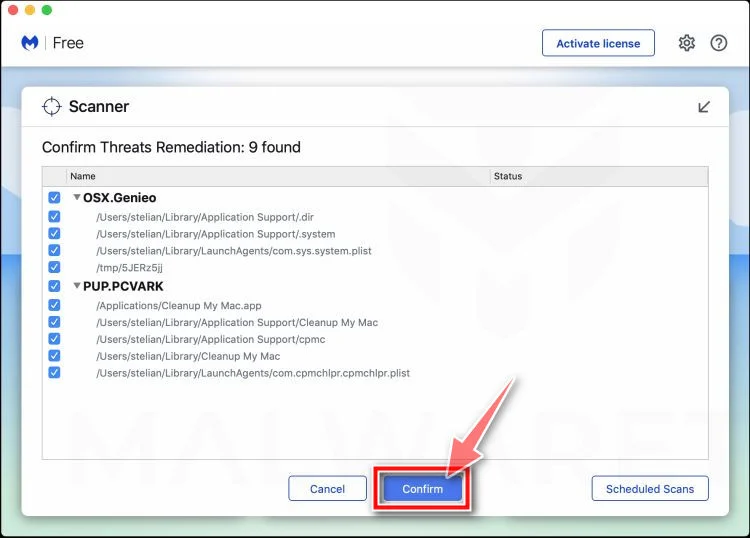
Quarantine the Detected Threats
When the scan is done, you’ll see a list of everything Malwarebytes found. Click the “Quarantine” button to remove all the threats at once.
-
Restart Your Mac
Malwarebytes will now remove all the malicious files it found. Some threats can only be fully removed after a reboot — if Malwarebytes asks you to restart, allow it. Once you’re logged back in, your Mac is clean.
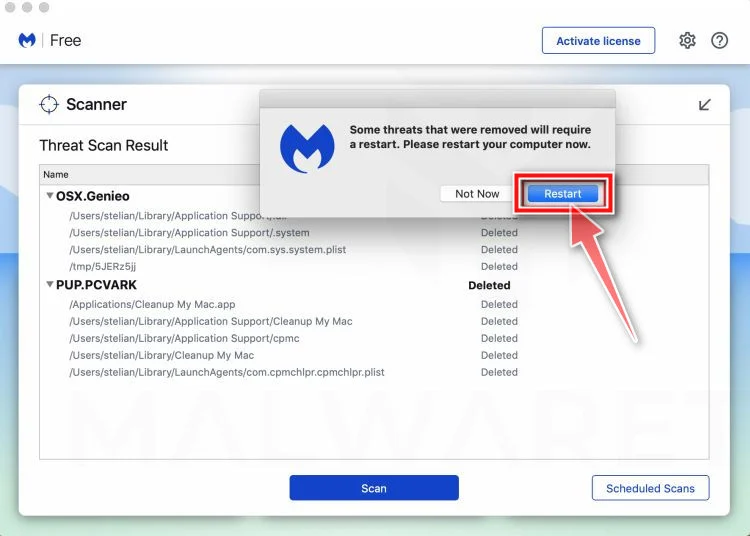
That’s it — your Mac is now free of adware, rogue browser extensions, and other potentially harmful software.
If you are still experiencing problems while trying to remove a malicious program from your computer, please ask for help in our Mac Malware Removal Help & Support forum.
Run a Malware Scan with Malwarebytes for Android
Malwarebytes for Android automatically detects and removes dangerous threats like malware and ransomware so you don’t have to worry about your most-used device being compromised. Aggressive detection of adware and potentially unwanted programs keeps your Android phone or tablet running smooth.
-
Download Malwarebytes for Android.
You can download Malwarebytes for Android by clicking the link below.
Get Malwarebytes for AndroidOpens Google Play in a new tab.Want real-time protection? See Malwarebytes Premium for AndroidMalwarebytes for AndroidScans your phone and removes malware at no cost -
Install Malwarebytes for Android on your phone.
In the Google Play Store, tap “Install” to install Malwarebytes for Android on your device.

When the installation process has finished, tap “Open” to begin using Malwarebytes for Android. You can also open Malwarebytes by tapping on its icon in your phone menu or home screen.

-
Follow the on-screen prompts to complete the setup process
When Malwarebytes will open, you will see the Malwarebytes Setup Wizard which will guide you through a series of permissions and other setup options.
This is the first of two screens that explain the difference between the Premium and Free versions. Swipe this screen to continue.
Tap on “Got it” to proceed to the next step.
Malwarebytes for Android will now ask for a set of permissions that are required to scan your device and protect it from malware. Tap on “Give permission” to continue.
Tap on “Allow” to permit Malwarebytes to access the files on your phone.
-
Update database and run a scan with Malwarebytes for Android
You will now be prompted to update the Malwarebytes database and run a full system scan.

Click on “Update database” to update the Malwarebytes for Android definitions to the latest version, then click on “Run full scan” to perform a system scan.

-
Wait for the Malwarebytes scan to complete.
Malwarebytes will now start scanning your phone for adware and other malicious apps. This process can take a few minutes, so we suggest you do something else and periodically check on the status of the scan to see when it is finished.

-
Click on “Remove Selected”.
When the scan has been completed, you will be presented with a screen showing the malware infections that Malwarebytes for Android has detected. To remove the malicious apps that Malwarebytes has found, tap on the “Remove Selected” button.

-
Restart your phone.
Malwarebytes for Android will now remove all the malicious apps that it has found. To complete the malware removal process, Malwarebytes may ask you to restart your device.
That’s it — your Android phone is now clean — no more malicious apps, adware, or browser redirects.
If you are still having problems with your phone after completing these instructions, then please follow one of the steps:
- Restore your phone to factory settings by going to Settings > General management > Reset > Factory data reset.
- Ask for help in our Mobile Malware Removal Help & Support forum.
Stay Protected: Block Ads and Malicious Sites
Now that your device is clean, keep it that way. Most infections start with a malicious ad or a fake download button — so blocking them at the source is your best defense.
We recommend AdGuard, which blocks malicious ads, phishing pages, and dangerous redirects before they can reach you.
👉 Download AdGuard and browse safely
Frequently Asked Questions About the Elon Musk X Casino App Scam
1. Is the Elon Musk X Casino app real?
No, the Elon Musk X Casino app is a complete scam. There is no actual app by this name endorsed or created by Elon Musk. Any ads, videos, or websites promoting it are fraudulent.
2. How can you identify the X Casino app scam?
Red flags include fake Elon Musk endorsements, promises of guaranteed jackpot winnings, links to suspicious websites, and an app that is unavailable on legitimate app stores like Google Play.
3. What happens if you try to download the X Casino app?
The links actually direct to a fake website posing as the Google Play store. It either steals your personal information or infects your device with malware disguised as the real app.
4. Are the Elon Musk endorsements in the ads real?
No. The ads use AI-generated deepfake videos of Elon Musk to fake his endorsement of the scam app. Elon Musk has no actual association with this app or these ads.
5. Can you really win money using the X Casino app?
No, there are no jackpots or money to be won. The promises of easy winnings are fabricated to trick victims. Any money you deposit will simply be stolen.
6. What does the X Casino app scam want from victims?
The scam aims to steal personal information, login credentials, financial account details, and money from victims. It may also install malware for further spying and theft.
7. What should you do if you downloaded the fake X Casino app?
Immediately delete it, run antivirus scans, change passwords, contact banks, and monitor for fraud. Avoid any further engagement with the scammers to limit damages.
8. How can you avoid mobile app scams like this?
Stick to official app stores like Google Play and Apple App Store. Research unfamiliar apps. Beware too-good-to-be-true offers. Protect personal data.
9. Where should the X Casino scam be reported?
Report these fake ads to social media platforms like Facebook and Instagram. Also file complaints with the FTC to help warn others.
10. Who typically falls victim to such scams?
Anyone can fall prey, but those more trusting of internet content and less tech-savvy are common targets. Stay vigilant and don’t get duped.
The Bottom Line
The promise of easy jackpot money using an app endorsed by Elon Musk is a complete scam. The ads are designed to go viral and trick users into downloading malware or revealing personal information.
Avoid falling for scams by watching for red flags like too-good-to-be-true claims, grammatical errors, and fake reviews. Stick to downloading apps only from official app stores like Google Play Store and Apple App Store.
Be very cautious before clicking on links or providing information to unfamiliar third-party websites. Protect yourself by using strong passwords, enabling two-factor authentication, monitoring your accounts and reports regularly.
If you suspect you are victim of fraud, take steps to limit damages immediately. Report the scam to appropriate authorities to help prevent others from falling prey. Stay vigilant – arming yourself with awareness is key to sidestepping cybercrimes.

Join the discussion
2 commentsShare your experience or ask a question about this article.
Discussion
So I fell for the redirect it is now sports betting.ag and wild casino .ag and few other ones the come up after u sign up as a api. So if need more info please reach out because what they do is on the first spin they suck u in on a 20 cent spin win 8.00$ I’m like whoa . Ok. Then . U raise to 1.$ then u may get $3. Then poof gone!
In reply to John Tschoepe
Hi John, thank you for sharing that.
What you described fits the same trap we often see with gambling redirects and fake betting funnels. They use a small early win to build confidence, get you to raise your bets or deposit more, and then the pattern changes fast. Those early wins are often part of the bait.
Your comment adds useful detail for readers who may be seeing the same redirect chain.