Michael Williams Lotus Consults Scam Email: Fake Funding Offer Warning
Written by: Lapain Epuran
Published on:
An unsolicited email offers to connect your business or project with carefully vetted lenders around the world. The sender sounds professional, asks for a business plan, and promises competitive low-interest financing.
For someone searching for capital, the message can feel like a lucky introduction. It may instead be the beginning of identity theft or an advance-fee loan scam.
Overview
The email uses a polished business funding pitch
The Michael Williams Lotus Consults scam email claims to come from a “Senior Financial Consultant.” One reported version uses michael.williams@lotusconsults.org and the subject “Exploring Funding Opportunities for Your Project.”
The message says Lotus Consults connects high-caliber clients with vetted lenders and offers financing for personal, business, and project needs. It invites the recipient to send a business plan and executive summary.
The language is broad enough to fit almost any entrepreneur. It contains no meaningful evidence that the sender reviewed the recipient, project, credit, revenue, or repayment ability before making contact.
The requested documents contain valuable intelligence
A business plan may reveal names, addresses, telephone numbers, signatures, bank relationships, revenue, customers, intellectual property, budgets, and future transactions. That information can support targeted fraud even before money is requested.
Warning signs include:
An unsolicited offer of worldwide low-interest financing
No clear explanation of how the sender found your project
A generic consultant title without verifiable licensing
A request for confidential plans before basic due diligence
No specific lender, legal entity, address, or credit terms
Promises that appear stronger than the underwriting performed
Fees requested before any real funding is delivered
The offer can develop into an advance-fee scheme
After receiving a response, the supposed consultant may promise approval and introduce processing, insurance, legal, compliance, transfer, or registration fees. Each charge is presented as the last obstacle before release of a much larger loan.
The lender and financing do not exist. The victim loses the fees, while submitted documents may be reused for impersonation, business-email compromise, fake invoices, or new credit applications.
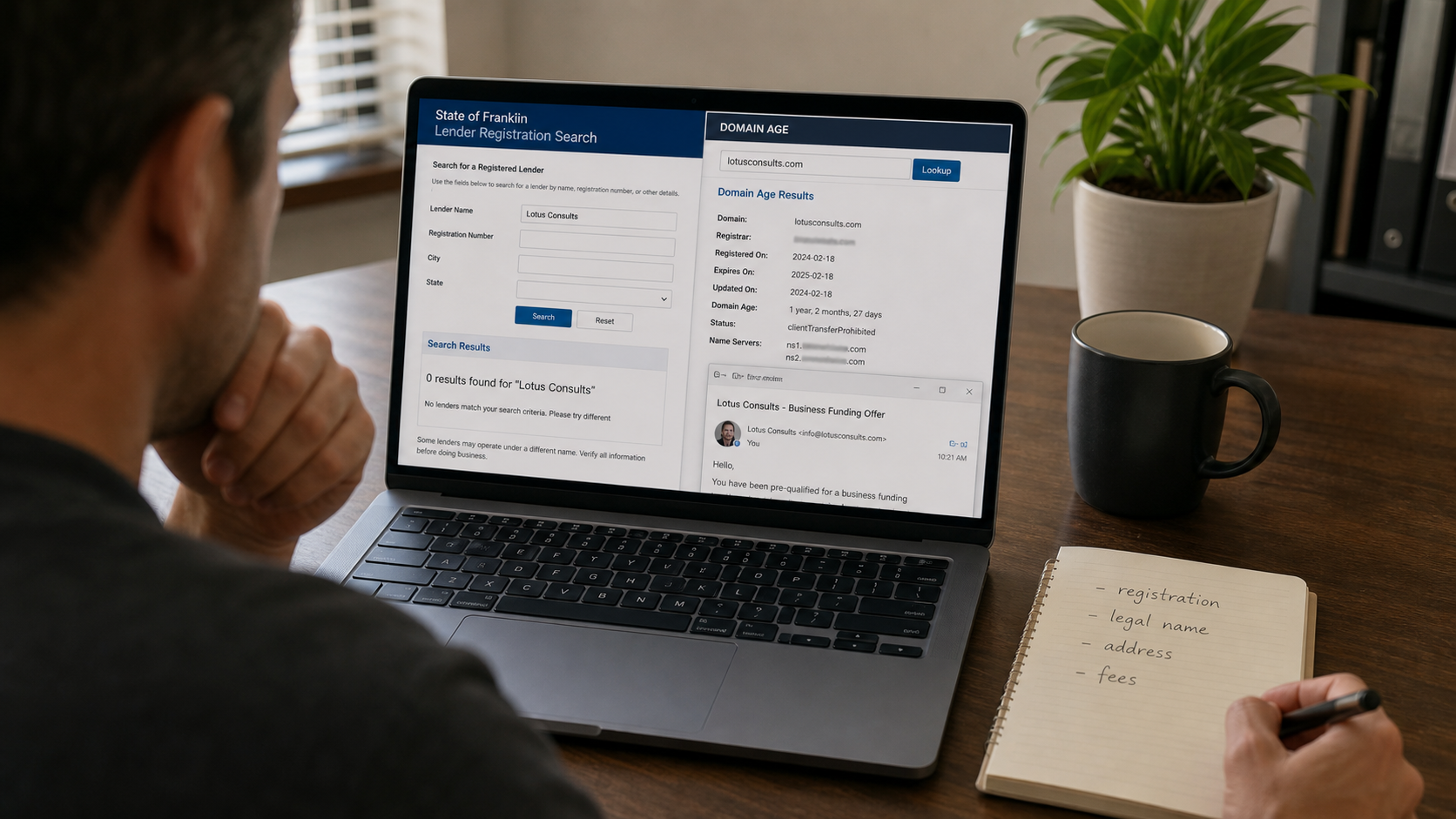
Do not reply or send documents. Verify the company, lender, registration, domain, address, and representative through sources that the email did not provide.
What the Reported Email Says
The message identifies “Michael Williams” as a Senior Financial Consultant at Lotus Consults. It says the organization specializes in connecting clients with vetted lenders worldwide.
It offers competitive low-interest solutions tailored to projects and asks the recipient to share a business plan and executive summary. The promise remains vague about loan size, annual rate, collateral, jurisdiction, repayment, and the actual lender.
A professional tone does not verify the sender. Names can be invented or copied, domains can be registered quickly, and financial terminology can be taken from genuine consultancy websites.
The reported email address should not be trusted simply because the local part contains the sender’s name. The important questions are whether the legal business exists, whether the domain belongs to it, and whether the person is authorized.
How the Michael Williams Lotus Consults Scam Email Works
Step 1: Bulk outreach finds businesses that need funding
The email may be sent to addresses collected from company websites, directories, registrations, conference lists, social media, and breached databases. A recipient’s business name can be inserted automatically.
Criminals do not need to know who currently needs a loan. Sending enough offers eventually reaches someone preparing a launch, managing cash flow, or seeking investors.
Step 2: Formal language creates an image of selectivity
Terms such as “high-caliber clients,” “carefully vetted lenders,” and “funded realities” imply an established network. The recipient is invited to believe the project may qualify for privileged access.
No evidence of selection is supplied. The same template can be delivered to thousands of unrelated recipients.
Step 3: The victim sends a business plan
The first request may not involve payment. Asking for familiar business documents lowers suspicion and gives the fraudster detailed information for the next message.
The scammer can quote revenue, milestones, and names from the plan to make a fabricated approval look personally reviewed.
Step 4: A lender or investor appears
A second person may contact the victim as an underwriter, legal officer, bank representative, or private investor. Multiple participants make the transaction feel as though it passed through real departments.
Websites, letters of intent, approval certificates, and account statements may be created to support the story. None replaces verification with a regulator and the supposed institution.
Step 5: Approval is granted unusually quickly
The project is accepted with little challenge, sometimes for an amount larger than requested. The favorable terms encourage the victim to focus on closing rather than question how risk was assessed.
Legitimate lenders examine identity, credit, cash flow, collateral, business history, and legal documents. A guaranteed approval before this process is a serious warning.
Step 6: An advance fee blocks release of the funds
The supposed loan cannot be transferred until the victim pays for insurance, processing, taxes, compliance, legal review, or an international transfer. Payment may be requested by wire, crypto, or to an unrelated company.
Once paid, another issue appears. The promised funding remains visible in fake paperwork but never reaches the victim’s usable account.
Step 7: Stolen documents support additional fraud
Business and identity records can be sold or reused. Criminals may impersonate the company, target its customers, redirect legitimate invoices, or approach employees with convincing internal details.
The victim may later receive a recovery offer that requests another fee. Knowledge of the original application makes the second approach sound credible.
How to Verify a Business Funding Offer
Ask for the lender’s full legal name, physical address, registration number, lending jurisdiction, written terms, and the identity of the entity that will provide funds. Do not accept a consultant’s own website as the only confirmation.
Check the lender with the banking or financial-services regulator in the relevant state or country. The FTC advises borrowers to confirm that a lender is registered where it does business.
Contact the institution using a number in the regulator’s record. A fraudster may copy a real lender’s name, so confirming that the exact representative, domain, and offer are authorized is essential.
Have an independent attorney or accountant review the documents. The consultant should not choose or control the professional who evaluates the deal.
Why You Should Not Send a Business Plan Yet
An executive summary can contain enough detail for social engineering. Remove personal identifiers, account information, signatures, customer lists, and confidential technology before sharing even with a verified contact.
Use a staged disclosure process. A legitimate funder can explain its identity, mandate, privacy practices, and initial requirements before receiving the most sensitive documents.
Mark confidential material, control access, and record who received each version. If the offer arrived without a prior relationship, verify it before opening attachments or replying.
Tell employees about the contact. A scammer who knows the project may email finance staff later and request a payment while impersonating an executive.
Documents a Fake Funder May Send
A letter of intent can look formal while making no enforceable commitment. Check the legal name, governing law, signatory, lender registration, and contact channel before relying on it.
An approval certificate may include stamps, seals, reference numbers, and signatures. These visual details can be created in ordinary editing software and do not prove underwriting occurred.
A bank statement or proof-of-funds letter may be altered or entirely fabricated. Verify it with the named institution through a channel you locate independently.
Insurance documents can introduce another impersonated company. Contact the insurer and regulator directly, and confirm the policy number, insured parties, and payment instructions.
A confidentiality agreement may be used to discourage discussion with lawyers, banks, or employees. Confidentiality does not prevent a recipient from obtaining independent professional advice about a proposed transaction.
International transfer forms often create a reason for taxes or clearance charges. A displayed transfer pending in a portal controlled by the sender is not available funding.
Never judge a financing package by the number of documents. A coordinated fraud can produce an entire file in which every company, official, and signature is controlled by the same group.
How to Protect Your Company After Sending a Plan
Tell finance, legal, leadership, and information-security teams what was disclosed. A shared timeline helps the company recognize later messages that reuse the project’s details.
Notify customers or partners only when their information is affected and follow applicable legal advice. Do not let embarrassment delay a measured incident response.
Add verification requirements for changes to invoices, bank accounts, and executive payment requests. Use a known telephone number rather than replying to the suspicious thread.
Monitor newly registered domains resembling the company name when exposure is serious. Criminals may use copied documents to create a convincing supplier or investor impersonation.
Review bank-account changes and large outbound payments with a second person for the following months. Information stolen today may be saved until a believable project milestone creates the right moment for fraud.
Keep the original email in a protected evidence folder rather than forwarding it widely. Security staff can preserve headers without exposing more employees to attachments and links.
One extra word is not enough protection, but one independent telephone call can expose an entire fabricated financing operation.
Company, Address, and Fulfillment Checks
The legal entity must exist in the claimed jurisdiction
Search official business registries and financial regulators. A similar name is not enough; compare registration numbers, officers, status, and permitted activities.
The domain should belong to the verified company
Compare the email domain with the address in official records. Lookalike spelling, recent registration, hidden ownership, and unrelated infrastructure deserve caution.
The physical office needs independent confirmation
A prestigious address may be a virtual office or copied from another firm. Contact building management or the verified institution without using details in the email.
The actual funding path must be documented
Identify which regulated entity supplies the money and where fees go. Do not wire funds to individuals, intermediaries, or unrelated companies.
What a Legitimate Lender Does Differently
A real lender explains costs and underwriting rather than guaranteeing approval. It provides written disclosures, verifies the borrower, and answers questions about regulation and complaints.
Some legitimate applications include appraisal or application costs, but paying a fee never guarantees credit. The FTC warns that a demand for payment before promised funds is a central advance-fee scam sign.
Terms identify the legal lender and borrower
Interest, fees, repayment, and collateral are clear
The lender checks credit and repayment ability
Payments go to verified business accounts
The borrower can obtain independent advice
Questions do not trigger threats or artificial deadlines
Walk away when the promised loan exists only in emails, certificates, or a dashboard controlled by the sender.
What to Do if You Have Fallen Victim to This Scam
Stop all communication and payments. Do not send a final insurance, tax, processing, or release fee.
Contact the bank or payment provider. Report fraud and ask whether a wire, card charge, transfer, or crypto purchase can be stopped or traced.
Preserve the entire offer. Save emails with headers, attachments, domains, telephone numbers, contracts, recipient accounts, wallet addresses, and transaction records.
Assess the disclosed business information. List every person, account, customer, signature, document, and confidential detail exposed, then notify affected teams.
Secure email and financial systems. Change passwords, enable strong two-factor authentication, inspect forwarding rules, and alert staff to possible invoice impersonation.
Scan devices that opened attachments. Use Malwarebytes to check for credential stealers, remote-access tools, and other malware delivered with the funding documents.
Block malicious domains. AdGuard can reduce access to reported phishing sites and deceptive redirects, but it cannot recover documents already shared.
Report the scheme. File at ReportFraud.ftc.gov and IC3.gov, and notify financial regulators and local police when money was lost.
Reject recovery solicitations. An unexpected person promising guaranteed reimbursement for another fee is likely continuing the fraud.
Is Your Device Infected? Run a Free Malware Scan
Slow performance, constant pop-ups, or strange behavior? These are classic signs of a malware infection. The fastest way to find out is to scan your device with Malwarebytes Anti-Malware Free — one of the most trusted malware removal tools available.
The free version detects and removes the most common threats, including:
Adware — the cause of those annoying pop-ups
Browser hijackers — unwanted redirects and changed homepages
Trojans and spyware — hidden programs stealing your data
Potentially unwanted programs (PUPs) — software you never asked for
👉 Select your device below — Windows, Mac, or Android — then follow the simple steps to download Malwarebytes, scan your system, and remove any threats it finds. The whole process takes about 5 minutes.
Malwarebytes for WindowsMalwarebytes for MacMalwarebytes for Android
Run a Malware Scan with Malwarebytes for Windows
Malwarebytes is one of the most popular and trusted anti-malware tools for Windows — and it’s completely free for removing infections. It catches threats that many antivirus programs miss, including adware, browser hijackers, and trojans. Follow the steps below to scan and clean your PC in just a few minutes.
Download Malwarebytes
Click the button below to download the latest version of Malwarebytes for Windows from the official source. The free version is all you need — it will scan your computer and remove adware, browser hijackers, and other malicious software at no cost.
(The link opens in a new page where your download will start)
Install Malwarebytes
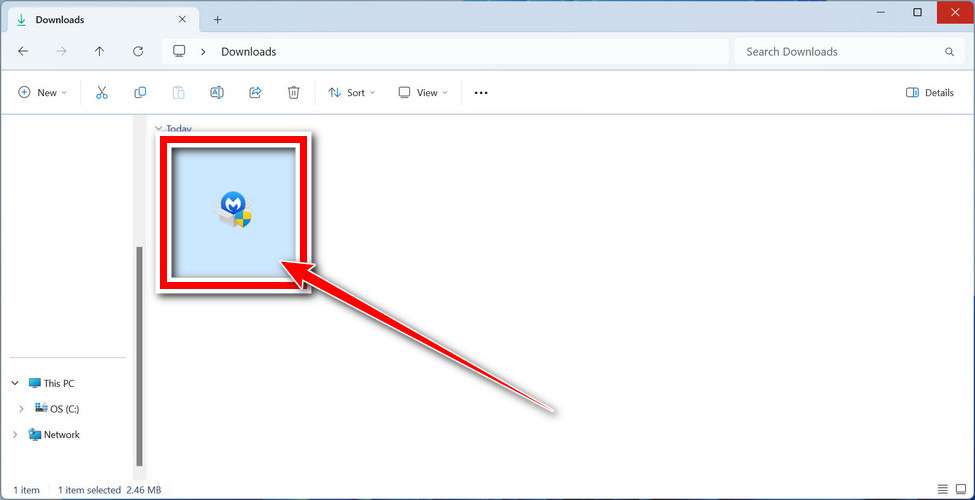
When the download finishes, open your Downloads folder and double-click the MBSetup file. If Windows shows a User Account Control pop-up, click “Yes” to allow the installation.
Follow the On-Screen Prompts to Install Malwarebytes
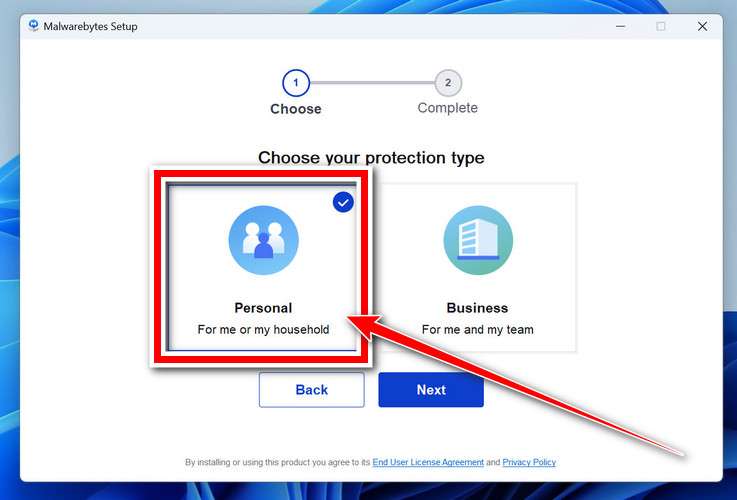
The setup wizard will walk you through a few quick screens:
Choose where you’re installing the program — “Personal Computer” or “Work Computer” — then click Next.
Malwarebytes will now install on your device. This usually takes under a minute.
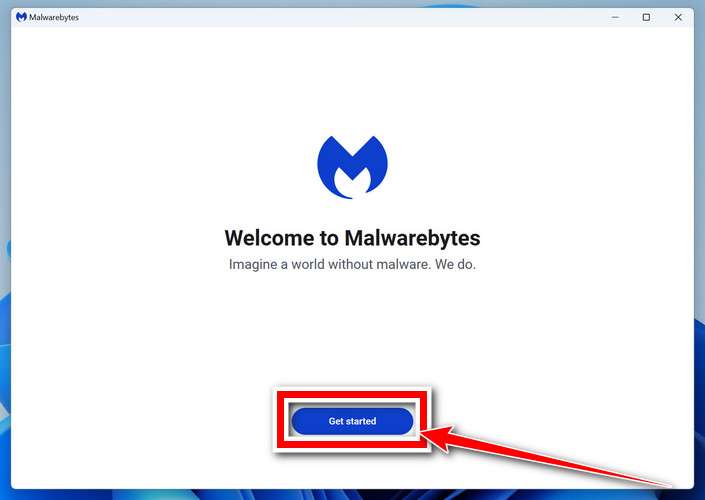
When installation is complete, the “Welcome to Malwarebytes” screen will open automatically.
On the final screen, click Open Malwarebytes to launch the program.
Enable “Scan for Rootkits”
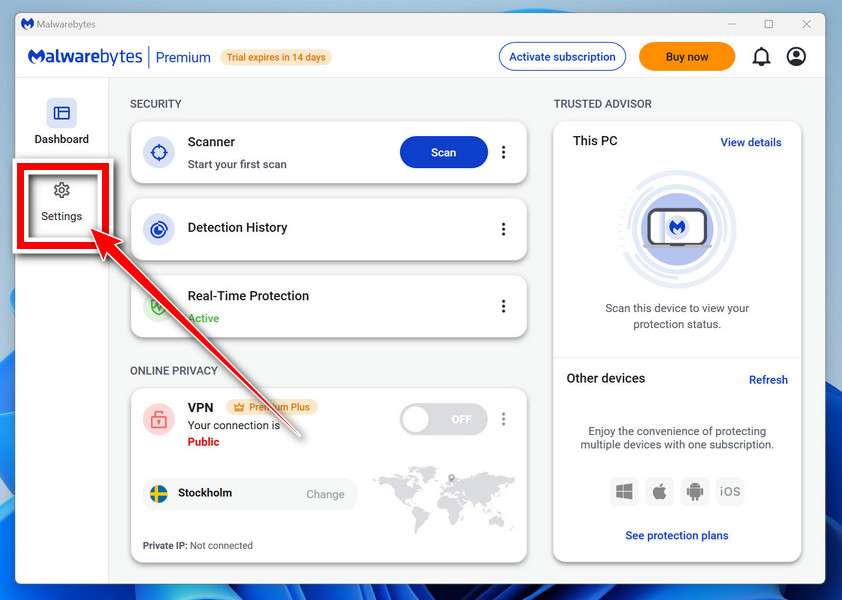
Before scanning, turn on rootkit detection so Malwarebytes can find even the most hidden threats. Click the Settings gear icon on the left side of the screen.
In the settings menu, find “Scan for rootkits” and click the toggle so it turns blue.
Done? Click “Dashboard” in the left pane to return to the main screen.
Start the Scan
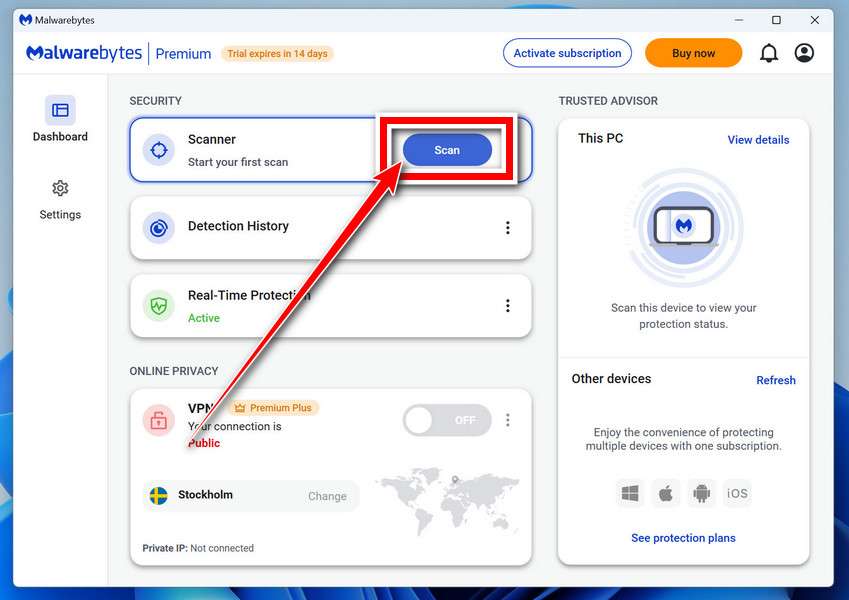
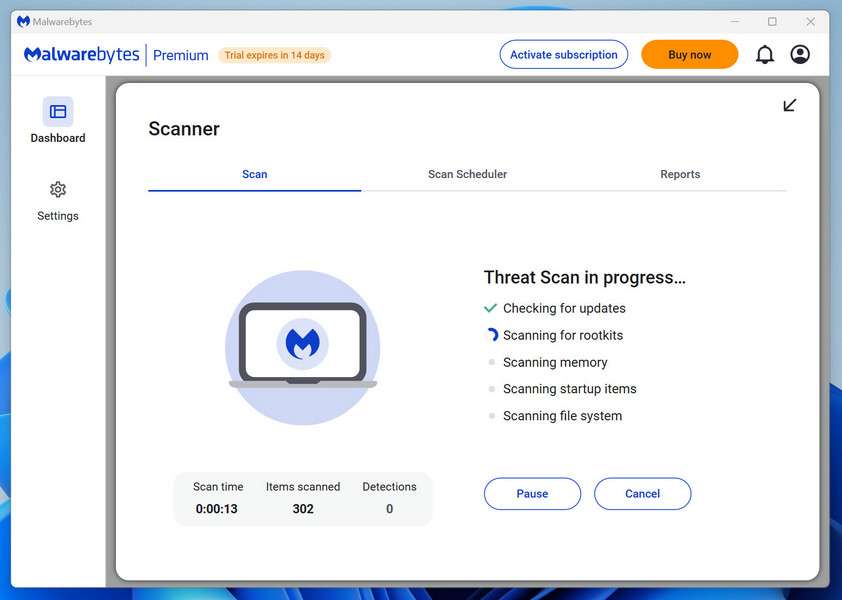
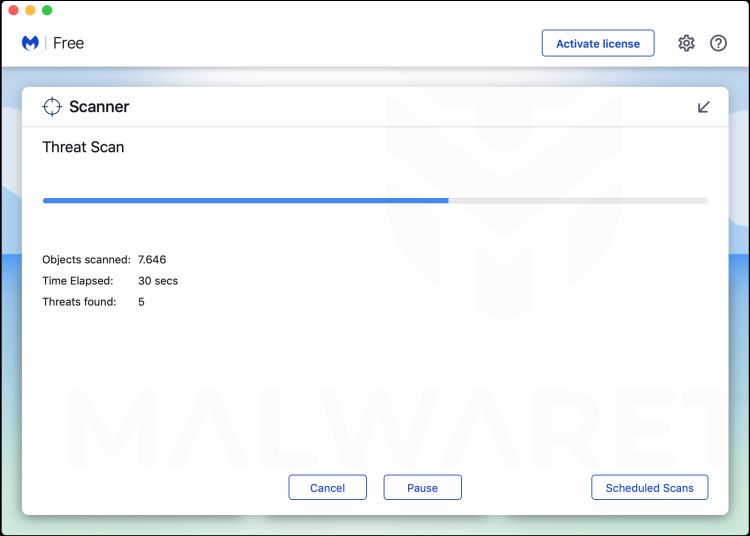
Click the blue Scan button. Malwarebytes will automatically update its virus database and start checking your computer for malware.
Wait for the Scan to Finish
The scan checks your entire system for browser hijackers and other malicious programs, so it can take several minutes. Feel free to do something else — just check back occasionally to see the progress.
Quarantine the Detected Threats
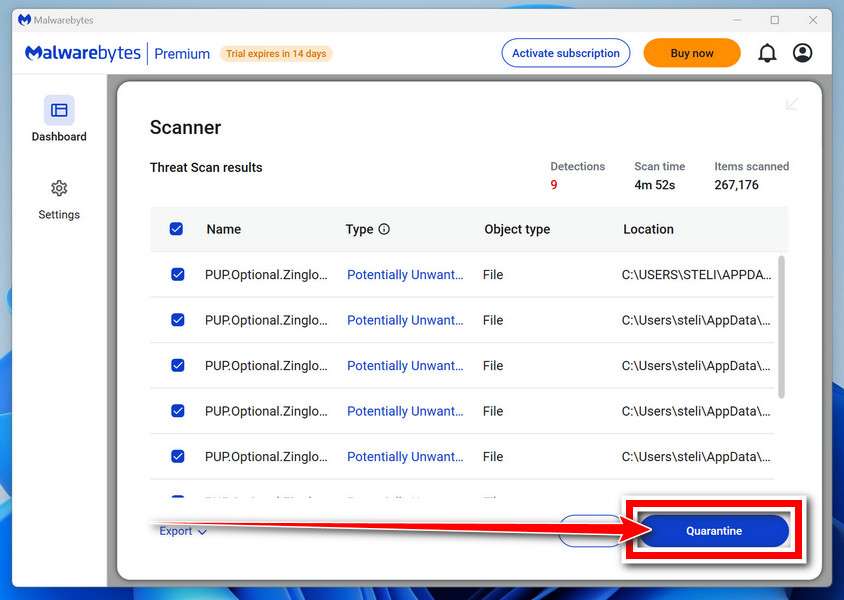
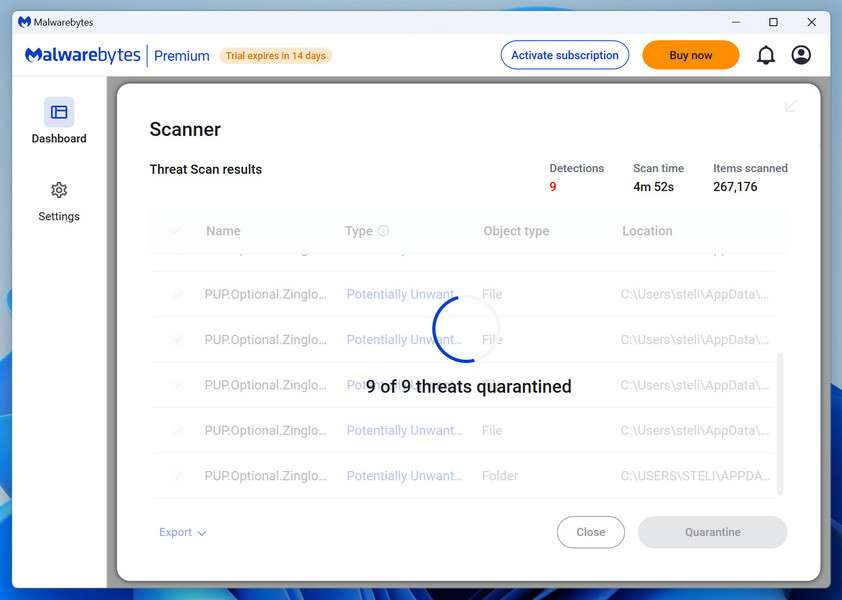
When the scan is done, you’ll see a list of everything Malwarebytes found — malware, adware, and potentially unwanted programs. Click the “Quarantine” button to remove all of them at once.
Malwarebytes will now remove the malicious files and registry entries and move them safely into quarantine.
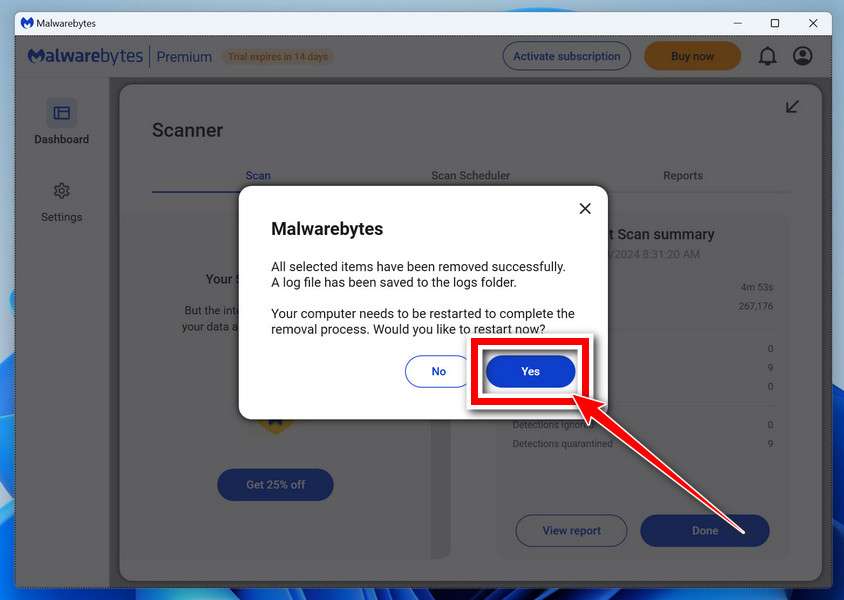
Restart Your Computer
Some threats can only be fully removed after a reboot. If Malwarebytes asks you to restart, click Yes. Once you’re logged back in, your PC is clean and you can continue with the next steps in this guide.
When the scan finishes, click Quarantine to remove everything Malwarebytes found. That’s it — your Windows PC is now clean of trojans, adware, and other malware, and should be back to running smoothly.
If your current antivirus allowed this malicious program on your computer, you may want to consider purchasing Malwarebytes Premium to protect against these types of threats in the future. If you are still having problems with your computer after completing these instructions, then please follow one of the steps:
Malwarebytes for Mac is a free on-demand scanner that removes the malware other security software tends to miss — adware, browser hijackers, and unwanted programs included. Cleaning an infected Mac with Malwarebytes has always been completely free, and it’s our go-to recommendation. Follow the steps below to scan and clean your Mac in just a few minutes.
Download Malwarebytes for Mac
Click the button below to download the latest version of Malwarebytes for Mac.
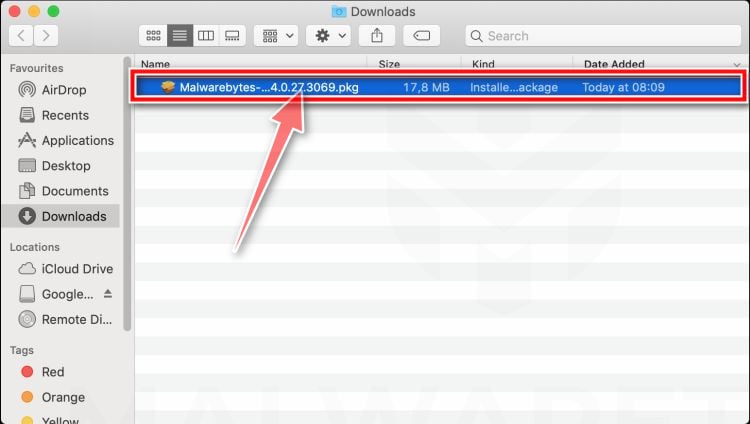
When the download finishes, open your Downloads folder and double-click the setup file to begin the installation.
Follow the On-Screen Prompts to Install Malwarebytes
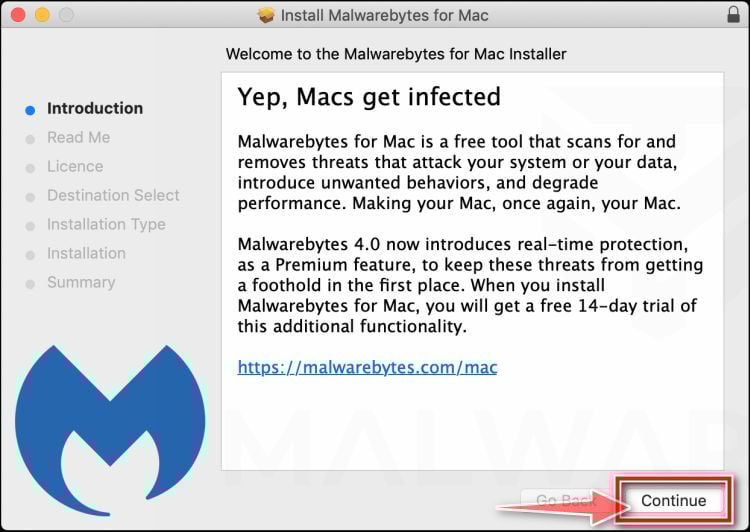
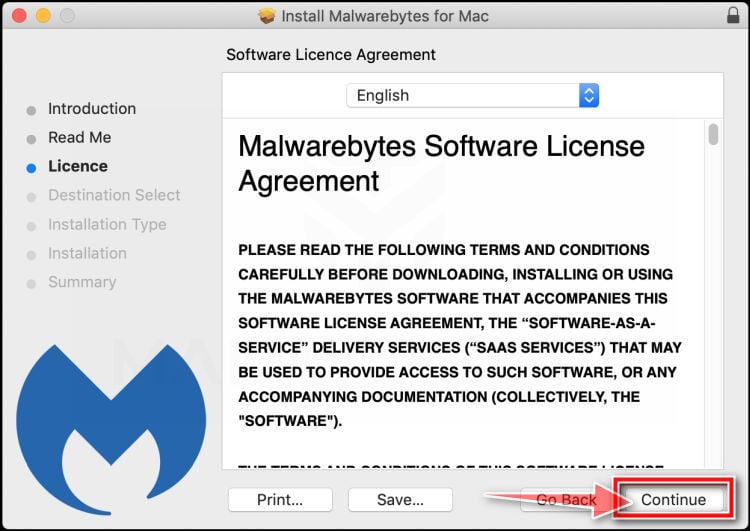
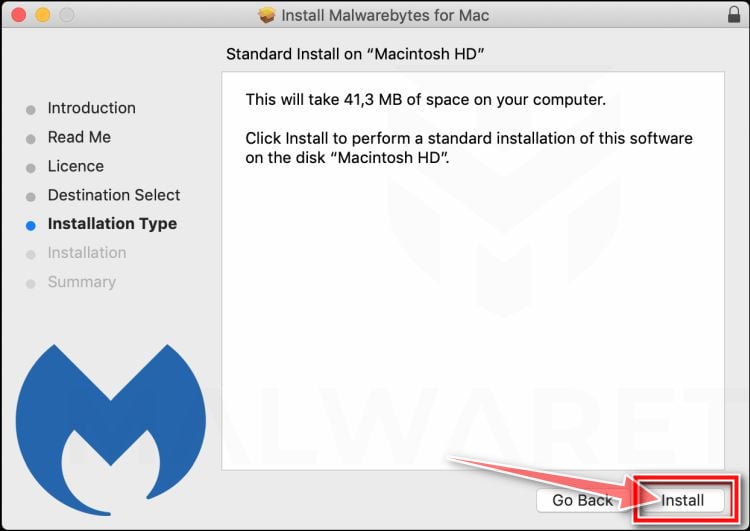
The Malwarebytes for Mac Installer will guide you through a few quick screens. Click “Continue” and keep following the prompts until the installation completes.
When the installation is complete, Malwarebytes opens to the Welcome to Malwarebytes screen. Click “Get started“.
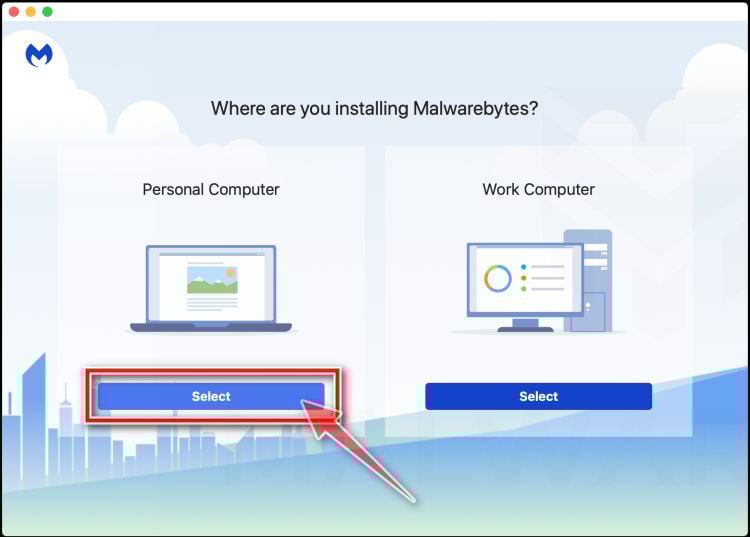
Select “Personal Computer” or “Work Computer”
Malwarebytes will ask what type of computer you’re installing it on. Click either Personal Computer or Work Computer, whichever applies.
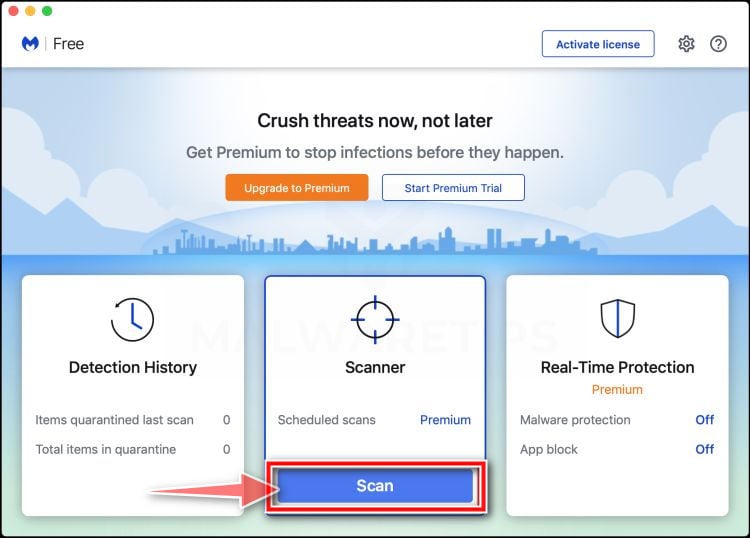
Start the Scan
Click the “Scan” button. Malwarebytes will automatically update its detection database and begin checking your Mac for malware.
Wait for the Scan to Finish
Malwarebytes will scan your Mac for adware, browser hijackers, and other malicious programs. This can take a few minutes, so feel free to do something else — just check back occasionally to see the progress.
Quarantine the Detected Threats
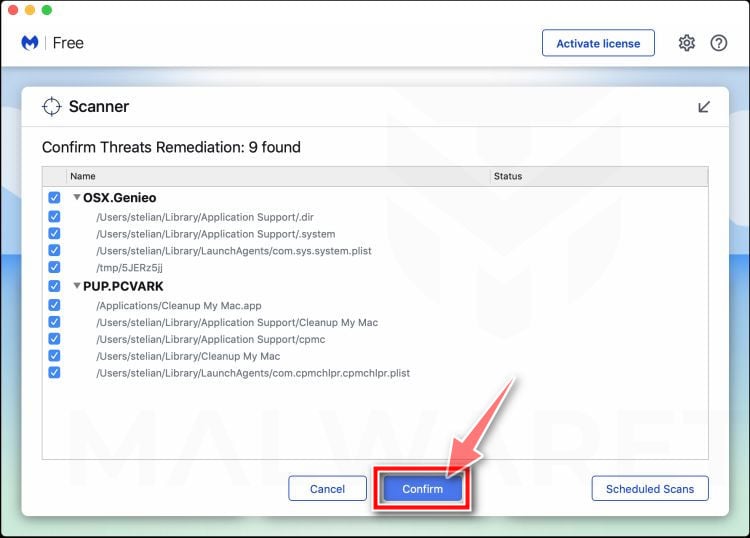
When the scan is done, you’ll see a list of everything Malwarebytes found. Click the “Quarantine” button to remove all the threats at once.
Restart Your Mac
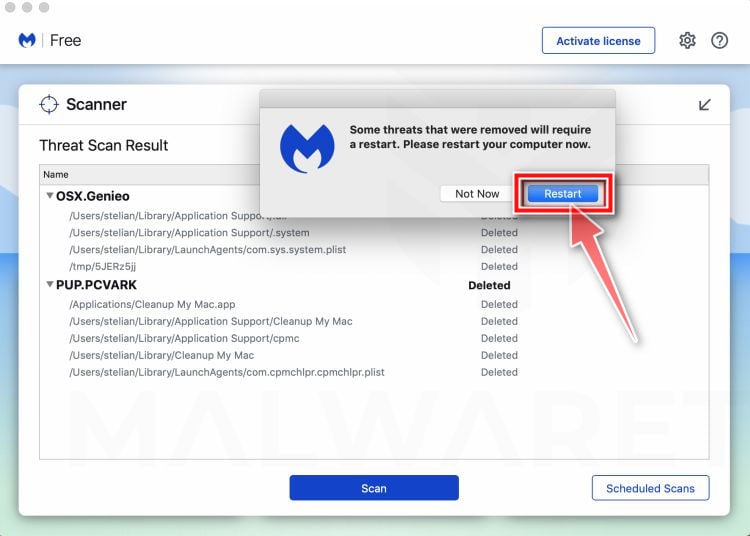
Malwarebytes will now remove all the malicious files it found. Some threats can only be fully removed after a reboot — if Malwarebytes asks you to restart, allow it. Once you’re logged back in, your Mac is clean.
Once the scan is done, remove every threat it detected. Your Mac is now free of adware, rogue browser extensions, and other potentially harmful software.
If your current antivirus allowed a malicious program on your computer, you might want to consider purchasing the full-featured version of Malwarebytes Anti-Malware to protect against these types of threats in the future. If you are still experiencing problems while trying to remove a malicious program from your computer, please ask for help in our Mac Malware Removal Help & Support forum.
Run a Malware Scan with Malwarebytes for Android
Malwarebytes for Android automatically detects and removes dangerous threats like malware and ransomware so you don’t have to worry about your most-used device being compromised. Aggressive detection of adware and potentially unwanted programs keeps your Android phone or tablet running smooth.
Download Malwarebytes for Android.
You can download Malwarebytes for Android by clicking the link below.
In the Google Play Store, tap “Install” to install Malwarebytes for Android on your device.
When the installation process has finished, tap “Open” to begin using Malwarebytes for Android. You can also open Malwarebytes by tapping on its icon in your phone menu or home screen.
Follow the on-screen prompts to complete the setup process
When Malwarebytes will open, you will see the Malwarebytes Setup Wizard which will guide you through a series of permissions and other setup options. This is the first of two screens that explain the difference between the Premium and Free versions. Swipe this screen to continue. Tap on “Got it” to proceed to the next step. Malwarebytes for Android will now ask for a set of permissions that are required to scan your device and protect it from malware. Tap on “Give permission” to continue. Tap on “Allow” to permit Malwarebytes to access the files on your phone.
Update database and run a scan with Malwarebytes for Android
You will now be prompted to update the Malwarebytes database and run a full system scan.
Click on “Update database” to update the Malwarebytes for Android definitions to the latest version, then click on “Run full scan” to perform a system scan.
Wait for the Malwarebytes scan to complete.
Malwarebytes will now start scanning your phone for adware and other malicious apps. This process can take a few minutes, so we suggest you do something else and periodically check on the status of the scan to see when it is finished.
Click on “Remove Selected”.
When the scan has been completed, you will be presented with a screen showing the malware infections that Malwarebytes for Android has detected. To remove the malicious apps that Malwarebytes has found, tap on the “Remove Selected” button.
Restart your phone.
Malwarebytes for Android will now remove all the malicious apps that it has found. To complete the malware removal process, Malwarebytes may ask you to restart your device.
After the scan, tap Remove Selected to delete all detected threats. Your Android phone is now clean — no more malicious apps, adware, or browser redirects.
If your current antivirus allowed a malicious app on your phone, you may want to consider purchasing the full-featured version of Malwarebytes to protect against these types of threats in the future. If you are still having problems with your phone after completing these instructions, then please follow one of the steps:
Restore your phone to factory settings by going to Settings > General management > Reset > Factory data reset.
Now that your device is clean, keep it that way. Most infections start with a malicious ad or a fake download button — so blocking them at the source is your best defense.
We recommend AdGuard, which blocks malicious ads, phishing pages, and dangerous redirects before they can reach you.
The name in an unsolicited email does not verify a person. Confirm identity, authorization, and licensing through official records and independently obtained company contacts.
Is lotusconsults.org a verified lender website?
Do not assume that it is because the address appears professional. Verify the legal entity, registration, domain ownership, and lender behind the offer before interacting.
Why does the sender want my business plan?
The information can personalize a false approval and support identity theft, invoice fraud, or attacks against employees and customers.
Are all upfront loan fees illegal?
Some legitimate applications have disclosed costs, but no fee guarantees approval. Unexpected demands to release promised funds are a strong scam warning.
What if I replied but sent no documents?
Stop contact and expect follow-up attempts. The sender now knows your address is active and may tailor a second offer to your response.
What if I opened an attachment?
Do not enable macros or install software. Scan the device, change exposed passwords from a trusted system, and monitor email and financial accounts.
The Bottom Line
The Michael Williams Lotus Consults email uses an attractive funding story to obtain business information and open the door to advance fees. Professional wording is not evidence of a real lender.
Do not reply or send a business plan until the legal company, representative, lender, domain, and payment path have been confirmed independently.
10 Rules to Avoid Online Scams
Here are 10 practical safety rules to help you avoid malware, online shopping scams, crypto scams, and other online fraud. Each tip includes a quick “if you already got hit” action.
Stop and verify before you click, log in, download, or pay.
Most scams win by creating urgency. Verify using a trusted method: type the website address yourself, use the official app, or call a known number (not the one in the message).
If you already clicked: close the page, do not enter passwords, and run a malware scan.
Keep your operating system, browser, and apps updated.
Updates patch security holes used by malware and malicious ads. Turn on automatic updates where possible.
If you saw a scary “update now” pop-up: close it and update only through your device settings or the official app store.
Use layered protection: antivirus plus an ad blocker.
Antivirus helps block malware. An ad blocker reduces scam redirects, phishing pages, and malvertising.
If your browser is acting weird: remove unknown extensions, reset the browser, then run a full scan.
Install apps, software, and extensions only from official sources.
Avoid cracked software, “keygens,” and random downloads. During installs, choose Custom/Advanced and decline bundled offers you do not recognize.
If you already installed something suspicious: uninstall it, restart, and scan again.
Treat links and attachments as untrusted by default.
Phishing often impersonates delivery services, banks, and popular brands. If it is unexpected, do not open attachments or log in through the message.
If you entered credentials: change the password immediately and enable 2FA.
Shop safely: research the store, then pay with protection.
Be cautious with brand-new stores, “closing sale” stories, and prices that make no sense. Prefer credit cards or PayPal for dispute options. Avoid wire transfers, gift cards, and crypto payments.
If you already paid: contact your card issuer or PayPal quickly to dispute the transaction.
Crypto rule: never pay a “fee” to withdraw or recover money.
Common patterns include fake profits, then “tax,” “gas,” or “verification” fees. Another is a “recovery agent” who demands upfront crypto.
If you already sent crypto: stop paying, save evidence (wallet addresses, TXIDs, chats), and report the scam to the platform used.
Secure your accounts with unique passwords and 2FA (start with email).
Use a password manager and unique passwords for every account. Enable 2FA using an authenticator app when possible.
If you suspect an account takeover: change passwords, sign out of all devices, and review recent logins and recovery settings.
Back up important files and keep one backup offline.
Backups protect you from ransomware and device failure. Keep at least one backup on an external drive that is not always connected.
If you suspect infection: do not connect backup drives until the system is clean.
If you think you are a victim: stop losses, document evidence, and escalate fast.
Move quickly. Speed matters for disputes, account recovery, and limiting damage.
Stop payments and contact: do not send more money or respond to the scammer.
Call your bank or card issuer: block transactions, replace the card if needed, and start a dispute or chargeback.
Secure your email first: change the email password, enable 2FA, and remove unfamiliar recovery options.
Secure other accounts: change passwords, enable 2FA, and log out of all sessions.
Scan your device: remove suspicious apps or extensions, then run a full malware scan.
Save evidence: screenshots, emails, order pages, tracking pages, wallet addresses, TXIDs, and chat logs.
Report it: to the payment provider, marketplace, social platform, exchange, or wallet service involved.
These rules are intentionally simple. Most online losses happen when decisions are rushed. Slow down, verify independently, and use payment methods and account controls that give you recourse.
Hello! I'm Lapain Epuran, your go-to source for detailed and honest product reviews. From tech gadgets to miracle cures, I provide insights to help you make informed choices. Join me as we discover what's truly worth your time and money.