Please Add My Number on WhatsApp Scam: Why You Should Never Reply Back
Written by: Lapain Epuran
Published on:
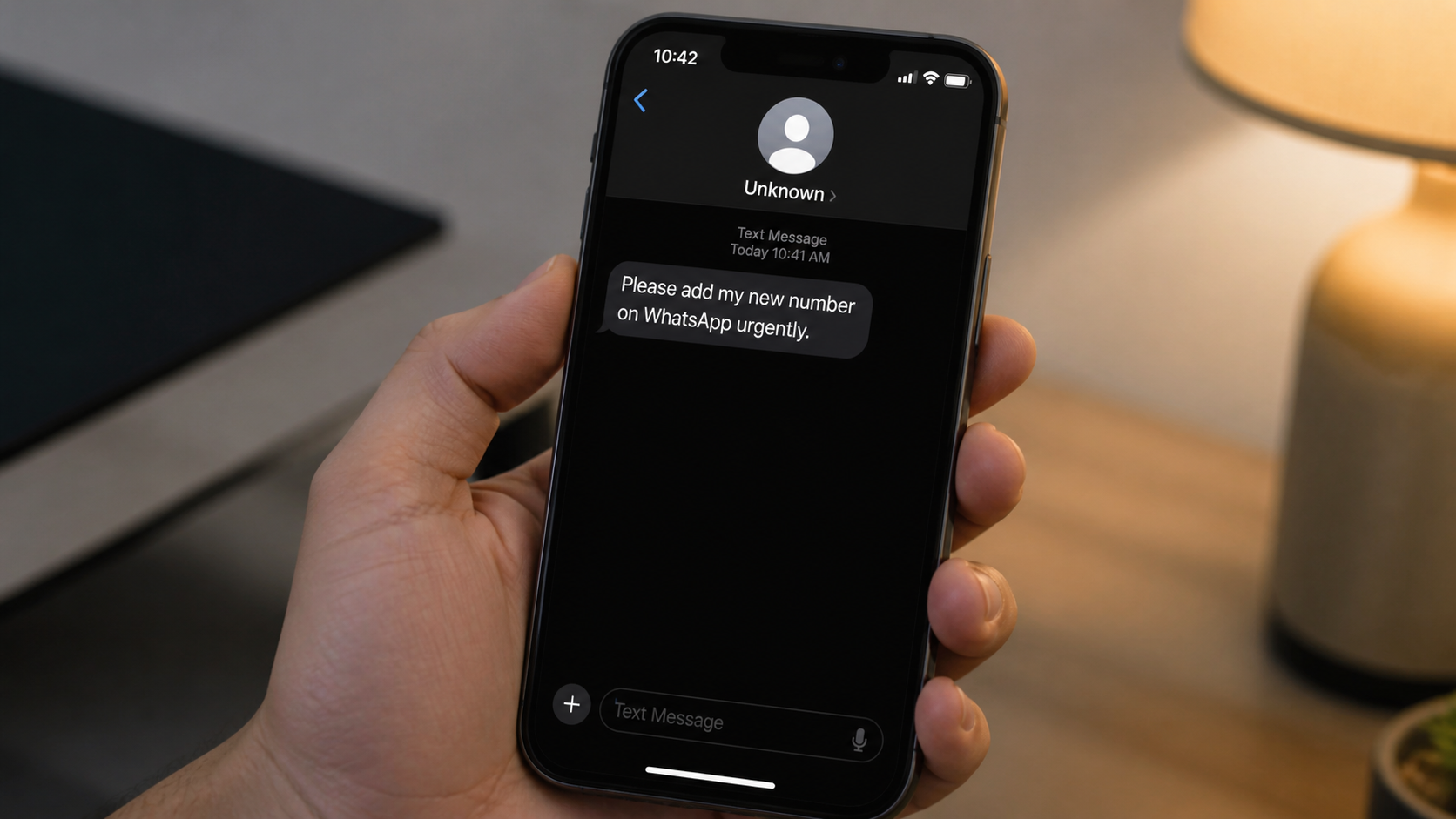
A short message asks you to save an unfamiliar number and add it on WhatsApp. There may be no link, no obvious threat, and no request for money, which makes the instruction seem harmless.
Saving the number is not the final goal. It is the first step into a conversation the scammer has carefully prepared.
Overview
The vague request is designed to make you start the conversation
The “please add my number on WhatsApp” scam begins with a robocall, SMS, social media message, or email instructing the recipient to save a number and make contact through WhatsApp. The sender may mention a job, parcel, business opportunity, old friend, family emergency, or account issue.
The first message often says very little. Curiosity encourages the target to add the contact and ask who it is, giving the criminal an active conversation and confirmation that the phone number belongs to a responsive person.
From there, the scam can become account theft, a fake job, investment fraud, romance manipulation, a family impersonation, or a request for money and personal information.
The message may arrive through several channels
A prerecorded call can tell the listener to add a number because “the recruiter cannot reach you.” A social account may claim it is a new private number, while a text may say a delivery agent needs directions.
Typical messages include:
“Please add my new number on WhatsApp urgently”
“We reviewed your résumé; contact HR on WhatsApp”
“Your package cannot be delivered until you message the courier”
“Hi Mum, I lost my phone and this is my temporary number”
“Save this business number to receive your commission”
“I sent a code to you by mistake; please forward it”
“Your account needs verification through our WhatsApp agent”
Adding a contact does not grant account access by itself
Saving a phone number alone does not hand over your WhatsApp account. The danger comes from the conversation, links, payments, permissions, and verification codes that follow.
However, responding confirms that your number is active and may reveal a profile photo, status, name, or other information depending on your privacy settings. That information helps the scammer personalize the next approach.
Why Scammers Want You to Contact Them First
Unsolicited mass messages can be blocked or filtered. When a recipient saves a number and starts a chat, the exchange can appear more like an ordinary contact between two people.
The scammer also gains a psychological advantage. Because you initiated the WhatsApp message, later replies may feel like answers to your own question rather than an intrusion.
The move separates the conversation from the platform where the original contact happened. A fake recruiter found on a job site, for example, wants to leave that site before its safety systems or moderators can review the messages.
WhatsApp’s encryption protects messages in transit, but it cannot determine whether the person on the other end is lying. A private conversation can still be fraudulent.
How the Scam Works
Step 1: A vague message or robocall creates curiosity
The opening contact avoids details that could be checked. It may only say there is an urgent matter, job offer, delivery, or personal reason to add the number.
Bulk campaigns can reach thousands of people. Anyone who follows the instruction identifies themselves as a promising target for a more time-consuming scam.
Step 2: The victim saves the number and opens a WhatsApp chat
The WhatsApp profile may use a company logo, a stolen photograph, or a familiar name. Business accounts and polished profile descriptions can also be created by criminals.
The sender may respond immediately, suggesting a prepared team or automated system. Speed and professional language are meant to reward the victim for making contact.
Step 3: The scammer selects a story that fits the response
If the victim mentions looking for work, the account becomes a recruiter. If the victim asks about a package, it becomes a courier. A friendly response can lead to an investment or relationship approach.
Some criminals already have leaked information and can mention a relative, employer, or recent purchase. Others ask casual questions that quietly collect the same details.
Step 4: Trust is built through conversation and small proofs
The account may send documents, photographs, websites, voice notes, or screenshots of successful payments. These materials are easy to fake or steal and should not replace independent verification.
In job and task scams, a small commission may be paid. In family impersonation, the sender may explain why a call is impossible. Each detail is designed to remove one natural objection.
Step 5: The real request appears
The scammer may ask for a transfer, gift card, cryptocurrency deposit, card details, identity document, or login. Another common request is the six-digit registration code sent when someone tries to register your WhatsApp number.
The code may be described as a way to verify friendship, join a group, recover a mistaken message, or confirm a job. In reality, it can authorize an account takeover.
Step 6: The victim is pressured to act before verifying
A family emergency becomes more urgent, a job slot is about to close, or an investment window expires. The criminal may insist that secrecy is necessary or warn that another person will be harmed.
Pressure narrows attention. Pausing to call a known number, visit an official site, or speak with someone you trust often breaks the scam.
Step 7: The account, money, or identity is exploited
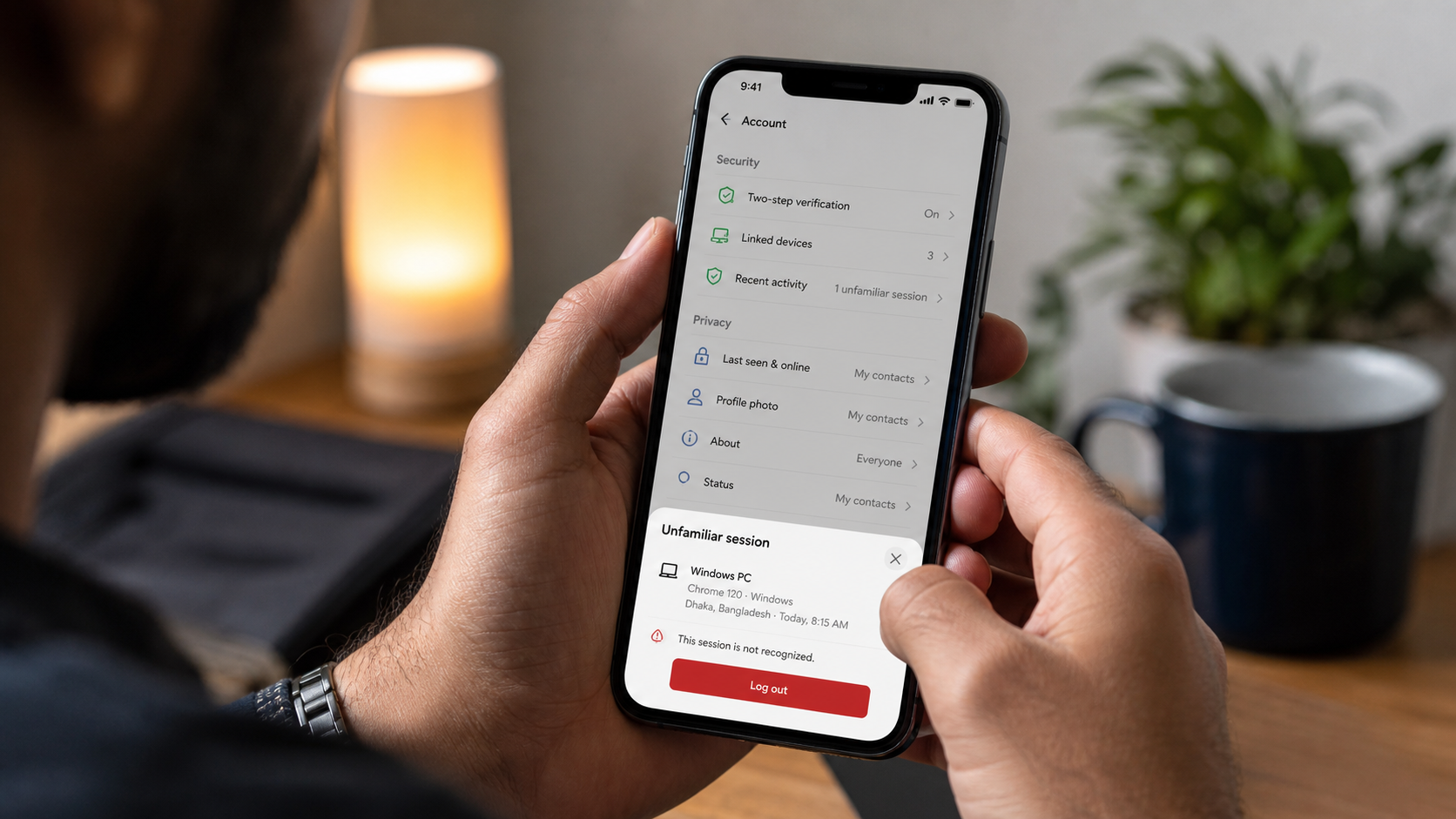
If the attacker registers your WhatsApp number, you may be logged out. The stolen account can then message your contacts with believable requests for emergency money or codes.
Financial scams continue until the victim refuses another payment. Identity information and active phone numbers may be sold for future phishing campaigns.
Company, Address, and Fulfillment Checks
A business contact should identify the legal company clearly
Ask for the business name, official website, department, and reason for contacting you. Then verify those facts outside WhatsApp using the organization’s published contact information.
A WhatsApp Business label is not a guarantee of legitimacy. Criminals can create business profiles and upload copied logos just as they create ordinary accounts.
An address must belong to the claimed operation
Search the office, warehouse, or store address independently. A residential property, mailbox, coworking location, or unrelated retailer does not prove the sender works for the named company.
For a delivery claim, compare the tracking number and address only through the courier’s official app or site. Do not provide extra identity details to make a vague shipment appear real.
The offer should exist without the private chat
A job should appear on the employer’s careers page, a bank alert should appear in the banking app, and an order should exist in your real purchase history. The chat cannot be its own evidence.
Ask whether the event makes sense based on something you actually initiated. Scammers often rely on common activities and wait for the recipient to supply the missing context.
Payments and fulfillment should follow normal channels
Legitimate organizations do not need gift cards, private crypto wallets, or personal transfers to release a parcel, salary, refund, or prize. Those methods bypass normal consumer protections.
Do not let a chat agent redirect you to a new vendor, bank account, or payment page. Confirm every change with the organization through a separately verified channel.
How to Protect Your WhatsApp Privacy Before a Scam Arrives
Set your profile photo, About information, status, and last-seen visibility to contacts or a narrower audience. A stranger who sees less personal context has fewer details to use in an impersonation story.
Restrict who can add you to groups and silence calls from unknown numbers if that fits how you use the app. These settings reduce interruptions without making every genuine contact impossible.
Review Linked Devices periodically, not only after an incident. Remove sessions you no longer use and investigate any browser or computer you do not recognize.
Protect voicemail with a strong PIN and secure your mobile-carrier account. Attackers sometimes combine messaging scams with attempts to intercept codes through voicemail or SIM takeover.
The Verification Code Account-Takeover Trick
WhatsApp sends a registration code when a phone number is being set up on a device. If you receive one without requesting it, someone may have entered your number accidentally or may be attempting to steal the account.
The official WhatsApp account-security guidance says never to share the six-digit registration code or two-step verification credential. It also recommends checking linked devices and enabling two-step verification.
A scammer cannot complete the normal registration process without access to the code sent to you. Social engineering is used to make you voluntarily hand over that final piece.
WhatsApp’s two-step verification PIN is different from the registration code. Both should remain private, and an email address added to the security settings should also be protected with a strong password and multifactor authentication.
Other Scams That Follow the Request
Fake recruitment and task jobs
A supposed recruiter offers remote work with simple online tasks. After showing fake earnings or paying a tiny commission, the platform demands deposits to unlock higher-value tasks or withdrawals.
Family and friend impersonation
The sender claims to have a new number because a phone was lost or broken. Soon, an urgent bill, replacement device, or emergency requires a transfer that supposedly cannot wait.
Investment and romance grooming
A stranger turns a wrong-number conversation into friendship, romance, or mentorship. Over time, a fake trading platform is introduced and displays profits that cannot actually be withdrawn.
Delivery and account-support phishing
The contact sends a link for a small delivery fee or security check. The page collects card details, credentials, or a one-time banking code and may add a recurring subscription.
How to Check the Person Without Taking the Bait
Do not save or message the unfamiliar number simply to discover who it is. A legitimate person can identify themselves clearly and provide a verifiable reason for contact through the original channel.
If someone claims to be a relative, call the relative’s known number or another family member. Ask a question whose answer is not available on social media.
For employers, couriers, banks, and government agencies, use contact details found on the official website or app. Do not rely on a website, phone number, or document sent in the chat.
Review WhatsApp privacy settings for profile photo, About information, status, groups, calls, and last-seen visibility. Limiting strangers’ access reduces the context available for impersonation.
What to Do if You Have Fallen Victim to This Scam
Stop responding and preserve the chat. Capture the number, profile, messages, links, payment requests, and transaction details. Then use WhatsApp’s Block and Report options.
Recover the WhatsApp account if you were logged out. Re-register your phone number through the official app, request a new code, review linked devices, and remove every device you do not recognize.
Enable or reset two-step verification. Add a secure recovery email and protect that mailbox with a unique password and multifactor authentication.
Warn your contacts. Tell friends, relatives, and coworkers through another channel that the account may have sent fraudulent requests. Ask them not to pay or share codes.
Contact financial providers immediately. Report card, bank, transfer-app, gift-card, or cryptocurrency payments as fraud. Ask about freezes, recalls, disputes, and account replacement.
Protect exposed identity and login information. Change reused passwords, notify document issuers, monitor credit, and secure mobile-carrier access if personal or SIM-related details were shared.
Report the scam and ignore recovery agents. Notify the relevant fraud authority and police when money or identity theft is involved. Do not pay anyone who promises guaranteed retrieval of stolen funds.
Scan devices that opened files or installed apps. Remove unknown downloads and use Malwarebytes to check for malicious or unwanted software before returning to banking or email.
Block malicious links that may be sent again. AdGuard can help stop known phishing domains and harmful redirects, although account recovery and payment reports still require separate action.
Is Your Device Infected? Run a Free Malware Scan
Slow performance, constant pop-ups, or strange behavior? These are classic signs of a malware infection. The fastest way to find out is to scan your device with Malwarebytes Anti-Malware Free — one of the most trusted malware removal tools available.
The free version detects and removes the most common threats, including:
Adware — the cause of those annoying pop-ups
Browser hijackers — unwanted redirects and changed homepages
Trojans and spyware — hidden programs stealing your data
Potentially unwanted programs (PUPs) — software you never asked for
👉 Select your device below — Windows, Mac, or Android — then follow the simple steps to download Malwarebytes, scan your system, and remove any threats it finds. The whole process takes about 5 minutes.
Malwarebytes for WindowsMalwarebytes for MacMalwarebytes for Android
Run a Malware Scan with Malwarebytes for Windows
Malwarebytes is one of the most popular and trusted anti-malware tools for Windows — and it’s completely free for removing infections. It catches threats that many antivirus programs miss, including adware, browser hijackers, and trojans. Follow the steps below to scan and clean your PC in just a few minutes.
Download Malwarebytes
Click the button below to download the latest version of Malwarebytes for Windows from the official source. The free version is all you need — it will scan your computer and remove adware, browser hijackers, and other malicious software at no cost.
(The link opens in a new page where your download will start)
Install Malwarebytes
When the download finishes, open your Downloads folder and double-click the MBSetup file. If Windows shows a User Account Control pop-up, click “Yes” to allow the installation.
Follow the On-Screen Prompts to Install Malwarebytes
The setup wizard will walk you through a few quick screens:
Choose where you’re installing the program — “Personal Computer” or “Work Computer” — then click Next.
Malwarebytes will now install on your device. This usually takes under a minute.
When installation is complete, the “Welcome to Malwarebytes” screen will open automatically.
On the final screen, click Open Malwarebytes to launch the program.
Enable “Scan for Rootkits”
Before scanning, turn on rootkit detection so Malwarebytes can find even the most hidden threats. Click the Settings gear icon on the left side of the screen.
In the settings menu, find “Scan for rootkits” and click the toggle so it turns blue.
Done? Click “Dashboard” in the left pane to return to the main screen.
Start the Scan
Click the blue Scan button. Malwarebytes will automatically update its virus database and start checking your computer for malware.
Wait for the Scan to Finish
The scan checks your entire system for browser hijackers and other malicious programs, so it can take several minutes. Feel free to do something else — just check back occasionally to see the progress.
Quarantine the Detected Threats
When the scan is done, you’ll see a list of everything Malwarebytes found — malware, adware, and potentially unwanted programs. Click the “Quarantine” button to remove all of them at once.
Malwarebytes will now remove the malicious files and registry entries and move them safely into quarantine.
Restart Your Computer
Some threats can only be fully removed after a reboot. If Malwarebytes asks you to restart, click Yes. Once you’re logged back in, your PC is clean and you can continue with the next steps in this guide.
When the scan finishes, click Quarantine to remove everything Malwarebytes found. That’s it — your Windows PC is now clean of trojans, adware, and other malware, and should be back to running smoothly.
If your current antivirus allowed this malicious program on your computer, you may want to consider purchasing Malwarebytes Premium to protect against these types of threats in the future. If you are still having problems with your computer after completing these instructions, then please follow one of the steps:
Malwarebytes for Mac is a free on-demand scanner that removes the malware other security software tends to miss — adware, browser hijackers, and unwanted programs included. Cleaning an infected Mac with Malwarebytes has always been completely free, and it’s our go-to recommendation. Follow the steps below to scan and clean your Mac in just a few minutes.
Download Malwarebytes for Mac
Click the button below to download the latest version of Malwarebytes for Mac.
When the download finishes, open your Downloads folder and double-click the setup file to begin the installation.
Follow the On-Screen Prompts to Install Malwarebytes
The Malwarebytes for Mac Installer will guide you through a few quick screens. Click “Continue” and keep following the prompts until the installation completes.
When the installation is complete, Malwarebytes opens to the Welcome to Malwarebytes screen. Click “Get started“.
Select “Personal Computer” or “Work Computer”
Malwarebytes will ask what type of computer you’re installing it on. Click either Personal Computer or Work Computer, whichever applies.
Start the Scan
Click the “Scan” button. Malwarebytes will automatically update its detection database and begin checking your Mac for malware.
Wait for the Scan to Finish
Malwarebytes will scan your Mac for adware, browser hijackers, and other malicious programs. This can take a few minutes, so feel free to do something else — just check back occasionally to see the progress.
Quarantine the Detected Threats
When the scan is done, you’ll see a list of everything Malwarebytes found. Click the “Quarantine” button to remove all the threats at once.
Restart Your Mac
Malwarebytes will now remove all the malicious files it found. Some threats can only be fully removed after a reboot — if Malwarebytes asks you to restart, allow it. Once you’re logged back in, your Mac is clean.
Once the scan is done, remove every threat it detected. Your Mac is now free of adware, rogue browser extensions, and other potentially harmful software.
If your current antivirus allowed a malicious program on your computer, you might want to consider purchasing the full-featured version of Malwarebytes Anti-Malware to protect against these types of threats in the future. If you are still experiencing problems while trying to remove a malicious program from your computer, please ask for help in our Mac Malware Removal Help & Support forum.
Run a Malware Scan with Malwarebytes for Android
Malwarebytes for Android automatically detects and removes dangerous threats like malware and ransomware so you don’t have to worry about your most-used device being compromised. Aggressive detection of adware and potentially unwanted programs keeps your Android phone or tablet running smooth.
Download Malwarebytes for Android.
You can download Malwarebytes for Android by clicking the link below.
In the Google Play Store, tap “Install” to install Malwarebytes for Android on your device.
When the installation process has finished, tap “Open” to begin using Malwarebytes for Android. You can also open Malwarebytes by tapping on its icon in your phone menu or home screen.
Follow the on-screen prompts to complete the setup process
When Malwarebytes will open, you will see the Malwarebytes Setup Wizard which will guide you through a series of permissions and other setup options. This is the first of two screens that explain the difference between the Premium and Free versions. Swipe this screen to continue. Tap on “Got it” to proceed to the next step. Malwarebytes for Android will now ask for a set of permissions that are required to scan your device and protect it from malware. Tap on “Give permission” to continue. Tap on “Allow” to permit Malwarebytes to access the files on your phone.
Update database and run a scan with Malwarebytes for Android
You will now be prompted to update the Malwarebytes database and run a full system scan.
Click on “Update database” to update the Malwarebytes for Android definitions to the latest version, then click on “Run full scan” to perform a system scan.
Wait for the Malwarebytes scan to complete.
Malwarebytes will now start scanning your phone for adware and other malicious apps. This process can take a few minutes, so we suggest you do something else and periodically check on the status of the scan to see when it is finished.
Click on “Remove Selected”.
When the scan has been completed, you will be presented with a screen showing the malware infections that Malwarebytes for Android has detected. To remove the malicious apps that Malwarebytes has found, tap on the “Remove Selected” button.
Restart your phone.
Malwarebytes for Android will now remove all the malicious apps that it has found. To complete the malware removal process, Malwarebytes may ask you to restart your device.
After the scan, tap Remove Selected to delete all detected threats. Your Android phone is now clean — no more malicious apps, adware, or browser redirects.
If your current antivirus allowed a malicious app on your phone, you may want to consider purchasing the full-featured version of Malwarebytes to protect against these types of threats in the future. If you are still having problems with your phone after completing these instructions, then please follow one of the steps:
Restore your phone to factory settings by going to Settings > General management > Reset > Factory data reset.
Now that your device is clean, keep it that way. Most infections start with a malicious ad or a fake download button — so blocking them at the source is your best defense.
We recommend AdGuard, which blocks malicious ads, phishing pages, and dangerous redirects before they can reach you.
Is it dangerous just to add an unknown WhatsApp number?
Saving it does not automatically surrender your account, but it can expose profile information and begin a manipulative conversation. The safest response to a vague unsolicited request is no response.
Why did someone ask me to message them first?
Your message confirms the number is active and creates a conversation that looks less unsolicited. It also moves you away from the protections of the original platform.
Can WhatsApp support ask for my registration code?
No. Never share a registration code, two-step verification PIN, or password with a caller or chat account claiming to provide support.
What if the sender knows a family member’s name?
Names and relationships can be found in social profiles, stolen contacts, and data leaks. Verify through a known phone number or another trusted relative before believing an emergency story.
Should I reply to tell the scammer I know it is fake?
No. A reply confirms that your number is monitored and can invite more pressure. Preserve evidence, report the account, and block it.
Can I recover a WhatsApp account after sharing the code?
Often, re-registering the number in the official app can restore access. Act quickly, review linked devices, enable two-step verification, and follow WhatsApp’s recovery instructions.
The Bottom Line
A request to “please add my number on WhatsApp” is not harmless when the sender refuses to identify themselves clearly. Do not initiate the chat, and never share codes, money, documents, or credentials with an unverified contact.
10 Rules to Avoid Online Scams
Here are 10 practical safety rules to help you avoid malware, online shopping scams, crypto scams, and other online fraud. Each tip includes a quick “if you already got hit” action.
Stop and verify before you click, log in, download, or pay.
Most scams win by creating urgency. Verify using a trusted method: type the website address yourself, use the official app, or call a known number (not the one in the message).
If you already clicked: close the page, do not enter passwords, and run a malware scan.
Keep your operating system, browser, and apps updated.
Updates patch security holes used by malware and malicious ads. Turn on automatic updates where possible.
If you saw a scary “update now” pop-up: close it and update only through your device settings or the official app store.
Use layered protection: antivirus plus an ad blocker.
Antivirus helps block malware. An ad blocker reduces scam redirects, phishing pages, and malvertising.
If your browser is acting weird: remove unknown extensions, reset the browser, then run a full scan.
Install apps, software, and extensions only from official sources.
Avoid cracked software, “keygens,” and random downloads. During installs, choose Custom/Advanced and decline bundled offers you do not recognize.
If you already installed something suspicious: uninstall it, restart, and scan again.
Treat links and attachments as untrusted by default.
Phishing often impersonates delivery services, banks, and popular brands. If it is unexpected, do not open attachments or log in through the message.
If you entered credentials: change the password immediately and enable 2FA.
Shop safely: research the store, then pay with protection.
Be cautious with brand-new stores, “closing sale” stories, and prices that make no sense. Prefer credit cards or PayPal for dispute options. Avoid wire transfers, gift cards, and crypto payments.
If you already paid: contact your card issuer or PayPal quickly to dispute the transaction.
Crypto rule: never pay a “fee” to withdraw or recover money.
Common patterns include fake profits, then “tax,” “gas,” or “verification” fees. Another is a “recovery agent” who demands upfront crypto.
If you already sent crypto: stop paying, save evidence (wallet addresses, TXIDs, chats), and report the scam to the platform used.
Secure your accounts with unique passwords and 2FA (start with email).
Use a password manager and unique passwords for every account. Enable 2FA using an authenticator app when possible.
If you suspect an account takeover: change passwords, sign out of all devices, and review recent logins and recovery settings.
Back up important files and keep one backup offline.
Backups protect you from ransomware and device failure. Keep at least one backup on an external drive that is not always connected.
If you suspect infection: do not connect backup drives until the system is clean.
If you think you are a victim: stop losses, document evidence, and escalate fast.
Move quickly. Speed matters for disputes, account recovery, and limiting damage.
Stop payments and contact: do not send more money or respond to the scammer.
Call your bank or card issuer: block transactions, replace the card if needed, and start a dispute or chargeback.
Secure your email first: change the email password, enable 2FA, and remove unfamiliar recovery options.
Secure other accounts: change passwords, enable 2FA, and log out of all sessions.
Scan your device: remove suspicious apps or extensions, then run a full malware scan.
Save evidence: screenshots, emails, order pages, tracking pages, wallet addresses, TXIDs, and chat logs.
Report it: to the payment provider, marketplace, social platform, exchange, or wallet service involved.
These rules are intentionally simple. Most online losses happen when decisions are rushed. Slow down, verify independently, and use payment methods and account controls that give you recourse.
Hello! I'm Lapain Epuran, your go-to source for detailed and honest product reviews. From tech gadgets to miracle cures, I provide insights to help you make informed choices. Join me as we discover what's truly worth your time and money.