

The bottle arrives looking gentle enough for a morning tea ritual, with soft greens, herbal names, and a promise that lymphatic flow will finally feel lighter. What many buyers notice next is not a medical miracle but another charge on the statement, followed by another shipment they never meant to reorder.
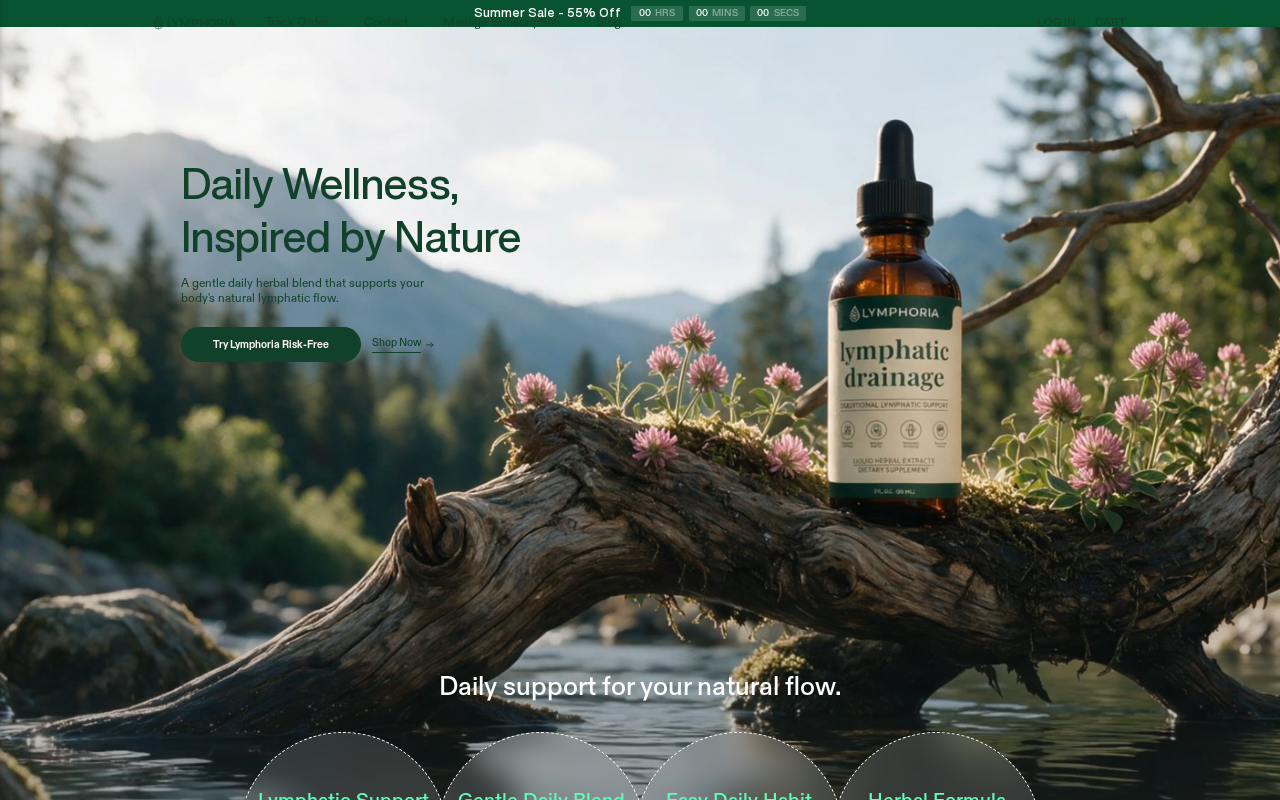
Lymphoria sells lymphatic drainage drops through its online store with Subscribe and Save pricing near €34.95 a bottle. Public complaints on Trustpilot and BBB complaint records describe unintended renewals, hard cancellations, and support threads that stall on pause language instead of a clean stop.
The herbs on the label are familiar, yet the billing pattern is what deserves the loudest warning.
Overview
Lymphoria presents liquid herbal drops as daily support for lymphatic flow, puffiness, bloating, and a lighter feeling after meals. The storefront uses the same calm aesthetic seen across a crowded category of private label lymph drops sold through social ads and Shopify style checkouts.
Listed botanicals include cleavers aerial parts, stillingia root, red clover blossom, and prickly ash bark. Those plants appear in many traditional herbal blends, yet product specific clinical proof that this bottle drains lymph, reshapes a face, or clears hardened congestion is not what the ads provide.
The sharper consumer issue sits at checkout. Subscribe and Save is framed as the best value path, with automatic replenishment every billing cycle until the customer cancels. Multiple reviewers say they believed they bought one bottle, then found recurring charges and packages they did not want.
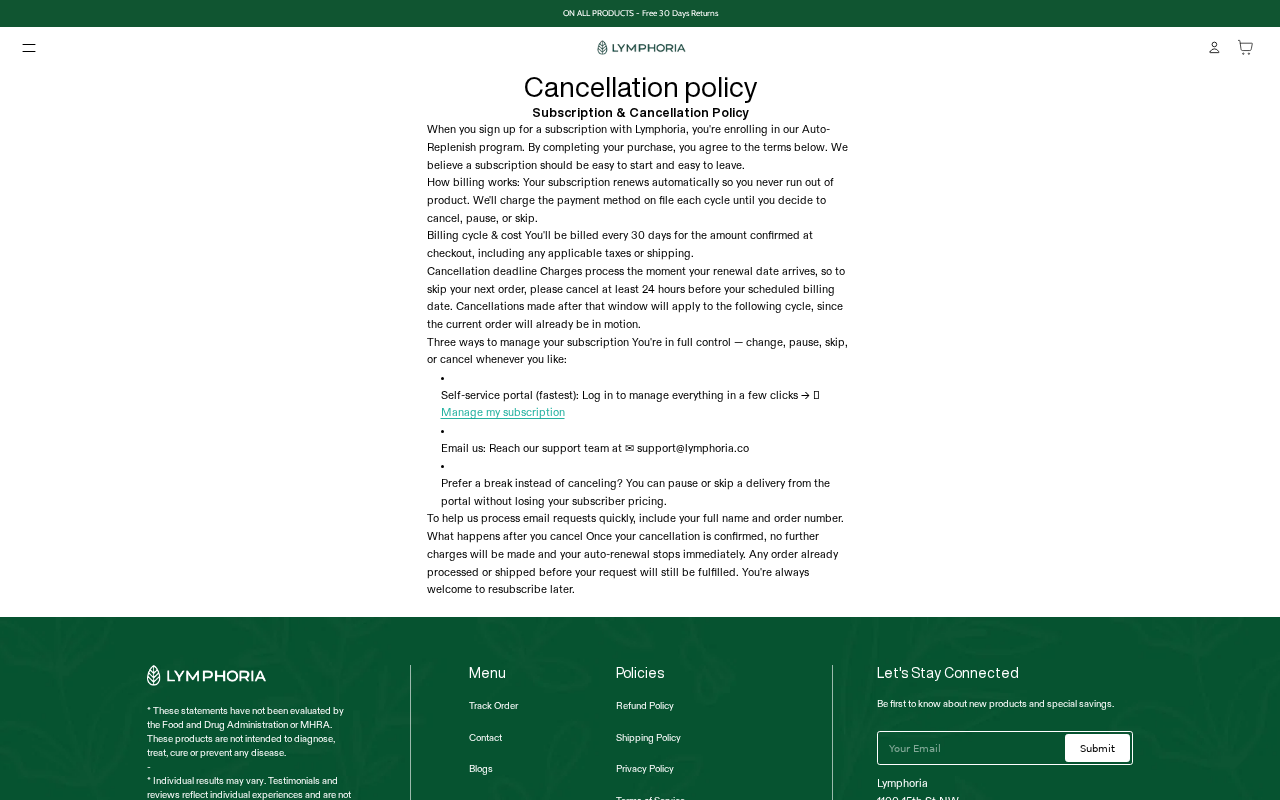
Cancellation policy pages say customers can manage, pause, skip, or cancel through a portal or by emailing support, and they warn that cancellations must land at least twenty four hours before the next billing date. Reviewers repeatedly describe email loops where pause offers replace clear cancellation confirmations.
The domain itself is young, with registration around late September 2025 according to public domain records cited across consumer warning writeups. A young store can still fulfill orders. Youth still matters when aggressive health claims and auto renew billing arrive together.
Contact pages list Looxe LLC at 1100 15th St NW in Washington, DC, including a suite style unit number on some policy pages. That street hosts large commercial and coworking style occupancy, so a printed address alone does not prove a dedicated supplement clinic sits behind the bottle. Treat that printed street line as a mailing identity rather than proof of a dedicated clinic until stronger operational transparency appears on the public record.
MalwareTips has already mapped this same lymphatic dropper category through Elavyn, Nevea, and Cleantra. Lymphoria fits the same pattern of broad lymph claims plus funnel mechanics that punish inattentive checkout choices when renewals hide behind wellness language.
How These Ads Work
1. Social ads sell de-puffing as a daily dropper habit
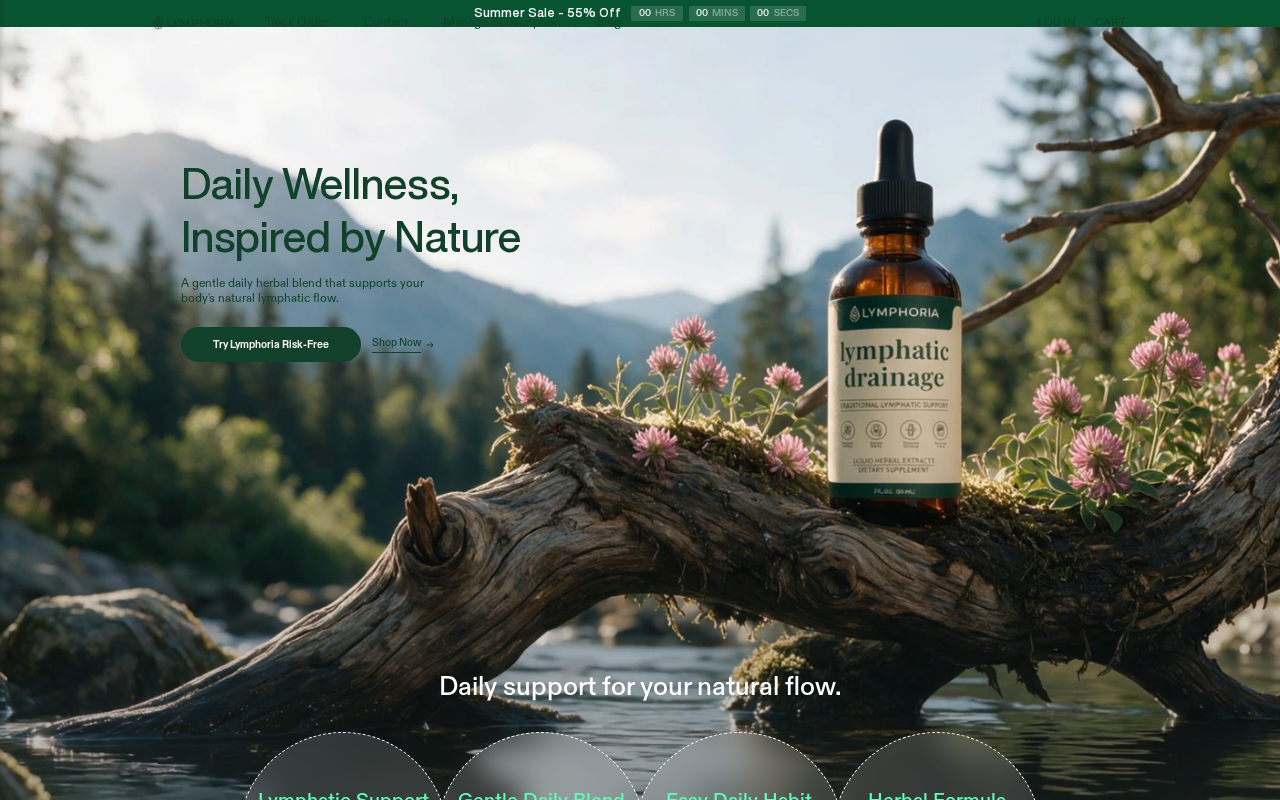
The entry point is usually a short video about facial puffiness, heavy legs, bloating, or brain fog. Soft music and nature photography make a brown dropper bottle look like a spa ritual rather than a recurring commerce product.
Viewers are told a few drops in water can restore flow, clear stagnation, and bring contours back. The emotional target is visible insecurity, which is why the same script appears across many lymph drop brands with only the logo changed.
2. The sales page turns common herbs into a drainage system
On the product story, cleavers become a high pressure rinse, stillingia becomes a demolition crew for congestion, red clover targets under skin fluid, and prickly ash acts like an internal pump. The metaphors are vivid and almost entirely unmeasured.
Shoppers rarely receive a finished product trial proving those metaphors in humans at the dose sold. They receive ingredient folklore wrapped in modern conversion design, complete with star ratings and risk free buttons.
3. Subscribe and Save is positioned as the sensible default
Checkout presents one time purchase beside a discounted subscription path marketed as best value. Timers, bundle deals such as buy two get one free, and countdown sales push buyers to decide quickly while reading very little fine print.
People in a hurry often leave Subscribe and Save selected without realizing renewals will bill about every thirty days until cancelled. That single interface choice is where many documented complaints begin, because the ad sold relief while the cart quietly defaulted into monthly billing.
4. The first unexpected renewal confirms the trap
Weeks later, a card alert or bank notification shows another Lymphoria charge that the buyer never treated as an intentional subscription. A second bottle may already be in transit while the customer is still deciding whether the first bottle did anything beyond tasting herbal.
Trustpilot reviewers describe exactly this sequence, including people who say they ordered once for a sale price and later saw larger recurring amounts tied to delivery every month. The surprise itself becomes the product experience.
5. Cancellation requests meet delay, pause offers, and ambiguity
Official policy text claims cancellation is available through a self service portal or support email. Public complaints describe unanswered mail, chatbot style replies, and staff who offer to pause or change bottle counts after the customer asked to terminate everything.
BBB complaint narratives include buyers who say they requested cancelation and refund the same day an order confirmation arrived, then spent days repeating the instruction while shipments and policy excuses continued. Even when a company eventually cancels, the labor cost to the customer is part of the harm.
6. Refund rules protect the merchant more than the impulse buy
Refund language commonly limits relief to a window such as thirty days, excludes renewals after that window, and places responsibility on the customer to cancel before the next cycle. Once a renewal posts, the path back to money can narrow quickly because the merchant can point to a policy window that already closed on the calendar.
That structure is why the marketing word risk free deserves skepticism from anyone comparing the ad promise with the real cancellation path. A guarantee that expires while a subscription is still hard to stop is not the same as an easy exit from recurring billing.
7. The health story keeps running after the billing story turns sour
Even customers who escape the subscription still confront overstated lymph claims. True lymphatic disease, lymphedema after surgery, infection related swelling, and cardiac or kidney fluid issues require clinical care rather than a dropper bottle from an ad.
Using herbal drops as a pleasant ritual is a personal choice. Treating them as drainage medicine because a sales page used plumber metaphors is how secondary harm sneaks in beside the card charges.
What The Ingredients Can And Cannot Prove
Cleavers, red clover, stillingia, and prickly ash have long histories in herbal traditions. Historical use is not a substitute for modern evidence that a specific commercial blend reduces facial puffiness in seven to ten days or reopens blocked lymphatic channels.
The storefront itself includes standard disclaimers that statements are not evaluated by the FDA or MHRA and that the product is not intended to diagnose, treat, cure, or prevent disease. Those lines sit awkwardly beside marketing that implies drainage, de-puffing, and detox style transformation.
Anyone pregnant, nursing, on medication, or managing a diagnosed fluid condition should talk with a clinician before adding concentrated herbal extracts. Plant based does not mean risk free, especially when auto renew tries to keep the bottle coming every month.
Why This Category Keeps Catching Buyers
Facial puffiness and bloating are visible, emotionally charged, and easy to photograph. That makes lymphatic drainage an almost irresistible marketing hook for any liquid herbal blend that can be poured into a dropper bottle and photographed beside greenery.
Private label suppliers can print new labels quickly, which is why Elavyn, Nevea, Cleantra, and Lymphoria can look different while telling nearly the same story. Shoppers think they found a specialized clinic formula when they have often found another coat of paint on a familiar funnel.
Subscription commerce then multiplies revenue without requiring the product to outperform a placebo ritual. If only a fraction of buyers miss the renew toggle, the merchant still captures months of charges while support teams manage cancellations as a cost center.
Regulators have spent years warning about negative option billing and hard to cancel offers. Consumer reports about Lymphoria sit inside that broader enforcement interest even when individual refunds eventually arrive after enough pressure.
How To Inspect The Checkout Before You Pay
Read the purchase type line character by character. If the cart says Subscribe and Save, deliver every so many weeks, or auto replenish, assume another charge is scheduled unless you change it to a one time purchase and confirm the change on the final review screen.
Screenshot the cart before submitting payment. Capture the price, the subscription interval, any free bottle math, and the exact button label so you can prove what the interface displayed if a renewal later appears.
Open the subscription policy and refund policy in separate tabs before you buy. Look for the cancellation deadline, whether email counts as notice, whether renewals after thirty days are nonrefundable, and which legal entity name appears on the contact page.
Compare the street address with ordinary map context. A Washington, DC commercial building can host mail receiving, coworking suites, or registered agents. That is not proof of fraud by itself, yet it should lower confidence in any story that implies a brick and mortar wellness clinic compounded your drops on site.
Search the brand name with the words subscription, cancel, and chargeback before you enter a card. Patterns in public reviews often reveal the real product experience faster than the testimonial carousel on the sales page.
Separating Billing Harm From Wellness Disappointment
Some buyers receive a bottle, dislike the taste, feel no change, and simply move on after a one time purchase. That outcome is ordinary supplement disappointment and does not by itself prove criminal fraud.
Other buyers face repeated charges after clear cancel requests, delayed confirmations, or interface designs that made subscription easy to join and hard to leave. That billing pattern is the core reason this offer belongs in a scam style consumer warning even when packages sometimes arrive.
Keep those harms distinct when you talk to a bank or regulator, and lead with unauthorized renewals, ignored cancellation, and dollar amounts. Mention overhyped lymph claims as context, not as the only injury, because card networks understand billing disputes more cleanly than botanical debates.
If the drops cause itching, swelling of the mouth, dizziness, or other allergic signs, seek urgent care and stop the product. Preserve the bottle label for the clinician and for any later complaint file.
Before you trust another lymph ad, remember that a calm bottle photo cannot cancel a recurring merchant charge for you. Only a verified one time cart, a written cancellation, or a bank block can do that work.
Keep screenshots of every billing email even after a cancellation confirmation arrives, because renewal systems sometimes fire once more before the merchant flag fully propagates.
What To Do If You Are Stuck In Lymphoria Billing
1. Freeze the billing path today. Log into any customer portal, cancel the subscription in writing, and screenshot the confirmation screen with the date visible.
2. Email a clear termination request. Write that you withdraw authorization for future charges, include your full name, order number, and account email, and ask for written confirmation that auto renew is permanently cancelled rather than paused.
3. Watch the twenty four hour cutoff. If a renewal is imminent, contact your bank the same day and ask about stop payment or recurring merchant block options while you wait for the seller reply.
4. Save the entire paper trail. Keep the ad, checkout page showing Subscribe and Save, policy pages, bank alerts, tracking emails, and every support reply. Those files matter more than memory when a dispute begins, because card networks ask for dates, screenshots, and written cancel requests rather than vague recollection.
5. Dispute unauthorized or misrepresented renewals with your issuer as soon as the paper trail is assembled. Tell your card issuer you did not intend recurring billing or that cancellation requests were ignored, then upload your timeline promptly.
6. Refuse endless pause negotiations. If support offers to skip a month or reduce bottles after you asked to cancel, repeat the cancel instruction once more in writing and escalate to your bank if charges continue.
7. Report the pattern. File complaints with the FTC at ReportFraud.ftc.gov, your state attorney general or local consumer authority, and platforms that hosted the advertisement so investigators can see repeated billing conduct.
8. Do not swallow more product to justify the charge. If you have allergic symptoms, unusual swelling, or worsening fluid retention, stop and seek medical advice rather than finishing bottles you already regret ordering.
9. Reassess the health claim separately. Even after billing stops, remember that lymph drops are not a proven treatment for lymphedema or unexplained edema, and delay in real care can cost more than any subscription.
The Bottom Line
Lymphoria is best understood as a high caution lymphatic drop offer where the primary consumer injury is recurring billing that many buyers say they never meant to join. Herbal ingredients may be real, yet the drainage narrative remains lightly evidenced and heavily stylized.
If you want botanical drops, buy once, read the cart line by line, and assume Subscribe and Save means another charge is coming. If you already got trapped, cancel in writing, involve your bank early, and treat the lymph marketing as the secondary story behind the subscription machinery.
The category will keep renaming itself across new domains and soft color palettes. The defense stays the same for every version: slow down at checkout, demand written cancel confirmation, document every charge carefully, and do not confuse a pretty dropper bottle with proven lymphatic medicine.

Reviews & discussion
0 commentsShare a firsthand experience, or ask a question.
Community reviews
Lymphoria Lymphatic Drainage Drops
Moderated reader experiences, not an editorial verdict.
Start the conversation
Have a question or something useful to share? Add the first comment.