

The pitch was hard to forget: if you had missed the rise of Bitcoin, here was another chance to get in early. Friends could join, account balances could grow, and a financial breakthrough seemed just ahead.
The OneCoin scam turned that hope into a worldwide investment disaster. Understanding the gap between the sales story and the underlying asset also matters for anyone receiving a recovery offer today.
Overview
A documented fraud, not simply a disappointing investment
OneCoin was promoted as a cryptocurrency through a large recruitment-driven sales network. Its founders included Ruja Ignatova and Karl Sebastian Greenwood. The operation began in 2014 and was based in Sofia, Bulgaria.
U.S. authorities describe more than $4 billion invested worldwide in the fraudulent cryptocurrency. Greenwood received a 20-year prison sentence in September 2023. The sentencing announcement describes fabricated valuation and mining claims, not merely losses caused by a falling market.
That distinction matters. A risky investment can lose value while still representing a real asset. OneCoin’s central problem was that investors were misled about what they were buying and how its supposed value was established.
The apparent proof came from inside the sales system
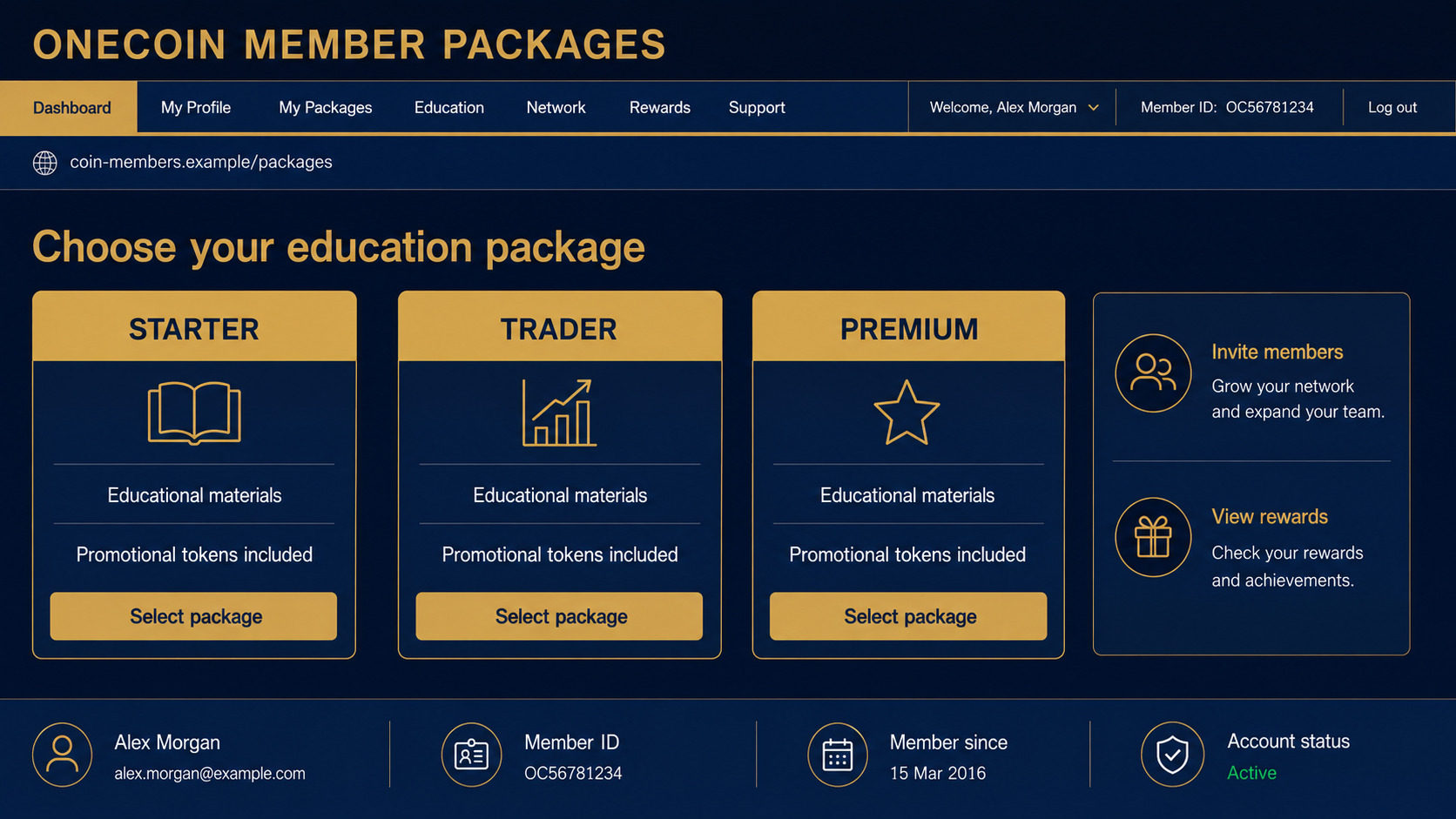
Packages, member accounts, referral commissions, and promotional events made the operation tangible. But tangible activity is not the same as independently verifiable financial value. The system selling the opportunity also supplied much of the information used to justify it.
- The hook: A chance to participate early in a cryptocurrency success story.
- The purchase: Packages associated with education and tokens presented as part of obtaining OneCoin.
- The distribution: Members received incentives to recruit additional purchasers.
- The credibility problem: Internal claims substituted for independent confirmation of the asset and its market.
- The continuing risk: Former investors can be targeted again through supposed recovery services.
There is a real compensation process, with limits
The Justice Department announced a remission process in April 2026. This is a process for distributing recovered assets to eligible victims, not evidence that the original coins have acquired real value.
As checked on September 5, 2026, the official remission website says the June 30, 2026 deadline has passed and the filing portal is closed. It directs people still wishing to file to its published email route. That instruction does not guarantee late acceptance or payment.
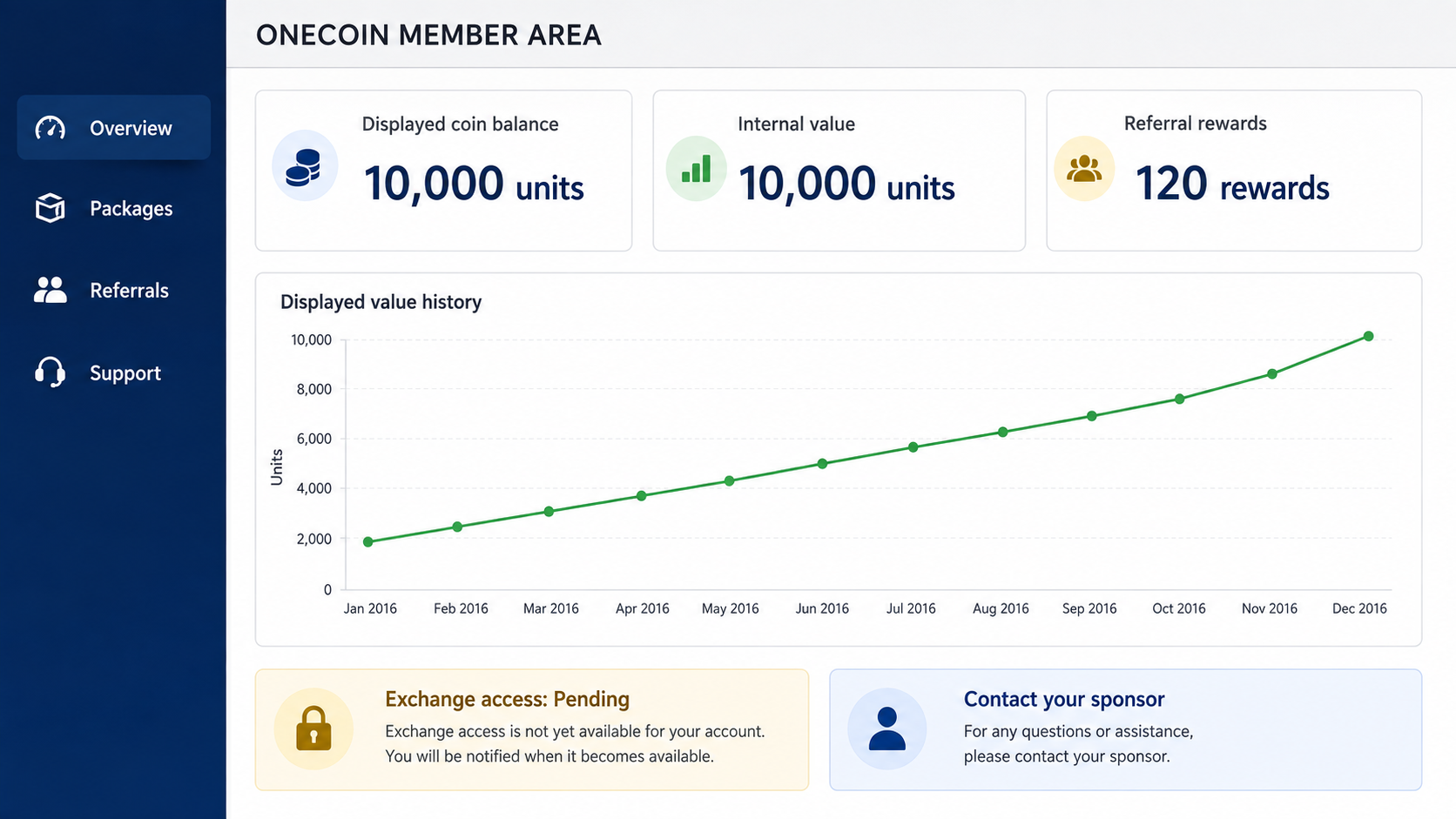
The images here are illustrative historical-style reconstructions, not authentic member records. Their layouts, names, and example figures are fictional. They help explain the sales and dashboard concepts without presenting invented screenshots as evidence.
Why the Promise Reached Beyond Cryptocurrency Enthusiasts
A difficult financial idea becomes easier to accept when someone you know explains it. A friend might have attended an event, bought a package, and watched their displayed balance rise. Their enthusiasm can be sincere even when the underlying opportunity is fraudulent.
This creates a painful social dimension. Questioning the investment may feel like questioning a family member’s judgment or honesty. People can delay asking practical questions because they do not want to embarrass someone who introduced them.
Recruitment rewards complicate that relationship further. A person recommending an opportunity may benefit when somebody joins. Their confidence and incentive should be considered separately from the evidence supporting the asset.
The right questions are ordinary ones: What do I own? Who sets its price? Can its existence be checked independently? Who would buy it from me? A complicated explanation should eventually answer those questions, not make them seem disloyal.
How the OneCoin Scam Works
Step 1: The pitch turns a missed opportunity into a new opening
OneCoin’s promotion drew on public awareness of Bitcoin’s growth. The FBI’s account of the case describes a pitch aimed at people who felt they had missed an earlier cryptocurrency opportunity.
That comparison did persuasive work before an investor examined the technology. The question became whether to join early enough, rather than whether the new opportunity had the properties that made the comparison meaningful.
A familiar success story does not transfer its credibility to a different product. Two offerings can share financial vocabulary while having entirely different ownership, market, and verification arrangements.
Step 2: Packages make participation feel like a concrete purchase
The operation sold packages connected with education and tokens. The package format gave members something to select and purchase, making participation resemble a structured program rather than an unexplained transfer of money.
Separating an educational product from a financial promise is essential. Materials or training can exist without validating a claim that accompanying tokens represent a valuable, transferable asset.
Before paying for any similar arrangement, ask what portion of the decision rests on the education itself. If the real reason for buying is promised investment growth, a label describing the purchase as education does not answer the financial questions.
Step 3: Technical language supplies an explanation few can check
Mining and blockchain terminology gave the promotion a technical foundation in the eyes of prospective buyers. Prosecutors described OneCoin’s supposed mining process as fabricated. Investors were not receiving the independently operating system they had been led to expect.
The broader warning is not that every unfamiliar technical term signals fraud. It is that an explanation should remain testable. A diagram, internal dashboard, or confident presentation cannot substitute for the thing it claims to describe.
When all verification routes are controlled by the seller, ask what evidence exists outside that system. Referring you back to another sales presentation is not independent confirmation.
Step 4: Rising displayed value reinforces the original decision
U.S. authorities found that OneCoin set its own purported value rather than deriving it from genuine supply and demand. The display could therefore reassure members without proving what an independent buyer would pay.
A balance is an assertion by whoever controls the interface. It becomes meaningful only when its relationship to a real asset, enforceable right, or recoverable funds is established. A neat chart cannot make that relationship exist.
For an investor, the practical distinction is between seeing a number and being able to substantiate it. Do not treat an internal increase as income available to spend or borrow against.
Step 5: Recruitment spreads the story through trusted relationships
Members were encouraged through commissions to bring in additional purchasers. The recruitment structure helped the scheme expand across social networks and countries. A person could encounter the same opportunity repeatedly through different acquaintances.
Repeated exposure can feel like independent confirmation even when every recommendation traces back to the same source. A large community may be repeating one unsupported claim rather than contributing separate evidence.
Distinguish the recommendation from the recommender. Someone who believed the pitch can also be a victim. Assess their actions and any disclosed financial interest without assuming that every participant understood the fraud.
Step 6: The promise of future usefulness defers the hardest questions
A supposed future exchange, adoption milestone, or wider market can become a reason to postpone checking practical value. The investor is asked to focus on what may happen next rather than what can be demonstrated now.
Future plans are not the same as present liquidity. Ask whether access to your money depends on a promise by the same party that took it. If it does, a growing internal number should not be treated as proof of a realizable gain.
This is an analytical lesson from the case, not a claim that every victim encountered an identical withdrawal screen. Preserve the particular promises and restrictions you received when documenting your own experience.
Step 7: The aftermath creates an opening for recovery impostors
After a major fraud, affected investors may search for administrators, lawyers, or tracing services. A recovery scam can exploit that need by claiming that the lost balance is waiting behind a fee, tax payment, or wallet-verification step.
The DOJ’s remission announcement says neither the department nor its administrator will ask for payment to participate. Verify a recovery message through the official case route before sharing information.
A genuine compensation program does not make every message mentioning it genuine. A fraudster can copy a real case number and deadline just as easily as a commercial logo.
Company, Address, and Fulfillment Checks
A registered company does not validate an asset
OneCoin involved identifiable people and companies. This was not simply a website with no name behind it. A business registration establishes certain administrative facts; it does not certify that every claim made by the business is true.
For any investment, verify the specific offering and the permissions relevant to it. Do not substitute the existence of a company for evidence about custody, pricing, or the asset itself.
An office or event does not prove financial backing
Physical presence can reassure buyers because it feels harder to fake than a message. Yet an office, conference, or professional presentation says little about whether the promised financial product exists as described.
Do not visit or confront people at historic addresses while trying to recover losses. Use the official case contacts and provide records that investigators or administrators can evaluate.
A sponsor is not an independent support authority
The person who introduced an investment may sincerely want to help. They may also have an incentive to preserve confidence in it. Treat their advice separately from instructions issued by a verified administrator or authority.
Keep support replies and recruiter messages because they can document promises. Do not let an old sponsor redirect you to a new paid recovery scheme without independent confirmation.
Trace actual payments and receipts
For a digital investment, fulfillment is not a parcel. It concerns what was actually delivered in return for the payment and whether the claimed asset can be independently verified.
When documenting a loss, prioritize records of money paid and money actually returned. A displayed portfolio balance or promotional estimate is not automatically the amount eligible for compensation.
Checking OneCoin Compensation Information in 2026
Start from the DOJ’s announcement and follow its link to the administrator. This establishes an independent route to the program. Do not begin with an unsolicited recovery message, sponsored search result, or social-media referral.
The administrator’s FAQ explains the program and documentation requirements. Eligibility involves qualifying purchases and actual net loss; readers should use the published criteria rather than assume that every historical account qualifies.
- Check the current deadline and filing instructions directly with the administrator.
- Use the official contact route for questions about a late submission.
- Keep copies of everything submitted and any acknowledgment received.
- Do not pay to activate a claim or release a supposedly guaranteed award.
A submission is a request for consideration, not a promise of a particular payment. The amount recovered from criminal assets and the rules of distribution matter. Do not make financial commitments based on an unconfirmed recovery estimate.
What to Do if You Have Fallen Victim to This Scam
- Stop new payments tied to the old investment.
Do not buy an upgrade, migration package, release certificate, or replacement token merely because someone says it will restore the original value. Verify any current proposal independently.
Keep messages making those claims. A new payment creates a new exposure; it does not become safer because it is framed as fixing an earlier loss.
- Build a factual transaction record.
Gather bank transfers, receipts, member identifiers, purchase dates, recruiter details, and records of any money returned. Separate actual payments from values shown inside a member dashboard.
Store copies in a secure place. Do not alter documents to make an application fit a claimed eligibility rule. Accurate records are more useful than an inflated loss estimate.
- Check the official remission route.
Follow the administrator link from the DOJ announcement. As of the date checked for this article, the original filing deadline has passed; use the administrator’s published contact instructions if you still wish to seek consideration.
Ask directly about the status of your particular circumstances. Do not interpret the availability of an email address as a guarantee that a late petition will be accepted.
- Report recent recovery-scam payments promptly.
If you recently paid someone claiming to recover OneCoin funds, contact the bank, payment provider, or exchange involved. Supply the transaction identifiers and recipient information and ask what action remains possible.
Recovery options depend on the payment method and timing. An institution may be able to investigate or attempt an intervention, but nobody should promise that the transfer can certainly be reversed.
- Secure accounts and documents shared with impostors.
Change any exposed reused passwords on real services. If you gave an unverified recovery agent identification or account records, list the information involved and seek appropriate identity-theft guidance.
Never provide a wallet recovery phrase, private key, or banking security code to establish a claim. Those secrets authorize access; they are not ordinary evidence of an investment loss.
- Check devices used for suspicious recovery tools.
If someone persuaded you to install a tracing program or remote-access application, stop using the device for financial activity until it has been assessed. Use another trusted device for urgent account protection.
Malwarebytes can help scan for malicious or unwanted software introduced during that contact. A scan cannot convert a worthless investment into funds or authenticate a remission claim.
- Use official reporting and legal help where necessary.
Report suspected online recovery fraud through IC3 in the U.S. or the appropriate authority in your country. Keep the original OneCoin records separate from a later recovery incident.
If you need individualized legal advice, verify the professional through an independent licensing or regulatory route. A person quoting a real court case in a message has not proved their authority to act for you.
- Reduce repeat exposure without trusting a filter alone.
AdGuard can help reduce scam-ad and known malicious-site encounters while researching recovery. It cannot determine entitlement to compensation or verify a person contacting you privately.
Discuss major decisions with someone outside the original sales network. It is understandable to want the loss resolved quickly, but urgency is exactly what another impostor may try to use.
Frequently Asked Questions
Was OneCoin just a cryptocurrency that fell in price?
No. The documented case involves fraudulent claims about the asset and its operation, not simply market volatility. A displayed internal valuation was not proof that investors owned something worth that amount on an independent market.
Why did genuine people recommend it to friends?
Some participants believed the sales claims and expected to benefit. Recruitment incentives also encouraged recommendations. Do not assume every person who joined understood the fraud, but do examine any financial incentive behind advice to invest more.
Can an old member balance establish my loss?
It can be part of your records, but it is not automatically a measure of eligible loss. Preserve proof of actual payments and returns. Follow the official administrator’s rules for documenting and calculating a claim.
Is the OneCoin remission website legitimate?
The DOJ links to onecoinremission.com and identifies Kroll Settlement Administration as the administrator. Reach it through that official announcement. An unrelated site or message using the same case name does not inherit that authorization.
Can I still submit after June 30, 2026?
At the September 5, 2026 check, the official site said the filing portal was closed and directed people still wishing to file to its published email route. Contact the administrator directly; late acceptance and compensation are not guaranteed.
Do I have to pay a fee to receive compensation?
The DOJ says participation in the remission process does not require payment to the department or administrator. Treat demands for release taxes, activation fees, or wallet deposits as reasons to stop and verify through the official program.
The Bottom Line
The OneCoin scam shows why a growing dashboard balance, enthusiastic community, and impressive presentation cannot replace independent evidence about an investment. The financial story was persuasive; the underlying claims did not hold up.
For affected investors, the practical next step is accurate documentation and verified official guidance. Check current remission instructions, keep expectations realistic, and do not let the hope of recovery become the reason for another payment to an impostor.

Join the discussion
0 commentsShare your experience or ask a question about this article.
Discussion
Start the conversation
Have a question or something useful to share? Add the first comment.