

A beautiful corset dress appears between ordinary social posts, marked down so heavily that waiting feels risky. The photographs look expensive, the reviews glow, and a countdown says the last few sizes could disappear before you finish thinking.
The trouble often begins after that polished first impression. A corset dress scam can lead to a missing order, a poor imitation, recurring charges, or a checkout designed mainly to collect card and personal information.
Overview
What shoppers are being shown
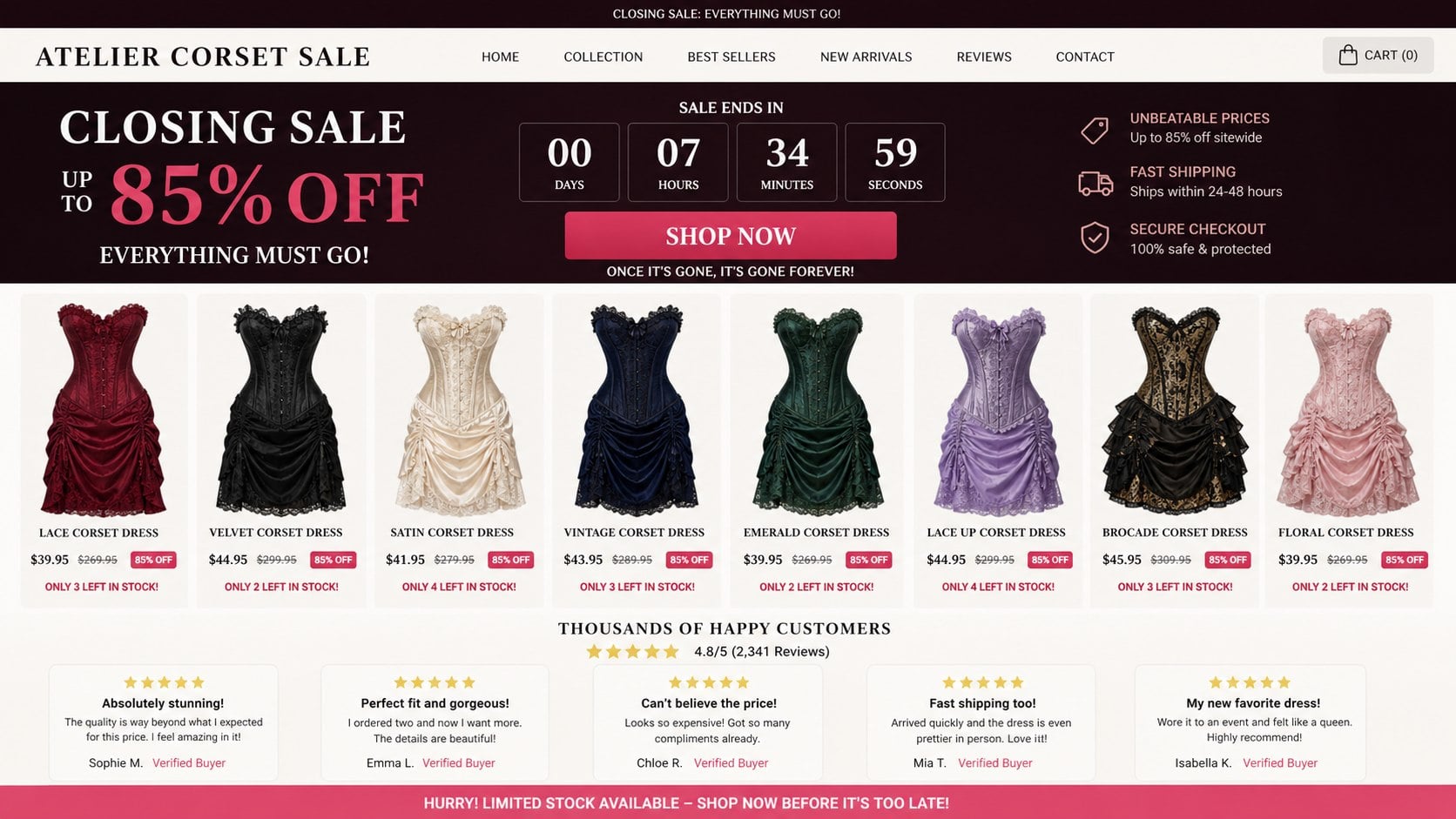
The ads usually feature dramatic corset-style gowns, fitted mini dresses, or formal pieces that resemble designs sold by established fashion labels. The advertised store may claim it is closing, clearing a warehouse, celebrating an anniversary, or selling direct from the manufacturer.
Prices are often 70% to 90% below what comparable garments cost. Product images, size charts, and review photographs may be copied from designers, influencers, marketplaces, or earlier scam stores.
- A “today only” closing or liquidation sale
- Designer-looking dresses priced below basic manufacturing cost
- Countdowns and low-stock messages on every product
- Hundreds of perfect reviews with vague wording
- No verifiable company behind the storefront
What may arrive after an order
Some buyers receive nothing. Others get a thin, poorly cut garment that barely resembles the photographs. Fabric, boning, lining, fasteners, color, length, and sizing can all differ because the seller used images of a premium product to market a cheap substitute.
Return requests may be ignored or answered with a demand to ship the item internationally at the buyer’s expense. The seller may offer a small refund only if the customer keeps the unusable dress.
Why the risk extends beyond one bad purchase
A fake checkout can collect the shopper’s name, address, phone number, email, and card details. That information may be used for unauthorized transactions, phishing, account attacks, or future scams tailored to the original order.
Some checkouts add shipping protection, a membership, or a trial subscription using a preselected box or faint disclosure. The first charge may look correct while a later recurring charge appears under an unfamiliar billing name.
How the Corset Dress Scam Works
Step 1: A visual social media ad creates desire
The campaign starts with a short video or polished image showing a detailed dress moving beautifully under studio lighting. The content is chosen to stop scrolling, not to prove that the advertiser owns or can supply the garment.
Scammers frequently copy material that already performed well for a designer or creator. Cropping removes a watermark, while new text adds an extreme discount and a link to an unrelated store.
The ad may target people who recently searched for wedding guest outfits, prom dresses, partywear, or a particular fashion label. Familiarity makes the offer feel like a timely recommendation rather than an unsolicited pitch.
Step 2: The landing page imitates a real boutique
The link opens a storefront with coordinated colors, product collections, size selectors, trust badges, and customer reviews. Modern shop templates make it easy to assemble a professional-looking site quickly.
A convincing appearance does not reveal who operates the shop. The domain may have been registered recently, while the About page describes years of experience in generic language copied from another business.
Contact details are often limited to a form or free email address. A street address may lead to a residence, mailbox, unrelated company, or large office building with no identifiable tenant.
Step 3: Artificial urgency prevents comparison shopping
Every product seems to have only two or three units left. A countdown resets when the page is refreshed, pop-ups claim other shoppers are buying, and the cart expires within minutes.
These elements are designed to move the buyer from admiration to payment before there is time to reverse-search the photos, inspect the domain, read independent reviews, or compare the garment with the original design.
A permanent “closing sale” is especially revealing. Search the store name and look at archived or cached results. If the same final-day message has appeared for months, the deadline is a sales device.
Step 4: The checkout captures money and personal data
The checkout requests shipping and card information, sometimes on a different domain from the store. A padlock in the browser only means the connection is encrypted; it does not prove that the merchant is honest.
Extra costs may appear late in the process. Shipping, insurance, priority handling, membership, or currency conversion can turn the advertised bargain into a much larger charge.
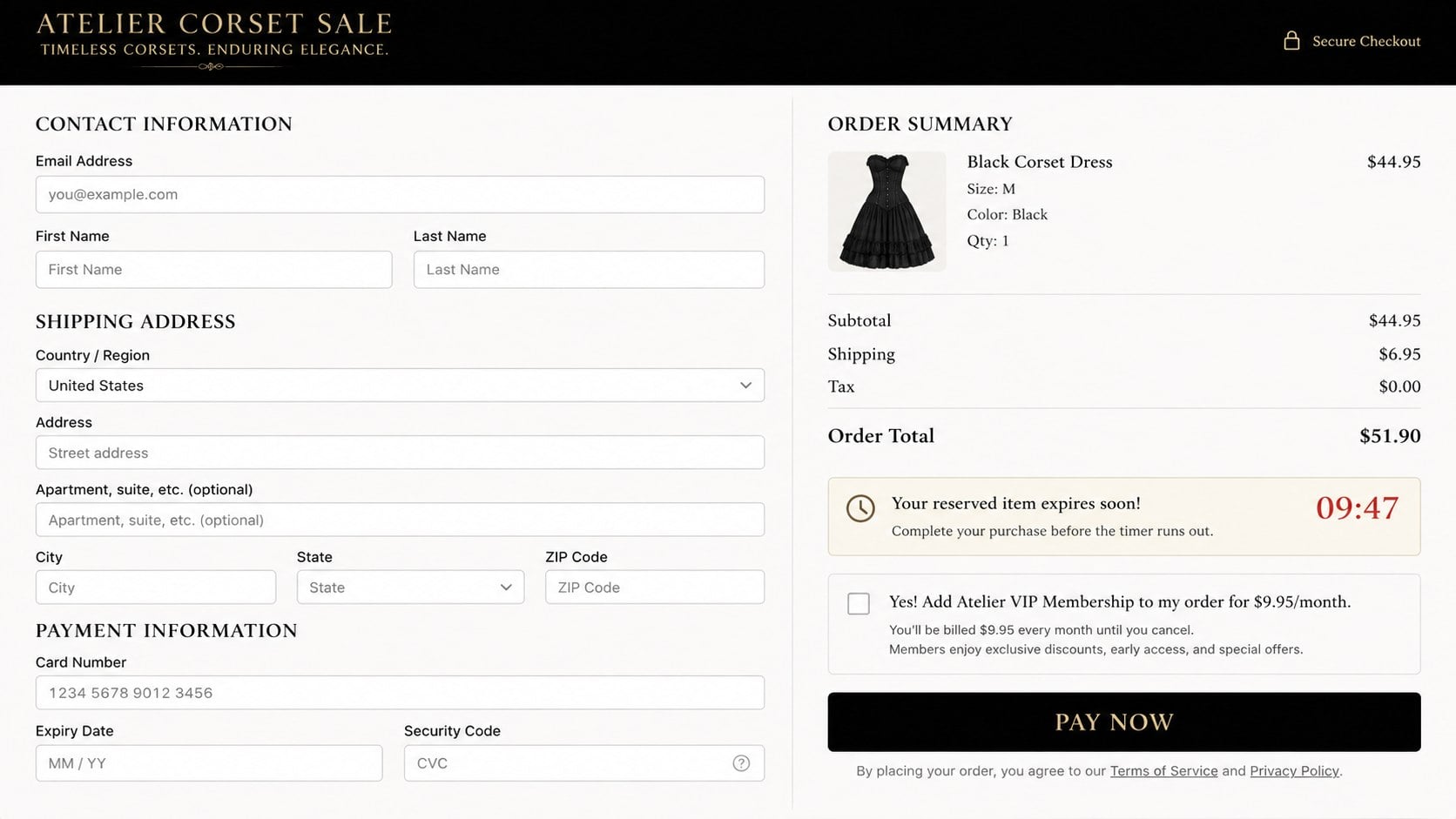
If the payment fails, the page may ask the buyer to try another card. Each attempt can expose an additional account, even when no successful order confirmation appears.
Step 5: Fulfillment creates delay and confusion
A tracking number may be issued quickly but show only that a label was created. Other numbers track a small parcel, travel to the wrong area, or belong to a shipment unrelated to the customer’s address.
Slow replies encourage the buyer to wait beyond the card issuer’s dispute window. Support may blame customs, weather, seasonal demand, or an incomplete address while promising that the package is nearly there.
If a garment arrives, the difference from the advertisement can be framed as a minor color or sizing variation. The seller may demand extensive photographs, packaging evidence, and repeated forms before considering a return.
Step 6: The storefront disappears or changes names
Once complaints accumulate, the site may close. The same product images, policies, and template can reappear under a new domain and brand name within days.
Customers who supplied contact information may continue receiving fashion promotions from related stores. A later message could claim to offer a refund but lead to another phishing form or fee request.
This rotation is why a long list of positive reviews on the seller’s own page means little. Independent history tied to the legal company, address, domain, and payment descriptor matters more.
How to Spot a Fake Corset Dress Store
Reverse-search the product images
Use Google Lens or another reverse-image tool on several product photographs. Finding the same image on an established designer’s website at a far higher price strongly suggests the discount seller did not create the content.
Check small details such as room backgrounds, model poses, garment names, and review photos. A fraudulent catalog often combines images from several brands that do not share the same styling or photography.
Read the policies as carefully as the product page
Look for contradictions in company names, return addresses, governing law, shipping times, and contact email domains. Copied policies may mention another shop that the operator forgot to replace.
Be cautious when returns require prior approval but no working support channel exists. A policy is useful only when a real company can be reached and the stated terms can be enforced.
Test the urgency claims
Open the page in a private window or return later. A timer that restarts, inventory that never changes, or the same recent-purchase pop-up with different names indicates that the activity is simulated.
Legitimate shops can run sales and low-stock alerts. The concern is the combination of permanent urgency, extraordinary prices, copied content, and a missing business identity.
Inspect the payment options
Avoid stores that demand cryptocurrency, wire transfers, gift cards, or payment through a personal account. Those methods offer little recourse and are unusual for ordinary fashion retail.
A credit card generally provides stronger dispute rights than a debit card. Do not let a small additional discount persuade you to use a payment method that removes protection.
Company, Address, and Fulfillment Checks
Identify the legal company
Find the company name in the terms, privacy policy, checkout, and order confirmation. Compare those locations. Different names suggest the storefront was assembled from reused material or routes payments through an unrelated entity.
Search official corporate records where the business claims to operate. Incorporation alone is not proof of honest trading, but a complete absence of the stated company is a meaningful warning.
Verify the address and contact channels
Search the address independently and confirm that the business is listed there. Look for a unit number, public telephone number, and email using the same domain as the store.
Send a practical question before ordering, such as where returns are processed or whether a pictured feature is sewn or printed. A vague automated response reveals more than a polished FAQ.
Check the domain and store history
A newly registered domain is not automatically fraudulent, but it cannot support claims of years in business. Search the domain, store name, email, address, and product text separately.
Reviews published before the domain existed, identical praise across unrelated sites, or sudden bursts of perfect ratings should be treated cautiously. Give more weight to detailed independent reports with photographs and dates.
Confirm shipping and return reality
Look for the origin country, processing time, carrier, return destination, restocking fee, and who pays international postage. “Fast worldwide shipping” is not a useful fulfillment commitment.
Before paying, save the product page, measurements, material description, delivery estimate, and refund policy. Those records can support a dispute when the page later changes or disappears.
What to Do if You Have Fallen Victim to This Scam
- Contact your card issuer now. Explain whether the order never arrived, the item was materially different, or the charge was unauthorized. Ask about a dispute, replacement card, and recurring-payment block.
- Do not pay a refund or customs fee. A seller does not need another payment to return your money. Treat unexpected release charges and refund verification links as follow-up scams.
- Save evidence before the site vanishes. Capture the ad, product page, checkout, policies, confirmation, payment descriptor, messages, tracking history, and photographs of anything received.
- Send one clear written demand. State the promised item, what happened, the remedy requested, and a reasonable response deadline. Keep the message factual for the payment dispute record.
- Change any reused password. If the store asked you to create an account, replace that password everywhere else it was used and enable multi-factor authentication on your email.
- Scan for unwanted software. If the site pushed an app, browser extension, or download, uninstall it and run a complete Malwarebytes scan.
- Stop malicious ads and notifications. Revoke the site’s browser notification permission. AdGuard can help block known malicious advertising, phishing destinations, and disruptive redirects.
- Monitor statements and messages. Watch for small test charges, unfamiliar subscriptions, and phishing that references your order. A replacement card may be appropriate if card details were exposed.
- Report the ad and store. Report the seller to the social platform, payment processor, domain provider when appropriate, and the FTC at ReportFraud.ftc.gov.
Buying a Corset Dress Safely Online
Start from the designer’s official site or a retailer you can independently identify, rather than following a social ad. If a promotion names a brand, navigate to that brand’s known domain and look for the same sale.
The FTC’s online shopping guidance recommends researching unfamiliar sellers and treating unusually low prices as a warning. That pause is especially useful when a social ad claims an expensive garment has suddenly become a bargain.
Compare construction details. Real corset garments may describe boning, lining, fabric composition, closures, cup structure, care instructions, and garment measurements. A fake listing often relies on dramatic pictures while giving only a generic size chart.
Read independent reviews for fit and returns, not just star ratings. Useful reviews mention height, measurements, ordered size, fabric, delivery time, and how support handled a problem.
Finally, leave the cart open and return later. A legitimate buying decision survives a pause. A deal that only makes sense while a fake timer is running is not a deal worth taking.
Frequently Asked Questions
Are all cheap corset dresses scams?
No. Lower-cost garments exist, but the listing should use its own accurate photos and materials description. The scam appears when a seller misrepresents the product, hides its identity, or takes payment without reliable fulfillment.
Why does the dress look different from the advertisement?
The seller may have copied photographs of a premium garment and shipped a mass-produced imitation. Lighting cannot explain major differences in fabric, structure, trim, length, or construction.
Can a store legally refuse every return?
Return rights vary by location and circumstances, but a policy does not erase card-dispute rights for unauthorized charges, nondelivery, or material misrepresentation. Ask your issuer promptly.
Does HTTPS mean the fashion store is legitimate?
No. HTTPS encrypts traffic between the browser and website. Scam stores can obtain certificates easily, so the padlock does not verify the merchant or its products.
Should I ship a poor-quality dress back overseas?
Speak with your payment provider first. International tracked return postage may exceed the item’s value, and a dishonest seller may deny receipt. Preserve the seller’s instructions and all tracking if you return it.
What is the safest way to pay for a dress online?
A credit card usually offers stronger dispute options than debit, wire transfers, gift cards, or cryptocurrency. Whatever method you use, confirm the merchant independently and save the offer before paying.
The Bottom Line
The corset dress scam uses desire, copied fashion imagery, and artificial scarcity to make an unknown store feel irresistible. The result may be no delivery, a worthless imitation, hidden charges, or exposed payment information.
Pause before checkout. Reverse-search the pictures, verify the company and return address, ignore resettable countdowns, and choose a payment method with real recourse. A trustworthy dress seller will still make sense after the timer reaches zero.








