

A sharp suit, leather shoes, or a fragrance marked 80% off can make a fake luxury outlet feel like a lucky discovery. The page may carry familiar colors and product photography, while a social ad insists that a warehouse clearance ends tonight.
That familiarity is precisely what a Hugo Boss website scam exploits. The fraud is not connected to the real fashion company; it borrows the brand’s reputation long enough to capture an order, card details, or both.
Overview
What a fake Hugo Boss website looks like
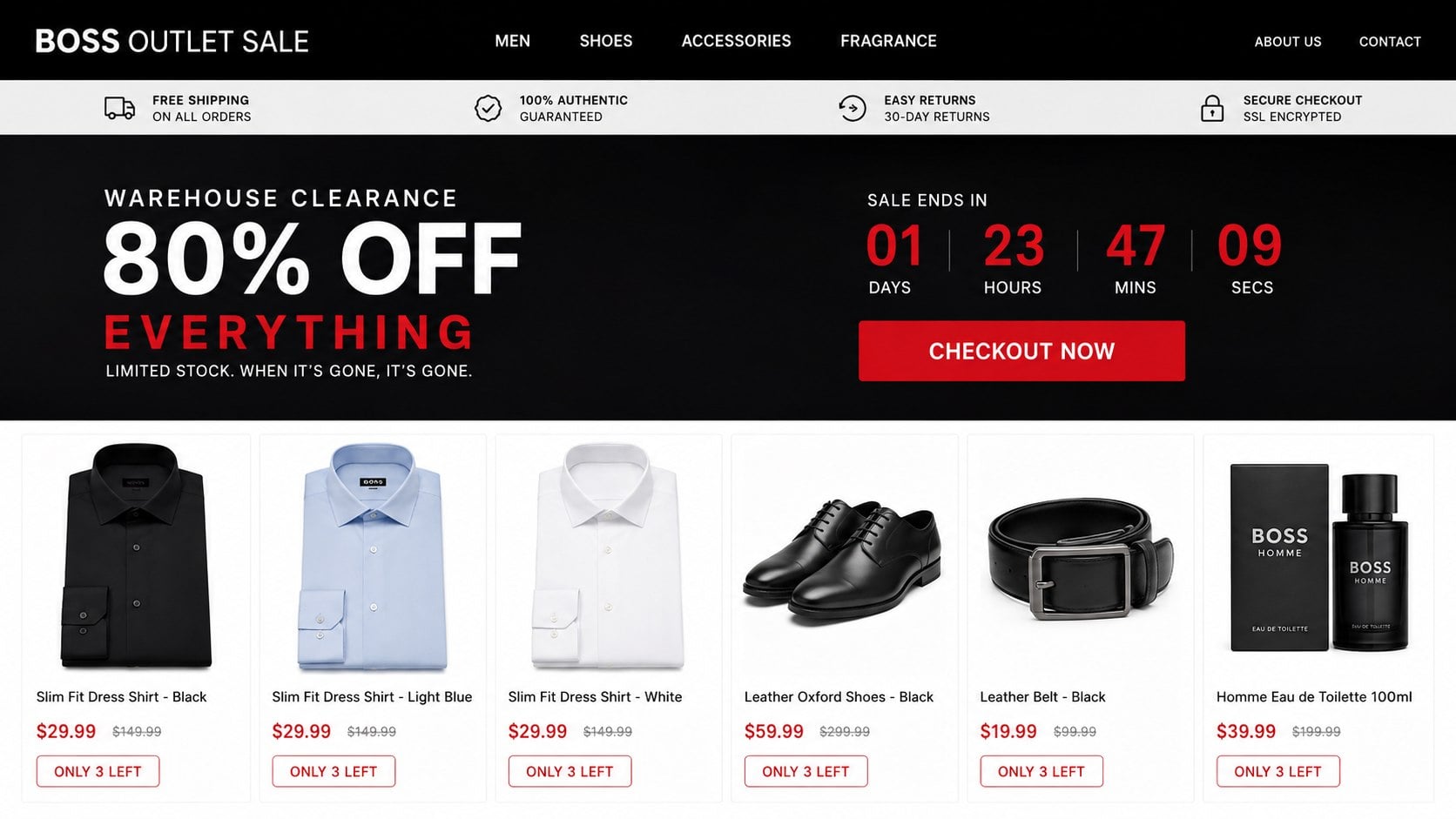
The fraudulent store may imitate a luxury outlet with black-and-white styling, neat product grids, official-looking category names, and a logo or wordmark copied from the brand. The domain often combines the brand name with words such as outlet, clearance, sale, shop, or factory.
Scammers can copy photographs, descriptions, size information, and policy text from legitimate retailers. A clean design is therefore not evidence that the operator is authorized to sell genuine merchandise.
- Brand-name products discounted by 70% or 80%
- A domain that is not the official brand domain
- A permanent warehouse, anniversary, or closing sale
- Missing company identity and vague contact details
- Card collection followed by weak or nonexistent support
What the official brand says about counterfeit sellers
HUGO BOSS states on its official anti-counterfeiting page that fraudsters create networks of domains containing its trademarks, imitate its official website, and advertise through social media and marketplaces while claiming their products are genuine.
The company identifies extreme discounts, anonymous sellers, unclear addresses, weak designs, and unsupported claims about factory overruns as common warning signs. It recommends buying through its official online store or authorized sellers.
What victims may lose
The most obvious loss is the purchase price. The shopper may receive no parcel, a counterfeit item, or a low-quality product unrelated to the listing. Returns can be routed to an expensive overseas address or ignored completely.
The checkout also gathers useful personal data. A criminal operator can retain contact details and card information, attempt additional charges, enroll the buyer in an undisclosed subscription, or send follow-up phishing built around the order.
How the Hugo Boss Website Scam Works
Step 1: A fraudulent ad borrows the brand’s status
The scam commonly begins on Facebook, Instagram, TikTok, a search advertisement, or a promotional email. It presents a dramatic markdown on suits, polos, shoes, belts, fragrances, or accessories and frames the event as rare.
The advertiser may claim that a store is closing, unsold inventory must be cleared, or a seasonal collection is being liquidated. These explanations make a price that would normally look impossible feel temporarily plausible.
Ad accounts can be newly created, compromised, or renamed from an unrelated page. A large follower count or older creation date does not prove that the current advertiser belongs to HUGO BOSS.
Step 2: The link opens a cloned storefront
The landing page recreates familiar luxury-retail cues. It may display a navigation bar, product filters, store policies, customer reviews, trust icons, and a newsletter form, all within a professionally built commerce template.
The critical detail sits in the browser address. The real official store uses hugoboss.com, while a fraudulent domain may insert hyphens, extra words, unusual endings, or small spelling changes that are easy to miss on a quick visit.
Some scam sites hide the domain inside an in-app browser opened by a social platform. Opening the address menu or copying the link into a normal browser makes the actual hostname easier to inspect.
Step 3: Extreme prices and fake scarcity drive the order
Nearly every product may show the same steep discount. A timer counts down, inventory warnings say only a few units remain, and pop-ups announce purchases by other customers.
Real retailers sometimes use promotions and stock messages, but an entire premium catalog rarely falls to implausibly low prices without clear confirmation on the company’s official channels.
Refresh the page and watch the timer. If it restarts or the stock count returns, the urgency is scripted. The store is trying to shorten the time available for verification.
Step 4: The checkout collects sensitive information
The buyer enters a name, email, phone number, delivery address, card number, expiration date, and security code. The checkout may remain on the fake domain or pass through another unfamiliar site.
A security certificate does not confirm authorization. It only protects data while it travels to the website, which may still be operated by scammers.
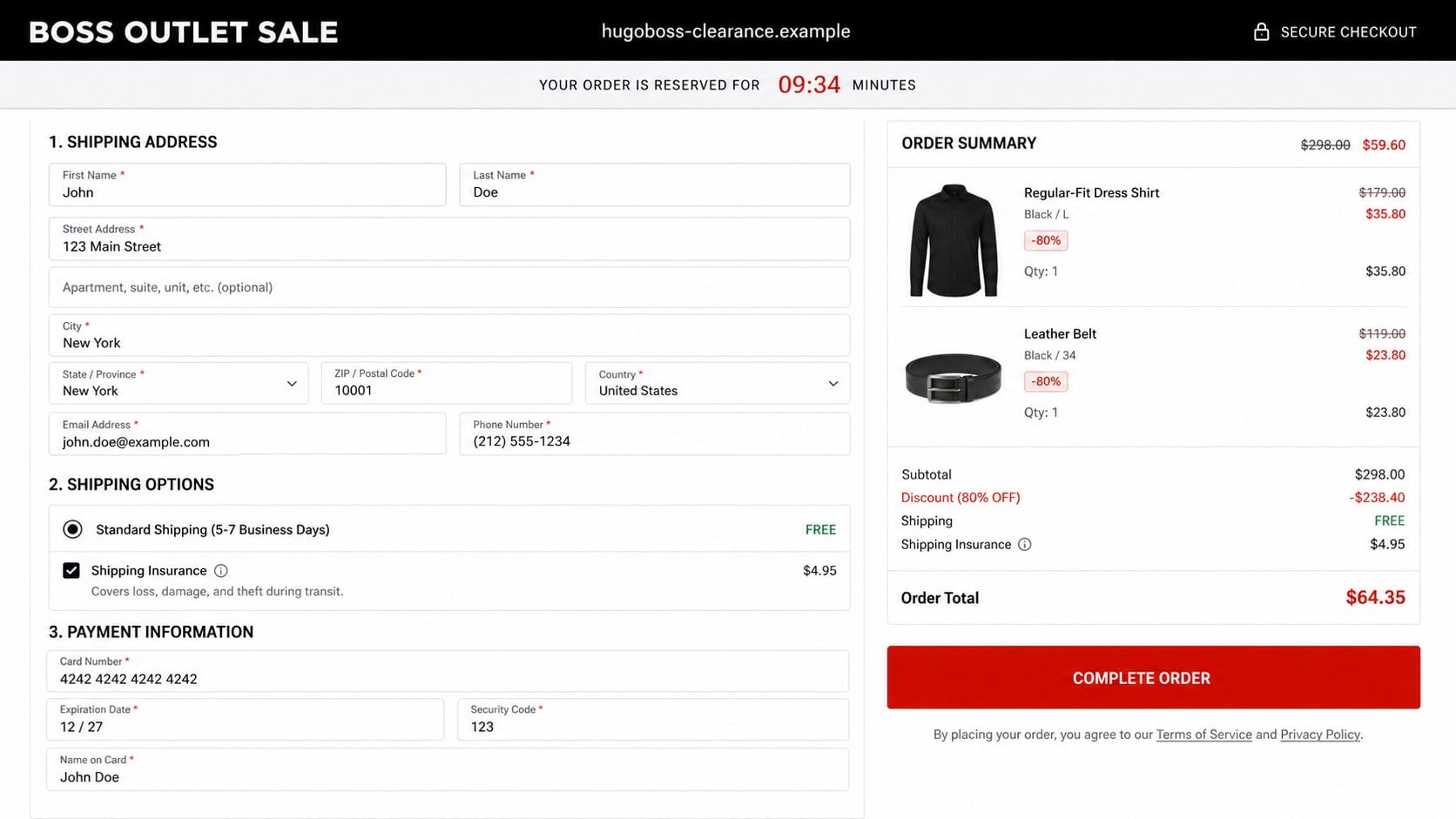
Some pages respond to a valid card with a false error and invite another attempt. The shopper may then expose several cards while believing that no payment went through.
Step 5: An order confirmation creates false reassurance
A confirmation email may include an order number, delivery estimate, and tracking link. The sender name can reference the brand even when the underlying address belongs to an unrelated free mailbox or disposable domain.
Tracking can remain at “label created,” point to a lightweight parcel, or show delivery in a different city. A tracking event proves that something moved through a carrier, not that the advertised product was shipped to the buyer.
Support replies often repeat that delays are normal and ask the customer to wait. Each additional week can reduce the time available to challenge the transaction.
Step 6: The operator resists refunds and reuses the data
When the customer complains, the seller may offer 10% or 20% back, claim the product matches the listing, or require an international return with tracked postage. The destination may cost more to reach than the order is worth.
Meanwhile, the card can be tested with small transactions or used at other merchants. The email address may receive more fake outlet promotions because the completed purchase marks the person as responsive.
Once reports spread, the storefront can disappear and return under a new domain. The visual template and stolen catalog are inexpensive to reuse, which allows the network to rotate faster than individual reviews accumulate.
Red Flags on Fake Luxury Outlet Sites
The domain is close to the brand but not exact
Read the hostname from right to left and identify the registered domain, not merely the first word you recognize. A brand name placed before an unrelated domain ending does not make that site official.
Search for the promotion by navigating independently to hugoboss.com. If the real store does not mention the event, do not trust the social ad’s version.
The discount applies to almost everything
A fake outlet often shows a uniform 70% or 80% reduction across current-looking merchandise in every size. That pattern is easier to generate than a realistic clearance with limited products and uneven availability.
Compare several exact product names with authorized retailers. Large differences should be explained by verifiable condition, season, or outlet status, not a generic banner.
The copy reveals a recycled template
Read the About, Contact, Privacy, Terms, Shipping, and Returns pages. Scam templates sometimes leave another company name, a different country, broken links, or contradictory processing times in the text.
Product pages may switch writing style or measurements because descriptions were collected from different sources. Missing material details and repeated generic reviews are additional warnings.
Support cannot answer a concrete question
Ask whether a particular item is from a named collection, where returns go, and whether the seller is an authorized dealer. A legitimate retailer should provide clear, consistent answers.
Automated replies that avoid the question, a contact form with no copy for the sender, or an email address unrelated to the store make a future dispute more likely.
Company, Address, and Fulfillment Checks
Confirm authorization through the brand
Use the brand’s official store locator or contact page to verify a retailer. Do not accept a badge on the seller’s own website as proof of authorization.
HUGO BOSS invites consumers to report suspicious sellers through its official corporate fake-products page. Navigate there independently instead of using a reporting link supplied by the questionable store.
Trace the operator named in the policies
Record the legal entity, registration number, address, telephone number, and email shown across the site. Search each element separately and look for connections to other short-lived storefronts.
If the checkout identifies a different merchant, investigate that name too. The billing descriptor should not be a surprise after payment.
Validate the stated address
Independent maps and corporate registers can reveal whether the location is an office, residence, mailbox, vacant property, or unrelated business. A prestigious city in the footer means nothing without a verifiable occupant.
Be cautious when the store claims a US or European identity but its return terms quietly direct parcels elsewhere. That mismatch affects cost, delivery time, and the ability to enforce a refund.
Save fulfillment terms before checkout
Capture the product description, price, delivery estimate, cancellation policy, and return address. Keep the ad and order confirmation as well.
These records show what the merchant represented at the time of purchase. They are valuable when a counterfeit product arrives or the website later replaces its policy.
What to Do if You Have Fallen Victim to This Scam
- Call the card issuer promptly. Report a counterfeit, nondelivery, misrepresentation, or unauthorized transaction as accurately as possible. Ask whether the card should be replaced.
- Review every recent transaction. Look for small test charges, repeated billing, and unfamiliar merchant names. Continue monitoring after the original purchase.
- Preserve the evidence. Save the ad, full URL, product listing, checkout, receipt, support messages, tracking, return terms, and clear photographs of any item received.
- Do not pay to unlock a refund. Ignore requests for tax, customs, verification, or account activation fees. A legitimate card refund returns through the original payment channel.
- Change reused credentials. Replace the store password anywhere else it appears. Secure the connected email account with a unique password and multi-factor authentication.
- Remove suspicious downloads. If the site persuaded you to install an app, extension, or shipping tool, uninstall it and run a complete Malwarebytes scan.
- Clean up browser abuse. Revoke notification permission for the site. AdGuard can help reduce malicious ads, redirects, and known phishing pages while you recover.
- Report the fake store. Notify the social platform, HUGO BOSS through its official anti-counterfeiting contact, the payment provider, and the FTC at ReportFraud.ftc.gov.
- Watch for targeted follow-ups. Treat unexpected delivery corrections, refund forms, and support calls as suspicious. Criminals may reuse the order details to appear credible.
How to Shop for Hugo Boss Products Safely
Begin at the official HUGO BOSS website or an authorized retailer you already know. If an ad catches your attention, type the official address manually and search the real catalog for the promotion.
Compare the exact style number, materials, product photography, sizes, and price. A counterfeit seller may copy the visible description but omit traceable identifiers or mix photographs from several seasons.
Use a credit card when possible and avoid direct transfers, cryptocurrency, gift cards, or payment to a personal account. Stronger dispute options matter when buying from a retailer you have not used before.
Do not allow a timer to decide. A genuine luxury purchase should withstand ten minutes of research, a check of the domain, and a second look at the seller’s return route.
Look beyond the first search result when checking a retailer. Fraudulent stores can buy advertisements that appear above the official result, so the ad label and complete domain deserve attention before any click.
If you want an outlet price, use a location or retailer confirmed through the brand’s own channels. A stranger’s coupon page is not a safer route simply because it promises another 10% off.
Frequently Asked Questions
What is the official Hugo Boss website?
The official consumer store uses hugoboss.com. Regional paths can vary, but an extra sale word, hyphen, or unusual domain ending should be verified before entering information.
Are Hugo Boss outlet sales always fake?
No. The brand and authorized retailers can operate legitimate outlets and promotions. The issue is an unauthorized site using the brand identity and unrealistic prices without a verifiable business.
Can a fake site send a real tracking number?
Yes. The number may track a worthless parcel, a shipment to another address, or only a label. Match the carrier record with your destination, package weight, and actual delivery.
What if I received a counterfeit item?
Photograph the packaging, labels, materials, stitching, and differences from the listing. Contact your payment provider quickly and describe the item as counterfeit or materially misrepresented.
Is a very professional website safe?
Not by appearance alone. Store templates and copied brand assets can create a polished page in hours. Verify the domain, legal operator, authorization, address, and payment route.
Should I contact the seller before disputing?
A concise written request can document the problem, but do not let repeated delays consume the dispute window. Ask your issuer about deadlines immediately.
The Bottom Line
A Hugo Boss website scam looks convincing because it borrows what shoppers already trust: the name, products, photography, and language of a recognized brand. Its extreme sale and urgent countdown are meant to outrun basic verification.
Check the domain against hugoboss.com, confirm the retailer through official channels, and investigate the operator before paying. If you already ordered, preserve the page and contact your card issuer before the storefront or dispute window disappears.








