

A message saying someone found your missing pet can turn relief into panic in seconds. So can an adoption listing that seems perfect, or a call claiming an animal needs urgent treatment before it can come home.
That emotional pressure is exactly what pet care scammers count on. Here is how these schemes unfold, what should make you pause, and how to check the story without putting your money or personal information at risk.
Overview
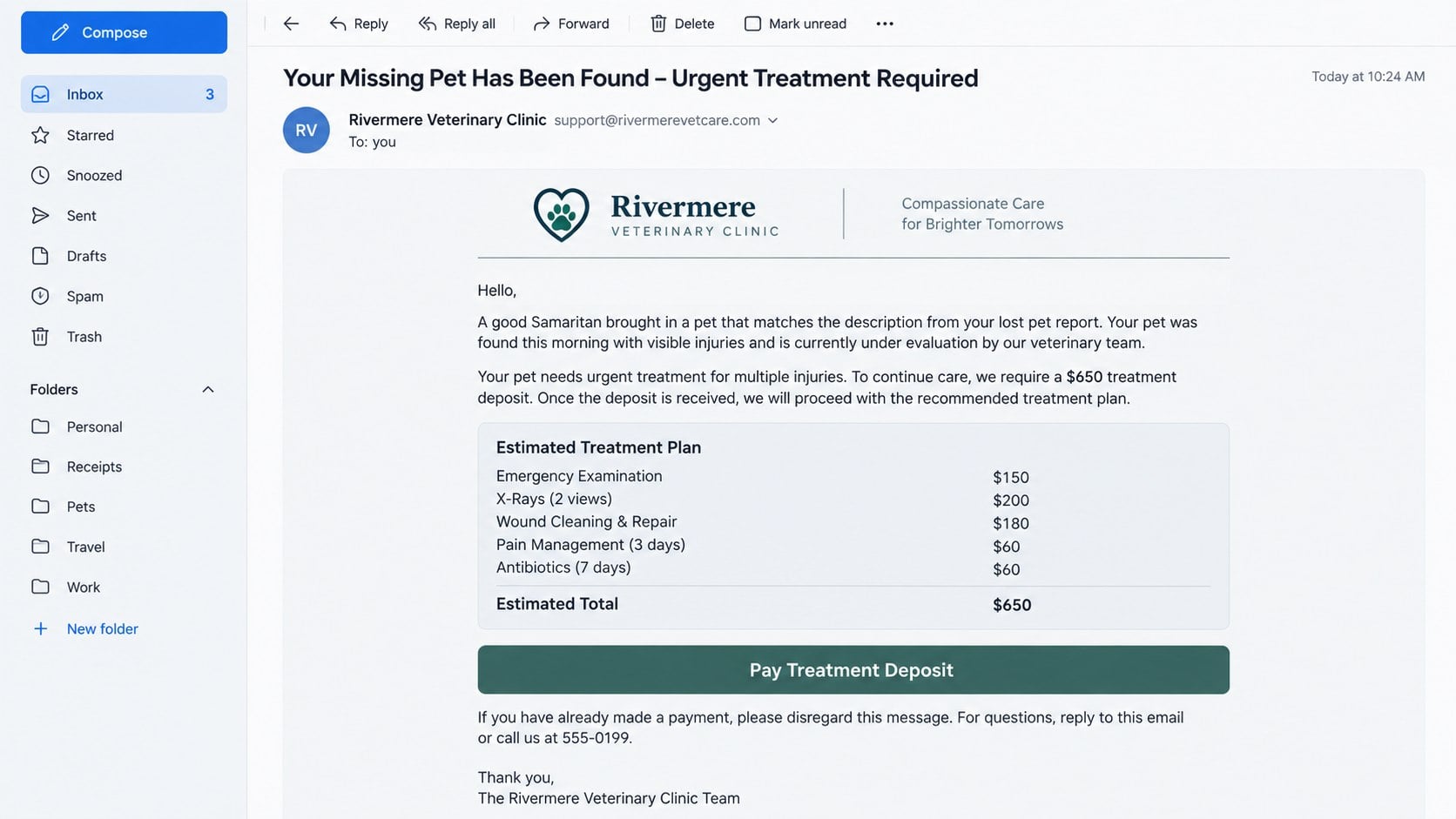
Pet care scams are not limited to fake puppy listings. Criminals impersonate veterinary clinics, shelters, breeders, transport companies, rescue groups, and even people who claim to have found a missing animal.
The story changes, but the objective is usually the same: create an urgent emotional situation, keep you from verifying it independently, and collect a payment that is difficult to reverse.
The scam begins with a believable pet-related story
A scammer may respond to a missing-pet post and claim the animal was injured. Another may advertise a puppy or kitten, offer low-cost treatment, request donations for a rescue, or promise pet-sitting services.
Many of these stories use copied photos, real clinic names, local area codes, and details taken from public social media posts. That familiar information can make a stranger seem credible before any real verification has happened.
Urgency replaces normal verification
The supposed veterinarian may say surgery cannot begin until a deposit is paid. A seller may claim several other families want the same animal. A caller posing as an officer may threaten penalties if an alleged treatment bill is not settled immediately.
The pressure is deliberate. A legitimate clinic, shelter, or breeder should allow you to call a publicly listed number, ask questions, review documents, and understand what you are paying for.
The requested payment offers little protection
Gift cards, cryptocurrency, wire transfers, cash apps, and person-to-person payments are common in pet scams because they can be fast and difficult to recover. Some fraudulent pages also collect card details and identity information.
Common pet care scam scenarios include:
- A fake veterinarian claiming a missing pet needs emergency surgery.
- A copied puppy, kitten, bird, or exotic-pet adoption listing.
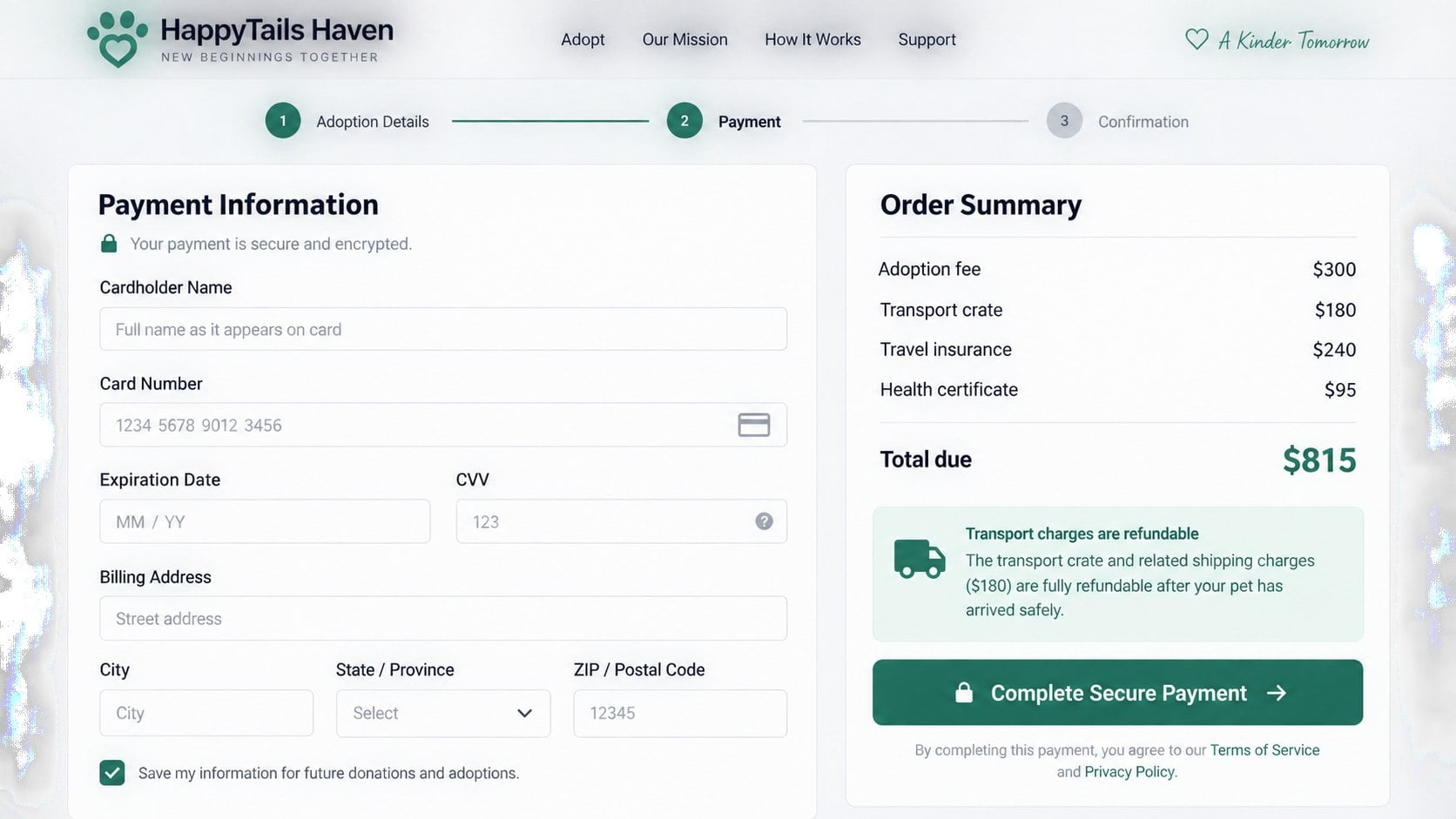
- Unexpected transport, insurance, crate, vaccination, or quarantine fees.
- A fake rescue collecting donations for an animal it does not control.
- A fraudulent pet-sitting, grooming, boarding, or training service.
- A prize or giveaway that requires a fee before the animal or reward can be released.
Why Pet Care Scams Feel So Convincing
Pet owners are used to making quick decisions when an animal may be hurt. Scammers exploit that instinct by presenting verification as a dangerous delay rather than a normal safety step.
They also build the story from information the victim has already shared. A public lost-pet post may include the animal’s name, breed, color, neighborhood, medical condition, collar, and the owner’s phone number.
A criminal does not need to possess the animal to repeat those details. The scammer may simply read the post, copy the photos, and then introduce one new claim: the pet was found, but money is required before the owner can see it.
Copied photos create false proof
An image sent by the scammer may come from the owner’s own post, an old shelter listing, or another social media account. A blurry crop or close-up is not proof that the sender currently has the animal.
Ask for a new, specific form of verification that was not publicly disclosed. For example, request a live video call or ask the person to show a harmless identifying detail while you remain cautious about revealing additional private information.
Real organization names lend borrowed credibility
A fake caller can use the name of a genuine local veterinary hospital and even spoof a familiar-looking number. Search results may confirm that the clinic exists, but that does not confirm the person contacting you works there.
End the call and contact the organization through the number on its official website or a trusted directory. Do not call the number in the message, invoice, advertisement, or caller ID display.
Small payments lead to larger demands
The first request may be described as a modest deposit. Once it is paid, the scammer invents a second obstacle such as medication, overnight observation, pet insurance, transport, customs clearance, or a refundable crate charge.
Each payment increases the victim’s emotional and financial investment. The criminal relies on the hope that one more transfer will finally bring the pet home or complete the adoption.
How the Pet Care Scam Works
Step 1: The scammer finds a vulnerable target
Criminals monitor public missing-pet groups, community pages, classified advertisements, and social media comments. They also publish their own fake adoption, rescue, veterinary, or service listings and wait for interested people to respond.
A public post gives them useful details and confirms that the owner is worried. A buyer searching for a specific breed gives them a ready-made story about a rare animal that is suddenly available.
Step 2: The scammer creates a credible identity
The criminal may copy a real veterinarian’s name, a clinic address, a shelter logo, breeder photos, or reviews from an unrelated business. Some create polished websites and social profiles that appear established at first glance.
A professional-looking page proves only that someone built a page. The important question is whether the person communicating with you can be independently connected to the real organization, address, license, and animal.
Step 3: An urgent problem is introduced
The missing pet allegedly needs immediate treatment. The advertised puppy supposedly has another buyer waiting. A transport company claims the animal is stranded, or a rescue says a donation deadline is about to expire.
The scammer may discourage an in-person visit, claiming the clinic is closing, the animal is in isolation, the seller is traveling, or the courier cannot release the pet until a fee is paid.
Step 4: Payment is demanded through an unusual channel
The victim is instructed to buy gift cards, send cryptocurrency, use a payment app’s friends-and-family option, make a wire transfer, or enter card information on an unfamiliar page.
The recipient name may not match the clinic, shelter, breeder, or service in the story. If questioned, the scammer may say the account belongs to a technician, courier, manager, volunteer, or billing partner.
Step 5: New fees appear after the first payment
A successful first transfer tells the criminal that the victim is engaged. The scammer then adds medication charges, boarding costs, a health certificate, delivery insurance, taxes, or a second deposit.
Receipts may be fabricated to make these demands look official. Some display fake refundable amounts, but no legitimate refund is waiting behind the next payment.
Step 6: The scammer disappears or returns with another identity
When the victim refuses further payment, the account may be deleted and the phone number may stop working. The fake listing can reappear under a new name with the same photos.
Victims may later hear from someone offering recovery, investigation, or reimbursement for an advance fee. This is often a second scam based on information shared by the original criminal network.
Clinic, Shelter, Seller, and Payment Checks
A familiar name is not proof of identity
Caller ID, email display names, social media names, and profile photos can be copied or manipulated. A real clinic or shelter name can be inserted into a fraudulent invoice in minutes.
Find the organization’s contact information independently. Call and ask whether the employee, animal, invoice number, and payment request are genuine. A trusted organization will understand why you are verifying an unexpected demand.
An address or photo may have been copied
Search the address separately and compare it with official records. For sellers or breeders, reverse-search animal photos and look for the same pictures attached to different names, cities, or prices.
If an in-person visit is practical and safe, arrange it through a verified business channel. Do not send a deposit simply because the seller claims a visit is impossible until money changes hands.
Support often disappears when verification begins
Scammers tend to answer emotional questions quickly but become vague when asked for licensing details, a live video, a written treatment estimate, or confirmation through a publicly listed number.
Watch for repeated excuses, changing names, conflicting locations, and pressure to keep the transaction secret. Those inconsistencies matter more than polished graphics or reassuring language.
The payment trail should match the story
A clinic invoice should not normally require gift cards or cryptocurrency sent to an unrelated individual. An adoption fee should have clear terms, a traceable recipient, and documentation that identifies the actual organization or seller.
Check what buyer protection applies before paying. Do not let the promise that a charge is refundable persuade you to use a payment method that offers no realistic dispute process.
Warning Signs of a Pet Care Scam
No single clue proves fraud, but several warning signs together should stop the conversation until the claim is independently verified.
- The person contacts you immediately after a public missing-pet post.
- They refuse to provide fresh proof that they have the animal.
- A supposed clinic will not let you call back through its official number.
- The seller will not allow a live video call or safe in-person meeting.
- The animal’s photos appear in older or unrelated listings.
- The price is far below normal and paired with a rushed deadline.
- Payment must be made by gift card, cryptocurrency, wire, or friends-and-family transfer.
- The recipient name does not match the business or person in the agreement.
- New insurance, transport, medical, or clearance fees appear after payment.
- The sender asks for account passwords, verification codes, or excessive identity documents.
How to Verify a Pet-Related Claim Safely
Slow the interaction down and separate the claim from the contact details supplied by the stranger. The safest verification comes from a channel the scammer did not choose.
The FTC warns that scammers may impersonate animal hospitals or law enforcement and claim a missing pet had an emergency. Treat demands for gift cards, payment apps, cryptocurrency, or wires as serious warning signs.
If someone says a clinic has your pet, search for that clinic yourself and call its official front desk. If a shelter requests a donation, navigate to the shelter’s known website instead of using the message link.
For an adoption or sale, ask for a live video showing the animal and a specific, harmless action. Review contracts, veterinary records, ownership information, and the seller’s history before paying.
When a pet may genuinely be injured, verification does not mean ignoring the situation. It means contacting the real clinic quickly through a trusted number and confirming what care is needed before transferring money.
What to Do if You Have Fallen Victim to This Scam
- Stop all further payments. Do not send another fee to release a pet, unlock a refund, complete transport, or satisfy a supposed investigator. Additional payments rarely recover the original money.
- Contact the payment provider immediately. Tell the bank, card issuer, wire service, gift card company, cryptocurrency platform, or payment app that the transaction resulted from fraud. Ask whether it can be reversed, frozen, or formally disputed.
- Secure exposed financial accounts. If you entered card or banking details on a suspicious page, replace the card, change online banking credentials, and review recent transactions. Enable transaction alerts where available.
- Change reused passwords. Start with the email account connected to the conversation, then protect social media, payment, marketplace, and cloud accounts. Use a unique password for each service and enable multi-factor authentication.
- Remove unknown sessions and apps. Review active sessions, linked devices, browser extensions, and recently installed applications. Sign out anything you do not recognize and revoke suspicious app access.
- Scan the affected device. If you downloaded a file, opened a suspicious attachment, or installed software at the scammer’s direction, run a trusted security scan. Malwarebytes can help check the device for malware and other unwanted software.
- Block malicious pages and repeat contact. AdGuard can help filter known malicious and deceptive web destinations, but it does not replace account recovery or a payment dispute. Block the scammer’s numbers and accounts after preserving evidence.
- Save the evidence. Keep screenshots, profile links, email headers, phone numbers, invoices, payment receipts, wallet addresses, and the original advertisement. Do not edit the files if they may be needed for a report.
- Report the fraudulent listing and account. Notify the social network, marketplace, community group, or advertising platform. If a real clinic, shelter, breeder, or rescue was impersonated, tell that organization as well.
- Report the fraud to the appropriate authorities. Use your national fraud-reporting service and local law enforcement when money, threats, identity documents, or an actual missing animal are involved.
- Update public missing-pet posts carefully. Warn others about the scam account, but remove unnecessary personal details and avoid publishing new identifying information that another scammer could reuse.
- Expect recovery scams. Ignore anyone who promises to retrieve the money or identify the criminal for an advance payment. Share new contact attempts with the institution handling your original report.
Frequently Asked Questions
Can a scammer know my pet’s name and still be lying?
Yes. The name, breed, color, neighborhood, photos, and medical details may all come from your public post. Ask for new proof the person could only provide if they genuinely have access to the animal, then verify the claim through an independent channel.
Would a real veterinarian demand payment before treatment?
Veterinary payment policies vary, and a real clinic may request a deposit. The scam warning is an unexpected contact that refuses independent verification or demands an unusual payment. Call the clinic through its official number and confirm the animal, staff member, estimate, and payment process.
How can I check whether a pet adoption listing is genuine?
Reverse-search the photos, arrange a live video, verify the seller or rescue independently, review records, and use a payment method with appropriate protection. Be especially cautious when an in-person meeting is repeatedly avoided or fees keep changing.
Is a pet transport insurance fee refundable?
Scammers frequently describe transport, crate, quarantine, and insurance charges as refundable. Do not rely on that promise. Contact the transport company through independently found details and confirm the shipment before paying anything.
What if the caller threatens to withhold or harm my pet?
Do not meet the person alone or send money solely because of the threat. Preserve the messages and contact local law enforcement. Continue checking verified shelters, clinics, animal control offices, and community networks through their official channels.
Can I recover money sent to a pet care scammer?
Recovery depends on the payment method and how quickly the fraud is reported. Contact the provider immediately and request its fraud procedure. Be skeptical of third parties that guarantee recovery in exchange for another fee.
The Bottom Line
Pet care scams work because concern for an animal can make an urgent story feel more important than verification. A real name, local number, convincing photo, or professional invoice is not enough on its own.
Pause, contact the organization through a channel you find independently, and insist on proof before paying. If you have already sent money or shared information, act quickly to secure your accounts, preserve evidence, and report the fraud.
The safest response is compassionate but careful: take the animal’s welfare seriously while making sure the person asking for money is exactly who they claim to be.








