

A new brain supplement can look convincing when its website blends clinical language, polished packaging, and numbers that seem unusually precise.
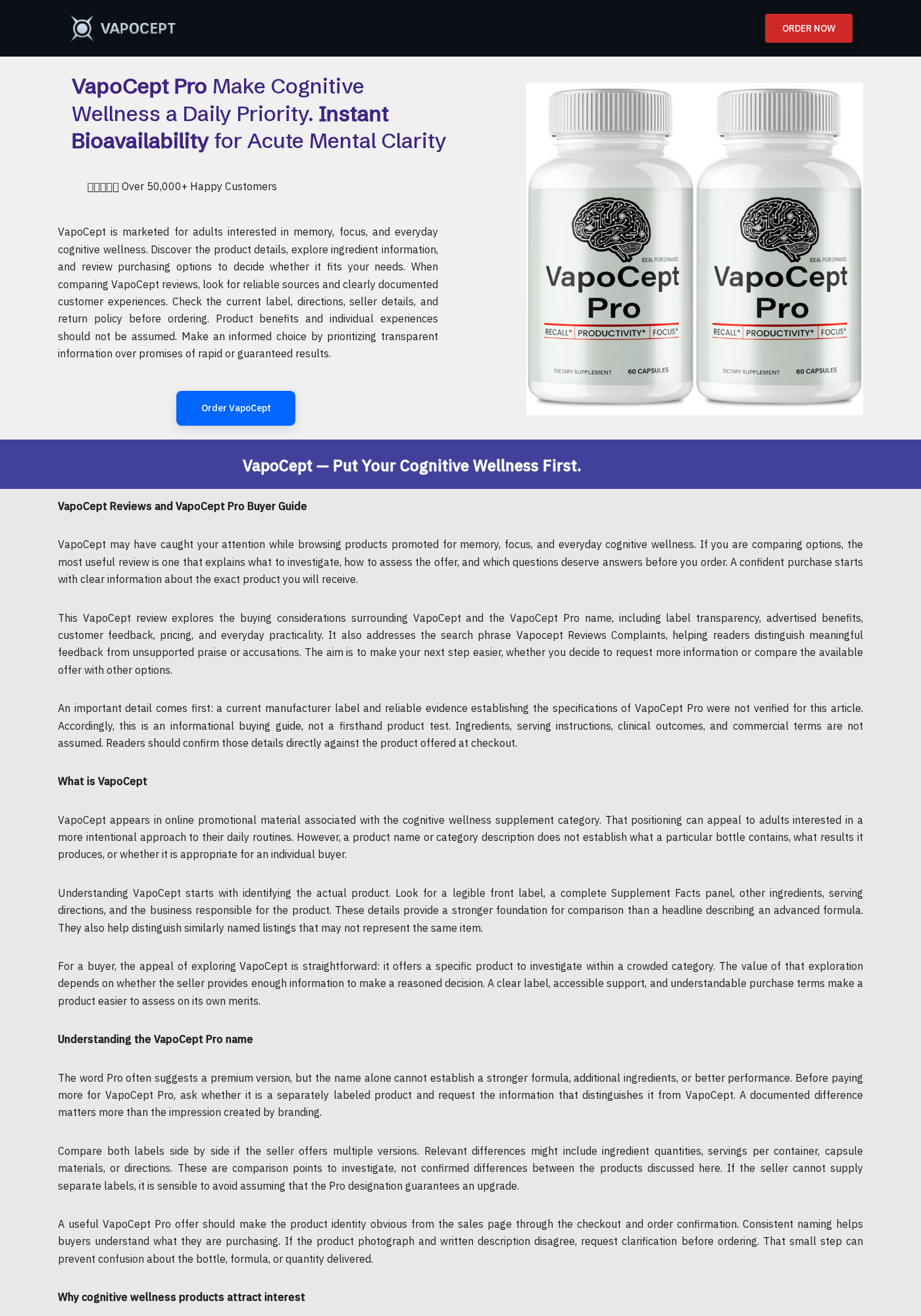
VapoCept Pro uses that formula confidently. A closer reading, however, reveals details that deserve far more attention than the bottle graphics.
Overview
What VapoCept Pro claims to offer
VapoCept Pro is presented as a cognitive supplement for memory, focus, mental clarity, and faster delivery of brain-supporting ingredients.
The page describes capsules, yet repeatedly promotes “vapor-phase absorption” and microscopic particle technology. It never explains how swallowing a capsule creates that delivery system.
Visitors also see claims involving rapid onset, high absorption, measurable particle size, and an exceptionally large customer base.
These are not vague wellness slogans. They are specific, testable claims that should be supported by product-level evidence and transparent manufacturing information.
Why the current website raises serious questions
The site calls itself the official source, but several passages admit that basic information could not be verified.
It says the manufacturer label, exact formula, product-specific clinical trials, current pricing, refund period, and bundle details were not established.
Those admissions appear beside confident performance statistics and medical-sounding explanations. The contrast makes the page feel assembled from incompatible pieces.
The domain was registered on September 17, 2026, only days before this review. A fresh domain is not proof of fraud.
It does matter when the same page claims more than 50,000 happy customers without showing a verifiable history supporting that number.
The most important findings
Our investigation found a product page, but it did not identify enough reliable information to confirm the seller, formula, or advertised technology.
- The domain has only a very short public history.
- The page admits that essential product facts remain unverified.
- Precise absorption, particle-size, and onset figures lack visible supporting reports.
- The named expert could not be independently connected to a published VapoCept Pro study.
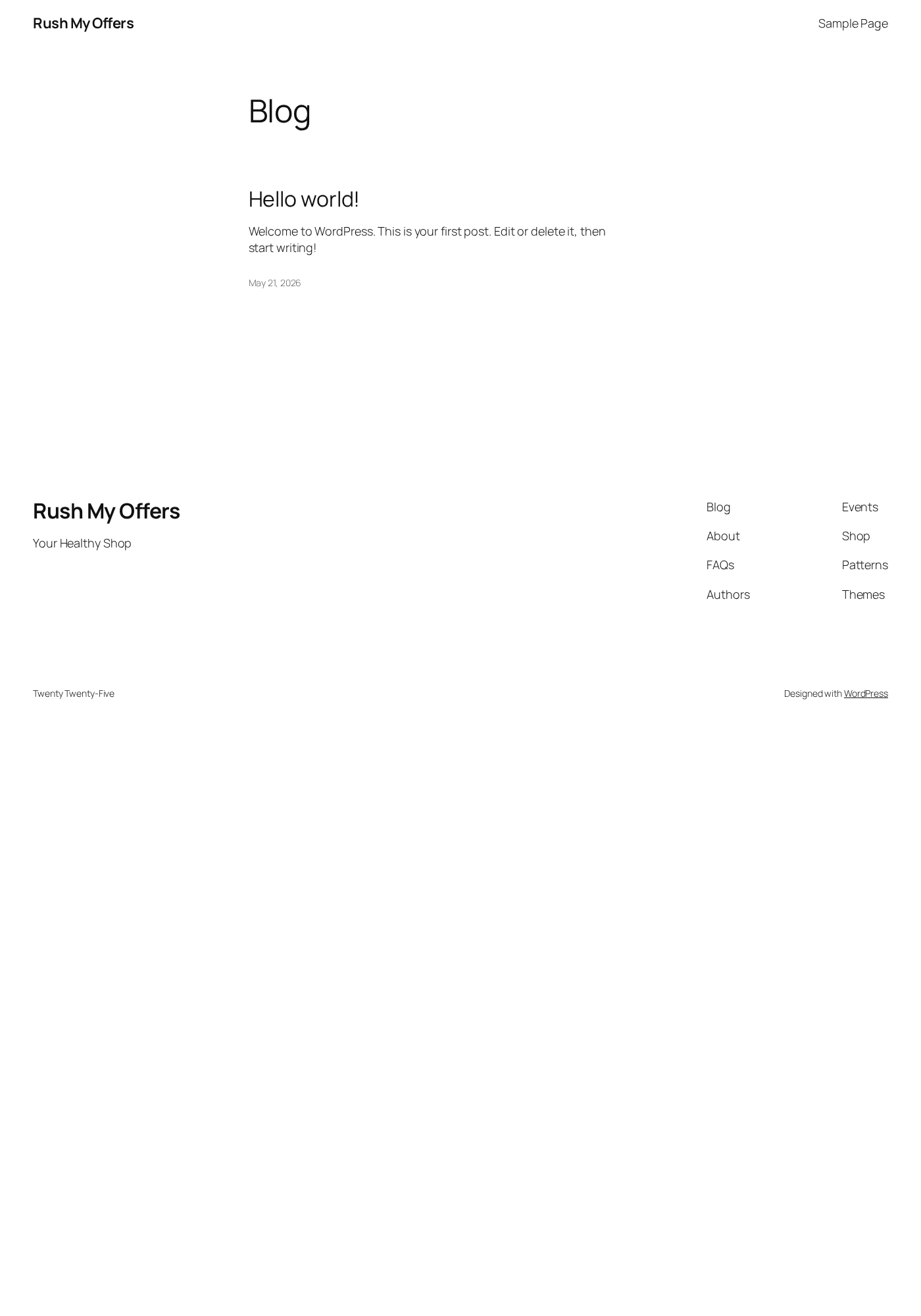
- The order button currently leads to a generic WordPress page, not a functioning product checkout.
- No clear legal company, physical address, or complete customer-service channel appears on the reviewed page.
Together, these findings make VapoCept Pro a high-risk purchase. They do not establish what every bottle contains, because no bottle was laboratory tested for this review.
Is VapoCept Pro Legit or a Scam?
We could not verify VapoCept Pro as an established supplement sold by a clearly identified manufacturer with documented product testing.
The strongest concern is not one dramatic typo. It is the accumulation of contradictions across the page, domain history, evidence, and order route.
A legitimate new brand can use a recent domain. It should still identify the responsible company, publish coherent policies, and support precise scientific claims.
VapoCept Pro does not currently meet that basic standard. Its page asks visitors to trust numbers while admitting that core product facts remain unknown.
The broken purchasing route adds another problem. A customer cannot meaningfully evaluate checkout terms when the advertised button does not reach an active product checkout.
For those reasons, we recommend avoiding the offer unless the seller provides verifiable answers and a functioning checkout with complete terms.
This conclusion concerns the reviewed offer and evidence available now. It is not a laboratory finding about the chemical contents of an unseen capsule.
The Scientific Claims Do Not Add Up
“Vapor-phase absorption” is never properly explained
The page says VapoCept Pro bypasses digestive breakdown through vapor-phase delivery, yet the displayed product is a bottle of capsules.
A swallowed capsule normally enters the digestive system. An unusual delivery mechanism needs a clear explanation, diagrams, formulation details, and reproducible testing.
The website provides confident descriptions but no accessible technical report showing how this particular capsule supposedly behaves after ingestion.
It also does not identify an inhaler, vaporizer, sublingual device, or other hardware that might make the phrase understandable.
Without that bridge, “vapor-phase” functions like impressive marketing language rather than a demonstrated feature of the product pictured.
Exact numbers appear without traceable evidence
The page promotes 98% absorption, 100-nanometer particle precision, and a 90-second onset. Those figures imply controlled measurement.
Yet visitors are not shown a study protocol, laboratory name, certificate, batch report, sample size, journal citation, or full results.
A precise percentage can feel more trustworthy than a general promise. Precision alone is not proof.
To evaluate such figures, consumers need to know what was measured, against which comparator, in whom, and under what conditions.
They also need confirmation that the tested material matches the product currently being sold. The reviewed page supplies none of those links.
The page contradicts its own certainty
One section says no verified product-specific trial was established. Another presents the delivery system as though its performance were already settled.
The page also declines to assign ingredients because the manufacturer label was not verified. That is an extraordinary gap for an ingestible product.
Customers cannot assess allergies, interactions, dosage, or suitability without a complete Supplement Facts panel and responsible manufacturer information.
A website cannot reasonably ask people to trust advanced absorption claims while saying it cannot confirm the underlying formula.
That internal conflict is more informative than any decorative badge. It shows the promotional story is ahead of the available evidence.
The expert endorsement is not enough
A quote is attributed to “Dr. Anya Sharma,” described as a lead neuro-chemist. The page does not provide credentials that visitors can meaningfully verify.
There is no linked institutional profile, license, publication, conflict disclosure, or VapoCept Pro research paper accompanying the endorsement.
Even a real scientist’s general comments would not prove that a finished supplement works. Product-specific claims require product-specific evidence.
Consumers should never treat a portrait, title, or quotation as a substitute for transparent research and accountable company information.
How the VapoCept Pro Offer Works
Step 1: A new “official” page targets memory concerns
The offer begins with familiar worries: forgetfulness, slow recall, poor concentration, and age-related cognitive decline.
These concerns feel personal and urgent. They can make a simple capsule especially attractive to older adults and worried family members.
The “official website” wording encourages visitors to stop searching and accept this page as the brand’s authoritative source.
Step 2: Technical language creates an impression of discovery
Terms involving nanoparticles, rapid onset, neural pathways, and advanced absorption make the offer sound different from ordinary memory supplements.
The science-shaped language performs an important sales function. It gives readers a reason to believe this bottle has solved a delivery problem.
However, the page does not provide the documentation needed to distinguish a real platform from an invented marketing concept.
Step 3: Precise statistics replace accessible proof
Numbers such as 98%, 100 nanometers, and 90 seconds are easy to remember. They also look authoritative when displayed beside laboratory-style graphics.
Most shoppers cannot independently test those figures. They may assume the seller would not publish exact numbers without measurements.
That assumption is risky. Any meaningful claim should lead to evidence that another qualified party can inspect and evaluate.
Step 4: Social proof reduces hesitation
The page says more than 50,000 customers are happy with the product. It does not show how that figure was calculated.
Large customer counts create a feeling of safety through popularity. A new domain makes the unsupported scale claim particularly difficult to reconcile.
Seller-controlled testimonials and counters are not equivalent to verified purchases collected by an independent platform with transparent moderation.
Step 5: Cautious admissions protect the page
Buried among the confident claims are statements that the manufacturer, formula, trials, pricing, and refund details were not verified.
These caveats may appear responsible at first. In practice, they undermine the foundation required to recommend an ingestible product.
A consumer may remember the headline benefits while overlooking the passages admitting that essential facts remain uncertain.
Step 6: The order button fails at the critical moment
The reviewed purchase button routes through Rush My Offers. It currently lands on a generic WordPress homepage containing a default “Hello world!” post.
There is no visible VapoCept Pro checkout, package selector, final price, subscription disclosure, refund policy, or merchant identity at that destination.
This could reflect a broken or unfinished affiliate campaign. Either explanation makes the offer unsuitable for a careful purchase.
Do not search for another checkout based on advertisements or unsolicited messages. Look for independently verifiable company information first.
What a Safe Supplement Checkout Should Show
A complete label before payment
Consumers should see every active ingredient, amount per serving, other ingredient, allergen warning, suggested use, and responsible distributor before ordering.
“Proprietary” language does not excuse missing safety information. A purchaser must know what will enter the body and at what dose.
If the label appears only after delivery, the customer cannot make an informed decision at the point of sale.
A clear seller and final price
The checkout should identify the legal merchant, billing descriptor, bottle quantity, shipping charge, tax, total, and whether the transaction repeats.
It should also state the customer-service email, phone number, return address, and cancellation procedure in ordinary language.
A generic destination with none of these details is not a place to enter card data.
Specific evidence for specific claims
If a seller advertises exact absorption or onset figures, it should publish the report supporting those figures.
The report should name the laboratory, tested product, lot, method, comparator, sample, endpoints, limitations, and date.
Certificates should be independently verifiable. A badge or cropped chart created by the seller is not equivalent to a complete report.
Health and Privacy Risks
An unknown supplement can create risks beyond wasted money. Missing ingredient and dosage information makes interaction screening impossible.
People using blood thinners, psychiatric medicines, seizure medication, sedatives, stimulants, or multiple prescriptions should be especially cautious.
Pregnancy, nursing, liver disease, kidney disease, allergies, and upcoming surgery also require individual medical guidance.
Do not stop prescribed treatment because a page promises faster memory support. Sudden medication changes can be dangerous.
Memory changes can have many causes, including sleep problems, depression, medication effects, vitamin deficiencies, infections, or neurological conditions.
New, worsening, or disruptive symptoms deserve professional evaluation rather than experimentation with an unidentified formula.
A broken order link can also expose visitors to copycat pages. Search results may lead to unrelated sellers using similar branding.
Never reuse a password, upload identification, or provide bank credentials to “verify” a supplement order.

Company, Address, and Fulfillment Checks
The responsible company is not clearly identified
The reviewed page does not prominently name a legal entity responsible for manufacturing, billing, warranties, adverse-event reports, or customer disputes.
A brand name is not a company identity. Consumers need the entity that will appear on the receipt and card statement.
Without that information, it becomes harder to verify registration, complaints, ownership, or the person legally accountable for product claims.
No useful operating or return address is provided
We did not find a clear headquarters, manufacturer, or returns address on the reviewed page.
Even when an address appears elsewhere, verify its function. It may be a mailbox, residence, virtual office, or third-party fulfillment warehouse.
A warehouse can move parcels without designing the formula or controlling the advertising. It should not be mistaken for the manufacturer.
Customer support cannot be tested properly
A buyer should be able to ask who makes the product, where it is manufactured, what the formula contains, and whether billing recurs.
The reviewed page does not provide a complete, credible support route capable of answering those questions before payment.
If contact information later appears, test it before ordering. Ask precise questions and save the written answers.
Product traceability is missing
Safe supplement commerce should provide lot numbers, expiration dates, manufacturing origin, responsible distributor, and a path for reporting adverse reactions.
Independent testing should connect to the exact product and batch, not a generic ingredient certificate or unrelated laboratory logo.
Cheap, mass-produced capsules from opaque supply chains can contain incorrect doses, contaminants, allergens, or undeclared ingredients.
Until VapoCept Pro supplies traceable evidence, consumers cannot reliably evaluate what they would receive.
What to Do if You Bought VapoCept Pro
- Stop and document everything. Save the advertisement, product page, order button, checkout, receipt, emails, package label, and card descriptor before pages change.
- Do not take an unidentified capsule. Check the sealed bottle for a complete label, lot, expiration date, manufacturer, tampering, and ingredient amounts.
- Ask a pharmacist or clinician. Show them the full label and your medication list. Seek medical help promptly for unexpected symptoms.
- Request cancellation in writing. Contact the merchant named on the receipt and state the order number, date, amount, and requested resolution.
- Check for recurring billing. Review the checkout confirmation and monitor statements for additional charges or unfamiliar merchant descriptors.
- Contact the card issuer. If the seller cannot be reached or an unauthorized charge appears, ask about blocking future charges and disputing the transaction.
- Report the offer. Submit misleading advertising to the FTC. Report adverse supplement reactions through FDA MedWatch and preserve the bottle.
- Secure the device. If unfamiliar redirects or downloads appeared, scan with Malwarebytes and use AdGuard to reduce malicious ads and trackers.
Act methodically rather than arguing with anonymous pages. Dates, screenshots, tracking numbers, and written requests create the strongest record.
Frequently Asked Questions
Is VapoCept Pro a real supplement?
A product page and bottle images exist. We could not verify an accountable manufacturer, complete formula, functioning checkout, or product-specific testing.
Does VapoCept Pro have proven 98% absorption?
We found the claim on the sales page, but no accessible study or laboratory report supporting that exact figure for the advertised product.
What does “vapor-phase” mean for a capsule?
The reviewed website does not explain the mechanism adequately. It shows capsules without identifying a vapor device or verifiable delivery technology.
Why does the domain age matter?
A new domain is not automatically fraudulent. It weakens claims of extensive history when the site provides no independent evidence for 50,000 customers.
Can I safely try VapoCept Pro with medication?
Do not assume so. A clinician cannot assess interactions without a reliable ingredient list and doses connected to the bottle you received.
What is the biggest VapoCept Pro red flag?
The page makes unusually precise scientific claims while admitting that the manufacturer, formula, trials, price, and refund details were not verified.
The Bottom Line
VapoCept Pro asks consumers to trust advanced science without supplying the ordinary evidence required for an informed supplement purchase.
The recent domain, contradictory copy, missing company details, unverifiable statistics, and broken order route make this offer one to avoid for now.








