

AMUA VitalDrops wraps a small amber bottle in bright branding, enthusiastic testimonials, and promises aimed at women facing uncomfortable midlife changes.
The offer deserves a closer reading because the purchase can involve more than one shipment, and the refund promise is narrower than its headline suggests.
Overview
What AMUA VitalDrops claims
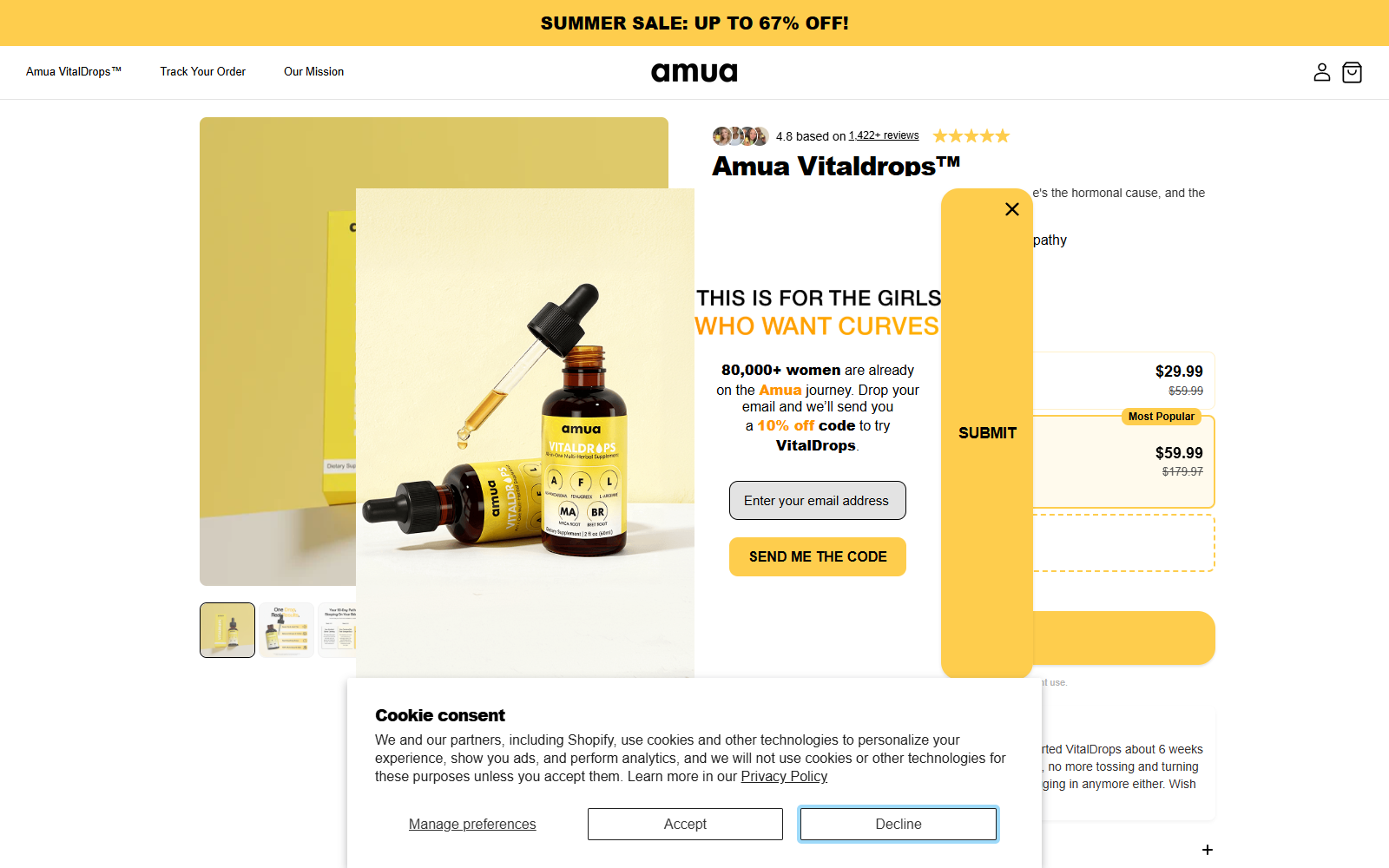
AMUA sells a liquid dietary supplement containing ingredients such as fenugreek, maca, ashwagandha, beet root, and L-arginine.
The menopause-focused page connects the drops with hip discomfort, gluteal tendinopathy, hormone changes, circulation, sleep, and body composition.
Other pages have promoted the same brand around curves and blood flow. That flexible storytelling makes the exact evidence behind each promise especially important.
Where the refill risk appears
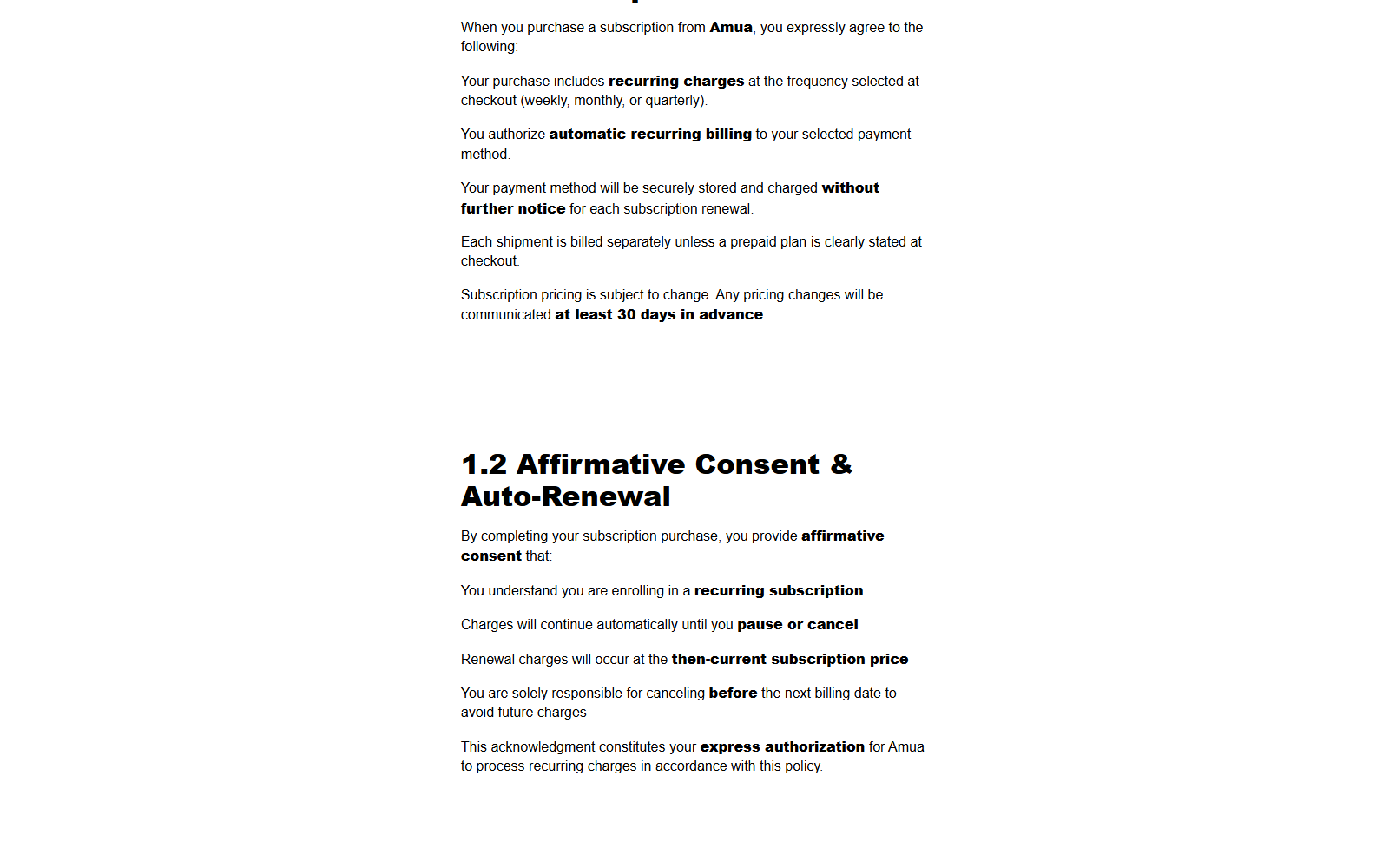
AMUA publishes a detailed subscription policy. It permits weekly, monthly, or quarterly recurring charges when a customer selects a subscription option.
The policy authorizes automatic billing without another notice for each renewal. It also requires cancellation at least 24 hours before the next charge.
Processed subscription charges are described as final. Missing the cancellation deadline can therefore produce another shipment with limited refund options.
Our assessment
AMUA VitalDrops is not an invisible product with no policies. The central risk is a real recurring-billing program paired with strong health marketing and restrictive renewal terms.
A shopper can avoid subscription billing by choosing a genuine one-time option, if available and clearly confirmed in the final checkout.
We would not rely on testimonials or broad hormone explanations as medical evidence. Discuss persistent pain or menopause symptoms with a qualified clinician.
- Subscription frequencies can be weekly, monthly, or quarterly.
- Renewals continue automatically until paused or canceled.
- Cancellation must occur at least 24 hours before billing.
- Completed renewal charges are described as nonrefundable.
- Failed charges may be attempted again after three and five days.
- The 90-day guarantee excludes a single-bottle purchase by itself.
The Same Drops Are Attached to Several Different Stories
The reviewed product page speaks directly to women experiencing menopause. It suggests that changing estrogen and cortisol levels explain hip pain and related symptoms.
That story is emotionally effective because it gives a frustrating condition a simple cause and places a purchasable solution beside it.
Yet AMUA’s wider marketing has also connected VitalDrops with curves, blood flow, confidence, and body changes. Those themes are not interchangeable clinical endpoints.
A supplement can contain the same ingredients while marketers rotate the problem used to sell it. The changing narrative does not strengthen the scientific evidence.
Ask which ingredient was tested, at what dose, for which outcome, in what population, and against what control.
General research about an herb cannot automatically validate a finished blend. Dose, purity, extraction, interactions, and study design all matter.
The page says many customers saw results within weeks. Individual testimonials cannot establish typical effectiveness or rule out other explanations.
“FDA-Registered” Does Not Mean FDA-Approved
The product page uses manufacturing language such as FDA-registered and GMP-certified. Those phrases can sound like government confirmation of the supplement’s benefits.
Dietary supplements are not preapproved by the FDA for effectiveness in the same manner as prescription medicines.
A facility registration does not mean the agency tested this bottle, endorsed its claims, or concluded that it treats menopause-related conditions.
Likewise, GMP language concerns manufacturing practices. It is not proof that the advertised health outcomes will occur.
Look for a complete Supplement Facts panel showing the amount of every active ingredient. Proprietary or unexplained dosing makes meaningful comparison difficult.
People taking blood-pressure, blood-sugar, hormone, thyroid, sedative, or anticoagulant medicines should discuss ingredients with a healthcare professional.
How the AMUA VitalDrops Refill Trap Works
Step 1: A personal symptom story leads to the offer
An advertisement may describe stubborn hip pain, restless sleep, body changes, or reduced confidence as part of a hidden hormonal pattern.
The story can feel more intimate than a normal supplement advertisement. It appears to explain why familiar approaches did not work.
That emotional recognition moves the visitor toward testimonials before the subscription terms become the main focus.
Step 2: Social proof makes the drops look established
The page references large customer and social-view numbers. It also displays reviews beside product bundles.
Numbers controlled by a seller are not an independent customer sample. They do not reveal refund rates, renewal complaints, or unsuccessful users.
Search for reviews that include order dates, package details, billing experiences, and photographs not hosted by the merchant.
Step 3: The buyer chooses one-time or subscription terms
The recurring program applies when the shopper selects a subscription. That distinction should remain obvious on the product page, cart, checkout, and receipt.
A lower subscription price can pull attention away from renewal frequency. Weekly and monthly billing create very different annual costs.
Before payment, write down the amount, shipment count, interval, next billing date, and cancellation method.
Step 4: The payment method remains authorized
AMUA’s policy says the selected payment method is stored and charged automatically for renewals.
The company says another notice is not required each time. A customer who overlooks the first receipt may discover the program through a later statement.
Subscription pricing can change after advance notice. Monitor emails and statements even if the first amount looked acceptable.
Step 5: Cancellation timing becomes decisive
The policy places responsibility on the customer to cancel at least 24 hours before the next billing date.
A request sent after that cutoff may stop future shipments without reversing the charge already processed.
Do not wait until the renewal morning. Cancel several business days early and retain a screenshot showing the effective status.
Step 6: The refund and guarantee rules narrow recovery
The subscription policy says charges already processed are final when cancellation was missed. The refund policy separately promotes a 90-day satisfaction guarantee.
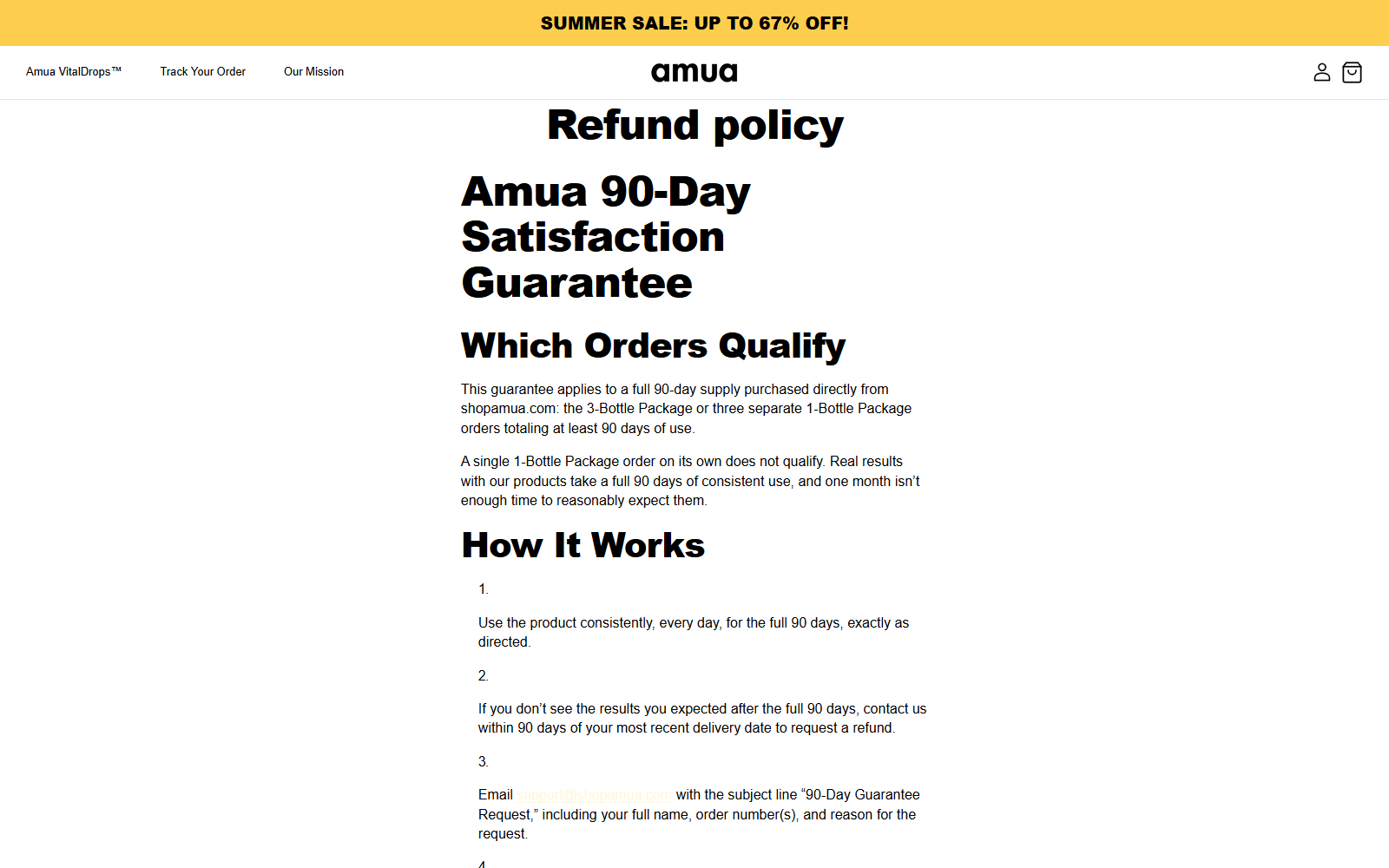
That guarantee applies to a full 90-day supply, such as a three-bottle package or three qualifying one-bottle orders.
A single bottle alone does not qualify. The customer is also told to use the product consistently for the full period before requesting relief.
The 90-Day Guarantee Has Important Conditions
A headline guarantee can look like permission to try one bottle. AMUA’s written policy does not offer that simple arrangement.
It says the buyer needs at least 90 days of product. That requirement encourages a larger initial order or repeated purchasing.
The user must then consume the drops consistently. Waiting for the required trial period may overlap with additional subscription renewals.
A guarantee request must follow the stated contact process. Save the policy version visible on purchase day because terms can change later.
Ask support whether opened bottles must be returned, who pays postage, which charges qualify, and whether shipping or protection fees are excluded.
Do not assume the satisfaction guarantee overrides the subscription policy’s statement about processed renewals.
If support gives an interpretation that differs from the published page, request it in writing before ordering.
Company, Address, and Fulfillment Checks
The refund policy names Nexiron Holdings LLC
AMUA’s refund page identifies Nexiron Holdings LLC as doing business through Shop Amua. That disclosure gives buyers a name beyond the product brand.
Record it with the storefront URL and statement descriptor. A bank or regulator may index the transaction under the company name instead of AMUA.
The Wyoming address does not prove manufacturing
The policy lists 4008 Laramie Street in Cheyenne, Wyoming. A company address does not establish where the drops are formulated, bottled, tested, or shipped.
Request the manufacturer shown on the physical label and compare it with the invoice, policies, and any laboratory certificate.
The telephone number should be tested before purchase
The site publishes a telephone number. Call it before ordering and ask about subscription frequency, cancellation, the 90-day guarantee, and the exact return process.
A functioning line is useful only if representatives answer specific questions and provide confirmation that can be saved.
Fulfillment is separate from clinical credibility
A warehouse can reliably ship bottles while the health claims remain weak. Delivery does not validate efficacy, safety, or the testimonial narrative.
Check the label for lot number, expiration, manufacturer, ingredient amounts, warnings, and tamper evidence when the package arrives.
What to Do if You Have Fallen Victim to This Scam
- Confirm the enrollment. Review the checkout, receipt, account, and policy to identify the selected frequency, amount, and next renewal date.
- Cancel through every available channel. Use the account controls, email, and telephone. Request written confirmation that future billing and shipments are stopped.
- Act before the cutoff. Submit cancellation more than 24 hours before renewal and save timestamps proving when the request was received.
- Revoke payment authorization clearly. State that no further recurring charges are authorized after the cancellation’s effective date.
- Ask about the current shipment. Request interception, return authorization, the correct address, postage responsibility, and the exact refundable amount.
- Document the guarantee conditions. Save evidence of the package size, order history, usage requirement, delivery date, and policy visible during purchase.
- Contact the card issuer when billing continues. Provide the cancellation, renewal receipt, subscription terms, support replies, and subsequent statement.
- Do not invent medical results. Describe billing and policy problems separately from whether the supplement helped your symptoms.
- Report concerning reactions. Stop using the product and consult a clinician when appropriate. Preserve the bottle, lot number, and ingredient panel.
- Scan suspicious downloads. Use Malwarebytes after unexpected files. AdGuard can reduce malicious supplement advertisements and redirect chains.
- Submit a factual complaint. Give consumer agencies the legal company, address, phone, receipt, card descriptor, cancellation date, and disputed amount.
How to Read a Supplement Subscription Before Paying
Find the words subscribe, recurring, autoship, renewal, frequency, cancel, pause, and final sale. Search the entire page, not only the product box.
Compare one-time and subscription buttons. A selected color, filled circle, or discount badge can indicate that recurring billing is active.
Open the cart after every selection. Confirm that the description still says one-time if that is your intention.
Calculate twelve months of billing. A modest bottle price becomes significant when renewed monthly, and weekly plans increase exposure much faster.
Inspect the cancellation route before enrolling. “Easy cancellation” should lead to a visible account control or a responsive support process.
Read what happens after the cutoff. Some programs stop future charges but refuse to refund the renewal already created.
Keep a calendar reminder several days before the date. Do not rely solely on a reminder email that policies say may not be sent.
Use a payment method with transaction alerts. Early notice improves the chance of resolving an unwanted renewal before another package is opened.
Health Claims Require Better Evidence Than Testimonials
Menopause can coincide with musculoskeletal symptoms, sleep changes, mood changes, and many other concerns. One social-media explanation cannot diagnose their cause.
Hip pain may involve tendons, joints, back problems, injury, or other conditions. Delaying evaluation for a supplement story can prolong harm.
Testimonials rarely disclose concurrent treatment, natural fluctuation, lifestyle changes, or unsuccessful customers.
Before trying a blend, show the full ingredient panel to a pharmacist or clinician who knows your medicines and health history.
Do not interpret “natural” as harmless. Plant ingredients can affect blood pressure, glucose, hormones, sedation, allergies, and medication metabolism.
If a merchant implies treatment of a diagnosed condition, ask for the exact clinical trial on the finished product.
A good refund policy cannot substitute for reliable evidence. It only determines what happens when expectations are not met.
Keep the first bottle and shipping carton until the matter is resolved. The lot, expiration date, manufacturer, and label can answer questions a webpage cannot.
Compare the delivered Supplement Facts panel with the archived listing. Ingredient amounts or warnings should not appear for the first time after purchase.
If the bottle lacks tamper evidence, arrives leaking, or has an unreadable lot code, photograph it and contact the seller before consuming anything.
Do not combine several hormone, energy, or circulation supplements casually. Overlapping ingredients can increase side effects without making any product more effective.
Record the date you stopped the supplement and any symptoms. That timeline can help a clinician evaluate a possible reaction.
Frequently Asked Questions
Is AMUA VitalDrops a scam?
It is a marketed supplement with published policies. The major concerns are aggressive health claims, rotating sales stories, recurring billing, and restrictive renewal refunds.
Does AMUA VitalDrops create automatic refills?
Yes, when a shopper selects a subscription. The policy permits weekly, monthly, or quarterly renewals that continue until paused or canceled.
Can I get a refund for an AMUA renewal?
The subscription policy says processed charges are final when cancellation was missed. Ask support and your card issuer about the specific transaction.
Does one bottle qualify for the 90-day guarantee?
No. The reviewed policy says a single one-bottle order alone does not qualify; it requires a full 90-day supply.
Is AMUA VitalDrops FDA-approved?
The product page’s FDA-registered language does not mean the supplement was FDA-approved for effectiveness or endorsed for menopause symptoms.
How do I cancel AMUA VitalDrops?
Use the account or published support channels at least 24 hours before renewal, and keep written confirmation showing that future charges were canceled.
The Bottom Line
AMUA VitalDrops combines a personal menopause narrative with a subscription program that can continue billing without a fresh notice.
The 24-hour cutoff, final processed renewals, retry attempts, and conditional 90-day guarantee deserve more attention than testimonial counters or sale banners.
If you still buy, choose one-time billing deliberately, save the terms, verify the ingredient panel, and obtain medical guidance for persistent symptoms.








