

Mayevara promises lighter legs, a less puffy face, clearer skin, and renewed energy from a daily bottle of herbal drops.
The storefront looks polished and reassuring, but its strongest health and refund messages change depending on which page a shopper reads.
Overview
The Product Is Sold as a Gentle Lymphatic Reset
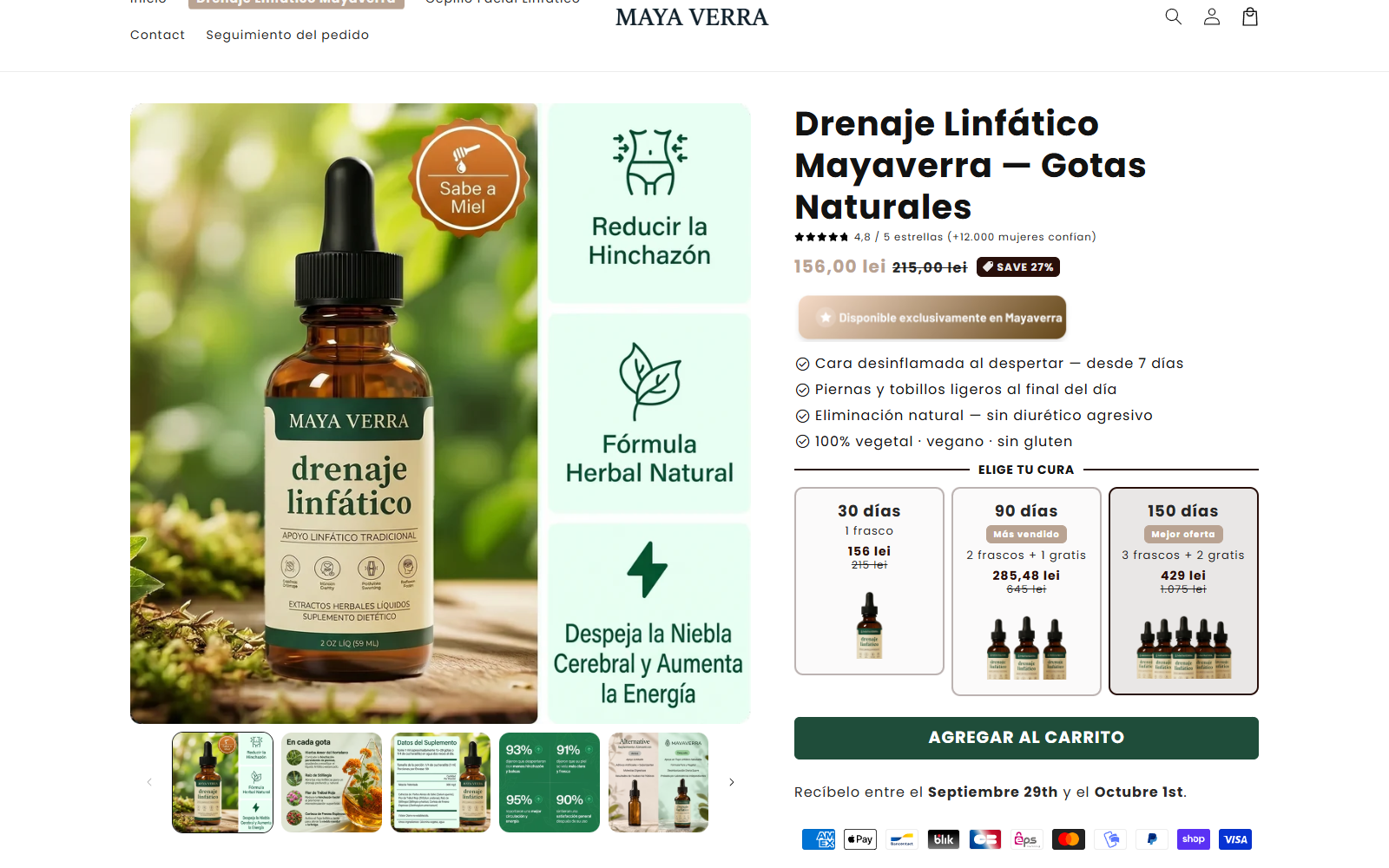
Mayevara sells liquid herbal drops described as support for natural lymphatic drainage, fluid balance, digestion, circulation, mood, and daily detoxification.
The formula is promoted with cleavers, stillingia, red clover, and prickly ash. The seller says it is plant-based, alcohol-free, sugar-free, and gluten-free.
Claims on the reviewed pages include a less puffy face within seven days, lighter legs, clearer skin, better energy, and reduced swelling.
The product is offered through one-bottle, three-bottle, and five-bottle packages. Larger packages are labeled as the most popular or best value.
The Evidence Comes From the Seller
The website presents percentages from an internal survey involving 490 volunteers after eight weeks of use.
It reports that 97% noticed less morning facial puffiness, 84% saw less swelling, and 83% felt lighter with more energy.
Those numbers are marketing claims, not a published clinical trial. The page does not provide a study protocol, control group, raw data, or peer review.
Customer testimonials and internal surveys can describe experiences, but they cannot establish that the drops treat a medical cause of swelling.
The Biggest Concern Is Policy Conflict
Mayevara is not condemned here merely because it sells an herbal product. The sharper warning comes from contradictions across its own pages.
The homepage banner promises 30 days. Product sections promise 60 days with no questions. The terms of sale state 14 days.
The refund policy returns to 30 days, requires an unused item, blocks sale-item returns, and threatens only a 30% refund when delivery is refused.
Before ordering, shoppers should understand these specific risks:
- The displayed guarantee changes between 14, 30, and 60 days.
- Opened or used products may fail the refund policy’s eligibility rule.
- Discounted products may be excluded even though the store prominently promotes sales.
- Refusing delivery can reduce the refund to 30%.
- Different pages display multiple email addresses.
- The return destination is a supermarket parcel locker, not a named headquarters.
What the Health Claims Really Mean
The lymphatic system moves fluid, immune cells, and waste products through vessels and lymph nodes. It is not a drain that normally needs commercial cleansing.
Swollen ankles, persistent facial puffiness, sudden weight change, pain, redness, or shortness of breath can have causes that deserve medical evaluation.
Possible causes include medication effects, venous problems, hormonal changes, kidney disease, heart conditions, infection, allergies, or true lymphatic disorders.
An herbal mixture cannot safely replace diagnosis. A reduction in water weight also does not prove that toxins were removed.
Mayevara says it is not a harsh diuretic. At the same time, much of the sales story centers on eliminating retained fluid and visible swelling.
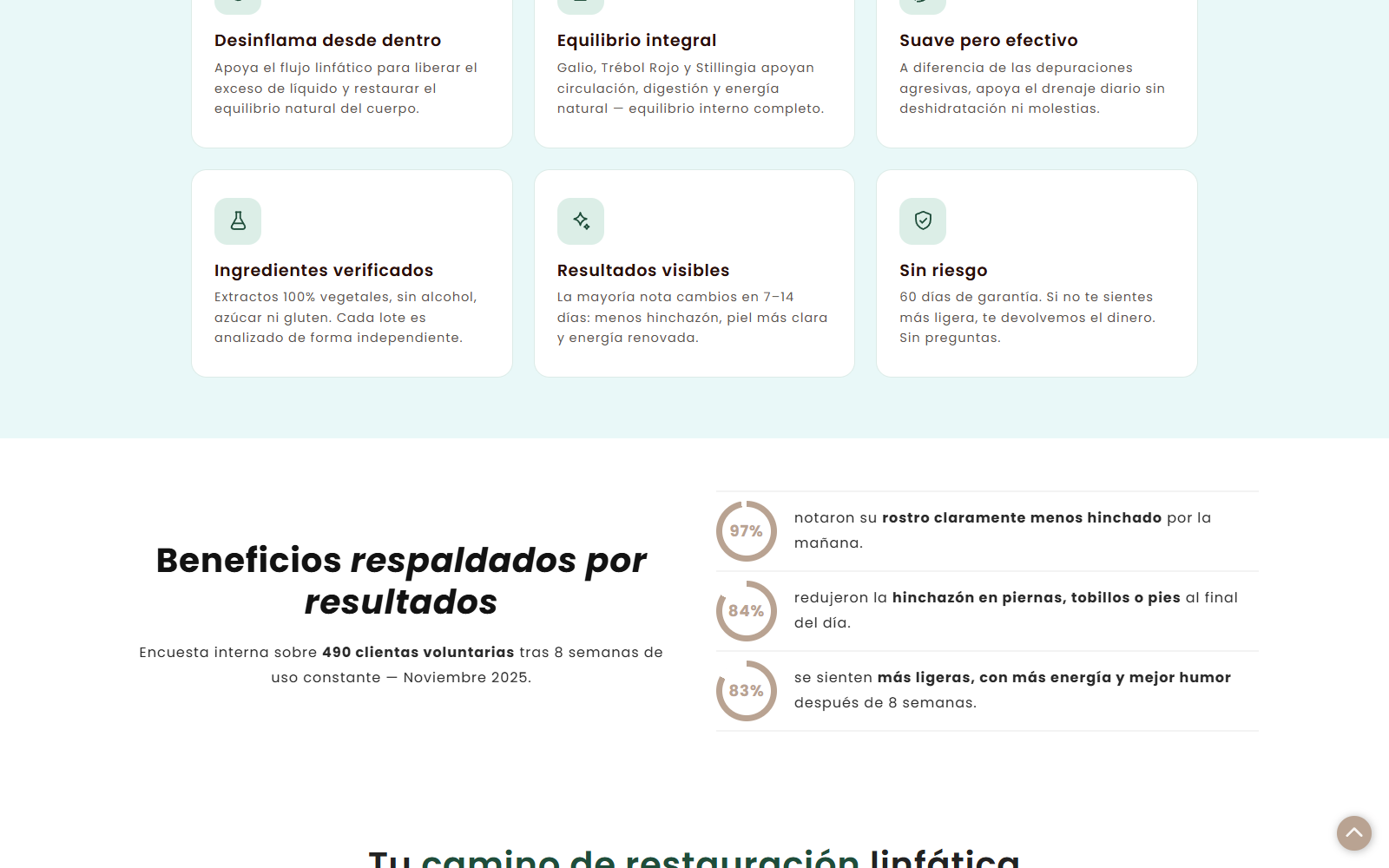
The survey graphic sounds scientific because it uses exact figures, a sample size, and a date.
However, the page does not explain recruitment, missing responses, dosing compliance, adverse events, measurement methods, or who analyzed the results.
It also does not show whether participants knew what outcome the seller expected, or whether improvement was measured objectively.
Exact percentages are not automatically reliable evidence. Good clinical evidence must be transparent enough for independent experts to evaluate.
How the Mayevara Sales Funnel Works
Step 1: A Common Symptom Becomes a Hidden Imbalance
The offer begins with experiences many people recognize: morning puffiness, heavy legs, bloating, fatigue, and frustration with changing body shape.
Those symptoms are reframed as sluggish lymphatic flow that a simple daily ritual may restore.
This explanation is emotionally satisfying because it gives several unrelated complaints one easy cause and one purchasable answer.
Step 2: Herbal Language Makes the Answer Feel Gentle
The page repeatedly distinguishes Mayevara from aggressive detoxes and harsh diuretics.
Traditional botanical names, plant imagery, and statements about independent batch analysis create a feeling of natural safety and careful formulation.
Natural ingredients can still cause allergies, interactions, bleeding risk, hormonal effects, or complications during pregnancy and breastfeeding.
Step 3: Internal Survey Numbers Supply Scientific Theater
High response figures give the impression that results are predictable. Timelines describe improvements across the first four weeks.
Yet the website’s survey is not equivalent to a randomized, blinded, controlled trial. It cannot prove that the drops caused each claimed outcome.
A buyer should ask for the complete study and an exact ingredient label, including amounts per dose.
Step 4: Testimonials Turn Symptoms Into Stories
Personal accounts describe pregnancy changes, nursing shifts, menopause, painful legs, and failed attempts with teas or diuretics.
Stories make the benefits easier to imagine, but they offer no way to verify diagnoses, medications, lifestyle changes, or whether the writers are representative.
A testimonial can be genuine and still provide poor evidence for what another person’s body will experience.
Step 5: Bundles Push the Commitment Higher
The product page offers 30-day, 90-day, and 150-day packages. The larger choices show free bottles and larger crossed-out totals.
That structure encourages a long supply before the buyer knows whether the formula is tolerated, useful, or eligible for return.
Start with the smallest quantity if you proceed. Photograph the selected package and final quantity before paying.
Step 6: Urgency Discourages Policy Reading
Banners announce a summer offer, free shipping only today, secure payment, and a full-refund guarantee.
A discount popup offers as much as 60% off in exchange for an email address. Repeated urgency keeps attention on savings.
The decisive information sits elsewhere in dense policy pages, where the promise becomes narrower and less consistent.
Step 7: The Return Process Creates Friction
The refund page requires prior approval, unused condition, original packaging, tags, and proof of purchase.
It says shoppers must accept delivery and then complete a return. Refusing the parcel can leave only a 30% refund.
The policy also excludes sale items, which matters because the storefront presents the product as discounted.
Company, Address, and Fulfillment Checks
The Brand Page Does Not Name a Legal Company
The legal notice says the website is operated by the Mayevara brand, but it does not identify a registered company number or responsible legal entity.
Its last-updated field still contains a placeholder asking someone to add a date.
A brand name alone is not enough for accountability. Buyers should know the entity accepting payment and the jurisdiction governing the transaction.
The Return Address Is a Parcel Locker
Returns are directed to Locker Super U, 22 Rue de la Galarnière, 44400 Rezé, France.
A parcel locker can be useful logistics infrastructure. It does not show where the company is managed, where products are made, or who receives legal notices.
Request a complete recipient name and return authorization before shipping. Carriers may reject or mishandle parcels addressed only to a locker.
Support Details Do Not Stay Consistent
The refund process uses contact.mayaverra@yahoo.com. The site footer displays Contact@mayaverra.com.
For delayed refunds, the same policy unexpectedly directs customers to contact.horaparis@gmail.com, an address carrying a different brand name.
Multiple unrelated addresses make escalation harder. Keep all messages and verify which address appears on the order confirmation.
The Supply Chain Is Described but Not Identified
The FAQ says the drops are formulated and bottled in GMP-certified facilities, but it does not name the manufacturer or certificate issuer.
The reviewed page also lacks easily verifiable batch certificates, laboratory reports, importer details, and exact active amounts.
Ask for a complete supplement label, lot number, factory name, country of origin, and certificate of analysis matching the bottle you will receive.
The Refund Promise Changes as You Read
At the top of the store, the guarantee is 30 days. A product section later promises 60 days, no questions and no conditions.
The terms of sale allow returns within 14 days and place return postage on the customer, except for defective or incorrect products.
The refund policy allows 30 days, but only when the item is unused, tagged, and in original packaging.
These rules cannot all describe the same simple, risk-free trial. A used bottle cannot remain unused after someone tests whether it works.
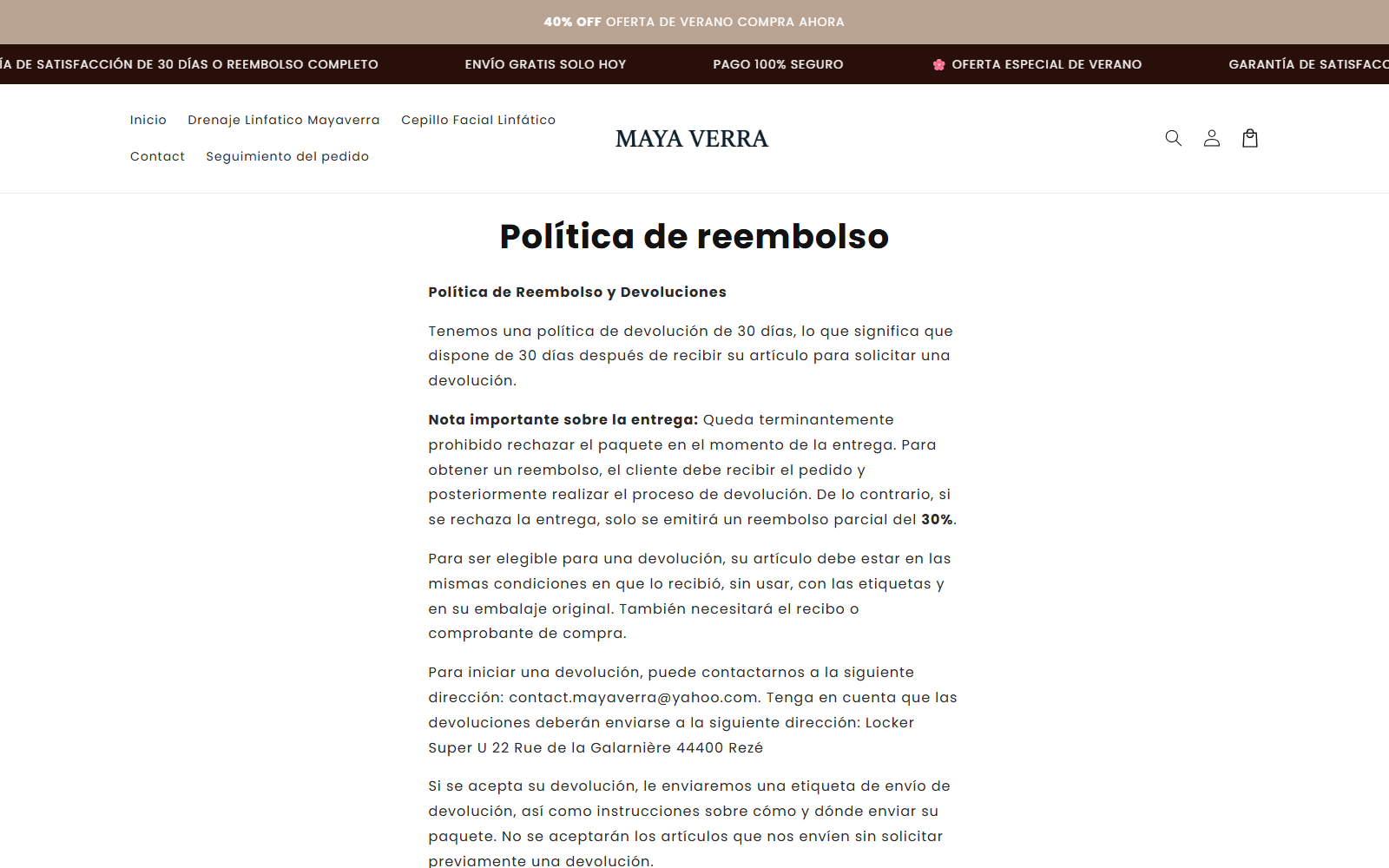
The policy shown above adds another severe condition. Refusing delivery results in only a 30% partial refund.
It also says sale items cannot be returned. Because the product is marketed with promotions, that clause may cover many ordinary purchases.
Before paying, ask the seller to confirm in writing which guarantee controls your order and whether an opened bottle qualifies.
If the answer is vague or contradicts the page, do not assume the friendliest version will be honored later.
Red Flags Visible on the Store
- Internal survey claims are presented without a complete study.
- The legal notice contains an unfinished date placeholder.
- The legal operator is not clearly identified.
- The guarantee shifts between 14, 30, and 60 days.
- Sale-item exclusions conflict with constant discount messaging.
- A different-brand Gmail address appears in refund instructions.
- Returns go to a parcel locker rather than a named business office.
- The product pushes larger bundles before effectiveness is known.
One error can be careless administration. Several conflicts across health, legal, and refund information create a much greater buying risk.
The safest response is not panic. It is to demand clarity before surrendering payment details or beginning an ingestible product.
Why the Ingredient Label Still Matters
A list of botanical names does not tell buyers how much of each ingredient appears in a serving.
Without exact amounts, customers cannot compare formulas, discuss exposure with a clinician, or identify which ingredient may have caused a reaction.
Extract strength matters too. A concentrated extract can produce different effects from an ordinary tea made with the same plant.
The seller should provide serving size, botanical part, extract ratio, other ingredients, allergen information, warnings, lot code, expiration date, and responsible manufacturer.
Independent testing should match the finished batch. A generic laboratory badge does not prove identity, potency, microbial safety, or heavy-metal limits for your bottle.
How to Document a Conflicting Guarantee
Record the entire checkout journey, not only the product headline. Capture the cart, selected bundle, discount, shipping promise, and final amount.
Save the refund policy as a PDF and include its address and date. Store copies outside the email account used for ordering.
Ask support one direct question: may an opened bottle be returned after a genuine trial? Request a yes-or-no answer tied to your order.
If support cites another policy, ask for its exact link. Conflicting promises become easier to explain when a bank sees every version together.
Do not send health records or identity documents merely to prove disappointment. Provide only information reasonably needed to locate the transaction.
What to Do if You Have Fallen Victim to This Scam
- Preserve every version of the promise. Save the 14-day, 30-day, and 60-day language, plus the bundle, discount, order total, confirmation, and return exclusions.
- Stop using the drops after a concerning reaction. Keep the bottle, lot code, ingredients, packaging, and photographs. Seek medical advice for persistent or serious symptoms.
- Send a written cancellation or return request. Use every address shown on your confirmation and policy pages. Ask which rule applies and request authorization.
- Do not refuse delivery without advice. The reviewed policy threatens a 70% loss. Ask your card issuer how to protect your rights before acting.
- Return only with tracking. Confirm the recipient, photograph the sealed parcel, keep its weight, and preserve proof that the locker accepted it.
- Dispute an unhonored promise. Give your payment provider the conflicting guarantee screenshots, support messages, tracking, and exact requested remedy.
- Inspect the device used for the purchase. Malwarebytes can find unwanted software, while AdGuard can reduce malicious ads and risky redirect pages.
- Reject refund recovery pitches. A stranger asking for upfront payment, remote access, or cryptocurrency cannot guarantee retrieval of your money.
- Report misleading health marketing. Contact your consumer authority, food or supplement regulator, advertising platform, and payment processor with copies of the claims.
Frequently Asked Questions
Is Mayevara proven to improve lymphatic drainage?
No clinical trial establishing that outcome was provided on the reviewed pages. The highlighted percentages come from the seller’s internal survey.
Is Mayevara definitely a scam?
The evidence supports a strong buyer warning, not a claim that every order is fraudulent. Policy conflicts and incomplete company identification create substantial risk.
Does the store offer 14, 30, or 60 days?
All three periods appeared on different pages. Obtain the controlling terms in writing before ordering and save the version displayed during checkout.
Can I return an opened bottle?
The refund policy requires an unused product, while the sales message promises a trial. That conflict should be resolved with the seller before purchase.
Why is the parcel-locker address important?
It may receive returns, but it does not identify headquarters, management, or manufacturing. A complete recipient and authorization are essential for proof of delivery.
Should swelling be treated with detox drops?
Persistent or sudden swelling needs professional evaluation. Do not delay care, change medication, or use an herbal product as a substitute for diagnosis.
The Bottom Line
Mayevara combines emotionally appealing wellness claims with impressive percentages and money-saving bundles. Its own policies make the supposed risk-free trial far less clear.
The shifting guarantee, sale exclusion, unrelated support email, unnamed operator, and locker return address justify extreme caution. Get written answers before paying or choose a transparent seller.








