

Covering gray hair usually means gloves, careful timing, and a bathroom you hope will survive the process.
PearWood offers a calmer picture: ordinary shampoo, botanical language, quick color, and no stained hands. That simplicity deserves a closer look.
Overview
What PearWood Sells
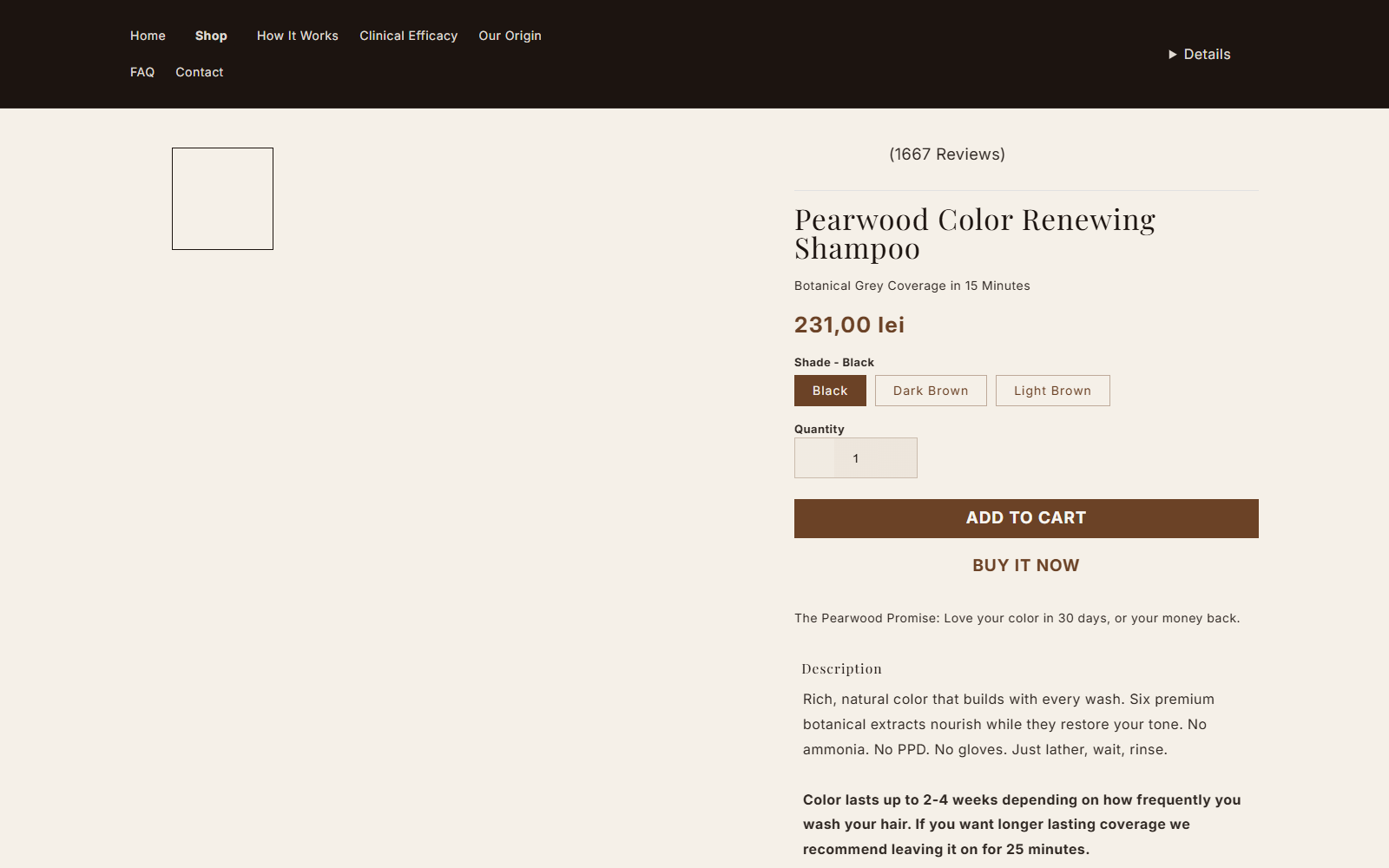
PearWood Color Renewing Shampoo is a color-depositing hair product offered in black, dark brown, and light brown shades.
The seller describes it as botanical gray coverage that works in 15 minutes and lasts roughly seven to ten washes.
A bottle costs $49 on the reviewed page. The company says one bottle provides about ten to fifteen treatments.
Despite the shampoo language, this is still a hair-color product. It changes appearance by depositing color rather than merely washing hair.
The Claims Buyers See First
The sales page emphasizes no ammonia, no PPD, no gloves, and no staining of skin or bathroom surfaces.
It also presents six botanical extracts as supporting healthier-looking hair while restoring tone.
The page displays more than 1,600 reviews and a 30-day promise, creating the impression of a well-established, low-risk purchase.
- Gray coverage is advertised in about 15 minutes.
- The formula is described as free from ammonia and PPD.
- The seller says gloves are unnecessary.
- The FAQ says hands and showers will not stain.
- The refund page excludes several unsatisfactory-result scenarios.
- A 48-hour patch test is still required.
Our Findings in Plain English
PearWood appears to be an operating direct-to-consumer brand selling a physical hair-color product. We cannot fairly label every sale a scam.
The problem lies in the distance between the frictionless advertising and the more defensive policy language.
“No gloves” and “no staining” are unusually broad promises for a color-depositing formula. Independent buyers have described staining around nails and cuticles.
The guarantee also sounds broader on the product page than in the formal policy, where color variation may be excluded.
PearWood Is Hair Color, Even When It Feels Like Shampoo
The Format Changes the Experience, Not the Basic Risk
A shampoo-like application can be easier than mixing conventional box dye. Ease does not remove the possibility of staining, irritation, or uneven results.
Color-depositing ingredients must interact with hair strongly enough to alter its appearance. That same process can affect porous skin, nails, grout, towels, and fixtures.
The seller recommends a patch test, which is an important acknowledgment that an apparently gentle routine can still produce a reaction.
The FDA advises patch testing before every hair-dye use and recommends gloves, label compliance, careful timing, and thorough rinsing.
“Botanical” Does Not Mean Chemical-Free
PearWood highlights He Shou Wu, ginseng, ginger, Dong Quai, Biota orientalis, panthenol, and hydrolyzed wheat protein.
Those highlighted ingredients do not explain the entire coloring system. Plant extracts can accompany synthetic colorants, surfactants, preservatives, and fragrance.
A marketing page can accurately name botanicals while still giving them more visual prominence than the ingredients responsible for color.
Read the full bottle label. Do not substitute a list of “hero botanicals” for the complete ingredient declaration.
“No PPD” Is Useful but Not a Universal Safety Claim
PPD is a well-known hair-dye allergen, so avoiding it may matter to people with documented sensitivity.
However, a PPD-free formula can contain other substances that irritate skin or trigger allergy. Individual history still matters.
People with previous dye reactions should discuss ingredients with a qualified clinician rather than relying on a single excluded chemical.
Stop immediately after swelling, blistering, severe burning, breathing difficulty, or facial involvement. Serious symptoms need urgent medical attention.

How the PearWood Marketing Funnel Works
Step 1: The Ad Recasts Dyeing as Washing
The central idea removes everything people dislike about hair dye: bowls, brushes, gloves, smell, appointments, and visible mess.
Once the product feels like normal shampoo, shoppers may lower the caution they would use with a conventional color treatment.
The wording is powerful because it sells convenience before it asks the buyer to evaluate chemistry or color limitations.
Step 2: Salon Prices Become the Comparison
The brand compares its under-$5 estimated treatment cost with salon visits said to cost $150 or more.
This calculation assumes the advertised number of applications, acceptable shade results, and no corrective service afterward.
Price-per-use claims are only meaningful when the bottle delivers enough usable applications for that buyer’s hair length and density.
Step 3: Reviews Create Confidence
The page presents a large review count and polished customer statements. That volume can feel like proof that staining and coverage questions are settled.
On-site reviews are controlled by the seller’s platform. Buyers should compare them with independent reports and look for repeated, specific complaints.
Pay attention to details about gloves, cuticles, bathroom surfaces, shade accuracy, gray coverage, scalp reactions, shipping, and refunds.
Step 4: Absolute Convenience Claims Remove Objections
The FAQ answers the staining question with a direct “No” and says gloves are not needed.
That assurance is more categorical than the experience many hair-color users would expect. Hair porosity, skin condition, and application habits vary.
Use gloves anyway, protect surfaces, and perform the first application when you have time to respond to an unexpected result.
Step 5: The Guarantee Closes the Sale
The product page says buyers can contact the company within 30 days for a full refund, even after using the shampoo.
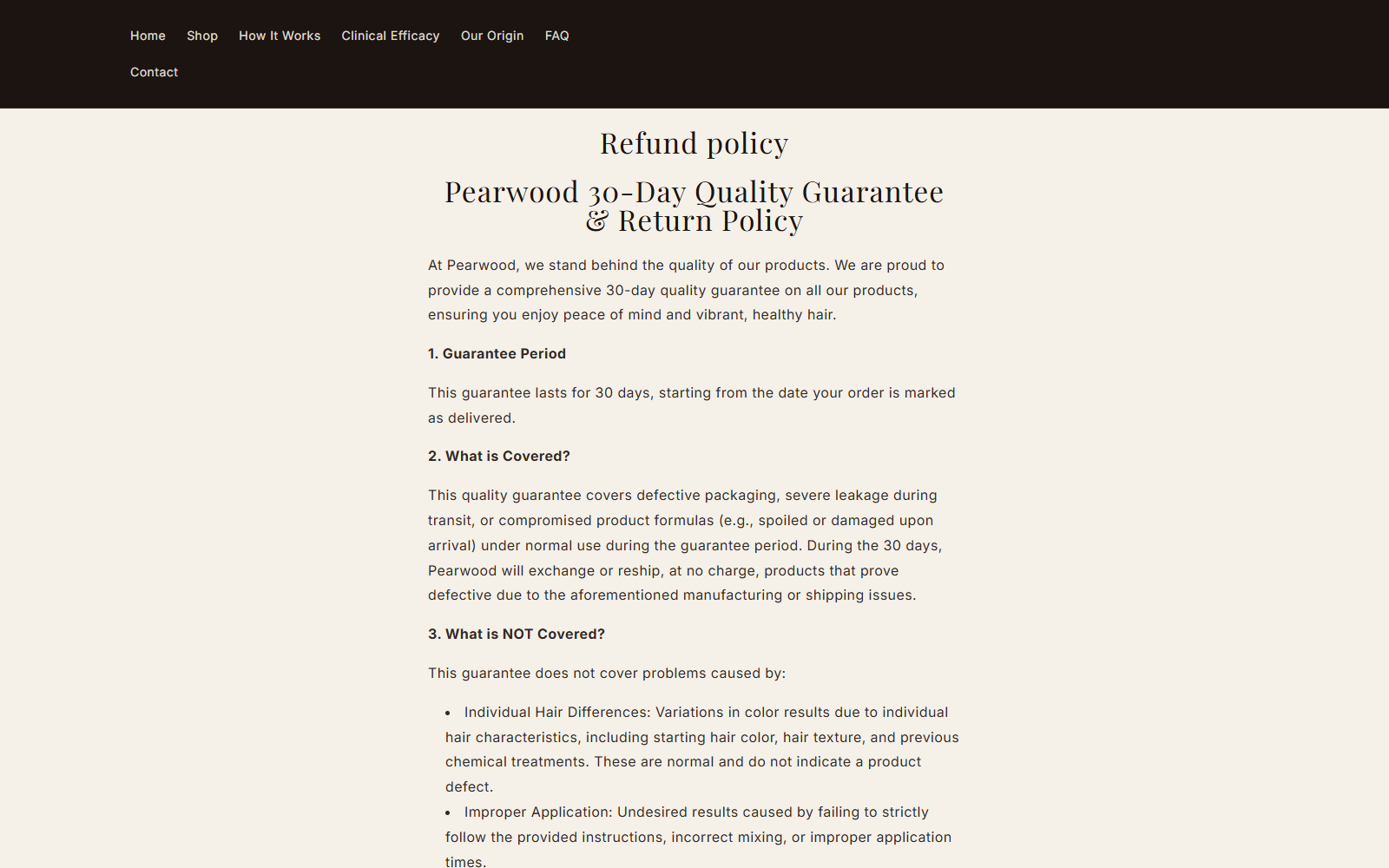
The formal policy describes a quality guarantee focused on damaged packaging, leakage, or compromised formula.
It says variation caused by starting color, texture, prior treatments, or application is not a product defect.
Step 6: Policy Interpretation Decides the Outcome
A buyer may complain that the shade failed, stained skin, or covered gray unevenly. The company may classify that as individual variation.
The customer reads “love your color or your money back.” The policy gives the seller several narrower categories for evaluating the same complaint.
That gap should be resolved in writing before purchase, especially if dissatisfaction rather than damage is the likely return reason.
The Guarantee Is Less Simple Than the Headline
Defects Receive the Clearest Protection
The policy specifically covers severe leakage, defective packaging, and a spoiled or damaged formula reported during the 30-day period.
Customers must provide an order number plus photographs or video. Approved cases can receive replacement, reshipment, or refund.
This is a conventional defect process. It is not identical to a broad satisfaction guarantee for opened color products.
Color Results Can Be Excluded
PearWood says results vary with starting color, texture, and previous chemical treatments. Those differences are classified as normal.
That language can exclude the exact outcome most shoppers care about: whether the shade actually covers their gray hair naturally.
Ask support whether partial coverage, unexpected tone, or staining qualifies under the product-page promise.
Used Products Face Practical Limits
The page says a refund may be available after use, while the policy says products that are completely or largely used are not covered.
Those statements can coexist only if the allowed amount of testing is clearly defined.
Before applying repeatedly, ask how many uses preserve eligibility and what evidence is needed to document an unsatisfactory result.
Return Shipping Can Reduce the Refund
For unopened, non-quality returns, the company says it may provide a prepaid label and subtract the actual cost from the refund.
International buyers can face additional customs issues. The shipping page also places duties and import fees on the recipient.
Calculate the likely recovery before returning a $49 bottle. A refund can become much smaller after postage and deductions.
Company, Address, and Fulfillment Checks
The Site Names Pearwood Hair Inc
The contact policy identifies PEARWOOD HAIR INC and lists support@pearwood.com.
That is more specific than a storefront with no operating name. Buyers should still compare it with the receipt and statement descriptor.
If another entity appears at checkout, ask what role each company plays in selling, processing, and fulfilling the order.
The Listed Address Is Called a Warehouse
PearWood lists 46 Stafford Street, Suite 2911, Lawrence, Massachusetts 01841 as its warehouse.
A suite address does not automatically prove or disprove physical inventory. Verify whether returns are actually accepted there before mailing.
Use map records, state filings, carrier guidance, and written support confirmation. Never assume the parcel’s sender address is an approved return destination.
Global Shipping Complicates Simple Assumptions
The shipping policy says orders may come from different warehouses and that multiple-item purchases can arrive separately.
It also mentions worldwide shipping, customs delays, and recipient responsibility for import costs.
Those details suggest the customer experience may extend beyond a single Massachusetts location, even when a domestic address appears in the footer.
The Package Should Identify the Responsible Supplier
When the bottle arrives, photograph the label, barcode, lot code, origin statement, ingredients, warnings, and importer or distributor.
Compare those details with the website. Report unexplained differences before using the product.
A brand story is not traceability. The physical label should tell a buyer who stands behind the formula placed on hair and scalp.
How to Test PearWood More Safely
Perform the 48-Hour Patch Test
Use the method stated on the label and wait the full period. A previous history of trouble deserves professional guidance.
Do not treat a successful patch test as a guarantee. It reduces uncertainty but cannot predict every reaction during full application.
Wear Gloves and Protect the Room
FDA consumer guidance recommends gloves for hair dye. That precaution is sensible even when a seller says gloves are unnecessary.
Use an old towel, remove porous bathroom items, and rinse splashes immediately. Photograph stains before attempting aggressive cleaning.
Run a Strand Test
Apply the product to a hidden section of hair before committing to the whole head.
A strand test can reveal shade, timing, coverage, texture, and staining behavior without creating a large corrective problem.
Document the First Use
Record the starting color, exact application time, amount used, gloves, rinse procedure, and result in neutral lighting.
This record helps support evaluate the case and prevents a dispute from becoming one person’s memory against another’s policy interpretation.
Plan for Color Correction
Before full application, decide what you will do if the shade turns too dark, warm, cool, or patchy.
Repeated washing may fade deposited color, but aggressive stripping can dry hair and irritate an already sensitive scalp.
A salon correction can cost more than the original bottle. That possibility belongs in the real price calculation.
Do not combine unfamiliar removers, bleach, or another dye immediately after a reaction. Seek professional advice when hair or scalp is damaged.
What to Do if You Have Fallen Victim to This Scam
Use this response plan for deceptive advertising, unauthorized charges, fake seller pages, withheld refunds, or a materially misrepresented order.
- Stop after a concerning reaction. Rinse thoroughly, preserve the product and packaging, and seek medical care for swelling, breathing trouble, blistering, or severe irritation.
- Record the result immediately. Photograph the hair, scalp, hands, nails, shower, bottle, lot code, and remaining product before conditions change.
- Write to support within 30 days. State the order number, delivery date, application steps, requested remedy, and relevant promise shown during purchase.
- Ask which policy controls. Request a written explanation if the satisfaction promise conflicts with the narrower quality-guarantee exclusions.
- Do not mail without authorization. Confirm the recipient, full address, return deadline, tracking requirement, and expected shipping deduction.
- Escalate a payment dispute promptly. Contact the card issuer when the product materially differs from the offer or an approved refund never arrives.
- Secure the browsing device. If an ad caused unwanted downloads or redirects, run Malwarebytes and remove suspicious browser permissions.
- Limit intrusive retargeting. AdGuard can reduce aggressive advertising, though it cannot judge formulas or cancel an order.
Frequently Asked Questions
Is PearWood Shampoo a Scam?
We found an active seller, a physical product, formal policies, and identified contact details. That does not support calling every order fraudulent.
Our concerns center on broad no-stain advertising and a refund policy narrower than the headline promise.
Will PearWood Stain Hands or a Shower?
The official FAQ says no, but independent reports describe staining around nails and cuticles.
Because outcomes vary, gloves and surface protection are sensible regardless of the advertisement.
Is PearWood Really PPD-Free?
The seller states that the formula contains no PPD. Confirm the current ingredient list on the physical bottle you receive.
PPD-free does not mean allergy-free, irritation-free, or composed only of plant ingredients.
Can I Return PearWood After Using It?
The product page describes a used-product satisfaction refund, but the detailed policy excludes several result-related situations and largely used products.
Obtain a written answer for your circumstances before repeated applications.
Does PearWood Ship From the United States?
The site lists a Massachusetts warehouse, while its policy discusses global partners, multiple warehouses, split shipments, and customs.
Ask where your specific order will originate and where a return would go.
Should I Use PearWood Without Gloves?
We would not rely on that convenience claim. Gloves are a low-cost precaution when applying any product designed to deposit hair color.
Follow the bottle directions, patch test, protect surfaces, and use a hidden strand first.
The Bottom Line
PearWood may be a convenient color-depositing shampoo, but it is still hair dye and should be treated with hair-dye precautions.
The absolute no-stain message and policy carve-outs deserve attention. Photograph the offer, patch test, wear gloves, and clarify refund eligibility before use.
A polished botanical story cannot promise your shade, scalp, nails, and bathroom will behave exactly like the advertisement.








