

A skincare ad can feel unusually convincing when it names familiar ingredients and shows polished before-and-after results.
Padoro uses that formula well, but the important details appear after the glossy promise, where most hurried shoppers never look.
Overview
What Padoro Actually Is
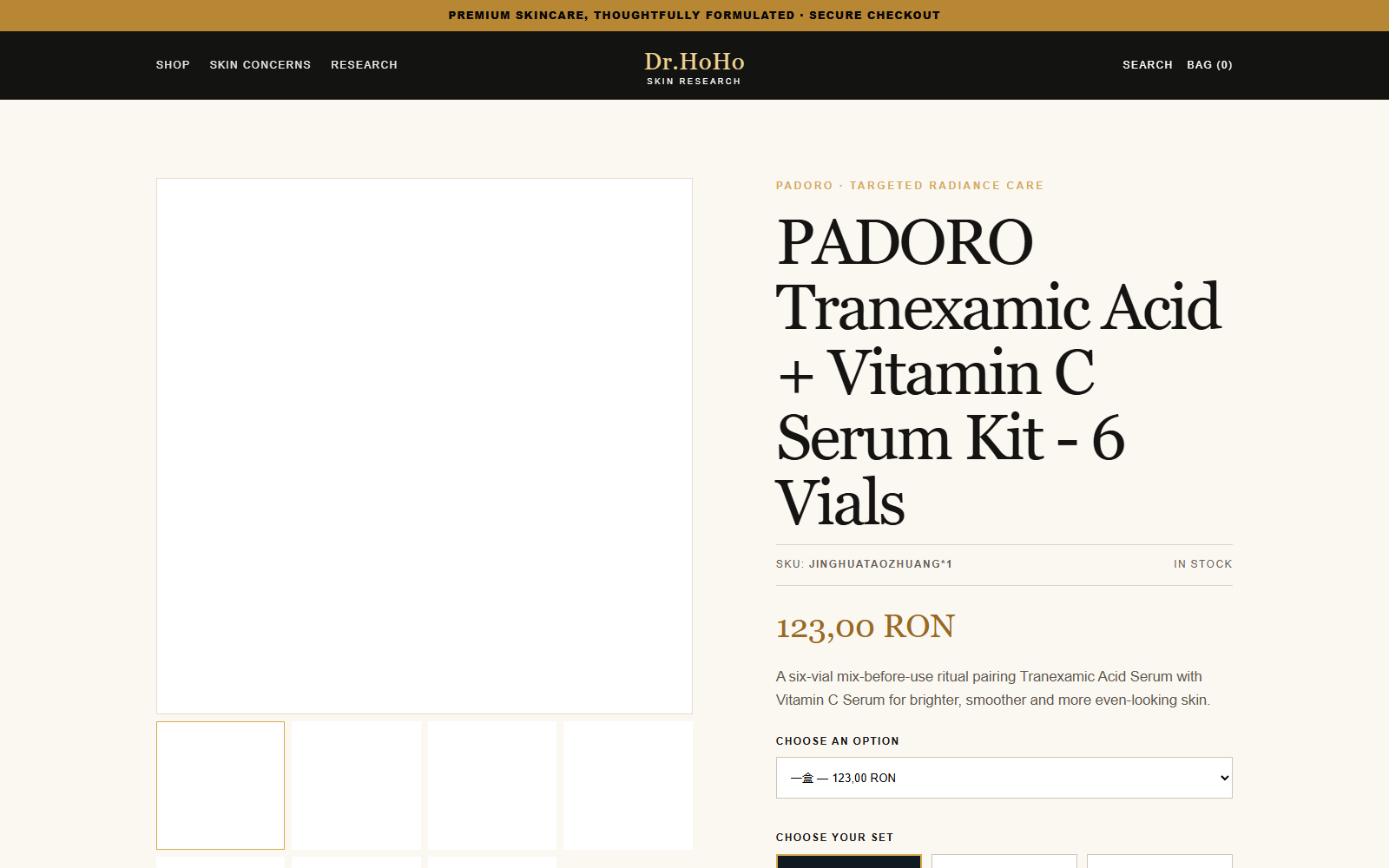
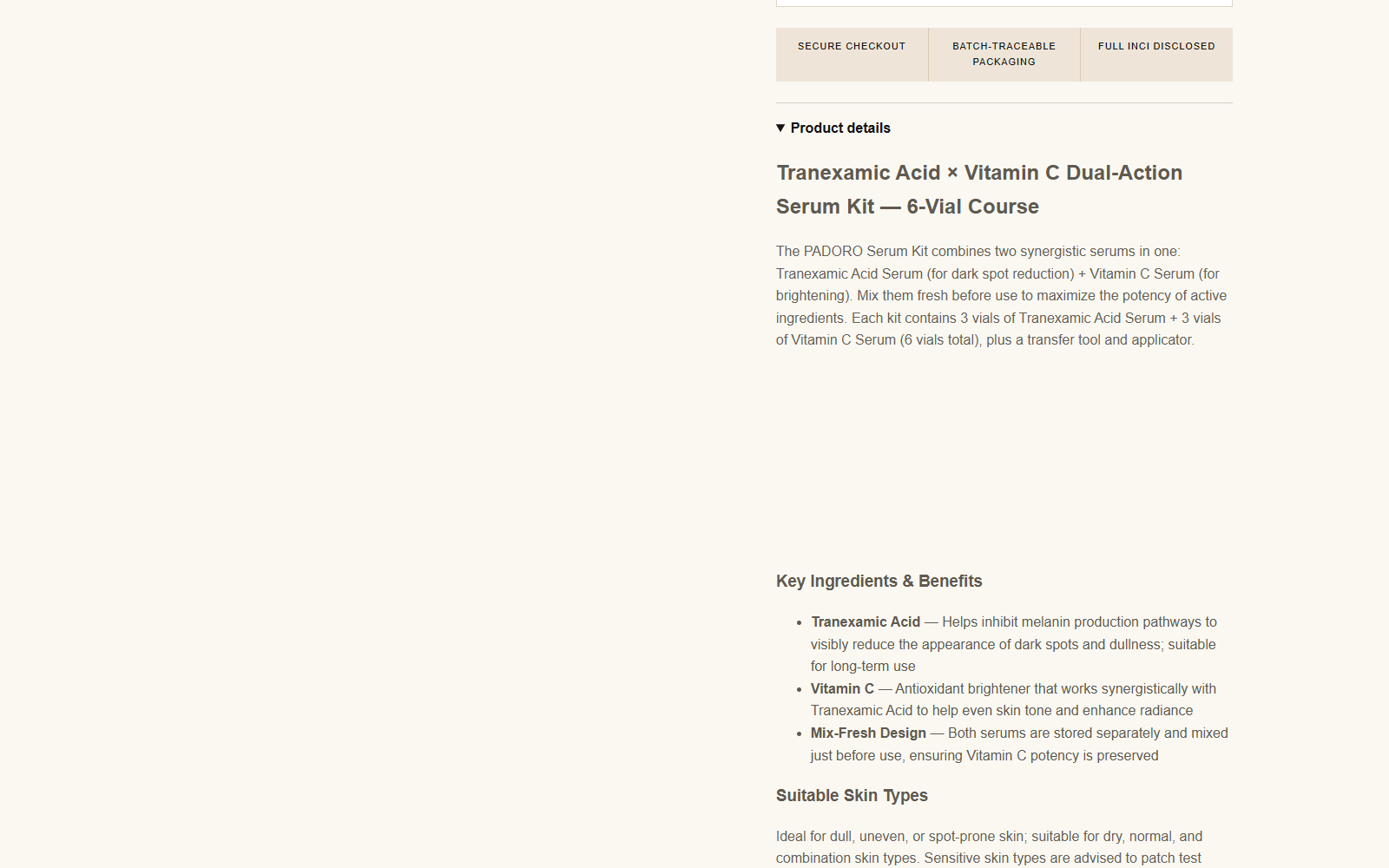
Padoro is a six-vial cosmetic kit combining a tranexamic acid serum with a separate vitamin C serum.
The buyer mixes paired vials before applying the product once daily. The listing targets dark spots, dullness, and uneven-looking skin.
This is not an imaginary product. A Padoro label also appears in the U.S. National Library of Medicine’s DailyMed database.
That listing helps establish that a labeled cosmetic exists. It does not prove every advertising claim, seller, or checkout channel is trustworthy.
What the Advertising Promises
The storefront describes brighter, smoother, and more even-looking skin. Social listings add wrinkle reduction, soothing, moisturizing, and anti-aging language.
Those phrases cover several different outcomes. A shopper may hear treatment, while the wording technically describes appearance.
The kit is sold through multiple channels, including a branded Dr.HoHo store and marketplace sellers with their own return systems.
- A physical six-vial serum kit is being offered.
- Prices, currencies, and bundle choices can vary by channel.
- Seller identities differ between the branded store and marketplaces.
- The Dr.HoHo return page contains unfinished information.
- Personal-care exclusions may limit ordinary returns.
- Results depend on formulation, concentration, skin type, and sun protection.
Our Assessment
We did not find enough evidence to call every Padoro sale fraudulent. The product has identifiable packaging, ingredients, and active marketplace listings.
The concern is the purchasing channel. The Dr.HoHo refund policy still shows an unfilled return-address placeholder and an unrelated-looking Outlook address.
That is a serious operational warning. A return policy is useful only when a buyer knows who accepted the order and where returns actually go.
Padoro should be treated as a real cosmetic sold through channels that deserve separate scrutiny, not as a clinically proven dark-spot treatment.
What the Evidence Does and Does Not Show
A DailyMed Entry Is Not an Approval Badge
DailyMed publishes labeling submitted for products. Its presence can help identify a labeler, ingredients, directions, and warnings.
Consumers sometimes mistake database inclusion for government endorsement. Those are different things, especially for products marketed as cosmetics.
The entry supports the conclusion that Padoro is more than a name invented for one advertisement. It does not verify outcomes shown in social videos.
It also cannot guarantee that every box sold online came through the same supply chain or was stored correctly.
Tranexamic Acid Can Be Real Without Making Every Claim True
Tranexamic acid is a genuine ingredient used in skincare discussions about uneven pigmentation. That fact alone cannot validate an entire advertisement.
Performance depends on the finished formula, concentration, stability, packaging, frequency, irritation, sun exposure, and the cause of discoloration.
A product page should provide a complete ingredient list and clear instructions. Buyers need more than a recognizable active ingredient printed prominently.
Anyone treating persistent or changing pigmentation should consider professional evaluation. Some marks need diagnosis rather than repeated cosmetic experimentation.
Vitamin C Stability Matters
Vitamin C formulas vary widely. Their effectiveness depends on the specific derivative, concentration, pH, packaging, and exposure to air or light.
Padoro’s separate-vial concept is presented as a freshness advantage. That is plausible as packaging logic, but it is not independent proof of results.
Check the box for batch information, manufacturer details, expiration guidance, and a complete INCI ingredient list before applying anything.
Do not use a cloudy, leaking, unusually colored, or strong-smelling vial merely because the seller calls the kit fresh.
How the Padoro Sales Funnel Works
Step 1: A Visual Skin Concern Creates the Hook
The ad usually begins with dark spots, uneven tone, or age-related changes that are easy to recognize in a mirror.
These concerns are emotionally effective because improvement feels visible and measurable. Dramatic imagery can make a slow cosmetic process look immediate.
Before-and-after media should be treated cautiously unless lighting, timing, makeup, camera settings, and participant selection are explained.
Step 2: Familiar Ingredient Names Supply Credibility
Tranexamic acid and vitamin C sound scientific because they are real ingredients with legitimate research around particular uses and formulations.
The marketing benefit comes from transferring that general credibility to this exact kit without showing equivalent product-specific evidence.
Look for testing on the finished Padoro formula, not research involving another concentration, delivery system, or patient population.
Step 3: Bundles Reframe the Purchase
The listing encourages buyers to compare one, two, or three boxes rather than first deciding whether one box is appropriate.
A larger percentage saving can make the highest quantity appear economical. It also increases the amount at risk before tolerance is known.
For skincare, a cautious first purchase is usually more sensible than stocking up because a timer or bundle discount creates pressure.
Step 4: The Buyer Moves Between Sellers
A social ad may lead to a marketplace, a branded store, or another reseller. Each route can have different prices and protections.
The business accepting payment matters more than the logo on the bottle. That entity controls fulfillment, returns, and charge descriptions.
Save the exact domain, seller profile, final cart, and receipt. Searching only for Padoro later may lead to a different merchant.
Step 5: A Reassuring Policy Reduces Hesitation
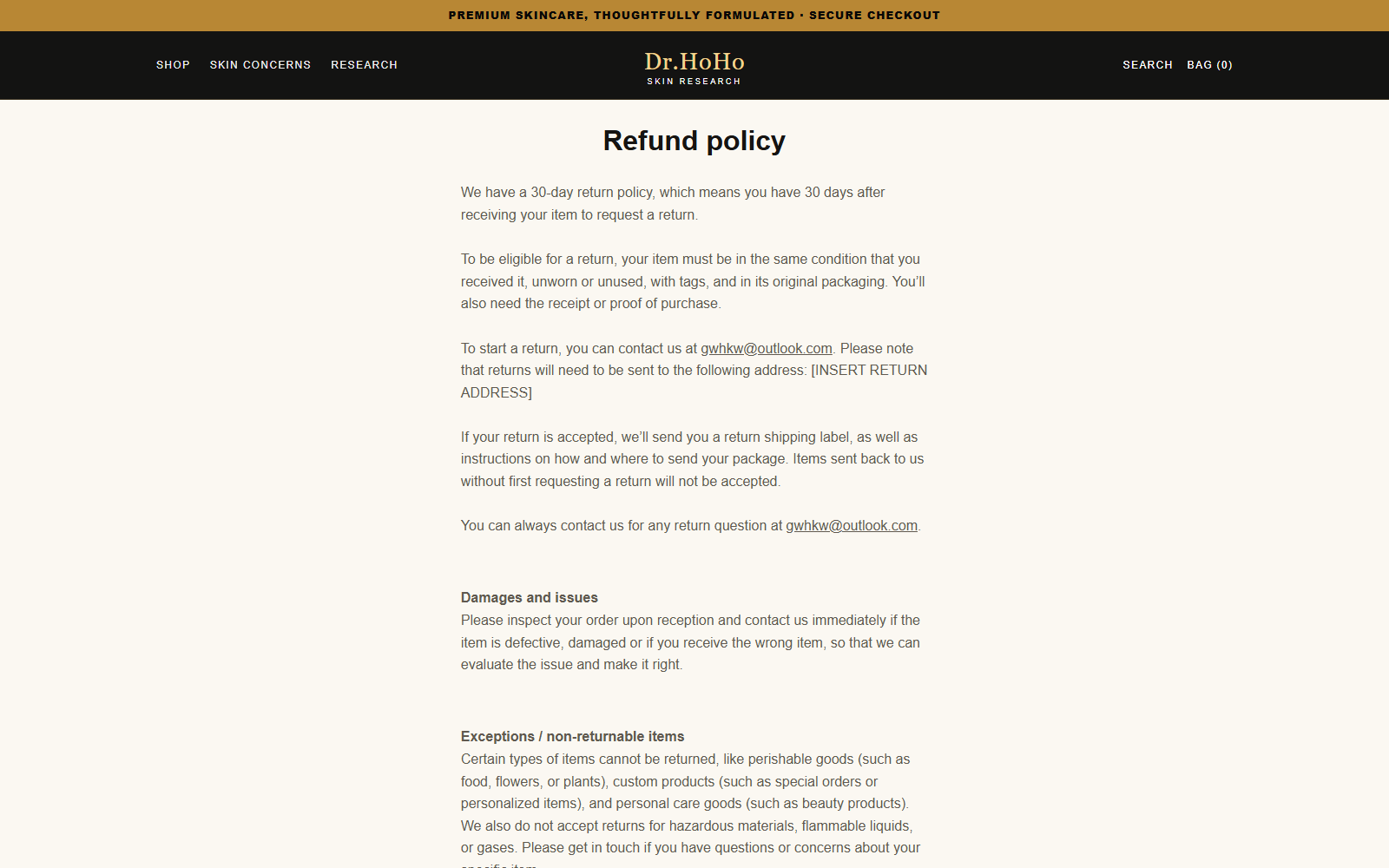
The Dr.HoHo page mentions a 30-day return policy. At first glance, that sounds like a conventional safety net.
The detailed wording requires unused condition and original packaging, while also naming personal-care goods among items that may be non-returnable.
A serum cannot be meaningfully tested while remaining unused. Buyers should ask how dissatisfaction claims are handled before opening the box.
Step 6: The Return Process Becomes the Real Test
The reviewed policy directs customers to an Outlook address and leaves the destination as “[INSERT RETURN ADDRESS].”
That unfinished template language creates avoidable uncertainty about where a valid return must be shipped and who will receive it.
If support supplies an address later, compare it with the receipt, parcel origin, business disclosures, and any return authorization.
Red Flags on the Dr.HoHo Return Page
The Return Address Is Missing
A customer cannot estimate postage, customs exposure, or delivery time without knowing the country and destination of the return.
The placeholder looks like a policy template that was never completed. That is not a minor spelling error in a decorative paragraph.
It sits inside the procedure a buyer must follow to recover money. The missing detail weakens the practical value of the guarantee.
The Contact Address Does Not Match the Store Name
The refund page uses gwhkw@outlook.com rather than an address on the Dr.HoHo domain.
A free email account is not automatic proof of wrongdoing. It does make business identity and record-keeping harder to evaluate.
Ask support to identify the legal merchant, return recipient, and country in writing before sending a parcel or additional personal information.
Beauty Products May Be Excluded
The policy says personal-care goods, including beauty products, can be non-returnable. Padoro is plainly a beauty product.
That clause can conflict with a shopper’s broad understanding of “30-day returns,” especially after the package has been opened.
Request a product-specific answer. A general policy should not be assumed to promise a used-serum satisfaction refund.
Sale Items Are Also Excluded
Bundle savings and promotional pricing appear throughout many direct-response stores. The policy says sale items cannot be returned.
A buyer should therefore ask whether the selected Padoro bundle is classified as a sale item before completing payment.
Keep the answer beside the order confirmation. Policies can change, while a dated screenshot preserves what was represented when you paid.
Company, Address, and Fulfillment Checks
Identify the Merchant, Not Just Padoro
The product name does not tell you which company charged the card. Marketplace listings can name a seller different from the brand.
On one current marketplace listing, seller information points to Blackiss INC in Sheridan, Wyoming, while the item is sold under another storefront name.
That arrangement may be lawful marketplace structure. It still means buyers must preserve the exact seller record tied to their transaction.
Check the Labeler and Package
The DailyMed label identifies product information that can be compared with the box you receive.
Look for matching ingredients, directions, warnings, lot numbers, net contents, and responsible-company details. Photograph every side before discarding packaging.
Misspellings, missing batch data, leaking vials, or instructions that differ sharply from the current label deserve immediate questions.
Do Not Assume a Registered-Agent Address Is Headquarters
Sheridan, Wyoming addresses are frequently used for company registration and mail handling. An address alone does not reveal staffing or fulfillment location.
Search the suite, compare state records, and ask where customer support and returns are actually handled.
A registered address can identify a legal entity without proving that the product is manufactured, tested, or shipped there.
Confirm Fulfillment Before Paying
Ask whether the order ships domestically or internationally, how long dispatch takes, and whether customs fees can apply.
Confirm the exact number of boxes, total charge, and whether any replenishment plan exists. Do not infer billing frequency from a product image.
The reviewed Padoro pages did not establish that every purchase creates a subscription. Check your own cart instead of repeating unsupported rumors.
How to Evaluate the Skincare Claims
Ask for the Complete Formula
Front-label ingredients are not a complete formula. Review the full ingredient list for fragrance, preservatives, solvents, and known sensitivities.
If the seller cannot provide a readable list before purchase, wait. Skin products should not require guessing about what touches your face.
Patch Test Conservatively
Follow the package directions and test a small area first. Stop if burning, swelling, blistering, or persistent redness develops.
Do not layer several new actives at once. Introducing one product makes it easier to identify the cause of irritation.
Use Sun Protection
Dark-spot routines can be undermined by ultraviolet exposure. The product page itself advises broad-spectrum sunscreen during daytime use.
Sunscreen does not make an irritating formula safe. It addresses sun exposure, not allergy, contamination, or an unsuitable ingredient combination.
Measure Realistic Change
Take neutral photographs in the same room, time, distance, and lighting. Avoid filters and makeup when comparing progress.
If there is no meaningful improvement, do not keep buying bundles simply because the ad says results are around the corner.
Skin turnover is gradual, and dramatic overnight transformations deserve skepticism. Compare a consistent area rather than judging the entire face emotionally.
Keep a brief diary of application, sunscreen, irritation, and other new products. That record can reveal patterns a promotional timeline hides.
If discoloration changes shape, color, texture, or bleeds, stop self-treating and obtain professional evaluation.
What to Do if You Have Fallen Victim to This Scam
These steps apply when a seller misrepresented the offer, charged unexpectedly, withheld goods, or used a fake Padoro advertisement.
- Stop using a questionable product. Discontinue application after a concerning reaction, preserve the box and vials, and seek medical help for serious symptoms.
- Capture the transaction record. Save the advertisement, seller profile, product page, cart, policy, receipt, tracking, and every support message.
- Contact the actual merchant. Use the seller named on the receipt or card statement, not a random Padoro page found later.
- Request a usable return address. Ask for the full legal recipient, street address, country, authorization number, deadline, and refund amount.
- Use tracked shipping only. Photograph the contents and sealed parcel, then retain the carrier receipt and delivery confirmation.
- Dispute unresolved billing problems. Contact the card issuer promptly if goods never arrive, quantities are wrong, or an agreed refund is withheld.
- Check for unexpected software. If the ad forced downloads or notifications, scan the device with Malwarebytes and review browser permissions.
- Reduce repeat advertising. AdGuard can block many intrusive ad placements, but it cannot validate products or reverse an existing payment.
Frequently Asked Questions
Is Padoro Serum a Scam?
We found evidence of a real labeled product, so a blanket scam claim would be too strong.
The Dr.HoHo return page contains significant red flags, including a missing return address and unclear beauty-product eligibility.
Is Padoro FDA Approved?
Do not treat DailyMed presence as FDA approval or proof that the serum will remove dark spots.
Cosmetics and drugs follow different rules. Evaluate the exact label, claims, and seller rather than relying on an approval implication.
Does Tranexamic Acid Remove Dark Spots?
Some topical formulations are studied for uneven pigmentation, but results vary and cannot be transferred automatically to every product.
Concentration, formulation, diagnosis, adherence, irritation, and sun exposure all influence what a user may see.
Can I Return an Opened Padoro Kit?
The reviewed policy requires unused condition and also lists personal-care goods among possible exclusions.
Ask the merchant for a written product-specific decision before opening or mailing anything.
Does Padoro Enroll Buyers in Automatic Refills?
We did not find sufficient evidence that every Padoro checkout automatically creates recurring billing.
Inspect the selected cart, post-purchase offers, receipt, and statements because different sellers can use different billing models.
Where Is Padoro Manufactured?
Check the physical package and current label for the responsible company and origin information.
A Wyoming seller address or branded storefront does not necessarily identify the manufacturing plant or fulfillment warehouse.
The Bottom Line
Padoro appears to be a real cosmetic kit, but recognizable ingredients and polished packaging do not validate dramatic social-media results.
The unfinished Dr.HoHo return policy is the clearest buying concern. Verify the merchant, return destination, formula, quantity, and billing terms before paying.
If any answer remains vague, skip the bundle. A skincare experiment should not begin with uncertainty about who has your money.








