

Skincare products often promise glowing transformations, but not every serum delivers what it claims. One product currently gaining attention is Volufiline Serum, marketed as a revolutionary formula that plumps, firms, and rejuvenates skin. With its plant-based complex featuring Anemarrhena Asphodeloides Root Extract, Centella Asiatica, Vitamin E, and Panthenol, the serum claims to restore volume and reduce fine lines.
But here’s the real question: Is Volufiline Serum legit, or is it just another overhyped skincare scam?
This article digs into the facts. We’ll break down what Volufiline Serum is, how it supposedly works, real customer reviews, red flags around its marketing, and what you should do if you’ve already purchased it. By the end, you’ll have a clear, research-based understanding to help you decide whether this serum deserves a place in your skincare routine or belongs in the category of overblown internet gimmicks.
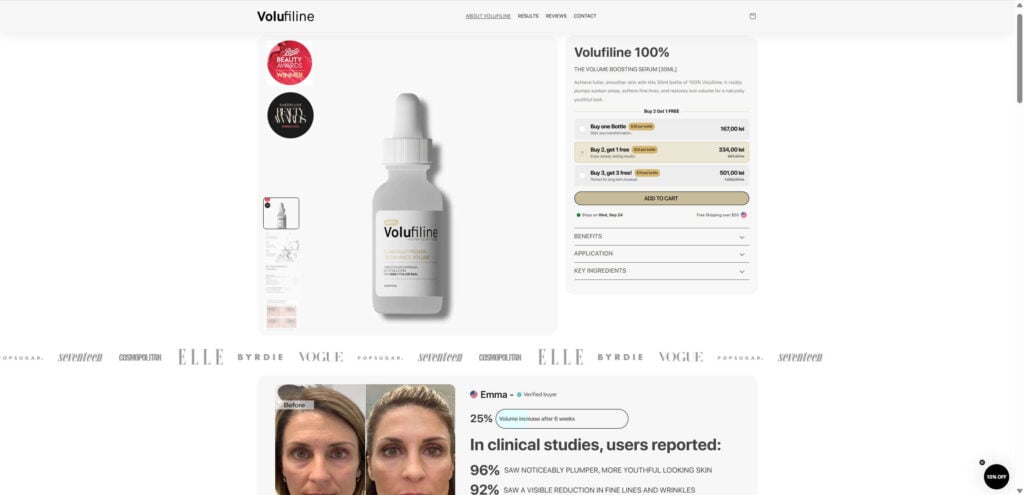
Overview of Volufiline Serum
Volufiline Serum is presented as an affordable alternative to costly cosmetic procedures such as dermal fillers, microneedling, or laser treatments. On its official website, the brand highlights bold claims, including visible volume increase, smoother skin texture, reduction in fine lines, and diminished under-eye bags.
The product is said to contain 100% Volufiline, a cosmetic ingredient primarily derived from Anemarrhena Asphodeloides Root Extract, often used in Korean beauty formulations. This botanical compound is believed to stimulate natural lipid storage in targeted areas, giving skin a fuller and plumper appearance.
Key Ingredients Claimed by the Brand:
- Anemarrhena Asphodeloides Root Extract: Promoted for its supposed volumizing effect.
- Centella Asiatica Extract: A soothing and repairing agent widely recognized in skincare.
- Vitamin E: A known antioxidant that supports skin health.
- Panthenol (Pro-Vitamin B5): Provides hydration and improves skin softness.
What the Website Claims
- Clinical Studies: The official site states that up to 96% of participants saw visibly plumper, youthful-looking skin, while 92% reported reduced fine lines and wrinkles.
- Awards: Displayed badges claim recognition from beauty experts and industry organizations.
- Massive Reviews: The site suggests the serum has received over 600,000 five-star reviews.
- Comparisons with Expensive Treatments: Marketing materials position Volufiline Serum as a cheaper alternative to cosmetic procedures costing thousands of dollars.
At first glance, these claims look very convincing. However, when cross-referenced with external sources and real-world customer experiences, cracks begin to appear.
Inconsistencies and Red Flags
- Exaggerated Reviews: While the official site mentions hundreds of thousands of glowing reviews, independent review platforms like Trustpilot show almost nothing about the brand.
- Amazon Reality Check: On Amazon, Volufiline Serum averages around 3.7 stars with fewer than 100 reviews, which is far from the massive global following the company suggests.
- Copied Content: Many testimonials and before-and-after photos appear recycled from other skincare products.
- Fake Awards: Some awards listed, such as “Beauty Expert 2024,” cannot be verified, especially considering the website was only created in early 2025.
- Lack of Transparency: The official site offers no physical address, no company background, and only a basic email contact.
Customer Feedback
- Positive Reviews: Some users genuinely report softer, smoother, and better-hydrated skin. Long-term users mention slight improvements in fine lines and overall skin plumpness.
- Negative Reviews: Others argue the serum made no difference even after consistent use for months. Complaints also include oily residue, breakouts, and no visible anti-aging benefits.
The Verdict from the Overview
The ingredients themselves do have known skincare benefits, but scientific backing for dramatic results is weak. Coupled with questionable marketing practices, inflated testimonials, and fake awards, the product leaves a lot of room for skepticism.
What to Do If You Bought This
If you’ve already purchased Volufiline Serum and feel misled, there are specific steps you can take to protect yourself and possibly recover your money.
1. Contact the Seller Directly
- Reach out to the company via their official email.
- Request a refund and keep copies of all correspondence for records.
2. File a Dispute with Your Payment Provider
- If you used a credit card or PayPal, contact your bank or provider.
- Explain that the product was misleading or falsely advertised.
- Many payment services allow disputes for non-delivery or misrepresentation.
3. Leave an Honest Review
- Share your experience on Amazon, Trustpilot, or other consumer platforms.
- Your feedback may prevent others from being misled.
4. Report the Website if Fraud is Suspected
- Use the Federal Trade Commission (FTC) website if you are in the United States.
- In other regions, file a complaint with your local consumer protection agency.
5. Check for Recurring Charges
- Some questionable skincare sites enroll buyers in automatic subscription plans.
- Check your bank account for unexpected recurring charges and cancel them immediately.
6. Learn for Future Purchases
- Research products on independent review platforms before buying.
- Avoid companies with no physical address or verified business credentials.
The Bottom Line
Is Volufiline Serum legit or a scam?
The answer is nuanced. The serum does contain ingredients like Centella Asiatica, Vitamin E, and Panthenol that can provide genuine skincare benefits. Some users may experience subtle improvements in hydration, texture, and softness.
However, the marketing around the product raises serious concerns. Fake awards, exaggerated review counts, questionable testimonials, and lack of company transparency all signal potential red flags. Independent customer feedback is inconsistent, with many users reporting little to no effect even after months of use.
If you are looking for a hydrating serum, safer options from well-established skincare brands may be more reliable. If you still want to try Volufiline, purchasing through Amazon is a better choice since you’ll benefit from buyer protection and real reviews.
In short, Volufiline Serum is not necessarily a complete scam, but it is far from the miracle product its official website makes it out to be. Approach with caution, realistic expectations, and an awareness of the red flags.

Reviews & discussion
0 commentsShare a firsthand experience, or ask a question.
Community reviews
Volufiline Serum
Moderated reader experiences, not an editorial verdict.
Start the conversation
Have a question or something useful to share? Add the first comment.