

Men’s health ads often promise privacy first, then use that privacy to move a deeply personal decision away from a doctor’s office.
Newman ApexDrive Pro follows that pattern with clinical language, a compact device, and claims reaching far beyond ordinary vibration.
Overview
What Newman ApexDrive Pro Is
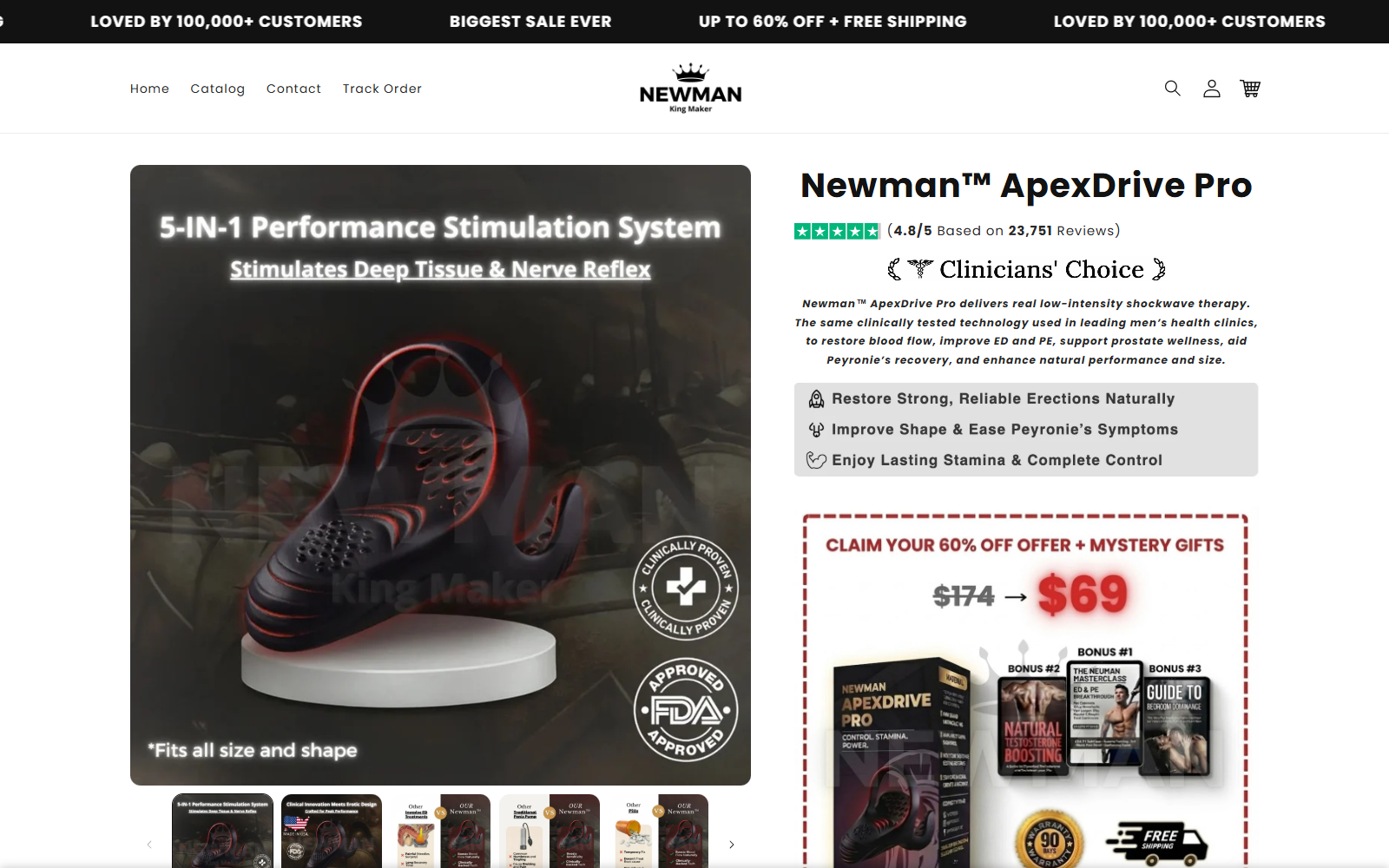
Newman ApexDrive Pro is an intimate wellness device sold for home use. The seller combines vibration with what it calls low-intensity shockwave therapy.
The device is promoted for erectile performance, sensitivity, stamina, prostate wellness, Peyronie’s recovery, and natural size improvement.
Those are not modest relaxation claims. They involve distinct medical conditions, body structures, and outcomes that normally require careful diagnosis.
The reviewed product page priced the device at $69.99 after a claimed 60% reduction from $174.99.
The Strongest Warning Signs
The page says the product delivers the same clinically tested technology used in leading men’s health clinics.
Promotional graphics include “FDA Approved” and “Clinically Proven” style badges. The page also presents more than 23,000 reviews.
Yet the American Urological Association considers low-intensity extracorporeal shockwave therapy investigational for erectile dysfunction.
- The advertised benefits span ED, PE, prostate symptoms, Peyronie’s disease, and size.
- The page uses clinic-style and regulatory-looking imagery.
- The visible offer claims a 90-day satisfaction guarantee.
- The detailed policy narrows return eligibility significantly.
- Customers pay return shipping to a central Asian warehouse.
- The seller can refuse items it considers used or mishandled.
Our Verdict
A physical device appears to be sold, so this is not simply a nonexistent-product page.
The bigger issue is whether an inexpensive consumer device can support the medical implications used to market it.
We found no reason to treat the page’s FDA-style badge as proof that ApexDrive Pro is FDA approved for the advertised conditions.
The offer should be approached as an unverified wellness gadget with aggressive medical marketing and a difficult return path.
Why the Shockwave Claim Matters
Clinical Shockwave Therapy Is Not Just a Buzzword
Low-intensity extracorporeal shockwave therapy uses specialized equipment to deliver acoustic energy according to defined protocols.
Clinical studies involve device specifications, energy settings, treatment schedules, patient selection, sham controls, and measured outcomes.
A vibrating consumer product does not become clinically equivalent merely because its page uses the word shockwave.
Buyers need the exact manufacturer, model, output measurements, regulatory status, and evidence for that particular device.
The AUA Calls ED Shockwave Therapy Investigational
The American Urological Association guideline states that low-intensity extracorporeal shockwave therapy for erectile dysfunction should be considered investigational.
The guideline says benefits have not clearly and reliably outweighed burdens and notes uncertainty about restoring normal erectile function.
It also states that the treatment is not FDA approved for ED and should be confined to appropriate research settings.
That context clashes with a storefront suggesting a low-cost home device brings clinic-grade treatment into a buyer’s routine.
Peyronie’s and Prostate Claims Need Separate Evidence
Peyronie’s disease involves scar tissue and penile curvature. Prostate symptoms can come from several benign or serious causes.
A single device cannot be assumed effective across these problems because they share a body region.
Delayed evaluation can matter when symptoms include pain, sudden curvature, blood, urinary retention, fever, a mass, or progressive dysfunction.
Marketing that groups everything under “circulation” oversimplifies conditions with different diagnostic and treatment pathways.
Size Claims Are Especially Persuasive
The page says regular use can support size gains and features customer statements describing visible changes.
Such claims exploit a common insecurity and can encourage prolonged use even when the device causes discomfort.
Look for independently published product-specific trials with objective measurements, adverse-event reporting, and meaningful follow-up.
Testimonials cannot replace controlled evidence, particularly for an outcome vulnerable to angle, arousal, expectation, and selective reporting.

How the Newman ApexDrive Pro Funnel Works
Step 1: The Ad Begins With a Private Fear
The copy names unreliable erections, reduced stamina, sensitivity, urinary symptoms, and confidence.
These are difficult topics to discuss. A private device feels easier than arranging an examination or describing symptoms to another person.
Convenience is genuine, but it should not replace diagnosis when a symptom may signal cardiovascular, hormonal, neurological, medication-related, or urological disease.
Step 2: Clinical Words Reframe the Gadget
Terms such as low-intensity shockwave, angiogenesis, tissue repair, microplaque, and acoustic pulses create a medical atmosphere.
The page describes the product as clinical-grade and clinically inspired, phrases that sound authoritative without identifying a regulatory clearance.
Ask for the exact FDA listing or clearance number and the specific intended use. A circular badge is not a searchable authorization.
Step 3: One Device Is Connected to Many Outcomes
The pitch moves from blood flow to erections, sensitivity, control, prostate health, Peyronie’s recovery, inflammation, and size.
A long benefit list makes the offer feel comprehensive. It also increases the amount of evidence needed to support the page.
Proof for one narrow endpoint cannot be stretched across every related claim.
Step 4: Social Proof Reduces Embarrassment
The site displays a 4.8 rating based on 23,751 reviews and banners claiming more than 100,000 customers.
Large numbers imply that thousands of other men quietly solved the same problem.
The reviewed page does not provide an independent audit explaining how those figures were collected, deduplicated, or verified.
Step 5: A Permanent Discount Creates Urgency
The $174.99 comparison price is crossed out beside $69.99, while the page calls the promotion the biggest sale ever.
This anchors the buyer to a supposed value rather than the cost of similar mass-market vibration devices.
Take a dated screenshot and return later. Repeating final-sale language is marketing pressure, not evidence of clinical performance.
Step 6: The Guarantee Answers the Last Objection
The product page promises a 90-day refund with “no questions asked” language if the user does not see results.
That statement lowers fear around an intimate purchase that might otherwise feel risky or embarrassing to return.
The formal refund policy adds conditions that make the process far less automatic.
Step 7: The Formal Policy Moves the Cost Back to the Buyer
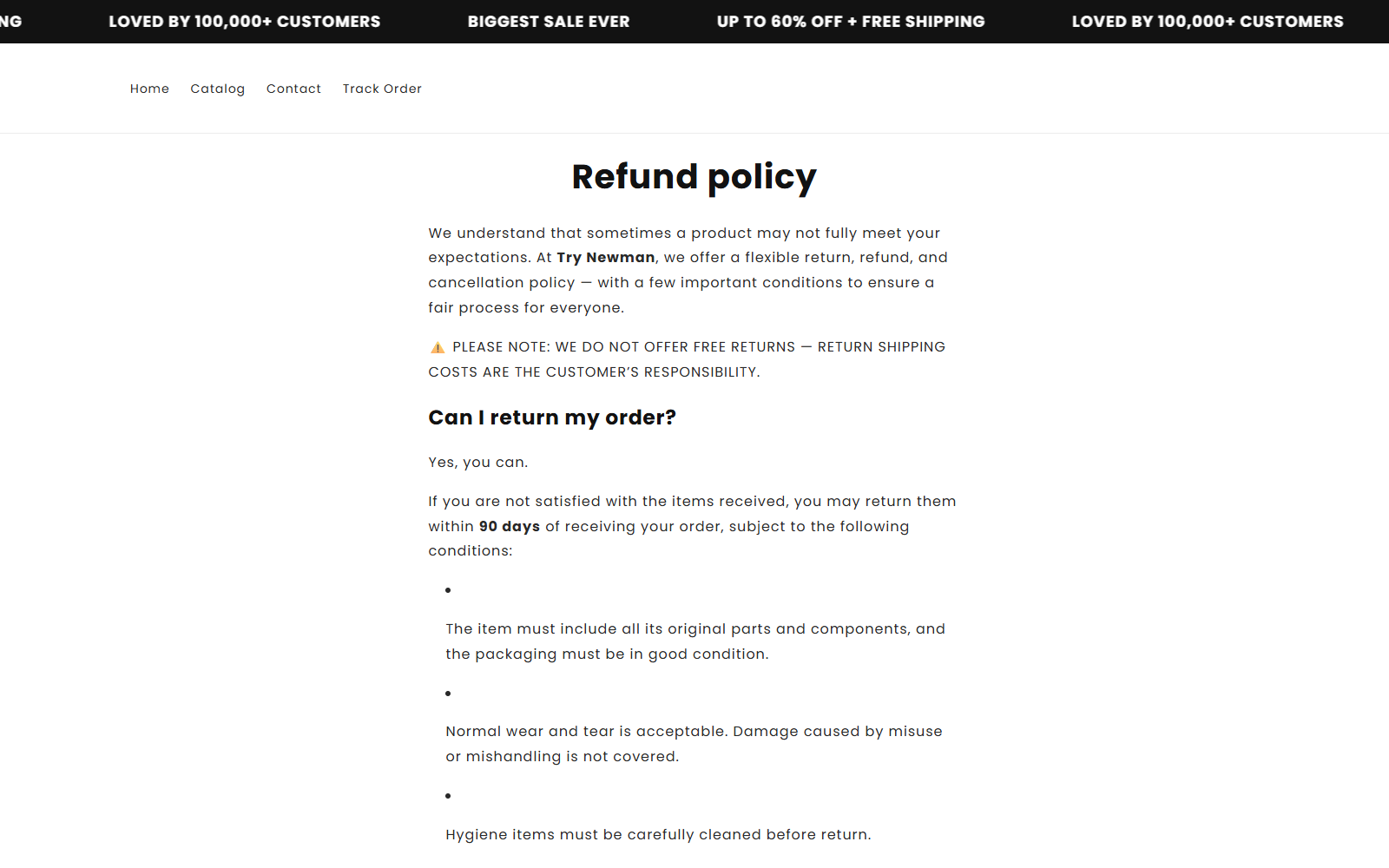
The policy says the product must include its parts, packaging must be in good condition, and hygiene items must be carefully cleaned.
It also says a product must have been found defective upon receipt, while used or mishandled returns may be refused.
All returns go to a central warehouse in Asia at the customer’s expense, making a low-cost device expensive to challenge.
The 90-Day Guarantee Conflict
“No Questions Asked” Is Not the Whole Policy
The offer says dissatisfaction after consistent use can lead to a full refund without questions.
The detailed page asks for an order number, reason, photograph, name, address, review, and compliance with return conditions.
That is plainly a questions-asked process. Buyers should rely on the most restrictive written terms unless support confirms otherwise.
Use and Defect Rules Pull in Opposite Directions
A 90-day performance test requires use. The policy says returns can be refused when they appear used outside accepted conditions.
It also states that the product must have been defective upon receipt, a very different standard from “I used it and saw no improvement.”
Ask support to reconcile those clauses before purchase and preserve the reply.
International Postage Can Erase the Value
The seller says every return must go to its central Asian warehouse and the customer pays postage.
Tracked international shipping, customs forms, and delivery confirmation can cost a large share of the $69.99 purchase price.
The policy does not publish the return address upfront. Customers receive it only after their request is reviewed.
Health and Hygiene Complicate Resale
An intimate device cannot be evaluated like an unopened shirt. Sanitation, bodily contact, and damage questions create legitimate handling concerns.
Those concerns also make an unrestricted satisfaction refund less believable. The page should explain the exact acceptable cleaning and use conditions.
Never continue uncomfortable use merely to satisfy an advertising promise. Safety comes before a refund window.
Company, Address, and Fulfillment Checks
The Storefront Uses the Newman Name
The site identifies itself simply as Newman and uses info@trynewman.com for support.
Its About text emphasizes empowerment and expert design but does not clearly identify named clinicians responsible for the medical claims.
Do not confuse this seller with unrelated established companies using Newman or Neumann in other industries.
No Public Return Address Appears in the Policy
The policy tells customers not to use the shipping-label address and says the correct destination will be supplied after review.
That prevents a buyer from calculating cost or researching the return location before payment.
Request the destination country, legal recipient, and expected tracked-postage range before ordering.
Fulfillment Comes From Asia
The refund policy expressly says products ship from Asia and all returns go to a central warehouse there.
This matters because the sales page otherwise uses U.S.-focused medical language, U.S. currency pricing, and American testimonial locations.
Asian fulfillment is not inherently fraudulent. It affects delivery time, return cost, product traceability, and practical enforcement.
The Package Must Carry Real Traceability
Photograph the manufacturer, model, country of origin, electrical markings, lot information, instructions, warnings, and importer when the parcel arrives.
If the package lacks a responsible company or does not match the listing, do not use it on sensitive tissue.
Ask the seller for regulatory documentation tied to that exact model, not a generic certificate for another factory product.
Medical and Safety Questions to Ask First
Could the Symptom Need Diagnosis?
Erectile changes can be associated with cardiovascular disease, diabetes, hormones, medication effects, stress, sleep problems, neurological disease, or other conditions.
Urinary symptoms can also require evaluation. A device may delay care if the buyer assumes every problem is poor circulation.
Is the Device Appropriate for Your Body?
Ask about pain, curvature, recent surgery, implants, anticoagulants, reduced sensation, skin disease, infection, and other relevant medical history.
A marketing FAQ cannot assess personal contraindications. Bring the model details to a qualified urologist or clinician.
What Energy Is Actually Delivered?
Request technical measurements for acoustic energy, frequency, pulse count, treatment area, and safety testing.
If the seller answers only with “clinically inspired” language, the clinical equivalence remains unproven.
When Should Use Stop?
Stop after pain, bruising, numbness, swelling, skin injury, bleeding, worsening curvature, or urinary difficulty.
Seek prompt care for severe symptoms, sudden dysfunction, prolonged painful erection, fever, trauma, or inability to urinate.
Clean the device only as instructed. Materials described as waterproof may still have charging ports or seams that require special handling.
Do not share an intimate device. Shared use creates hygiene risks that a disinfecting wipe may not fully address.
What to Do if You Have Fallen Victim to This Scam
This checklist covers misleading medical claims, counterfeit seller pages, unauthorized billing, missing orders, and a promised refund that was not honored.
- Do not ignore symptoms. Arrange appropriate medical evaluation instead of relying on the device to diagnose or treat an unexplained condition.
- Preserve the advertisement. Save the FDA-style badge, medical claims, price, review count, guarantee, checkout, receipt, and delivery records.
- Inspect before use. Photograph packaging, safety markings, instructions, manufacturer details, serial numbers, and any mismatch with the listing.
- Stop after harm or discomfort. Document the issue and obtain professional advice rather than continuing to satisfy a 90-day test.
- Request return terms in writing. Confirm whether dissatisfaction qualifies, the Asian address, tracked-postage rules, cleaning requirements, and refund deductions.
- Escalate genuine billing or description disputes. Contact the card issuer promptly when goods are unauthorized, materially misrepresented, or an approved refund is withheld.
- Check the device after deceptive redirects. Run Malwarebytes if the advertisement installed files, profiles, extensions, or unwanted notification permissions.
- Reduce repeated targeting. AdGuard can block many intrusive ads, although it cannot verify medical devices or recover a card payment.
Frequently Asked Questions
Is Newman ApexDrive Pro a Scam?
A physical product is offered, so “nothing exists” would be inaccurate.
The medical claims, regulatory-style imagery, review numbers, and difficult guarantee conditions create substantial reasons for caution.
Is Newman ApexDrive Pro FDA Approved?
We found no product-specific FDA evidence supporting the page’s approval implication for ED, PE, Peyronie’s disease, prostate problems, or enlargement.
Ask for a searchable authorization number tied to the exact model and intended use.
Does Shockwave Therapy Treat Erectile Dysfunction?
The American Urological Association considers low-intensity extracorporeal shockwave therapy investigational for ED.
That position does not validate an inexpensive home device claiming the same clinical technology.
Can ApexDrive Pro Increase Size?
The sales page makes size-related claims, but testimonials and diagrams do not establish durable anatomical enlargement.
Demand independent, product-specific evidence with objective measurements before believing that outcome.
Can I Return a Used Newman Device?
The offer presents a 90-day trial, while the policy permits refusal of returns it considers used or mishandled.
It also requires customer-paid shipment to Asia. Obtain written product-specific instructions before use or return.
Where Does Newman Ship From?
The published refund policy says products are shipped from Asia and returns must reach a central Asian warehouse.
The exact return address is provided only after the seller reviews a request.
The Bottom Line
Newman ApexDrive Pro is marketed less like a vibrator and more like a home medical platform for several sensitive conditions.
The evidence shown on the storefront does not justify treating those implications as established. The AUA’s investigational position is important context.
Do not let privacy, urgency, or embarrassment replace medical judgment. Verify the exact device, return cost, and regulatory status before considering payment.








