

Tooth pain has a way of shrinking the world to one urgent question: how can I make this stop tonight?
SmileFitPro meets that moment with a cheap bottle, a four-step fix, and promises that sound almost like a dental appointment in liquid form.
Overview
What SmileFitPro Claims to Be
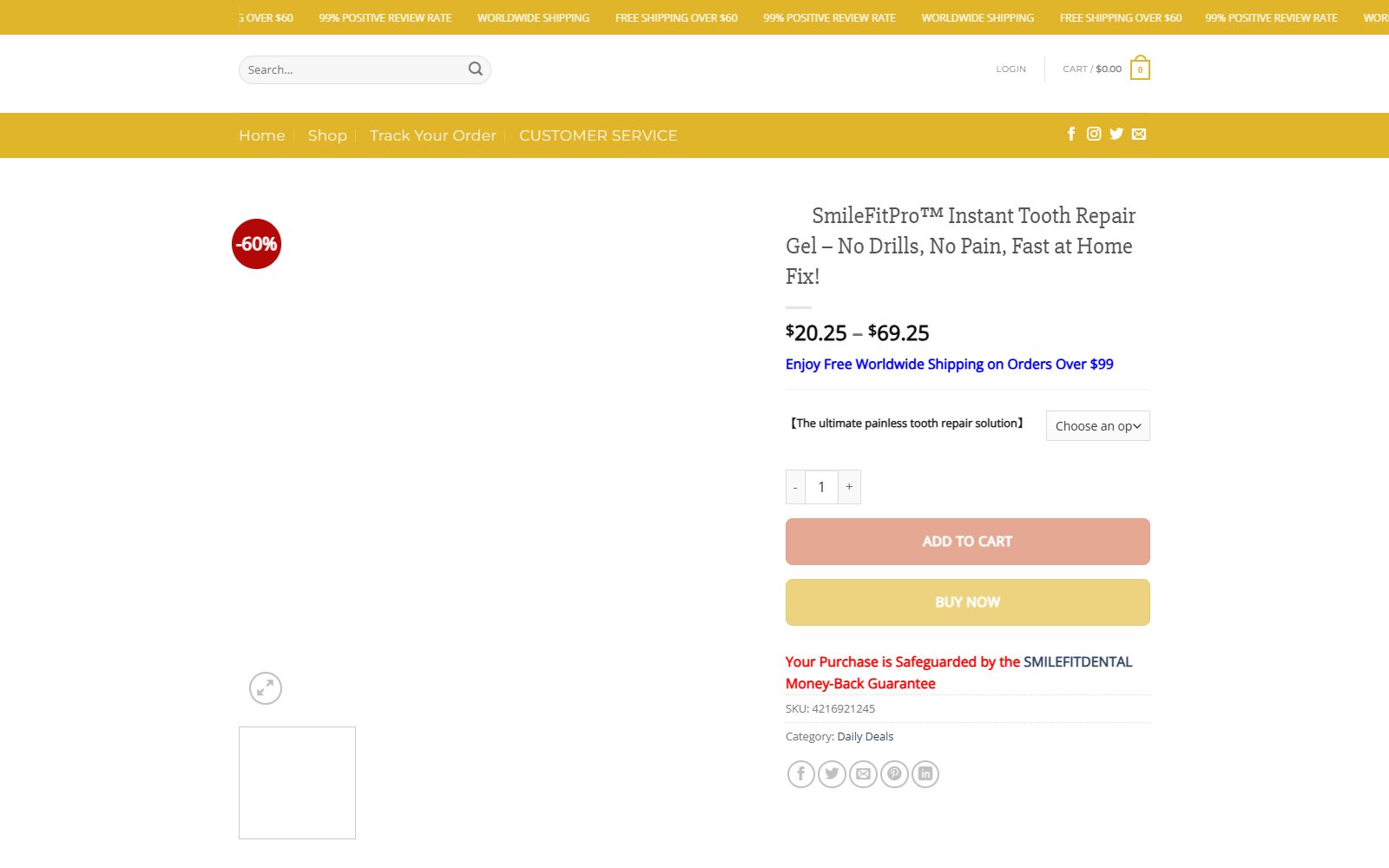
SmileFitPro is sold as an instant tooth-repair gel for pain, cracks, cavities, missing teeth, damaged enamel, and cosmetic gaps.
The reviewed page prices bottle bundles from $20.25 to $69.25 and calls the product America’s number-one no-drill dental fix.
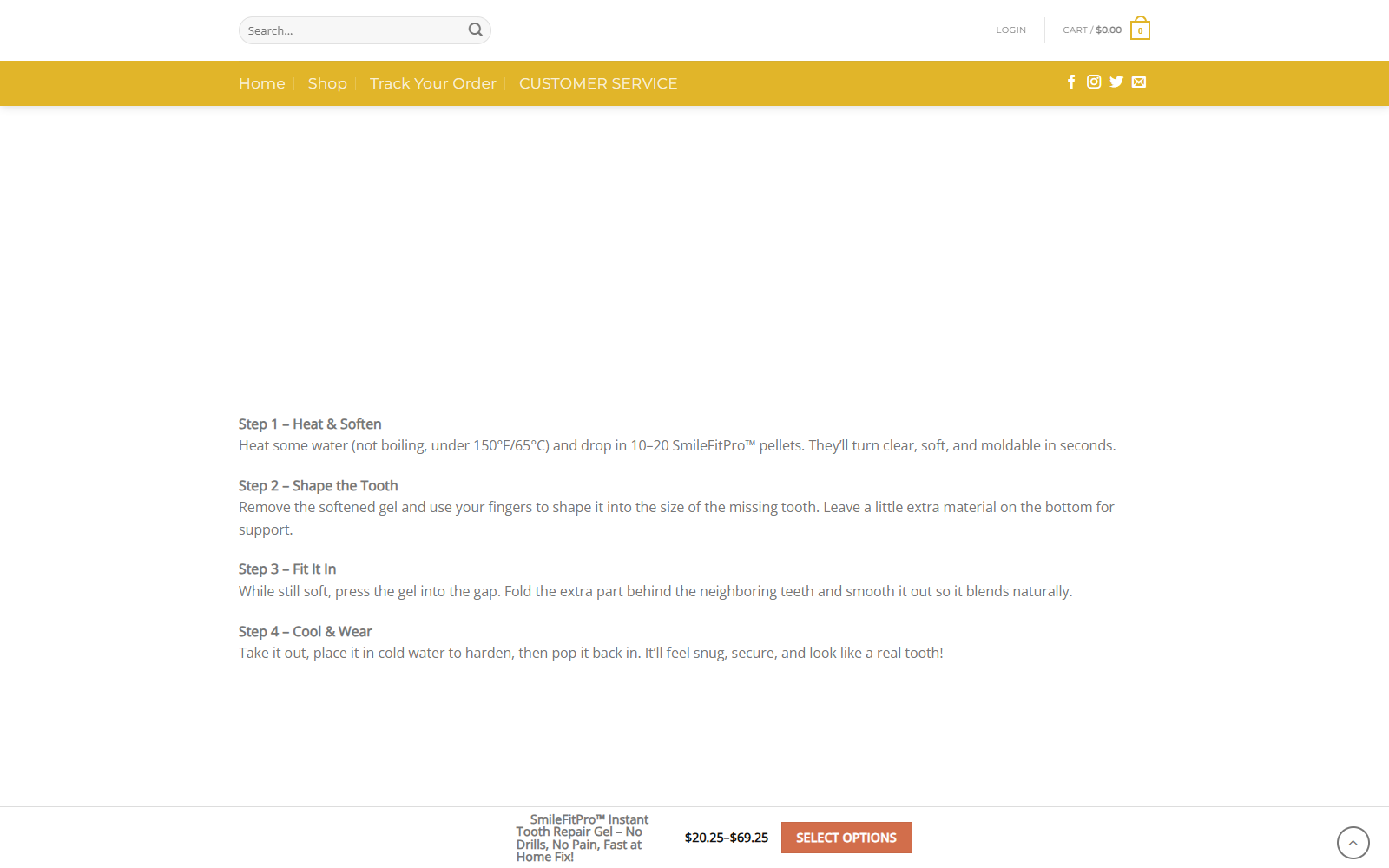
Its instructions tell users to soften pellets in hot water, shape the material with their fingers, press it into a gap, then cool it.
That procedure resembles moldable thermoplastic repair beads, not a dentist-applied restorative treatment that removes decay and seals a prepared cavity.
The Advertising Goes Much Further Than a Temporary Patch
The page says the material can numb nerve pain, fill cavities, repair enamel from within, fight bacteria, and last for years.
It also claims development by a dental research institute partnered with Harvard School of Dental Medicine.
Statistics say 98% received fast relief, 93% chewed normally within 48 hours, and 92% preferred it to previous options.
- The instructions describe heat-softened, hand-molded pellets.
- The copy describes pain treatment and enamel repair.
- The page encourages comparison with professional fillings.
- No customer reviews appear in the formal review tab.
- Named testimonials include complete residential-style addresses.
- The guarantee appears only as sales-page language.
Our Verdict
The advertisement crosses a dangerous line from temporary cosmetic repair into claims that could delay necessary dental treatment.
We could not verify the extraordinary clinical story from evidence presented on the page. Its instructions do not match its permanent-treatment implications.
A moldable material might temporarily disguise a gap for some users. It cannot diagnose decay, infection, fracture depth, or nerve involvement.
SmileFitPro should not be trusted as a substitute for a dentist, especially when pain, swelling, trauma, or infection is present.
Why the Dental Claims Are So Concerning
A Cavity Is Not an Empty Hole to Plug
Tooth decay is damaged tissue caused by disease activity. A professional evaluates the tooth, removes unhealthy material when needed, and restores the structure.
Pressing softened plastic into a visible opening does not establish that decay has stopped or that the tooth is clean.
Material placed over contamination can hide progression while pain, infection, or structural weakness continues underneath.
The FDA describes dental fillings as treatment choices made with a dental provider, not as universal hand-shaped home repairs.
Pain Relief Does Not Mean the Cause Is Fixed
Dental pain can come from decay, fracture, exposed dentin, pulp inflammation, abscess, gum disease, bite trauma, sinus problems, or other causes.
A temporary reduction in sensitivity cannot identify which problem exists.
Severe pain, facial swelling, fever, drainage, trouble swallowing, spreading redness, trauma, or breathing difficulty requires prompt professional attention.
Do not keep adding material to a painful tooth while waiting for a marketing promise to become true.
Enamel Does Not Simply Regrow From Pellets
The page says nano-hydroxyapatite rebuilds enamel from within and suggests the tooth becomes genuinely fixed.
Remineralizing early surface changes is not the same as rebuilding missing tooth structure, repairing a fracture, or curing an established cavity.
The seller should provide a complete formula, concentrations, biocompatibility data, intended-use labeling, and product-specific clinical evidence.
A list of fashionable dental ingredients does not prove that the bottle contains effective amounts or delivers them as described.
Hot-Water Molding Creates Its Own Risks
The instructions use water below 150°F and tell customers to handle softened material directly.
Water that is too hot can burn. Poorly shaped material can irritate gums, alter the bite, loosen, or create a choking hazard.
A repair that feels snug while cool may still shift during chewing or sleep.
Children, people with reduced sensation, swallowing problems, complex dental work, or acute infection should not improvise without professional guidance.
How the SmileFitPro Scam Works
Step 1: The Ad Finds Someone in Pain
The story begins with sleeplessness, difficulty eating, fear of drills, unavailable appointments, and dental bills above $100.
Those problems are real. They make a $20 bottle feel like relief, control, and financial rescue at the same time.
The buyer is encouraged to decide while uncomfortable, not after comparing the product with legitimate temporary-care guidance.
Step 2: A Temporary Cosmetic Material Becomes “Repair”
The simple molding process is presented as filling a cavity, stopping pain at its root, and rebuilding enamel.
That leap is the heart of the deception. Making a tooth-shaped object is not the same as treating diseased tissue.
The visible result may look convincing in a photograph while the underlying dental problem remains untouched.
Step 3: Medical-Sounding Ingredients Build Authority
Nano-hydroxyapatite, calcium, phosphate, xylitol, zinc oxide, clove oil, and lidocaine analogs appear in the narrative.
The page does not present a conventional complete label connecting those claims to the actual pellets shown in the instructions.
One line even calls the material biodegradable, reusable gel, wording that raises further questions about durability and hygiene.
Step 4: An Institutional Story Replaces Verifiable Evidence
The seller credits a “Pacific Advanced Dental Research Institute” and says it partnered with Harvard School of Dental Medicine.
It references licensed U.S. dentists, 18 months of development, 127 formulas, awards, and a journal publication.
Extraordinary credentials should be easy to verify through named researchers, published papers, award bodies, and institutional announcements. The page does not provide them.
Step 5: Testimonials Make the Transformation Personal
The page presents stories of gum disease, accident-related missing teeth, decay, regained confidence, and perfect-looking results within minutes.
The testimonials include exact-looking street addresses, an unusual and unnecessary disclosure for ordinary customer feedback.
That detail can make a fictional story feel specific. It does not independently verify the customer, diagnosis, or outcome.
Step 6: Professional Dentistry Becomes the Expensive Villain
A comparison table places SmileFitPro against office fillings on pain, speed, cost, enamel support, and access.
The table ignores diagnosis, X-rays, decay removal, infection management, bite adjustment, sterilization, material selection, and follow-up.
It compares the cheapest part of a temporary home patch with the full cost of professional care while claiming a similar result.
Step 7: Bundles and a Guarantee Close the Order
Customers can choose up to ten bottles, encouraging a larger commitment before one bottle has been evaluated.
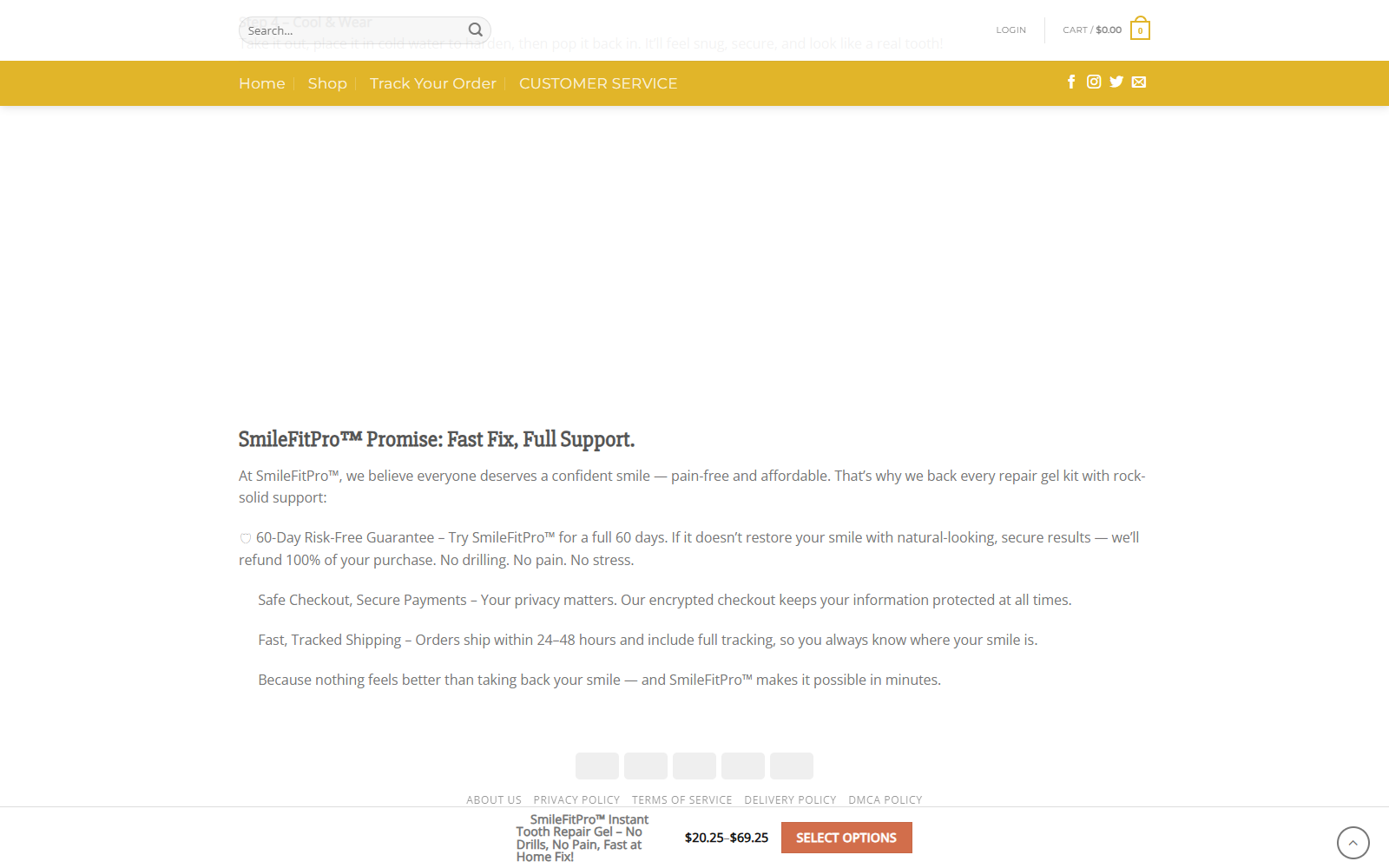
A 60-day risk-free guarantee promises a 100% refund if the product does not restore the smile securely.
The page provides no equally detailed refund procedure beside that promise, leaving the buyer to discover how the guarantee operates after payment.
Claims That Should Be Verified Before Any Use
“Developed With Licensed U.S. Dentists”
Responsible medical marketing should name the professionals, their credentials, their role, and the jurisdiction where they are licensed.
Anonymous expert language cannot be checked for conflicts, disciplinary history, or whether the person reviewed the finished product.
“Harvard-Partnered Research”
A partnership claim should lead to a statement, study, laboratory record, or official institutional page.
Without a verifiable citation, shoppers should not transfer Harvard’s reputation to an unrelated storefront.
“Lasts for Years”
A hand-molded removable material is exposed to chewing forces, saliva, temperature changes, food, bacteria, and cleaning.
Long-term use would require convincing durability and safety evidence, not just before-and-after images.
“Safe for Anyone”
No dental material is appropriate for every person, tooth, bite, allergy, infection, age, and medical history.
Broad accessibility claims are especially risky when the product is placed inside the mouth and can loosen.
Company, Address, and Fulfillment Checks
The Store Does Not Clearly Name a Legal Operator
The footer uses SmileFitDental branding and says the site is hosted by Google Cloud Platform.
Hosting identifies infrastructure, not the company responsible for orders, claims, safety, or refunds.
Before paying, request the legal business name, registration jurisdiction, physical address, and payment-statement descriptor.
The Medical Organization Needs Independent Confirmation
The “Pacific Advanced Dental Research Institute” is central to the product story, yet the sales page provides no verifiable institutional contact.
Search the exact name outside the seller’s ecosystem. Look for professional staff, publications, registration, and independent references.
If the only evidence leads back to the same sales copy, the authority claim remains unsubstantiated.
Customer-Service Links Are Not Company Transparency
A menu can include tracking, terms, privacy, and delivery pages while still omitting the real merchant behind the checkout.
Check those pages for consistent names, addresses, email domains, return instructions, and governing law.
Generic policy templates or contradictory contact details are warning signs, particularly for a product making medical claims.
Find the Return Destination Before Ordering
Ask whether opened oral-care goods are returnable and which country receives the parcel.
Confirm who pays postage, whether tracking is mandatory, how bundles are refunded, and whether shipping fees are excluded.
If support will not provide basic return logistics before sale, the 60-day badge offers little practical protection.
What to Do Instead of Relying on SmileFitPro
Treat Pain as Information
Pain signals that something needs evaluation. Masking it can be useful temporarily, but it is not a diagnosis.
Contact a dentist, urgent dental clinic, community health center, dental school, or local assistance program when cost is a barrier.
Use Only Appropriate Temporary Products
A pharmacist or dentist can help identify products intended for temporary lost-filling or crown situations.
Follow their labeling exactly. Do not use household glue, craft resin, random plastic, or an unlabeled internet product inside the mouth.
Protect a Damaged Tooth
Avoid chewing on the affected side, keep the area clean, and avoid extreme temperatures when they trigger pain.
Do not place aspirin directly on gums or a tooth. It can injure soft tissue.
Recognize Emergency Signs
Facial swelling, fever, spreading infection, difficulty breathing or swallowing, uncontrolled bleeding, severe trauma, or a knocked-out tooth can require urgent care.
Do not wait for shipping or a refund response when symptoms are escalating.
Ask About Lower-Cost Care
Dental schools, community clinics, public-health programs, and payment plans may reduce cost without replacing diagnosis with an unknown internet material.
Call before traveling and describe the symptoms honestly. Some clinics reserve urgent appointments for pain, swelling, trauma, or infection.
Ask for a written estimate and the least complex safe option. A legitimate provider can explain temporary and definitive choices separately.
Financial pressure is real, but delaying infection can make treatment more extensive and expensive later.
Keep receipts from emergency care. They can help document actual harm during a seller dispute or consumer complaint.
What to Do if You Have Fallen Victim to This Scam
- Stop using loose or painful material. Remove it only when safe, avoid forcing anything deeper, and seek dental advice for persistent symptoms.
- Get urgent help when needed. Facial swelling, fever, breathing trouble, swallowing difficulty, severe trauma, or spreading pain should not wait.
- Preserve every claim. Save the no-drill promise, ingredient story, institutional claims, statistics, guarantee, price, cart, and receipt.
- Document the bottle and reaction. Photograph the packaging, lot information, ingredients, molded material, tooth area, and any injury.
- Request a refund in writing. State the order number, purchase date, reason, promised outcome, and exact remedy requested.
- Ask for the legal seller and return address. Do not send an oral-care product to an unverified address or the parcel’s sender automatically.
- Dispute unresolved misrepresentation. Contact the card issuer promptly if the item materially differs from its medical-style sales claims.
- Secure the device used to order. Run Malwarebytes after suspicious downloads, and use AdGuard to reduce repeat deceptive health advertisements.
Frequently Asked Questions
Is SmileFitPro Tooth Repair Gel a Scam?
The reviewed page makes medical, institutional, and durability claims far beyond what its simple pellet-molding instructions establish.
We consider the offer highly deceptive and unsafe to treat as a replacement for professional dental care.
Can SmileFitPro Fill a Cavity Permanently?
Hand-shaped thermoplastic cannot diagnose decay, remove diseased tissue, disinfect a tooth, or create a professionally fitted permanent restoration.
At most, similar materials may serve limited temporary cosmetic or emergency purposes under appropriate guidance.
Does SmileFitPro Stop Tooth Pain?
The page claims rapid relief, but pain has many possible causes and relief does not establish treatment.
Persistent, severe, or worsening pain needs dental evaluation.
Is SmileFitPro FDA Approved?
The sales page does not provide a searchable FDA clearance or approval tied to the exact product and advertised uses.
Do not infer authorization from dental imagery, scientific words, or an ingredient list.
Can SmileFitPro Replace a Missing Tooth?
A hand-molded piece may change appearance temporarily, but it is not an implant, bridge, denture, or professionally designed prosthesis.
Poor fit can affect gums, bite, speech, chewing, and retention.
How Can I Get a SmileFitPro Refund?
Contact the merchant in writing within the advertised 60-day period and preserve proof.
Request the legal seller, approved address, eligibility for opened oral-care goods, postage terms, and expected refund before returning anything.
The Bottom Line
SmileFitPro turns a simple heat-and-mold material into a sweeping story about pain relief, cavity repair, enamel rebuilding, and years of protection.
The advertisement does not provide evidence strong enough for those conclusions. Its biggest danger is persuading someone to delay real care.
Use legitimate temporary guidance only while arranging a dental evaluation. A cheap cosmetic patch is not a cure hiding in a bottle.








