

Dentite Tooth Armor has exploded in popularity due to aggressive social media marketing about its supposed ability to heal cavities and restore tooth enamel. But do these bold claims withstand scientific scrutiny? This article objectively analyzes the evidence.
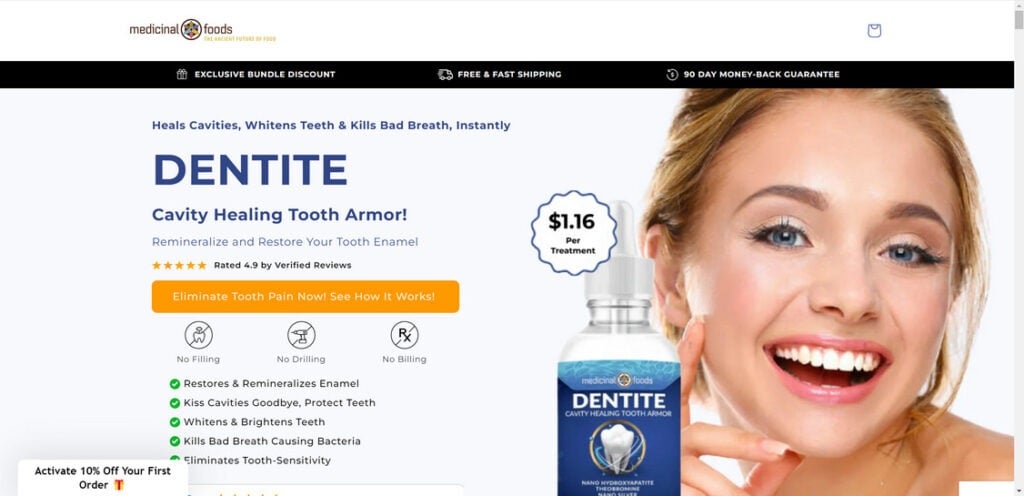
Overview of Dentite Tooth Armor
Dentite Tooth Armor is an oral health supplement claiming to rebuild and remineralize tooth enamel. It promises to heal cavities without drilling, reduce tooth sensitivity, kill bacteria, remove stains, and more.
It’s marketed heavily on social media and its official website TryDentite.com. The main ingredients touted are nano hydroxyapatite, theobromine, and nano silver.
Dentite costs $49-$89 per bottle depending on quantity ordered. The company is based in the USA but its origins and manufacturing details are unclear.
Objective Analysis of the Ingredients and Claims
Dentite makes bold assertions about being able to cure a wide array of dental problems. But what does the science actually say about its formulation?
Nano Hydroxyapatite
- Overview: Synthetic mineral that mimics natural tooth enamel structure. Studies show it can bond to damaged enamel and promote remineralization.
- Evidence Level: Promising but requires more research to determine long-term effectiveness and safety. Unlikely to completely rebuild enamel within days.
Theobromine
- Overview: Compound in chocolate believed to have antibacterial effects.
- Evidence Level: Limited studies to support notable dental health benefits. Any antimicrobial properties likely minimal.
Nano Silver
- Overview: Has antimicrobial properties but use in dental care is controversial due to toxicity concerns when ingested.
- Evidence Level: No strong evidence it can restore tooth enamel or cure cavities.
Assessment of Key Marketing Claims
Analyzing Dentite’s specific claims against scientific data reveals significant discrepancies:
- Claim: Rebuilds enamel and reverses cavities in 1-2 days.
- Assessment: Misleading. Enamel restoration is a gradual process requiring months of mineralization. Cavities require professional dental work to restore.
- Claim: Whitens teeth, freshens breath instantly.
- Assessment: Exaggerated. Temporary effects at best. Whitening and oral bacteria reduction require diligent oral hygiene.
- Claim: Repairs cracked teeth.
- Assessment: False. No evidence ingredients can heal fractures, which require fillings or dental crowns.
- Claim: Eliminates tooth sensitivity permanently.
- Assessment: Unrealistic. Sensitivity has many causes requiring customized dental treatments. No single product can universally resolve it.
Investigation of Customer Reviews and Results
Given the questionable ingredient science, analyzing customer experiences provides more insight into real-world results:
- Testimonials on TryDentite.com share stories focused on pain relief and whitening. No mentions of cavity filling or crack repairs.
- Independent reviews are non-existent, making verification of claims impossible.
- Several negative reviews report no change in tooth sensitivity after using Dentite for weeks.
- Multiple complaints of delayed shipping and problems getting refunds.
- No before and after documentation available.
Assessment of TryDentite.com Website Legitimacy
The TryDentite.com website itself displays additional suspicious signals that undercut its trustworthiness:
- No company information – Ownership, leadership, manufacturing, and physical address all undisclosed.
- Shady origins – Registered in January 2024 through Panama registrar, with social media managed from Honduras and Tunisia.
- Fake limited supply – Site shows “only x bottles left” disclaimers to spur panic orders, yet never runs out of stock.
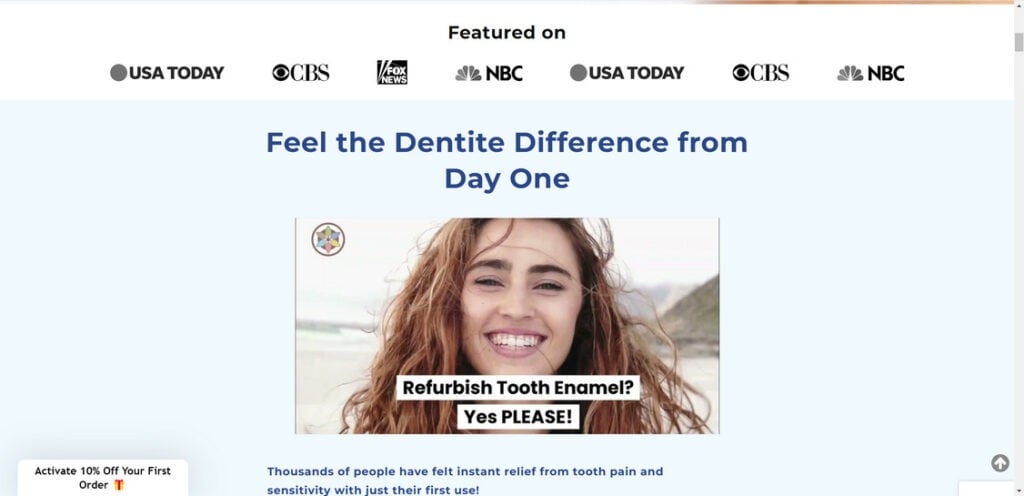
- Unsupported logos – Showcases media outlet logos like CNN and USA Today when no coverage exists.
- Non-functional pages – Privacy, Terms of Service, and Contact pages are dead links.
Final Verdict: Avoid Dentite
Given the lack of rigorous clinical evidence, exaggerated and unsupported claims, suspicious website practices, and nonexistent independent customer reviews – the verdict is clear:
Dentite Tooth Armor relies on dubious marketing tactics and misleading claims about unproven ingredients to capitalize on people’s dental health fears.
The ingredients may provide temporary sensitivity relief and surface stain removal in some cases. But suggestions of cavities and tooth fractures being repaired within days are simply false based on scientific knowledge. Customer feedback fails to validate any dramatic benefits as well.
Those concerned with dental care are better off sticking to proven prevention methods like brushing, flossing, dental visits, and limiting sugary foods. Seek professional customized treatments for issues like cavities, enamel erosion, and sensitivity.
Beware of dental health quick fixes that sound too good to be true. Dentite Tooth Armor currently lacks the rigorous testing and transparency to recommend for oral health – despite its confident marketing claims.

Join the discussion
0 commentsShare your experience or ask a question about this article.
Discussion
Start the conversation
Have a question or something useful to share? Add the first comment.