

The Bonnell 805 RX arrives with numbers that usually belong to much heavier motorcycles. Its combination of low weight and extreme electric power naturally attracts serious attention.
A machine this expensive and fast deserves more than an exciting launch video. Specifications, legal use, delivery, final-sale terms, service, and copycat listings all matter.
Overview
The Bonnell 805 is a genuine new e-moto
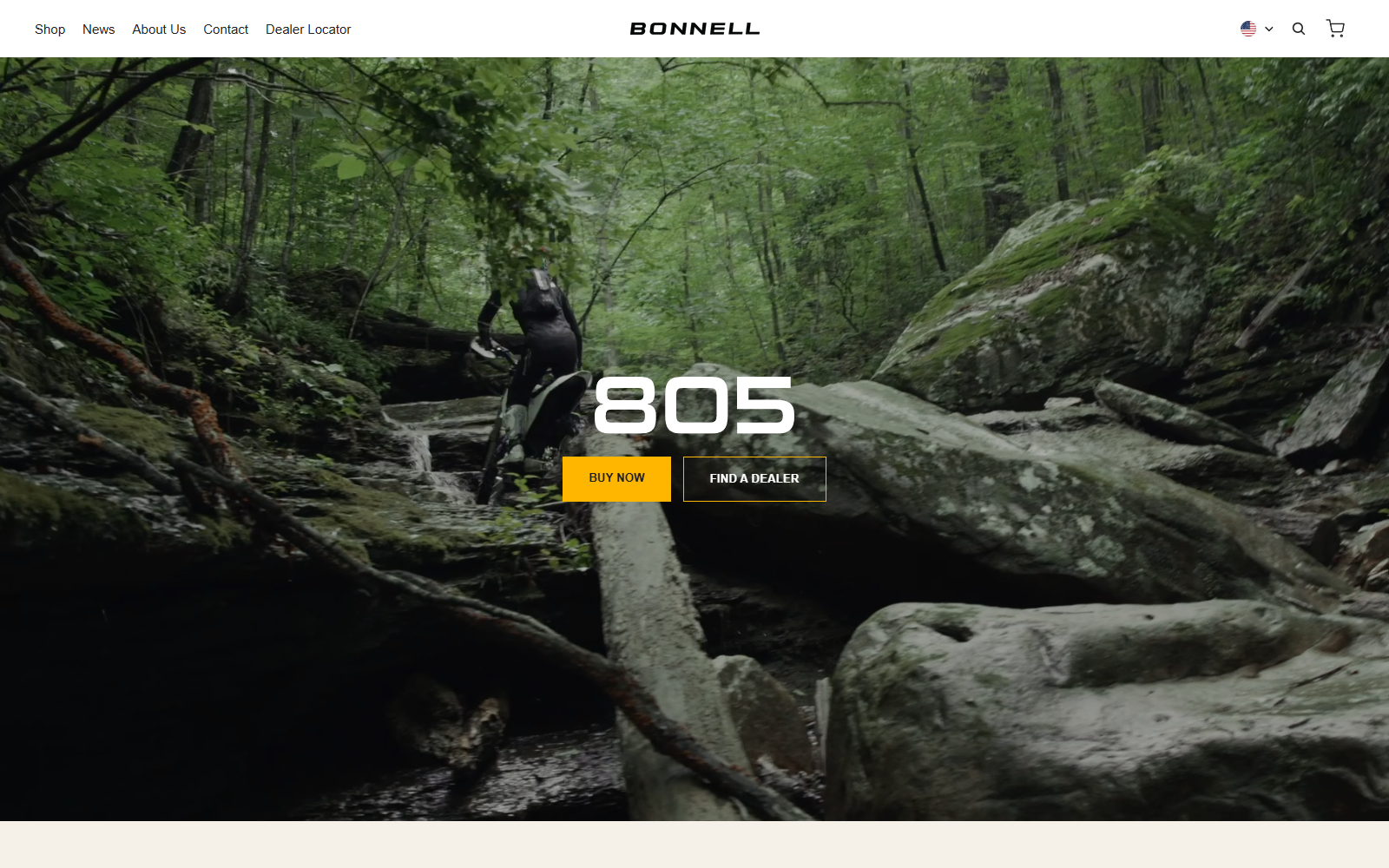
Bonnell presents the 805 RX as a high-performance electric off-road motorcycle. The official website provides detailed specifications, dealer tools, support, and an Austin address.
This is not evidence of a nonexistent-product scam. The important questions concern first-generation ownership, preliminary claims, road legality, price, and restrictive returns.
The performance targets are unusually ambitious
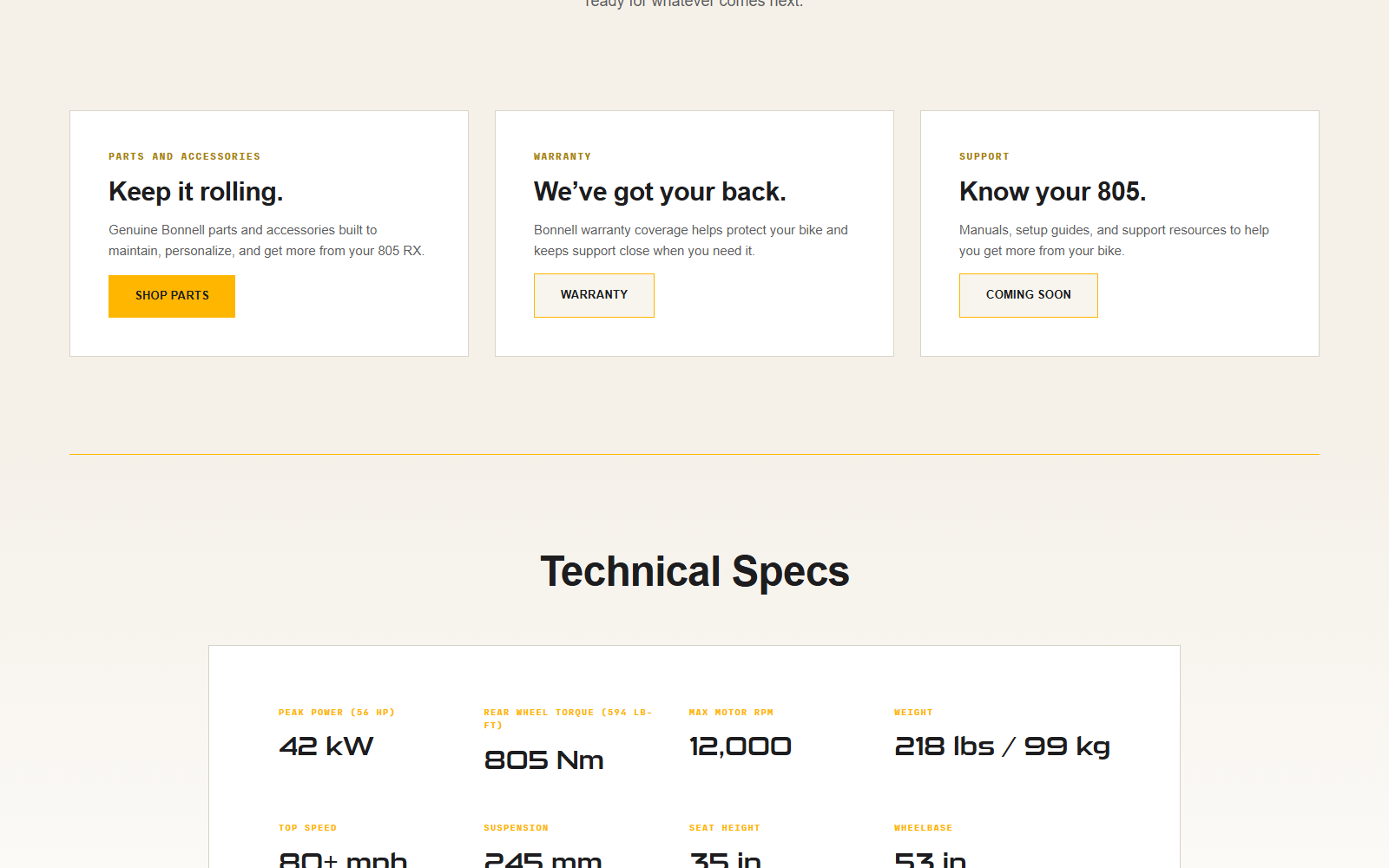
The official page lists 56 hp peak power, 805 Nm rear-wheel torque, more than 80 mph, and a 218-pound platform.
It also calls those figures manufacturer estimates under controlled conditions. Actual results can change with battery, rider, terrain, tires, temperature, and charge.
Completed orders are effectively final
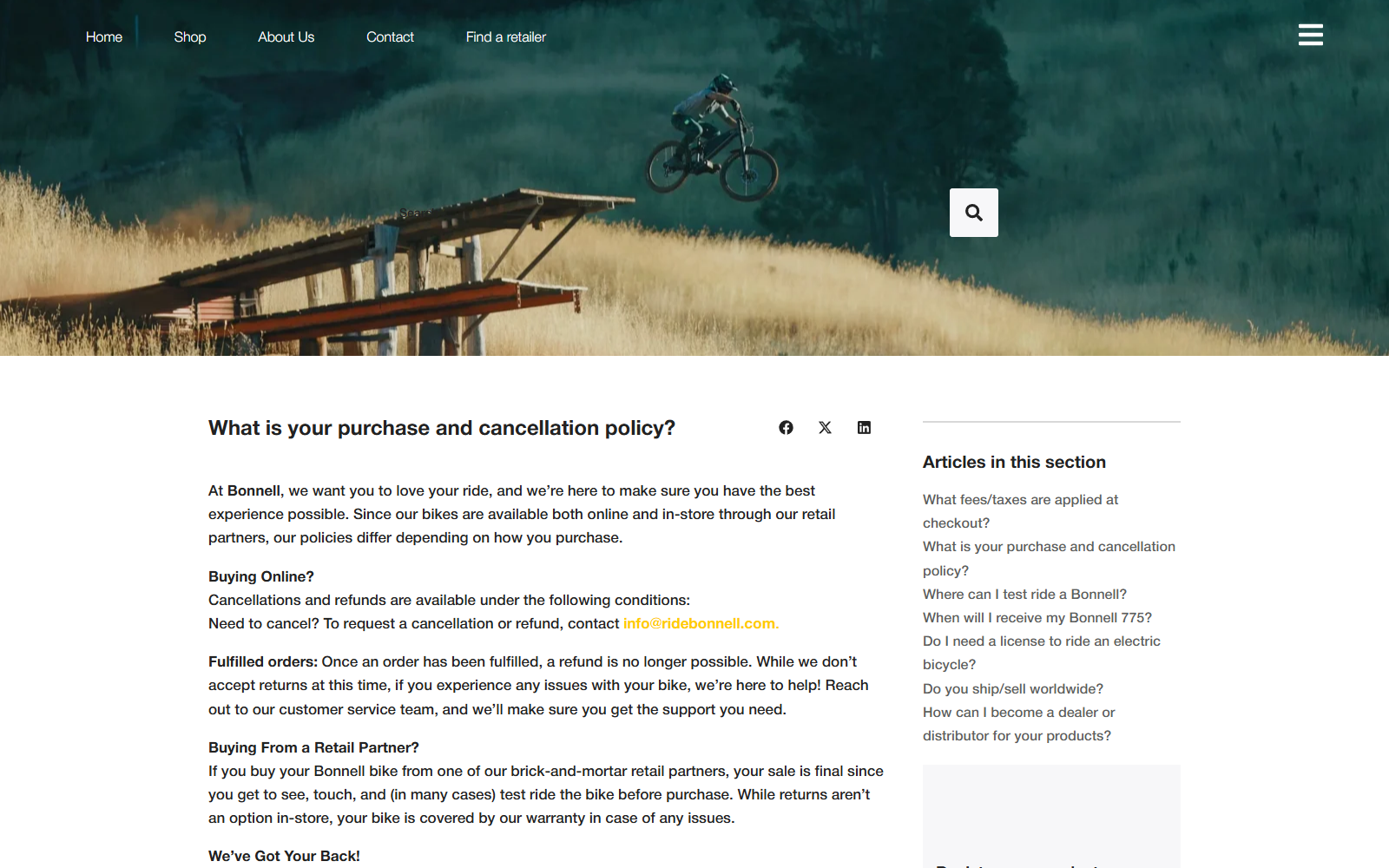
Bonnell’s support policy says a fulfilled online order cannot be refunded and returns are not accepted. Purchases through physical retail partners are final.
Our main findings are:
- The official product has a substantial technical specification page
- The 805 RX is intended exclusively for off-road use
- Published specifications remain preliminary and subject to change
- The standard battery is listed at 3.9 kWh
- Fulfilled online orders are not returnable under the posted policy
- Warranty claims are handled separately from returns
The 805 may be an impressive real machine. Buyers should treat the transaction like a motorcycle purchase, not an ordinary online gadget order.
What the Official Specifications Mean
Peak power of 42 kW, or 56 hp, describes a short maximum output. It does not show continuous power available throughout an entire ride.
Continuous output influences heat management and sustained performance. Ask how long peak output is available and what temperatures cause power reduction.
The advertised 805 Nm is measured at the rear wheel. Wheel torque includes gearing and cannot be compared directly with motor torque from another manufacturer.
Comparisons require the same measurement point, wheel diameter, gearing, test method, battery state, and speed.
The more than 80 mph figure places the 805 far beyond normal electric-bicycle performance. At that speed, tire, brake, suspension, frame, and rider protection become critical.
Bonnell describes the machine as exclusively off-road. Buyers should not assume pedals, lights, or a speed limiter would make it street legal.
Registration rules differ by country, state, and municipality. Insurance and access rules can also vary between private land, trails, and competition facilities.
The listed weight is 218 pounds. That is light relative to many motorcycles but heavy compared with bicycles and difficult to transport casually.
Owners may need a rated carrier, trailer, tie-down points, loading ramp, and vehicle tongue capacity appropriate for the combined load.
The standard Core battery is listed at 3.9 kWh, with a 4.7 kWh Race battery optional.
Battery capacity alone does not establish range. Speed, acceleration, elevation, surface, rider mass, temperature, tire pressure, and battery age can change consumption sharply.
The official page does not place one universal range figure beside the core specifications. That restraint is sensible for an aggressive off-road machine.
Buyers should request realistic examples at the pace and terrain they intend to ride. Track use and slow trail exploration produce very different results.
Controls, Battery, and First-Generation Risk
The 805 includes five customizable ride modes plus reverse. Its control system lists regenerative braking, traction control, boost, speed limiting, and an electronic clutch function.
Software-defined controls offer flexibility but create dependence on firmware, sensors, the display, and the companion application.
Ask which features remain available without a phone, account, mobile data, or future cloud service.
A physical kill switch is valuable. Buyers should still understand how the bike responds to a stuck throttle, sensor fault, application failure, or low-voltage event.
The swappable battery sits under the seat and can charge on or off the motorcycle. Confirm battery weight and the safe lifting procedure.
Large lithium packs require careful storage. Extreme heat, freezing conditions, impact, water intrusion, and incompatible chargers can create serious hazards.
Owners need a dry charging area, a suitable electrical circuit, smoke detection, and clearance from combustible materials.
Ask whether the pack and charger carry applicable independent certifications. A general quality statement is not the same as product-specific certification.
First-generation models also reveal problems that prototypes may not expose. Connectors, seals, bearings, software, fasteners, and parts supply improve through real-world volume.
That does not mean the 805 is defective. It means early buyers accept uncertainty alongside access to a new platform.
Serviceability should influence the decision. Verify diagnostic access, replacement battery pricing, controller availability, motor support, brake parts, and suspension service intervals.
A powerful motorcycle becomes unusable if one proprietary component remains unavailable for months.
How the Bonnell 805 Buying Process Works
Step 1: Confirm the exact model and seller
Use ridebonnell.com or a dealer listed through Bonnell’s official locator. Similar domains can appear convincing while having no relationship with the manufacturer.
Confirm whether the listing is for the 805 RX, a reservation, an accessory, or another Bonnell product before paying.
Step 2: Request the final specification sheet
The website says specifications and features remain preliminary. Ask which figures are fixed for the production unit assigned to your order.
Record battery version, charger, wheels, tires, lighting, color kit, drive system, software features, and included tools.
Step 3: Verify legal use and insurance
Contact the relevant motor-vehicle authority, land manager, and insurer. Do not rely on a salesperson’s general statement about your jurisdiction.
A machine intended for off-road use may be prohibited on public streets, bicycle trails, sidewalks, and many recreational paths.
Step 4: Understand the no-return point
The official policy allows cancellation before fulfillment. Once fulfilled, an online order cannot be refunded and Bonnell says it does not accept returns.
Ask exactly what event counts as fulfillment. Payment capture, label creation, warehouse release, and carrier pickup are different moments.
Step 5: Inspect delivery before acceptance
Large vehicles can suffer freight damage. Photograph the crate on every side before removal, including punctures, crushing, moisture, and broken straps.
Note damage on the carrier paperwork. Signing a clean receipt can complicate later freight claims.
Step 6: Complete setup and testing cautiously
Follow the manual, torque specifications, battery procedure, tire settings, and initial service schedule. Use the lowest mode in a controlled private area.
Do not test maximum speed before confirming brakes, controls, suspension, fasteners, protective equipment, and rider familiarity.
The Return Policy Is a Major Purchase Risk
Online shoppers often expect a cooling-off period or ordinary merchandise return. Bonnell’s posted support article says fulfilled orders cannot be refunded.
It also states that returns are not accepted at this time. That is unusually consequential for a costly machine a buyer may not have ridden.
Retail-partner purchases are final because customers can inspect and often test the bike before purchase, according to the same policy.
A test ride is therefore more than a convenience. It may be the only opportunity to evaluate fit, height, weight, controls, and throttle response before final payment.
Warranty coverage is not a substitute for returning an unwanted product. Warranty terms address qualifying defects and may require diagnosis, parts, or repair.
A buyer who simply finds the motorcycle too tall, powerful, heavy, or unsuitable may have no return path.
Ask whether deposits are refundable, whether custom configurations can be canceled, and when the seller considers the order fulfilled.
Request the answer by email. A verbal promise from a salesperson can be difficult to prove after payment.
If financing is used, confirm whether cancellation of the order automatically cancels the loan. These can be separate agreements.
Also inspect taxes, freight, assembly, documentation, dealer preparation, destination charges, and optional equipment before signing.
The advertised product price may not equal the amount financed or the final out-the-door cost.
Read the warranty exclusions before assuming every failure is covered. Competition, water exposure, modifications, crashes, wear, and unauthorized repairs may affect eligibility.
Budget for Ownership, Not Only Purchase
The motorcycle itself is only the opening cost. Protective equipment should include a certified helmet, boots, gloves, eye protection, and appropriate body armor.
Transport may require a trailer or carrier. Verify vehicle limits because the bike, carrier, accessories, and tie-down equipment add weight together.
A high-power machine consumes tires, brake pads, chains or belts, bearings, and suspension service more quickly under aggressive riding.
Ask for current prices and availability for those parts. An affordable wear item becomes expensive when international freight or long downtime is involved.
Battery replacement is the largest future question. Request its retail price, warranty duration, expected capacity retention, and storage recommendations.
Home charging may require a suitable outlet or circuit. The optional fast charger can have different voltage and electrical requirements.
Insurance can cover theft, damage, liability, or transport, depending on the policy. Standard homeowner coverage may exclude motorized off-road vehicles.
Secure storage is important because the motorcycle is valuable and comparatively light. Record the serial number and use layered physical security.
Trail access may involve membership, permits, event fees, or travel. Many public bicycle trails do not allow machines in this performance class.
Software ownership also deserves attention. Confirm whether the application requires a subscription and whether second owners can transfer the bike into a new account.
Resale value is uncertain for a new brand and platform. Battery health, service documentation, firmware support, and parts availability will influence future buyers.
Build a realistic annual budget before financing. Monthly payment alone hides maintenance, transport, protective gear, insurance, electricity, and eventual battery cost.
The 805 can still make sense for the right rider. Clear ownership arithmetic helps separate genuine enthusiasm from an expensive mismatch.
Company, Address, and Fulfillment Checks
The official website identifies a physical address
The product website footer lists 6025 Wilcab Road, Suite 1-100, Austin, Texas 78721.
Confirm that any invoice, financing document, and card descriptor correspond with Bonnell or the named authorized dealer.
Seller identity changes the contract
A dealer, marketplace seller, and manufacturer may each offer different cancellation, delivery, service, and warranty terms.
Determine who accepts the payment and who must perform repairs. Do not assume the brand resolves every dealer dispute.
Support and parts deserve a pre-purchase test
Send a detailed question before ordering and evaluate the reply. Ask about nearby service, diagnostic labor, battery availability, and ordinary replacement parts.
A response that only repeats marketing copy does not show the support depth required for a new motorcycle platform.
Freight fulfillment needs its own plan
Confirm shipping method, crate dimensions, residential surcharge, lift-gate service, appointment procedure, inspection rights, and damage-report deadline.
Know who pays return freight for a verified defect. Transporting a 218-pound motorcycle can cost far more than reversing an ordinary retail purchase.
What to Do if You Ordered From a Fake Bonnell Seller
- First identify the seller. Determine whether you paid Bonnell, an authorized dealer, a finance company, or an unrelated copycat website.
- Preserve the full offer. Save the product page, specifications, seller name, order total, policy, promised delivery, correspondence, and payment descriptor.
- Cancel before fulfillment. The official policy says cancellations can be requested through info@ridebonnell.com, while fulfilled orders cannot be refunded.
- Document freight damage. Photograph the unopened crate, carrier label, damage, missing parts, serial number, and condition before assembly.
- Use the warranty channel accurately. Describe the defect, error code, circumstances, mileage, and troubleshooting already completed. Keep every service record.
- Escalate misrepresentation. If an unauthorized seller copied Bonnell material or delivered another product, contact the card issuer before its dispute deadline.
- Secure exposed accounts. Change reused passwords and enable multifactor authentication if a suspicious copycat site collected login information.
- Remove malicious software. If a fake dealer required a download or remote-access tool, disconnect it and scan the device with Malwarebytes.
- Block follow-up traps. AdGuard can reduce malicious ads and trackers. Remove browser notification permission from unknown motorcycle stores.
- Report impersonation. Notify Bonnell, the advertising platform, payment provider, domain registrar, and FTC with screenshots and transaction details.
Frequently Asked Questions
Is the Bonnell 805 RX a scam?
No evidence reviewed supports that claim about the official product. Bonnell presents a real motorcycle, detailed specifications, support resources, and dealer channels.
Can the Bonnell 805 be ridden on public roads?
The manufacturer describes it as exclusively off-road. Road registration and use depend on local law, equipment, certification, licensing, and insurance.
Can I return a Bonnell 805 after delivery?
The posted policy says fulfilled online orders cannot be refunded and returns are not accepted. Dealer purchases are also described as final.
Are the performance figures guaranteed?
No. Bonnell labels specifications as preliminary and manufacturer-estimated. Actual performance varies with rider, battery, terrain, tires, temperature, and other conditions.
What should I test before buying?
Evaluate fit, seat height, low-speed control, throttle response, braking, suspension, weight, charging access, transport needs, and nearby service.
How can I avoid a fake Bonnell seller?
Start from ridebonnell.com, use its dealer locator, verify the payment recipient, and avoid prices or deposits offered through unverified social-media accounts.
The Bottom Line
The Bonnell 805 RX is a genuine, ambitious electric off-road motorcycle, not a disposable gadget or a proven fake-product scheme.
Its preliminary specifications, extreme performance, first-generation complexity, final-sale policy, and limited return options make careful pre-purchase verification essential.
Test ride if possible, confirm the exact production configuration, price every ownership cost, and buy only through a seller accountable for delivery and service.








