

The advertisement begins with a kitchen ingredient most people already own. It promises a tiny adjustment that supposedly changes weight loss without strict dieting or complicated routines.
SodaTide enters only after curiosity has done its work. The bottle looks like the answer, but the offer deserves a slower reading than the advertisement encourages.
Overview
The baking soda story leads to capsules
SodaTide is promoted through a viral “baking soda trick” narrative. Viewers expect a recipe, drink, or practical explanation involving ordinary baking soda.
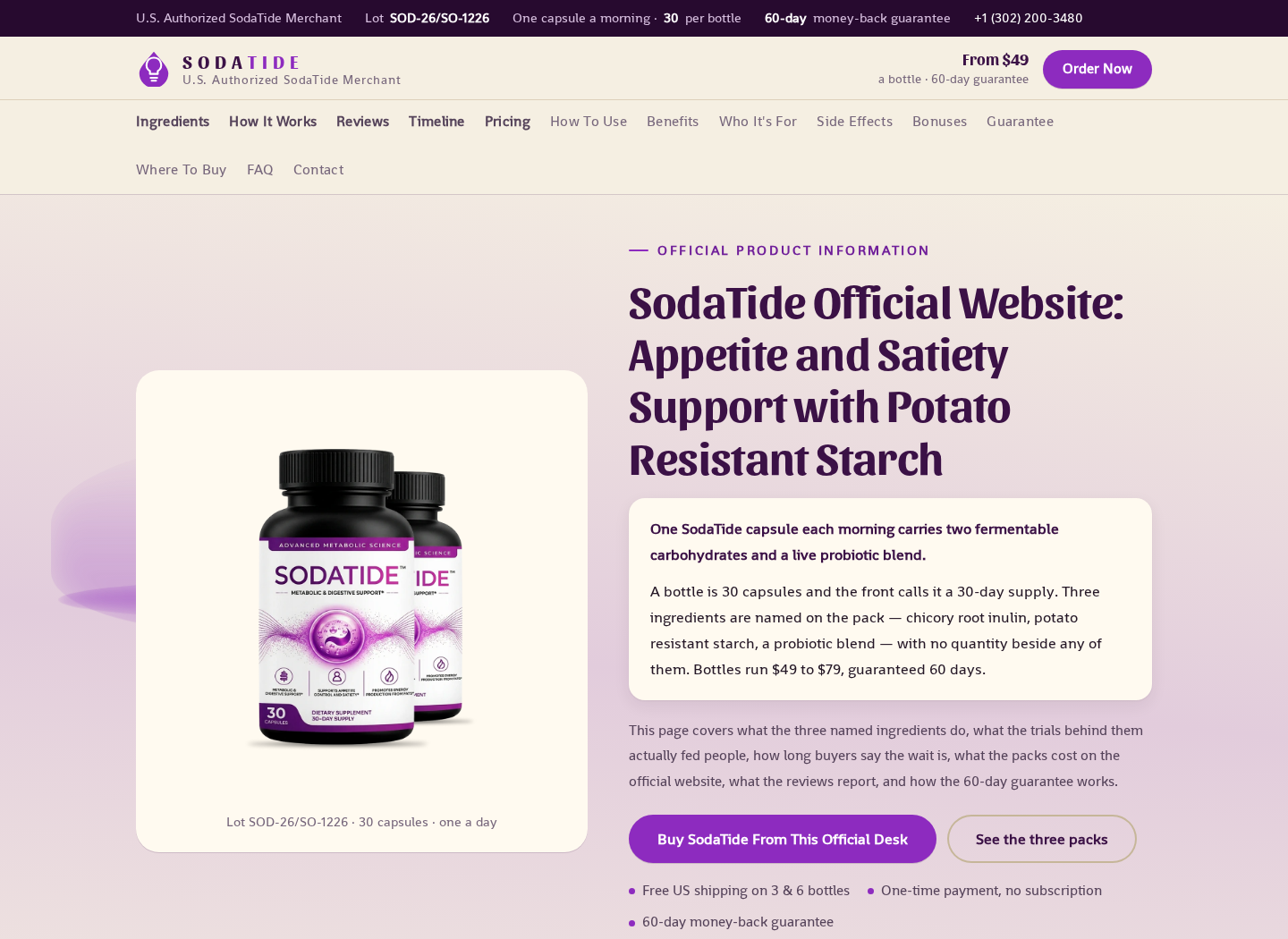
The sales destination instead offers capsules containing chicory root inulin, potato resistant starch, and a probiotic blend.
That gap matters. The advertisement sells discovery and simplicity, while the checkout sells a conventional digestive supplement in multi-bottle packages.
The site is a merchant page, not a clinical record
The website describes itself as a U.S. authorized SodaTide merchant. It does not present itself as the named manufacturer of the formula.
The page supplies ingredient names and promotional benefits, yet the visible bottle artwork does not show exact ingredient amounts or a complete Supplement Facts panel.
Without doses, independent testing, and finished-product research, shoppers cannot determine whether the promoted benefits apply to the capsules being sold.
The purchase carries practical refund risks
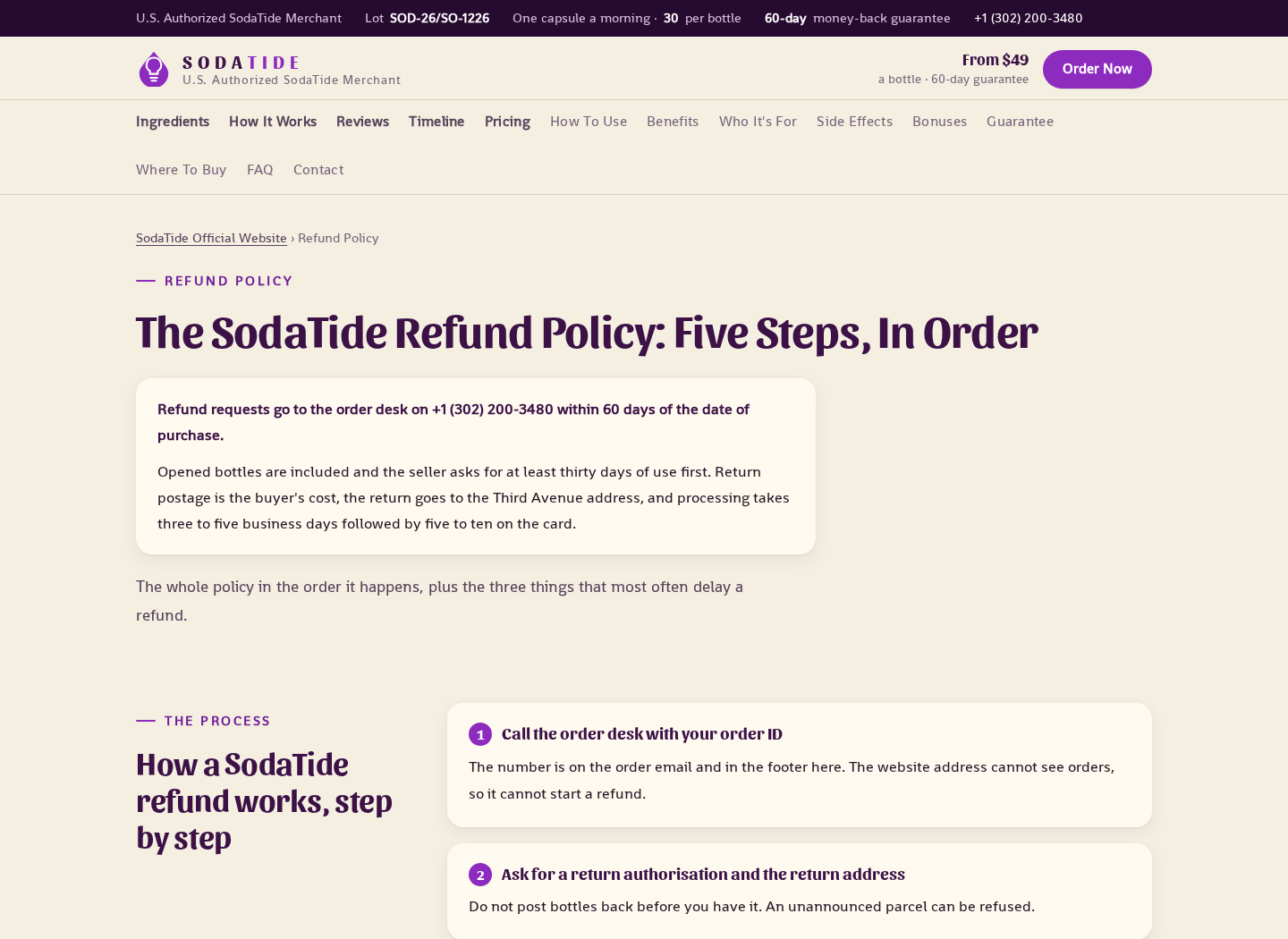
SodaTide advertises a 60-day guarantee, but customers are told to use the product for at least 30 days before requesting a return.
The buyer must telephone support, obtain authorization, and pay return postage. That combination leaves less practical time than a large guarantee badge suggests.
- The “baking soda” hook does not match the listed capsule ingredients.
- No single-bottle option appeared on the reviewed page.
- The seller says orders are one-time rather than subscriptions.
- The guarantee starts on the purchase date, not delivery.
- Return authorization is required before mailing.
- The buyer pays the return shipping cost.
What SodaTide Actually Is
SodaTide is marketed as a 30-capsule digestive and weight-management supplement. The suggested presentation treats one bottle as a 30-day supply.
The seller names three main components: chicory-derived inulin, resistant starch from potato, and a probiotic mixture.
Inulin and resistant starch are fermentable fibers. They can affect digestion and gut bacteria, but individual tolerance varies considerably.
Probiotics are not interchangeable. Effects depend on strain, amount, storage, formulation, condition studied, and whether viable organisms remain through the expiration date.
The page’s broad weight language cannot substitute for those details. “Supports digestion” is very different from proving durable fat loss in real customers.
The product page also acknowledges that SodaTide is not FDA approved. That is normal for a dietary supplement, but it limits how readers should interpret medical-style claims.
Facility standards, attractive packaging, or familiar ingredients do not mean the FDA verified the advertising or approved SodaTide for weight reduction.
The Missing Baking Soda Connection
The campaign’s most revealing contradiction is easy to miss. The hook highlights baking soda, yet the seller’s formula description does not list sodium bicarbonate.
A visitor may assume the capsules capture the promised recipe in a convenient form. The published ingredient summary does not establish that connection.
The story is useful because baking soda feels cheap, familiar, and accessible. It gives the advertisement a memorable object before the brand name appears.
Many rotating supplement campaigns use the same technique. A household ingredient, breakfast ritual, salt mixture, or bedtime drink becomes the headline.
The final bottle can change without rebuilding the story. A new domain and label can inherit the same video once an earlier offer attracts complaints.
That is why the recipe deserves separate verification. Ask what exact ingredients appear in the advertised method and whether those ingredients exist in the product.
Do not infer a mechanism from imagery. A glass, spoon, white powder, or kitchen scene can sell an association without making a precise factual claim.
How the SodaTide Sales Funnel Works
Step 1: A short video promises a hidden weight-loss trick
The journey commonly begins in a social feed. A narrator introduces baking soda as an overlooked answer that experts or large companies supposedly ignore.
The clip avoids the slow, variable reality of weight management. Instead, it suggests one forgotten cause explains stubborn results.
Viewers are asked to keep watching before the secret disappears. That manufactured exclusivity turns a health question into a countdown.
Step 2: The explanation postpones the usable recipe
The next page stretches the story with metabolism language, digestive illustrations, personal transformation, and warnings about common mistakes.
Each section promises the practical answer is coming. The delay increases emotional investment while preventing the viewer from checking a concise claim.
By the time a product appears, the visitor has spent several minutes accepting the narrative’s assumptions.
Step 3: SodaTide appears as the convenient shortcut
The bottle resolves the story. There is no measuring, recipe, or uncertain taste. The visitor can simply swallow a capsule.
That convenience is persuasive, but it does not repair the missing ingredient connection. The listed formula is not baking soda in capsule form.
The landing page shifts from an unusual discovery to standard supplement language about digestion, microbiome support, appetite, and weight.
Step 4: Bundle pricing raises the opening commitment
SodaTide does not display a one-bottle trial on the reviewed page. The first option contains two bottles for $158.
Three bottles cost $207, while six bottles cost $294. The displayed per-bottle price falls from $79 to $69 and then $49.
The mathematical saving can feel attractive, but a larger package places more money and more return complexity into the first transaction.
Step 5: The guarantee encourages a longer trial
The refund page says customers should try SodaTide for at least 30 days. That recommendation sounds reasonable for a supplement that claims gradual effects.
However, the 60-day period begins on the purchase date. Processing, shipping, the 30-day trial, support contact, and return transit all consume time.
A buyer who waits for dramatic results may approach the deadline before learning the authorization process.
Step 6: A telephone call controls the return path
The policy instructs customers to call +1 (302) 200-3480 for approval. Packages sent without authorization may not qualify.
The customer also pays return postage. Shipping several bottles with tracking can reduce the value of any eventual refund.
Get the authorization number, destination, deadline, and refundable amount in writing before sending anything.
Step 7: The one-time claim still requires verification
The website states the purchase is a one-time payment and says there is no subscription. We found no basis to contradict that published statement.
Still, the selected cart and receipt are the authoritative records. Confirm no add-on, future shipment, or continuity option appears before approval.
If a later charge occurs, the original screenshot can show what the merchant represented when payment was authorized.
Claims, Ingredients, and Evidence
Dietary fiber can increase fullness and influence bowel habits. That does not mean every fiber capsule produces meaningful or lasting weight loss.
Some people experience gas, cramping, bloating, loose stool, or constipation when adding fermentable fiber quickly.
Probiotic evidence is strain-specific. A generic blend name without organisms and colony counts prevents comparison with published studies.
The sales page does not provide visible amounts for the three highlighted ingredients. Buyers therefore cannot compare doses with research or other products.
We also did not find finished-product clinical trials on the reviewed page. Ingredient citations cannot be combined into proof for the complete capsule.
Weight changes involve energy intake, medications, sleep, hormones, activity, medical conditions, and time. A supplement cannot reliably diagnose which factor applies.
People using diabetes medicine, gastrointestinal treatment, immunosuppressive therapy, or multiple supplements should ask a clinician before adding a probiotic or concentrated fiber product.
Pregnancy, serious digestive illness, unexplained weight loss, persistent pain, or blood in stool require medical advice rather than an online capsule funnel.
Pricing and Return Math
The two-bottle package equals $79 per bottle before any applicable shipping or tax. The page displays it as a 60-day supply.
The three-bottle bundle lowers the displayed unit price to $69. The six-bottle option advertises $49 per bottle.
A lower unit price is useful only when the buyer wants every bottle, tolerates the formula, and can use the guarantee if needed.
Before ordering, calculate the total exposure rather than the saving. Six bottles require a $294 authorization today.
Ask whether opened and unopened bottles are treated differently. The visible policy should specify what must be returned for each package.
Photograph the bottles, seals, lot numbers, and packing slip upon arrival. Keep unused units closed until the product’s suitability is clear.
Use tracked shipping for returns. A delivery scan does not guarantee a refund, but it documents that the authorized destination received the parcel.
Also compare the purchase date with the delivery date. A long shipping delay can consume a meaningful portion of a guarantee measured from checkout.
Ask whether the merchant pauses the deadline during a support review. If it does, request that promise in writing with the case number.
Do not discard the outer mailer. Its sender name and return labels may reveal a fulfillment partner missing from the sales page.
If support proposes a partial refund, calculate the difference carefully. Accepting it may close the dispute while leaving most of the cost unrecovered.
A clear paper trail helps separate disappointment with results from a specific policy violation, quantity error, or unauthorized charge.
Company, Address, and Fulfillment Checks
The page describes a merchant rather than a manufacturer
SodaTide’s website calls itself an authorized U.S. merchant. That wording does not identify who formulated, manufactured, tested, or bottled the capsules.
A reseller can process orders without controlling production. Ask for the responsible manufacturer and distributor shown on the physical label.
The published addresses serve different roles
The site lists an office at 461 Fifth Avenue, Floor 8, New York. It directs returns to 909 Third Avenue, Floor 16, New York.
A polished Manhattan address can be a commercial office or mail service. It is not evidence of a laboratory, capsule factory, or warehouse.
Verify the return location through written authorization. Do not assume the office address will accept merchandise.
The contact details contain inconsistencies
The page uses `contact@Soddatide.com` in one area and `contact@customercs.com` elsewhere. The product spelling and domain should be compared carefully.
A legitimate operation should explain which address handles orders, health questions, privacy requests, and returns.
Call the published support number before paying and ask for direct answers. Record the date, representative, and promised procedure.
The product origin and testing need clearer documentation
We did not verify that SodaTide is manufactured in China, and the available pages do not justify making that claim.
The responsible question is what documentation exists. Request the manufacturing country, facility name, lot testing, expiration method, and certificate of analysis.
A fulfillment office can mail capsules without knowing whether the contents match marketing claims. Shipping efficiency is not quality assurance.
What to Do if You Have Fallen Victim to This Scam
- Stop relying on the advertisement. Save it, but use the bottle label, receipt, and written policy to identify what you actually purchased.
- Check the charge and quantity. Confirm the package matches your selection. Report unexplained additions or duplicate transactions to the merchant immediately.
- Contact SodaTide promptly. The guarantee runs from purchase. Call the listed support number and request written return authorization without waiting for day 60.
- Preserve unopened bottles. Keep seals intact while support clarifies eligibility. Photograph every container, lot code, and the complete shipment.
- Return with tracking. Use only the authorized destination. Retain postage receipts, tracking scans, delivery confirmation, and the promised refund amount.
- Watch for future billing. Although the site states one-time payment, review statements and dispute any charge you did not authorize.
- Get medical guidance. Stop using the product and consult a professional after troubling symptoms. Seek urgent care for severe or rapidly worsening reactions.
- Protect the browser and accounts. Scan with Malwarebytes after suspicious downloads. AdGuard can reduce malicious advertising and redirect chains.
- Report misleading promotions. Send the ad to the platform and provide regulators with the claim, landing page, receipt, and product label.
Avoid arguing about the entire campaign in one message. State the transaction, policy, requested outcome, and deadline plainly, then preserve every response.
Frequently Asked Questions
Does SodaTide contain baking soda?
The reviewed site highlights inulin, resistant starch, and probiotics. Its published ingredient summary does not identify sodium bicarbonate as the advertised formula’s key ingredient.
Is SodaTide an FDA-approved weight-loss drug?
No. SodaTide is marketed as a dietary supplement, and its own page says it is not FDA approved.
Does every SodaTide order renew automatically?
The seller says purchases are one-time and not subscriptions. Keep checkout screenshots and monitor statements so any contrary billing can be documented.
Can I buy one bottle to test it?
No single-bottle choice appeared on the page we reviewed. The smallest displayed package contained two bottles for $158, plus listed shipping.
How does the 60-day guarantee work?
The clock starts at purchase. Customers are asked to try the product for 30 days, call for authorization, and pay return postage.
What is the clearest SodaTide red flag?
The strongest warning is the mismatch between a baking soda recipe story and a capsule formula whose highlighted ingredients do not include baking soda.
The Bottom Line
SodaTide turns a viral baking soda promise into a multi-bottle capsule sale. The advertised story and listed formula do not line up clearly.
The product may arrive, but evidence, dosage transparency, and refund timing remain concerns. Do not order unless the seller answers those questions in writing.








