

A familiar face appears beside a promise that sounds private, urgent, and strangely simple. The advertisement says one gummy can restore confidence that years supposedly took away.
HoneyFil looks polished enough to invite a quick decision. A closer inspection reveals a much more complicated journey between the advertisement, the website, and the final order page.
Overview
The advertisement borrows Elon Musk’s identity
HoneyFil is promoted through social media videos and posts that appear to show Elon Musk discussing a men’s vitality discovery.
We found no reliable evidence that Musk created, endorsed, tested, or publicly recommended HoneyFil. A celebrity-style video is not proof of a commercial relationship.
Modern editing and voice-cloning tools can manufacture convincing endorsements from unrelated footage. The person may look and sound familiar while every commercial sentence is fabricated.
The HoneyFil website sends buyers to JellyFil
The most important finding appears after the shopper clicks the purchase button. HoneyFil does not keep the buyer inside a clearly branded HoneyFil checkout.
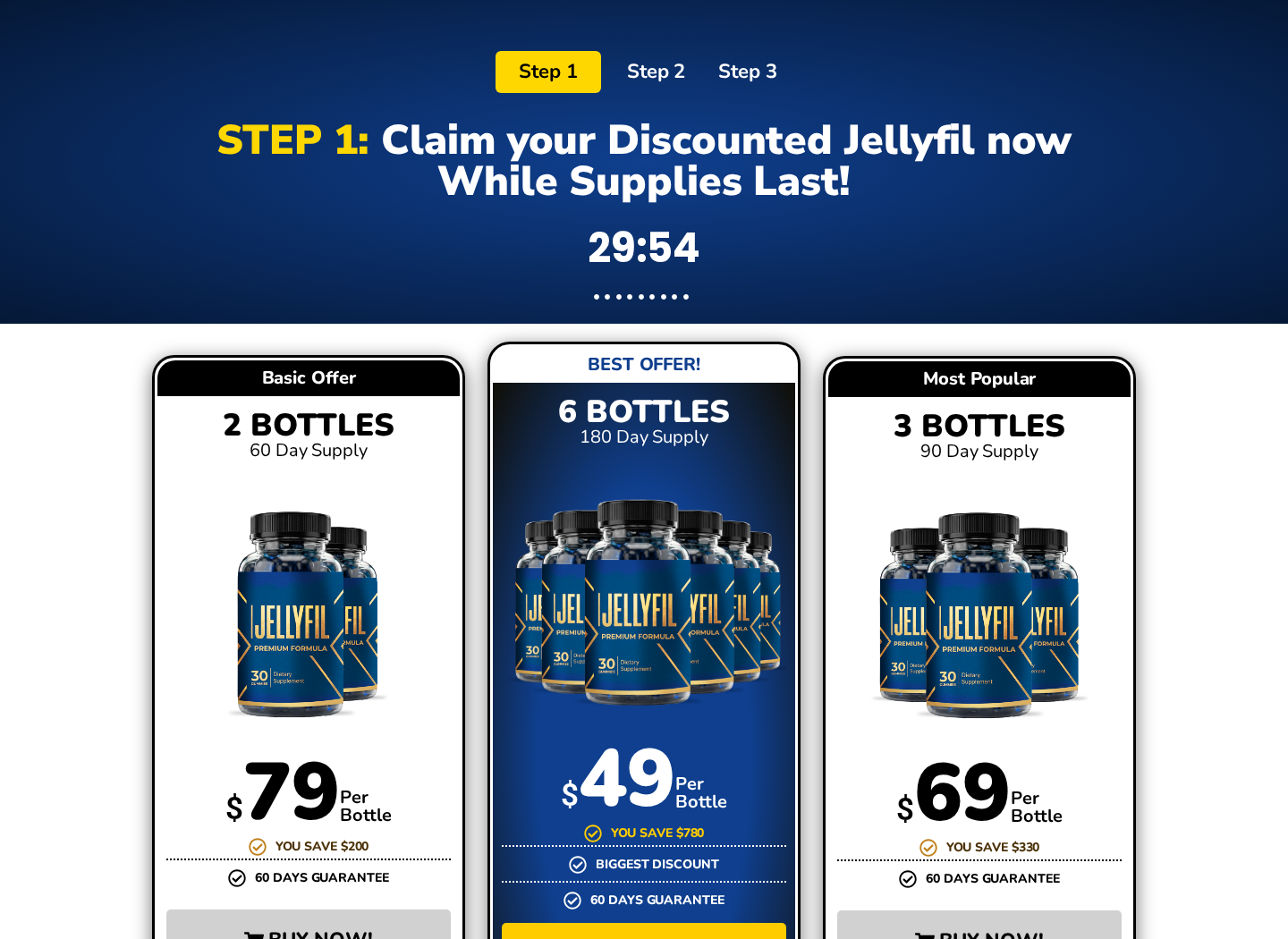
The order link redirects to a different domain displaying JellyFil branding. Bottles, testimonials, bundle labels, and urgency messages all change with that transition.
A renamed checkout is not a harmless design detail. Buyers should always know which product they are ordering and which company will charge them.
The evidence supports a deceptive funnel warning
HoneyFil’s celebrity pitch, broken policy links, brand switch, bundle pressure, and unclear seller path create substantial consumer risk.
However, we did not find evidence proving every order includes automatic refills. The checkout must be read carefully instead of assuming a subscription exists.
- The celebrity endorsement could not be verified.
- The purchase button changes HoneyFil into JellyFil.
- The smallest visible package contains two bottles.
- Countdown and popularity messages encourage a rushed order.
- The landing page’s legal links did not provide usable policies.
- The final page identifies BuyGoods as the retailer.
What HoneyFil Claims to Sell
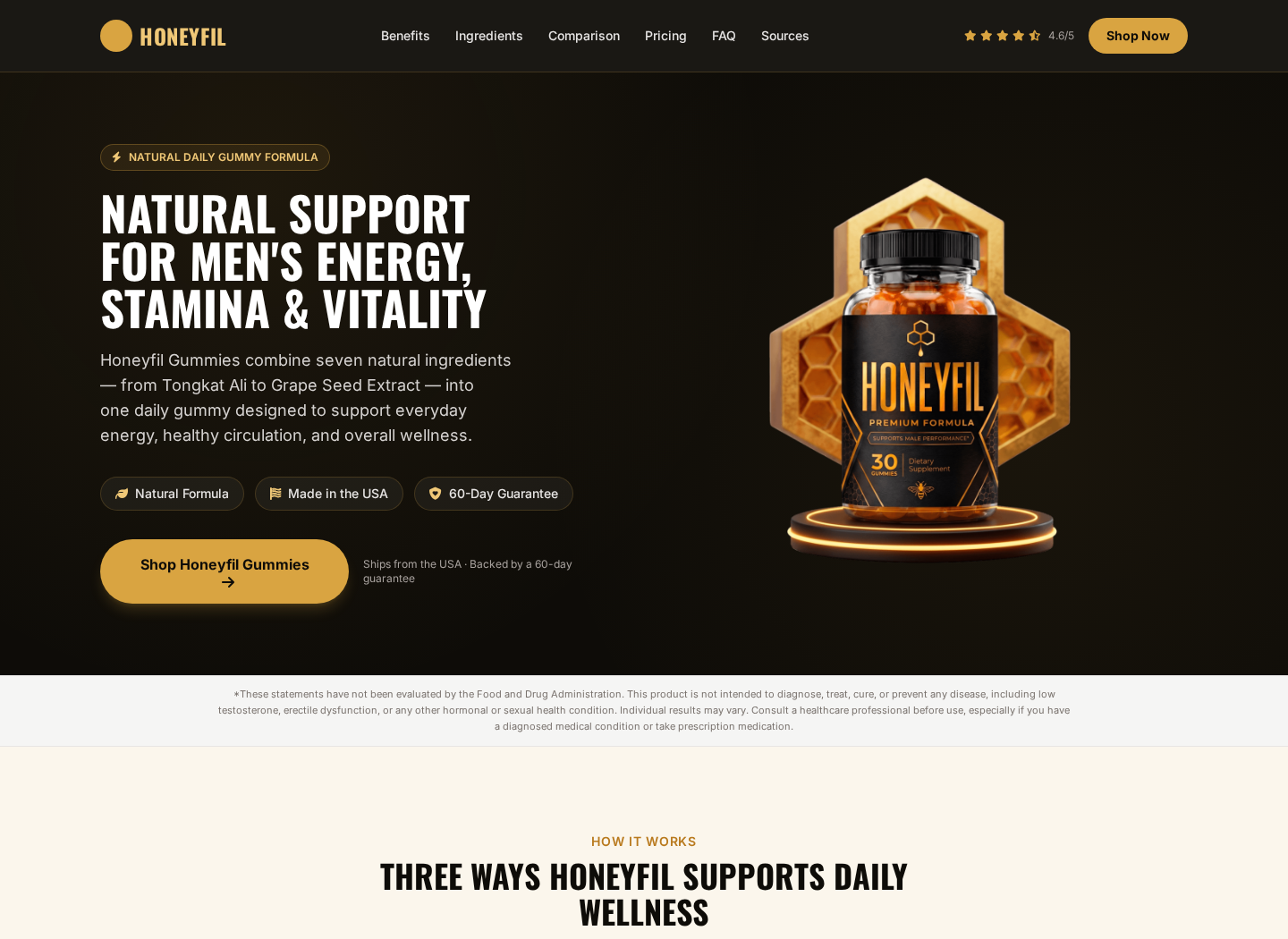
HoneyFil is presented as a gummy for men’s energy, stamina, confidence, and intimate performance. The language connects normal aging concerns with a convenient daily product.
The message is emotionally precise. It does not merely describe ingredients. It suggests a return to an earlier, more confident version of the buyer.
That framing can be powerful for people who feel embarrassed discussing sexual health, fatigue, medication effects, stress, or relationship difficulties with a clinician.
A supplement advertisement cannot diagnose the cause of those concerns. Similar symptoms can involve circulation, hormones, sleep, diabetes, anxiety, medications, or other medical conditions.
The seller’s page uses broad benefit language, attractive bottle imagery, and positive testimonials. Those elements demonstrate marketing, not clinical proof for this finished formula.
Even familiar ingredients need meaningful amounts, quality testing, interaction warnings, and reliable manufacturing information. A botanical name alone cannot establish effectiveness or safety.
Why the Elon Musk Video Should Not Be Trusted
A genuine endorsement should be independently traceable. It should appear through the celebrity’s verified channels, a documented partnership, or credible reporting with an identifiable source.
The HoneyFil campaign does not meet that standard. It relies on a video impression and a sales path controlled by the advertiser.
Deepfake promotions often begin with authentic interview footage. New mouth movements, captions, narration, or cloned audio then attach a product story to the original recording.
The edit may contain small timing problems, unusual facial movement, mismatched room sound, or a voice that lacks natural breathing and emphasis.
Those clues help, but visual inspection alone is no longer enough. The strongest test is whether the claimed endorsement exists outside the advertisement.
If a billionaire, physician, television host, or athlete truly backed a health product, the relationship would not depend on one disappearing social media clip.
Scammers choose famous people because recognition lowers resistance. The viewer knows the face, so the unfamiliar product inherits trust it has not earned.
HoneyFil may be replaced tomorrow by another label. The fake endorsement remains useful because the video can redirect to whichever offer is currently converting.
How the HoneyFil Scam Works
Step 1: A social media video creates borrowed trust
The funnel begins with a short video, sponsored post, or copied interview. Elon Musk appears to describe an unusual discovery for men’s vitality.
The advertisement may feel informal, like a leaked conversation rather than a commercial. That presentation makes the recommendation appear candid and personal.
Comments, reaction counts, and supposed customer replies can strengthen the illusion. None proves the speaker approved the message or used the product.
Step 2: The story turns a private concern into urgency
The narration describes declining energy, relationship strain, or disappointing performance. It then suggests ordinary treatments ignore a hidden cause.
This creates both discomfort and hope. The viewer is encouraged to act privately instead of asking a pharmacist or clinician a potentially awkward question.
Claims about limited availability or suppressed information make delay feel risky. The campaign wants emotion to reach the button before skepticism does.
Step 3: A branded landing page supplies reassurance
The HoneyFil page shows a clean bottle, benefit statements, customer stories, and ordering language. It looks more organized than the social advertisement.
That design can make the earlier celebrity video feel legitimate. In reality, a professional-looking page can be assembled quickly from reusable sales templates.
The page lists contact information, including an email, phone number, company name, and postal address. Those details require verification, not automatic trust.
Step 4: The purchase button changes the brand
Clicking Shop Now sends the visitor away from HoneyFil to a JellyFil order page on another domain.
The change is fundamental. A shopper attracted by one named product reaches a page selling another name with its own imagery and testimonials.
The redirect also contains affiliate tracking information. That indicates the path is designed to credit the traffic source when a visitor purchases.
Step 5: Bundles make the first charge larger
The visible JellyFil options begin with two bottles for $158 plus $9.99 shipping. Larger bundles show three bottles for $207 and six for $294.
Per-bottle pricing falls as quantity rises. The page also says most buyers choose six bottles, adding social pressure to the largest package.
A countdown timer and supply language narrow the decision window. Refreshing urgency devices should never replace a careful review of the cart.
Step 6: The retailer appears only near the bottom
The sales page identifies BuyGoods as the retailer and provides a Delaware address. That matters because the bottle name is not the complete transaction identity.
The card statement may show a retailer, processor, campaign name, or support descriptor. Buyers should record all of them before leaving the checkout.
We did not confirm that every purchase creates an automatic refill. The correct approach is to inspect the selected option and receipt for recurring language.
Step 7: Refund friction can begin after delivery
A large bundle creates more money at risk and more items to return. Opened-bottle rules, authorization requirements, and shipping costs can affect the refund.
The HoneyFil landing page’s Privacy and Terms links did not lead to useful policy pages during our review. That weakens informed consent before redirection.
The final retailer may publish separate rules. Save the exact policy visible when ordering because pages can change after complaints or campaigns rotate.
Pricing, Checkout, and Refill Questions
The cheapest displayed choice is not a trial bottle. It is a two-bottle order costing $158 before the listed shipping charge.
The three-bottle option totals $207. The six-bottle package totals $294 and receives the strongest visual emphasis on the page.
Per-unit arithmetic can distract from the actual card authorization. The important number is the complete amount due today, including shipping and taxes.
Before paying, confirm the product name, bottle count, billing descriptor, return period, return destination, and whether opened containers remain eligible.
Look for terms such as subscription, recurring, autoship, continuity, monthly delivery, preferred customer, or future shipments. Check boxes and nearby fine print matter.
No evidence we reviewed established universal automatic enrollment for HoneyFil or JellyFil. Do not repeat that claim without a receipt or checkout showing it.
If later charges appear, preserve the initial confirmation. It can show whether the merchant disclosed future billing when the purchase was made.
Company, Address, and Fulfillment Checks
The bottle name does not identify the whole operation
HoneyFil presents Gex Corporation LLP and an Ogden, Utah postal address. The destination page identifies BuyGoods as retailer from Wilmington, Delaware.
Multiple entities can participate in a legitimate transaction. The problem is that their roles are not explained clearly before the buyer follows the redirect.
Ask who owns the formula, who manufactures it, who processes payment, and who accepts returns. Four different answers require four verifiable records.
The support details must work before purchase
The HoneyFil page publishes a telephone number and an email using the `customercs.com` domain. A working contact line should answer product-specific questions consistently.
Call before ordering. Ask the agent to name HoneyFil, explain the JellyFil redirect, state the final quantity, and confirm whether future shipments occur.
An unanswered line, generic script, or refusal to provide written terms is a practical warning. Do not assume support improves after payment.
A mailing address may be only a mailbox
A postal address can receive notices without being a headquarters, laboratory, manufacturer, or returns center. Those functions are not interchangeable.
Never mail bottles to an address copied from a footer. Obtain written authorization and the exact return destination tied to the order.
Search the address independently and compare it with company registrations, receipts, package labels, and card descriptors. Contradictions deserve an explanation.
The supply chain remains insufficiently transparent
The pages we reviewed did not establish a clearly identifiable manufacturer with public batch testing for the exact finished gummy.
That does not prove the product came from China or contains dangerous substances. It means buyers lack information needed to evaluate origin and quality.
Request a complete Supplement Facts panel, lot number, expiration date, allergen statement, manufacturing country, responsible distributor, and independent certificate of analysis.
Unknown mass-produced supplements can vary in dose or quality. Never treat polished packaging as evidence that every batch matches its label.
Health and Privacy Risks to Consider
Men’s vitality concerns can have medical causes. A gummy should not replace evaluation for cardiovascular disease, diabetes, hormonal disorders, depression, or medication effects.
Ingredients promoted as natural can still interact with nitrates, blood-pressure medicines, anticoagulants, diabetes drugs, or other supplements.
Bring the full label to a pharmacist or clinician. If the seller does not provide exact amounts, that uncertainty itself limits a meaningful interaction review.
Checkout pages also collect identity, address, contact, and payment information. A deceptive advertisement can expose buyers even when a physical package eventually arrives.
Use a payment method with dispute rights. Avoid bank transfers, cryptocurrency, gift cards, or payment applications requested outside the documented checkout.
What to Do if You Have Fallen Victim to This Scam
- Save every record. Capture the advertisement, HoneyFil page, JellyFil checkout, selected bundle, confirmation, policies, emails, delivery label, and card descriptor.
- Confirm what was authorized. Compare the final receipt with the quantity and total you expected. Note any extra bottles, fees, or future-delivery language.
- Contact the retailer in writing. Identify the order and requested remedy. Ask for a cancellation number, return authorization, destination, deadline, and refundable amount.
- Monitor the payment method. Watch for repeat billing. Report unauthorized charges promptly and ask the issuer about blocking the merchant without closing unrelated services.
- Do not consume an uncertain product. If labeling is incomplete, damaged, or inconsistent, speak with a pharmacist before using it.
- Seek help for symptoms. Contact a clinician or poison center after an unexpected reaction. Use emergency services for severe breathing, chest, neurological, or allergic symptoms.
- Secure exposed accounts. Change reused passwords and enable multifactor authentication if the funnel requested account credentials or redirected through suspicious pages.
- Check the device. Run Malwarebytes if the advertisement triggered downloads or suspicious browser behavior. Use AdGuard to reduce malicious ads and tracking redirects.
- Report the campaign. Send the advertisement to the platform, file a consumer complaint, and report false celebrity or health claims to appropriate regulators.
Stay calm and work from documents. A clear timeline, screenshots, tracking number, and written cancellation request usually carry more weight than repeated telephone conversations.
Frequently Asked Questions
Is HoneyFil really endorsed by Elon Musk?
We found no reliable evidence of an endorsement. Treat videos linking Musk to HoneyFil as manipulated advertising unless confirmed through independently verified official channels.
Why does HoneyFil redirect to JellyFil?
The purchase button sends visitors to a differently branded sales page. The site does not clearly explain why the promoted and ordered product names differ.
Is HoneyFil definitely an automatic subscription?
We did not verify automatic enrollment for every order. Read the actual checkout, receipt, and card statement for recurring-delivery language or later charges.
How much does the HoneyFil funnel charge?
The destination page displayed two bottles for $158, three for $207, and six for $294. Shipping was listed separately on the smallest bundle.
Can the gummies treat erectile dysfunction?
No seller-controlled advertisement should establish that conclusion. Persistent symptoms require professional assessment because they can involve medication effects or underlying medical conditions.
What is the biggest warning sign?
The unexplained HoneyFil-to-JellyFil brand switch is the clearest transactional warning, especially when combined with the unverified celebrity endorsement and broken policy links.
The Bottom Line
HoneyFil is promoted through an unverified Elon Musk story, then sends buyers to a JellyFil sales page with expensive bundles and strong urgency tactics.
That is not a transparent purchase path. Avoid the offer unless the seller explains the brand change, formula, company roles, billing, and returns in verifiable writing.








