

NeuroRecall presents itself as a simple memory supplement for people who want steadier focus without stimulants or a complicated routine.
That ordinary promise hides an extraordinary checkout surprise. Following the order button changes far more than the page address.
Overview
The NeuroRecall offer at a glance
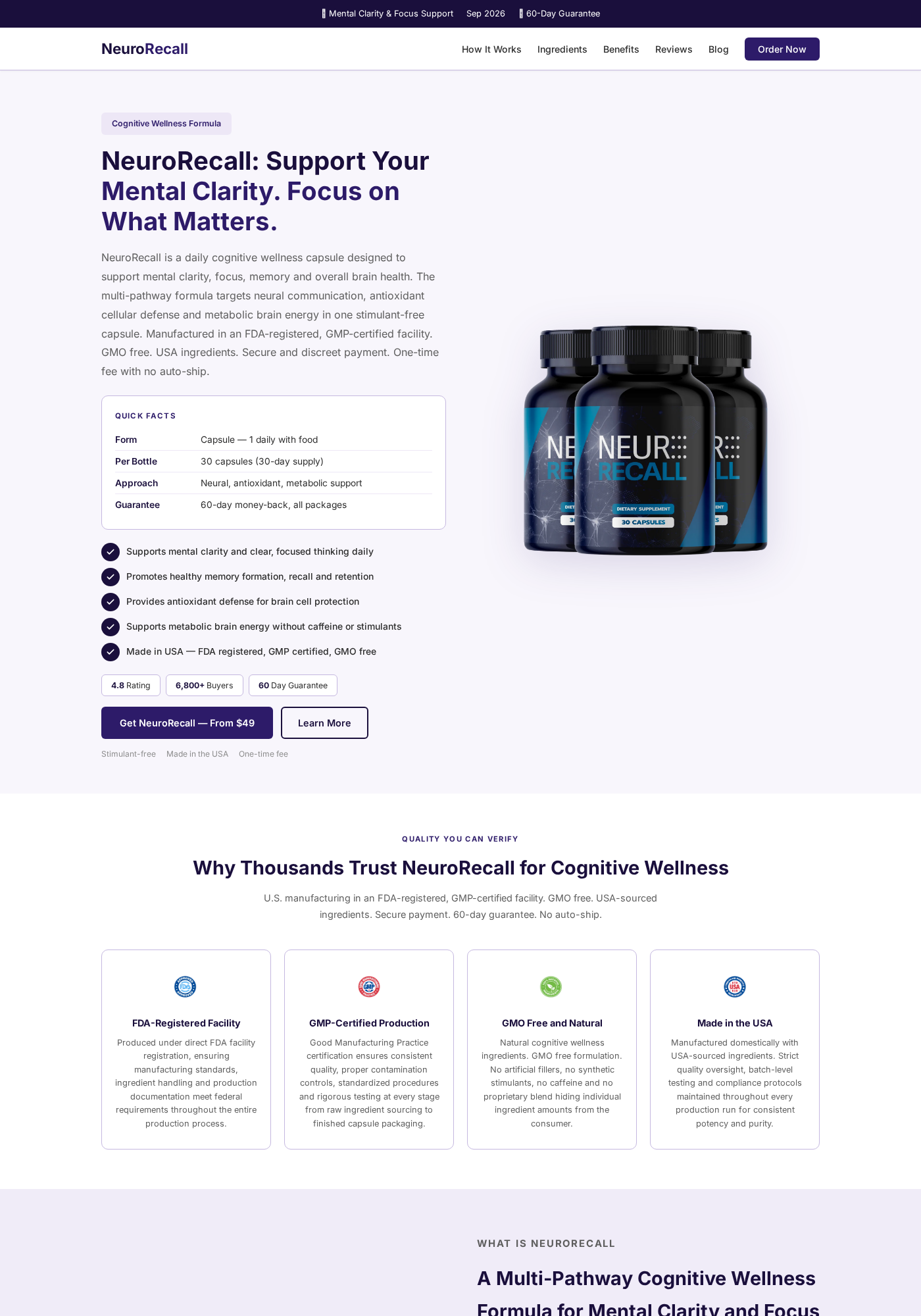
NeuroRecall is advertised as a once-daily cognitive supplement for memory, attention, and mental clarity.
The website says the product uses United States-sourced ingredients and is produced under FDA and GMP standards.
Its presentation is deliberately uncomplicated. Visitors see bottles, a 4.8 rating, more than 6,800 buyers, and an assurance that there is no autoship.
The page also refers to batch-level testing, although it does not display downloadable laboratory reports matching a product lot.
The crucial problem appears after clicking Order
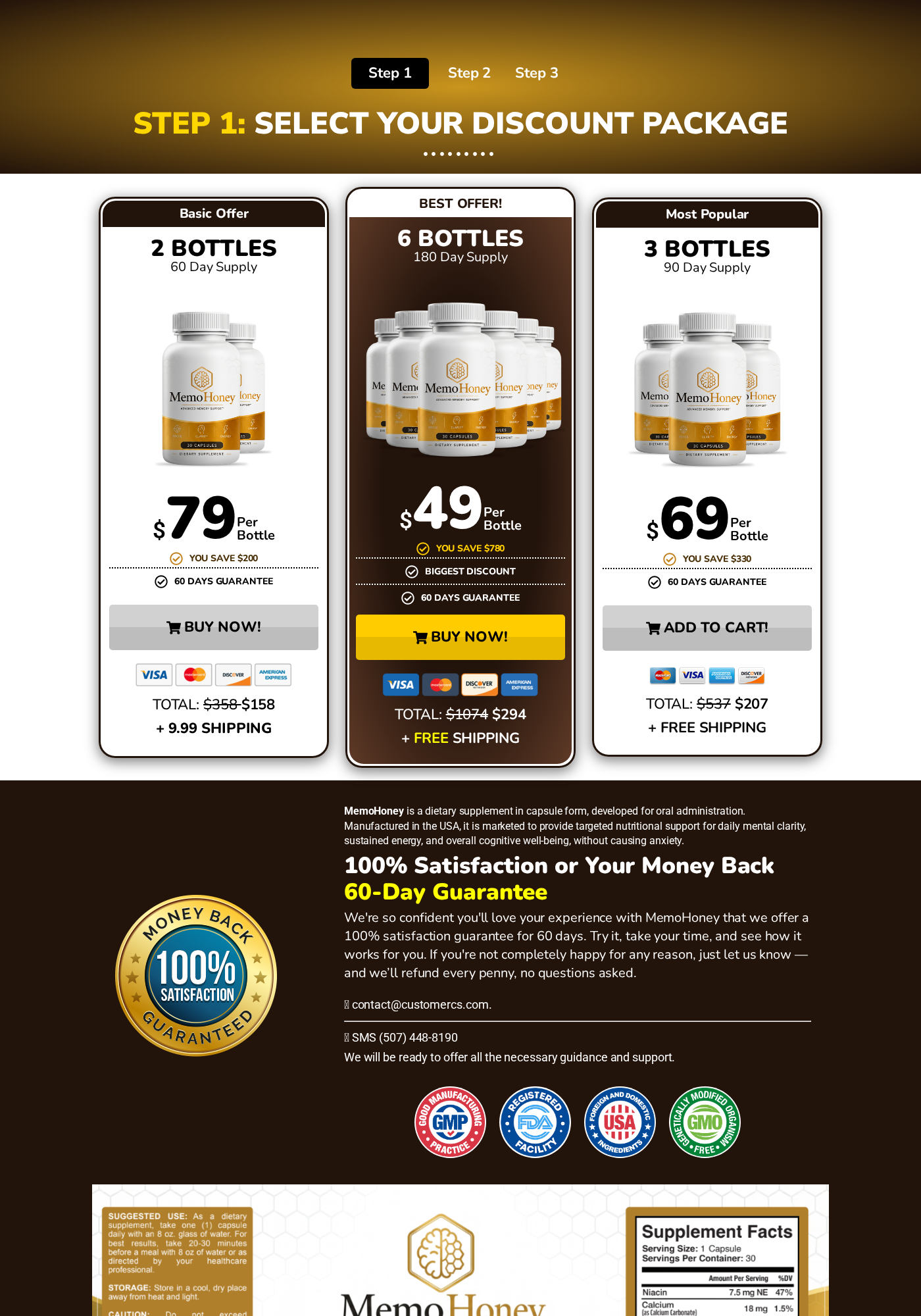
The NeuroRecall order button does not lead to a NeuroRecall checkout. It redirects to a page selling MemoHoney.
MemoHoney is a different product with different branding, bottle artwork, ingredients, and marketing.
The checkout item codes also use MemoHoney identifiers. This is not a harmless spelling variation or a secondary NeuroRecall domain.
A shopper who began researching NeuroRecall could therefore pay for another product unless the change is noticed before submitting payment.
The main findings
Our review found a young website whose trust claims are not matched by a working, brand-consistent buying process.
- Neurosrecall.com was registered on September 6, 2026.
- The page claims 6,800+ buyers despite its extremely short domain history.
- The order button redirects from NeuroRecall to MemoHoney.
- The checkout displays MemoHoney bottles and MemoHoney item codes.
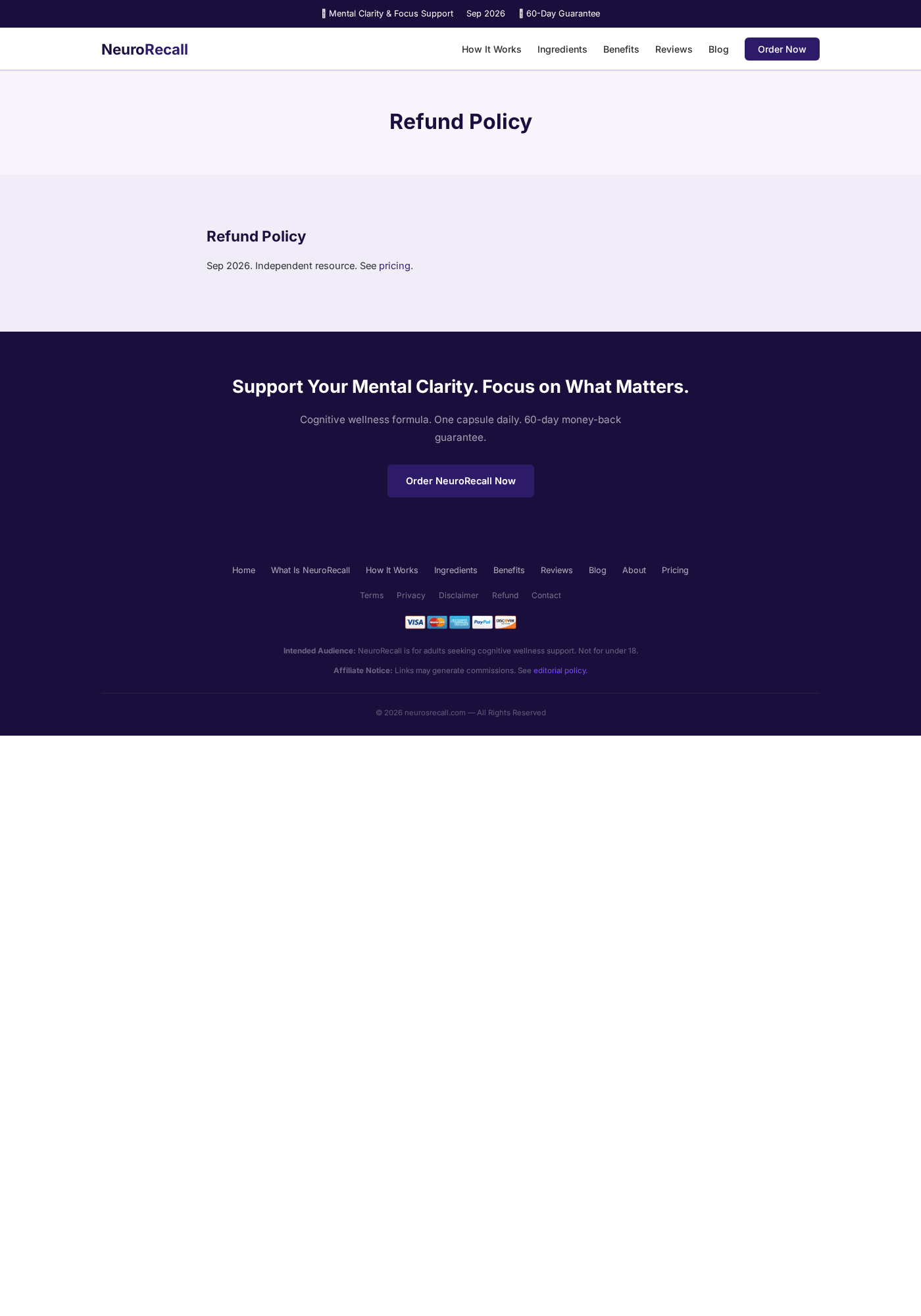
- The refund page provides no usable return procedure.
- The contact and terms pages offer very little accountable business information.
- No accessible finished-product trial supports the broad cognitive claims.
The redirect is direct, repeatable, and visible. It is the strongest reason to avoid entering payment information through the current NeuroRecall funnel.
We did not test either supplement chemically. Our conclusions concern the advertising, website behavior, policies, and transaction path.
Is NeuroRecall Legit or a Scam?
The current NeuroRecall offer is not a reliable way to purchase the product shown on its homepage.
A functioning store must deliver a checkout that clearly identifies the same item, quantity, price, seller, and refund terms advertised beforehand.
NeuroRecall fails at the first of those checks. Its call-to-action sends customers to a separate brand.
There are innocent explanations for an incorrect link, including a careless affiliate configuration or an unfinished website.
Neither explanation makes the checkout safe. A merchant should not accept money while the advertised and purchasable products disagree.
The barely populated policy pages add another layer of uncertainty. Buyers are not given a practical process for exercising the advertised guarantee.
Until the owner corrects the redirect and publishes complete company and return information, NeuroRecall should be treated as a high-risk offer.
The NeuroRecall-to-MemoHoney Switch Explained
The branding changes completely
NeuroRecall uses dark bottles and conventional memory-support language. The destination page sells MemoHoney with honey-themed labels and different packaging.
The name change is impossible to reconcile as a color update. These are visibly separate consumer brands.
A legitimate cross-sell would tell the shopper that the original item is unavailable and ask whether another product is wanted.
This route makes no such transition. The NeuroRecall button simply deposits the visitor at the other offer.
The checkout codes confirm the destination product
The order system uses item identifiers beginning with MemoHoney abbreviations. The bottles and package descriptions repeat the MemoHoney name.
That matters because a receipt or parcel would likely reflect the checkout item, not the NeuroRecall page that sent the buyer there.
If a customer later complains, the transaction record may show that MemoHoney was displayed at the final payment stage.
Always read the cart title and descriptor immediately before authorizing payment. Do not rely on what appeared several pages earlier.
The products cannot be assumed equivalent
Even when two supplements target memory concerns, their ingredients, doses, allergens, warnings, and responsible sellers can differ.
A substitute is not acceptable for an ingestible product without informed consent. Customers may have checked NeuroRecall ingredients for medical reasons.
The brand switch eliminates that informed decision. It asks people to continue while carrying trust from one product into another.
The Website’s Trust Signals Need Context
A recent domain claims thousands of customers
Neurosrecall.com was created on September 6, 2026. Our review occurred roughly two weeks later.
During that narrow period, the page already claimed more than 6,800 buyers and displayed a 4.8 rating.
A brand can sell through another channel before launching a new domain. If that happened, the site should explain where the history came from.
No review archive, prior storefront, migration notice, or independent platform was provided to validate the displayed totals.
“No autoship” should be confirmed at checkout
The homepage says purchases are one-time and do not involve automatic shipments. That is reassuring language when it matches the final agreement.
However, the checkout belongs to MemoHoney. NeuroRecall’s statement does not automatically control a transaction for a differently named item.
Read the final billing terms, subscription boxes, post-purchase offers, and receipt. Save screenshots showing the one-time price.
Batch testing is asserted but not demonstrated
The page refers to batch-level testing, a phrase that implies results exist for individual production lots.
Visitors are not given a certificate number, laboratory name, report date, contaminant panel, or bottle-lot lookup.
Without those details, the claim cannot help a customer verify identity, purity, potency, heavy metals, or microbial safety.
A generic quality badge is not a substitute for a report connected to the bottle being purchased.
How the NeuroRecall Checkout Trap Works
Step 1: A clean landing page establishes the NeuroRecall name
The first page repeatedly shows NeuroRecall, explains a daily routine, and makes the product feel like the subject of the transaction.
By the time visitors reach the button, they have already connected the promised benefits and trust statements to that brand.
Step 2: Ratings and buyer totals lower resistance
A 4.8 score and thousands of buyers suggest that other people have already investigated the offer and had good experiences.
Because the site supplies no inspectable review records, that impression rests mainly on numbers chosen by the page operator.
Step 3: “No autoship” addresses a common fear
Many supplement shoppers worry about recurring refills. The one-time-purchase promise anticipates that objection and creates relief.
That relief can make a visitor less attentive during the next step, precisely when the product changes.
Step 4: The order button sends the shopper elsewhere
Clicking Order moves the browser to a MemoHoney sales path. There is no clear handoff explaining why NeuroRecall disappeared.
Affiliate parameters accompany the route, indicating that the action may be tracked for a sales commission.
Step 5: Familiar checkout design keeps momentum going
The destination shows package choices, discounts, shipping language, and a guarantee. The layout looks like the natural next stage of the purchase.
A hurried user may focus on bottle counts and total cost without noticing the new label.
Step 6: The payment record belongs to MemoHoney
If the purchase is completed, the order system records MemoHoney identifiers. The consumer has not purchased the NeuroRecall item originally researched.
That mismatch may only become obvious when the confirmation arrives or a package reaches the door.
Step 7: Sparse policies make resolution harder
Returning to NeuroRecall for refund guidance produces little useful information. The buyer may need to identify the MemoHoney seller independently.
Every extra handoff creates delay, and refund periods continue running while the customer searches for the correct support channel.
The Refund Page Is Not a Refund Policy
Essential instructions are missing
The page titled “Refund Policy” does not explain eligibility, deadlines, return authorization, mailing address, required packaging, or processing time.
It essentially contains a heading and a short generic footer. A title alone cannot tell a customer how to recover money.
The guarantee cannot be evaluated
A meaningful guarantee identifies the liable seller and describes the exact action a customer must take.
It should also explain whether opened bottles qualify, who pays return postage, and whether original shipping is refundable.
NeuroRecall’s public refund page leaves those questions unanswered.
The destination brand may apply different rules
Because checkout sells MemoHoney, that offer’s conditions may govern the actual payment.
A buyer should not assume language seen on NeuroRecall automatically applies to a different item and order system.
Save both sets of pages. The contrast can help explain the transaction during a support request or charge dispute.
Why an Incorrect Product Link Is Not a Minor Bug
Health-product selection depends on exact identity
A broken link to the wrong color shirt is inconvenient. A supplement switch can change ingredients, warnings, dosage, and medical suitability.
The consumer’s research becomes useless when the cart silently replaces the item that was evaluated.
The final screen can shift legal responsibility
Checkout is where the product description, seller, total, and accepted terms become part of the recorded transaction.
If that screen says MemoHoney, the operator may argue that MemoHoney was plainly selected, despite NeuroRecall providing the path.
This possibility makes screenshots from before and after the redirect especially valuable.
The error should have been caught before promotion
Testing an order button is one of the simplest checks available to a store operator or affiliate marketer.
Leaving the mismatch live shows inadequate quality control over a page asking visitors to ingest a product and submit financial information.
Until the link is fixed, the safest interpretation is that NeuroRecall is not actually available through its advertised route.
The correction should be public and specific. It should identify the intended product, explain the previous redirect, and state which customers may have been affected.
Existing purchasers should receive direct instructions for cancellation, returns, and refunds without being forced to discover the mismatch independently.
Company, Address, and Fulfillment Checks
No responsible NeuroRecall company is clearly named
The site promotes a brand but does not prominently disclose a verifiable legal entity accepting responsibility for NeuroRecall.
Without that identity, corporate records and complaint history are difficult to connect to the offer.
No useful physical return location is published
The skeletal refund page does not provide a NeuroRecall returns address. Customers should never guess or mail supplements to a domain-registration address.
Only an authorization linked to the actual order should determine where a parcel is sent.
The contact path lacks operational detail
A dependable support page normally gives service hours, response expectations, an order lookup process, and escalation information.
NeuroRecall’s limited pages do not demonstrate that kind of established customer-care operation.
The fulfillment chain changes with the brand switch
Once the customer lands on MemoHoney, any warehouse and processor behind that product may become relevant instead of NeuroRecall’s unnamed operation.
A fulfillment address only shows where packages move. It does not prove who owns either brand or formulated either supplement.
What to Do if You Ordered Through NeuroRecall
- Identify the product actually purchased. Read the confirmation, card descriptor, and cart record. Determine whether the order says NeuroRecall, MemoHoney, or another name.
- Preserve evidence of the switch. Save the NeuroRecall page, redirect address, MemoHoney checkout, advertised no-autoship statement, receipt, and package label.
- Contact the processor shown on the receipt. Use the order confirmation’s verified support channel rather than guessing from the NeuroRecall homepage.
- Request cancellation before shipment. State that the checkout product did not match the item advertised when you clicked Order.
- Get return authorization. If the parcel has shipped, obtain written instructions and an approved address. Do not rely on an unverified warehouse listing.
- Watch for repeat billing. Review statements for several months despite the no-autoship claim. Report any charge you did not knowingly authorize.
- Escalate with organized documentation. If a promised refund fails, ask your card issuer about dispute options and supply a concise timeline of the mismatch.
- Check your device if anything unusual downloaded. Malwarebytes can detect malicious files, while AdGuard can block many deceptive advertisements and tracking redirects.
Frequently Asked Questions
What happens when I click the NeuroRecall order button?
During our checks, it redirected to a MemoHoney sales and checkout path rather than a NeuroRecall order page.
Are NeuroRecall and MemoHoney the same product?
The reviewed pages presented different names, labels, and offers. Nothing clearly established that they are identical formulas sold under interchangeable branding.
Does NeuroRecall really have 6,800 buyers?
We found no public, independently reviewable record validating that figure, particularly given the domain’s September 2026 creation date.
Is NeuroRecall a subscription?
The landing page says no autoship. Because checkout changes products, verify the final payment terms and continue monitoring your statement.
Where do I return an order?
Use only the return authorization supplied for your exact confirmation number. NeuroRecall’s public refund page did not provide an adequate procedure.
Should I take the MemoHoney bottles if they arrive?
Do not use an unexpected supplement until you have checked its sealed label, ingredients, warnings, and suitability with a qualified medical professional.
The Bottom Line
NeuroRecall looks straightforward until the moment a visitor tries to buy it. Then the funnel changes to MemoHoney without a clear explanation.
That product switch, combined with a new domain and nearly empty refund page, makes the offer too uncertain for us to recommend.
Do not enter payment details unless the seller restores a matching checkout and publishes complete, enforceable policies for the product being advertised.








