

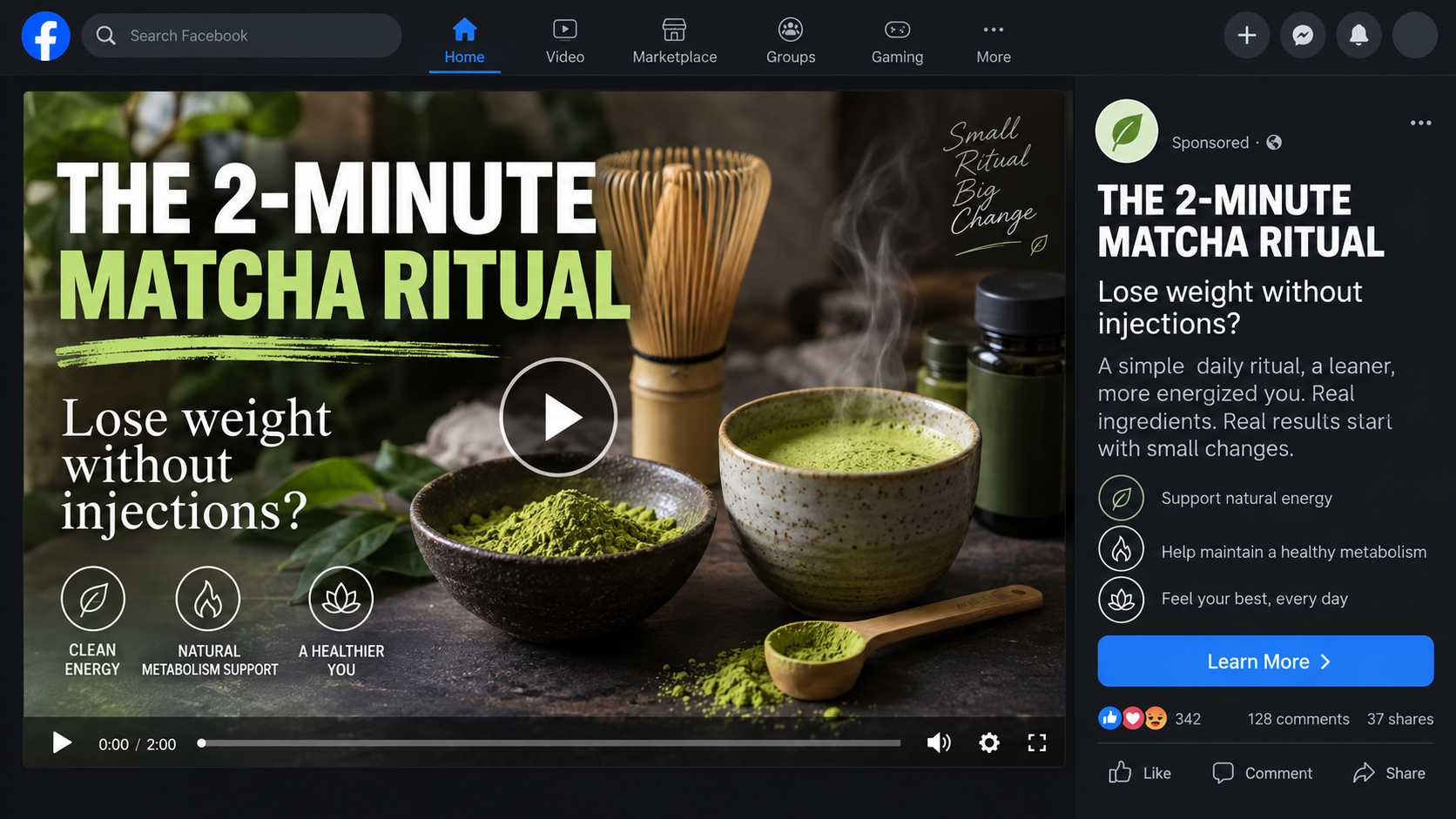
The video feels like an unguarded celebrity confession. Kelly Clarkson appears to discuss a simple matcha routine, and the clip promises answers before it disappears.
That familiar face is doing most of the selling. The product behind the button can change, but the emotional story is designed to survive every replacement.
Overview
The Kelly Clarkson video is manipulated
Fact-checkers have traced similar clips to authentic interviews that contained no matcha supplement endorsement. The commercial message was added later through digital manipulation.
Independent analysis has also identified synthetic audio in versions of the campaign. Natural-looking lip movement does not make the speech genuine.
Kelly Clarkson has publicly discussed her health and weight. Scammers exploit that real interest to attach false explanations and unauthorized product recommendations.
The “ritual” is a reusable sales story
The advertisement promises a special matcha recipe, often paired with a common kitchen ingredient. The practical recipe remains vague while curiosity builds.
Visitors eventually reach a supplement page. The label may change between campaigns, even when the celebrity footage and matcha narrative remain nearly identical.
This article focuses on the story, not one temporary bottle. Recognizing the story protects readers when tomorrow’s advertisement uses a different product name.
The main objective is a rushed purchase
The funnel combines a famous face, a dramatic personal transformation, fake news styling, countdowns, bundles, and a checkout designed for immediate action.
Some weight-loss funnels also create recurring-billing complaints. That risk must be checked at the actual checkout rather than assumed for every matcha advertisement.
- The celebrity endorsement is not authentic.
- The original footage did not promote the advertised product.
- The recipe is less important than the product redirect.
- Fake news pages may imitate trusted publishers.
- Product names and domains can rotate quickly.
- Subscription terms must be verified before payment.
What the Fake Matcha Advertisement Says
One version suggests Kelly Clarkson discovered a morning matcha ritual that explains her appearance or weight change.
Another frames the clip as a television interview, private confession, leaked segment, or advice powerful interests supposedly want removed.
The language often promises results without calorie counting, exercise, injections, or prescriptions. That comparison targets frustration with slow or difficult weight management.
A mysterious additional ingredient may be teased for several minutes. Baking soda, lemon, honey, salt, or another household item can occupy that role.
The exact ingredient is replaceable. Its purpose is to make the claim memorable, cheap-sounding, and easy to imagine trying at home.
The clip then implies viewers can obtain the same effect more conveniently through a promoted supplement.
None of those narrative elements proves Kelly Clarkson recorded the recommendation, used the product, or approved the advertisement.
How We Know the Celebrity Clip Is Fake
AAP FactCheck reviewed a campaign spread through a compromised social account. It found that the Clarkson footage had been repurposed and the product claims were fake.
AFP examined another altered video and reported strong indications that the audio was artificially generated. The original clip did not contain the sales endorsement.
PolitiFact has also documented manipulated Clarkson videos used to sell weight-loss products. This is a repeated impersonation pattern, not an isolated misunderstanding.
The strongest evidence comes from the source material. When the original interview is located, the supposed recipe and product recommendation are absent.
Scammers can crop network branding, add captions, change audio, and place the result inside a social post that looks uploaded by a fan.
A hacked or renamed account adds more credibility. Its age, followers, and old posts can make the advertisement appear to come from an established person.
Do not rely on blue check imagery inside a video. Verification belongs to the account and platform, not to a badge drawn into the recording.
How the Kelly Clarkson Matcha Ritual Scam Works
Step 1: A fake AI video stops the scroll
The campaign begins with a recognizable image, voice, or television setting. The first sentence hints that a private secret is finally being revealed.
The clip may combine real interview footage with cloned narration. Captions repeat the strongest promises for people watching without sound.
Comments below the post can be fabricated, restricted, or curated. Reactions do not prove the endorsement is authentic.
Step 2: The story rewrites a real weight-loss journey
Public photographs and interview fragments are arranged into a simple before-and-after story. A complex personal health history becomes one miraculous ritual.
The advertisement claims mainstream coverage omitted the true cause. That suggestion discourages viewers from trusting corrections or original interviews.
Real changes in a celebrity’s appearance do not validate any product using those photographs.
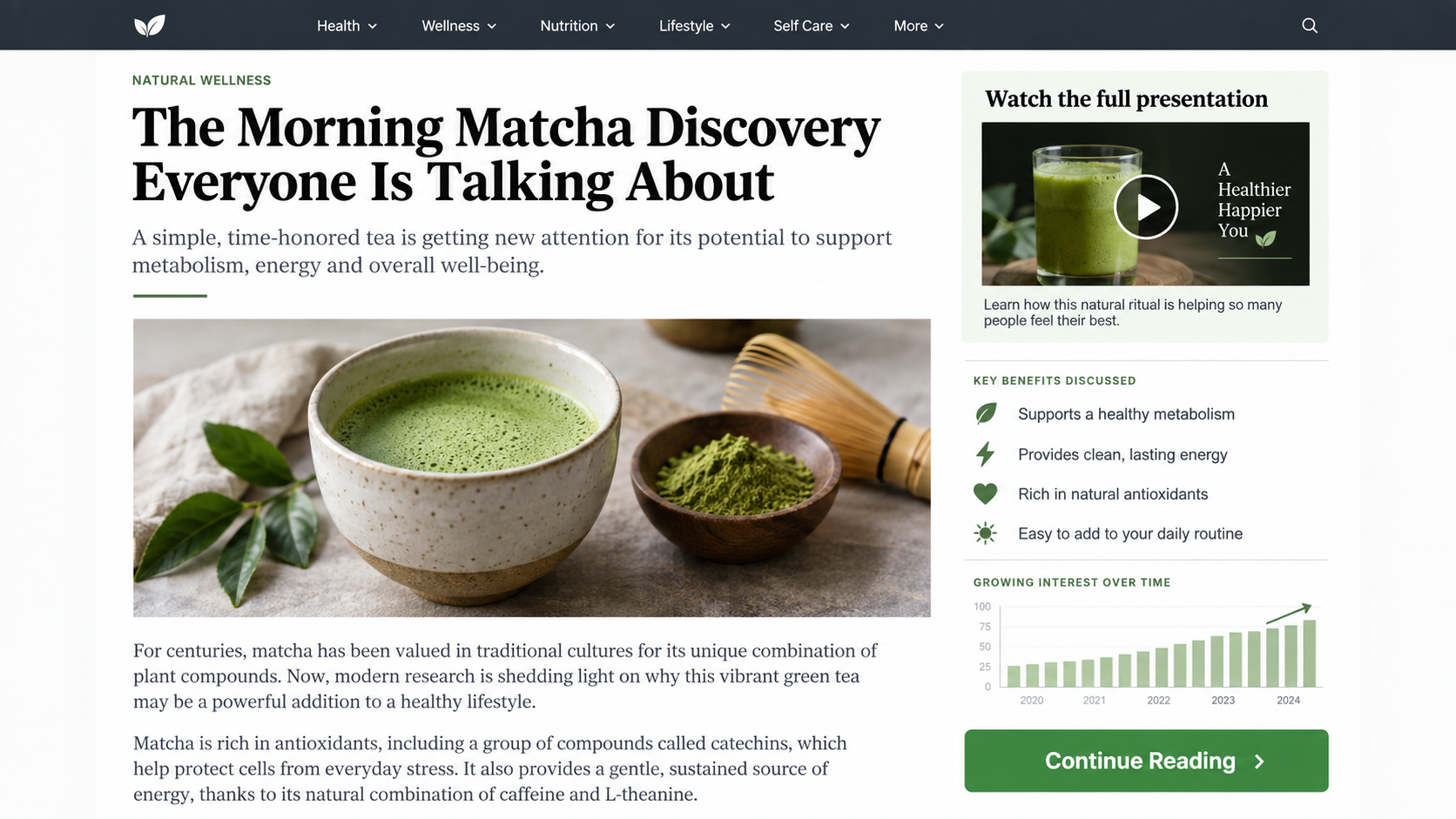
Step 3: A fake article supplies borrowed authority
The link may open a page resembling CNN, Fox News, a daytime program, a health magazine, or another trusted publisher.
Logos, fonts, breaking-news labels, and reporter-style paragraphs create familiarity. The domain, navigation, and links reveal that the page is not the real outlet.
Buttons often lead only to the offer. Genuine news pages have working sections, author histories, dates, corrections, and independent coverage.
Step 4: The advertorial stretches the promised reveal
Long paragraphs describe metabolism, inflammation, hormones, or a hidden biological switch. Scientific words provide atmosphere without establishing a testable formula.
The reader keeps moving because the ingredient or recipe is always one section away. Testimonials and dramatic numbers appear between explanations.
This delay changes the visitor from a curious viewer into someone invested in completing the story.
Step 5: A supplement replaces the kitchen ritual
The sales transition presents capsules, gummies, drops, or powder as the convenient version of the matcha discovery.
The product name is not stable. Campaigns have redirected to labels such as LeafTide or KeySlim, while other names can appear later.
That rotation is why searching only one bottle misses the larger scheme. The unauthorized Clarkson narrative is the reusable asset.
Step 6: The checkout favors multiple containers
Package ladders commonly make three or six bottles appear smarter than one. The page highlights a low unit price rather than today’s complete charge.
Countdowns, inventory warnings, and statements about the most popular bundle add pressure. Refreshing the page may restart the same urgency.
Buyers should review quantity, shipping, tax, add-ons, and the final authorization before entering card information.
Step 7: Hidden terms can create a second problem
Some online weight-loss offers have generated complaints about subscriptions or recurring shipments. That broader pattern makes checkout inspection essential.
It does not prove every product behind a Kelly Clarkson matcha ad automatically renews. The decisive evidence is the actual order page and receipt.
Look for autoship, membership, continuity, monthly delivery, trial conversion, or future-billing language near the price and final button.
Step 8: The campaign changes names after exposure
When complaints accumulate, the advertiser can retire a domain, replace the bottle label, and send the same video to a new checkout.
Affiliate accounts also disappear and return under new names. The fake interview continues circulating because producing it was the expensive part.
Readers who recognize the narrative do not need to memorize every supplement name. The pattern itself becomes the warning.
Why the Story Is So Persuasive
The campaign uses a real person with a visible transformation. That gives the viewer a concrete outcome before any product evidence appears.
It also offers privacy. Someone can order online without discussing weight, medication, or embarrassment with a clinician.
Matcha has a generally healthy reputation. The familiar ingredient makes the advertisement feel gentler than a strong drug claim.
The secret-recipe framing promises control. Instead of confronting several causes, the viewer receives one morning action and one product.
Artificial intelligence improves the presentation. Voice cloning can reproduce cadence, while face animation can align speech closely enough for casual viewing.
Mobile screens hide details that would look wrong on a larger display. Captions and quick cuts also reduce the time available to inspect lip movement.
Urgency finishes the process. A shopper who fears losing a discount is less likely to search the domain, company, ingredients, or return destination.
The Health Claims Do Not Match Reliable Evidence
Matcha contains caffeine and plant compounds. It can be part of a balanced diet, but it is not a guaranteed rapid weight-loss treatment.
Research on tea ingredients does not validate an unknown supplement using matcha imagery. Formula, dose, purity, and finished-product testing still matter.
A product can also contain ingredients unrelated to the advertisement. Always read the Supplement Facts panel rather than inferring contents from a video.
Weight change may involve medications, diabetes, thyroid disease, menopause, sleep, appetite, activity, mental health, or other factors.
Rapid unexplained change should be evaluated medically. Do not copy a celebrity story as a treatment plan.
Supplements can interact with prescriptions and may contain stimulants. People with heart, liver, kidney, pregnancy, or eating-disorder concerns need individualized advice.
The words natural and doctor recommended do not establish safety. Neither does a claim that a facility is FDA registered.
Company, Address, and Fulfillment Checks
The celebrity is not the seller
Kelly Clarkson’s image may dominate the advertisement, but the actual transaction belongs to another company.
Identify the legal entity shown in the checkout, terms, privacy policy, receipt, card statement, and package. Those records should align.
The product name can conceal a rotating operator
Different bottle names may use the same story, page template, payment processor, support line, or fulfillment address.
Compare those operational details instead of assuming every new label represents a new manufacturer.
A redirected checkout should explain why the product changed. If it does not, close the page.
Addresses may be mailboxes or shipping facilities
An address in a footer can belong to a virtual office, commercial mailbox, unrelated tenant, or warehouse that only receives returns.
Search the complete address and ask what function it serves. Do not send merchandise until support issues written authorization.
A fulfillment center can mail bottles without verifying celebrity claims, formula quality, or marketing legality.
Unknown supplements require supply-chain proof
Do not assume a product came from China because the website looks generic. Confirm origin from the label, customs records, and responsible distributor.
At the same time, do not accept vague manufacturing claims. Request lot-specific identity, potency, microbial, heavy-metal, and undeclared-drug testing.
Fake addresses, silent phone lines, disposable emails, and contradictory entities are serious warning signs. A bottle is not transparent merely because it arrived.
How to Check a Matcha Advertisement in Two Minutes
Pause the video and search one exact sentence in quotation marks. Recycled scam scripts often appear across different products and celebrity names.
Open Kelly Clarkson’s verified accounts independently. Do not use links attached to the advertisement.
Search for the original interview. Compare background, clothing, gestures, and surrounding conversation with the edited clip.
Inspect the destination domain. A page copying a news logo should use that publisher’s real domain and functioning navigation.
Scroll directly to the footer. Identify the seller, return policy, recurring terms, address, phone number, and payment descriptor before reading testimonials.
Check whether the product name remains consistent from advertisement through receipt. A brand change is a reason to stop.
Finally, search the exact company and billing descriptor with words such as complaints, subscription, returns, and unauthorized charge.
What to Do if You Have Fallen Victim to This Scam
- Preserve the complete funnel. Save the fake video, account name, advertorial, product page, checkout, receipt, terms, emails, and card descriptor.
- Cancel through the actual merchant. Use the company on the receipt, not a celebrity name or telephone number inside the fake article.
- Ask about recurring billing. Request written confirmation that future shipments, memberships, and automatic charges are canceled.
- Monitor every payment account. Report unexplained repeat charges quickly. Ask the issuer about dispute rights and merchant blocking.
- Keep unused products sealed. Obtain a return authorization and tracked destination before mailing. Photograph the package and its contents.
- Do not change medical treatment. Discuss ingredients with a pharmacist or clinician, especially after side effects or while using prescriptions.
- Secure any exposed login. Change the password from the real service, remove unfamiliar sessions, and enable multifactor authentication.
- Scan affected devices. Malwarebytes can check suspicious downloads. AdGuard can reduce malicious advertisements, trackers, and redirect chains.
- Report the impersonation. Notify the platform, consumer regulator, payment provider, and celebrity’s official team when appropriate.
Do not feel embarrassed. These campaigns combine advanced editing with familiar public figures and are deliberately built to bypass ordinary skepticism.
Frequently Asked Questions
Did Kelly Clarkson promote a matcha weight-loss ritual?
No credible evidence supports the viral endorsement. Fact-checkers found manipulated footage and synthetic audio in related advertisements.
Is there a real secret matcha recipe in the video?
The “recipe” functions mainly as a curiosity hook. The funnel ultimately directs viewers toward a commercial supplement whose label can change.
Which supplement is behind the scam?
There is no permanent answer. Products and domains rotate, which is why the fake celebrity story is more important than one temporary bottle.
Are all matcha supplements fraudulent?
No. Matcha is a real tea ingredient. The scam is the unauthorized celebrity endorsement, deceptive funnel, and unsupported transformation claim.
Will the checkout definitely create a subscription?
Not necessarily. Some funnels generate recurring-billing complaints, but buyers must inspect the specific checkout and receipt for continuity terms.
What is the fastest authenticity check?
Find the original interview and check the celebrity’s verified channels. If the endorsement exists only inside an advertisement, do not trust it.
The Bottom Line
The Kelly Clarkson matcha ritual video is a manufactured endorsement built from manipulated media. Its purpose is to lend celebrity trust to a rotating product funnel.
Ignore the bottle name and verify the story first. A genuine health recommendation does not need fake news pages, synthetic speech, and disappearing social accounts.








