

The caller says your phone number has been used in a crime. They claim to work for Singapore’s Immigration & Checkpoints Authority, and they sound as though a case is already open.
Before you have time to check, another supposed official joins the story. There are documents, instructions, and a warning to keep the matter private.
The ICA impersonation scam turns that sudden uncertainty into pressure. Understanding where the conversation changes helps you recognize what is happening before the demands grow.
Overview
A confirmed impersonation scheme begins with an accusation
In a joint warning dated September 25, 2026, Singapore Police and ICA described callers who falsely claim that someone’s identity or phone number is connected to criminal activity. The callers then transfer the victim to another fraudster impersonating a Chinese official.
The official advisory reports at least 117 cases and S$8.4 million in losses since January 2026 for this variant. It describes demands for transfers or cash under investigation or bail pretexts, sometimes reinforced with fake documents and nondisclosure agreements.
The second official is not independent verification
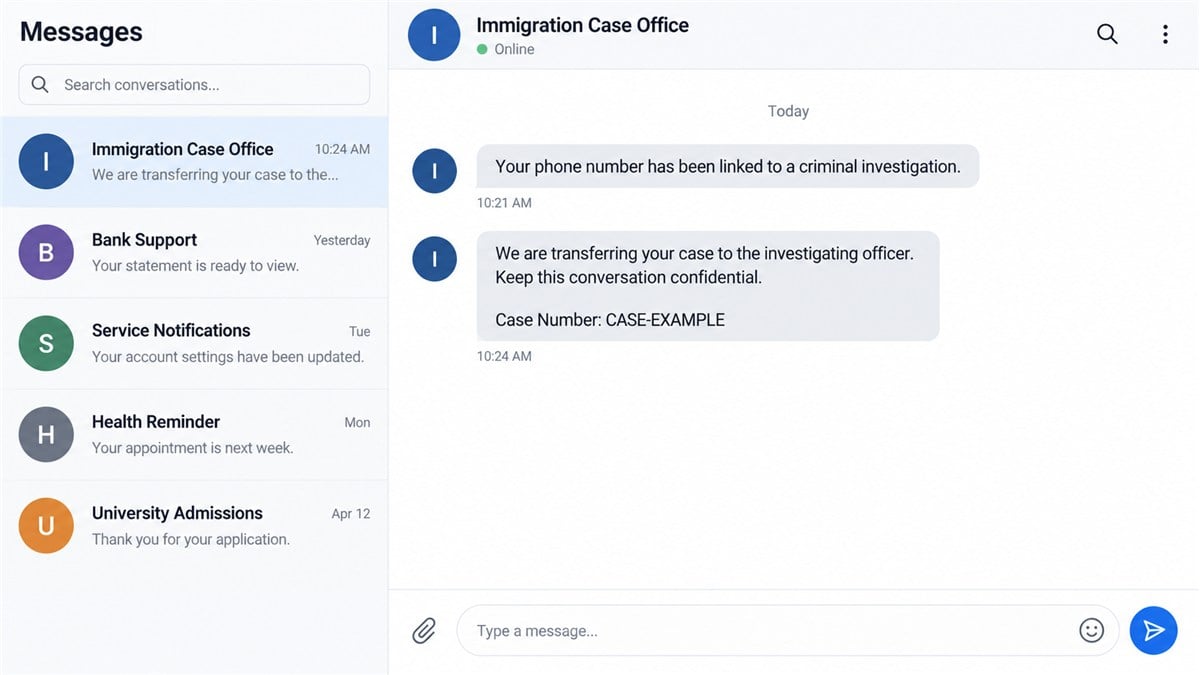
A transferred call can feel like an escalation within a real institution. You may hear another voice, receive a new title, or be given a reference number. None of those features proves that you have left the original caller’s control.
The important distinction is how you reached the official. A person introduced by the suspicious caller is part of the same unverified chain. Independent verification starts when you end that chain and contact the agency yourself.
- An unexpected criminal accusation creates fear.
- A supposed transfer introduces another authority figure.
- Secrecy discourages advice from family or your bank.
- Documents can make invented instructions look procedural.
- A payment demand turns the story into a financial threat.
ICA’s name is being misused
The warning concerns criminals impersonating an agency. It does not accuse ICA or the people it serves of running the scam. A caller knowing your name or other personal information is not evidence that the agency has opened a case.
The same advisory discusses a separate fraudulent permanent-residency consultancy scheme. Its reports and losses are separate. This article addresses the fake-official investigation call and the documents or messages used to support it.
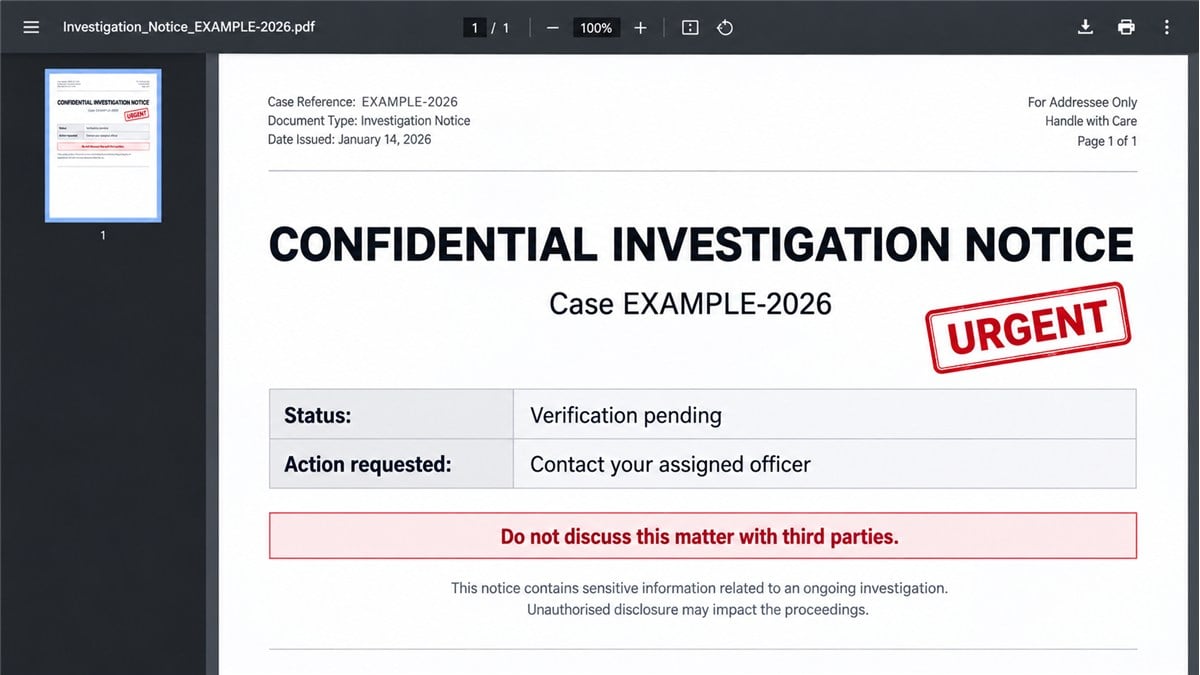
The images are fictional reconstructions of that pressure, not copies of a particular victim’s case file. They show the kind of demand to question without publishing someone’s private documents.
Why the Conversation Can Feel Hard to End
Similar pressure appears in fake Australian immigration calls. That is a separate scheme, but the same independent callback rule helps: a caller cannot verify their own authority by introducing another voice.
An accusation about identity misuse can sound partly protective. You may initially think the official is helping you clear up a problem rather than accusing you of wrongdoing. That gives the caller time to establish control of the conversation.
Once the story involves a foreign authority, it becomes harder to verify from memory. You may not know the relevant procedures, phone numbers, or terminology. The scammer benefits from presenting unfamiliarity as a reason to follow instructions.
Secrecy adds another layer. A direction to avoid discussing the case can make an ordinary call to a relative feel risky. But isolation removes the people most likely to notice that the payment request does not make sense.
You do not need to win an argument with the caller. You can end the conversation without explaining yourself. Verification is an action you take through an independently located channel, not a debate the person making the accusation has to approve.
Keep that rule simple enough to use while frightened: end the call, find the agency yourself, and ask whether the contact is genuine. A case number can be written down for that check without agreeing to anything else.
How the ICA Impersonation Scam Works
Step 1: The caller claims your identity or number is implicated
The opening statement creates an urgent problem you did not know existed. It may involve messages allegedly sent using your phone number or personal details supposedly connected to criminal activity.
Do not start filling gaps in the caller’s story. If they ask you to confirm an identity number, bank account, employer, or family contact, you may be giving them information they did not already have.
Step 2: A second voice gives the story apparent authority
The supposed transfer changes the setting without changing who controls it. A new person may speak more sternly, refer to a file, or claim wider powers. Those details can feel persuasive while remaining completely unverified.
Instead of continuing the transferred call, contact ICA through its official website. If another agency is named, locate that agency independently as well. Do not rely on a number supplied by either participant.
Step 3: Instructions are framed as cooperation
The caller may describe compliance as the way to protect yourself or clear your name. That framing can make hesitation feel like wrongdoing. It is a pressure tactic, not a reason to surrender control of your accounts.
Pause when instructions move from discussing an allegation to demanding money or private access. You should not need to reveal a banking password or approve an unexplained transfer to establish your identity to a stranger.
Step 4: Documents make the invented process look formal
A letterhead, reference number, or signature can make a demand look settled. These details are easy to imitate. A PDF or photograph is not proof that an agency issued it.
In this scheme, authorities have described fake documents including nondisclosure agreements. Do not let a document stop you from asking a trusted person or the real agency for help. Preserve it as evidence rather than treating it as an instruction.
Step 5: The demand becomes a transfer or cash handover
The claimed purpose may sound temporary or procedural. The caller can say the money is needed for an investigation, security, or bail. The label does not make the recipient legitimate.
Do not go to a meeting, withdraw cash, borrow money, or follow new bank instructions while the contact remains unverified. If you have already arranged a handover, contact the police through an official channel and explain the situation.
Step 6: Continued pressure can produce additional payments
Once money has moved, the victim may feel committed to finishing the process. Another demand can be presented as the final step needed to resolve the first one. Paying more does not validate what already happened.
Stop and report even if you previously followed instructions or promised confidentiality. You can explain the full sequence to your bank and authorities. Embarrassment should not give the caller extra time.
Company, Agency, and Contact Checks
The agency exists; the caller’s connection is unproven
Check the claimed relationship directly with the agency. A real department name is only a label until you confirm who contacted you. Caller ID and a confident introduction should not substitute for that check.
Use ICA’s independently opened website to locate its feedback or contact options. Do not copy a contact address from the suspect document and assume that it belongs to the agency.
An address on a document does not establish where it came from
A government building’s address is public information. Including it in a letter says nothing about who created the letter. The same applies to seals, job titles, and the names of real staff.
A meeting location also does not verify a collector. Do not attend a meeting to resolve an unverified payment demand. Tell the authorities about any planned location, time, or pickup instructions.
Real support does not need the scammer’s permission
Contact your bank directly if the caller discusses your accounts. Explain that someone claiming official authority is directing your financial activity. Avoid using speakerphone while the caller listens or letting them dictate what you tell bank staff.
If you feel too distressed to explain, ask a trusted person to sit with you while you make the call. Keep control of your own passwords and authentication codes.
Follow the payment trail, not the case story
A transfer reference, recipient account, or receipt is useful evidence. Preserve the exact details and the time money moved. Your bank needs those facts to assess what actions may still be possible.
Do not assume the named account holder is the organizer. Accounts and intermediaries can be misused. Provide the evidence to investigators instead of publicly accusing a person based only on a payment record.
How to Help Someone Who Is Still on the Call
If the person is being coached through a banking app, ask them to stop before approving anything. Do not take over the conversation with the caller. Move to a separate, trusted contact route so the scammer cannot keep supplying explanations in the background.
Write down what has already happened: whether they shared documents, made a transfer, withdrew cash, or agreed to meet someone. These details help the bank and police prioritize the immediate risks. Avoid guessing about actions the person has not confirmed.
Start by helping them create a pause. A frightened person may believe that ending the conversation will make the alleged case worse. Keep your language calm and practical: the next step is to verify through the agency’s own contact route.
Avoid blaming them for believing the caller. They may have been given convincing personal details, documents, and a long sequence of instructions. Focusing on those mistakes can make them defend the story instead of accepting help.
If money is about to move, prioritize contacting the bank. If a collector is expected or anyone feels physically threatened, contact local emergency services or police as appropriate. Do not arrange a confrontation with the suspected scammer.
After the immediate risk is addressed, help gather messages and write a timeline. One clear record can reduce the need to retell the story repeatedly while distressed.
What to Do if You Have Fallen Victim to This Scam
-
End the contact. Stop calls, chats, and payments. You do not need to obtain the caller’s permission to verify their identity. Do not comply with further secrecy instructions or attend a proposed meeting.
-
Call your bank through a known number. If you transferred money, shared account access, or are being pressured to withdraw cash, explain the official-impersonation claim. Ask the bank to assess the transaction and protect your accounts. Recovery is not guaranteed, so act promptly.
-
Verify with ICA independently. Open the official ICA website and use its published contact or feedback channels. Supply the claimed officer name and case reference if you have them, without continuing to communicate through the suspect contact.
-
Preserve messages and payment records. Save call logs, documents, chat history, recipient details, and receipts. Record the sequence of events. Keep originals private and avoid deleting useful evidence before the authorities advise you.
-
Secure information that was exposed. Change submitted passwords through genuine apps or websites. Ask the relevant provider what to do about any identity document or account details you disclosed. Watch for unfamiliar changes and further impersonation attempts.
-
Check any installed software. If the caller persuaded you to install an app or grant remote access, disconnect that access and seek trusted technical help. Malwarebytes can assist with malicious-software checks. AdGuard may block known scam pages and ads, but it cannot verify a voice on a call.
-
Report to the police. In Singapore, use official police reporting channels. The advisory also points people who are unsure to the ScamShield helpline at 1799. Report any scheduled handover or threat, not only completed payments.
-
Bring a trusted person into the process. Support makes it easier to resist renewed pressure. Ignore unsolicited offers to recover the money for a fee, even if the caller knows details of your loss or claims to represent investigators.
Frequently Asked Questions
Is the ICA impersonation scam confirmed?
Yes. ICA and Singapore Police jointly described the scheme and reported cases and losses. The confirmed issue is criminals impersonating officials, not misconduct by the agency itself.
What if the caller knows my personal details?
Knowledge of personal information does not authenticate the caller. Do not confirm additional details. Contact the agency independently and ask whether the approach is genuine.
Does a transferred call prove a second agency is involved?
No. Another participant introduced by the original caller is still part of the same unverified contact. End the call and locate the relevant agency yourself.
Should I obey a nondisclosure agreement sent by the caller?
Do not let an unverified document prevent you from seeking help. Preserve it and show it to the real agency or police through a trusted reporting route.
Can I recover money already transferred?
Contact your bank immediately and provide the transaction details. Available options depend on the payment and circumstances. No unsolicited recovery service can honestly guarantee that the funds will be returned.
Do I need to install an app to clear my name?
Do not install software at the direction of an unverified caller. If you already did, tell your bank and seek trusted technical help alongside reporting the impersonation.
The Bottom Line
The ICA impersonation scam builds authority through a sequence of voices, documents, and urgent demands. None of those substitutes for independently verifying the person contacting you.
End the conversation, contact the agency yourself, and involve your bank immediately if money or account access is at risk. A request to keep the situation secret is a reason to bring trusted help closer.








