

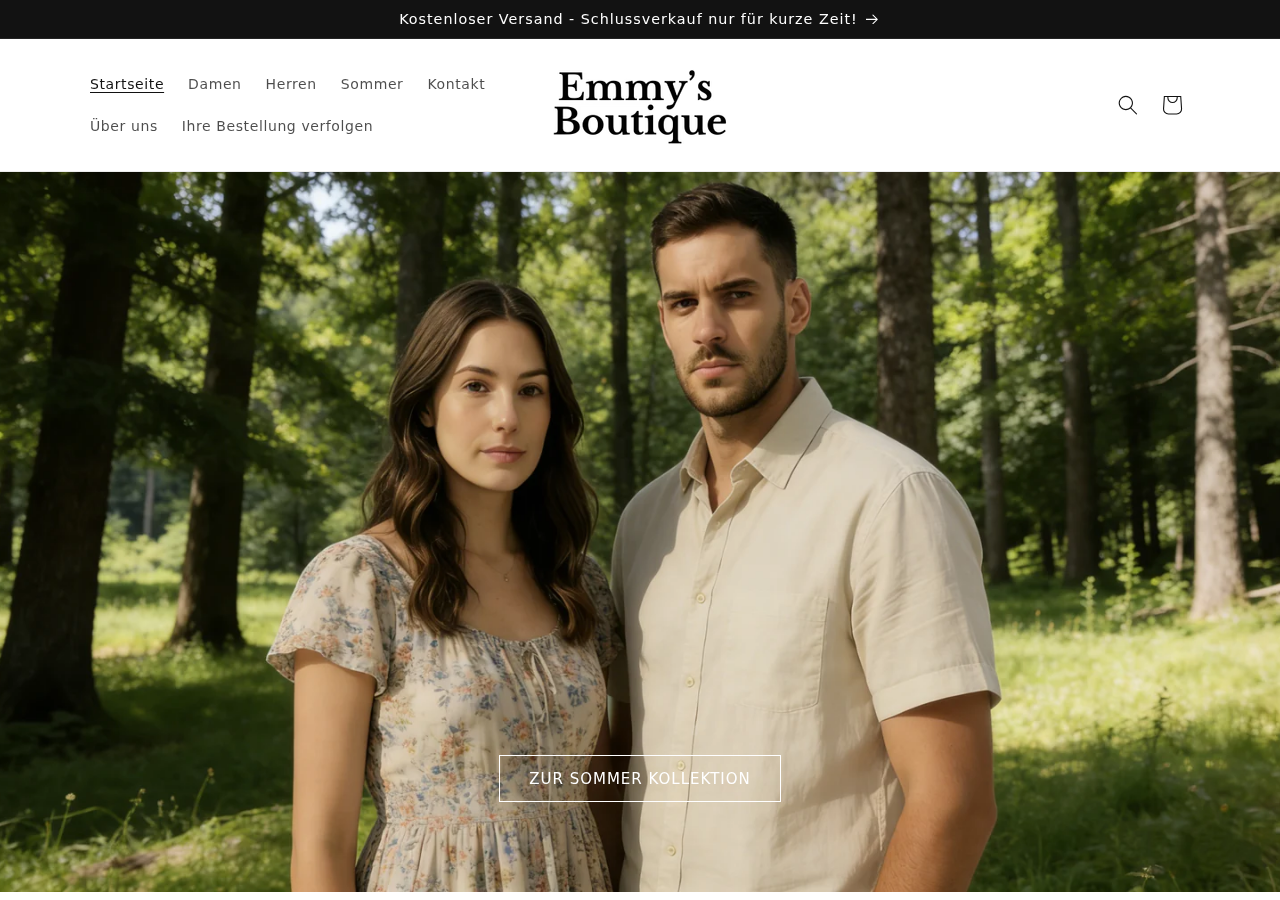
Emmy’s Boutique looks calm, personal, and carefully curated. Its closing-sale banner suggests shoppers have only a short time to rescue a favorite piece.
The experience described by many customers is much less graceful. Their complaints reveal what can happen after the attractive photograph has secured the payment.
Overview
The store is real enough to ship orders, but that is not the whole test
Emmys-Boutique.com was registered in June 2023 and currently operates a multilingual Shopify storefront. This is not merely a one-day domain with no commercial history.
Independent reputation tools do not uniformly classify it as fraudulent, and some reviewers report receiving merchandise.
The strongest warning comes from a repeated service pattern: products unlike photographs, weak quality, difficult returns, and incomplete refunds.
A store can deliver parcels while still using misleading presentation and unfair friction that leaves customers substantially worse off.
Recent independent reviews are overwhelmingly negative
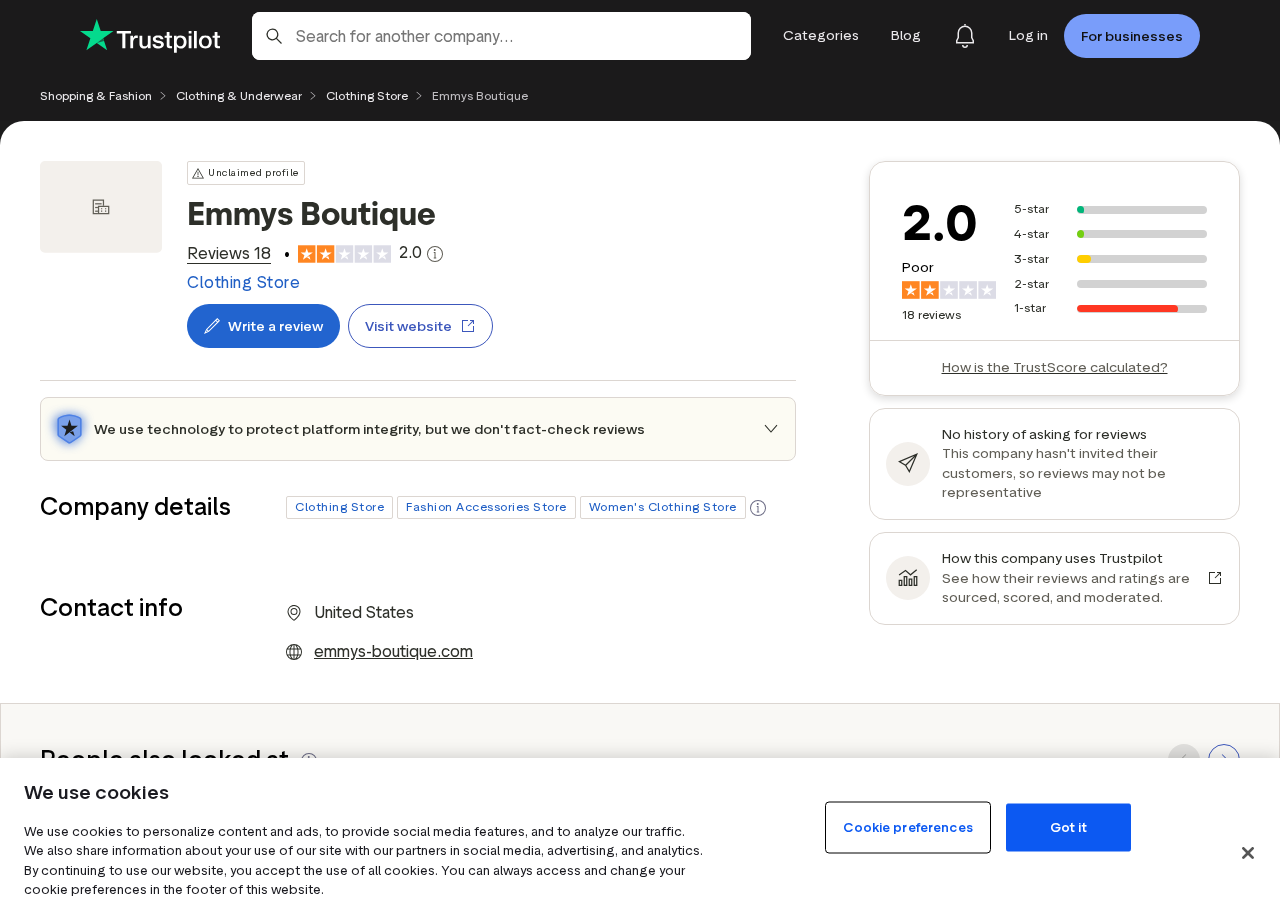
During our review, Trustpilot showed a low score and a large majority of one-star ratings for Emmys Boutique.
Customers alleged that garments differed in color, cut, fabric, sizing, and construction from the polished product images.
Several described unanswered messages, China return addresses, high postage, or offers beginning near 10% instead of a full refund.
These are individual reports rather than court findings, but the repetition across countries makes the pattern relevant to prospective buyers.
The closing-sale story increases pressure while complaints reduce confidence
The current homepage announces free shipping and a closing sale available only briefly. That familiar message encourages shoppers to overlook return details.
A farewell can explain deep discounts, disappearing stock, and a need for immediate payment without proving the business is actually closing.
The site has existed for years and has operated under multiple regional presentations, so the urgency deserves verification rather than automatic belief.
Shoppers should value the item based on materials and service, not sympathy for an unverified boutique ending.
- The domain dates to June 2023 and remains active.
- Trustpilot displayed a low rating dominated by one-star reviews.
- Complaints described goods unlike the advertised photographs.
- Multiple reviewers reported poor materials and inaccurate sizing.
- Customers alleged returns were directed to China at their expense.
- Several reported incremental partial-refund or store-credit offers.
How the Emmys Boutique Shopping Trap Works
Step 1: A polished advertisement sells the photograph first
Social promotions and product pages show dresses, trousers, shoes, and accessories in professional settings with carefully styled models.
The customer evaluates the visible garment as though that exact construction, fabric, fit, and finish will arrive.
One reviewer said the model photograph also appeared on another established brand’s website while the delivered dress looked materially different.
That allegation should be tested product by product, but it illustrates why reverse-image search matters before ordering.
Step 2: Boutique language adds trust to a remote catalog
The Emmy name, minimalist logo, seasonal collections, and warm copy make the retailer feel smaller and more attentive than a generic marketplace.
Multilingual storefronts extend that impression across countries while preserving the same centralized sales structure.
Customers may assume a nearby European boutique, straightforward consumer rights, and a domestic place to return unsuitable clothing.
The experience described in complaints instead involves overseas merchandise and remote email negotiation.
Step 3: Closing-sale pressure makes normal caution feel expensive
The banner says the clearance is available only for a short time. Discounted prices suggest the opportunity will disappear with the store.
A shopper may purchase several sizes or outfits before checking independent reviews because waiting appears to risk losing everything.
Permanent farewell marketing converts uncertainty into urgency: the less the customer knows, the faster the page asks them to decide.
Capture the date and revisit later. Repeated closing claims are evidence of a sales tactic, not a fixed liquidation.
Step 4: The delivered garment may expose the image gap
Reviewers describe thin synthetic material, inaccurate colors, missing features, poor stitching, chemical odors, and sizing far from expectations.
One complaint said a pair of trousers arrived without a usable buttonhole. Others said the received item barely resembled the advertisement.
Not every review can be independently verified, and individual experiences vary. The concentration of similar allegations remains difficult to dismiss.
Film the unboxing because a clear before-and-after comparison is far stronger than a general statement that quality was disappointing.
Step 5: Support proposes a ladder of alternatives to a return
Several reviewers describe being offered a small refund while keeping the garment, then a larger voucher or another partial amount after refusing.
This negotiation saves the seller return handling and preserves revenue, but it may leave the customer with unusable merchandise and most of the loss.
The exchange can continue until the buyer becomes tired, misses a payment-dispute deadline, or accepts less than the requested remedy.
When goods are materially misdescribed, respond with evidence and a clear deadline rather than debating endless percentages.
Step 6: A China return address makes the formal option unattractive
Complaints say customers eventually received a return destination in China and had to fund tracked international postage themselves.
Shipping can approach the item’s value, customs paperwork adds uncertainty, and the seller may require proof that the parcel reached the exact recipient.
A Netherlands contact or local-language storefront does not guarantee a local returns facility.
The practical choice becomes accepting a partial refund or paying more money to pursue the full amount.
What Customer Complaints Consistently Describe
Products that do not match the visual promise
Reviewers repeatedly distinguish ordinary disappointment from material differences in fabric, shape, finish, size, and even basic construction.
A photograph can be accurate for another manufacturer’s original garment while the delivered imitation uses cheaper materials and altered proportions.
Compare distinctive prints, seam lines, fasteners, and labels. These details help show whether the received product corresponds to the listing.
Photograph the item in neutral light beside a ruler and retain every tag.
Support that becomes harder to reach when a refund is requested
Some customers reported no answer after sending photographs or repeatedly asking for the required return form.
Others received replies but said support avoided supplying a straightforward full-refund route.
Silence and delay are important evidence. Keep sent-message headers and note every date, promise, and missing response.
Do not wait indefinitely when a card or PayPal claim has a fixed filing window.
Partial refunds and vouchers that protect the seller’s revenue
A 10% refund may sound better than paying international postage, but it leaves the buyer carrying 90% of a misrepresented purchase.
Store credit is even less protective because it requires another transaction with the retailer that caused the complaint.
Calculate the real outcome, including postage, duties, and lost time, before accepting any compromise.
Once accepted, a settlement may limit the ability to pursue the remaining amount.
Evidence supports a strong commercial warning with careful wording
We found an active store, an older domain, and mixed automated reputation scores rather than proof that every order is fictitious.
We also found a current body of highly consistent complaints about product mismatch, China returns, support, and refunds.
The fair conclusion is not that no customer receives clothing. It is that buying exposes customers to a well-documented pattern of avoidable risk.
That distinction is both accurate and more useful than a dramatic label unsupported by every transaction.
How To Investigate an Emmys Boutique Listing
Trace the photograph to its earliest retailer
Use reverse-image search with the full model shot, a cropped garment, and a distinctive detail such as embroidery or print.
Earlier high-resolution listings can identify the original brand and reveal whether Emmys Boutique changed the product name or specifications.
Save dated results and URLs. Image ownership can change, so one duplicate alone does not establish which seller copied whom.
The comparison becomes compelling when the delivered item also differs from the shared photograph.
Read the return policy as a shipping quote
Find the actual return country, not merely the business contact country. Ask support to confirm it before purchase.
Estimate tracked postage for the garment’s packaged weight and include customs forms, insurance, and delivery confirmation.
Check whether discounted or closing-sale items receive the same rights as full-price goods.
A 30-day headline means little when authorization consumes the window or postage makes the remedy uneconomical.
Inspect independent reviews by problem type
Do not rely only on an average score. Search for size, material, return, refund, China, support, and wrong item.
Read dates and languages to determine whether the same issue appears across markets and over time.
Treat every review as an allegation, then look for repeated operational details that unrelated customers are unlikely to invent identically.
A pattern is more informative than the angriest single review or the most enthusiastic testimonial.
Company, Address, and Fulfillment Checks
The public operator information should be verified independently
Third-party research has associated the store with a Netherlands address, registration number, telephone line, and an individual named Hanguang Zhao.
Buyers should verify those details in current registry records because footer information can be copied, outdated, or administrative.
Match the registered activity and address with the receipt, payment descriptor, return instructions, and parcel documents.
Do not assume a European address means merchandise is stored or returned there.
A Netherlands address may not be the returns warehouse
Reviewers report being directed to China after lengthy conversations, despite expecting a closer destination.
The listed office can handle correspondence while a supplier or fulfillment partner handles inventory elsewhere.
Search the address to determine whether it is a residence, virtual office, mailbox, warehouse, or unrelated business.
Send returns only to the address authorized for your order and use trackable service.
Email support creates a record but not necessarily a remedy
Keep every conversation in one thread and restate the requested resolution clearly when agents answer with alternative offers.
Ask for the agent’s name, legal merchant, case number, return recipient, and policy clause supporting any refusal.
Export messages or take screenshots in case the account portal becomes unavailable.
A friendly reply does not resolve the dispute until money is credited or a usable return is completed.
Mass-produced clothing can present quality and health concerns
Customer reports mention strong chemical smells and extremely poor materials. Stop wearing any item that causes irritation, breathing difficulty, or other symptoms.
Wash according to the label only after deciding whether doing so would affect your return rights.
Unknown dyes, decorations, cords, and fasteners deserve extra caution for children’s clothing.
Report a serious product-safety issue to the relevant national authority, not only the seller.
What to Do if You Have Fallen Victim to This Scam
- Preserve the listing and closing-sale claim. Save every product image, material statement, size chart, price, return promise, timer, and checkout selection.
- Film and photograph the delivered item. Include the sealed parcel, label, tags, measurements, defects, fabric, stitching, and side-by-side listing comparison.
- Request the precise remedy in writing. State whether you want replacement, prepaid return, or full refund and explain the material mismatch concisely.
- Reject irrelevant voucher pressure. You do not have to make another purchase merely because support offers store credit instead of addressing the complaint.
- Obtain complete return instructions. Confirm the country, recipient, authorization number, customs description, deadline, tracking standard, and responsibility for postage.
- Calculate before accepting a partial refund. Compare the offer with your loss and understand whether acceptance ends further claims.
- Escalate before deadlines expire. Give the bank or payment service photographs, the listing, messages, tracking, and a chronological summary of the dispute.
- Check the account for additional charges. Report anything unauthorized and ask the issuer whether card replacement is appropriate.
- Protect your device. Run Malwarebytes and use AdGuard to block malicious redirects, intrusive trackers, and recurring deceptive boutique advertisements.
How To Avoid the Next Fashion Dropshipping Trap
Distrust a boutique identity that exists only in its own advertising
Search the founder, address, company, photographs, and claimed history outside the storefront.
A genuine boutique normally leaves independent traces through customers, maps, archives, local records, and events.
A logo and sentimental paragraph can be created in one afternoon.
Assume dramatic discounts affect the return economics
Closing-sale language may introduce exclusions, shorter windows, or pressure to accept store credit.
Read every condition before payment and save the version that applied.
The cheapest dress is expensive when it arrives unusable and costs nearly as much to return.
Start with one protected purchase or none
Never place a large multi-item order merely to reach free shipping from an unfamiliar seller.
One garment limits exposure and reveals sizing, fabric, fulfillment origin, and support behavior.
Better still, choose a transparent retailer with domestic returns and independently verified products.
Frequently Asked Questions
Is Emmys Boutique a complete fake store?
The website is active and customers report receiving parcels, so describing every transaction as nonexistent would be inaccurate.
The serious concern is the repeated complaint pattern involving misrepresented goods and difficult refunds.
Where do Emmys Boutique returns go?
Multiple independent reviewers say support eventually directed returns to China, often at the customer’s expense.
Obtain the address for your exact order before posting anything because policies and fulfillment partners can change.
Why do reviews mention partial refunds?
Customers describe offers that began with a small percentage for keeping the item and sometimes increased after refusal.
This can make an expensive international return seem unattractive while preserving most of the seller’s revenue.
Are Emmys Boutique product photos copied?
At least one reviewer alleged that the same professional model photograph appeared on another brand’s official page.
Verify each listing with reverse-image search rather than assuming that allegation applies to every photograph.
What does the low Trustpilot score prove?
It proves that the profile contains substantial negative feedback, not that every allegation has been independently adjudicated.
The repeated operational details are useful warnings when combined with the store’s policies and your own research.
What is the safest response to a bad order?
Document the mismatch, request a specific remedy, keep every message, and escalate through the payment provider before its deadline.
Do not destroy, alter, or return the item until the evidence and authorized route are secure.
The Bottom Line
Emmys Boutique is not simply a vanished checkout page. It is an active fashion store surrounded by consistent complaints about product mismatch, poor quality, China returns, and refund resistance.
That documented pattern makes the closing-sale bargain difficult to justify. Shop elsewhere, where the photograph, garment, company, and return desk belong to the same accountable business.








