

Audrey Melbourne looks like the sort of neighborhood boutique people discover on a rainy afternoon and remember for years.
The storefront imagery, Australian name, and warm origin story create that impression instantly. Its legal pages lead somewhere entirely different.
Overview
The Melbourne identity is marketing, not the disclosed business location
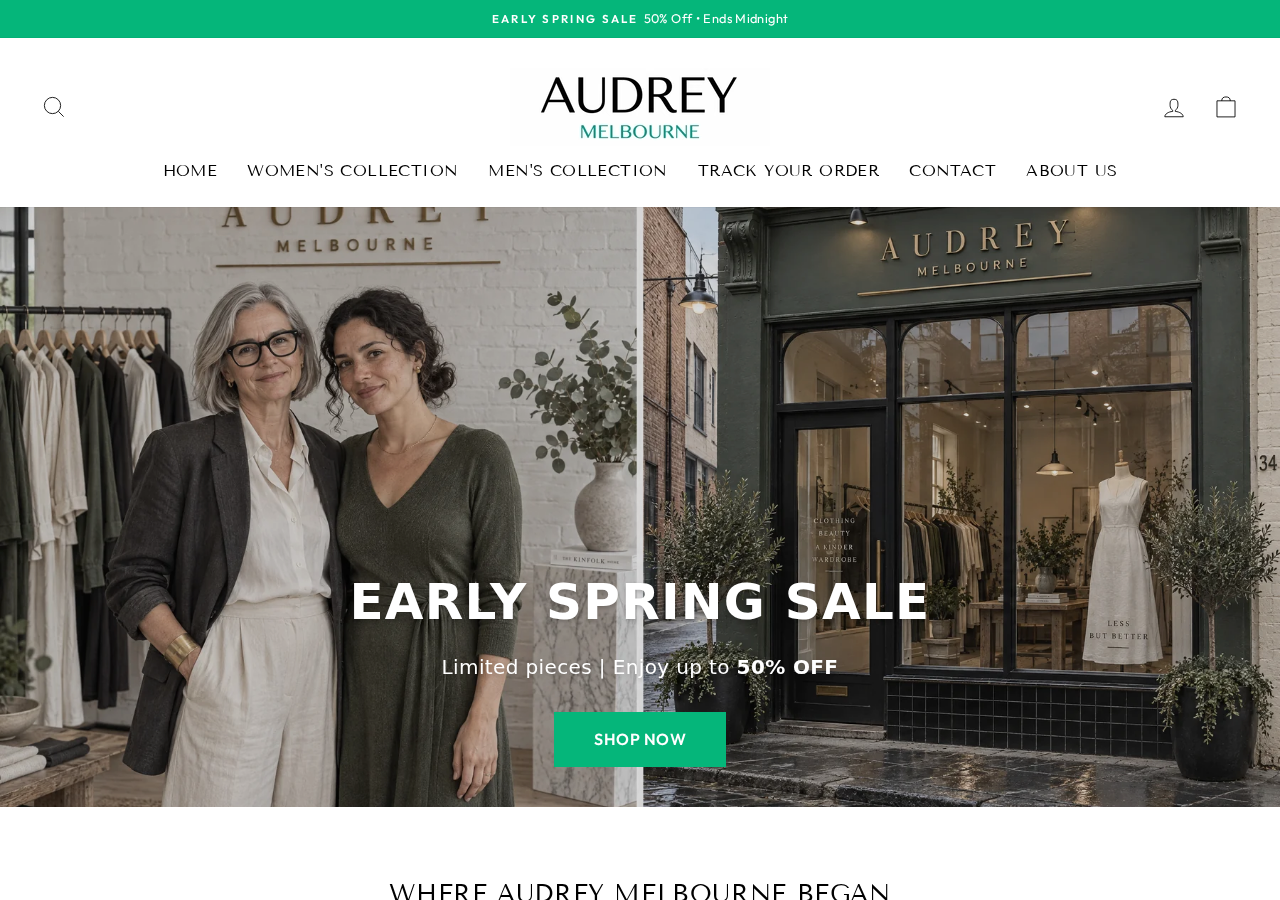
The homepage shows a polished physical boutique and two women presented as the human face of the brand.
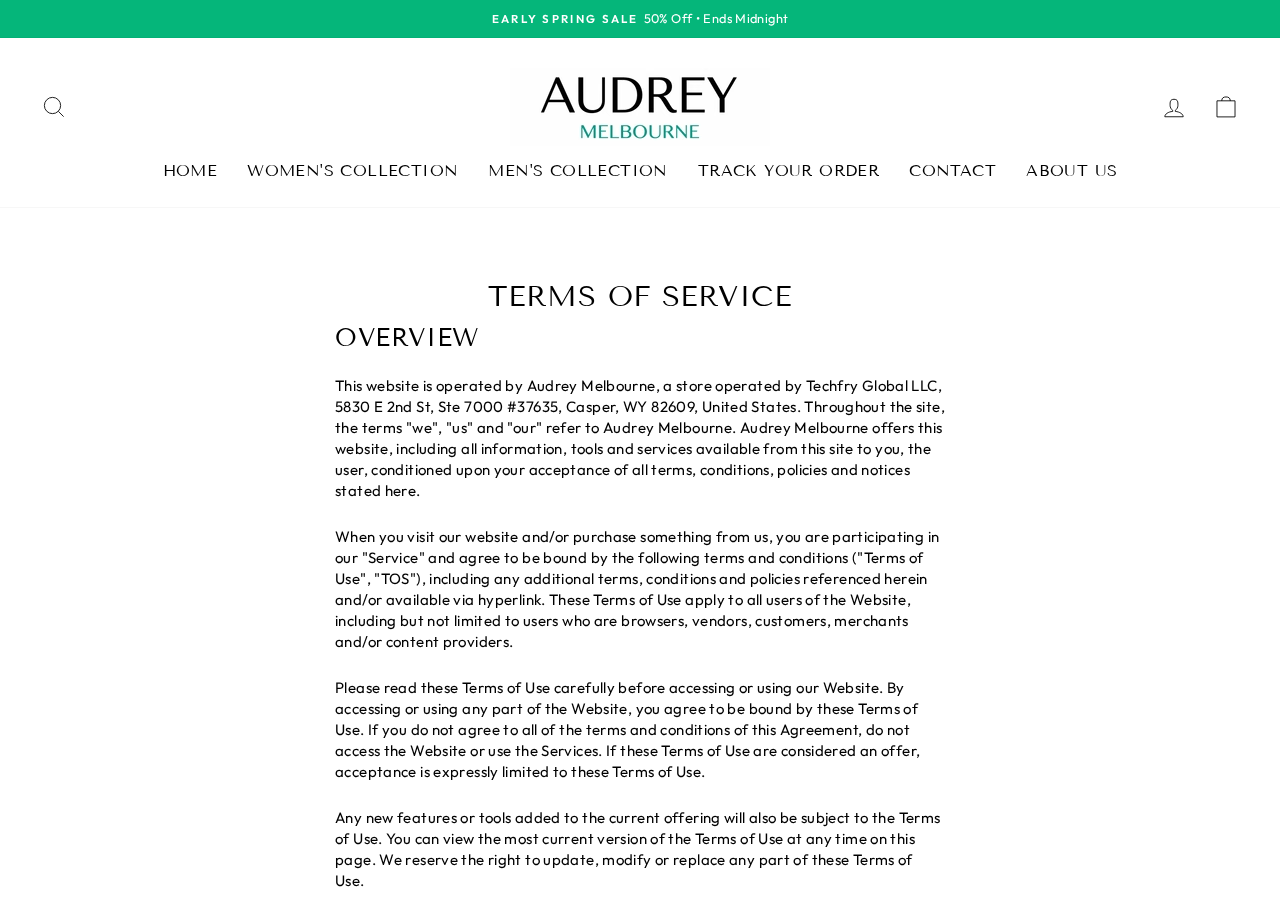
Its policies identify the operator as Techfry Global LLC at 5830 E 2nd Street, Suite 7000 #37635, Casper, Wyoming.
The site therefore uses Melbourne as a brand identity while disclosing a United States company and no verified Australian shop address.
A geographic name is not automatically deceptive, but shoppers should not mistake it for proof of local ownership, stock, or returns.
The terms disclose direct supplier shipping from China
Audrey Melbourne’s terms say products ship directly to consumers from its supplier in China. That sentence changes how the entire storefront should be understood.
The operation resembles cross-border dropshipping rather than a Melbourne boutique selecting stock from its own local racks.
Delivery times, sizing, quality control, customs exposure, and return economics can differ sharply from a domestic retailer.
This disclosure appears in legal text, while the homepage emphasizes local-looking fashion scenes and customer reassurance.
The permanent urgency and generated-looking imagery amplify the mismatch
A green banner advertises an early spring sale at 50% off and says it ends at midnight.
The hero scene looks unusually polished and may be synthetic or heavily composited. We cannot authenticate the people or storefront from the image alone.
The page also includes a cart reservation timer, another device encouraging checkout before deeper policy reading.
Together, the branding and urgency can lead buyers to infer a local boutique experience the legal terms do not provide.
- The domain was registered in June 2025.
- The disclosed operator is Techfry Global LLC in Casper, Wyoming.
- The terms say products ship directly from a supplier in China.
- No verified Melbourne retail address appears in the legal details.
- Customers pay return postage for ordinary returns.
- The site uses midnight-sale and cart-reservation pressure.
How the Audrey Melbourne Boutique Funnel Works
Step 1: A local-sounding name supplies instant familiarity
“Audrey Melbourne” sounds like a designer and a city-based shop at the same time. The pairing feels personal, fashionable, and geographically anchored.
Visitors may reasonably picture Australian ownership, local curation, domestic service, and a straightforward return within their own country.
The homepage strengthens that impression with boutique architecture, racks of neutral clothing, mature models, and language about where Audrey began.
The legal operator and fulfillment origin are not visible inside that first emotional impression.
Step 2: A founder-style story makes a catalog feel curated
The site describes clothing intended to make customers feel confident and comfortable, using intimate language normally associated with an independent shop owner.
That voice gives mass-listed garments a sense of taste, care, and continuity before the shopper examines their actual source.
A dropshipping seller can upload supplier images and descriptions without touching the inventory it promotes.
Curation should be demonstrated through original product photography, measurements, fabric details, and transparent sourcing rather than a warm paragraph alone.
Step 3: The sale clock encourages a decision before reading the terms
The banner says 50% off ends at midnight, while the cart holds items for a visible countdown period.
These cues imply that hesitation will increase the price or release the desired garment to someone else.
A buyer rushing to protect the discount may never reach the clause stating that the supplier ships directly from China.
Revisit the page after midnight and from another browser. Repeating deadlines reveal automated urgency rather than a fixed event.
Step 4: Product photography carries expectations that descriptions may not support
Flowing dresses, tailored jackets, and clean storefront scenes communicate material quality without letting buyers touch fabric or inspect stitching.
Dropship listings can use supplier or third-party imagery that looks better than the final garment under ordinary lighting.
Buyers should demand fiber percentages, garment measurements, lining details, care labels, manufacturing origin, and close photographs of seams.
Generic size charts and vague terms such as premium or elegant cannot predict fit, opacity, texture, or durability.
Step 5: China fulfillment becomes visible after the order begins moving
Tracking may reveal an overseas origin, consolidation route, or extended handoff that conflicts with the local impression created at purchase.
A domestic last-mile label does not prove local stock. It can be applied after an international parcel reaches a forwarding center.
Long delivery makes exchanges difficult when clothing was needed for an event or season.
Customs or import issues may also arise because the terms place certain charges on the consumer.
Step 6: Returns turn a simple sizing problem into cross-border negotiation
The policy requires prior contact, authorization, original condition, tags, packaging, and proof of purchase within 30 days.
Standard return shipping belongs to the customer. The correct destination is provided only after support reviews the request.
If that destination is overseas, tracked postage can consume much of the refund and create customs paperwork.
Customers should reject substitute vouchers or partial refunds when the delivered item is materially different and a full legal remedy applies.
What the Company Trail Reveals
A Wyoming suite replaces the expected Melbourne shop
The published address is in Casper, Wyoming, and includes a suite and mailbox-style number rather than a named Australian boutique location.
That address may provide corporate mail handling. It does not demonstrate a warehouse, showroom, design studio, or customer returns department.
Search the exact address and suite independently before treating it as operational headquarters.
The mismatch matters because the brand’s city identity shapes expectations about law, delivery, and accountability.
The China clause is more informative than the homepage
The terms expressly say all products ship directly from the supplier in China. That is the clearest description of the fulfillment model.
Direct shipping can reduce overhead, but it also means the seller may not inspect each item before it reaches the customer.
A buyer expecting locally stocked apparel may receive a generic garment available through multiple unrelated storefronts.
Compare product images and exact names across marketplaces before accepting the boutique markup.
An Australian telephone number does not establish local operations
The contact details include +61 480 811 028 and Australian service hours. Internet telephony can make geographic numbers available from anywhere.
Call before ordering and ask for the legal entity, physical Melbourne address, return country, and current stock location.
Record whether the representative answers those questions directly or repeats policy language.
A functioning number is useful, but it does not override contradictory company and shipping disclosures.
The evidence supports a dropshipping warning, not a non-delivery verdict
The site openly discloses China fulfillment in its terms, and we have not proven that every customer receives nothing.
Our concern is the distance between local-boutique presentation and the cross-border model buyers discover through legal text.
That can produce disputes over quality, sizing, delivery, returns, and the value of the advertised discount.
Describe the risk accurately: misleading local framing and difficult commercial remedies, not an unsupported claim about every transaction.
Before You Order Clothing From a Local-Looking Online Boutique
Reverse-search every important product photograph
Search the model image, garment-only image, and close-up separately. One result may locate the supplier when another finds only copied social posts.
Compare pocket placement, print alignment, buttons, hems, and background artifacts. Tiny details expose identical catalog images.
If the same dress appears for much less elsewhere, evaluate whether Audrey Melbourne adds meaningful service or merely a story.
Keep the search results with your order records in case the delivered product differs materially.
Use measurements rather than the size label
Ask for bust, waist, hip, shoulder, sleeve, rise, inseam, and garment length in a stated unit.
Compare those figures with clothing you already own, not an assumed Australian, American, or European size conversion.
Request the fabric composition and stretch percentage because photographs cannot reveal how a garment behaves.
A seller that cannot provide measurements for its own catalog is a poor choice for cross-border fashion.
Price the return before pricing the dress
Obtain the exact return country, postal code, package requirements, and responsibility for duties before checkout.
Calculate tracked postage for the likely parcel weight. A $20 return cost can erase the advantage of a discounted item.
Ask what happens when the product is defective or unlike the photograph and whether a prepaid label is guaranteed.
Save the answer because policies and support positions can change after the order.
Company, Address, and Fulfillment Checks
Techfry Global LLC is the entity named by the store
Receipts and card statements should be compared with that exact name. A different descriptor may signal another processor or merchant alias.
Verify the LLC’s current registry status, formation date, organizer, and available contact details rather than relying on the footer.
Registration proves an entity was filed. It does not prove a Melbourne boutique, local inventory, or good customer service.
Use the legal name when filing a payment dispute or consumer complaint.
The Casper address may be administrative rather than operational
Suite 7000 #37635 resembles a mail-forwarding or virtual-address format. Confirm the building’s actual services before sending merchandise there.
A corporate mailbox is not automatically improper, but it should not be described as a showroom or fulfillment center without evidence.
Never return clothing to the published company address unless support authorizes it in writing.
Unauthorized packages can be refused, lost, or excluded from the refund process.
Support channels must answer product-specific questions
The store lists email, telephone, and long weekly service hours. Test those claims with a question about one exact garment.
Ask for current stock country, manufacturer, fabric percentages, and return destination. Generic reassurance is not a substitute for facts.
Save call times, agent names, ticket numbers, and written follow-ups. A verbal promise is difficult to prove later.
If the number does not connect or email remains unanswered, do not place an order.
Direct supplier shipping can reduce quality control
When goods travel from a third-party supplier directly to buyers, the branded storefront may never inspect the exact item shipped.
Mass-produced clothing can arrive with inconsistent measurements, fabrics, colors, labels, stitching, or chemical odors.
Washable does not mean harmless. Stop using apparel that causes irritation and seek medical advice for a serious reaction.
Keep tags and packaging until quality, fit, and return rights are fully settled.
What to Do if You Have Fallen Victim to This Scam
- Save the local-boutique presentation. Capture the Audrey story, Melbourne branding, storefront image, 50% sale, product photographs, measurements, and delivery promise.
- Copy the legal disclosures. Preserve the Techfry Global LLC address and the clause stating that products ship directly from China.
- Cancel quickly when necessary. The policy allows a limited cancellation period. Send a dated request and retain proof of receipt.
- Record the entire unboxing. Show the shipping label, packaging, tags, size markings, fabric label, construction, defects, and comparison with the listing.
- Request the authorized return address. Ask for the country, recipient, reference, deadline, customs instructions, and written responsibility for postage.
- Do not accept delay as a resolution. Set a reasonable response deadline and preserve every partial-refund or voucher proposal.
- Use payment protection. Explain whether goods were missing, defective, counterfeit, or materially different. Submit images and policy evidence with a precise timeline.
- Monitor the card account. Report unauthorized charges immediately and discuss replacement with the issuer when payment details may be at risk.
- Clean the device used for purchase. Run Malwarebytes and add AdGuard to reduce malicious popups, trackers, and recurring deceptive boutique advertisements.
How To Spot the Same Boutique Under Another Name
Look for a city name attached to an unverifiable founder
The template often combines a woman’s first name with Melbourne, Sydney, London, Toronto, or another trusted shopping city.
Search the founder portrait and biography sentence. Reuse across unrelated stores shows that the identity is packaging.
A genuine local boutique should have consistent street, registry, archive, and community records.
Read the terms for the sentence the homepage avoids
Search the page for China, supplier, overseas, customs, return shipping, and governing law.
One clause can reveal more than an entire founder story.
Take screenshots because disclosure language may change as complaints accumulate.
Assume the closing or midnight sale will return
Do not buy because a banner says the discount ends today. Check again after the deadline.
Persistent urgency lets a dropshipper maintain full-time pressure while pretending each visitor found a rare moment.
Value the garment using comparable goods, not the crossed-out number.
Frequently Asked Questions
Is Audrey Melbourne an Australian company?
The site identifies its operator as Techfry Global LLC in Wyoming, United States.
It uses Melbourne branding and an Australian telephone number but does not publish a verified Melbourne retail address.
Where do Audrey Melbourne products ship from?
The terms state that all products ship directly to consumers from the supplier in China.
That disclosure is important for delivery time, quality control, customs, and returns.
Is Audrey Melbourne definitely a scam?
We have not established that every order fails or every product is unusable.
The evidence supports a strong warning about misleading local presentation, dropshipping, urgency, and potentially difficult cross-border returns.
Are the homepage photographs generated by AI?
Several images have a highly polished or synthetic appearance, but a screenshot alone cannot prove how each image was created.
Treat them as marketing scenes, not evidence that a physical Melbourne boutique exists.
Can I return an Audrey Melbourne order?
The policy offers a 30-day process with conditions and prior authorization. Standard return postage belongs to the customer.
Ask for the destination before ordering because international tracked shipping may be expensive.
What should I verify before buying?
Confirm the legal seller, stock country, garment measurements, fiber content, return address, and total tracked-return cost.
Pay with a method that supports merchandise disputes and save the exact offer.
The Bottom Line
Audrey Melbourne presents the warmth of a local fashion boutique, but its own terms describe a Wyoming-operated store sending products directly from a Chinese supplier.
That mismatch, combined with sale pressure and uncertain return economics, makes the offer difficult to trust. Buy comparable clothing from a transparent retailer.








