

Curex offers custom allergy drops through an online care program, promising a simpler alternative to repeated office visits and allergy shots.
It is a real clinical service, but that does not make every headline self-explanatory. Pricing, recurring care, compounded medication, and regulatory history deserve careful context.
Overview
Curex is a functioning telehealth allergy provider
Curex operates an online allergy-care program serving patients through remote intake, testing options, clinician review, and medication shipped to the patient’s home.
The service publishes a telephone number, describes its clinicians, explains insurance and self-pay arrangements, and offers account-based care rather than an anonymous bottle sale.
That evidence matters. Curex should not be described as a fictional clinic or a simple product scam merely because its advertising is aggressive.
The correct question is whether a particular patient understands the treatment status, expected timeline, recurring costs, cancellation process, and strength of the advertised claims.
The drops are personalized, compounded immunotherapy
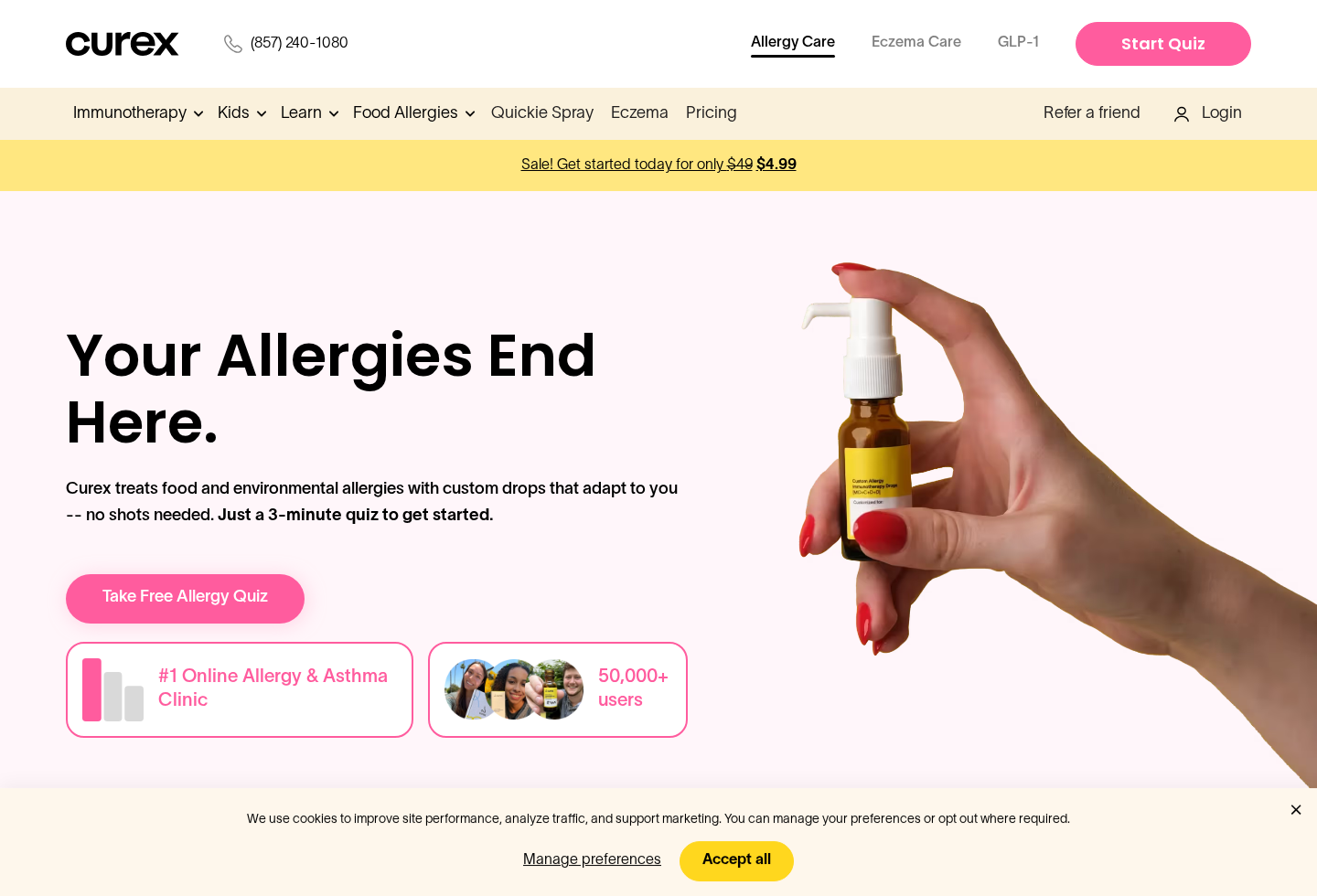
Curex markets sublingual immunotherapy, commonly shortened to SLIT. The patient places prescribed drops under the tongue instead of receiving allergy shots.
The company’s materials say clinicians prescribe personalized mixtures and compounding pharmacies prepare them. Curex also acknowledges that compounded drops are not FDA-reviewed for safety or efficacy.
That does not automatically mean the treatment is illegitimate. It means patients should not confuse clinician-supervised use with an FDA-approved finished drug.
Medical suitability depends on allergens, symptoms, testing, health history, adherence, and clinician judgment. An attractive quiz cannot answer every clinical question.
The main consumer risks involve clarity and commitment
Curex advertises convenient care and low introductory pricing. The continuing program can cost much more than the first amount highlighted in a promotional banner.
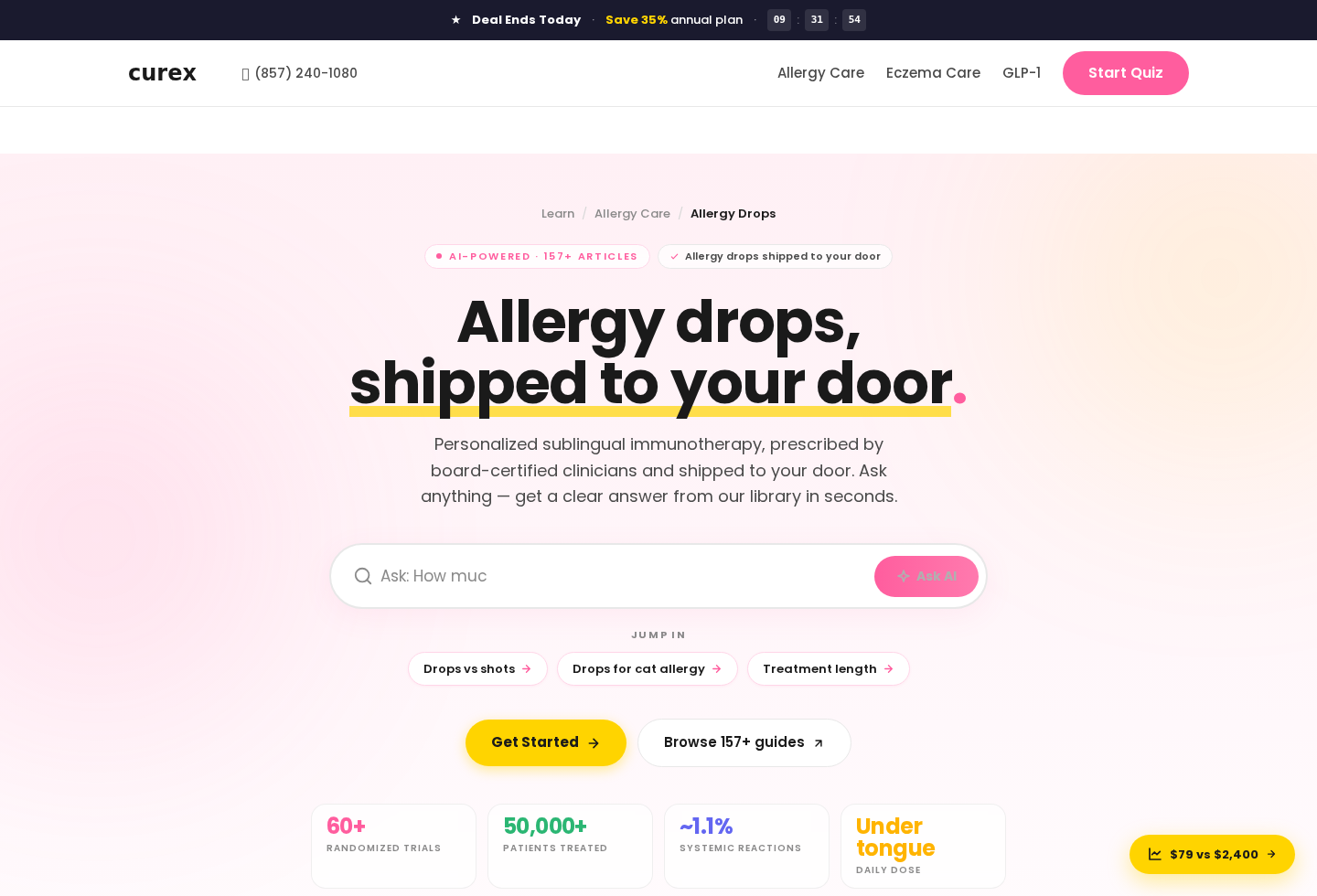
Official pages describe self-pay pricing around $79 monthly, or $948 annually, while insurance arrangements and testing charges can vary.
Prospective patients should ask what the first payment covers, when regular billing begins, which services are separate, and how cancellation affects prescriptions already processed.
- Curex is a real telehealth provider, not an invented storefront.
- The allergy drops are personalized and compounded.
- The finished compounded drops are not FDA-approved products.
- Monthly care can continue long beyond the introductory payment.
- Results and timelines differ between patients.
- A 2021 FDA letter challenged certain promotional claims then appearing online.
How the Curex Allergy Program Works
Step 1: Begin with an online quiz and promotional entry price
The process starts with questions about symptoms, allergens, previous treatment, and location. Advertising may emphasize a small amount to begin the assessment.
That entry price should not be mistaken for the total treatment cost. It may cover only onboarding, an initial consultation, or part of enrollment.
Before entering payment details, request a written schedule covering membership, medication, testing, insurance processing, visits, shipping, and possible cancellation fees.
Do not provide answers designed to qualify. Accurate medical information is essential because a clinician uses it to decide whether remote treatment is appropriate.
Step 2: Complete testing or submit previous results
Allergy immunotherapy requires identifying relevant triggers. Curex may arrange testing or review acceptable existing results, depending on the patient’s circumstances.
Ask whether testing is included, billed separately, submitted to insurance, or performed by an outside laboratory. Each route can change the final cost.
Insurance coverage is not the same as no patient responsibility. Deductibles, copayments, denied claims, and out-of-network services may still create charges.
Keep every explanation of benefits. Compare the provider name, service date, procedure, allowed amount, insurer payment, and balance with Curex’s estimate.
Step 3: Meet a clinician through telehealth
A licensed clinician reviews the intake and testing, discusses treatment, and decides whether to prescribe. Availability and licensing can depend on the patient’s state.
Use this appointment to ask about expected benefits, common reactions, emergency symptoms, alternatives, duration, missed doses, and interaction with existing care.
Marketing pages are not informed consent. The clinician should explain what is known, what remains uncertain, and why the proposed mixture fits you.
If the appointment feels rushed or questions remain unanswered, pause before shipment. Long-term treatment should begin with a clear clinical plan.
Step 4: Receive a compounded formula at home
The prescription is prepared for the individual and shipped for under-the-tongue dosing. Packaging should identify the dispensing pharmacy, patient, directions, and storage requirements.
Compounded medicines occupy a different regulatory position from FDA-approved manufactured drugs. The FDA does not pre-approve each compounded formula for safety, effectiveness, or quality.
This distinction should be understood without panic. Compounding can serve legitimate medical needs, while still requiring careful prescribing, pharmacy standards, and patient monitoring.
Inspect the package before use. Contact the clinician or pharmacy about missing labels, damaged seals, temperature concerns, unclear dosing, or unexpected ingredients.
Step 5: Continue treatment through recurring care
Allergy immunotherapy is generally not a one-week purchase. Curex frames the program as continuing treatment supported by follow-up care and repeated medication shipments.
Recurring billing may therefore continue while the patient remains enrolled. The convenience can be valuable, but only when dates and obligations are understood.
Set calendar reminders before each charge and shipment. Review whether symptoms, adverse effects, adherence, and cost still justify continuing.
Do not stop prescribed treatment solely because an online review caused concern. Contact the treating clinician and obtain individualized guidance.
Step 6: Cancel or change care through the program’s rules
A patient who wants to leave should distinguish canceling future membership from stopping medicine, refunding processed charges, and resolving an insurance balance.
Ask which date controls cancellation and whether a prescription already sent to the pharmacy can be stopped. Compounded medication may not be returnable.
Request written confirmation of the final service date, last shipment, last charge, and any continuing clinical instructions.
Monitor statements afterward. If another payment appears, compare it with the confirmed cancellation date before disputing the charge.
What the FDA History Actually Means
A 2021 letter addressed promotional claims
In 2021, the FDA issued an untitled letter to Curex after reviewing website statements concerning allergy drops and mixtures used for sublingual immunotherapy.
The agency’s concerns focused on claims that presented unapproved products in ways associated with diagnosing, treating, curing, or preventing disease.
This is historical regulatory evidence, not proof that today’s site is identical or that every present statement violates the law.
An untitled letter is not a finding that the clinic is fake
Regulatory correspondence can require a company to revise claims or explain compliance. It is not the same as a criminal conviction or shutdown order.
Consumers should use the letter to understand why wording matters, especially when treatment claims sound broader than the approved status of a product.
The fair conclusion is that Curex has a documented advertising-regulation history, while continuing to operate as a real telehealth provider.
Current claims still need careful reading
The homepage uses forceful phrases such as “Your Allergies End Here.” A patient should not interpret a slogan as a personalized guarantee of permanent relief.
Ask for realistic endpoints: fewer symptoms, reduced medicine use, improved tolerance, or another measurable goal. Then ask when progress will be evaluated.
Reliable care includes discussion of nonresponse and adverse events, not only success stories. A clear plan should explain what happens when expected improvement does not occur.
Company, Address, Provider, and Billing Checks
Verify the treating clinician
Record the clinician’s full name and licensing state. Check the appropriate state board and confirm that the professional is authorized to treat patients where you live.
Ask who handles urgent reactions outside scheduled appointments. A marketing telephone line is not necessarily the same as clinical coverage.
If your existing allergist is involved, request records and treatment details so both clinicians understand the complete plan.
Identify the compounding pharmacy
The dispensing label should name the pharmacy responsible for preparing the drops. Verify its license through the relevant state board of pharmacy.
Ask about ingredient sourcing, quality testing, storage, expiration, shipping temperatures, and replacement procedures for damaged deliveries.
Do not use a bottle labeled for another person or containing instructions that conflict with the clinician’s directions.
Map every recurring charge
Create a simple cost sheet covering enrollment, consultations, membership, medication, testing, laboratory work, shipping, and insurance balances.
Ask whether the quoted $79 self-pay amount includes the drops, clinician follow-up, testing, and all shipments. Get the answer in writing.
A low first payment can be legitimate introductory pricing, but it should never conceal the ordinary recurring amount.
Test support before committing
Curex publishes the number (857) 240-1080. Ask billing and clinical questions separately because different teams may handle them.
Send a written summary after any telephone call. Include the date, representative, answer provided, and requested correction.
Responsive support does not prove medical effectiveness, but it is essential when a long-term remote program manages prescriptions and repeated payments.

Questions to Ask Before Joining
Ask whether your specific allergies are appropriate for sublingual immunotherapy and what evidence supports the proposed formulation.
Request the expected treatment length and the earliest reasonable evaluation point. A plan without milestones can continue indefinitely without a meaningful decision.
Ask what the program does when symptoms worsen, systemic reactions occur, or the drops are missed for several days.
Confirm whether an epinephrine prescription is recommended and obtain exact emergency instructions. Do not improvise during a serious reaction.
Ask how the formula changes over time, what triggers a dose adjustment, and whether a new consultation creates an additional charge.
Finally, obtain the cancellation terms before payment. A healthcare subscription should be as clear about leaving as it is about joining.
How to Build a Safe Treatment and Cost Plan
Ask the clinician to write down the diagnosis, allergens being treated, formula goal, starting schedule, maintenance schedule, and expected review dates.
Keep that clinical plan separate from the sales page. It should explain your treatment without relying on slogans or generic success percentages.
Create a twelve-month cost estimate rather than comparing only the introductory amount. Include every expected membership, pharmacy, laboratory, and shipping charge.
Run the same estimate under insurance and self-pay scenarios. Insurance can lower costs, but deductibles and denied claims may reverse the comparison.
Ask who owns unused medication when treatment changes. Personalized compounded products may be nonreturnable even when the membership ends.
Record symptoms before starting. A simple diary can help distinguish gradual improvement, seasonal change, medication effects, and wishful interpretation.
Include adverse events and missed doses, not only better days. Complete records give the clinician a more reliable basis for adjustment.
Choose a formal reassessment date. Ask what level of progress would support continuing, changing the formula, or considering another approach.
Maintain ordinary allergy precautions unless the clinician changes them. Early improvement does not prove that emergency planning or avoidance is unnecessary.
If finances become difficult, contact billing before skipping payments or doses. Ask about plan changes and obtain any arrangement in writing.
What to Do If You Joined and Want to Stop
- Contact the treating clinician. Ask how to stop or taper the drops safely. Do not rely on a billing cancellation as medical guidance.
- Cancel future billing in writing. State the membership, patient name, requested end date, and that no new shipment should be processed.
- Request a final account statement. Separate Curex charges, pharmacy amounts, laboratory fees, insurer payments, adjustments, and patient balances.
- Save the complete record. Keep consent forms, prescriptions, labels, messages, cancellation confirmation, insurance explanations, and card statements.
- Dispute only inaccurate billing. Contact the provider first, then the insurer or card issuer with dates and documents if the problem remains unresolved.
- Report a medical reaction appropriately. Seek urgent care when needed, inform the prescriber, and report serious problems through official safety channels.
- Secure any exposed account. If you entered credentials on an imitation page, change passwords and scan the device with Malwarebytes.
- Limit deceptive health ads. AdGuard can reduce malicious redirects, but it cannot replace a clinician or alter your treatment plan.
Frequently Asked Questions
Is Curex a scam?
No evidence reviewed supports calling Curex a fictitious operation. It is a real telehealth provider, though pricing, claims, and compounded treatment require informed scrutiny.
Are Curex allergy drops FDA approved?
Curex states that its personalized compounded drops are not FDA-reviewed for safety or efficacy. A clinician’s prescription does not change that product status.
How much does Curex cost?
Official materials advertise varying entry offers and approximately $79 monthly self-pay care. Testing, insurance, and individual circumstances can change the total.
Did the FDA warn Curex?
The FDA sent Curex an untitled letter in 2021 concerning promotional claims for unapproved allergy-drop mixtures. It should be described with that historical context.
Can Curex permanently cure allergies?
No patient should treat a slogan as a guarantee. Ask the clinician for realistic goals, evidence relevant to your allergens, duration, and nonresponse plan.
Can I cancel Curex online?
Use the current official cancellation process and obtain written confirmation. Also ask about prescriptions, shipments, medical instructions, and charges already in progress.
The Bottom Line
Curex is a real online allergy-care service, not a fabricated supplement storefront. Its program combines telehealth, testing, compounded drops, and recurring care.
The main risks come from overreading marketing slogans, misunderstanding compounded-drug status, or entering a long program without mapping the complete cost.
Verify the clinician and pharmacy, request transparent billing, understand the FDA history accurately, and make treatment decisions with qualified medical guidance.








